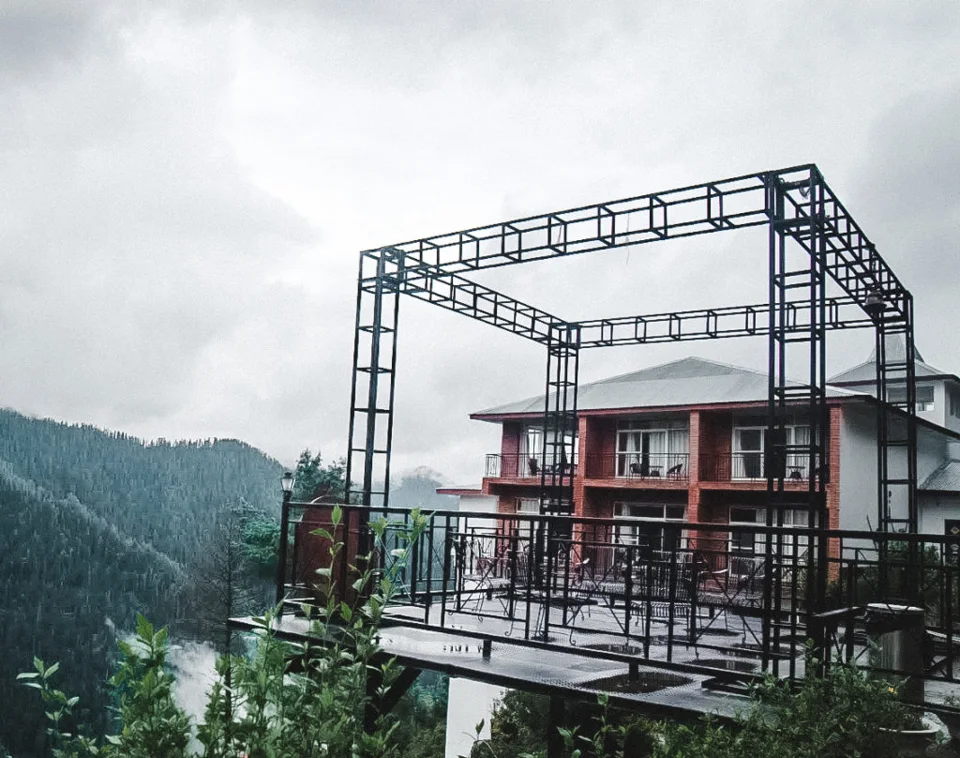
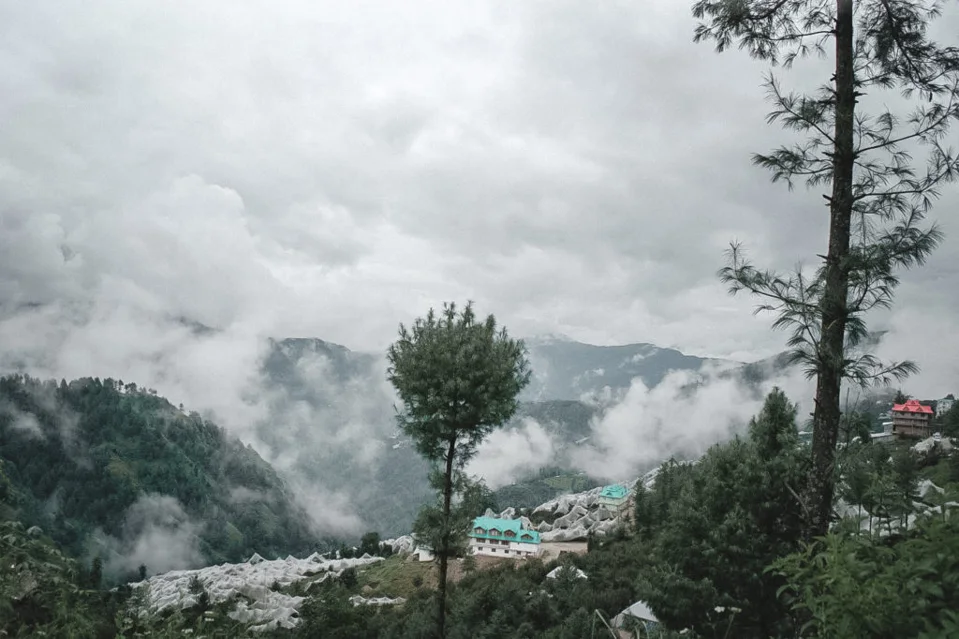
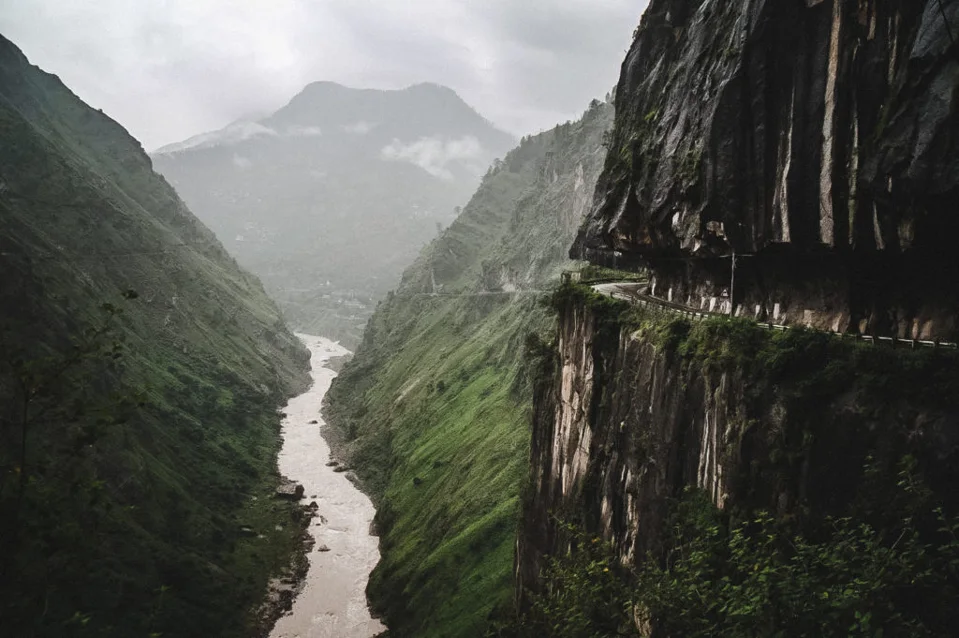
Weekend at Ooty

The Trigger

April 2024. Bengaluru running 35°C. A work trip to the city overlapped with the Lok Sabha election day landing on a Friday — a long weekend on a plate. Spontaneous trips age better because nothing has time to rot. We picked Ooty for the elevation drop. Time was tight; the plan was 48 hours and a bus ride.

Journey Onward

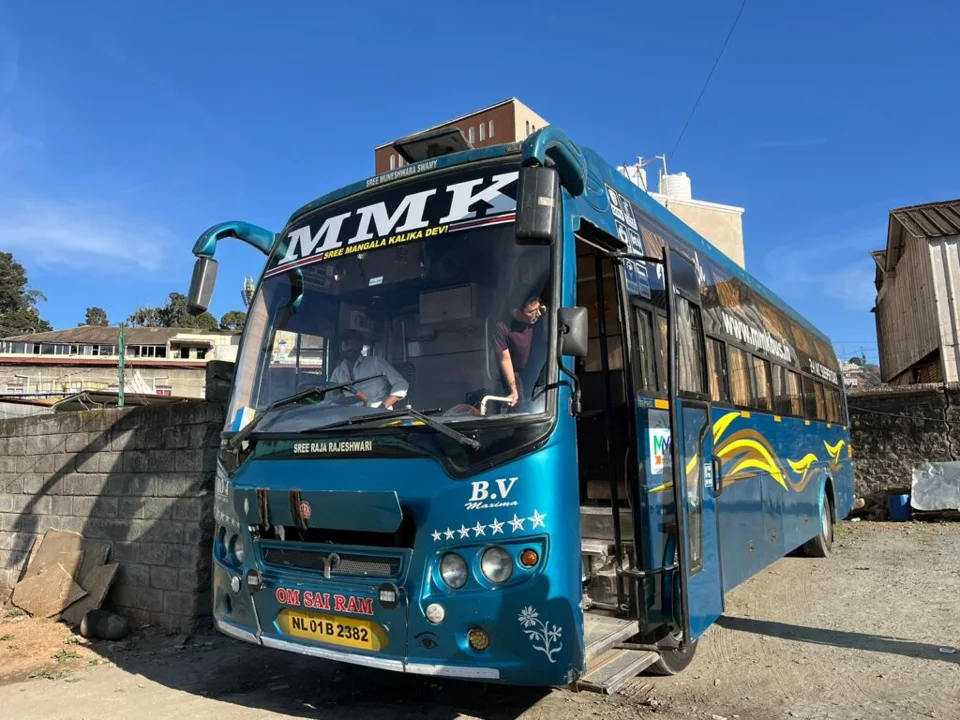
MMK A/C bus via Redbus, 1915 INR per head, departure 17 April (Thursday). Pickup point: Marathahalli Kalamandir, 10pm sharp. Bengaluru traffic delivered us at 10:10pm. The driver had been waiting since 9:45pm and had a few words ready when we boarded. Then we found out the AC was broken.

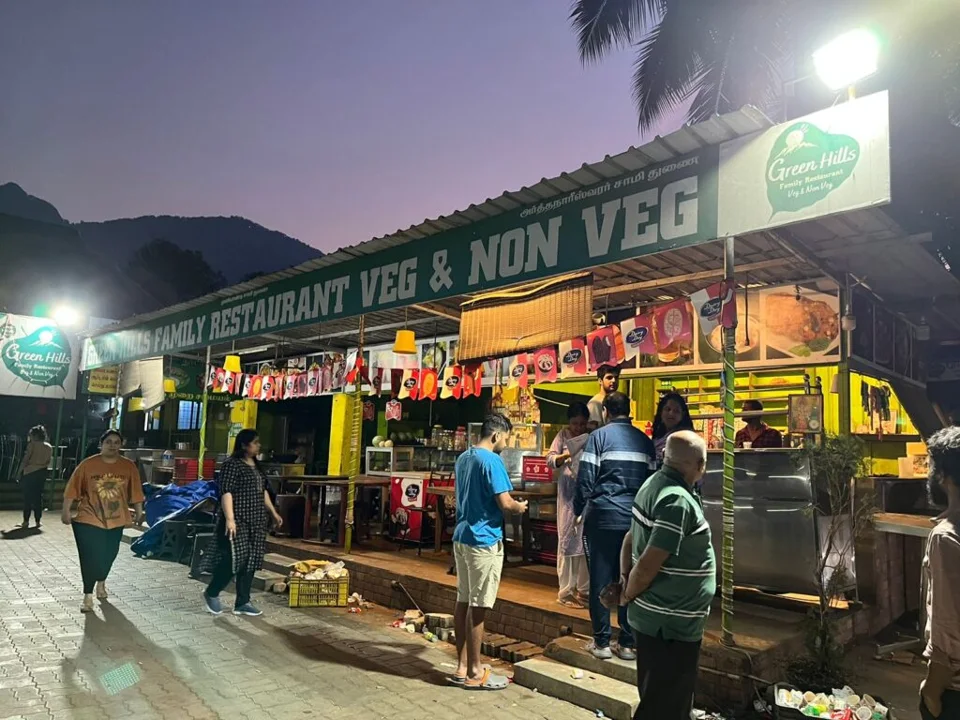
The bus held at Electronic City for 30 minutes while a mechanic restored cooling. Refreshments came as chips, juice, and biscuits. By dawn the road was Coonoor’s switchbacks; sleep collapsed under the corners. 5:45am stop at Green Hills Family Restaurant for a washroom break.
More uncomfortable driving and a rising vertigo before we got off at 7:40am at Sarkar Palace, the local parking yard.
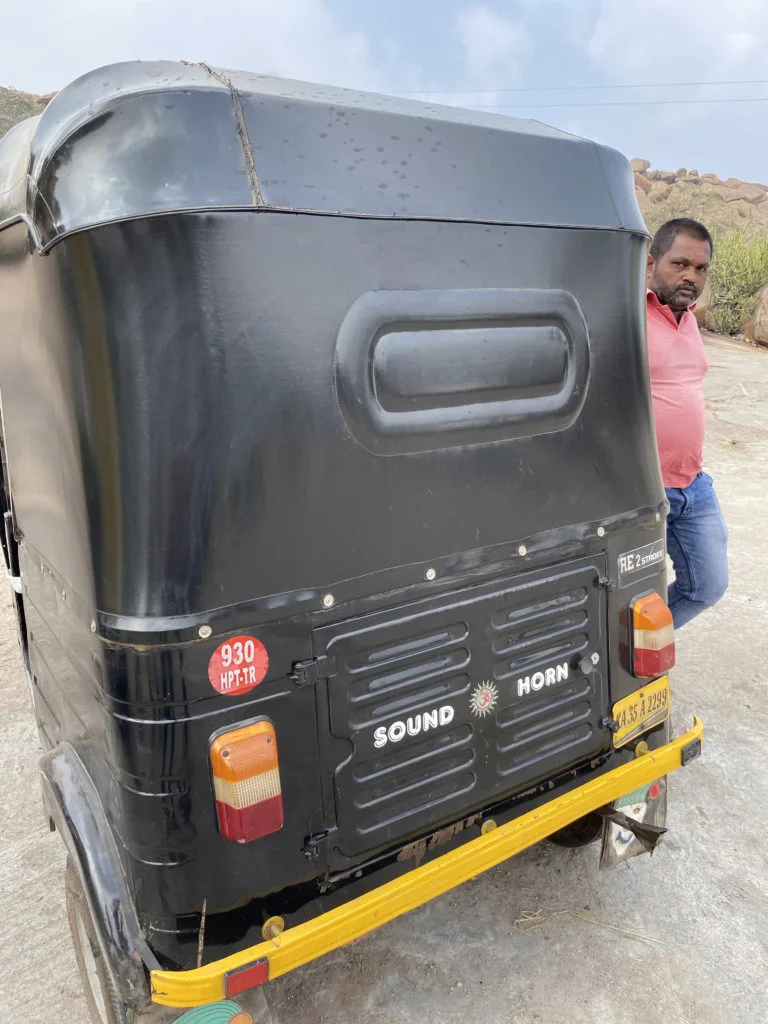
Hotel was a kilometre uphill. Ooty’s autos are the wide-back kind, four people plus luggage. 120 INR. We were at the door by 8am.
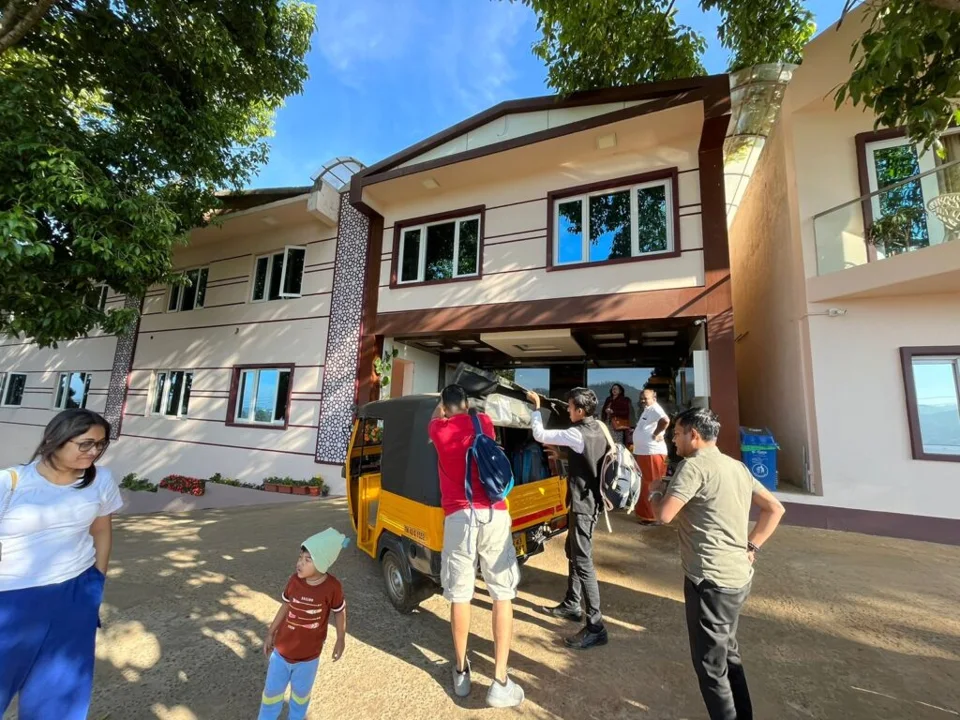
Beverly Villa gave us a mid-sized room to crash in between 8am and the 1pm check-in window. This is non-trivial: most Ooty hotels will not let you in before mid-day.

The Villa

Beverly Villa runs tiered rooms. We negotiated direct, beat the online rates, and got an early check-in folded in:
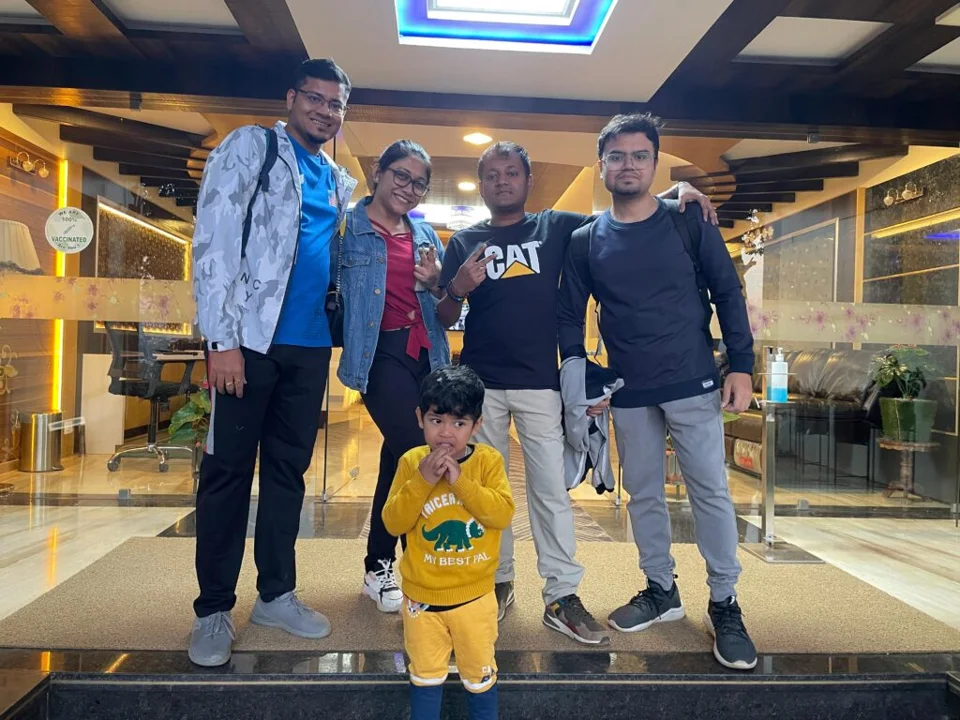
Booking summary:
Deluxe (26 April, early check-in): 2500 INR
Family suite (26-27 April): 9000 INR
Total tariff: 20,500 INR
Official check-in: 1pm
Check-out: 11am

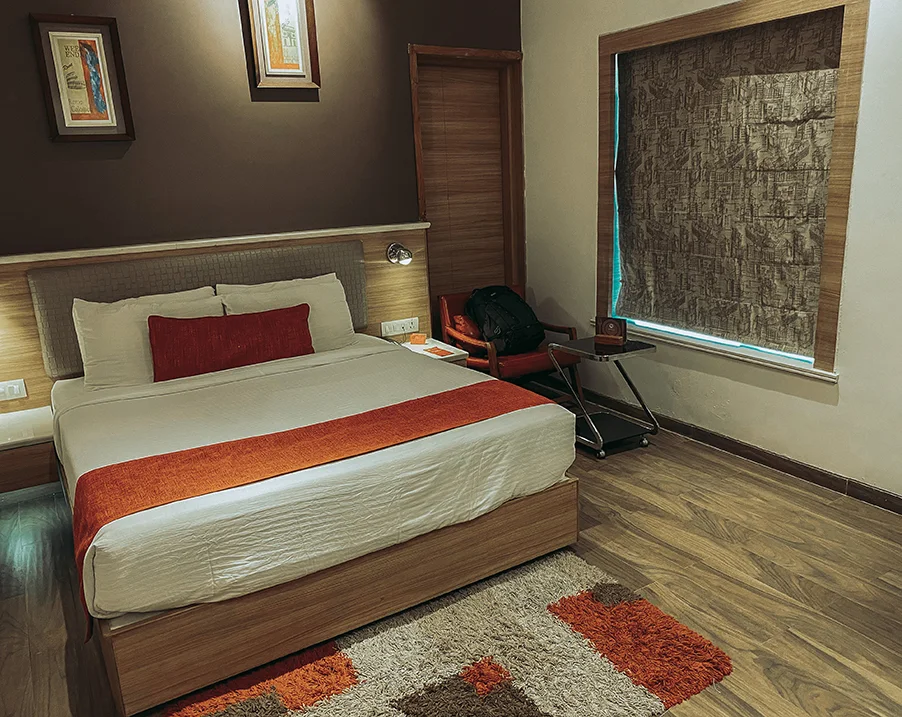
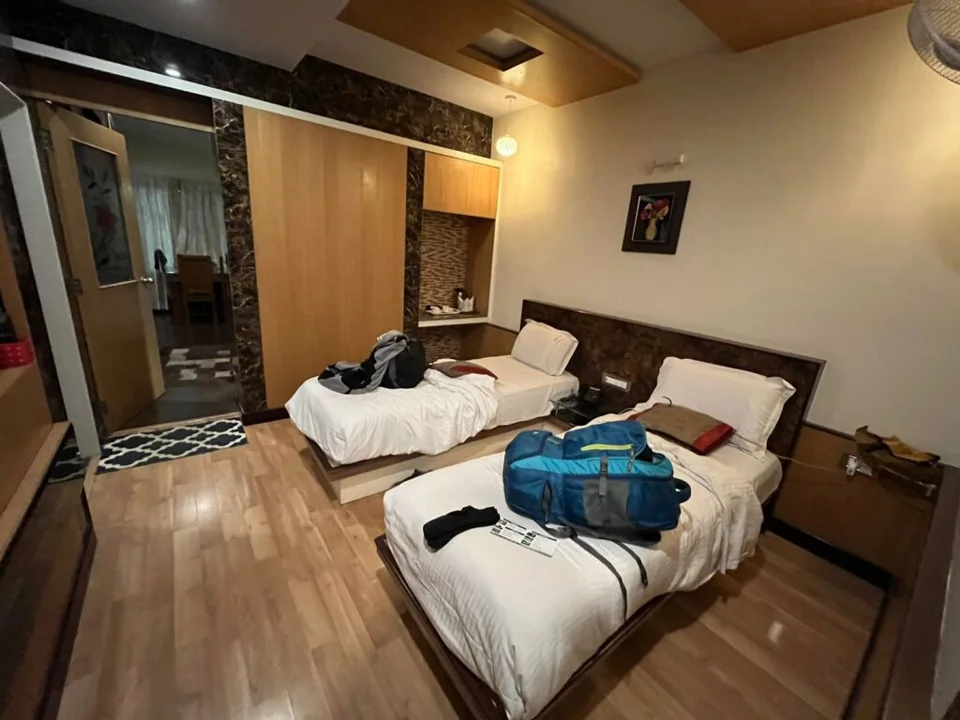
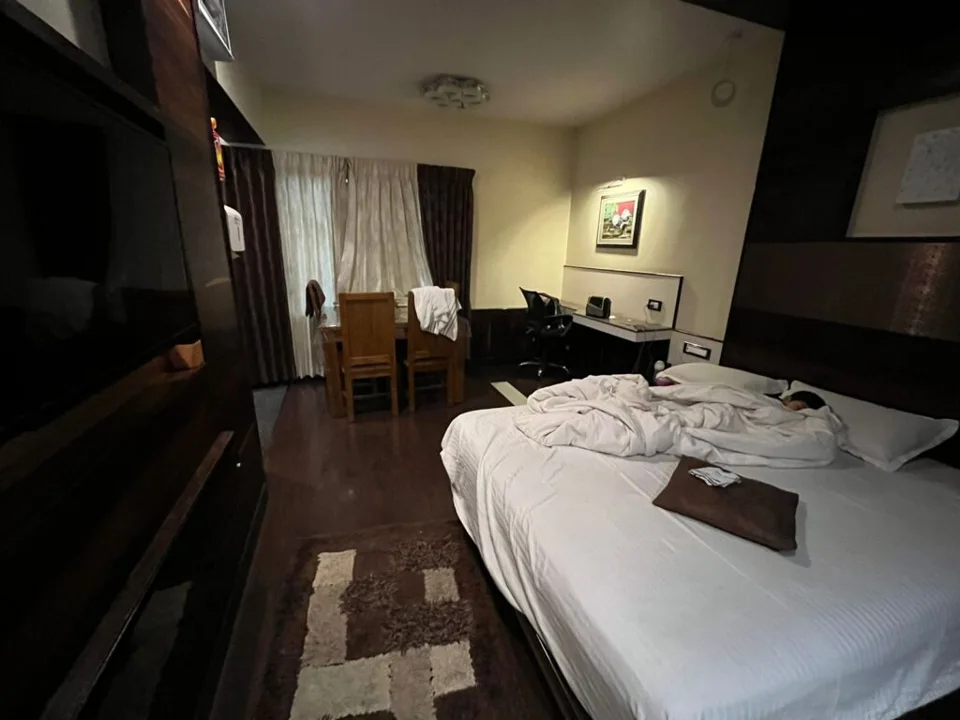
The lobby has table football, chess, and carrom scattered around. Our family suite came open at 11am — two interconnected rooms with separate bathrooms and a shared kitchen.
Botanical, Boutique, Brunch

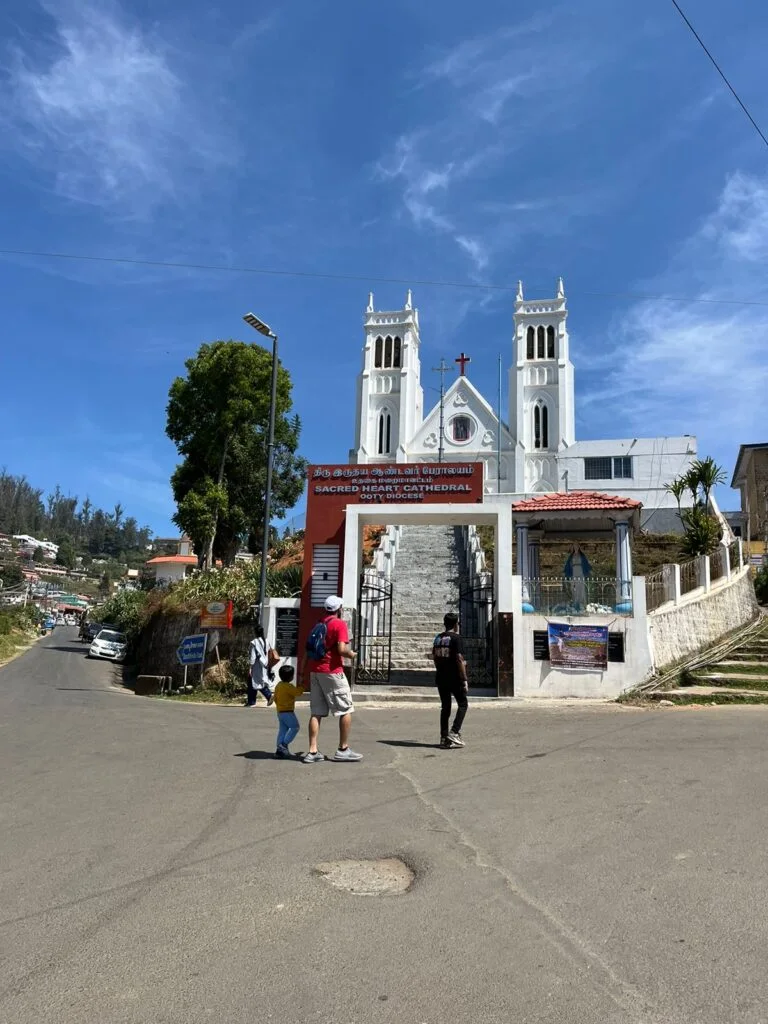
Between rooms, we walked downhill to the botanical garden, 400m away. Maps held up on the switchbacks. Past the Sacred Heart Cathedral on the way.
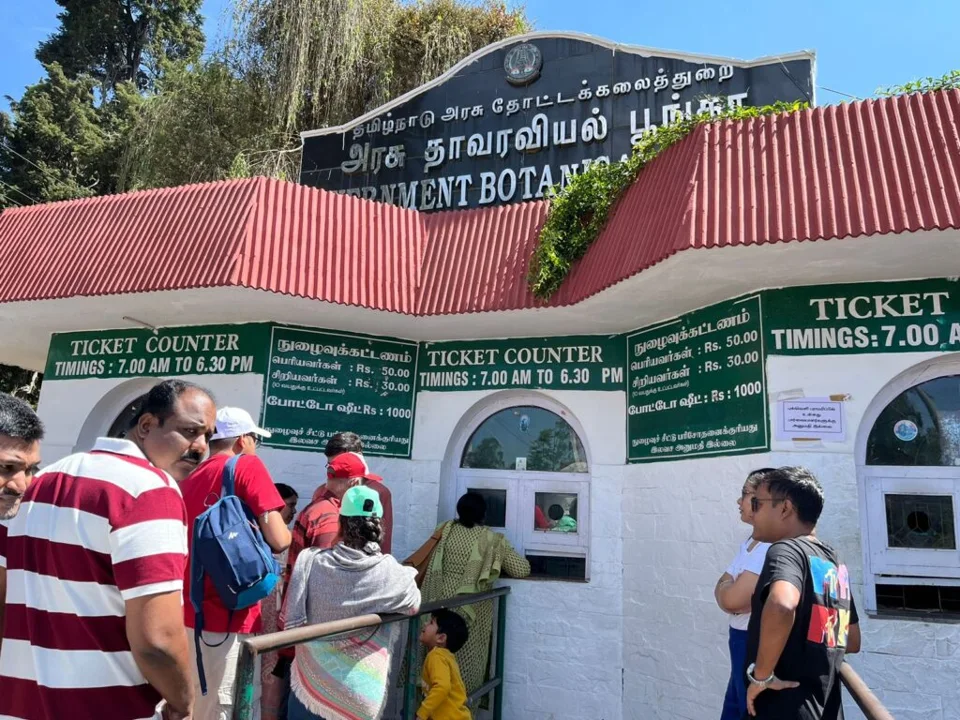
10:15am, 50 INR per head. We covered maybe a sixth of the garden in the hour we had. Maintained, popular, and worth more time than we gave it.
The Italian Garden section uphill has shrubs and hedges trimmed into animal shapes. The sun there is unfiltered. Worth seeing, less worth lingering in.
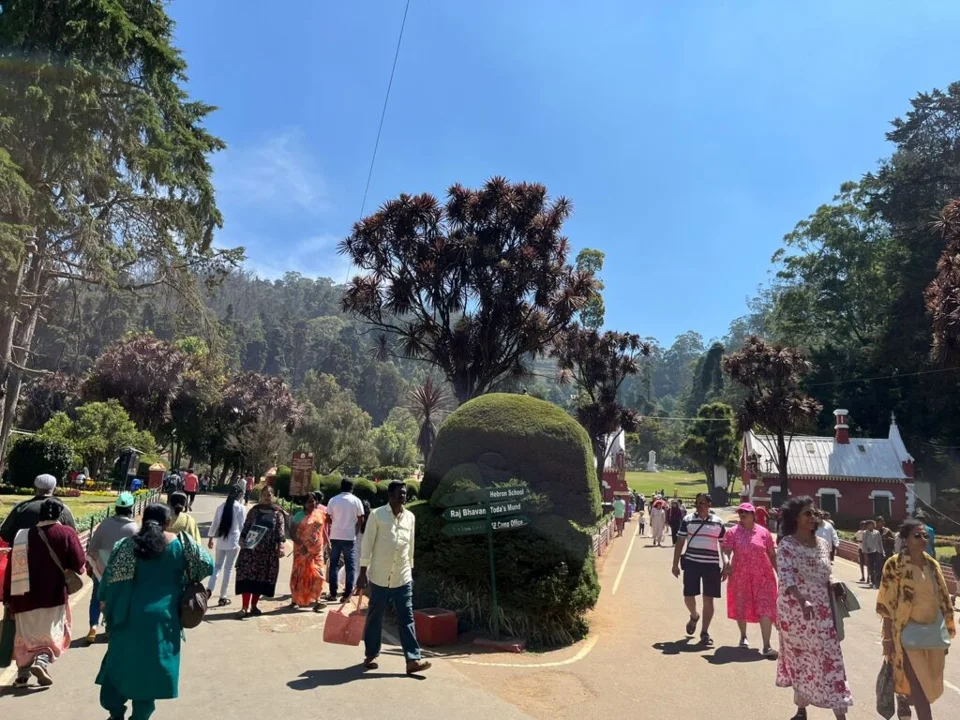
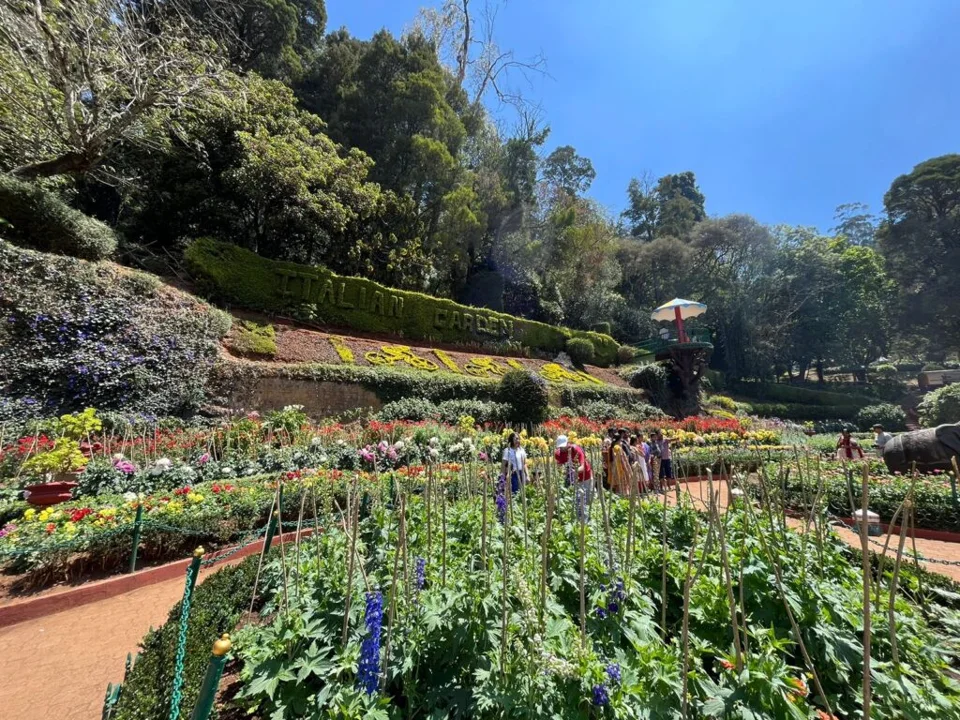
The villa was already calling about our family room being ready. We took photos and left.
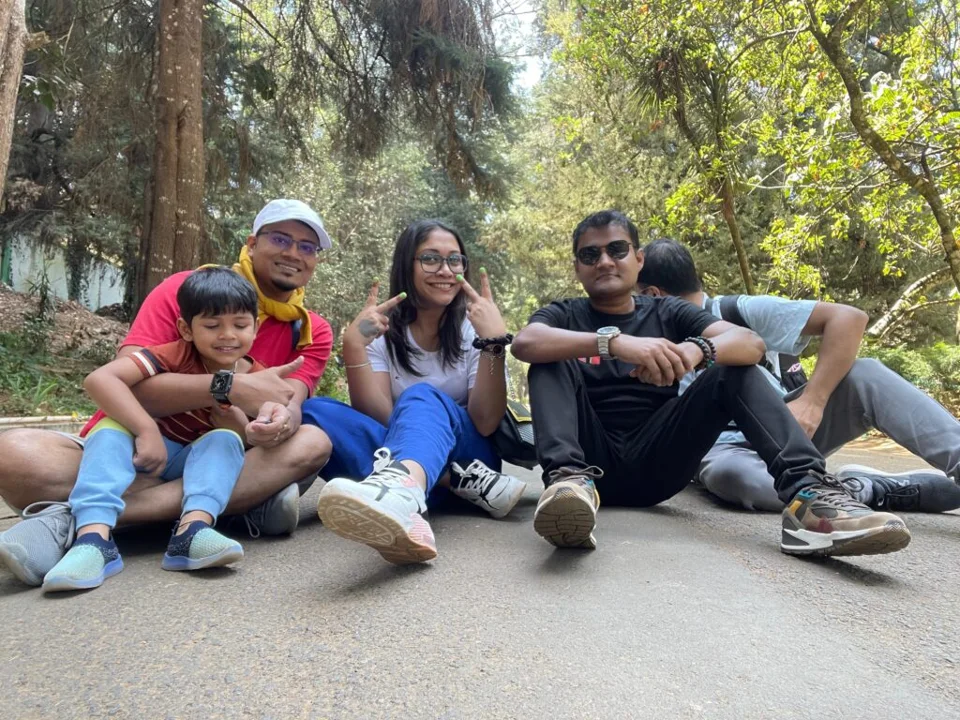
Back via auto (same 120 INR rate) to a restaurant near the hotel.
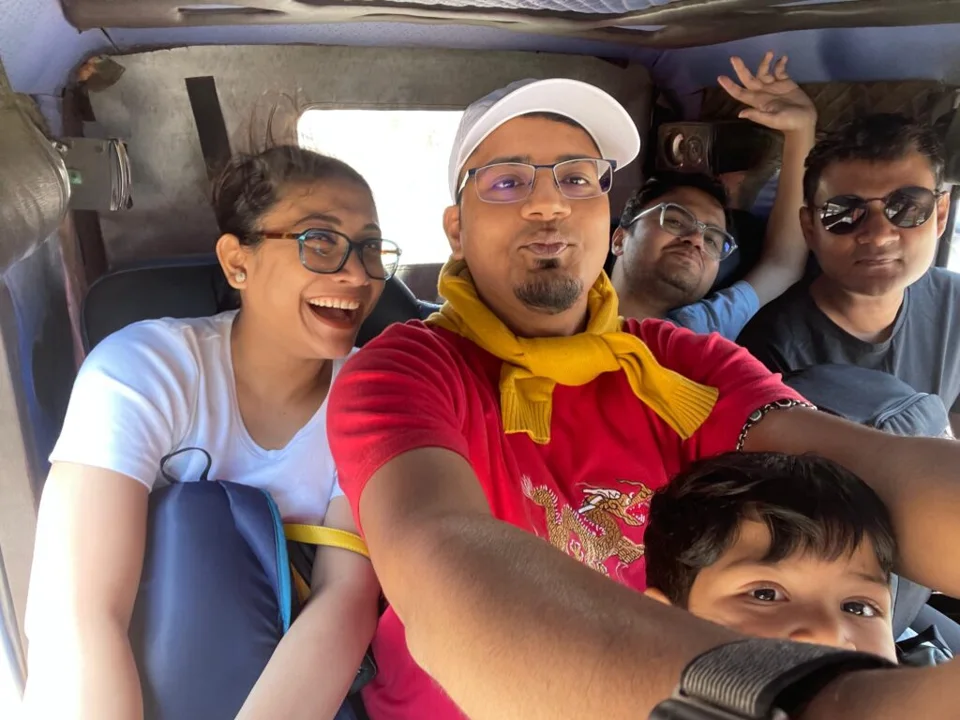
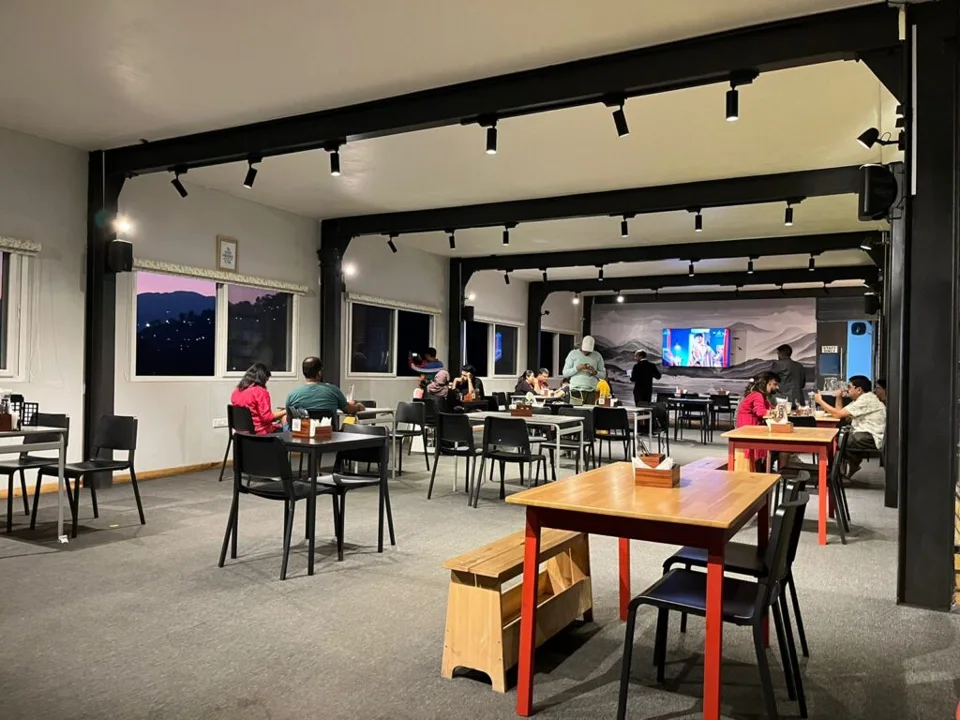
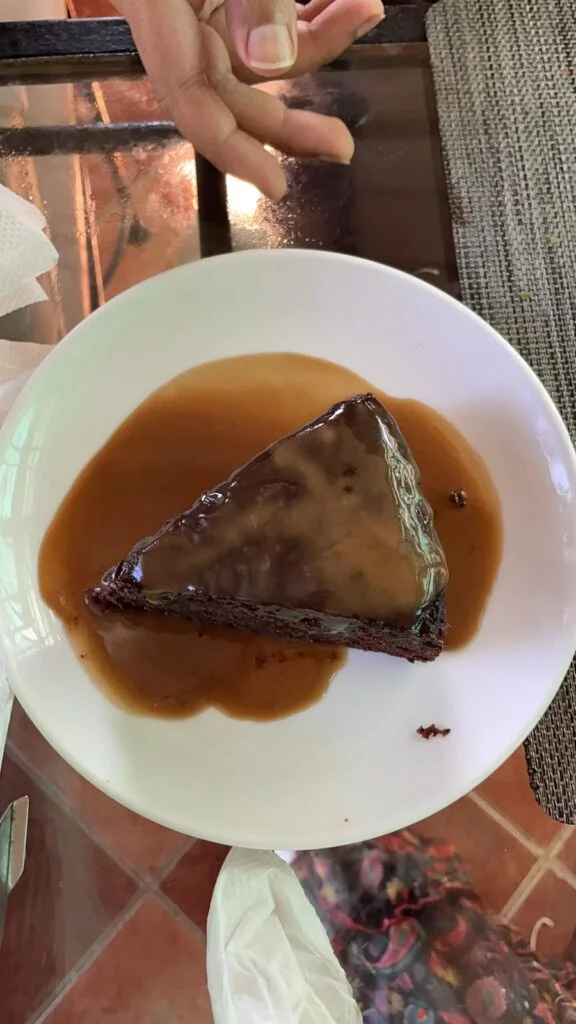
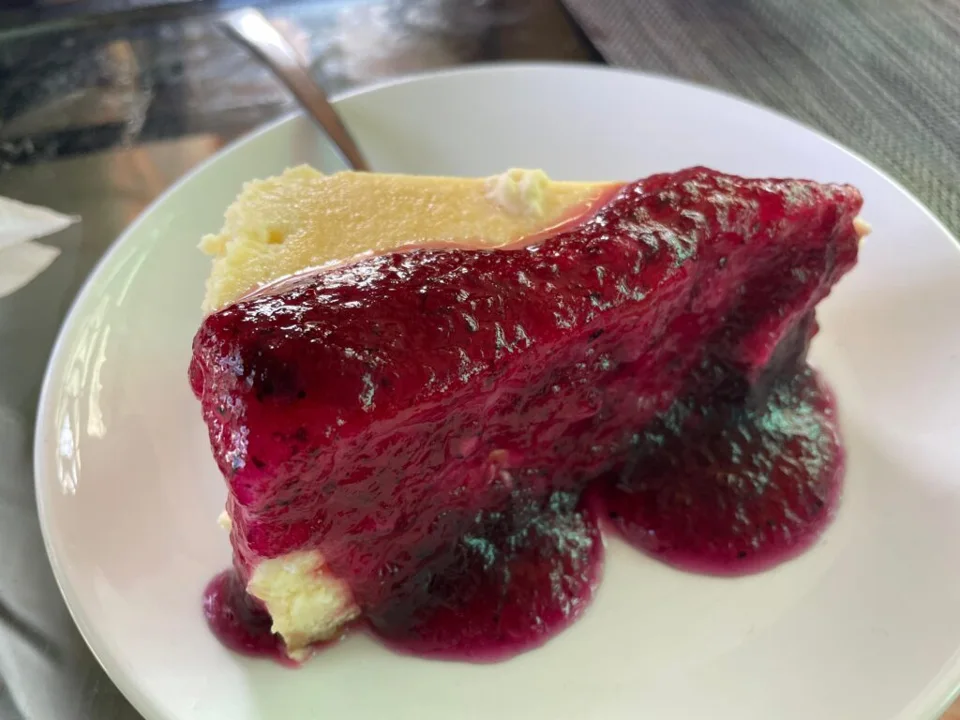
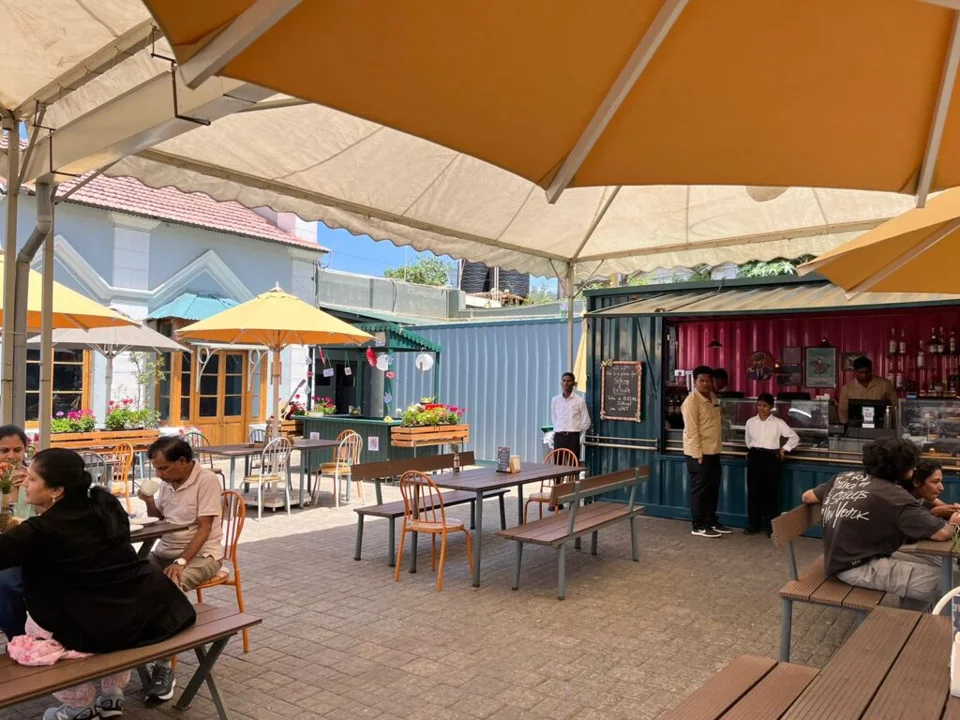
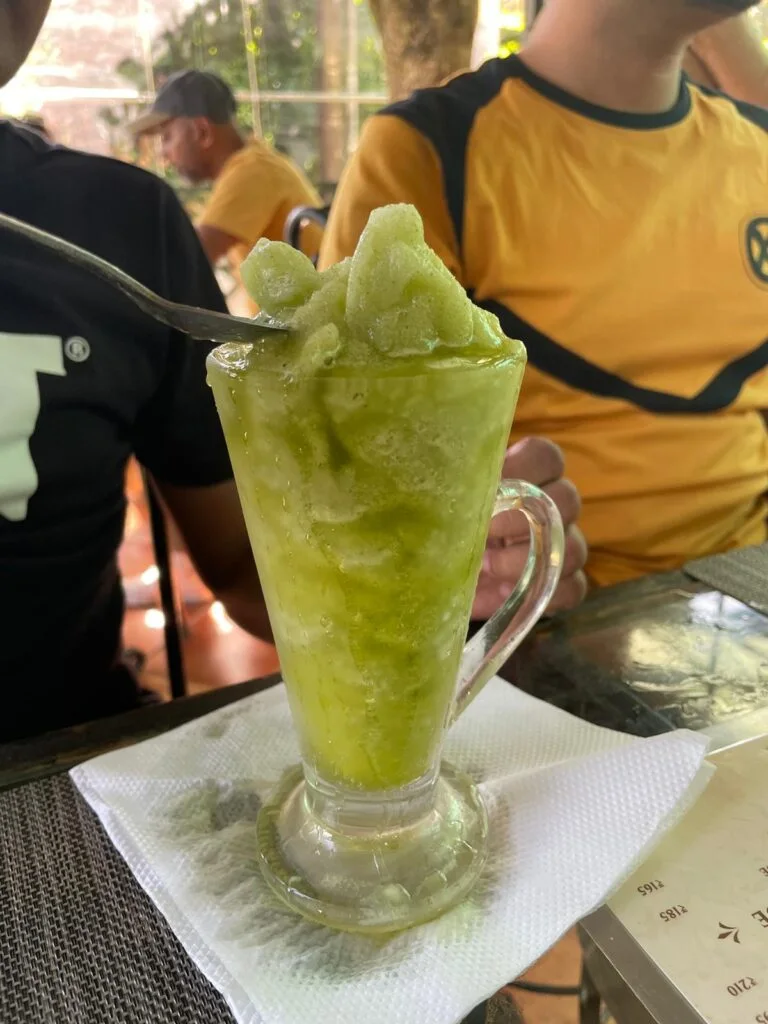
Le Cafe runs a heavy breakfast in a Spanish-siesta setup: outdoor seating, rustic, slow.
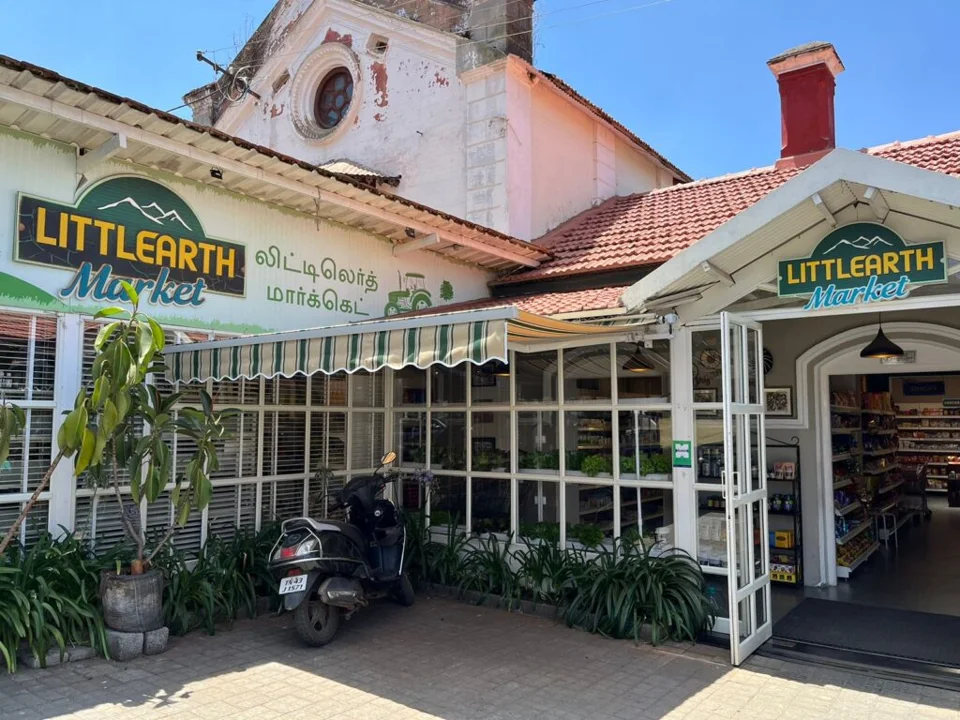
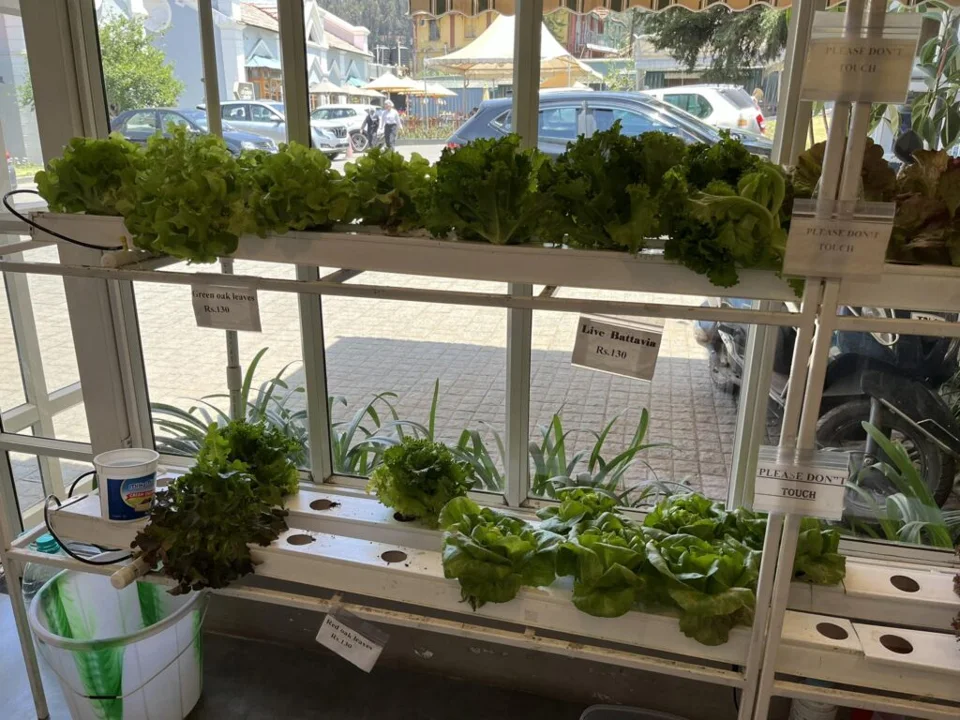
Adjacent: Little Earth, a supermarket-cum-larder with farm-fresh produce, handcrafts, and the usual essentials.
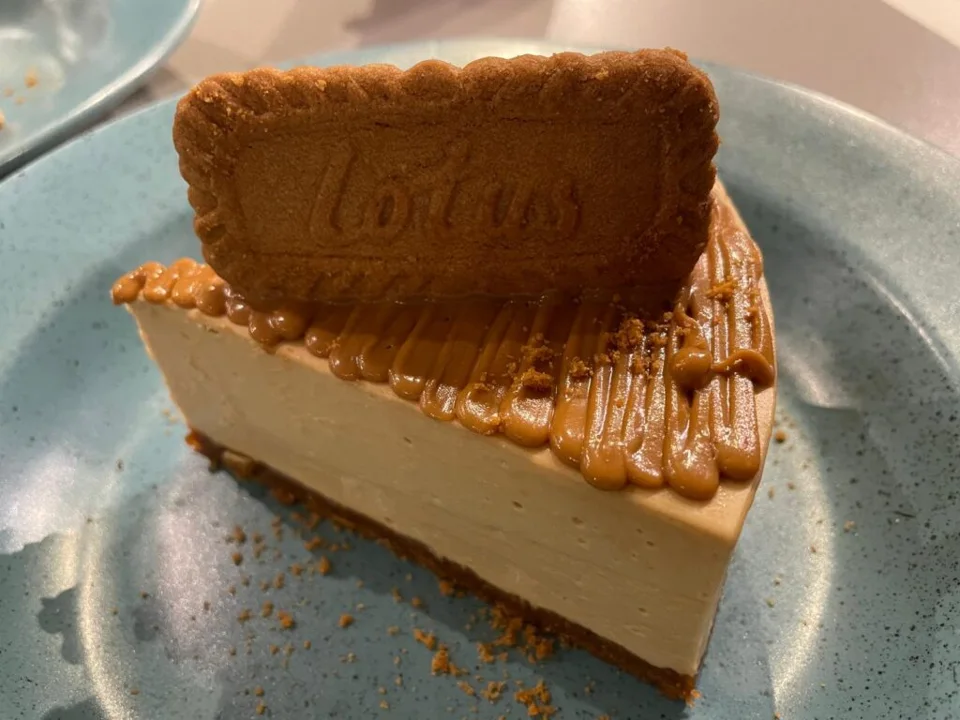
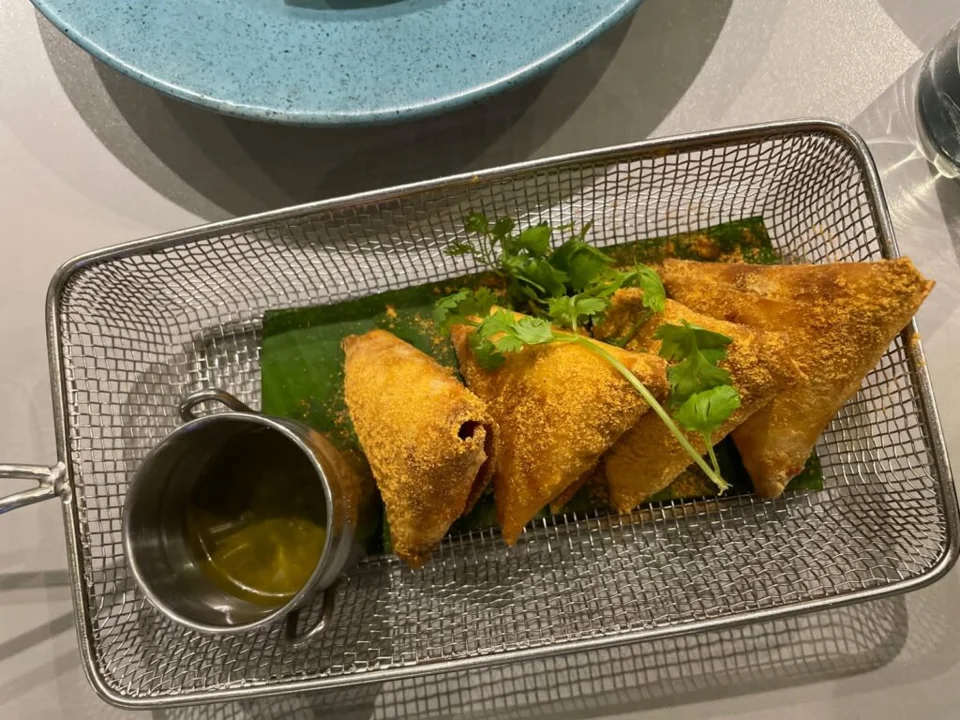
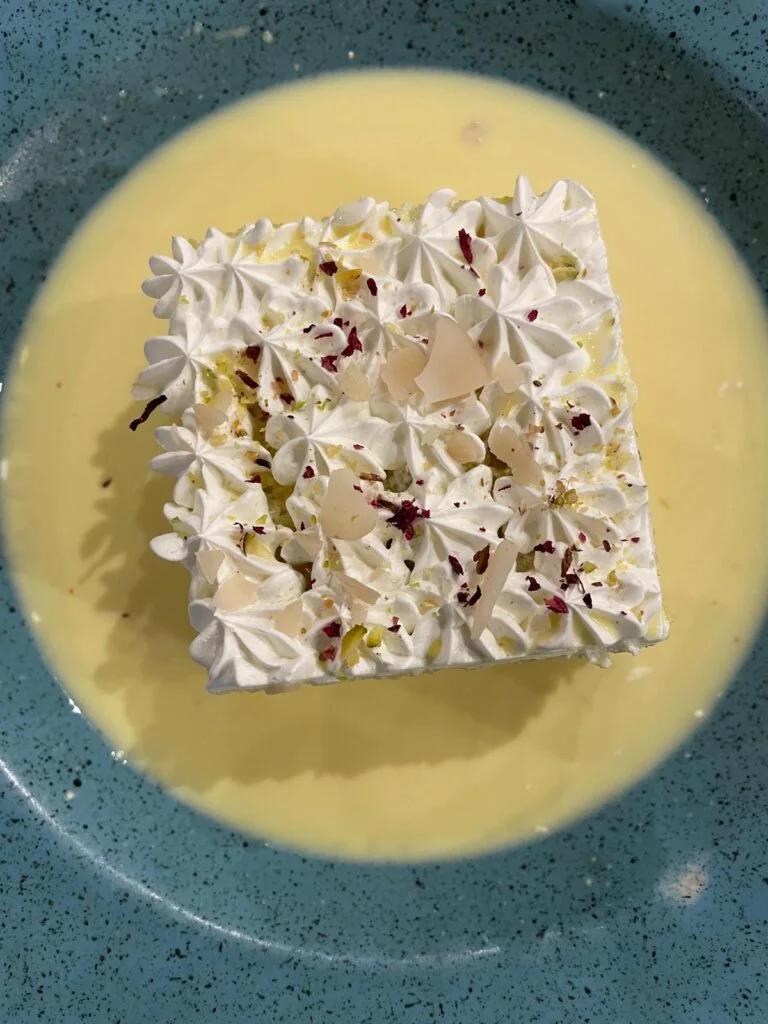
Service at Le Cafe was uneven. Some plates earned the bill, others did not. Wait times were long, presentation carried part of the price tag.
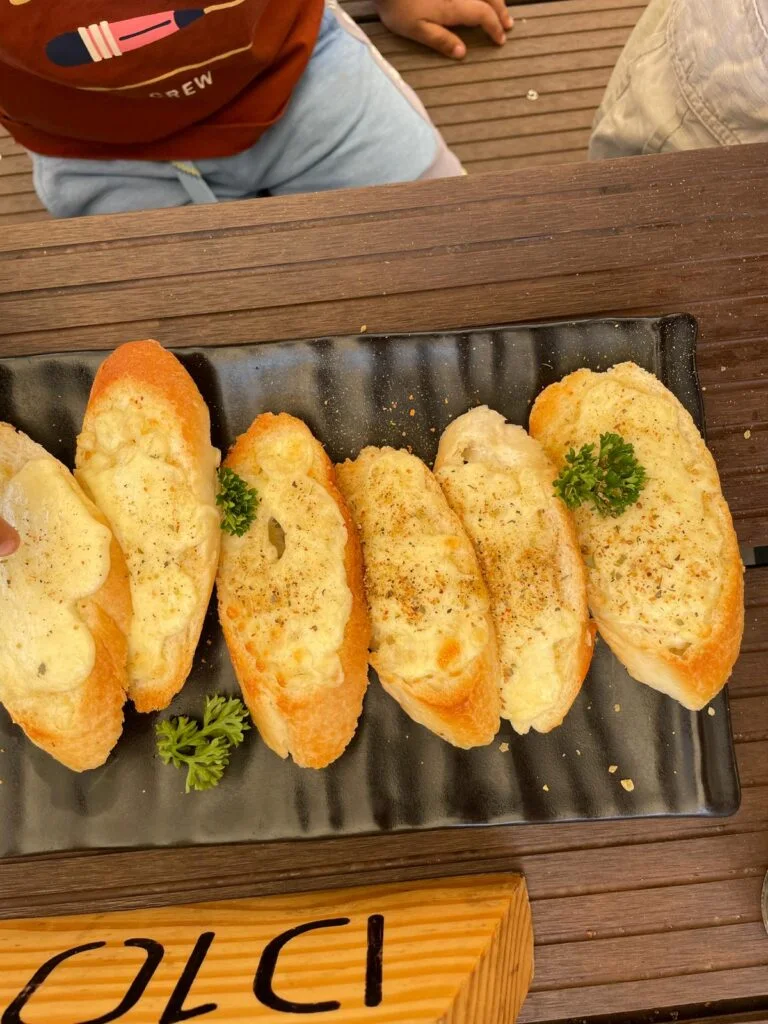
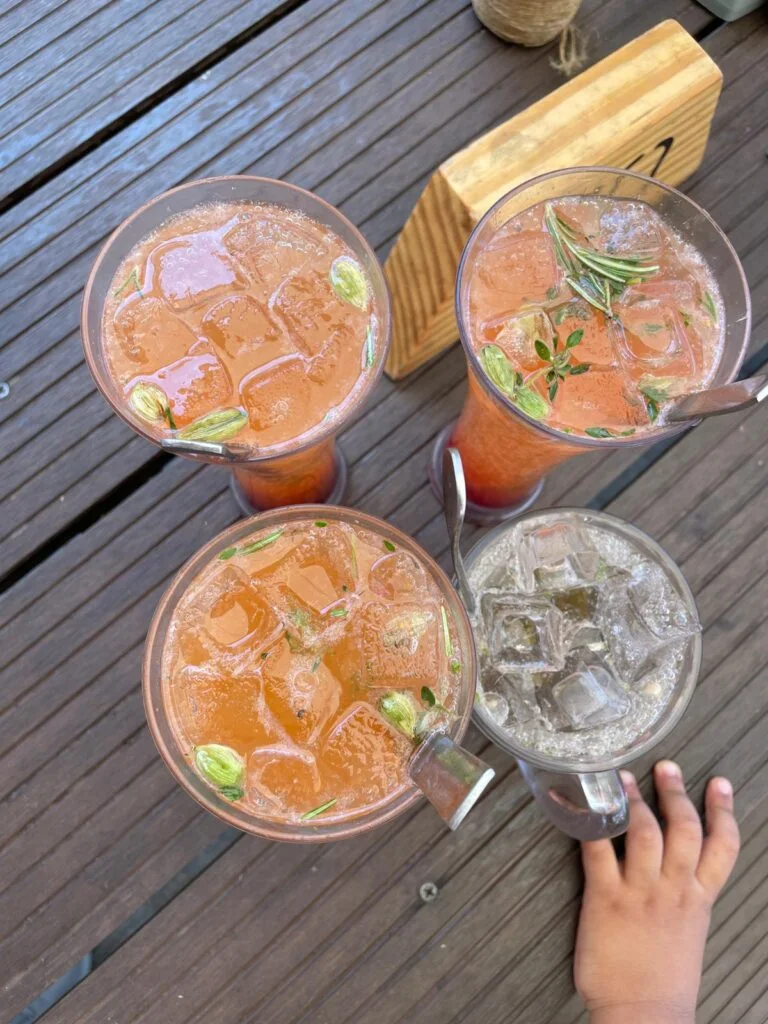
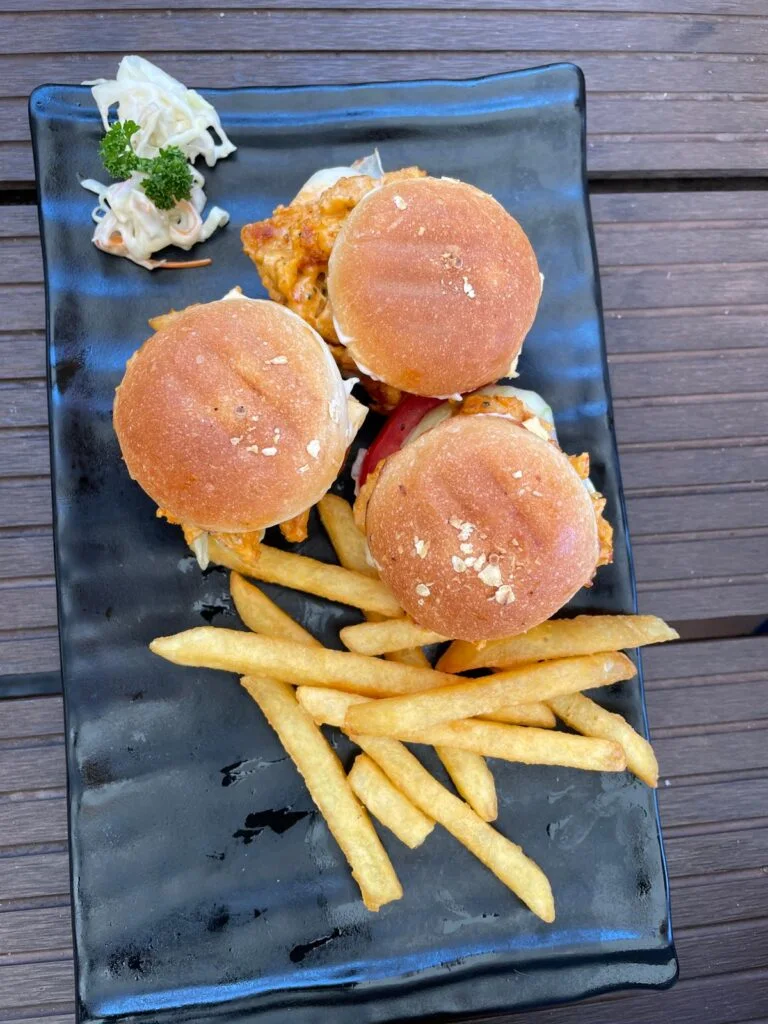
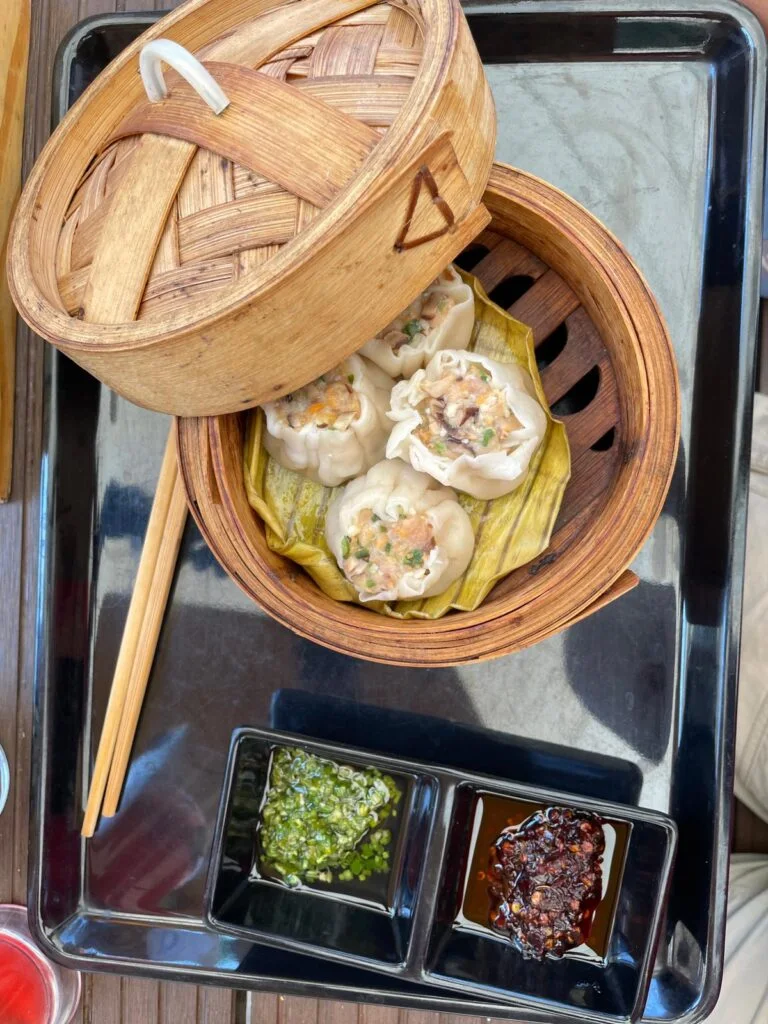
Mid-day. Family room ready, breakfast (dim sums, burgers, garlic bread, ramen, mocktails) sitting heavier than planned. Back to the suite for a nap.

Dinosaurs and Desserts

2pm: rickshaw to Angara for a North Indian lunch in a South Indian setting.
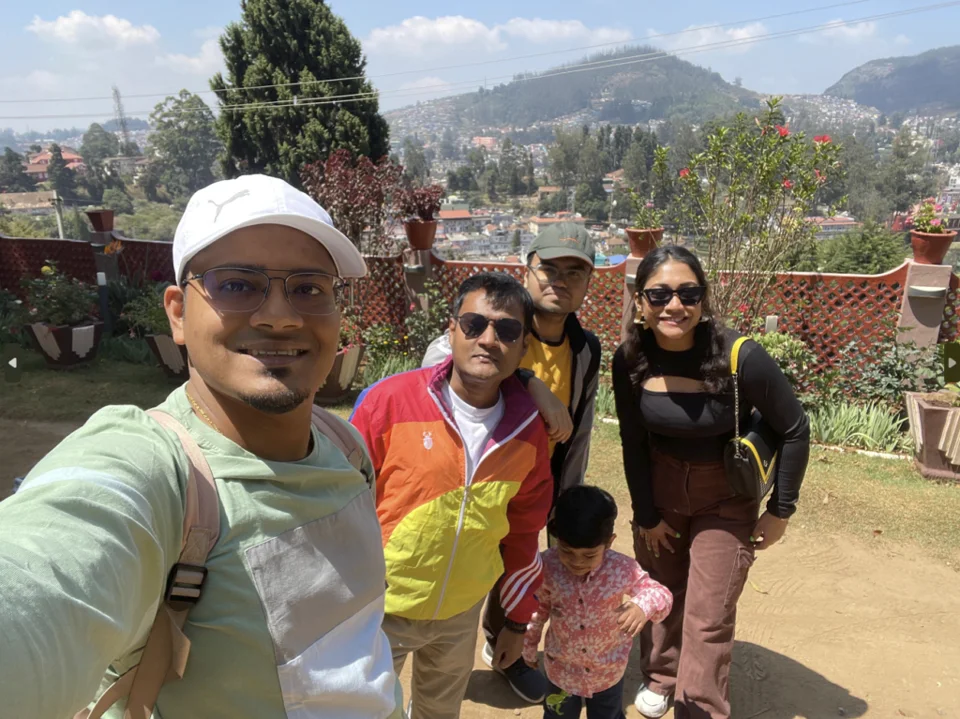
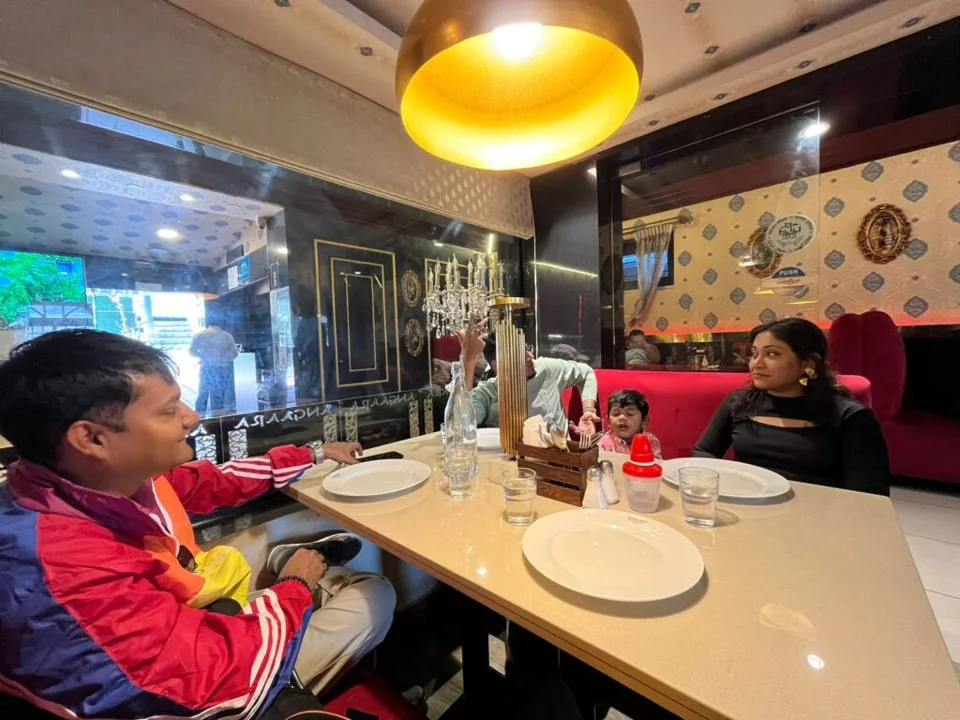
The waiter at Angara was fluent in Bengali, which was the surprise of the meal. We ordered biryani, rumali roti, ghee rice, keema, and mocktails — fuel for what was coming.
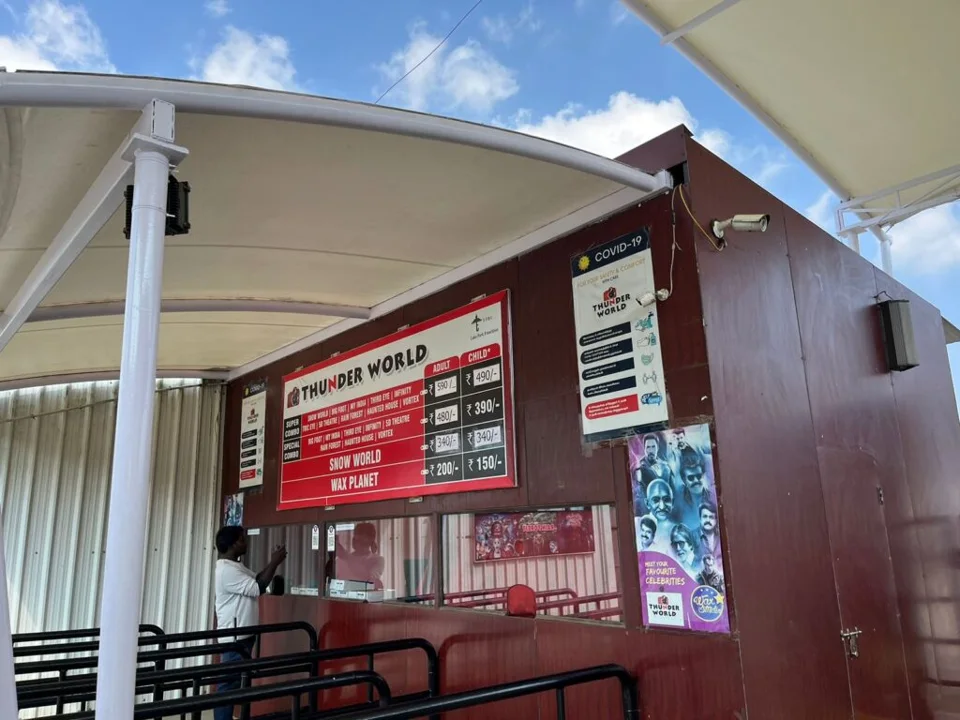
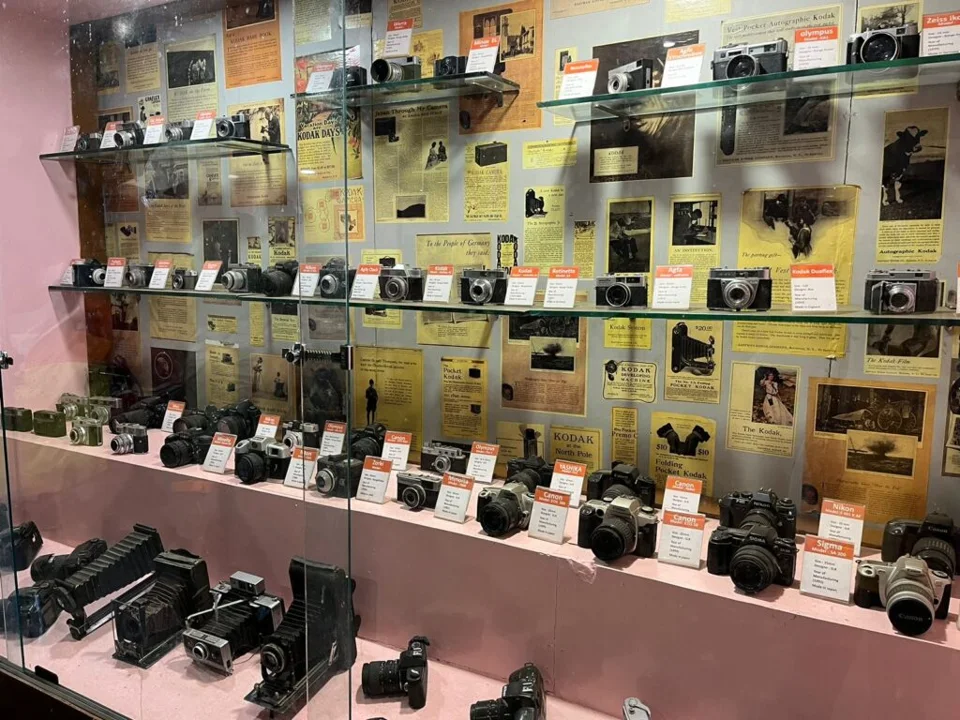
Thunder World is a small amusement park aimed at children, walking distance from Angara. We picked the second tier, which gets you the central plaza and access to the themed gates branching off it. We started in the vintage camera museum section.
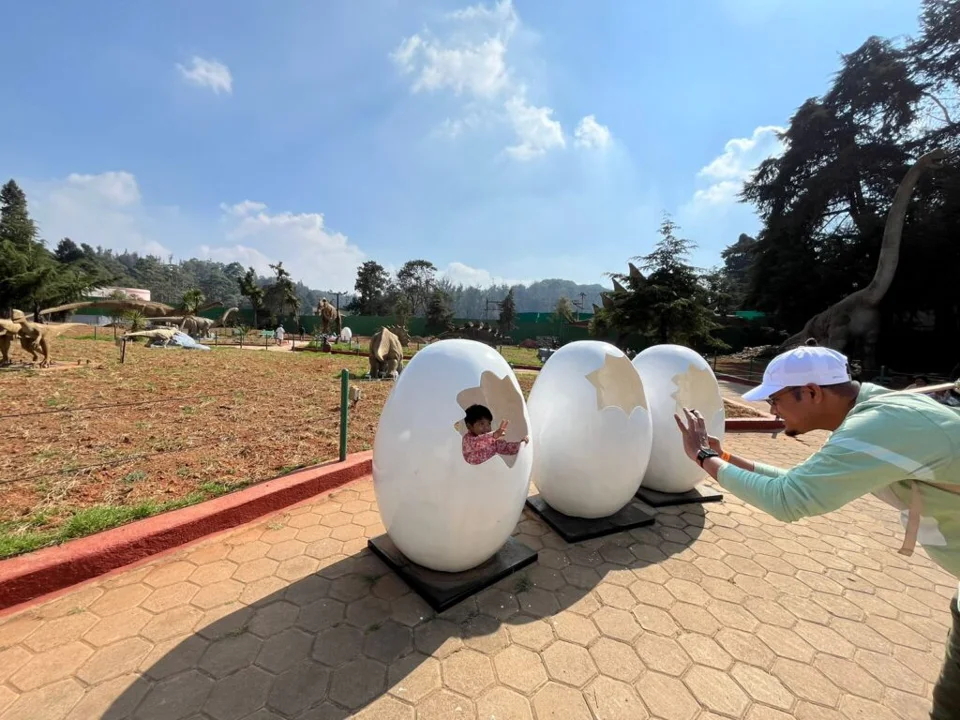
The dinosaur park is where it stops being for children. A mechanical T. rex head at the gate, then a tunnel of skeletal reconstructions, opening into a clearing of model theropods. Several are animated. The animation triggers without warning.
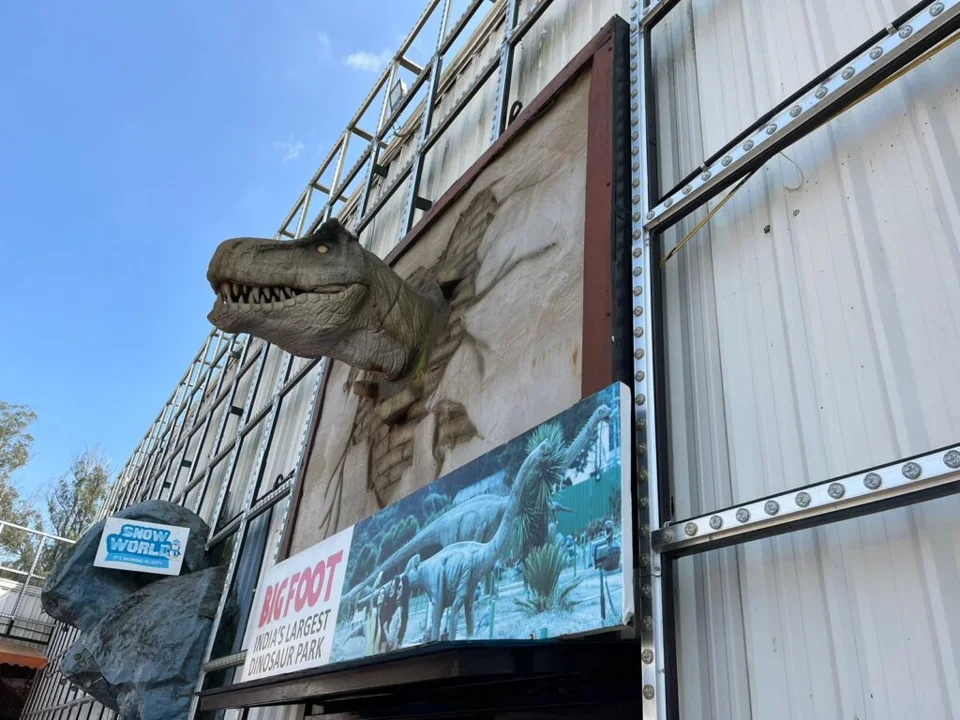
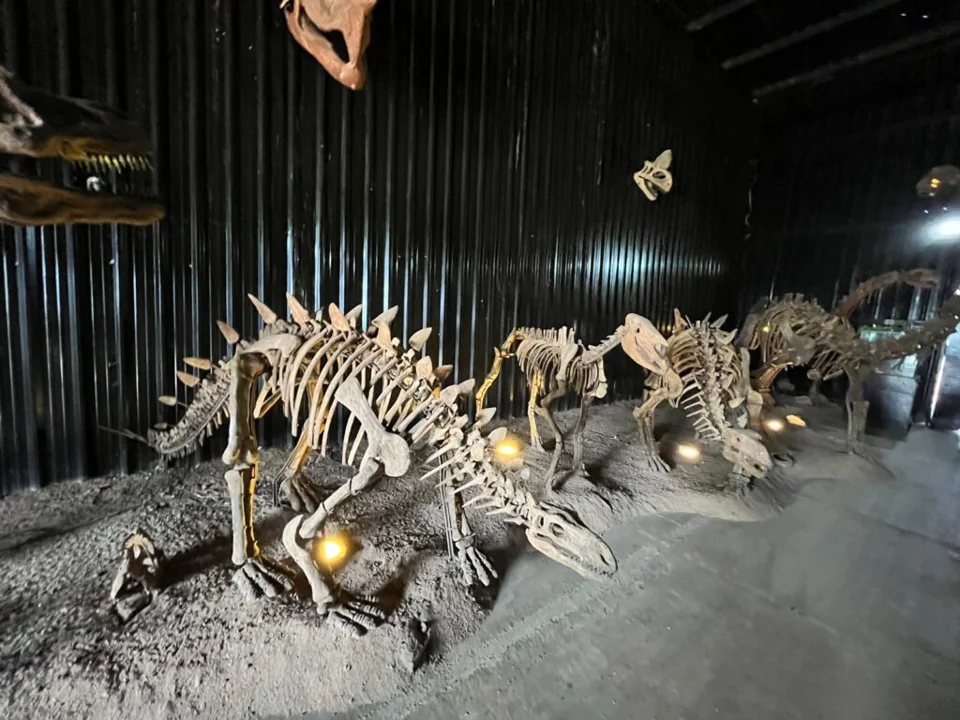
After we let the inner child finish being terrified, we moved to the haunted house / rainforest section. Genuine startles. A figure that springs out of a coffin with steam and audio cues. The grown-ups in the group were not unaffected.
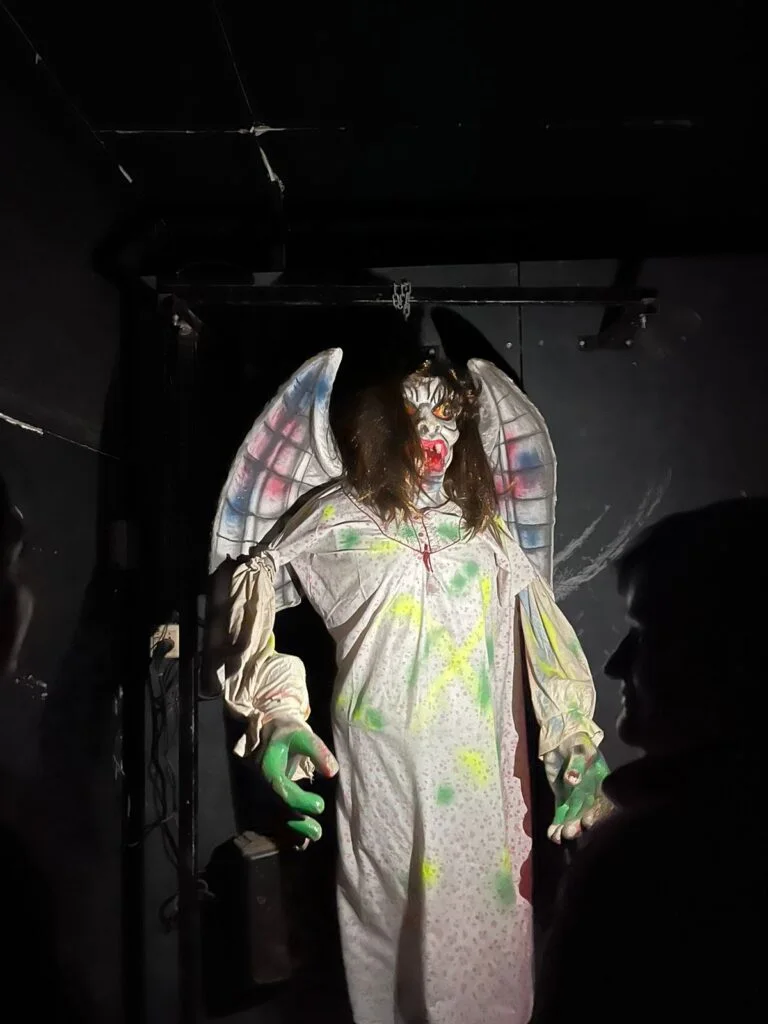
Then to the toy train station for the 4:30pm window. Four (sometimes five) diesel toy trains run daily between Udagamandalam (Ooty) and Coonoor. They sell out fast. We had booked a week ahead and could only get the 4:45pm departure, arriving 5:55pm. First class, 525 INR plus GST per ticket.
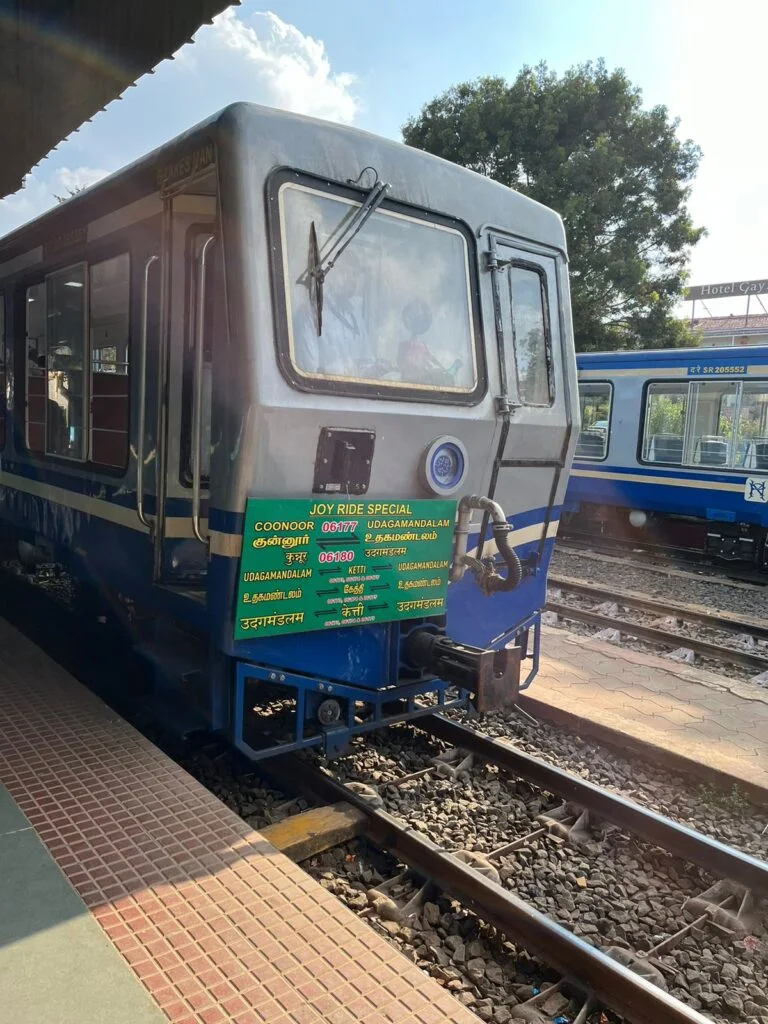
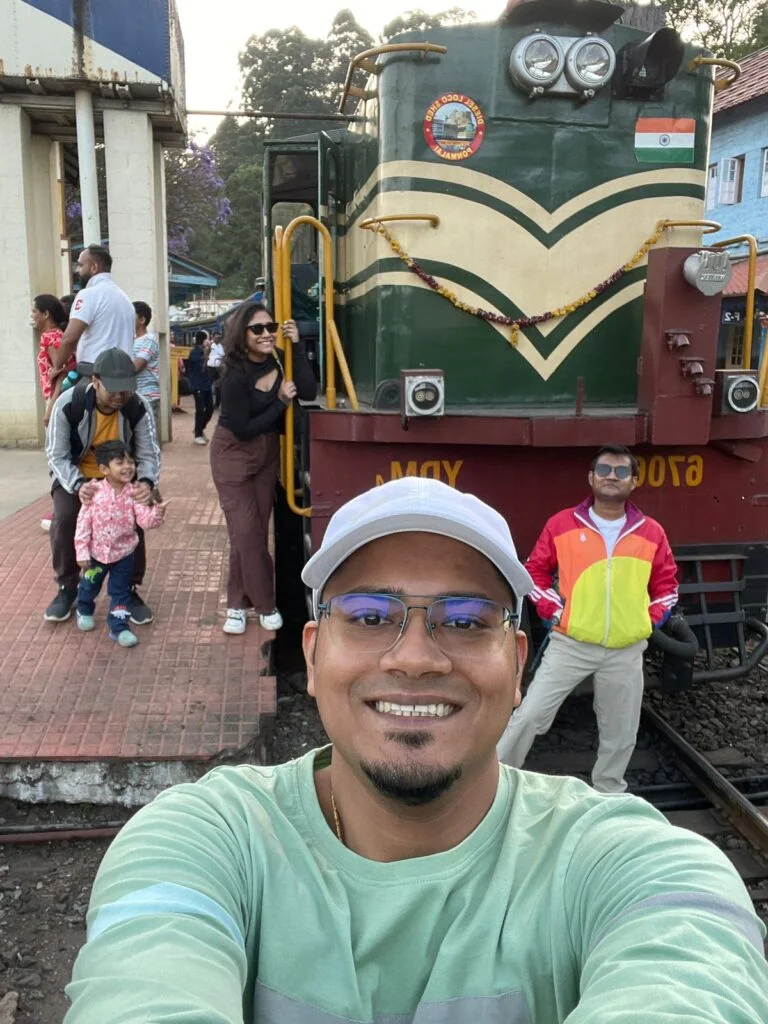
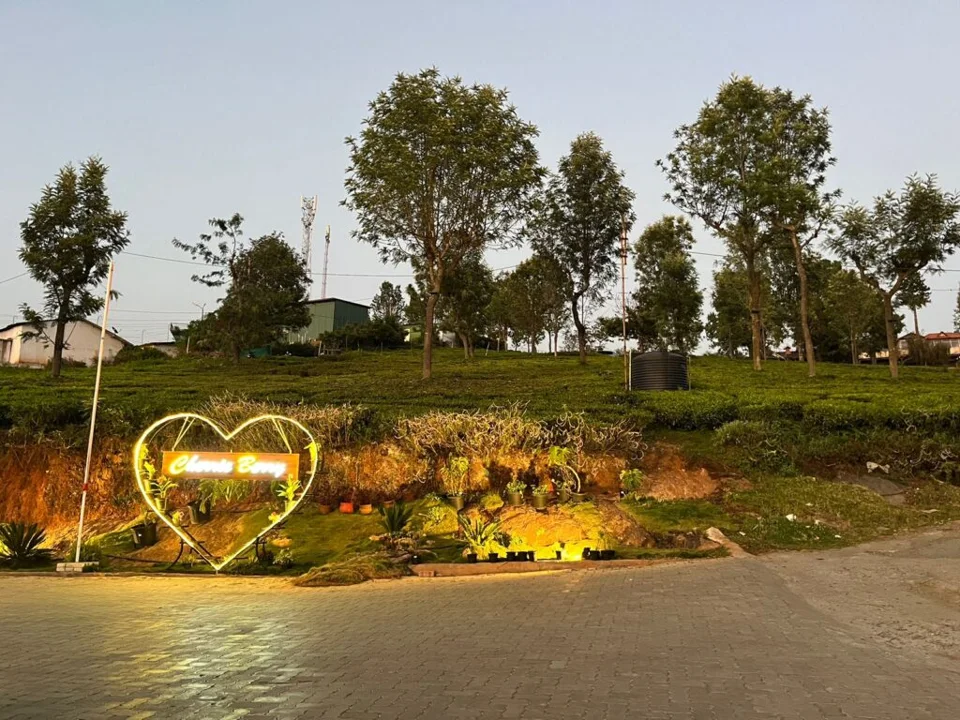
The station feeds out into the Coonoor town square, where a fleet of autos waits for tourists. We negotiated 150 INR to Cherry Berry, a supermarket-restaurant-farm in the highlands known for its desserts.
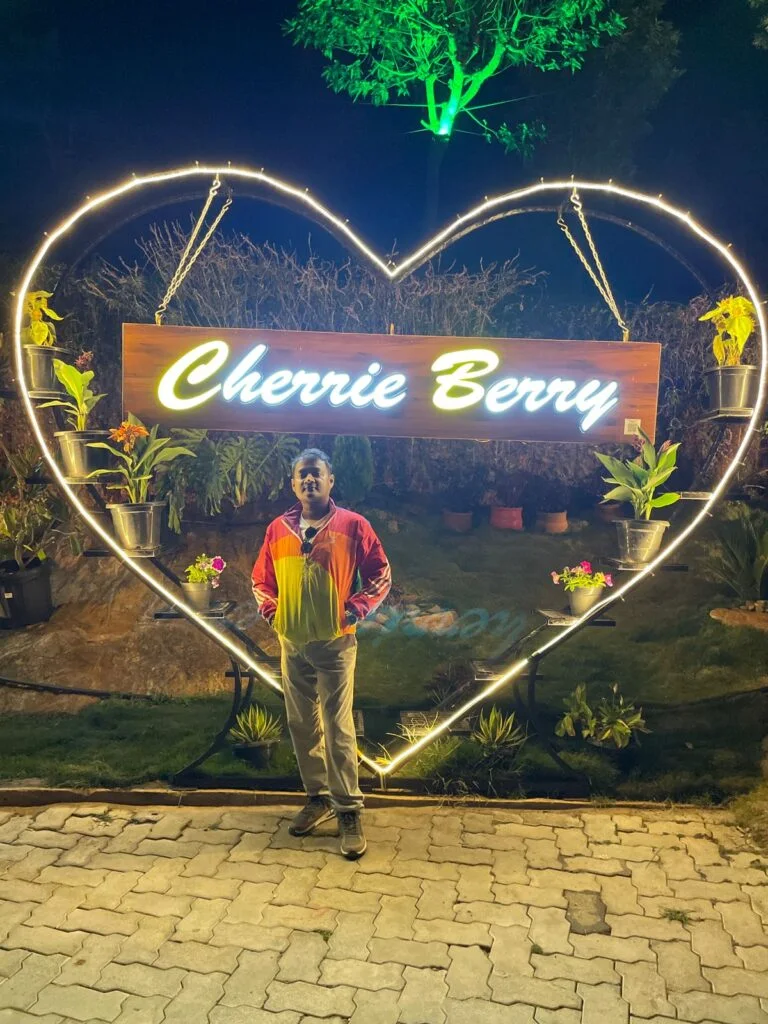
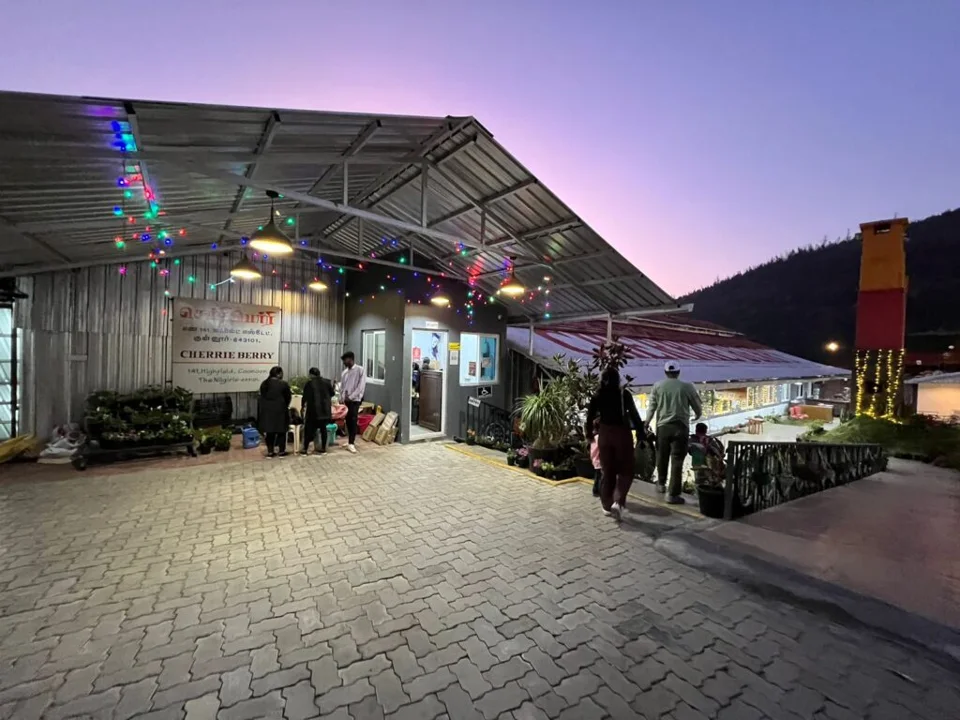
Savaari from Cherry Berry back to the hotel: 2000 INR for the one-way drop. We took a minimum dinner via online delivery and called it a night.

It’s Teatime

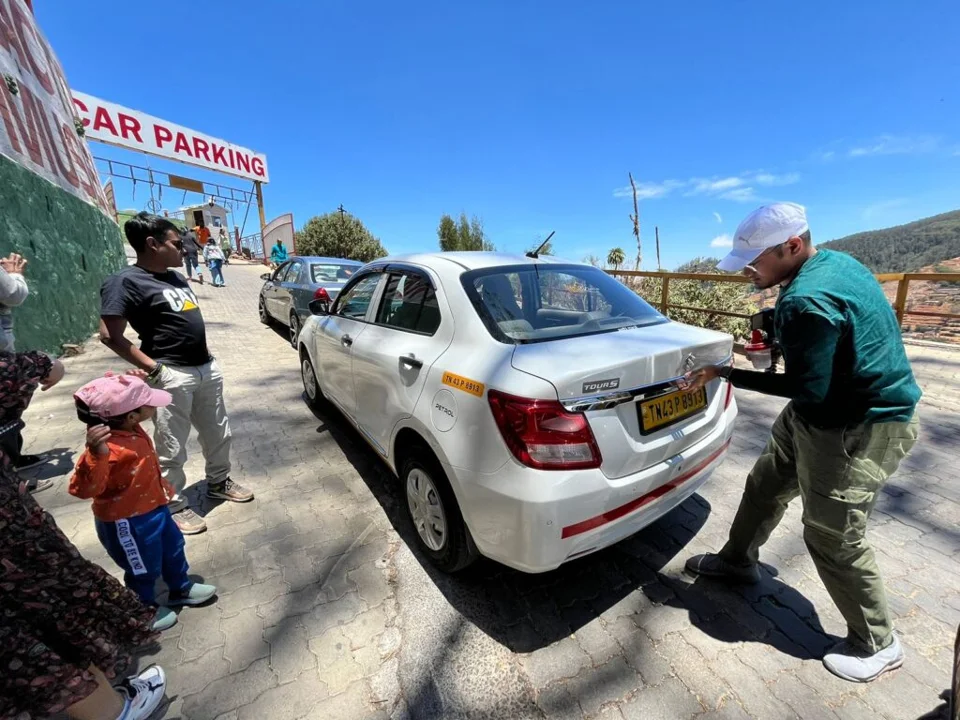
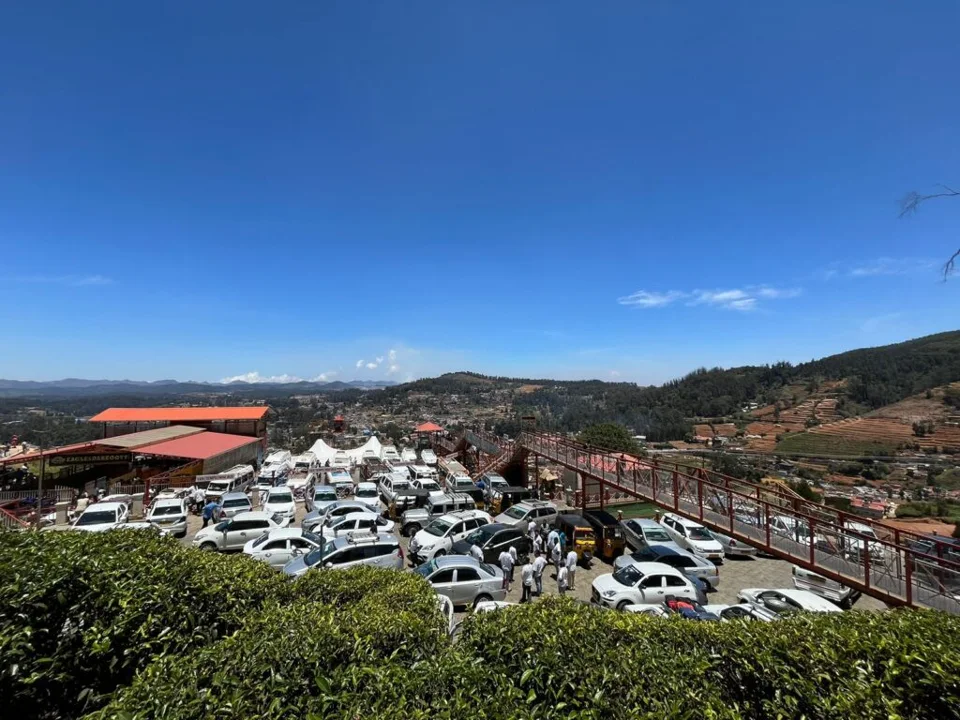
Day 2 we negotiated a full-day cab through the hotel for the standard sightseeing loop. We started at 11am at the tea and chocolate factory uphill. Parking was at queue-on-queue. The factory entry: 20 INR, payable on the spot in cash or UPI.
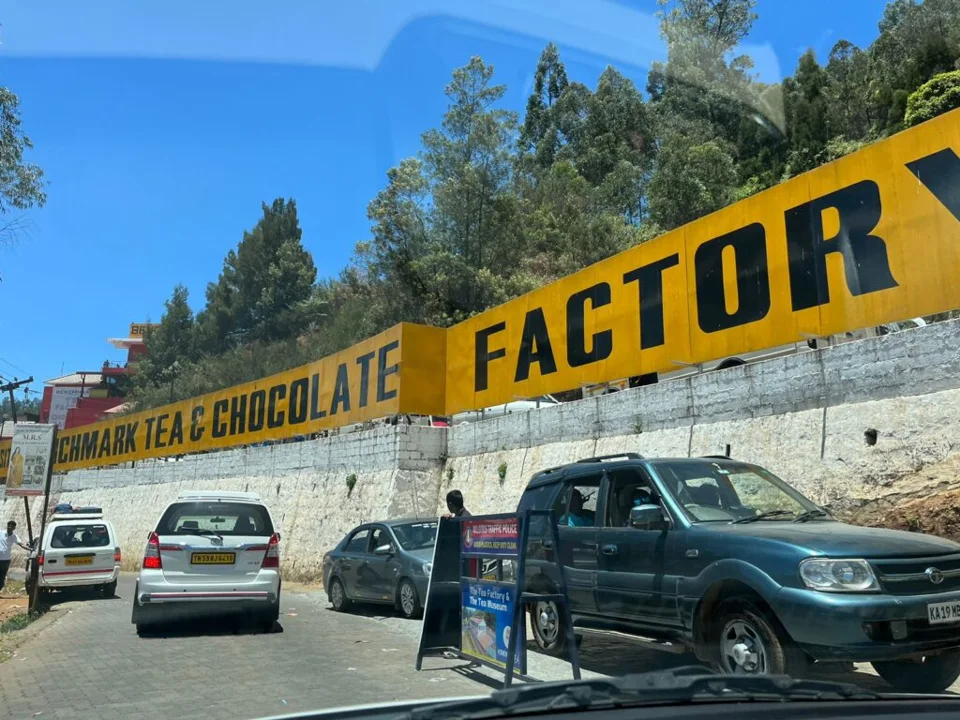
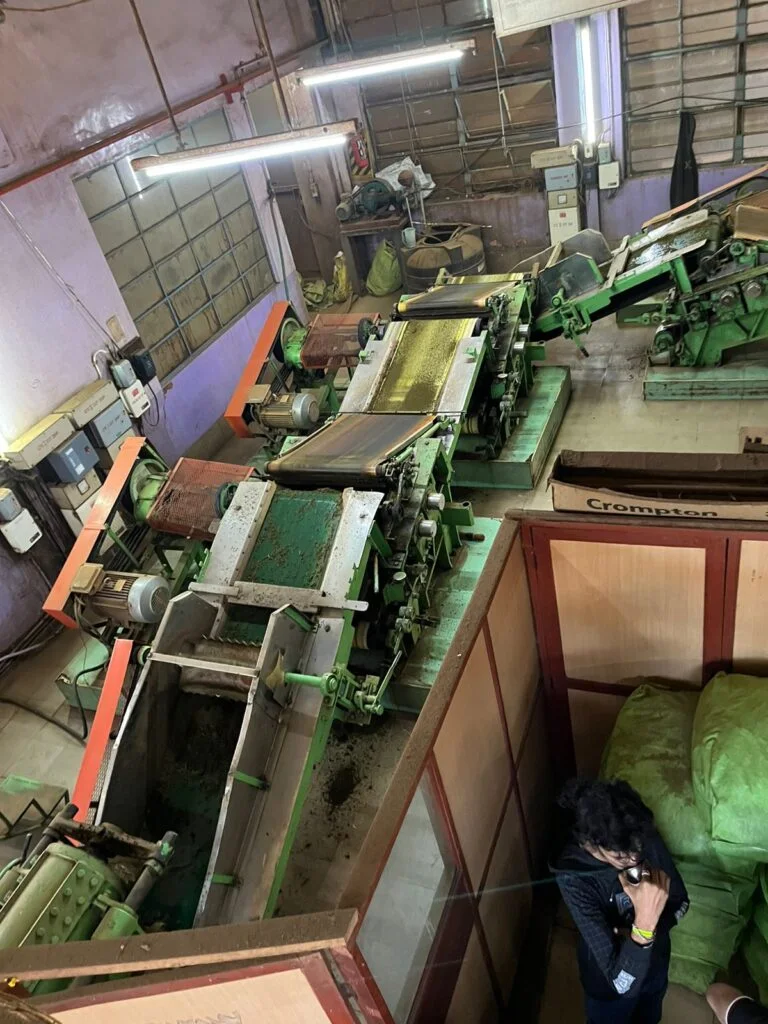
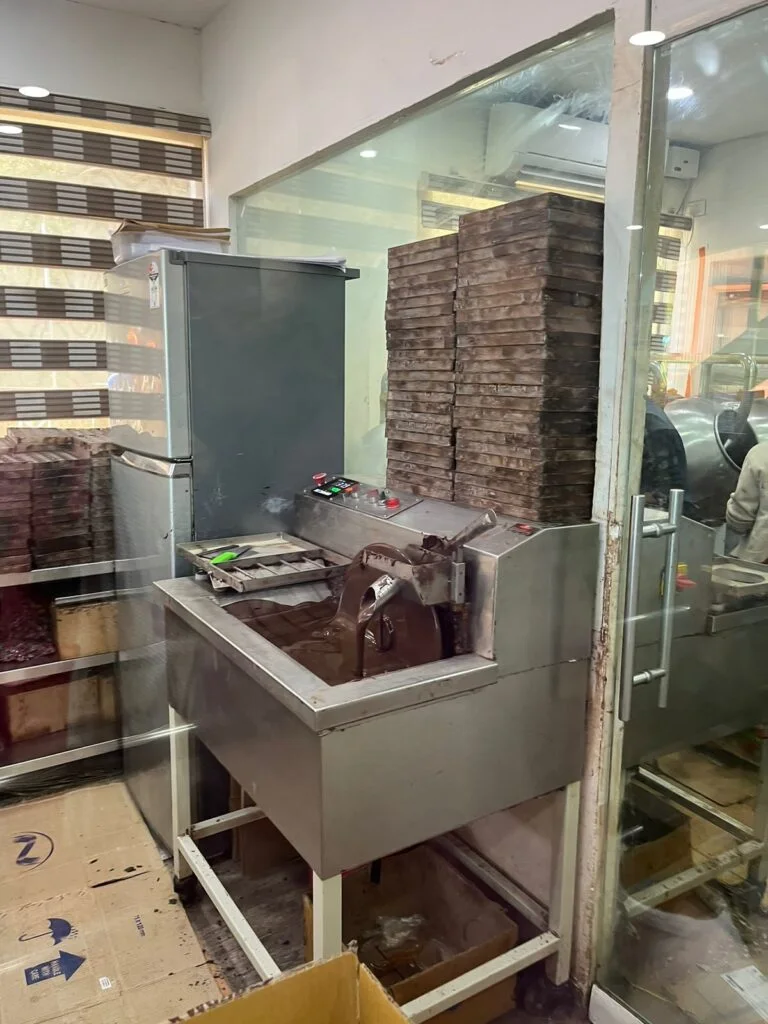
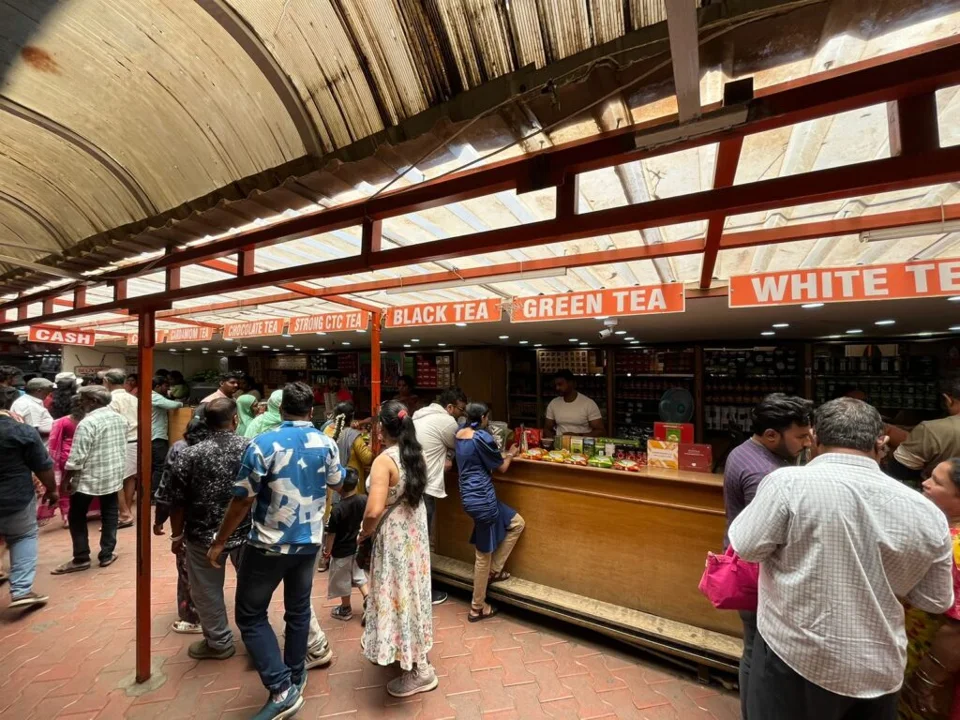
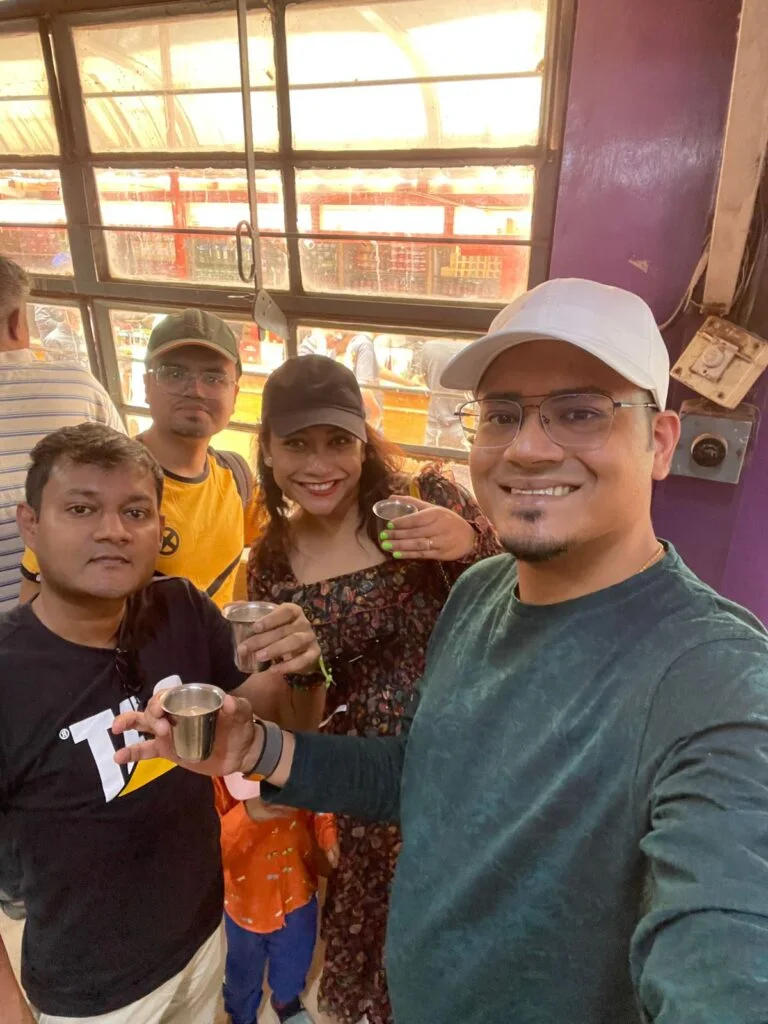
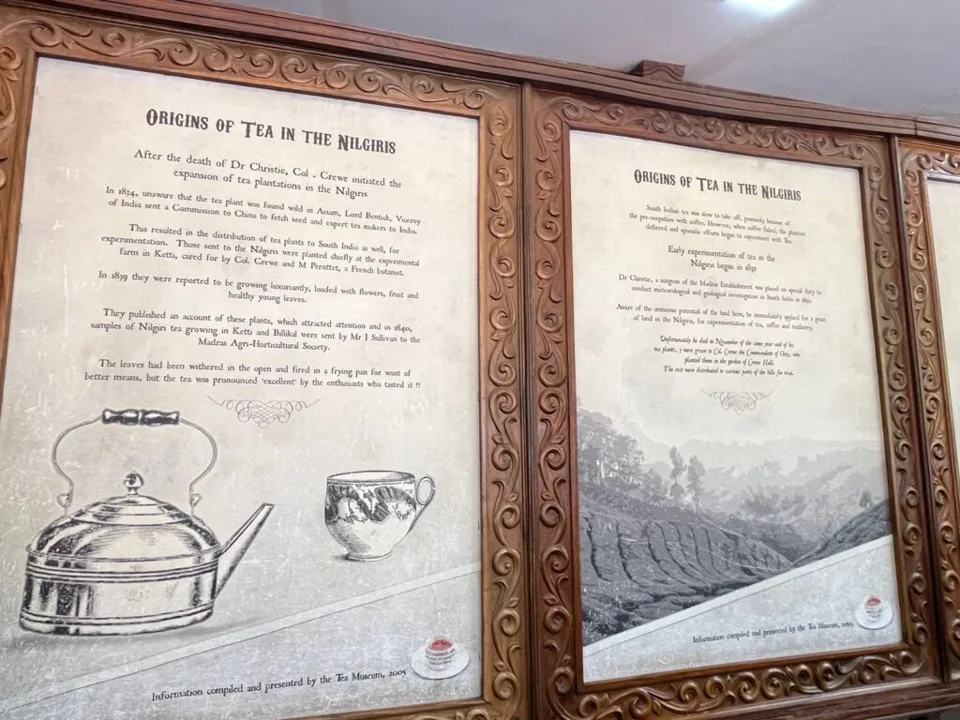
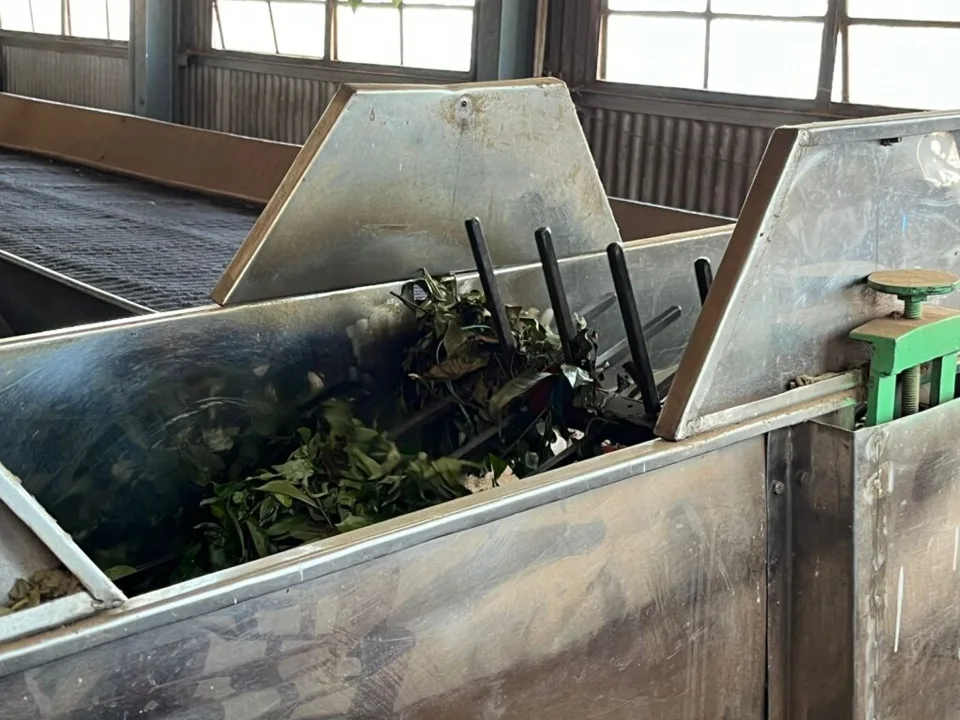
Inside, panels run through tea history and methodology. The chocolate-making side opens up next, with workers visibly producing the popular SKUs. The tour ends with a free tea-tasting and a shop selling locally-produced everything.
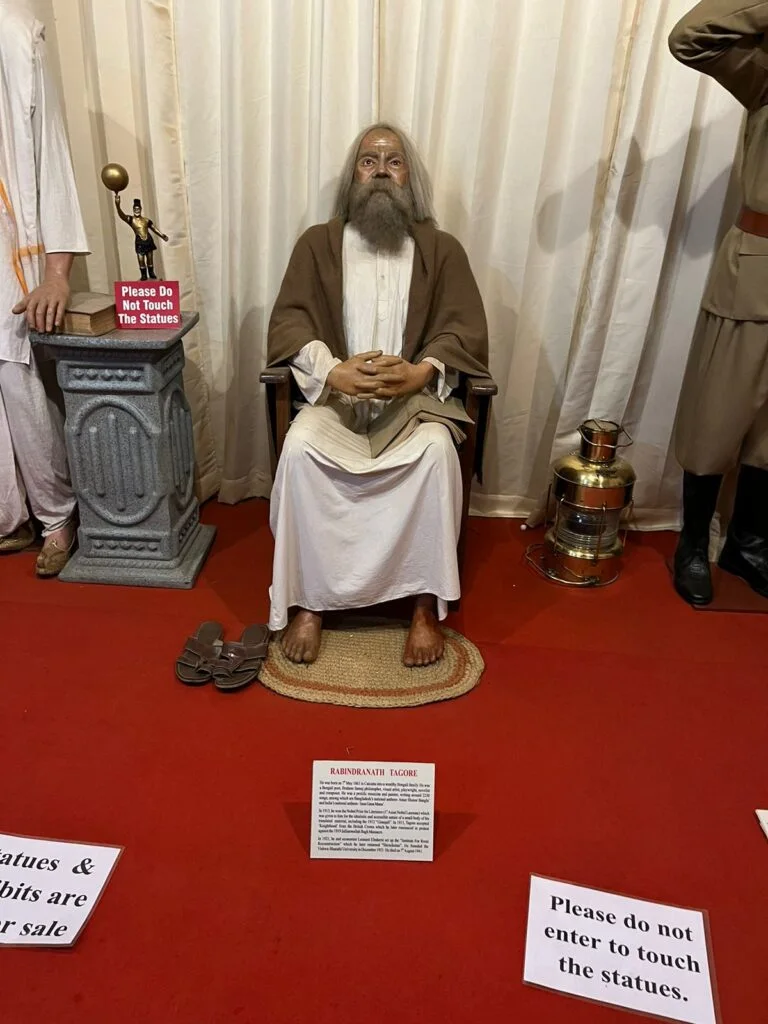
Then the Wax Museum, a short drive away. We stopped at the government-sanctioned textile shop first for some shopping. Wax Museum entry: 50 INR per head. The figures are surprisingly lifelike, several with a real you-look-twice quality. Two from Kolkata stood out.
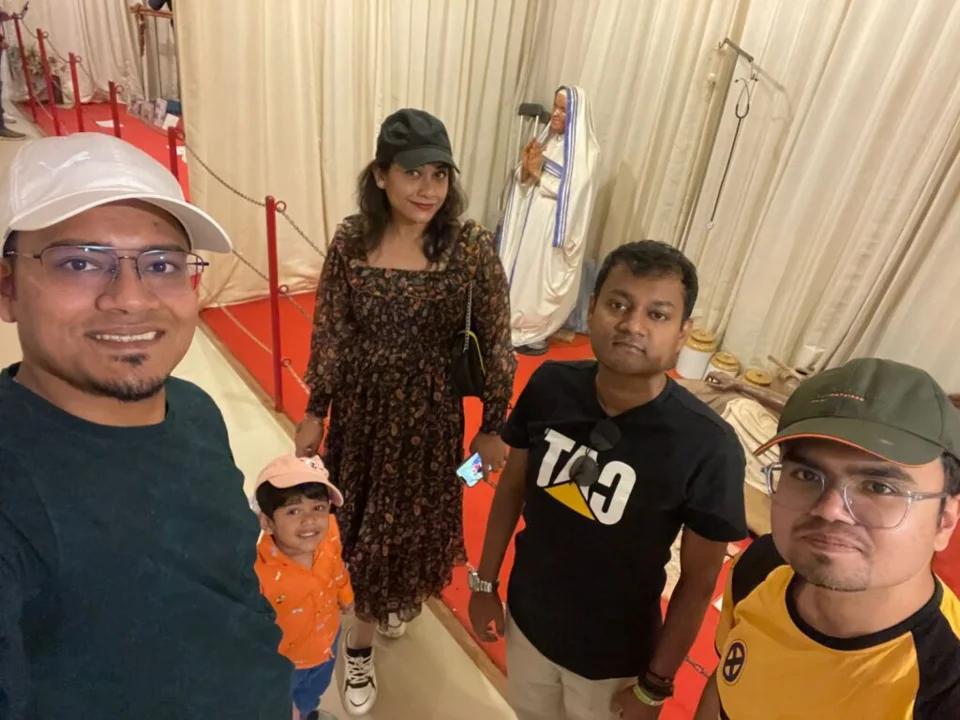
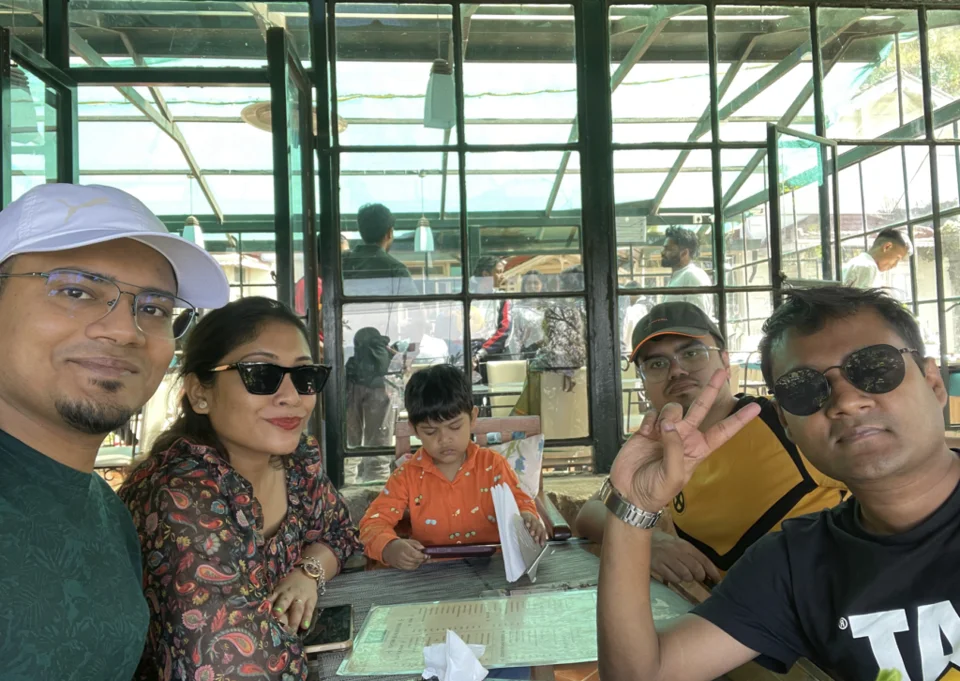
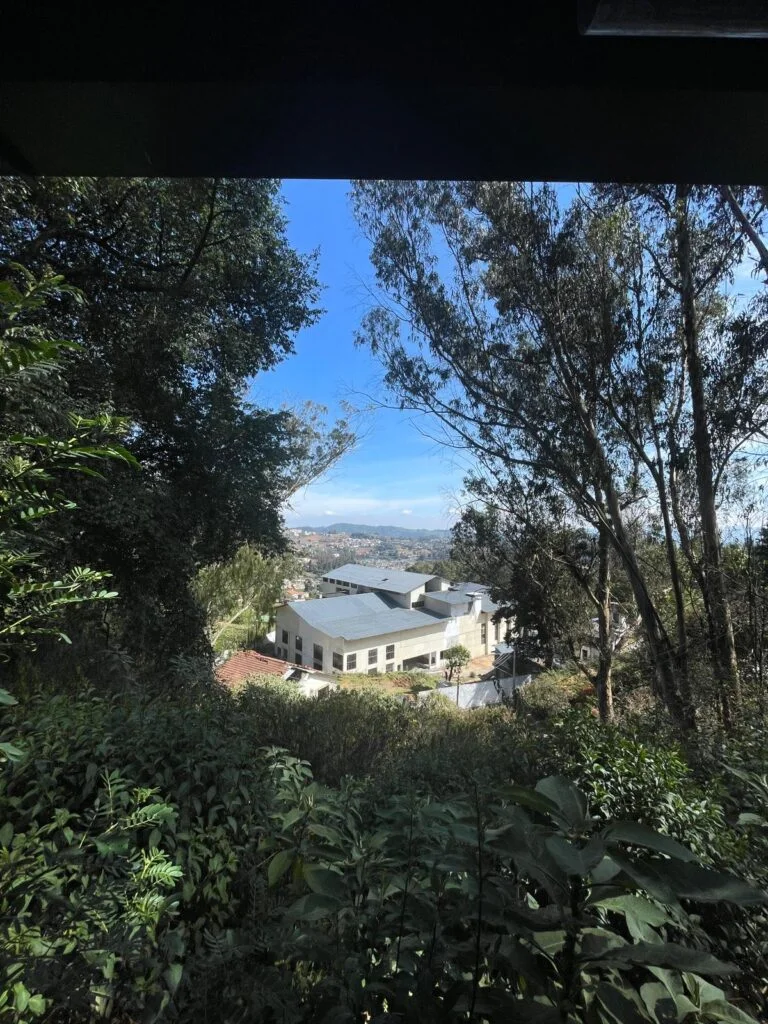
Our driver had a planned lunch spot calibrated for the post-lunch waterfall stop. We pivoted to Earl’s Secret instead. He warned us about the distance and the queue. We took the warning and skipped the waterfall. The road climbed in serpentines into a small English-cottage setup. We miscalculated the wait time and ended up spending the better part of an hour shooting selfies on the lawns.
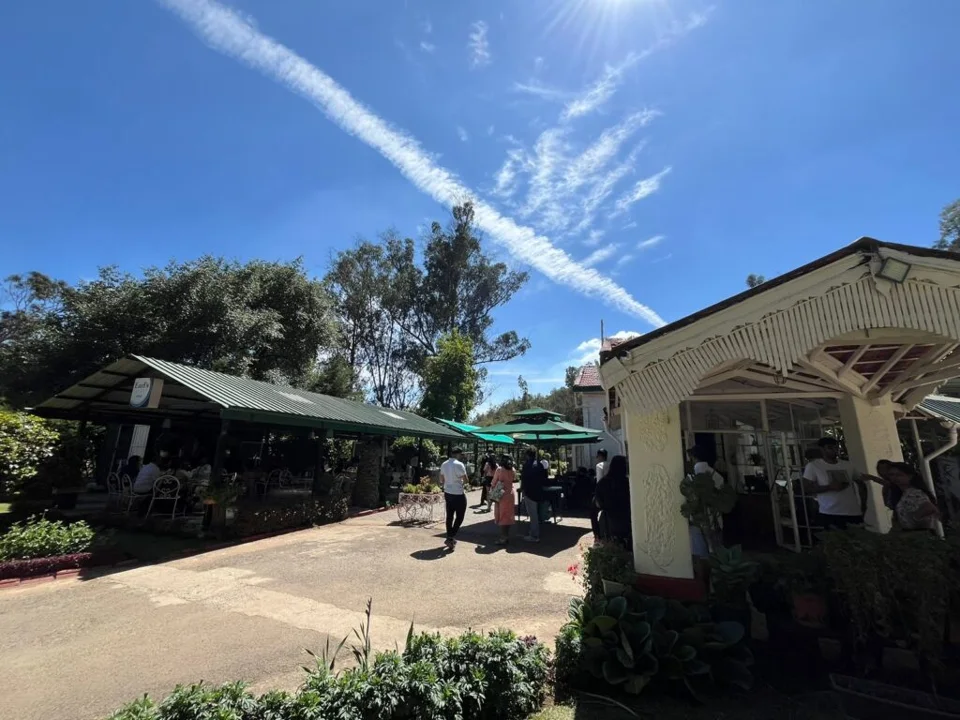
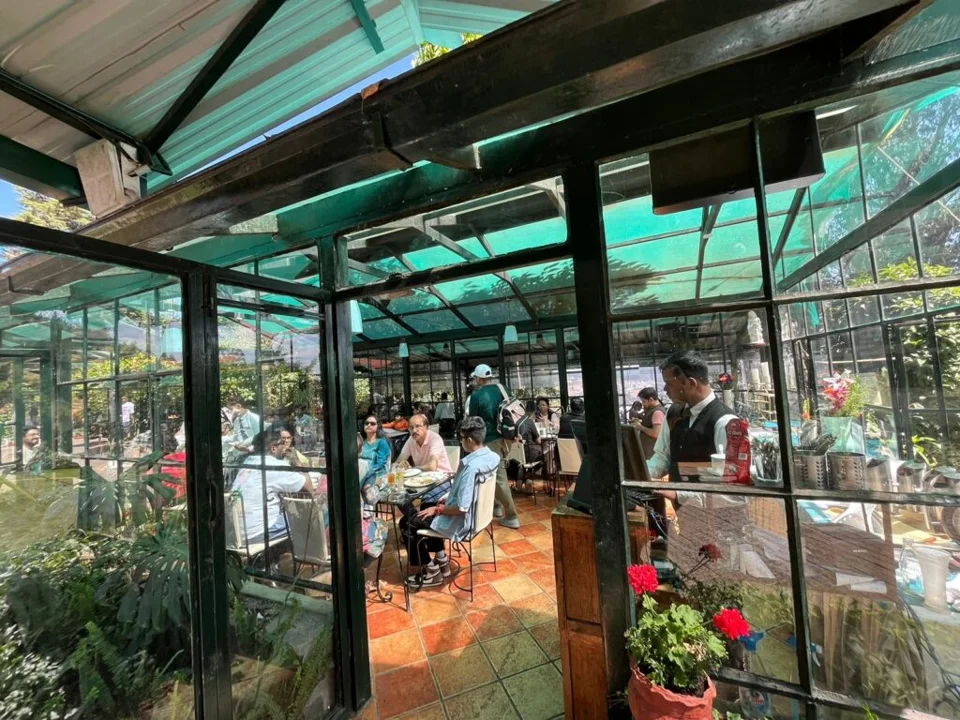
We were eventually seated. Beverages and desserts landed. Mains underdelivered against the reputation.
End of the Road

Almost everyone we spoke to recommended Moddy’s chocolates. We were too full to consider eating any of them on the spot. Plan: rest at the hotel until 4pm, leave at 7pm, board the return bus at 8pm. The Moddy’s run fit between.
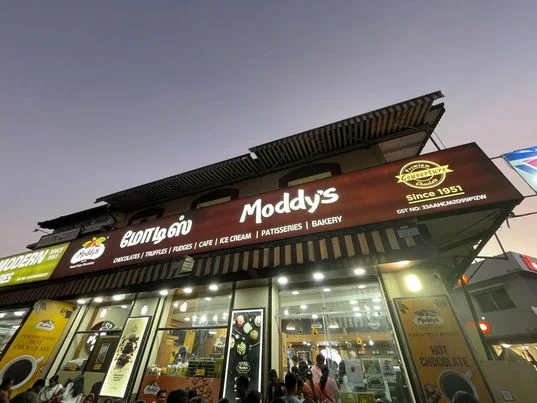
Moddy’s was packed. We picked baked items for dinner and chocolates for after. Pricing was steep — that is what the brand asks for. They run online delivery too. The Streamline return bus was a big upgrade on the inbound: better condition, less crowded, marginally cheaper at 1575 INR per head.
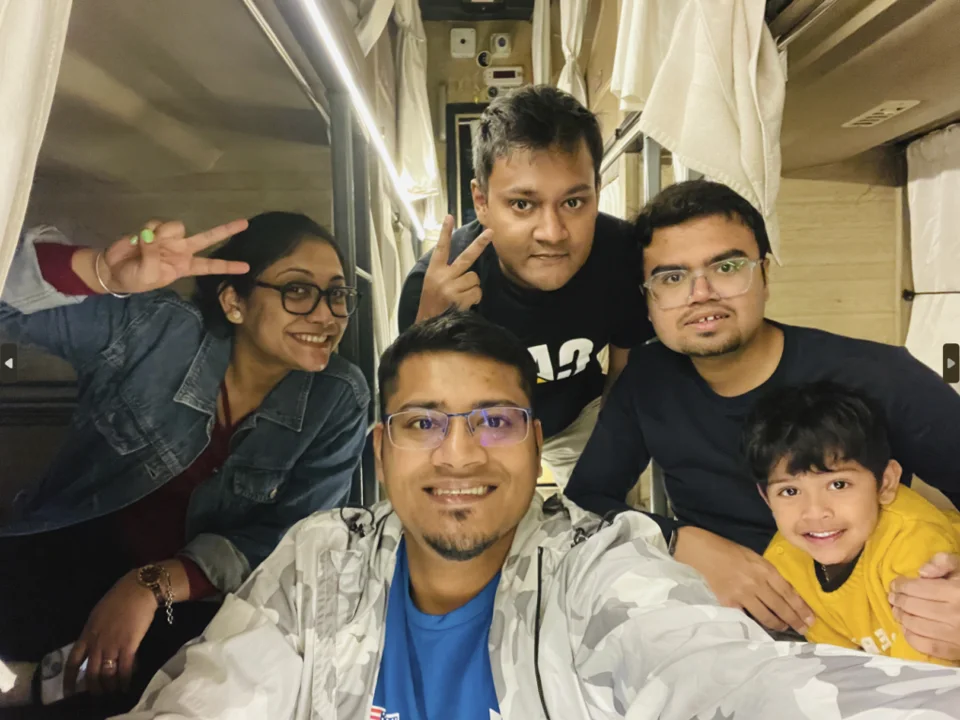
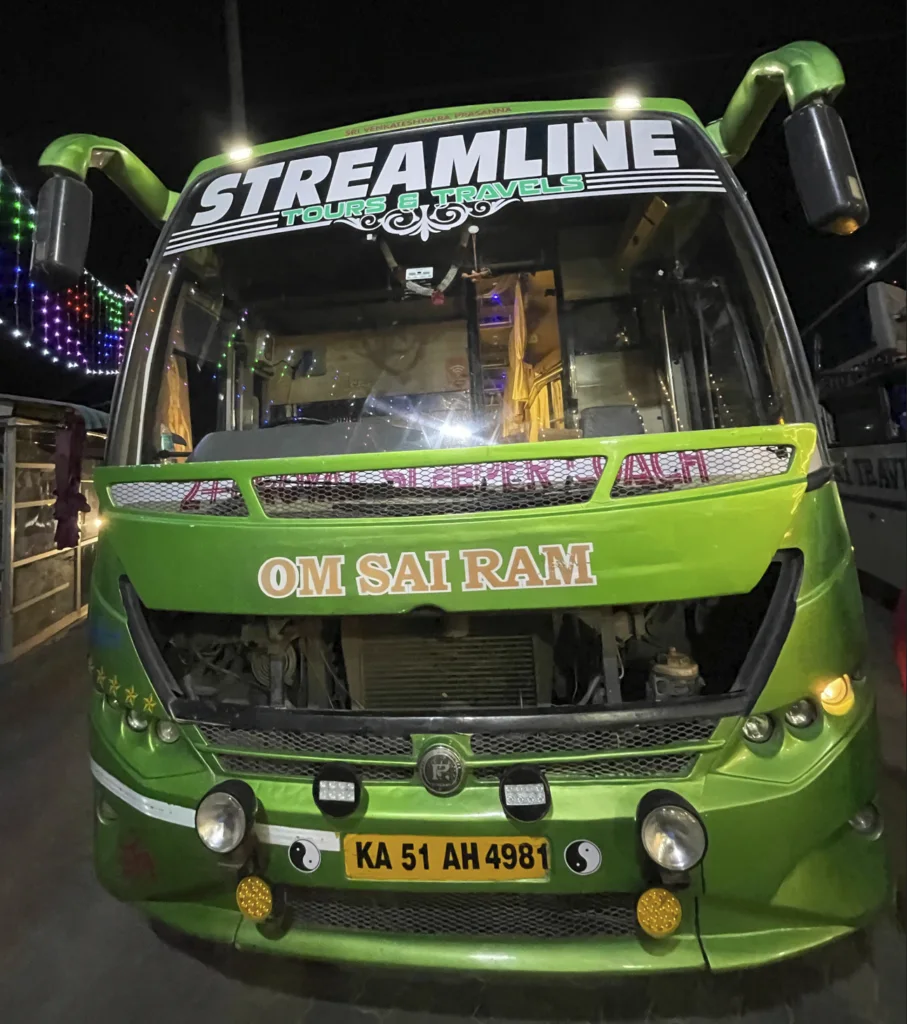
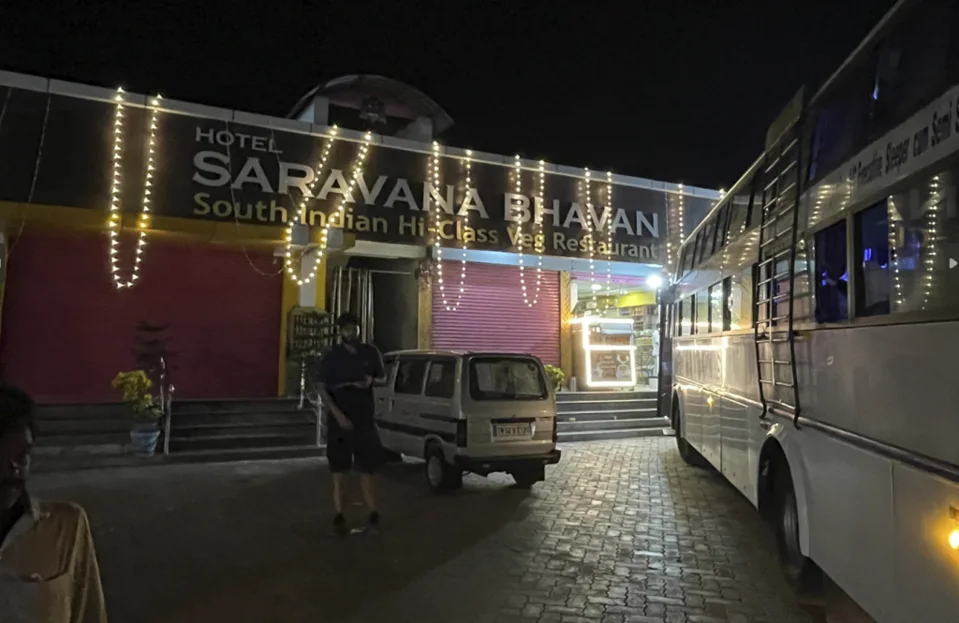
I was asleep within minutes of boarding. By report there was a midnight stop at Saravana Bhavan for a restroom break, with some passenger argument that the staff cut short. We were back in Bengaluru by 4:30am.

Field Notes

  • Coonoor switchbacks. A 30-minute stretch of sharp edge-of-the-road turns. Bring motion-sickness pills if you are prone.
  • Bargain hotels and cabs. Phone-direct beats the online rate often. Autos seem to run on standard rates; do not bother haggling those.
  • Hindi works. Locals are surprisingly fluent. Useful if you are coming from the north.
  • Ooty is touristy and the sun is harsh. Elevation amplifies it in summer. Most spots shut by 7pm; food delivery stops by 9:30pm.
  • Toy train: book a week+ ahead. They sell out. The 4:45pm slot is the most often-available.
  • Calibrate food expectations. Most meals are average for the price. Lean on beverages, desserts, and ambiance.

One Recommendation

The toy train between Ooty and Coonoor. The same line where the Dil Se song with A.R. Rahman, Shah Rukh Khan, and Malaika Arora was filmed. Here is a glimpse of the ride via Instagram @dot.pixelaha:

Breaking out,
Sayantan
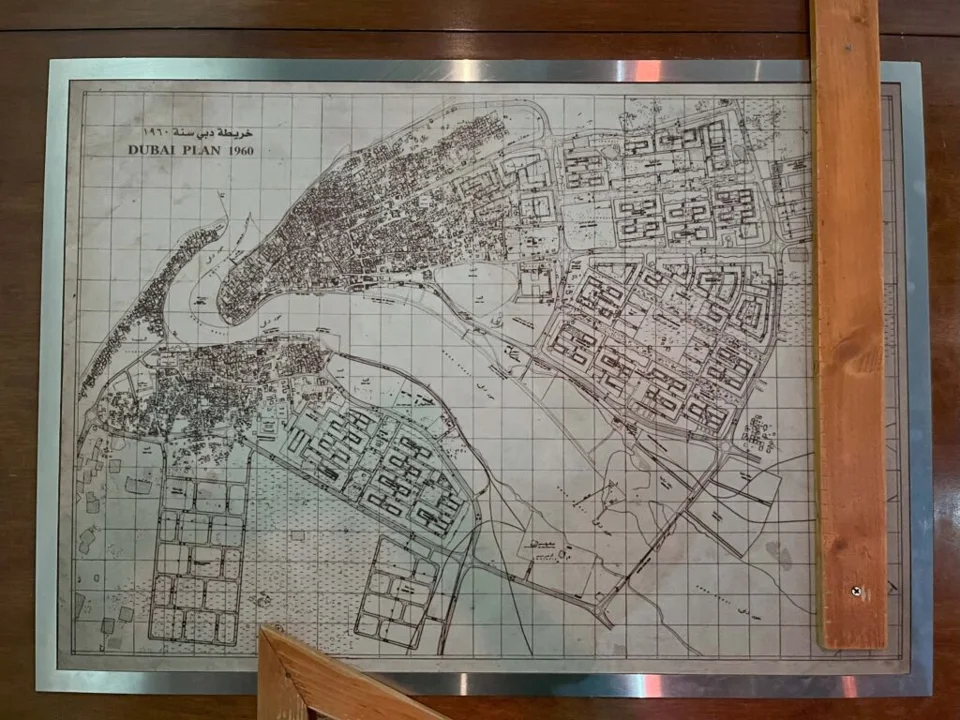
UAE Utopia

The Trigger

Passports for the family had been sitting unused for years. Singapore was the obvious first international trip, but I had already touched down there during a solo Indonesia run in mid-2023. Pivoted to UAE. Diwali week 2023, work was chaotic, and the family had not flown internationally as a unit before.

Tickets locked in April for reasonably priced fares. The dates fell across the Diwali week, the kind of break the year had been earning.

Visa

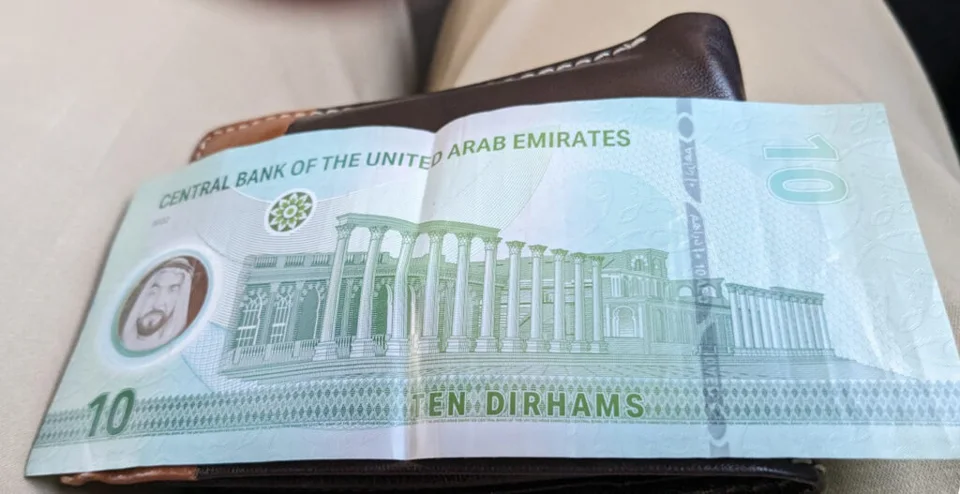
Used Makemytrip’s online visa flow. Standard processing is under a week. The application fee for the 30-day single-entry e-visa is just over 7000 INR. Documents needed: passport scan, photo. Genuinely the most painless visa process I have run for an Indian passport.

Two of our four visas hit a delay on the embassy side. Took two weeks total instead of the usual six days, and a lot of follow-ups with the Makemytrip support line. Released to inbox eventually.

Currency

Converted to AED at the Kolkata branch of Orient Exchange. The plan was to keep most spend on Niyo cards — instant UPI top-ups, low forex markup.

Dubai airport runs a 24×7 currency counter that takes INR. The exchange rate there is materially worse than back home; treat it as fallback only.

Hotel

My booking.com history struck again. This was the saga: locked Ibis for a 6-day trip in January at 1.15 lakh INR for what would have been a friends trip; that trip collapsed.

Replanned with family. Switched to Golden Tulip Media Hotel for the location and shuttle service: ~90k for 5 days.

Reconsidered for parental fatigue against the premium location and pivoted to Hampton by Hilton Dubai Al Seef in the Dubai Creek area: 75k INR. New, well-reviewed.

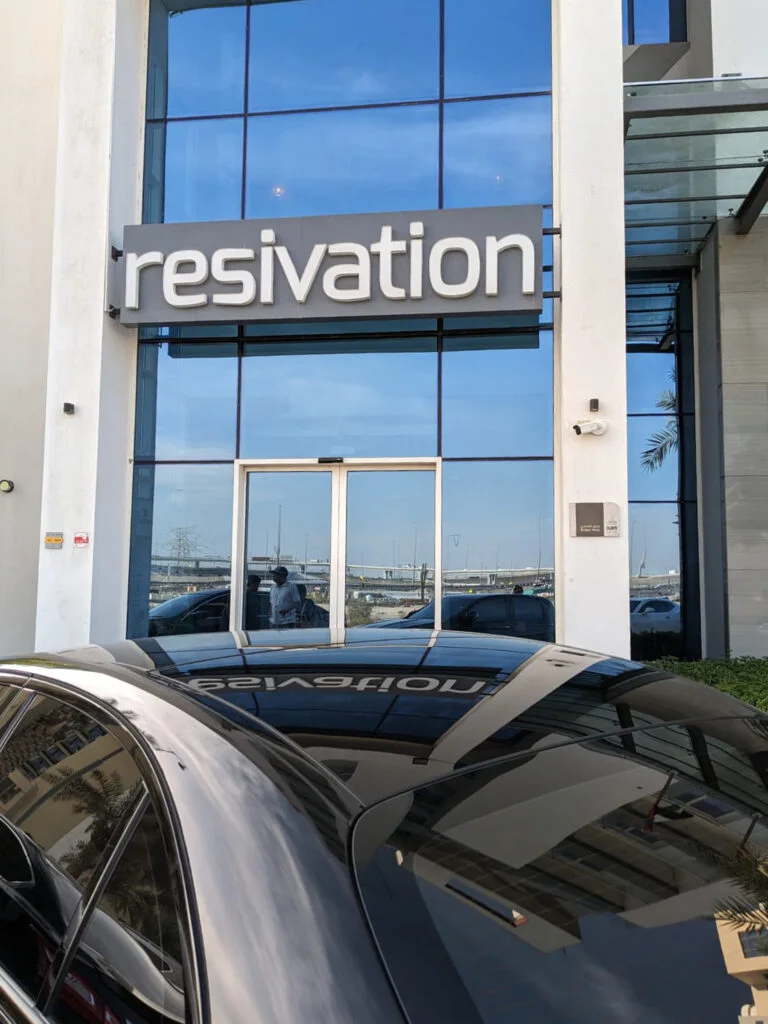
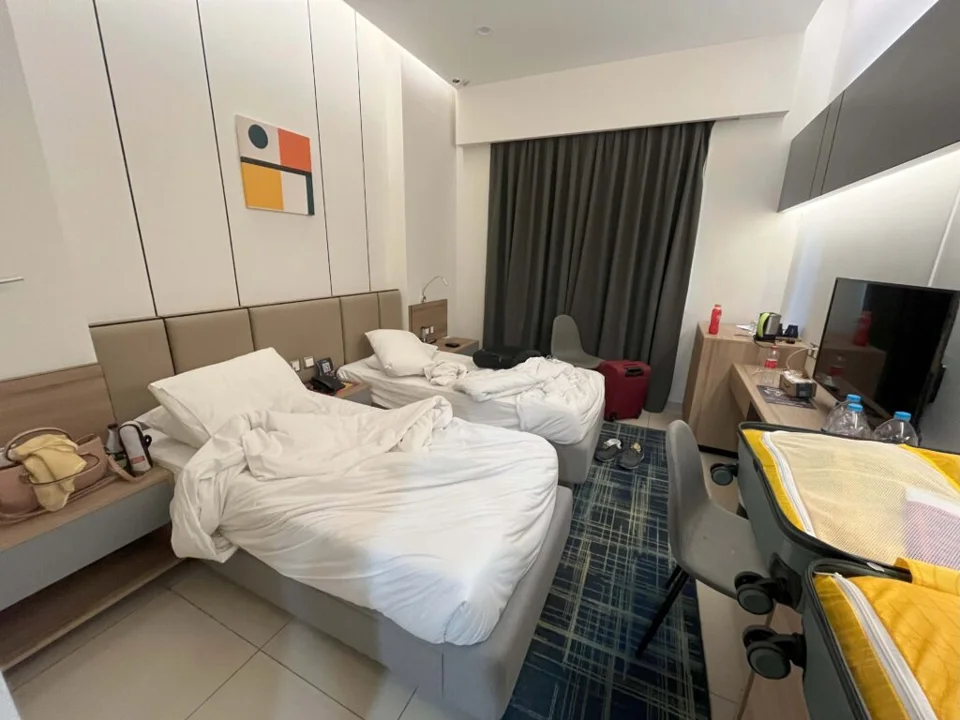
Three months out, I stumbled onto Resivation Hotel at 45k INR for the same window. Long-stay format aimed at office travellers. Pan-Asian restaurant on premises. Strong online reviews. The savings paid for the rest of the trip’s exploration. Bonus: a complimentary shuttle to Al Furjan metro on the Red Line.

Resivation sits on the outer edge of Dubai with active construction all around. Shuttle to Al Furjan runs every 30 minutes on weekdays, 7am-7pm. On weekends it goes to Ibn Battuta mall at 2pm and JBR at 5pm. Supermarkets in walking distance: 1 AED tea, snacks under 5 AED. The attached Thai restaurant runs a 30 AED breakfast buffet daily; lunch and dinner are à la carte and the food is properly Thai. 24×7 gym, luggage room, lobby. Room cleaning is every other day.

Smoking was technically not allowed in the room. In practice, room 109 reeked when we walked in. There is a designated smoking balcony on the second floor that nobody seems to use.

Flight

Outbound, 9 November (Thursday): EK-571, Kolkata-Dubai, scheduled 8:55am (delayed 30 minutes), arrival 12:50pm, 5h25m. Emirates was what an international flight should be; the only weak spot was the in-seat screen quality and the headphones. Boeing 777, economy. T3 arrival at DXB was seamless.

The immigration officers check the e-visa, take a photo, stamp the passport. Family members can go through together — ours took ~20 minutes including the queue. Some of the friendliest immigration staff I have encountered. Each arrival also gets a complimentary SIM with 1 GB loaded. Airport pickup via Dreams Star UAE: 2930 INR to the hotel.

Return, 13 November (Tuesday): AI-906 Dubai-Chennai (departure 23:10, arrival 04:45, 4h05m), then 3h20m layover, then AI-786 Chennai-Kolkata (08:05-10:40, 2h35m). Air India ran the same way it runs domestic. Full flight with food and alcohol. Had to clear immigration and recollect baggage at Chennai because the second leg counts as domestic.

Day 1: Arrival and Global Village

Hotel Resivation by 3:30pm. Check-in was prompt; rooms 102 (king) and 109 (twin) on the first floor. Tea, quick nap, then UberX out at 6:40pm. Tesla Model X, my first ride in one. Global Village by 7:20pm, total 2100 INR.

Tickets at the counter or online. No daily entry cap. Senior citizens (75+) free. Standard ticket: 620 INR per head.

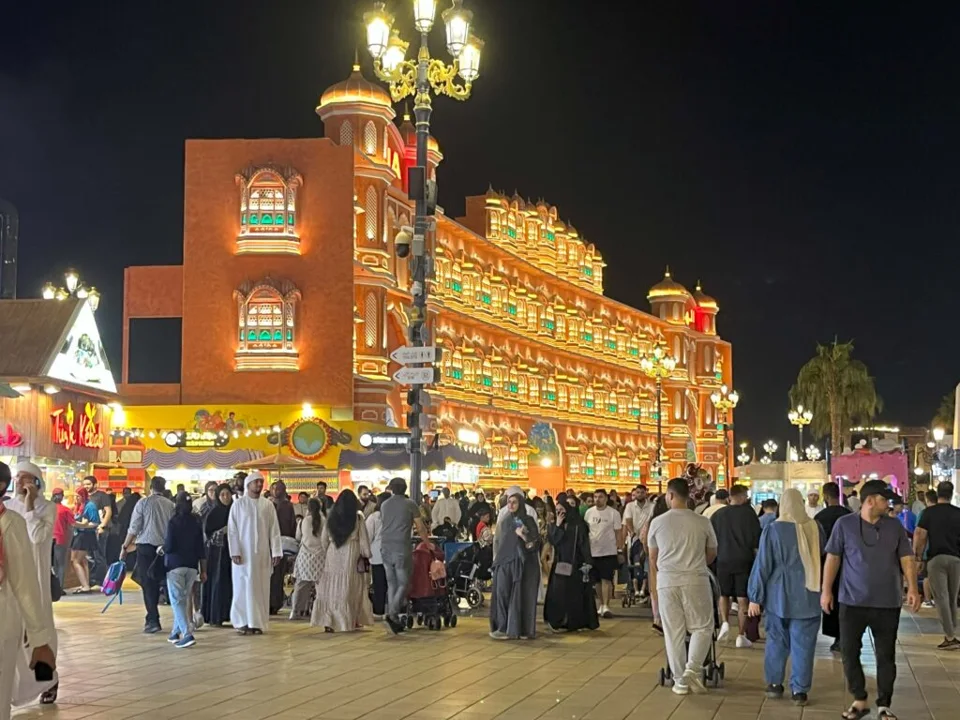
Each pavilion is sponsored by a country: shopping, food, interactive bits. Shopkeepers call out, customers haggle, the whole layout works. A few entire continents (South America, Europe, Africa) get a single pavilion, which felt off.

The India Pavilion is unusually large — built around a Red Fort facade. The food was UAE-Indian, not Indian-Indian. Kashmiri shops were heavily represented, North Indian flavour dominating the rest.

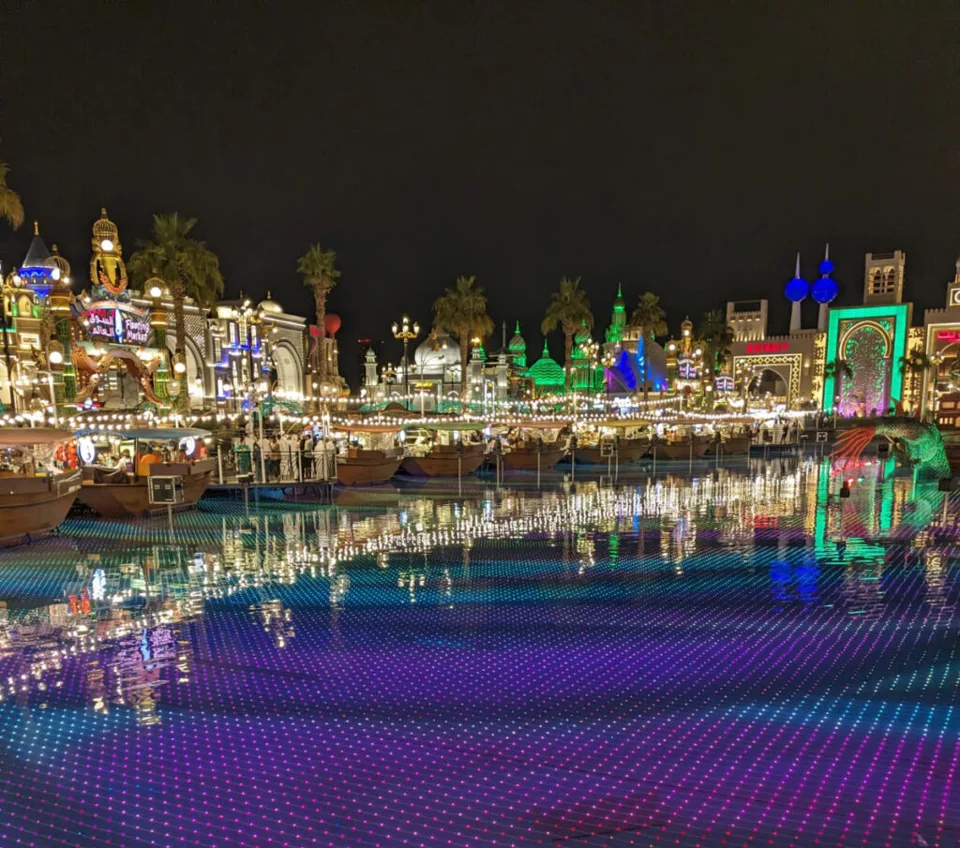
The central lake runs a Chinese Dragon theme. Across from it: a main stage with live music, with stairways and ground space full of resting visitors. Halfway through, we acknowledged we were not making a real dent in the place — too vast, plus jetlag. An attached amusement park including Ripley’s Believe It or Not stayed in the unexplored column.

We walked out through the wrong gate (a real cost in distance to the Uber pickup). Cab back at 9:20pm, hotel by 9:45pm. Same 2100 INR for the return.

Day 2: Six Emirates Tour

Six Emirates full-day tour via Viator: 29,800 INR. Capacity 6 max, advertised return by 4:30pm, actual return 8:30pm.

Major, our driver-and-guide, picked us up at 9:30am sharp. Format: Dubai overview from him, then a cruise through the others with hard pitstops. Abu Dhabi was deliberately excluded — needs its own day.

First emirate after Dubai: Sharjah. Al Qasba is a canal-side complex of cafes, boats, shops, and a Ferris wheel in the distance.

Sharjah Art Museum was closed (Friday). We pivoted to the Quran Roundabout — the intersection of court, library, mosque, and cultural building.

Third emirate: Ajman. Major routed us through the fish market on request. Local fishermen selling every kind of fish, crab, and lobster you can name. Quick stop at Ajman beach for sand and the cold Indian Ocean. Ajman is popular with tourists who want alcohol — Sharjah is dry, so the overflow lands here.

Fourth emirate: Umm Al Quwain, the smallest. Lunch stop while Major broke for afternoon prayer. Most rustic of the lot, no major tourist anchor, the inner roads showing wear.

Northernmost emirate: Ras Al Khaimah. Long drive from UAQ. Desert on either side, occasional camels along the highways. The road still carries painted distancing markings from the Covid era.

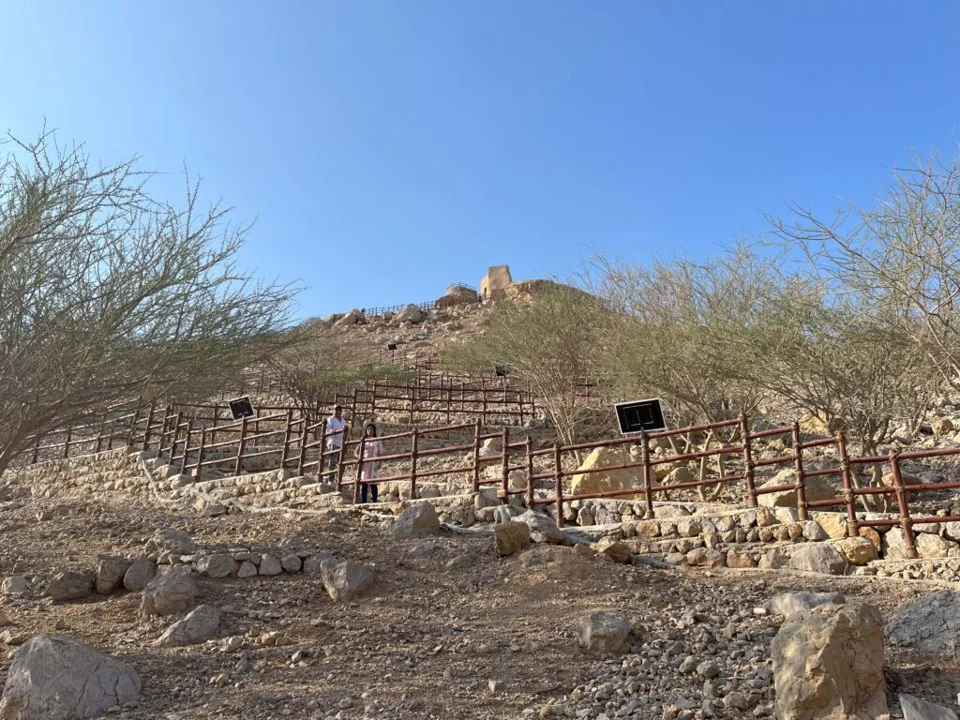
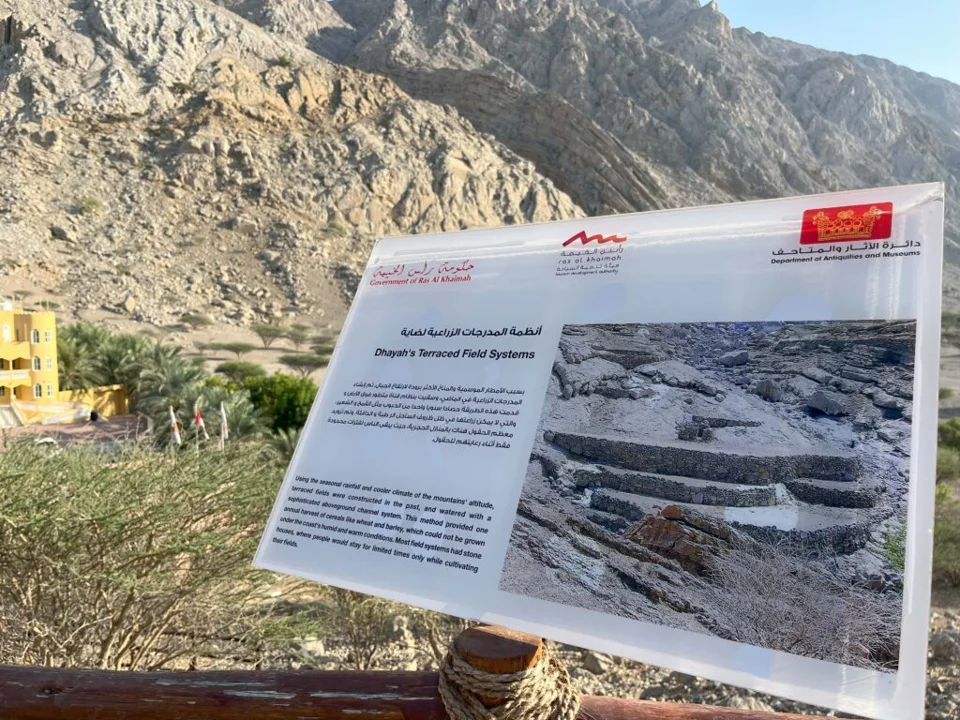
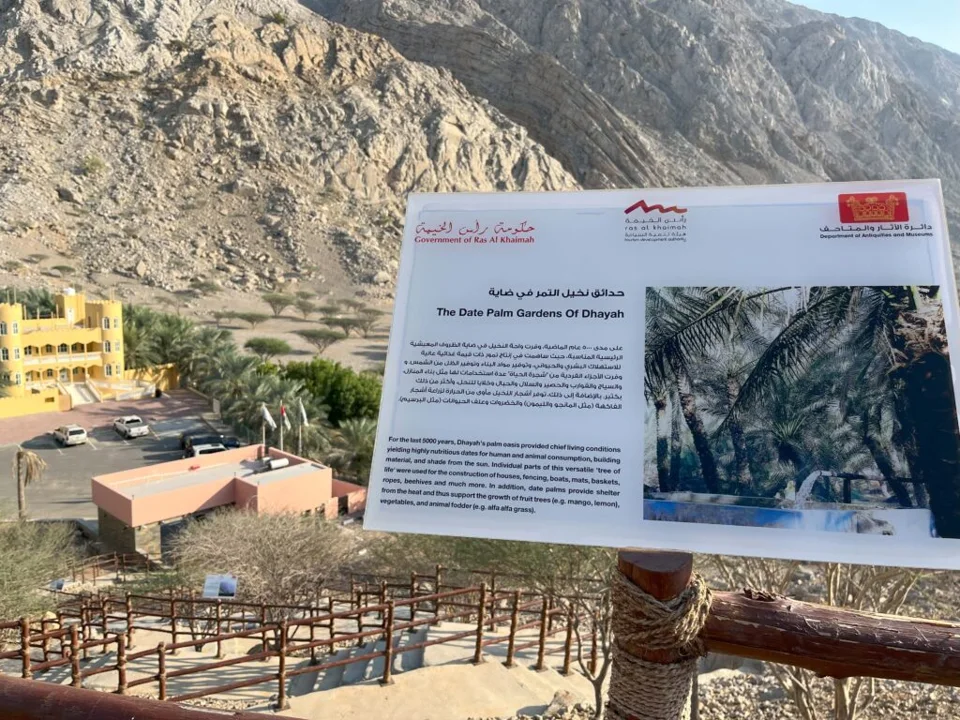
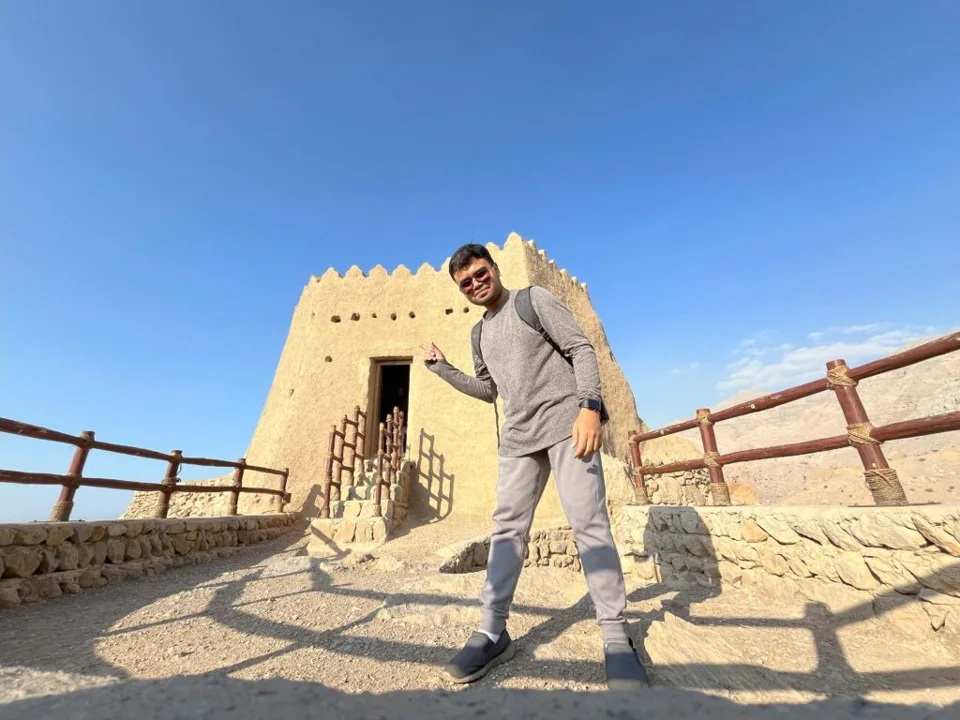
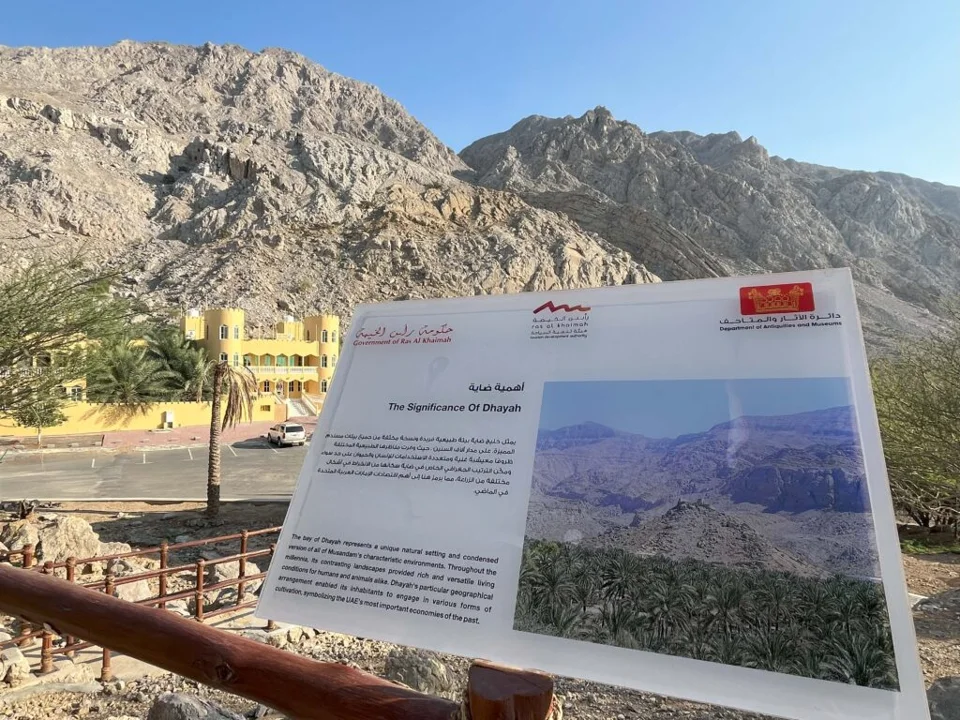
Stop near the Oman border at Dhayah Fort, the highest hilltop fort in UAE. We passed Sheikh residences on the way. The fort is 250+ steps to the top for a panoramic of RAK city.

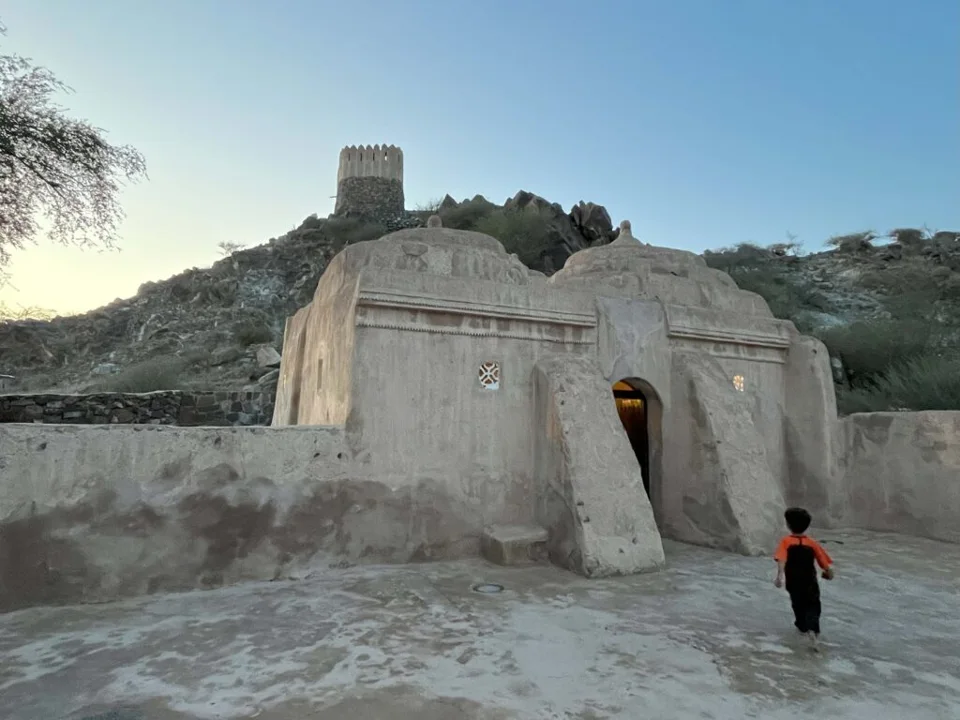
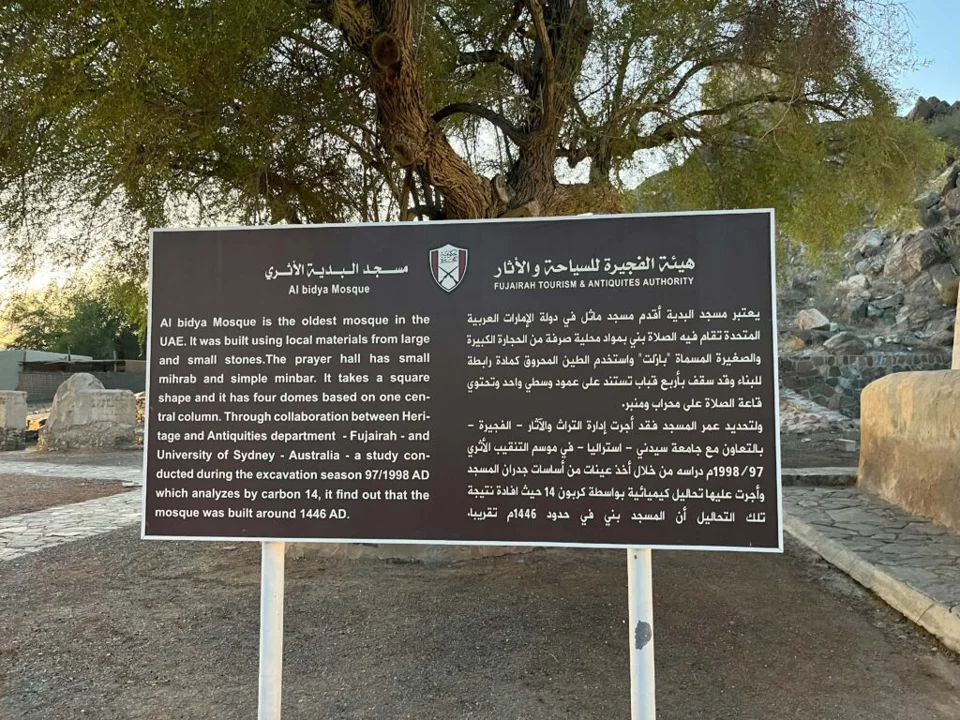
Final emirate: Fujairah. The headline stop here is Al Bidya Mosque, the country’s oldest known mosque (until a 2018 discovery in Al Ain dethroned it). Still in active use. Also called the Ottoman Mosque. Built from local stone and mud bricks finished with whitewashed plaster. The roof has four squat helical domes resting on a single central pillar that doubles as the ceiling support. The small mihrab on one wall faces Mecca.

Vintage car museum at Fujairah on the way back as night fell. Re-entering Sharjah we passed Khorfakkan Amphitheatre and the artificial waterfall built next to it.

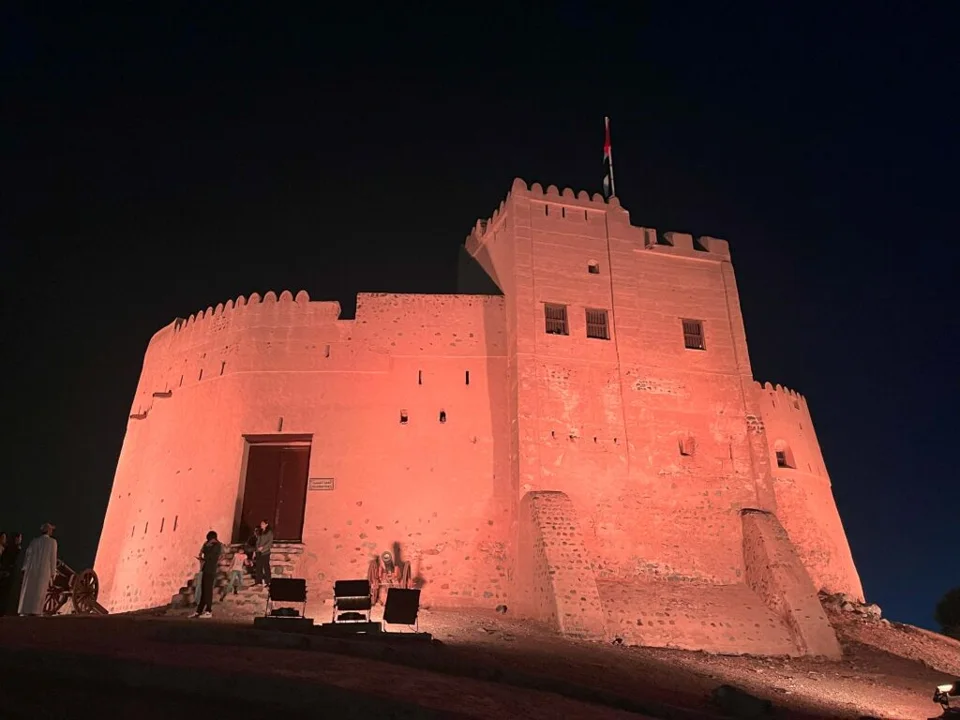
Final stop at Fujairah Fort for a quick photo. Then the long road home.

Day 3: Dubai Mall and Burj Khalifa

Heavy hotel breakfast, departed 11:16am. UberX was a Lexus this time (another first). Downtown Dubai in 30 minutes. Off at Dubai Mall P4 by 11:46am, ride cost ~2800 INR.

Pre-purchased the Klook Pass Dubai for three activities at a discount. The pass unlocks a 30-day window once the first activity is used. Super Saver Mode: ~20 activities exchangeable for tickets. Four-person pass cost 24,000 INR.

Dubai Mall: Underwater Zoo on the top floor extends down to the Dubai Aquarium on the ground. Show the QR at the counter for physical tickets. Started top-down with the aquarium.

Zoo sections: a water exhibit running multiple fish families; a night-jungle area for nocturnal mammals; a tropical jungle where birds fly free; a separate enclosure with crocodiles guarding eggs; and a paid penguin enclosure we skipped. Lunch at Nando’s on the LG, since the next activity was time-bound and convenient.

After the chicken feast, the hunt for the Burj Khalifa entrance through the Mall app. Directions were unclear; nearby store staff were not helpful; locals eventually showed us the way. Burj Khalifa offers prime and non-prime slots in three configurations: Level 124-125, Level 148, Sky Lounge. We wanted prime sunset on Level 124-125. Klook Pass covered non-prime, so I bought the prime upgrade separately on Klook at 22,100 INR.

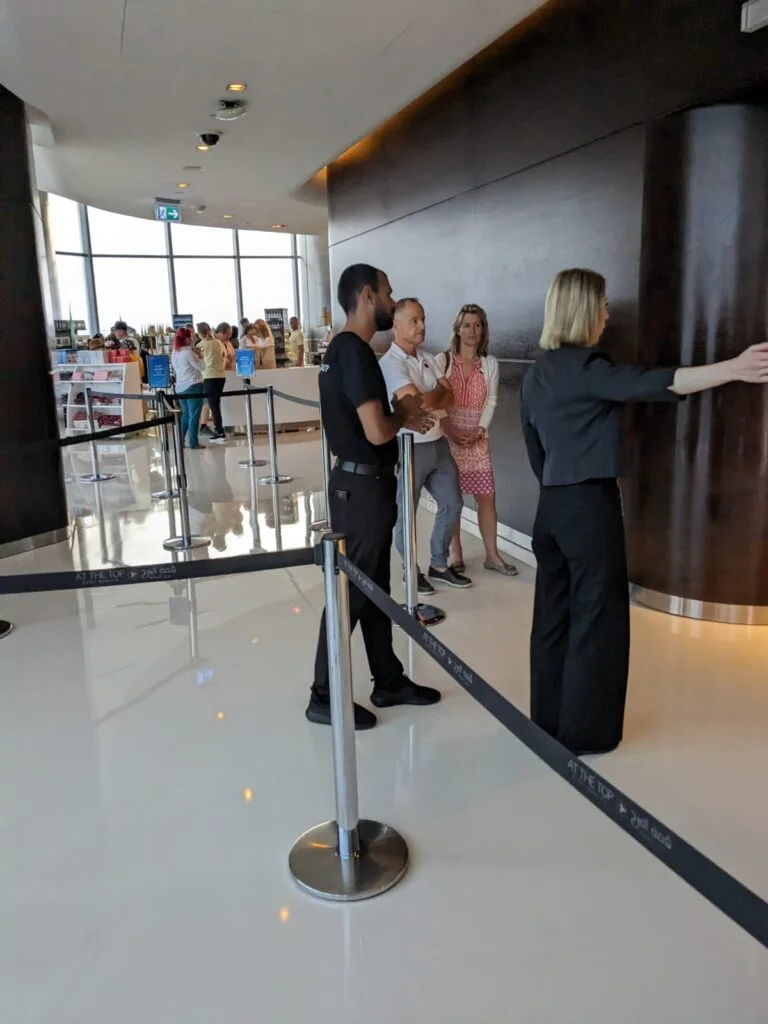
The procedure: queue, bag check, phased elevator entry. The elevator itself is a thing. Ears popped going up, with light animations on the LED panels marking the floors.

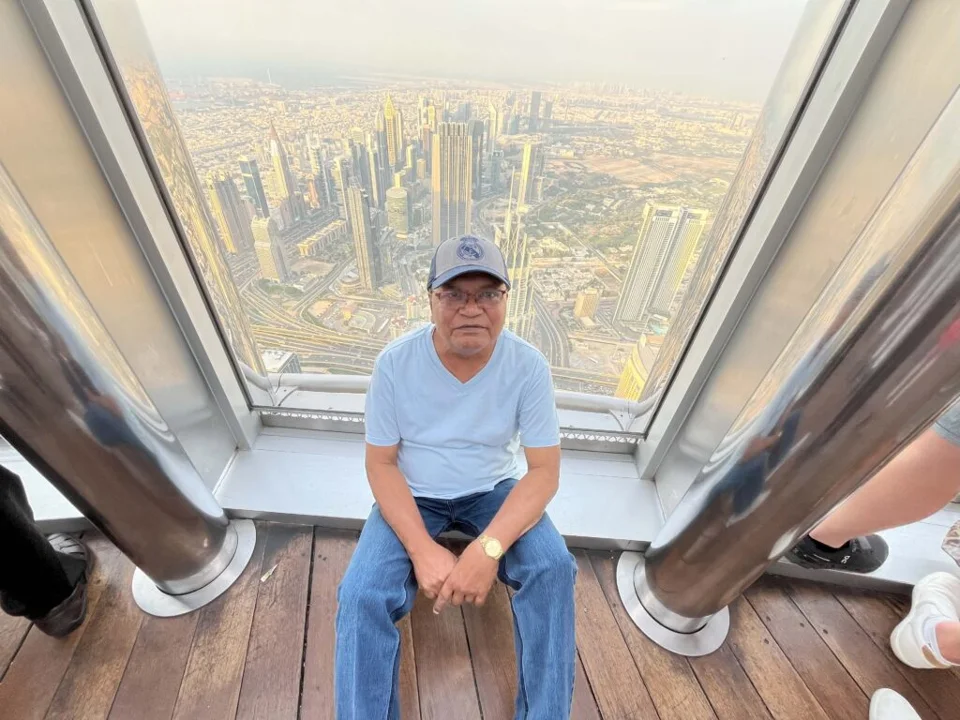
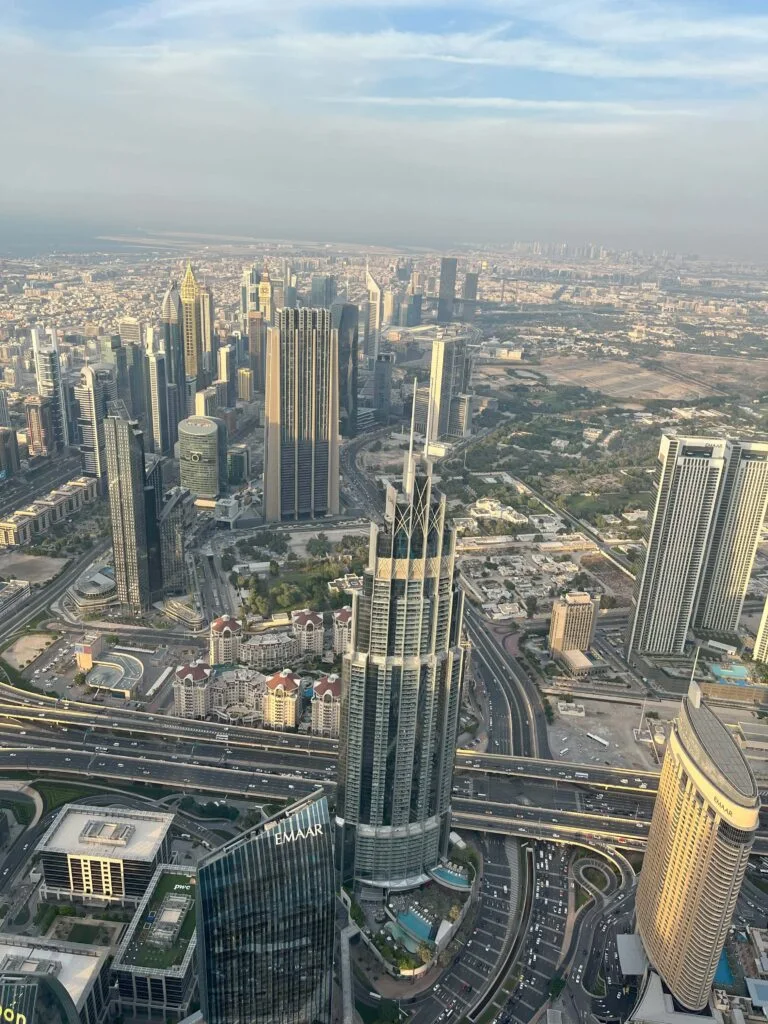
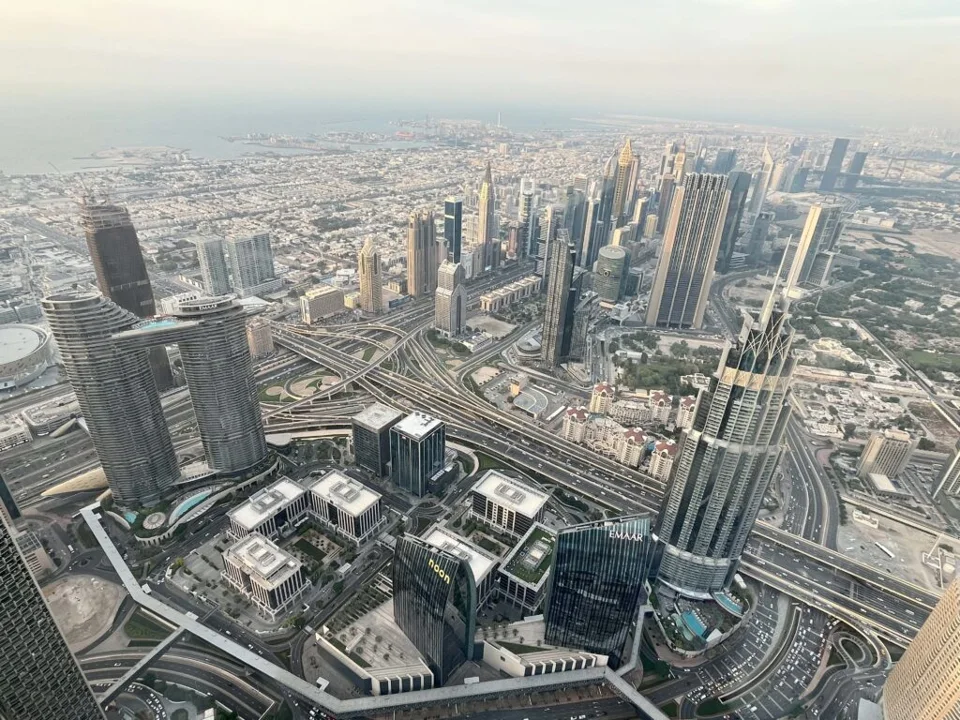
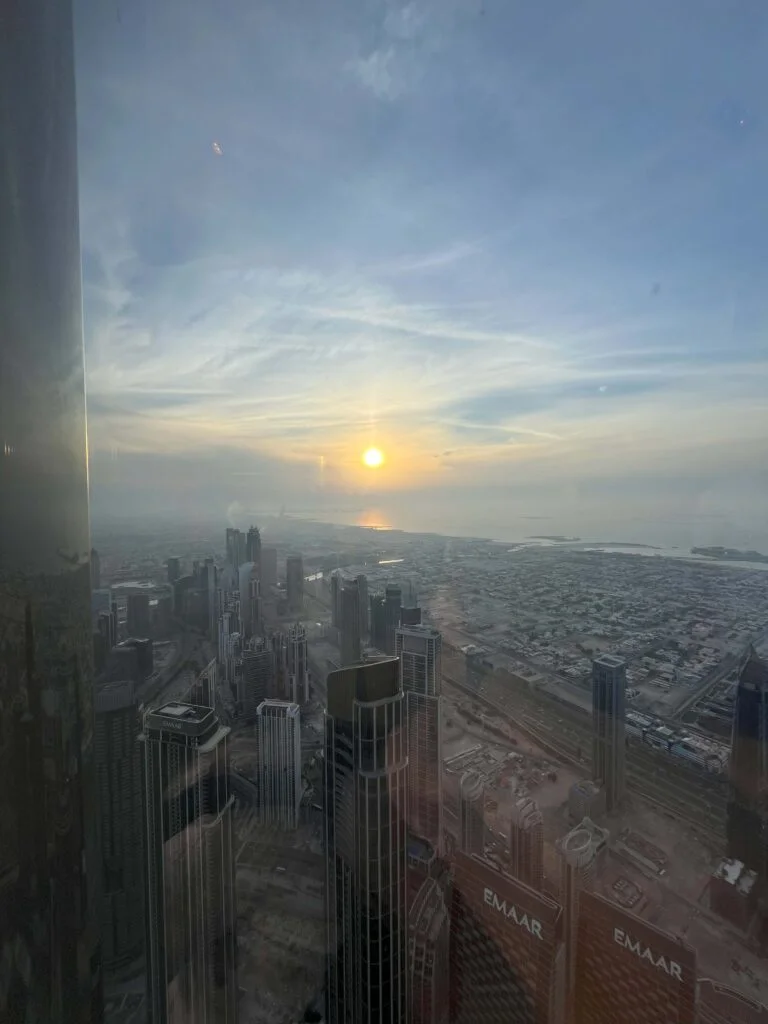
Top floor was windy. Near-360° view through toughened glass over the Dubai skyline. An overpriced merchandise shop on the way out. We waited 40 minutes for sunset; at 5:10pm the sun dropped through overcast clouds. Architecture and view delivered. We descended for the last item on the Mall list.

Some shopping happened in the hours before, which I am skipping. One callout: the Apple green-certified store sits in an exceptionally prime position with trees growing inside. The attached balcony gives a fish-eye view of the central mall — easily one of the better vantage points in the building.

Dubai Mall also runs an ice-skating rink in the central foyer. Active scene, mostly children with instructors.

Aquarium tunnel was the final activation. Tickets punched again at the entry. The tunnel is straightforward but the volume of fish, sharks, and rays around you is not. Walking through with sharks circling overhead is the frame that makes the visit.

Then the parking maze. P1 is six (or more?) levels of garage and Uber’s pickup-spot guidance is a known weakness here. Some running around later, we left at 6:10pm and were back at the hotel by 6:50pm. Bill: 2300 INR.

Day 4: Palm Jumeirah and Dubai Marina

Brief hardware detour: I had ordered the Bose QuietComfort Ultra earbuds the previous night after confirming with a Bose rep at Dubai Mall that the warranty would carry to India. Amazon priority shipping, 24,000 INR. Earliest delivery slot: 12 November. We started the day late, waiting for the package.

Quick fact about Amazon.ae: the courier’s contact is not shared with the customer (unlike India), and the customer reads out the OTP at the door for high-value items. The package landed at 2pm; evening plan stayed intact.

UberX at 2:35pm to Dubai Marina, 2:57pm arrival, 1000 INR. Marina is artificially-built coastline dressed in coffee shops, malls, and walking paths fronting some of Dubai’s premium hotels.

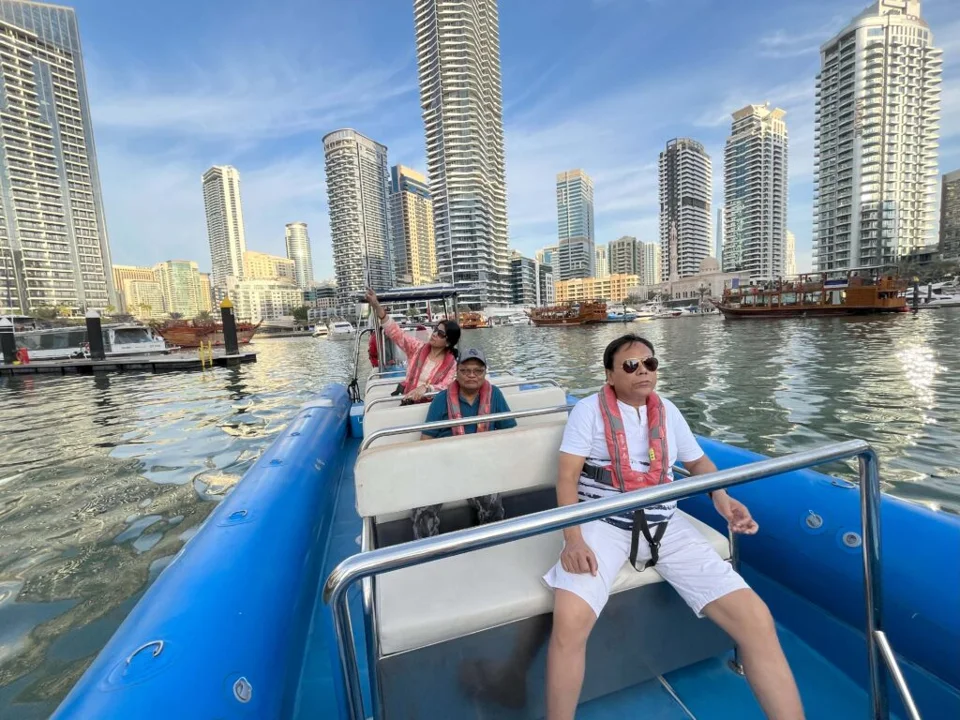
Klook Pass activation #2: the speedboat sightseeing tour. We took the 4pm slot, with boarding 10 minutes prior. The team needed a bathroom run — the speedboat is roughly 2 hours into the open sea with no toilet. By the time we were back, the shared boat was full. Xclusive Yacht Rentals Dubai held us, arranged a second boat, and effectively converted our slot into private. Sail at 4:30pm.

What followed was unannounced. The boat hit open-sea chop at speed. We were bouncing high enough that I asked the helm to ease up before someone got hurt. The route covered Dubai Marina, the perimeter of Palm Atlantis, a pause at Burj Al Arab, and a drive-by of the reigning monarch’s private islands and the property Shah Rukh Khan owns on the Palm. Senior travellers in the family group made it a daring choice in retrospect; in practice, the most memorable hour of the trip.

Back to shore by 6pm. A few hundred metres on foot to DMCC metro. 70 INR each on the Red Line to Onpassive station. Train was not packed; office returnees, mostly seated.

Day to Day Hypermarket sits next to Onpassive. We finished all the bargain shopping there. Booked the standard UberX home; got a Toyota Prius 7-seater that handled the bag haul. Trip cost: 1900 INR.

Day 5: Dubai Frame

Tested the hotel shuttle for the first time and was at Al Furjan station in 5 minutes. The counter agent steered us to the ticket vending machine. Tickets to ADCB station (further than Onpassive) involved a zone switch, so 120 INR each. From ADCB an Uber for 500 INR (or a 20-minute walk through the adjoining park) put us at the Dubai Frame gate at 1:10pm.

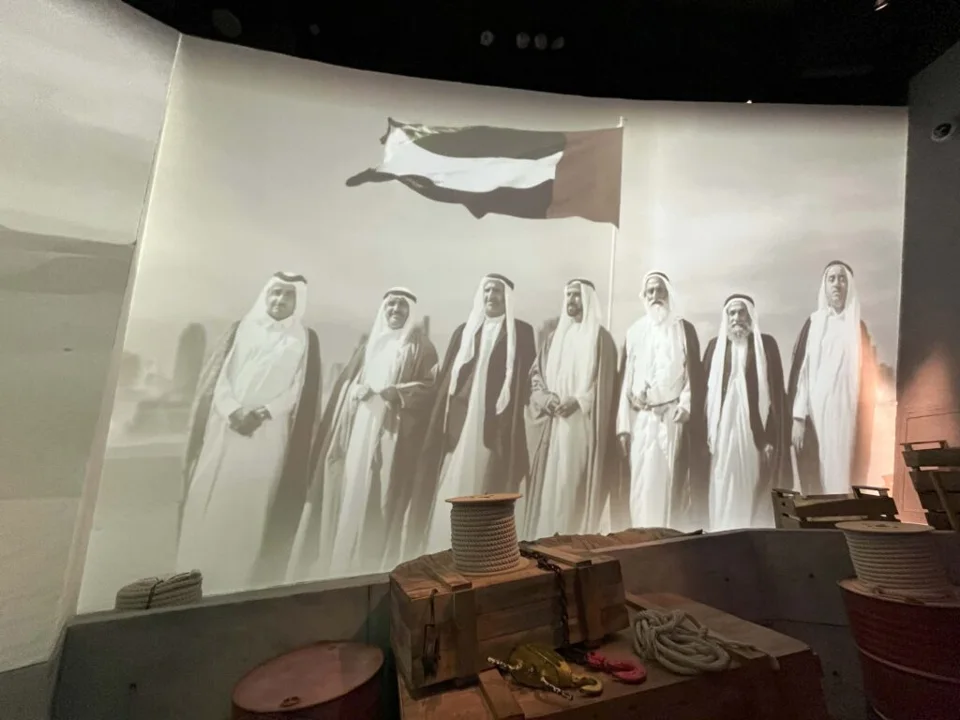
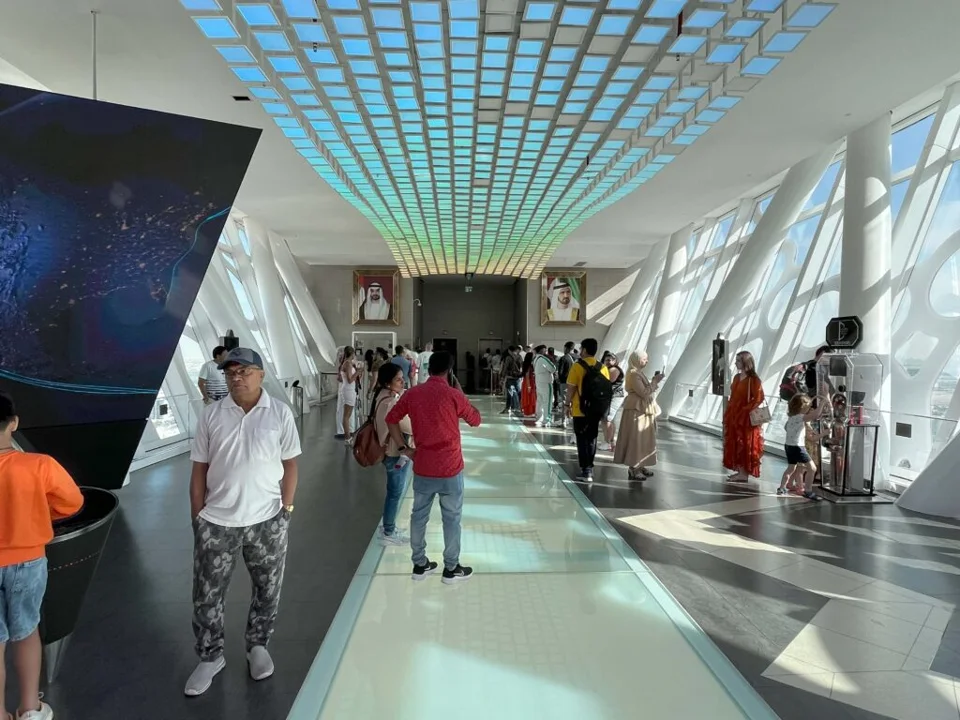
Klook Pass activation #3: the Dubai Frame. Wait time crossed an hour. Pleasant weather softened the queue. Inside, the first section runs a video of the UAE’s history and Dubai’s transformation.

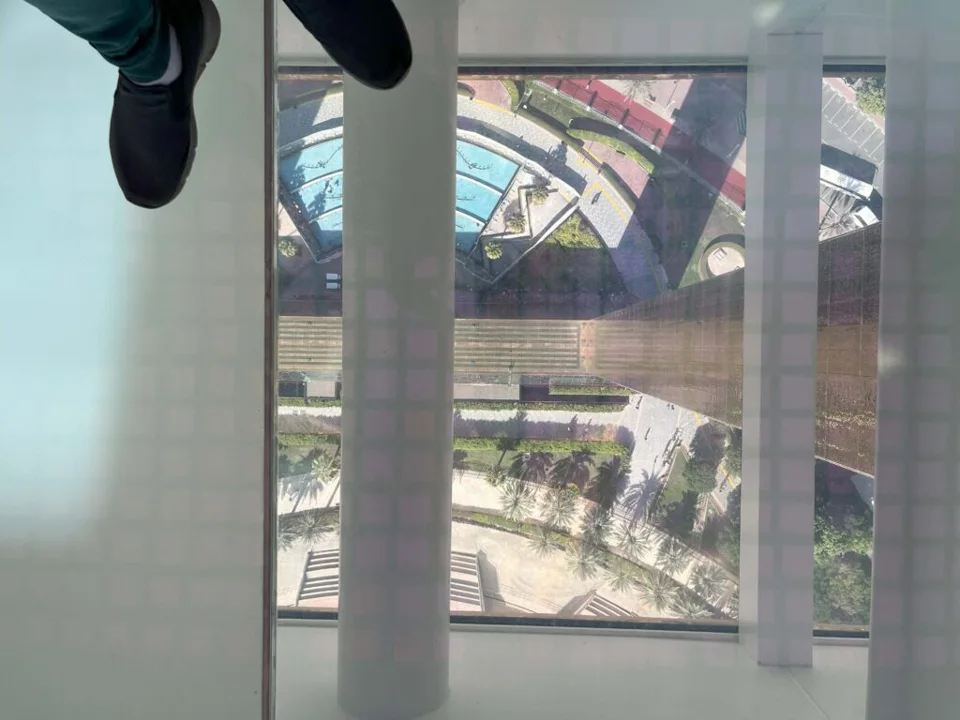
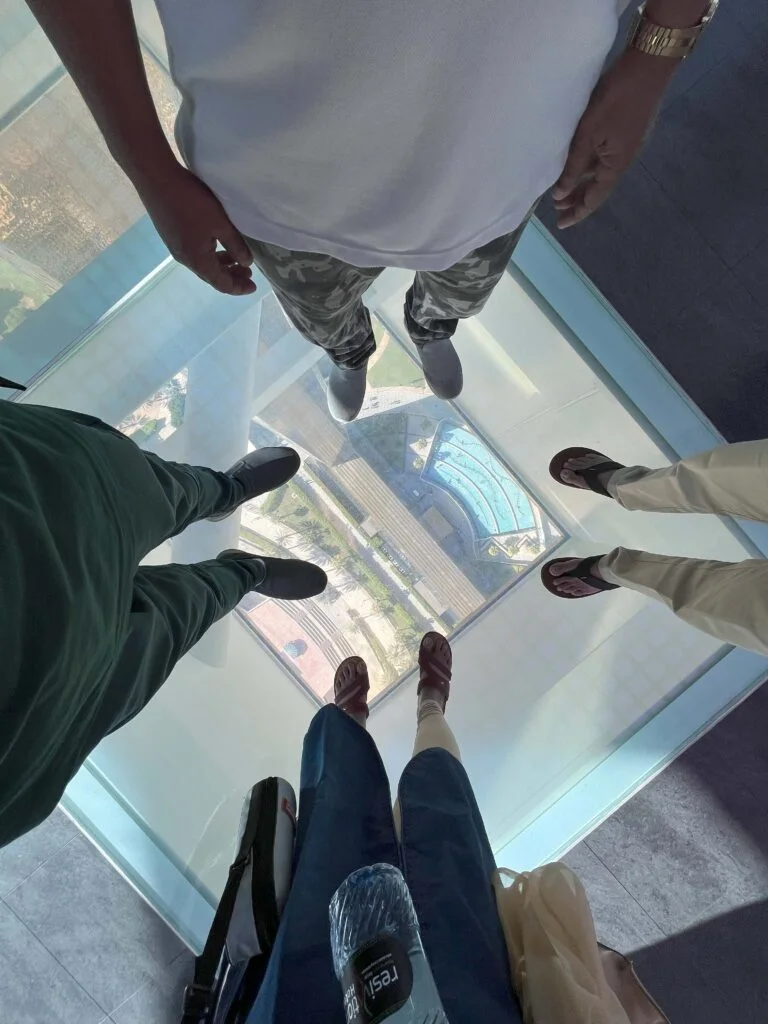
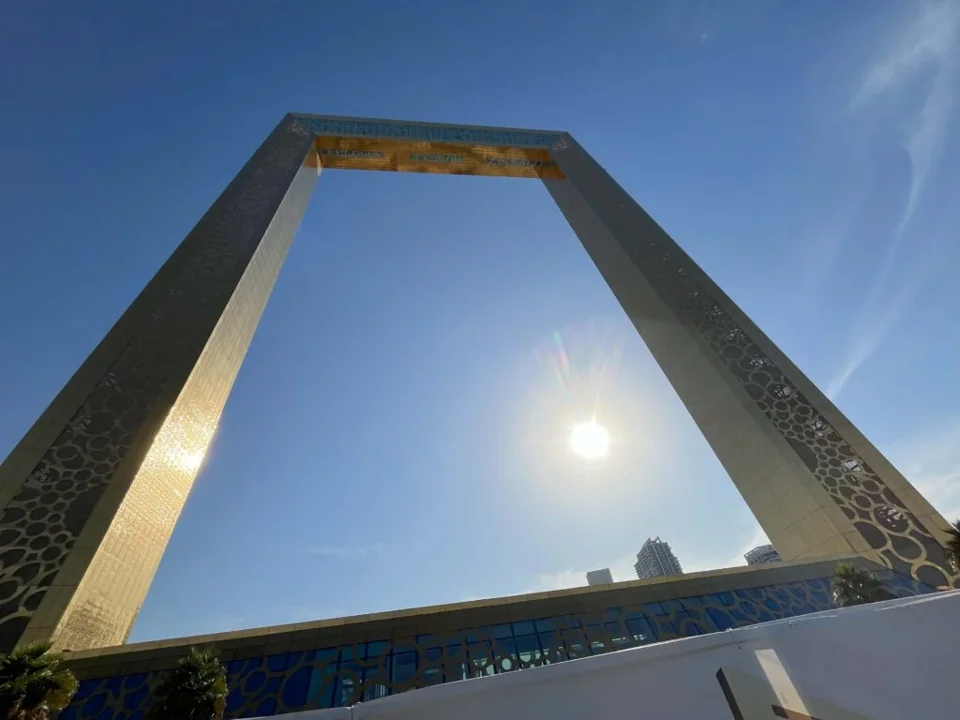
Elevator to the top of the monument, where you walk through the literal frame. Glass floor over Al Zabeel Park.

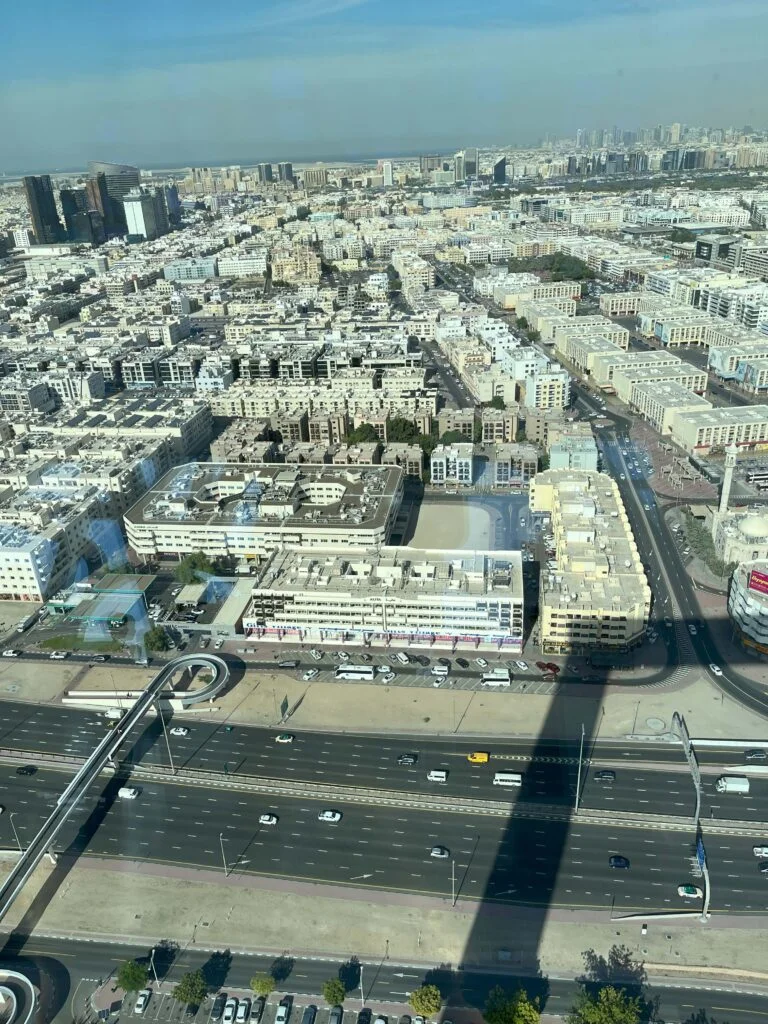
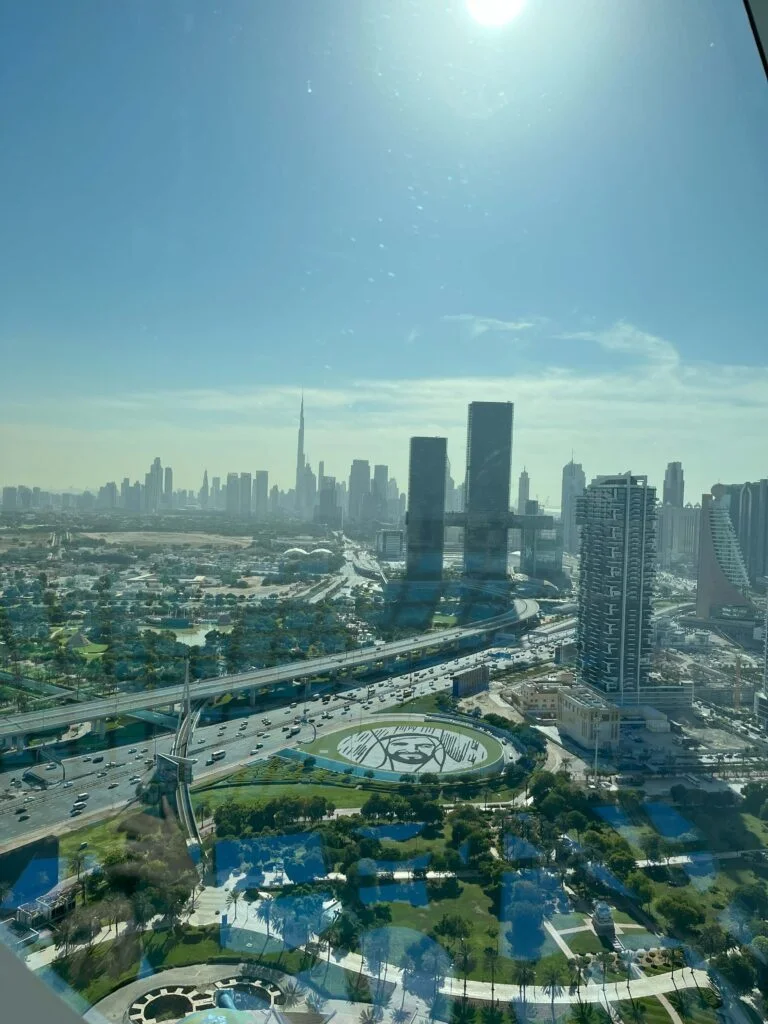
From the observatory: Old Dubai’s smaller, older houses on the right; modern high-rise Dubai on the left. The frame between past and present, executed in steel and glass.

On the descent: a 270° feature presentation of Dubai’s future. You stand inside the screen as a moving city projects around you. The most affecting display of the trip — the actual point of being here, condensed into ten minutes.

Out at 3:10pm. Uber back, 2700 INR, hotel by 3:42pm. Light lunch at the hotel. Started for the airport at 4:27pm in an UberXL. Heavy traffic put us at Terminal 1 only by 5:40pm. Most expensive ride of the trip: 5000+ INR.

Departure formalities and airline counter queue were exhausting. We took the internal transit metro to the proper airside, then went straight into the lounge. Mahaba lounge accepted Visa and Diners cards; we paid 2800 INR each for two non-cardholding guests. 4-hour wait. Food was excellent and the beverage spread was right-sized for dinner.

Field Notes

  • Climate. Comfortable November to March. Pack light. Summer is brutal — recorded high is 49°C. AC is everywhere, year-round.
  • Skip the package tour. The city is meticulously planned and connected. Cabs, Uber/Careem, metro, and buses cover everywhere comfortably.
  • Use the apps. Dubai Mall, Global Village, the major venues all have apps. Mandatory for navigation at this scale.
  • Cosmopolitan in the truest sense. Different countries and ethnicities living alongside each other in a way I have not seen elsewhere.
  • Cheap if you squint. A 1 AED tea at the supermarket vs. 20 AED at a restaurant. There are options for every spend tier; you have to think like a resident.
  • Safety. Among the safest countries I have visited. Holds across all seven emirates.

One Recommendation

Spend at least one day outside Dubai, Sharjah, and Abu Dhabi. The core memory of this trip came from RAK and Fujairah. They run a different register entirely — older, slower, more rooted.

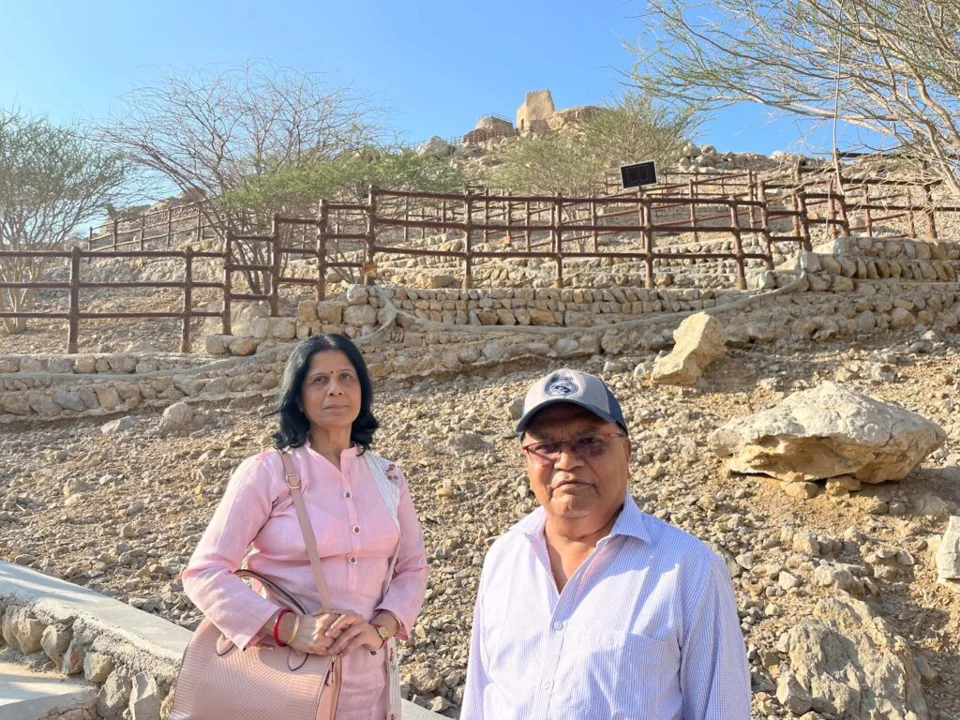
Summit of Dhayah Fort

Mae Alsalama Al Habibi.

Sayantan

Ascending to Arunachal

The Trigger

My first dedicated avian-focused write-up. These trips are typically not solo-able and need real guidance, so I had not bothered to document them before. Arunachal forced the issue. The terrain is hard, the destination is unfamiliar to most readers, and the bird at the centre of the trip — the Bugun Liocichla — is the first new bird species described from independent India.

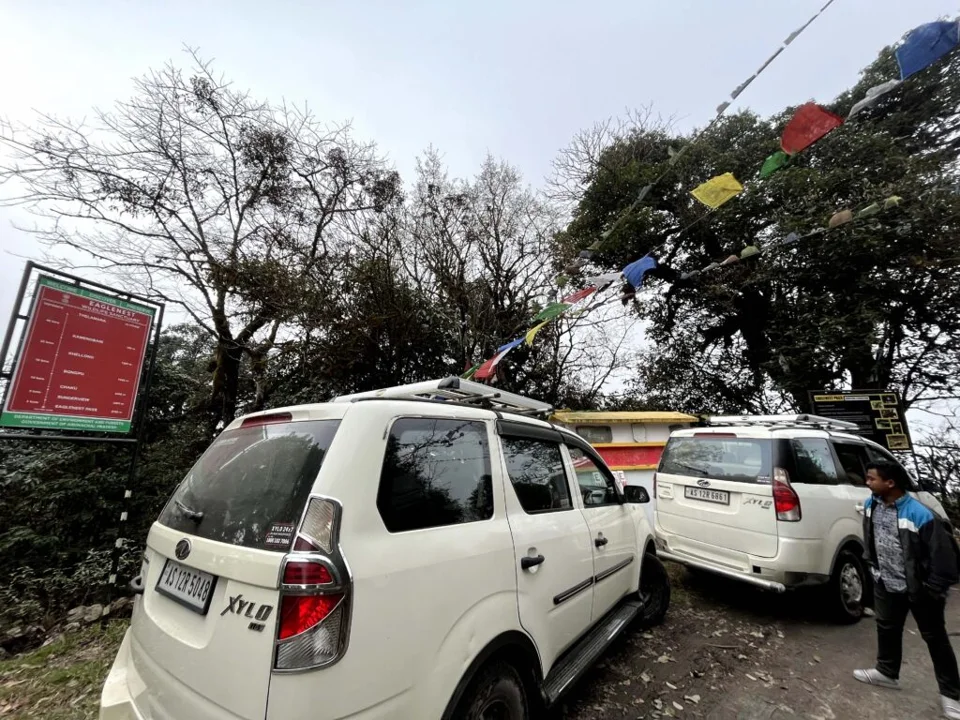
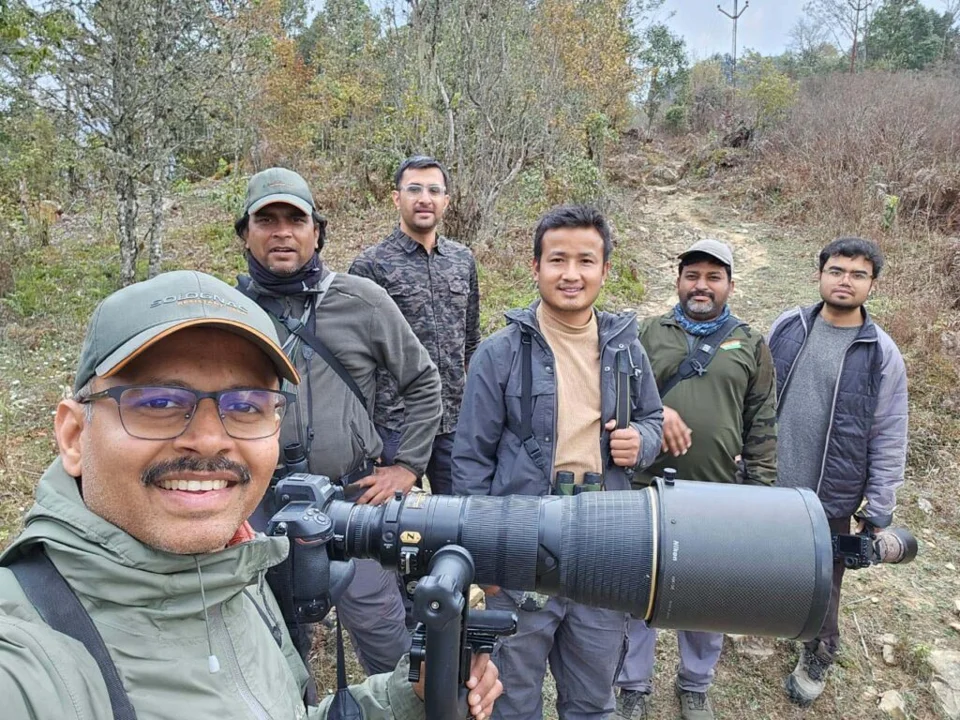
Operator: Avian Trips Group, who I have been travelling with since the pandemic. Tour leader Dilip; bird guide Micah; two Mahindra Xylos with their drivers. Group size: four.

Day 0

Checked in a day early on 6 April (Thursday). Day job is remote, all I need is laptop and internet. Air India out of Kolkata, Guwahati landing at 7am. The taxi rate at the terminal door is 100 INR. Cross the airport’s outer gate first and the same ride drops to 30 INR. Guwahati is the primary checkpoint for the seven sister states (Dibrugarh in upper Assam being the other).

600m on foot from the gate to my stay, Hotel Mirana. I had paid up to 2500 INR (from the standard 1800) over the phone for an early check-in window.

Second-floor room, spacious, well-kept. Food menu was on the higher side; room service ran until 10:30pm. Surprisingly tasty across a generous spread of options. The single hard miss was the Wi-Fi: speeds unusable, connection dropping every few minutes.

Day 1

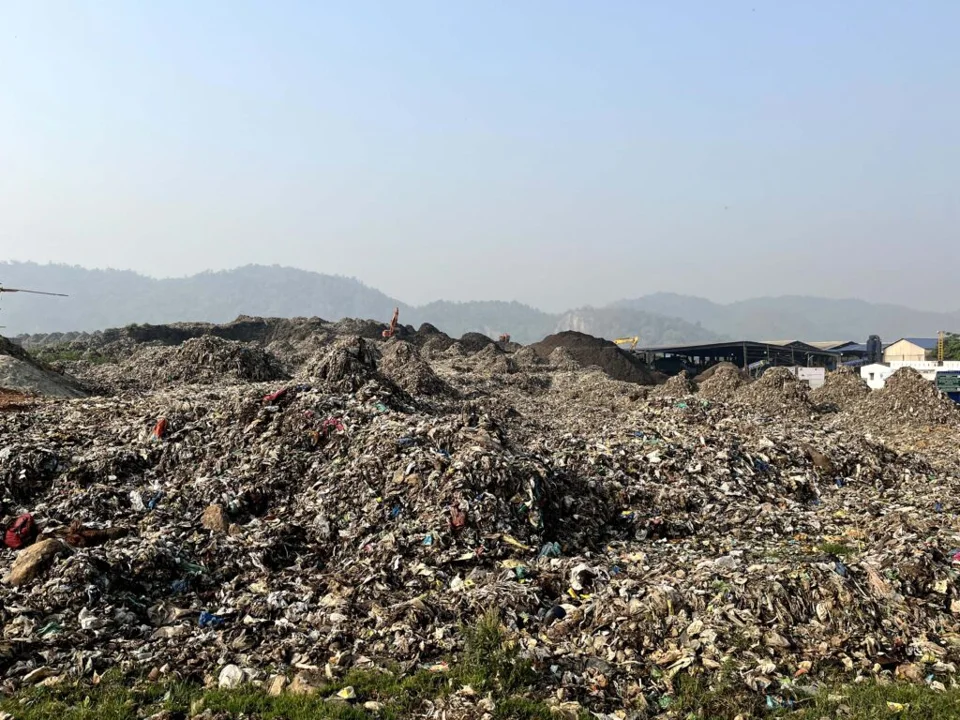
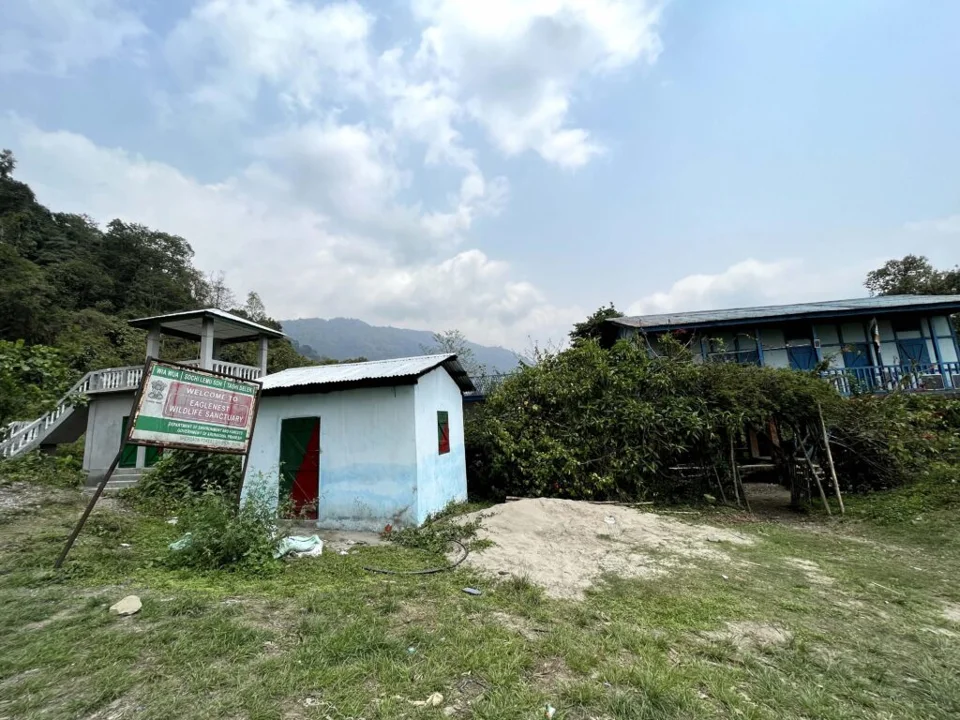
7:30am, off to the great municipal landfill of Guwahati to look for the endangered Greater Adjutant. The landfill is processed by industrial composters, which has neutralised the smell across an enormous area.

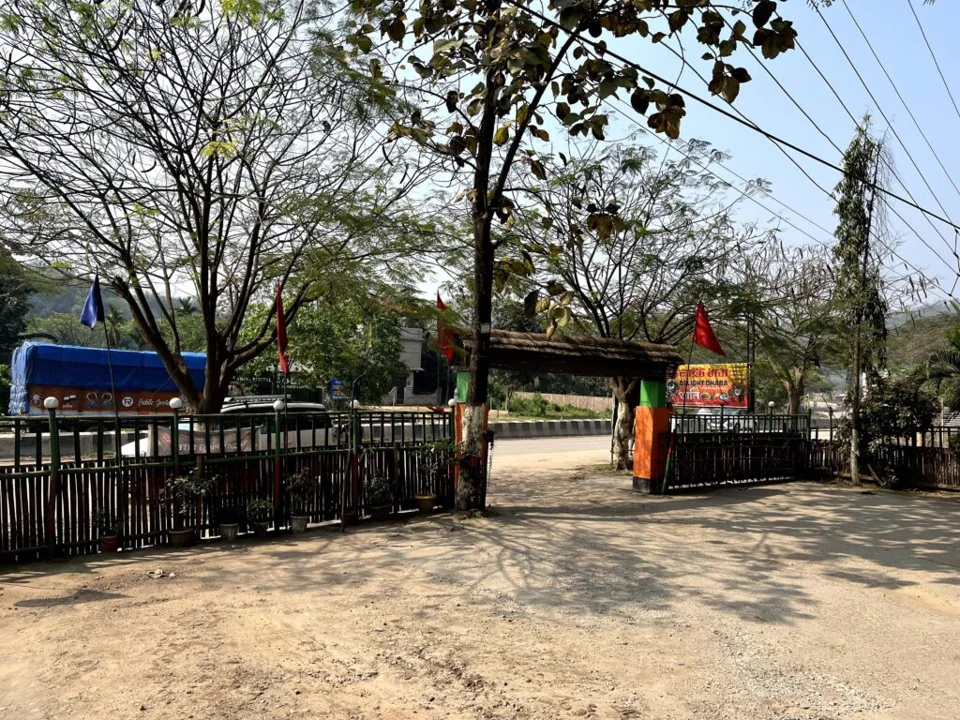
Two hours at the dump. Then north toward Arunachal. Breakfast at a roadside dhaba called Delight, which was less delightful than its name. Tea, roti, and sabzi was the limit of the menu. We continued into the 7-hour drive.

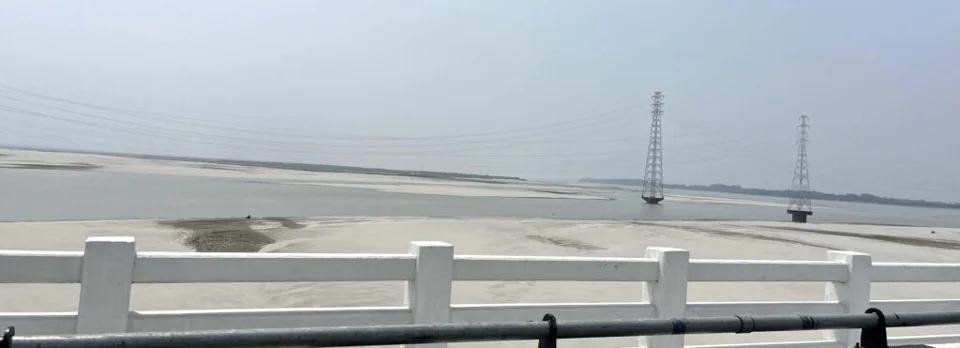
National Highway through the centre of Assam, all the way to Kaziranga National Park. Sharp left after that to bridge the Brahmaputra, which had run unusually low for the season.

Exited Assam at Tezpur. The Arunachal entry needs a pre-approved permit. The check-post is heavily manned by the Indian Armed Forces.

Lunch at another dhaba on the Arunachal side. Then a long uninterrupted drive to Lama Camp, where we slept.

Day 2

Lama at night is brutal. The cold gets through the quilts. Tap water reads like molten ice; hands go numb. The cold is the system’s way of telling you the next morning will deserve attention.

Up by 5am for the first session. Sun starts the warming clock; the temperature catches up to liveable as soon as the light is fully in.

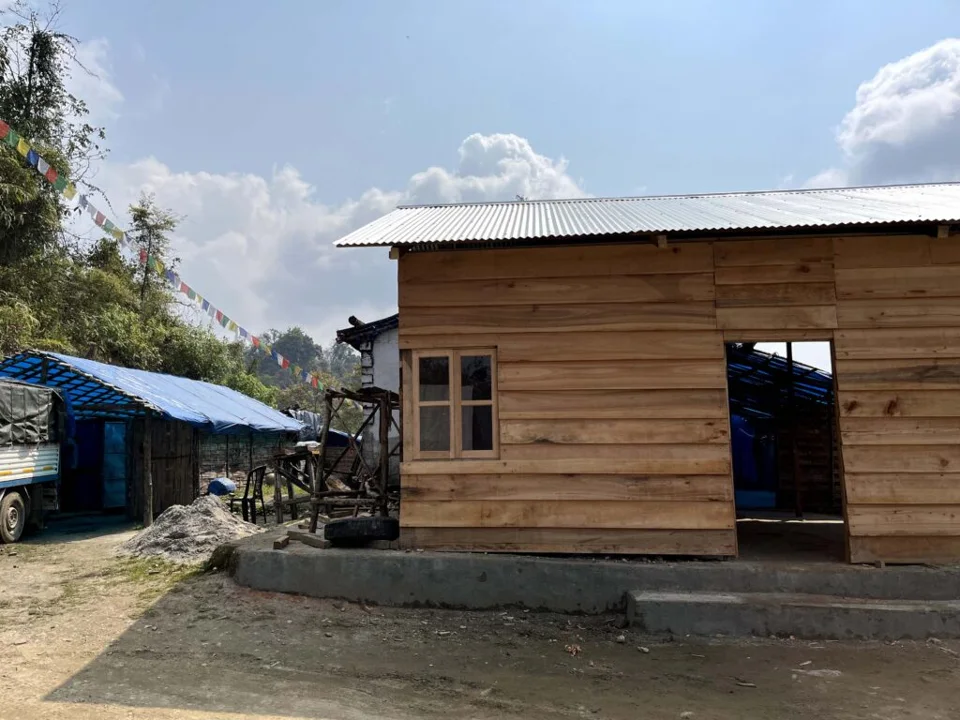
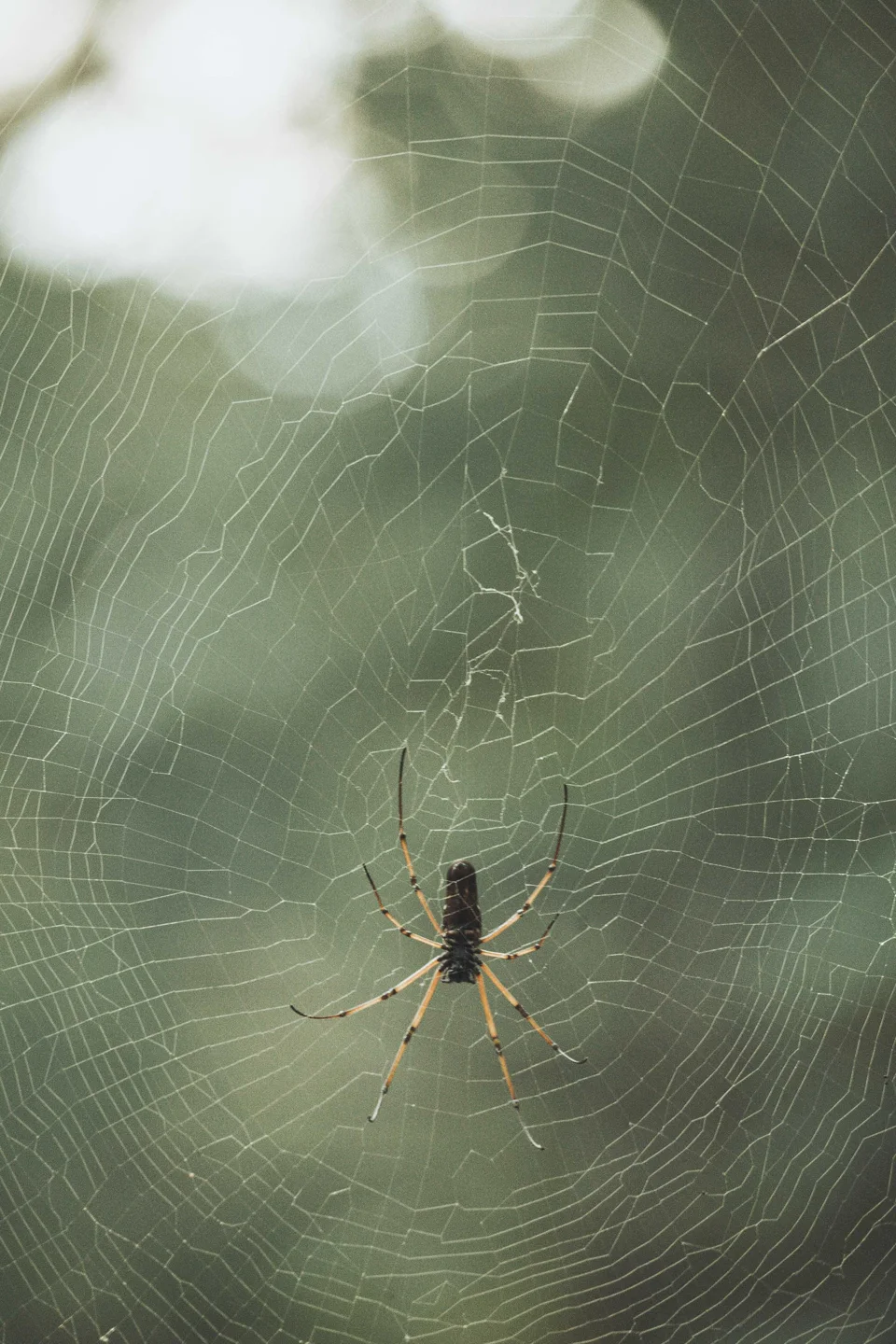
The Lama setup will not feel familiar to plains-dwellers. Stairs to the tents are wobbly. Rooms are wood-walled with tin roofs to handle the rain, with the occasional spider or moth coming through the gaps.

One solar LED per cabin. All phone and camera charging is in the common dining area. Three meals a day, all of them noticeably good.

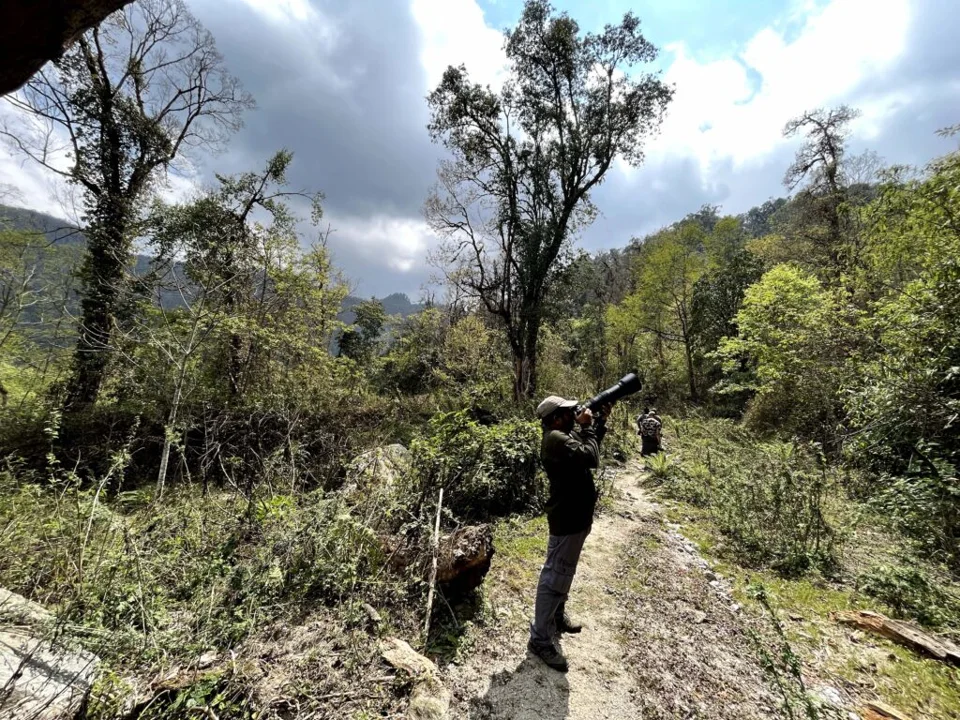
Birding here means driving to a coordinate the guide has confirmed, then walking rocky trails through dense forest. The biodiversity is among the highest in the country. Spotting in canopy and undergrowth is the part nobody can shortcut.

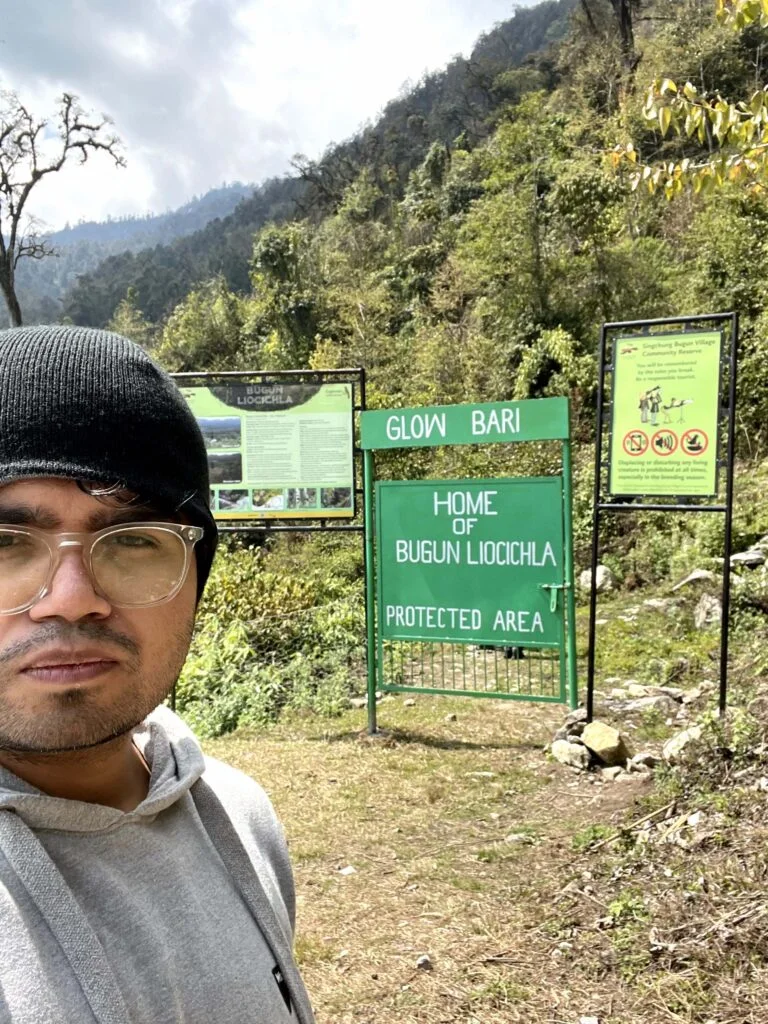
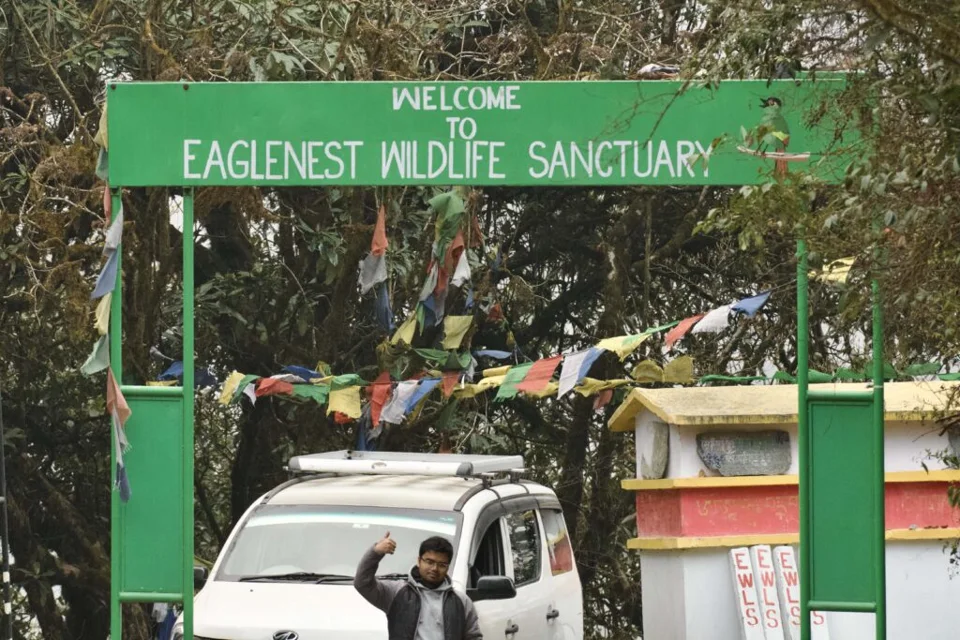
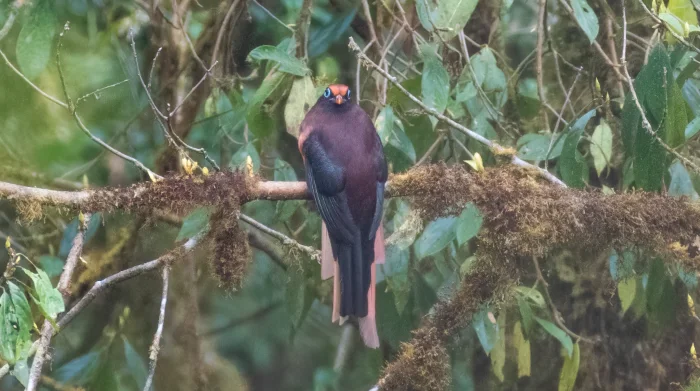
The headline bird at Eaglenest is the Bugun Liocichla. Conservative estimates put fewer than 250 mature individuals in the wild; the highest single-day confirmed count is 14.

On the trail we crossed paths with Ramana Athreya, the eminent birder and astronomer who first described the species in 2006 — the first new bird species described from independent India. The Bugun tribe protects the sanctuary; the species was named after them, and the relationship between the tribe and the bird’s protection is part of why it still exists.

Bugun Liocichla travels in mixed flocks. The standard tracking method is to find the other species in the flock and infer the Bugun is among them. Our guide picked up the call from a mixed flock several hundred metres ahead. The rest of us did not.

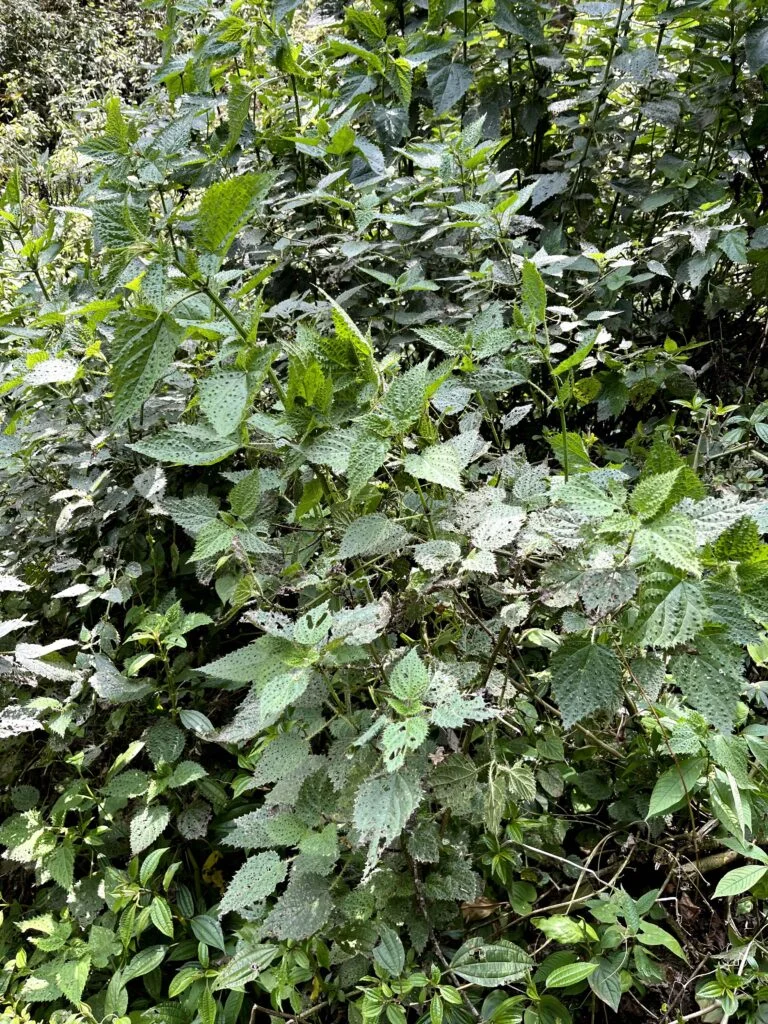
He took us uphill into the dense forest after the call. The route involved poking branches, tight manoeuvring, and an unpleasant amount of contact with Indian stinging nettle.

Most of the group got stung at some point. Spared from leeches only because the previous days had been dry.

Session ended without the bird. We drove up to Eaglenest Pass, a patch of forest wrapped in cloud at 9000+ feet. From there we descended a slope to look for Temminck’s Tragopan.

An hour of position-holding and the light started going. We called the day and dropped to the next camp through bumpy roads.

Day 3

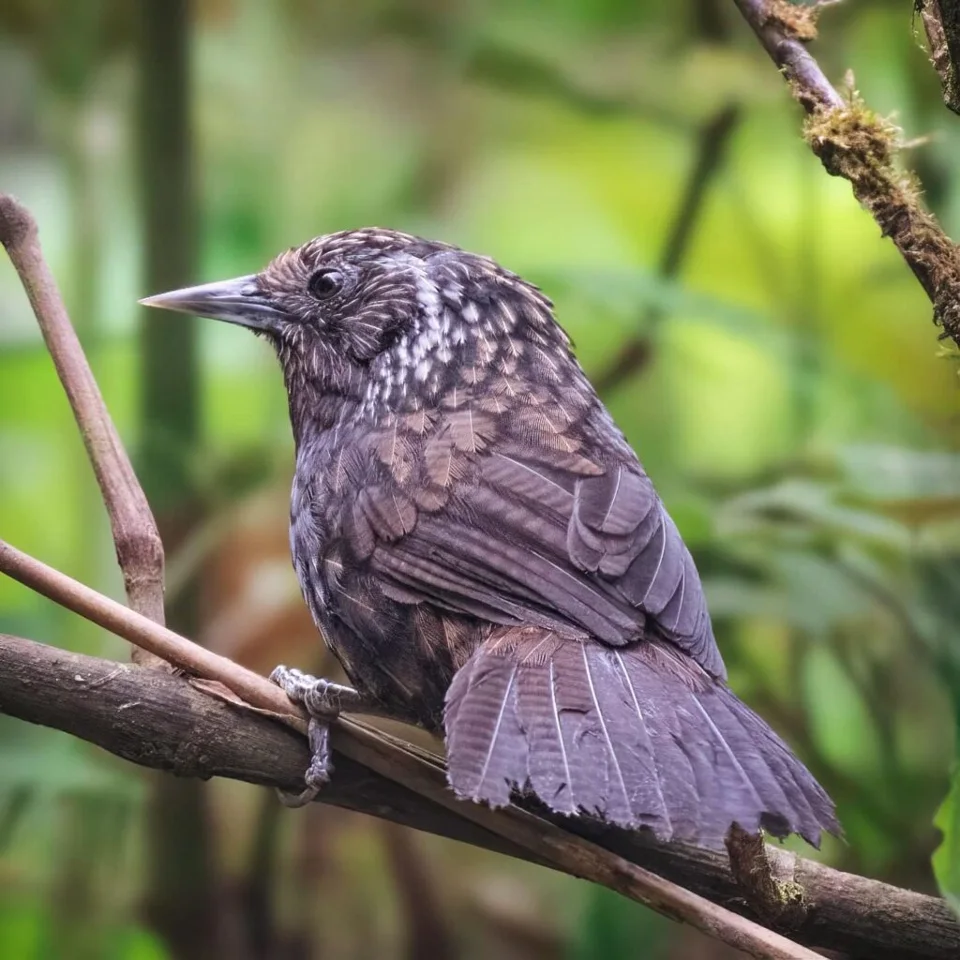
Bompu Camp is at lower elevation than Lama. Same facilities, much more bearable cold. Just outside the camp trail we found the Sikkim Wedge-billed Babbler, a recently rediscovered species that was thought to be extinct.

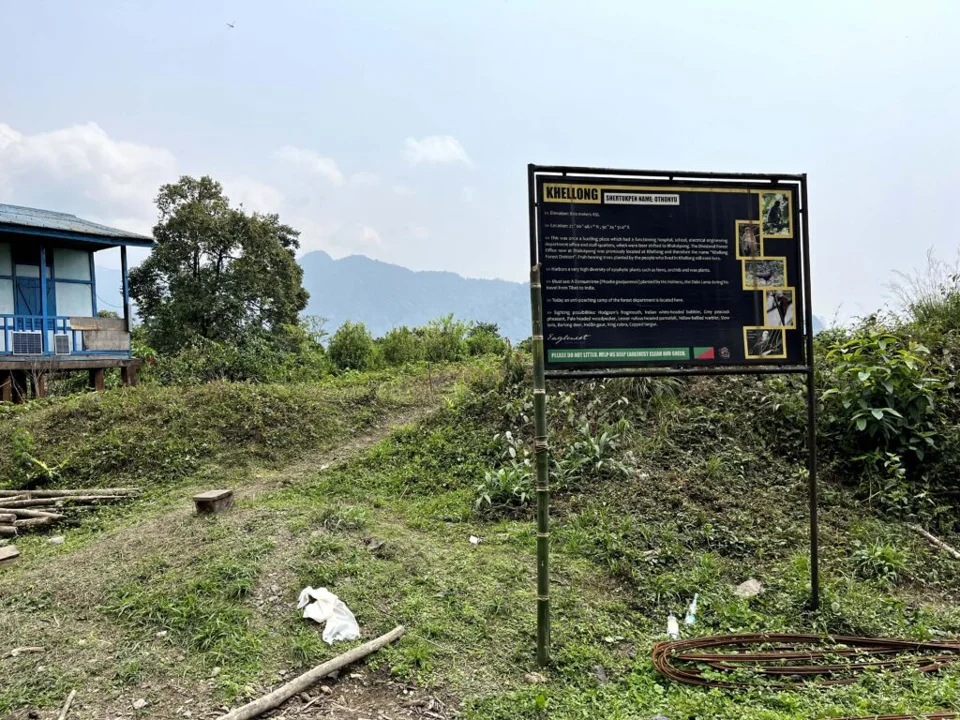
Drove on to Khellong at lower elevation still. The valleys here are flat and the temperature climbs through the morning.

End of Khellong is marked by a prominent army checkpost with broken beds and empty rooms — somewhere travellers can rest and use basic facilities.

The trail beyond goes to a small Buddhist shrine in the middle of the jungle.

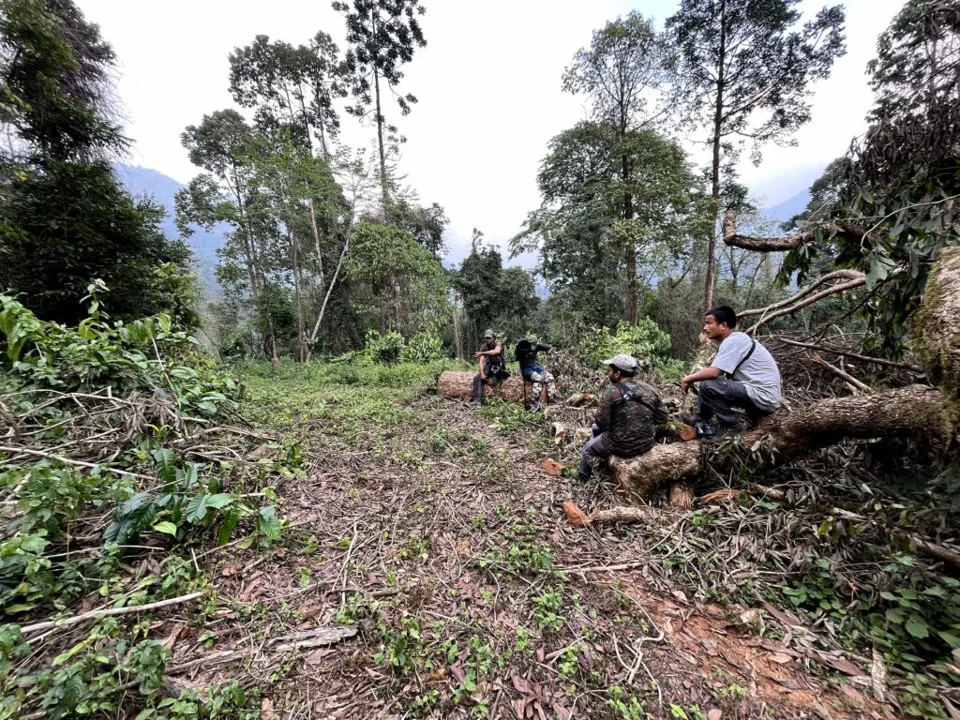
Around the shrine we saw active habitat destruction: trees being uprooted and milled into planks, almost certainly illegally. The headline sighting on this trail was a Red-headed Trogon.

Day 4

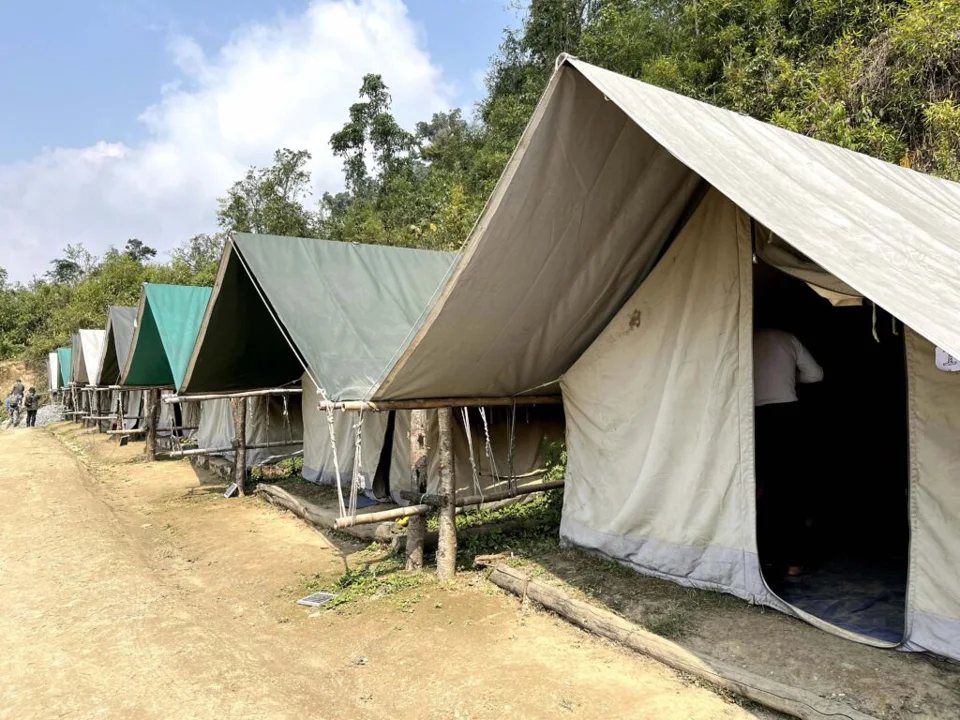
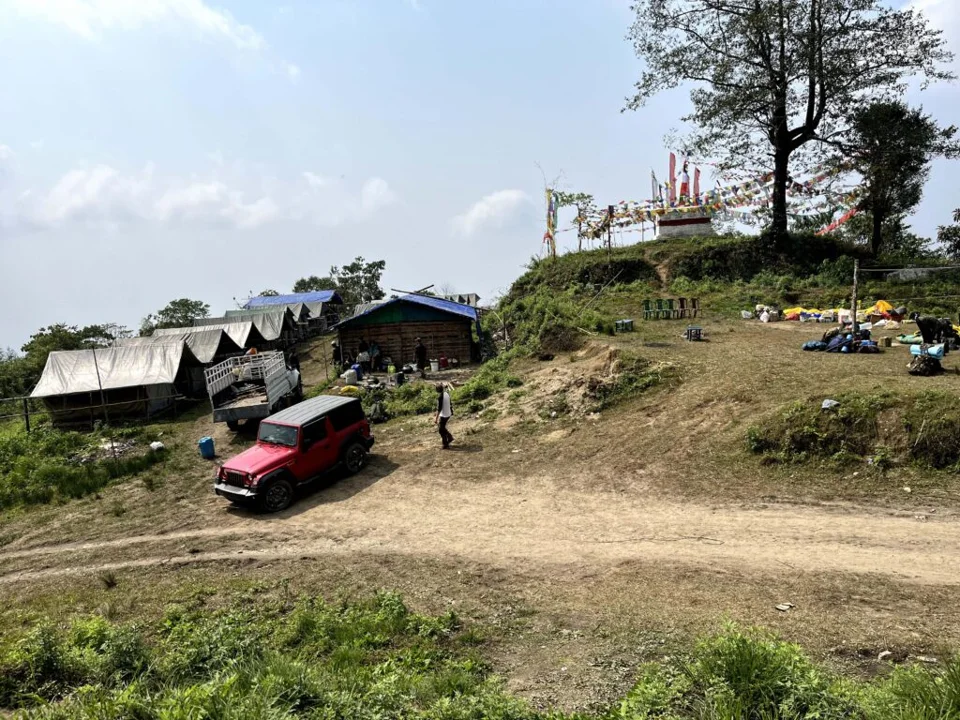
The next night was at Bompu, which spreads across a larger expanse than Lama. Trail of canvas tents and shared bathrooms, eco-built with deliberately minimal habitat impact.

Almost no internet at Bompu. Cellular network is spotty. There is a central patch for fireplace and trekker picnics.

Solar LED in each tent, charging in the common wooden house. Charging window: 7pm to 10pm only.

Food matches Lama’s quality. Same packed-breakfast-and-lunch model for early-departure birders. The standard rotation: fried rice, omelette, puri-bhaji, paneer, several green-vegetable spreads.

Day 5

The wrap-day on this leg. We went back via the same trail to Lama for another shot at the Eaglenest Pass tragopan.

First, the Ward’s Trogon family. The guide took us into a canopy-thick valley where we got two males and a female of this vulnerable species in a single window.

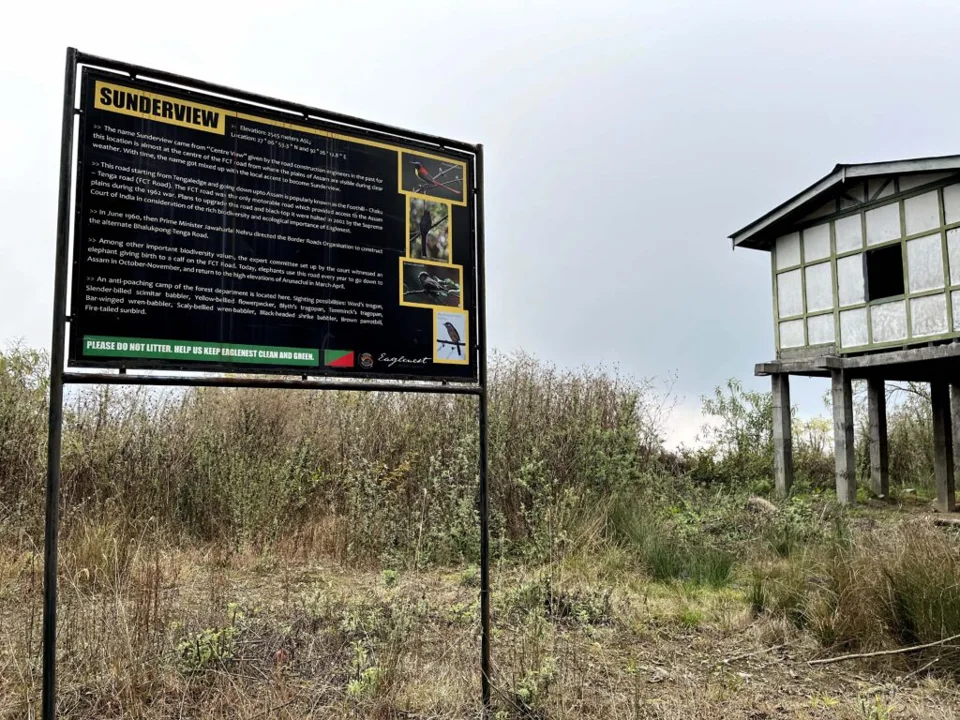
Second tragopan attempt at Sunderview also blanked (Blyth’s runs at lower altitudes). Back at Lama by 7pm. The cold was easier this time — either psychological adjustment or lighter wind, hard to call.

Night session for Hodgson’s Frogmouth. Heard the call repeatedly. Bird never came into the open. The compensation prize was a sky completely free of light pollution and cloud cover. The kind of dark that is rare to come across.

Day 6

Morning attempt for Bugun Liocichla in the core sanctuary. Greeted instead by a herd of Mithun, the state animal of Arunachal, a bovine. Local note: not reared for milk. Reared for meat — gifted from groom’s side at tribal weddings.

No Bugun. We dropped to the lowest elevation of the trip, Dirang Valley. Evenings in Dirang, hemmed in by mountain lines on every side, are the kind of frame the camera resents being put away for.

Unlike the camps, Dirang feels like a real town. Smooth roads, regular homestays, hotels, local market, food shops. Coming up as a popular tourist destination of Arunachal for that reason.

The Kameng river runs wide through the heart of the valley, white water and full force.

A regular tourist gets the option of a stay on the riverbed, which is a real draw.

We had a more strategic call to make. We chose Mondruk Homestay, up near the Dirang market.

Day 7

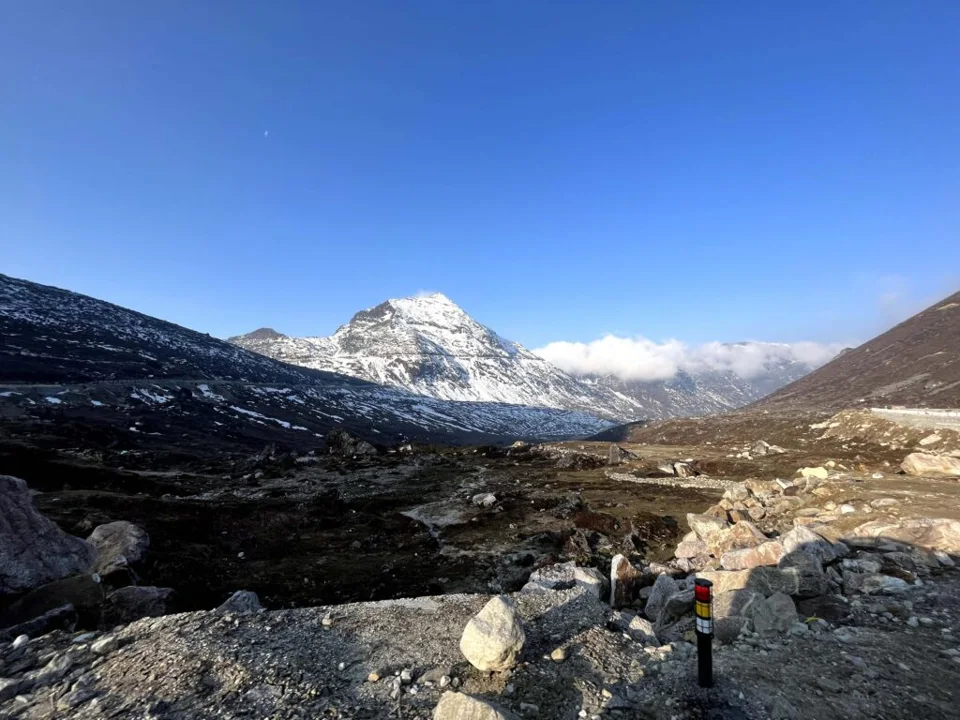
This is the post-interval high point of the trip. 2am wake-up. We were aiming for Sela Pass at 14,000 feet.

Sela has a massive entrance gateway. The pass is simultaneously an army base, a small village, and a tourist spot.

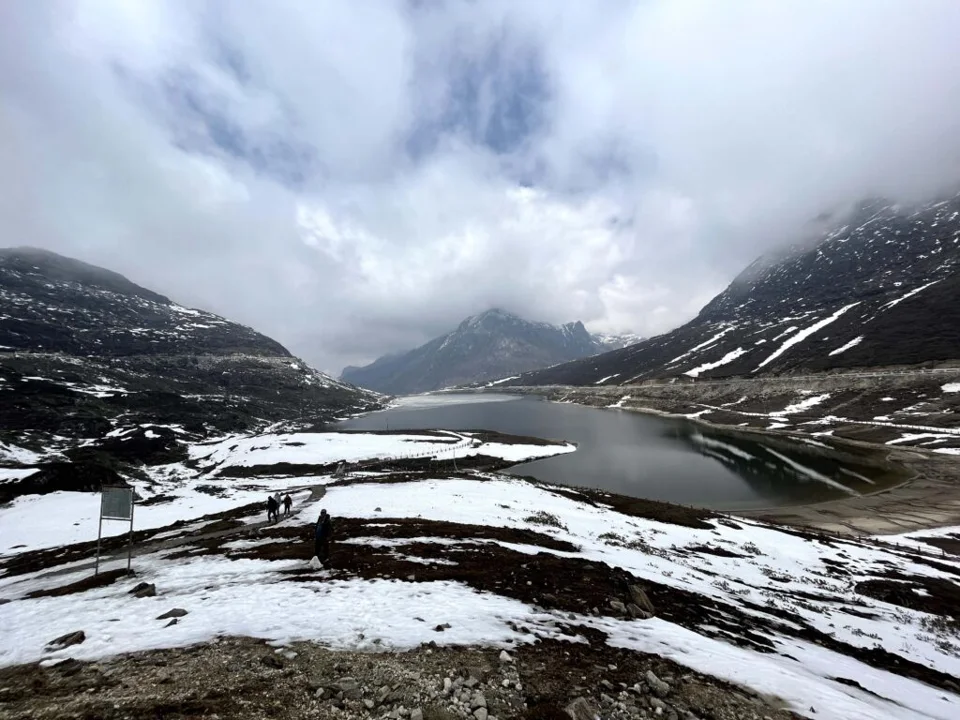
Luck arrived: there had been fresh overnight snowfall. The visuals improved by a factor and the snowy birds were more inclined to come close to human settlement.

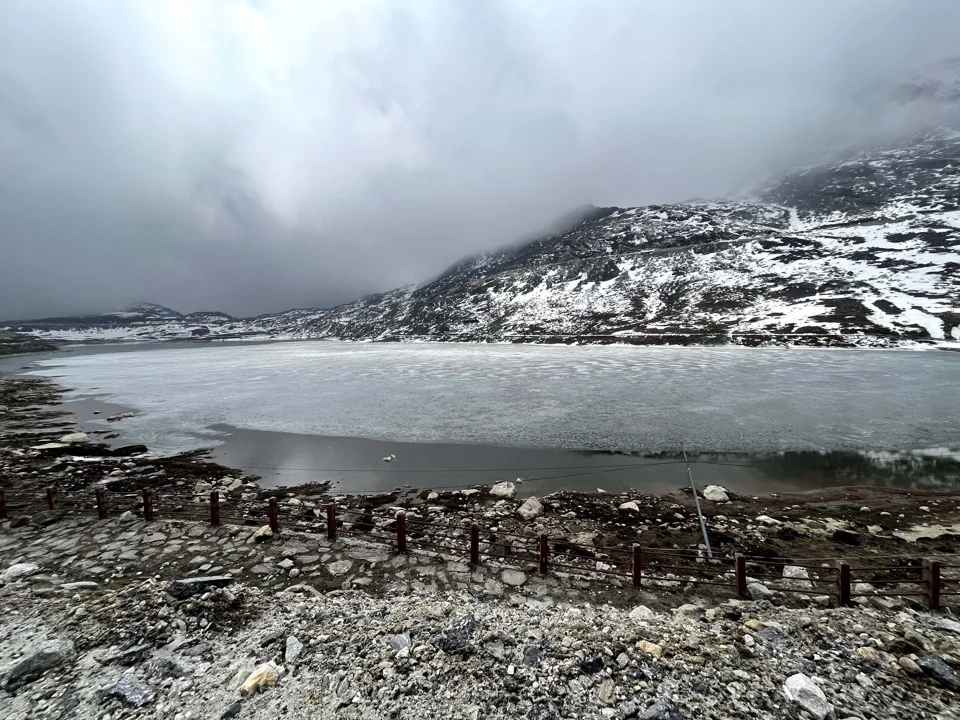
Snow-capped panoramas in every direction with frozen lakes between. Tibetan Buddhism counts 101 sacred lakes in and around the pass. The site has religious weight on top of strategic.

The pass road is smooth and wide thanks to the army. The road played a pivotal role during the Sino-Indian war.

The lake was almost completely covered by a thin sheet of ice. On the few sections where the ice had melted, common shelducks rested — the same species I had previously seen in the arid terrain of Kutch.

Trekking the slopes, our feet sank deep into the snow. Standard scene at Sela; tourists were starting impromptu snowball fights around us.

Hot Maggi at the nearby shop, then a final luck-roll along the army camp slopes — Snow Partridges in a flock and Himalayan Monals on the wing. Back to the hotel at Dirang by 3pm. Exhausted, full of frames.

Day 8

Mondruk Homestay was a step up from the previous camp stays — a solid three-storey apartment-style building with spacious rooms. The owners cook home-style meals on the top floor on request.

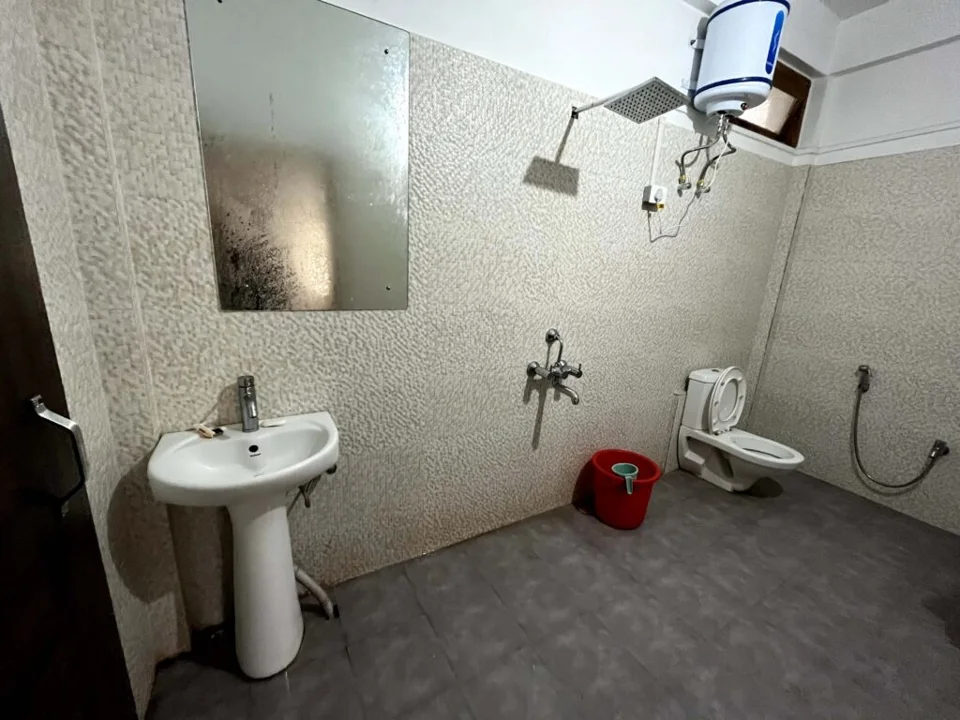
The bathroom had everything you need with on-demand geyser hot water.

Comfortable 15°C inside Dirang, so the occasional power cuts were not a problem. We left at 5am for Mandala. The centrepiece is 108 stupas, each one carved with Sanskrit incantations.

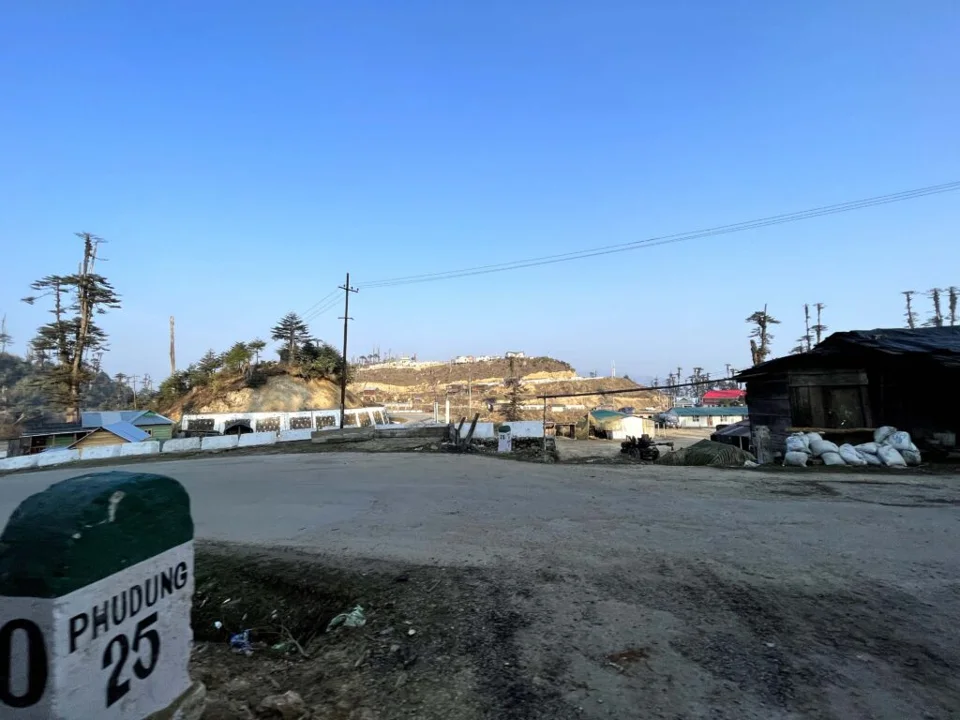
Past Phudung the route forks; the prominent path goes to Mandala at 11,000 feet.

Mandala is known for a famous birding lodge overlooking the gorge ahead. Lately, army training has expanded around it and the noise has gone up materially. Village settlements are spread across the slopes.

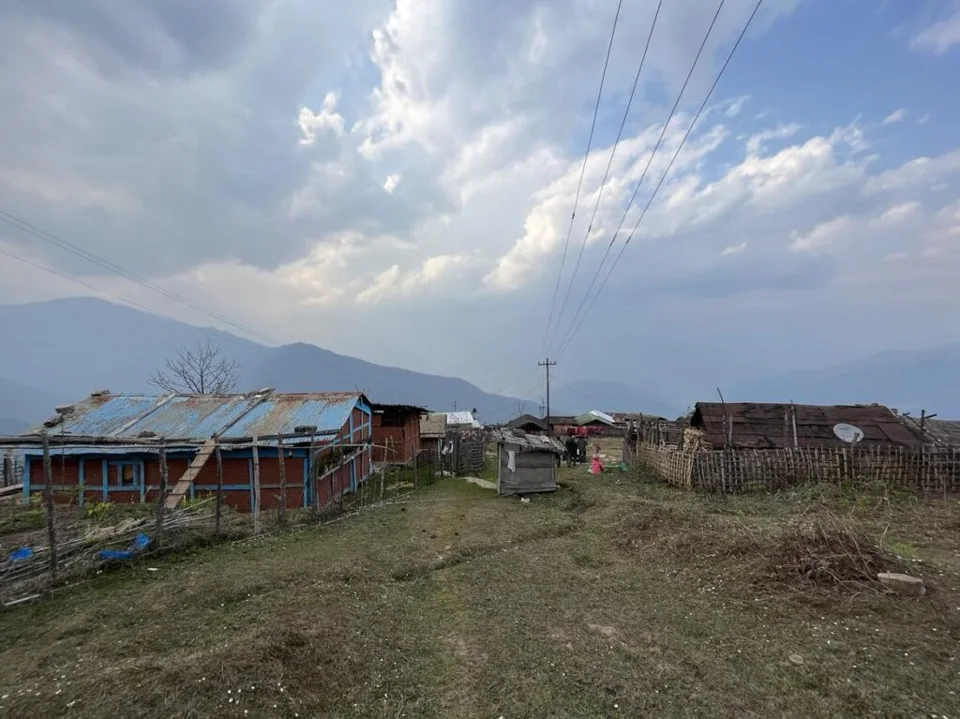
Typical Mandala scene: woodcutters in traditional dress, or locals running the small hotels that serve the army and the occasional tourists.

Walking down from Mandala top, we passed villages and watched cabbage farming on large patches.

Wrap call at 4pm. Final group photos. Trip officially closing.

Day 9

One final lap on Eaglenest for the Bugun Liocichla, with a hard 9am cut-off because some of the group had flights out of Guwahati. At 9:05am, after misidentifying Red-faced Liocichlas as the target species, we were walking back toward the car. Disappointed, promising ourselves another trip.

Then another guide and his foreign client at the entrance signalled silence. He had it in a bush nearby.

Split second later, there it was. On a branch. Sitting like a typical laughingthrush in foliage and shadow.

My hands locked. Could not believe it was finally in front of me. Couple of seconds later it dropped back into the bush. Then the second realisation: there were two adults hopping around in there. My shot is unusable but the better-prepared photographers in the group got the frame that confirms it. 180+ species on the final list. A large chunk of the personal lifer count came out of this single trip.

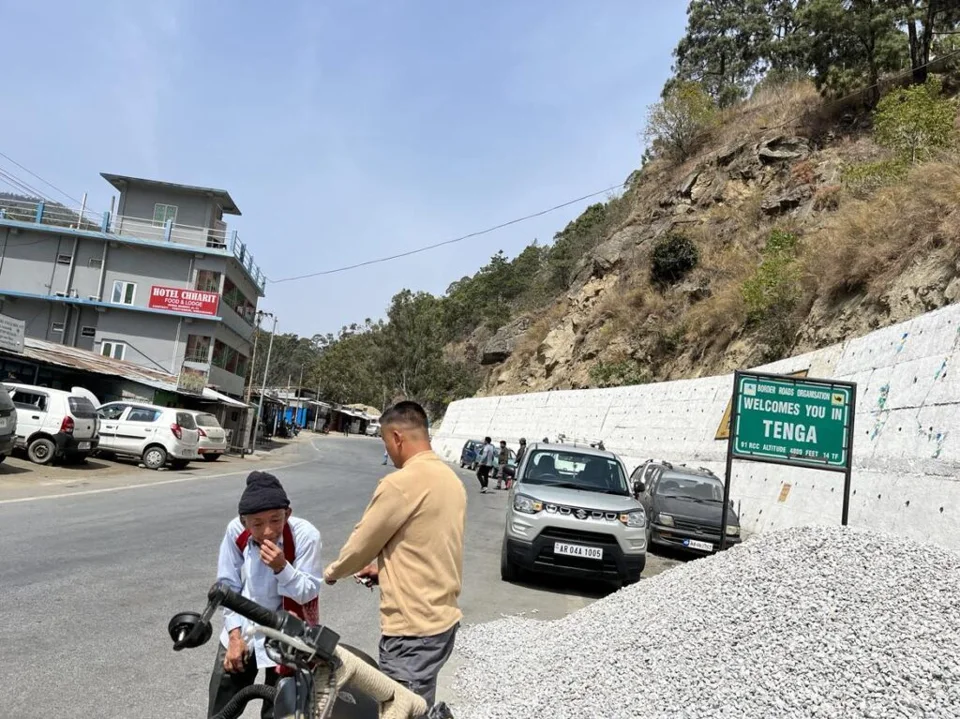
We drove to Tenga, where one of the team was continuing to Tawang to meet his family. Quick breakfast, then the long drive back to Guwahati for the rest of us.

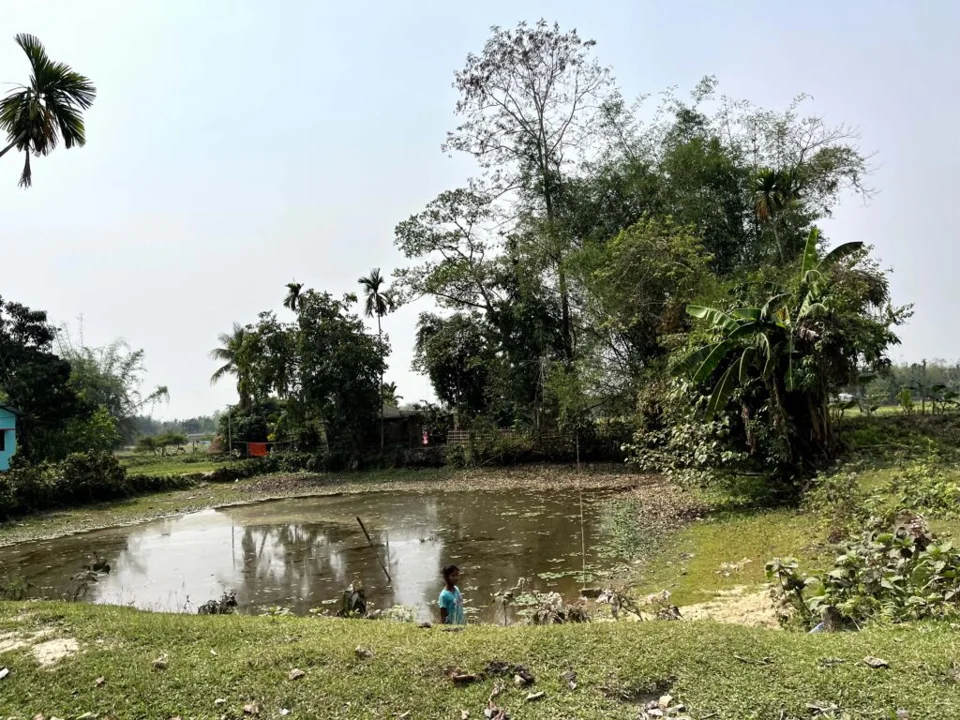
This time we skipped the Kaziranga route and took a parallel state highway through the Assam villages. It was Bihu — first-harvest celebration — and we passed countless local festivities on the way.

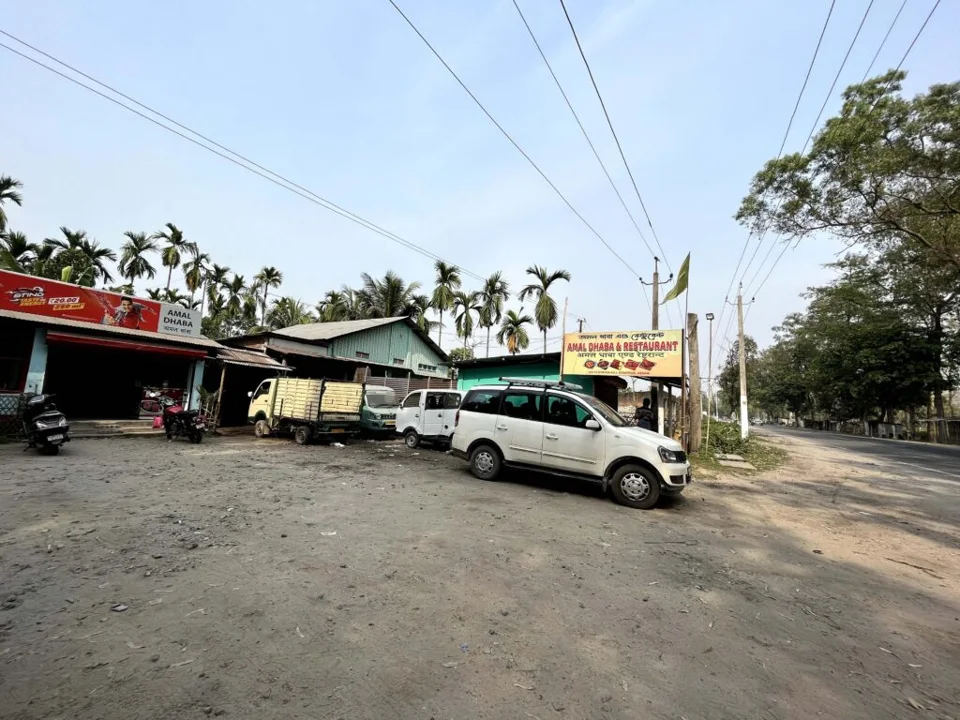
Lunch at Amal Dhaba, the worst meal of the trip. The next town was a long way ahead, so we made do.

Guwahati airport at 6pm. Most of the group went straight to the gates. I went back to Hotel Mirana for the night since my flight was the next evening.

Day 10

After clean sleep, dinner, and breakfast, I walked the 870m back to the airport gate (the receptionist quoted that figure precisely) in 38°C noon heat. Guwahati airport is small but modern. Bihu celebrations were rolling through the premises.

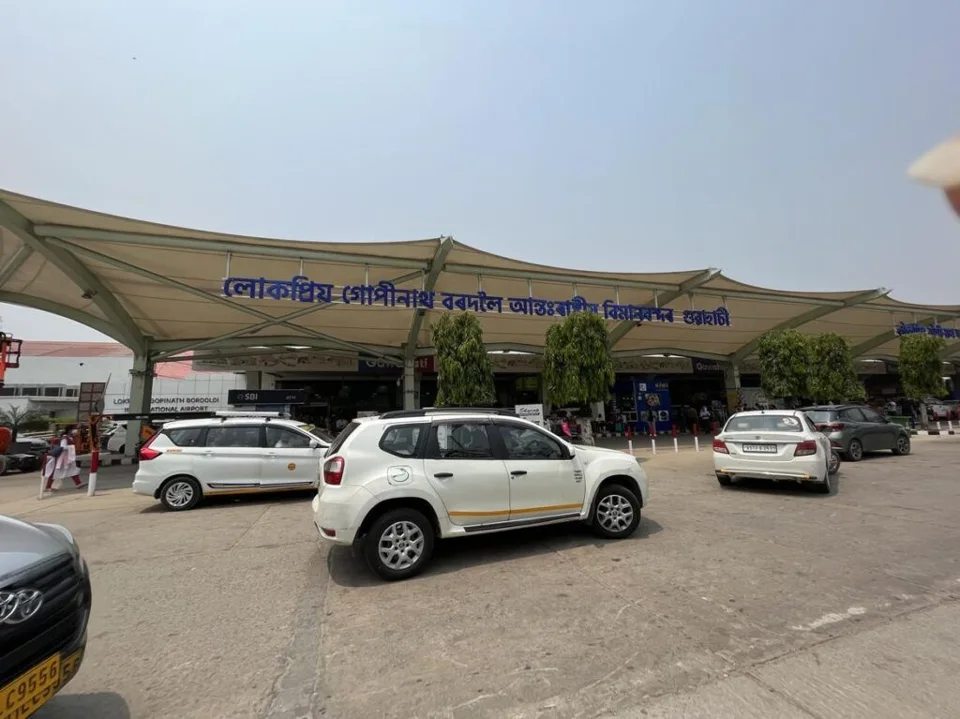
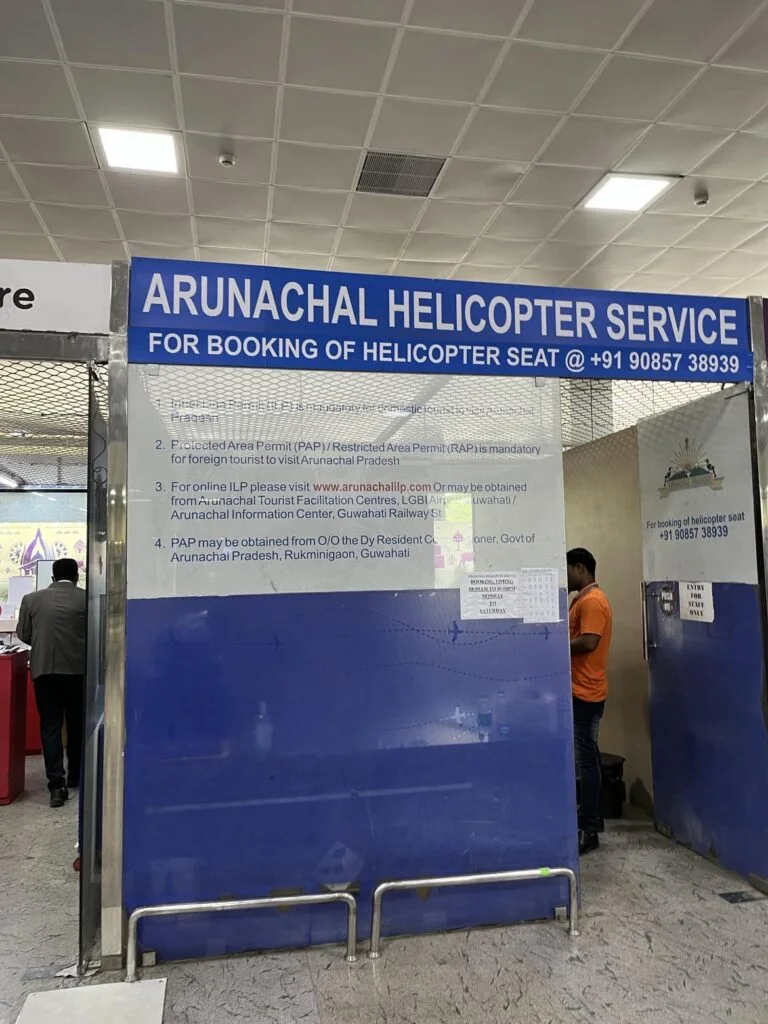
New thing learned: the Guwahati airport offers helicopter services into Arunachal.

The lounge is small but had a Bihu special menu. Items were close to a typical Bengali fish-chicken-paneer thali, with similar flavour profiles.

Air India back to Kolkata, on time, 4:30pm landing. The 42°C Kolkata heat was the closing hit of the week.

Field Notes

  • Pack layers across temperatures and terrain. Light fleece, heavy jacket for sub-zero, rain shell, thermals, gloves, hiking shoes, multiple socks, ear and head protection, nose protection. Some mornings you walk in a t-shirt; some nights you layer everything you own.
  • Anti-leech socks are essential when it rains. Carry first-line medicine — we had to drink boiled rainwater on at least one occasion when bottled water ran out, and the bug bites are real.
  • Get the Arunachal permit in place before you fly. Aadhaar must travel with you everywhere.
  • Hindi works. Most locals are fluent. People are helpful and friendly.
  • For camp stays: torch always. Tap water can be cold enough to numb your hands. Solar light only. Common-area charging works for 3-4 hours a night. Ask the staff to heat water in a bucket if there is no on-demand supply.
  • Astro is rewarding here. Arunachal night skies are among the cleanest in India for stargazing.
  • Basic fitness is required. A lot of walking and uphill hiking. Mental preparation matters as much as physical.

One Recommendation

The Bugun Liocichla is the headline because of its history, biology, and conservation status. The bigger recommendation is to stay at one of the camps rather than a hotel — the wilderness is what you came for. Bompu over Lama if the cold is your main concern. The video below is Bompu in walk-through form.

Freezing out,
Sayantan
Darjeeling Diaries

The Trigger

Bengali kids who have not been to Darjeeling are kept in a polite shame. My defence: I had been there, age two, no memory at all. April 2022 came with an unusually long weekend (Ambedkar Jayanti Thursday, Good Friday, Saturday-Sunday) and the gap suddenly felt fixable. We booked.

Travel

Outbound: Kanchenjunga Express, 6:35am sharp out of Sealdah. The 3AC was fine. The food was a disaster — pre-booked breakfast and lunch, 1 of 4 attempts actually delivered, and the rest was pantry no-shows. Other passengers reported the same. Despite that, NJP arrival was on time, 6:10pm.

Return: Teesta Torsa Express, 45 minutes late at NJP, no signage on coach positions, a frantic boarding scramble. The 2AC was a step up — proper linen, pillows, ticket-checking staff at the doors keeping the unticketed out, toilets in better shape. Departure 4pm. Sealdah by 5:30am.

Day Zero

NJP at 7pm. The hotel’s pickup driver was waiting at the gate. 20 minutes through traffic to VIP Hotel Olive Siliguri (pure veg). The pickup ride: 500 INR.

Two rooms at 3200 INR, no breakfast (add-on rate 150 INR per head). The wall signs forbid outside food but in practice the staff lets in delivery orders. The kitchen was actually good. Location is dead-centre Siliguri, which keeps the place full.

Single complaint: the bathroom floor uses non-anti-skid tiles. Watch your step. Check-out: 11am.

Day One

Driver and guide for the trip: Edward Chetri, recommended via my cousin’s previous trip. Deal: 3500 INR per day for transport plus sightseeing. Pickup at 10:30am, on Darjeeling soil by 2pm with one stop on NH 110 for tea.

Pre-checkin detour at Ghum Monastery. To enter you cross the railway track and drop down to the premises. Small gift shop and cafe alongside the monastery. The drizzle started without warning, the way it does on the hills. We moved on.

Past Mall Road. At Bhanu Bhawan we took the steep motorable cut down to Hotel Himalayan Retreat. Check-in was clean, the welcome warm.

Second-floor rooms, spacious, well-equipped. The hotel’s angle and the cloud cover meant no mountain view from our window. Room service is slow; the basement restaurant is faster and the cook is the reason to skip room service.

After lunch and a nap, we walked up to the Mall complex at 7pm. The path is short, ~10 minutes, but the crowd thickens around Glenary’s. We took tea at the shop directly opposite, then thrift-shopped first-copy garments inside Mahakali Market on the left side of Mall Road.

Dinner back at the hotel. Standout: the homemade curd. Lights out early. 3am wake-up alarm set.

Day Two — Tiger Hill

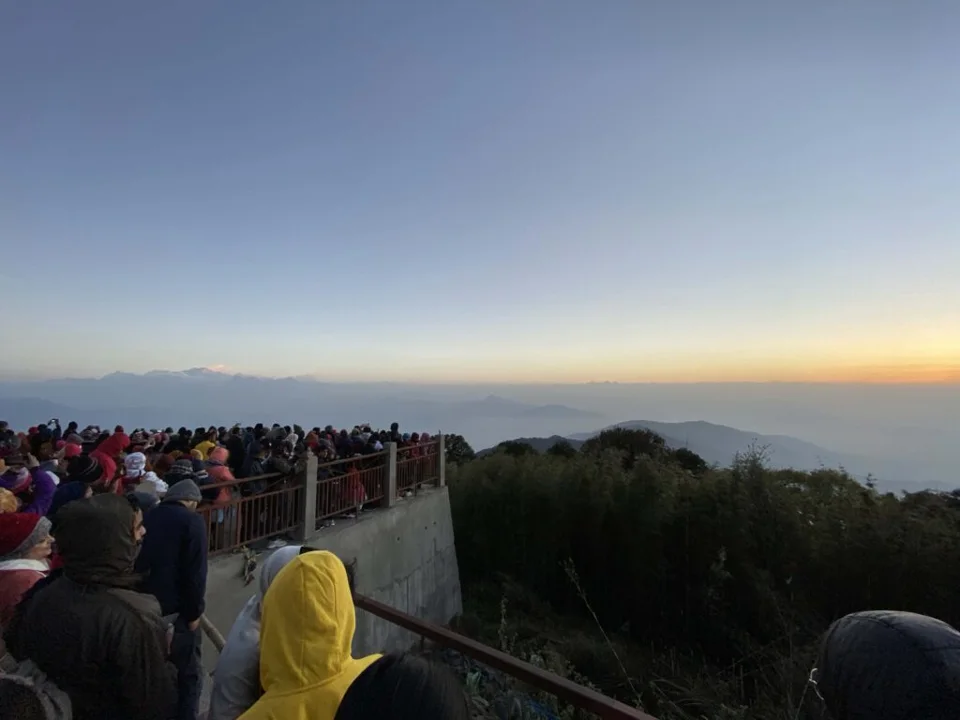
Out the door 3:45am. Reception: a column of a hundred cars already on the road. The Senchal Forest Reserve gust hit us full in the face on the way down. Local women work the parking with flashlights, selling 25 INR hot coffee. We were at the summit by 4:30am with an unobstructed line of sight in every direction.

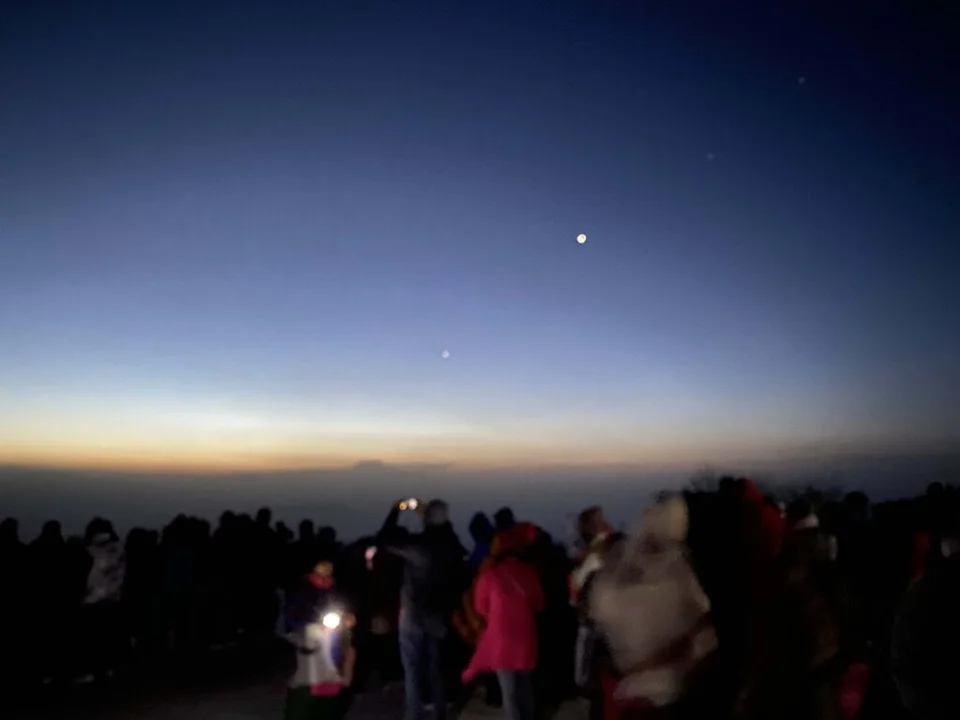
North Star and a gibbous moon, sharp against the dark. Then blue hour rolled in, sun creeping up the eastern horizon.

Golden hour gave way to the actual sun: a red disc clearing the ridgeline.

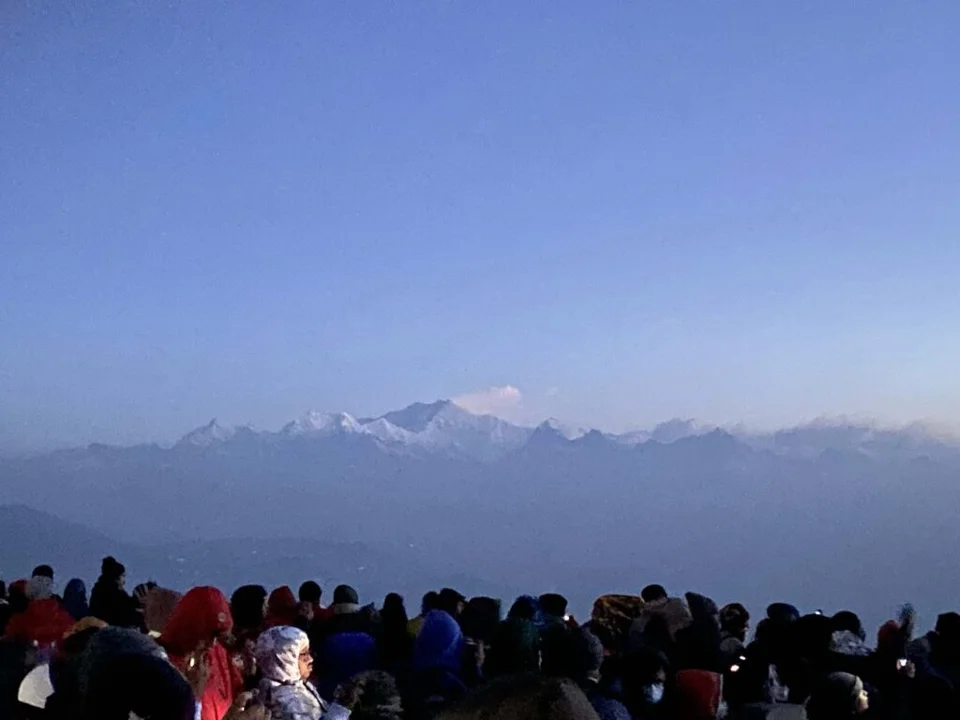
North face: Kanchenjunga lit up. Locals said this was the clearest visibility they had seen in weeks. We took the gift.

The viewpoint has an arena seat-out for those who want to settle in, and locals running paid telescope time on the peak.

Tea break at 8am on the way down, then back to the hotel for a clean-up and a 11am check-out. Bags into the back of the car.

Next: Darjeeling Zoo, 50 INR entry. The mountaineering institute on the back of the property is only accessible through the zoo.

The path inside is steep — challenging for older visitors. The zoo holds a strong roster: mountain goat sub-families, snow leopard, black leopard, pheasants, macaws, Bengal tiger, black bear. The headline animal here is the red panda.

We skipped the mountaineering institute and exited downhill, where Edward met us. Past the ropeway and rock-climbing stops to Happy Valley Tea Estate. The estate was on labour strike for a minimum-wage hike but the tea-garden walk was open.

Tibetan Refugee Camp and museum after that. Photographs document the displacement story; carpets are sewn live in the camp and sold by the artisans.

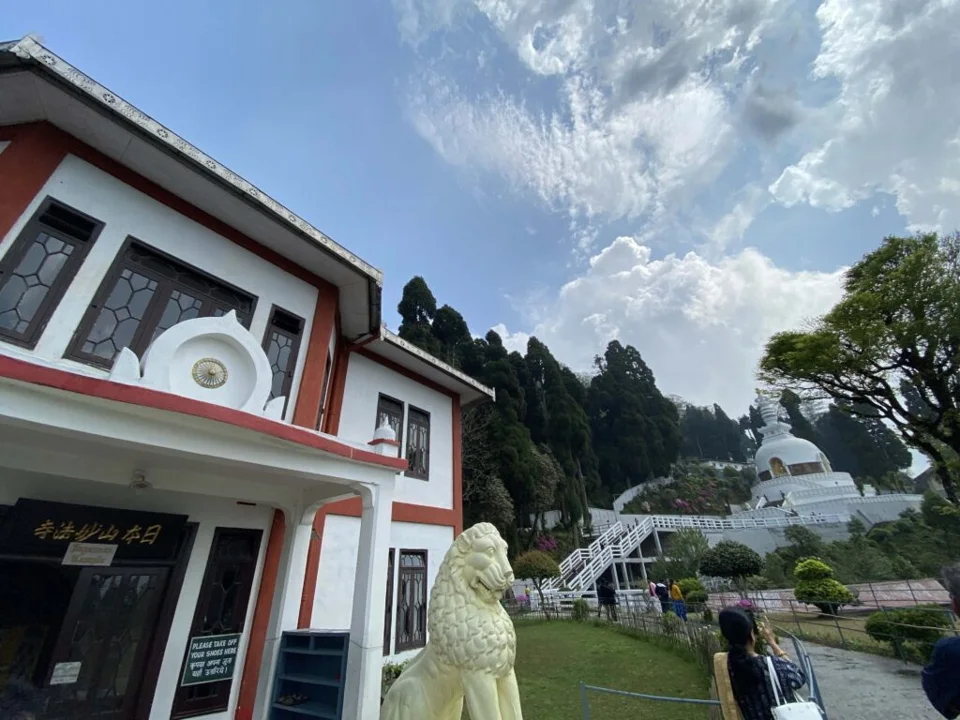
Final stop of the day: the joint Japanese Monastery and Peace Pagoda complex.

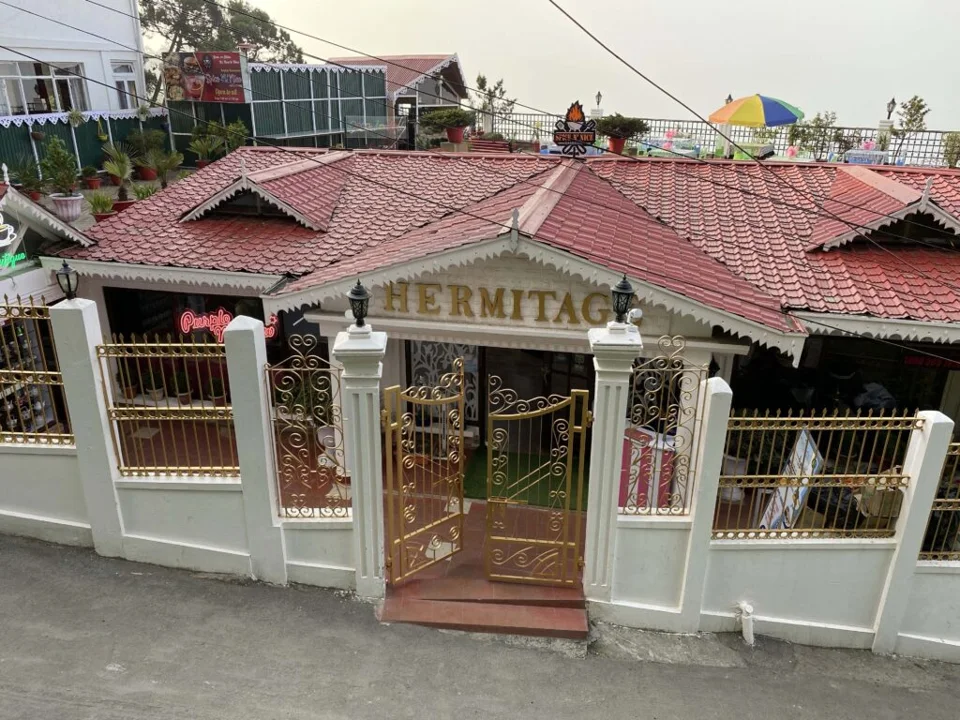
Hermitage Resort check-in window opened at 2pm. Verification was elaborate.

Day Three

Hermitage is built down a slope, not up. Every room gets a mountain view because the floors descend the gradient. We took the cheapest tier, Daisy, three floors down at the bottom.

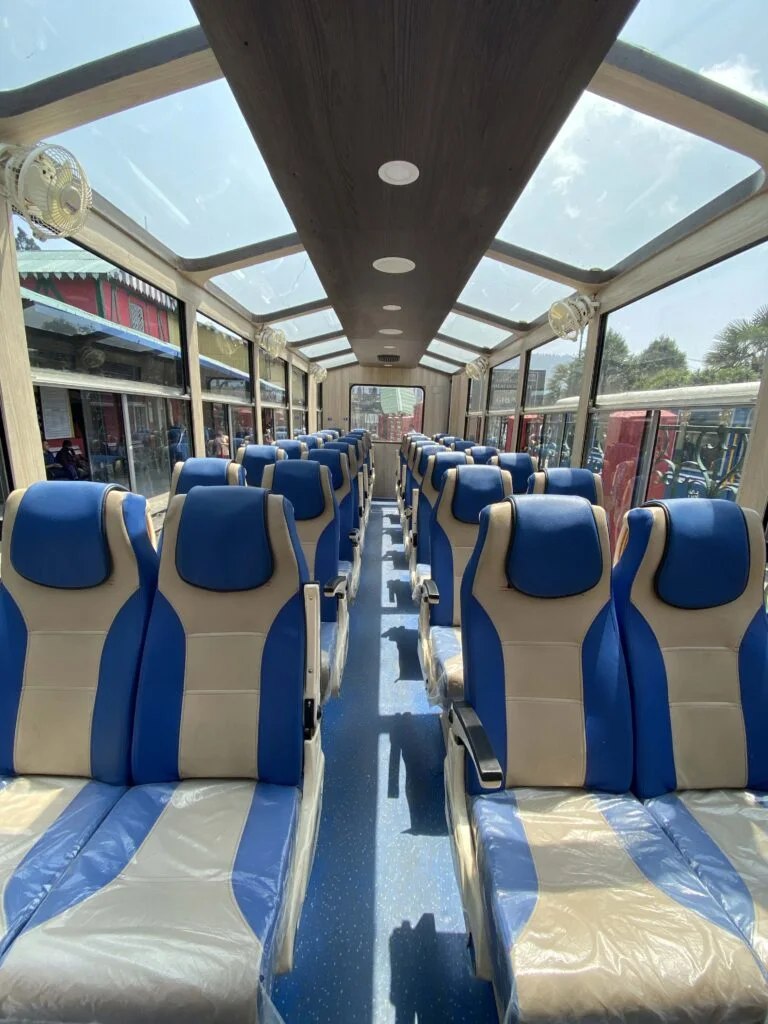
Toy train tickets booked on IRCTC: 1000 INR each for the diesel joyride round-trip, departing Darjeeling station 9:45am. The day before, most seats were still open. By boarding time, sold out.

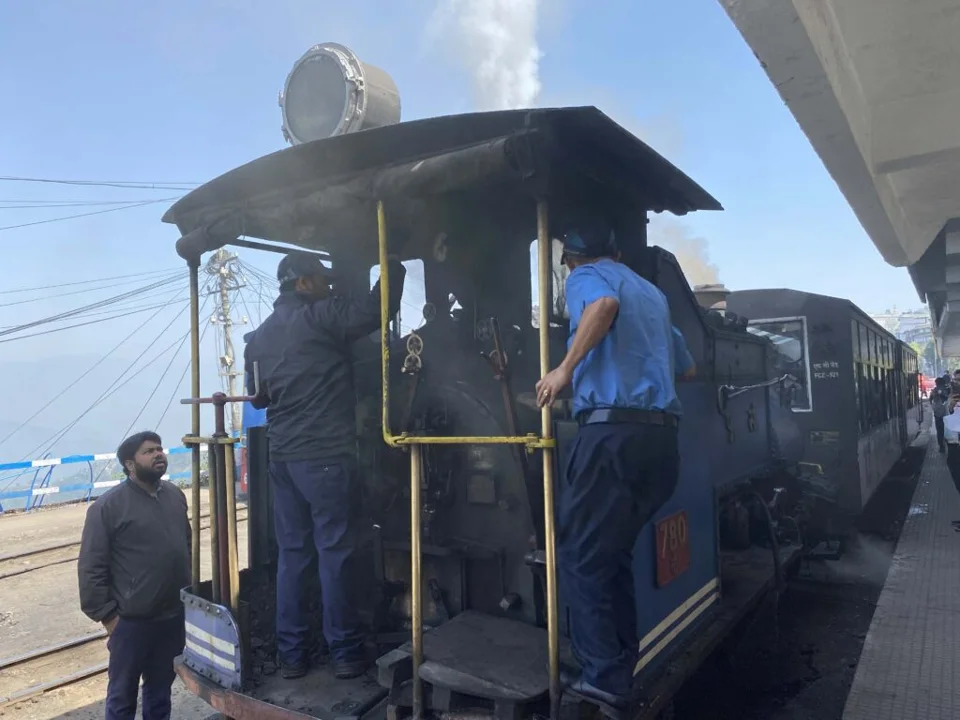
The other option is the steam ride — coal-powered, the original 1881 mechanism, no concession to the environment. 1500 INR each round-trip.

From Darjeeling station you can see Hindu Dhirdham Temple, accessible down a small winding path.

The diesel toy train clears the city in 35 minutes and stops at Batsia Loop. Many travellers get off here. The train holds 10 minutes before continuing.

Total run time to Ghum Station: 25 minutes from the loop.

At Ghum you can do the train museum, continue onward, or take the return ride. We took the return.

Edward picked us up post-return for Rock Garden. The road in is in poor shape, with caved-in sections that have been waiting for repair. The garden is essentially a stack of rocks flanking a small waterfall, with stairways built in for the climb.

We pushed further to Gangamaya Park (920 INR entry), a flat expanse of flowering trees, cherry blossoms, and a small lake for boating.

Lunch at the famous Glenary’s. Per-head average around 400 INR (without alcohol). Bakery downstairs, pub in the basement, dining on top, with an open-air section that allows smoking.

Evening shopping: Darjeeling tea from Nathmull’s Tea Room, the original at the entrance of Mahakali Market on Mall Road. Non-negotiable stop.

Day Four

Different route up to Mall this morning, through New Mahakali Market on the right. Longer walk, much gentler slope. Breakfast attempt at Keventers at 8:15am — they open at 8 — found a 50-deep queue. We bailed, packed breakfast elsewhere, left by 9am.

First stop on the way to Takdah: Rangli Rangot, a viewpoint where wild strawberries grow.

Takdah Orchid Centre, 20 INR entry, forest-division-maintained, basic washroom. They sell low-maintenance plants — cacti, succulents — at the gate from 50 INR.

Onward to the Tinchuley tea garden, which gives you a panoramic of Teesta and Kalimpong from one frame. Rain clouds closed the view by mid-day. Heavy haze.

Lamahatta Eco Park (20 INR per head) was the next stop, a garden inside a pine forest with a wooden elevation built for a top-down view of the area.

For the adventurous: a 750-metre uphill walk through the forest to a sacred lake. The map prints on the back of the entry ticket.

Final dinner at Glenary’s. Bakery cakes packed for the return train.

Field Notes

  • Phone hotels before booking online. Direct deals beat aggregator rates. Our Siliguri hotel handled the entire negotiation over WhatsApp.
  • Toy trains: book day-before on weekdays. Weekends and holidays, book a week or more ahead.
  • Darjeeling Mail sells out months ahead for any holiday window. Book very early.
  • Check the weather forecast before locking dates. Mountain visibility is the variable that determines whether your photos work. Snow runs through winter.
  • Darjeeling tea and Glenary’s. Both earn the hype. Do not skip either.
  • Mall Road horse rides in the morning if you are with kids.
  • Tiger Hill: leave very early. The road is one-way and the daily car cap is real. Late arrivals get the inferior viewpoint, not the summit.

One Recommendation

Tiger Hill at 4:30am on a clear day. Watch the spectrum shift across the Kanchenjunga face: blue, gold, red, white. The moment is short. The visibility is conditional. Take the gamble.

Queening out,
Sayantan
Terra Tadoba

The Trigger

This started a year earlier in Spiti, when Chetan, my room-share on that trip, planted the idea of a proper wildlife trip. Twelve months of birding later, I picked up a Sigma 100-400 for my Sony body, specifically for mammals. Chetan put me onto ShareYourSafari, a small group operator known for tiger reserves. The booking went in April 2021. Cancelled when Phase 2 lockdown hit Nagpur. Re-booked for the season-opener slot, 14-17 October 2021, over the Dussehra weekend.

Onward

Maha Ashtami night (13 October). Out of the door at 4am to clear airport traffic, which was being diverted around a Burj Khalifa replica somewhere on the route. Airport in two hours. 9am flight to Nagpur via Delhi, with a T2-to-T3 transfer mid-stop. Out of Nagpur arrivals at 4pm with vaccine paperwork verified.

Checked in at Hotel Urban Hermitage, 5 minutes from the airport (free pickup-drop-off included), at the very end of the airport road. The metro line runs alongside, Mumbai-style.

Built for corporate stays. Rooms in the mid-2000 INR band. Five floors with a rooftop dining setup and a buffet on the ground floor. The food prices were aggressive across the board, including room service.

Every dish was a miss. The Paneer Jhalfrezi and Special Chicken Angara were both spice without flavour. Even the breakfast — poached eggs and steamed vegetables at 170 INR — was poorly executed.

Bedsheets were dirty (sparing the details). Room service tilted toward unprofessional. On the upside: the rooms themselves were spacious with a real workspace and a large tiled bathroom. The big window over the metro overpass gave a clean view of Nagpur traffic from the curtain.

The Plan

The package: Nagpur pickup at 9am on 14 October, Innova drop to Kolara Gate, stay at Taaru Vann or similar. Day 1 lunch on arrival plus afternoon safari. Days 2 and 3 (15 and 16 October) two safaris each, morning and evening. Day 4 (17 October) morning safari, drop back to Nagpur by 3pm for departures. Total: 6 safaris (3 core + 3 buffer). Cost: 21,000 INR with 50% online upfront, balance on the ground.

Owner-contact: Harshal Malvankar. Group size: 16 participants, batches of 4.

Safari One: Navegaon Core

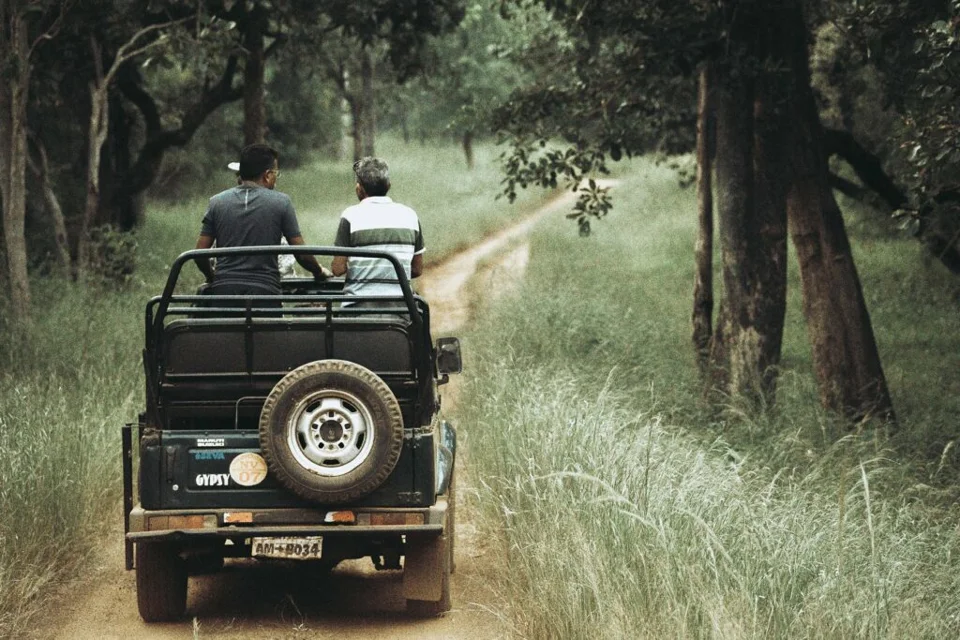
Mr. Yogesh picked me and four others up in his 8-seater Innova at 10am. The remaining group was inbound on later flights landing by 11am. Different vehicles for each batch.

My roommate and the first person in the car was Altaf — trained harpist, far more wildlife experience than me, and a Tadoba veteran with this same operator. Bangalore-based for work, Nagpur native. He had come to pick me up knowing the hotel had handled my breakfast. We took a quick detour through what used to be a birding patch on the city’s edge and bagged peafowl on the way.

Picked up the rest of our jeep at the bungalow of Mr. Rajiv and Mrs. Lalita, senior birders from Pune. Both have travelled extensively and had four prior trips to Tadoba. Their stay was at Taaru Vann, a stone’s throw from Kolara Gate. Most of the group, including me, were assigned Sylvan Wood resort.

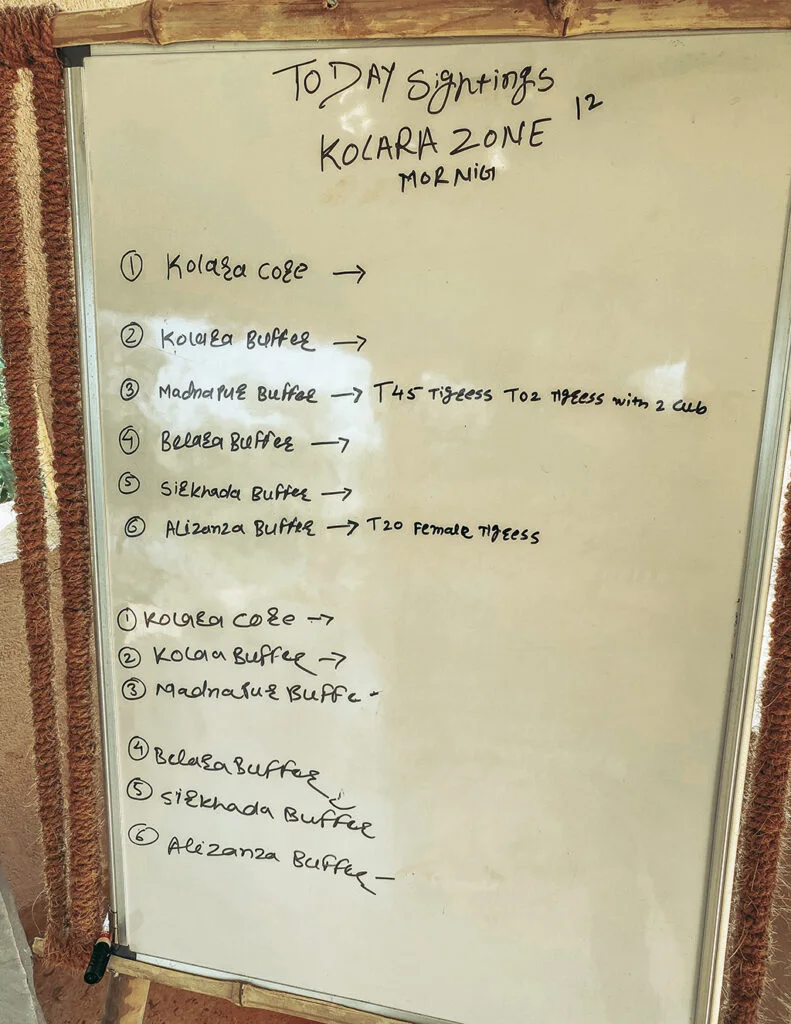
2.5 hours to Sylvan. After dropping us, the car took the couple onward to Taaru Vann, 20 minutes further. Welcome drink at Sylvan, then a quick game of pool. The resort gate has a sighting board updated daily; the previous day’s headline was Tigress Rani. We caught buffer lunch before the afternoon safari.

Each group is assigned a different zone to maximise the spread of sightings. My roommate Altaf got swapped to Mrs. Nina’s car for the safari rotation. Mrs. Nina was the daughter and wife of Bangladesh Liberation War army veterans, in from Noida on her daughters’ insistence.

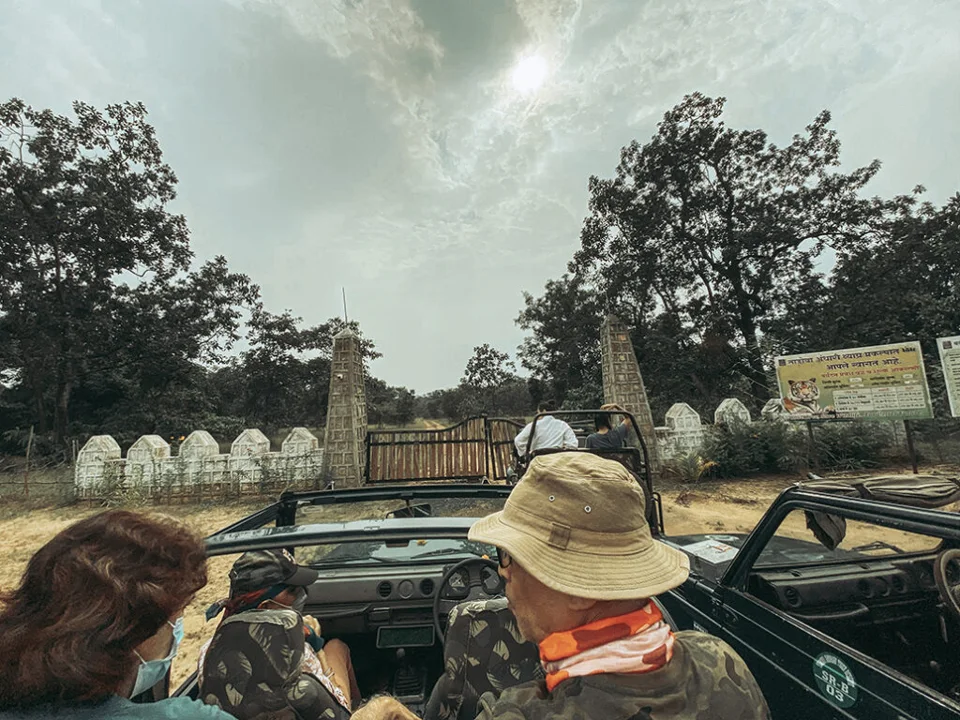
First geography note: Navegaon and Kolara gates lead to the same zone. Evening safari runs 2:30 to 6:30pm. Effective showtime is 3 hours per person, because part of the route is buffer area where humans and wildlife share land.

Hard caps on jeeps per gate, 60 jeeps total across Tadoba. No littering. No leaving the jeep. No phone calls. Phones go in a locked steel hatchet inside the jeep. Pricing tiers: small bus is cheapest, 6-seat jeep is standard, 4-seat (quartet) jeep is premium for visibility, full private jeep is the top tier.

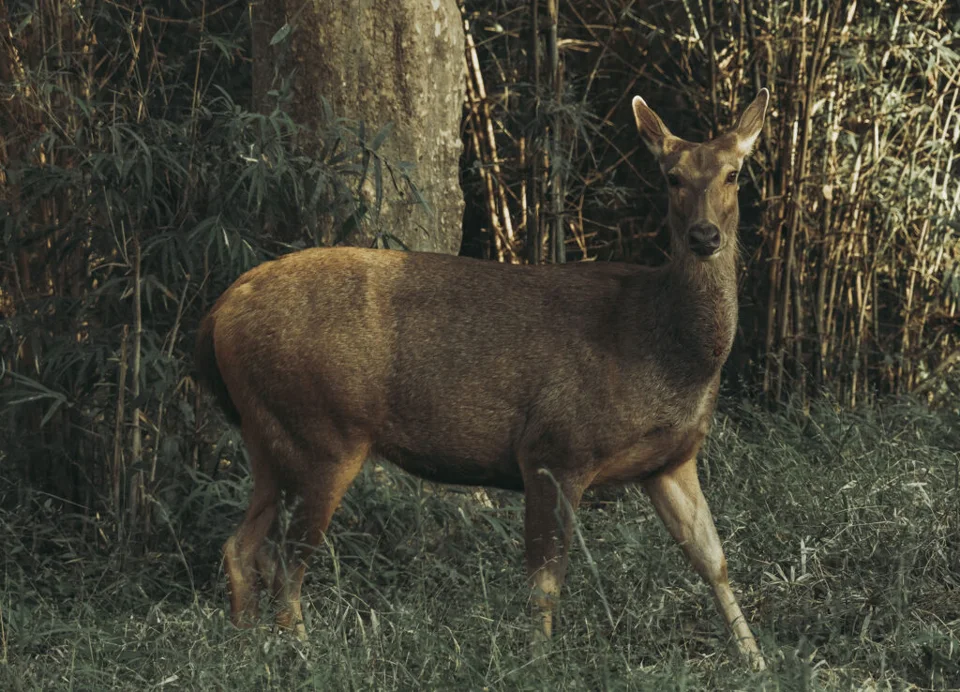
Vulnerable Species Sambar Deer (Rusa unicolor)

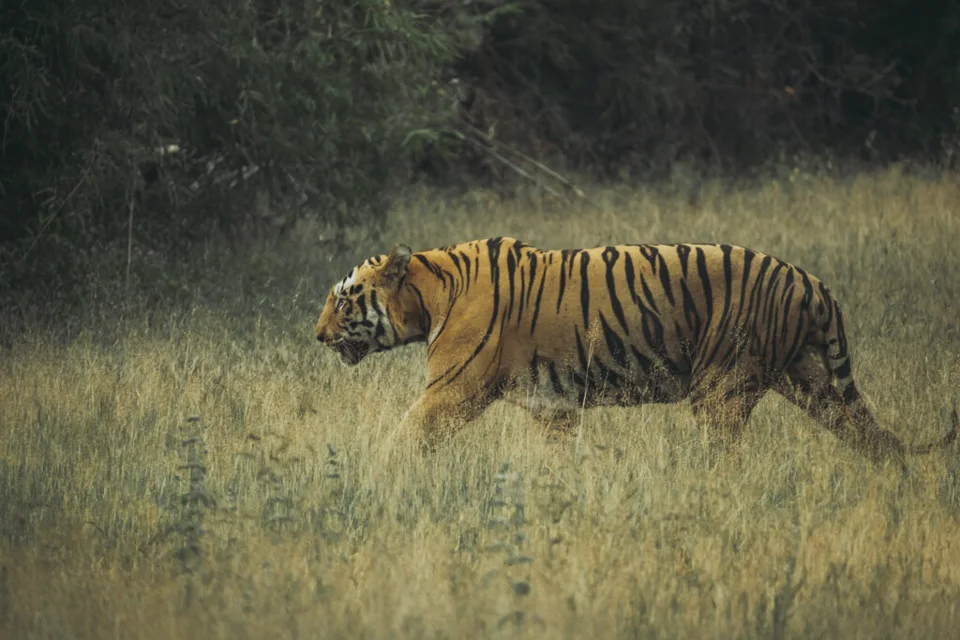
Encounters that afternoon: mongoose, spotted deer, sambar deer, pond heron, lesser cormorant, grey hornbill. Then a rumour about Tigress Sharmili moving through the area with her cubs. We paced an area looking for her. What crossed the road in front of us instead was her partner, the 10-foot male tiger Bajrangi (T-45). He stopped for a split second to look at us, then walked through to the pond. My reflex came late. I caught a clean side-profile shot, nothing more.

Tiger 45 Bajrangi Endangered Royal Bengal male Tiger (Panthera tigris tigris)

100 INR each to the driver and the guide. Generous tip for the day, fully earned. The other groups had blanked. We bonded over paan-flavoured hookah under the stars.

Safari Two: Kolara Buffer

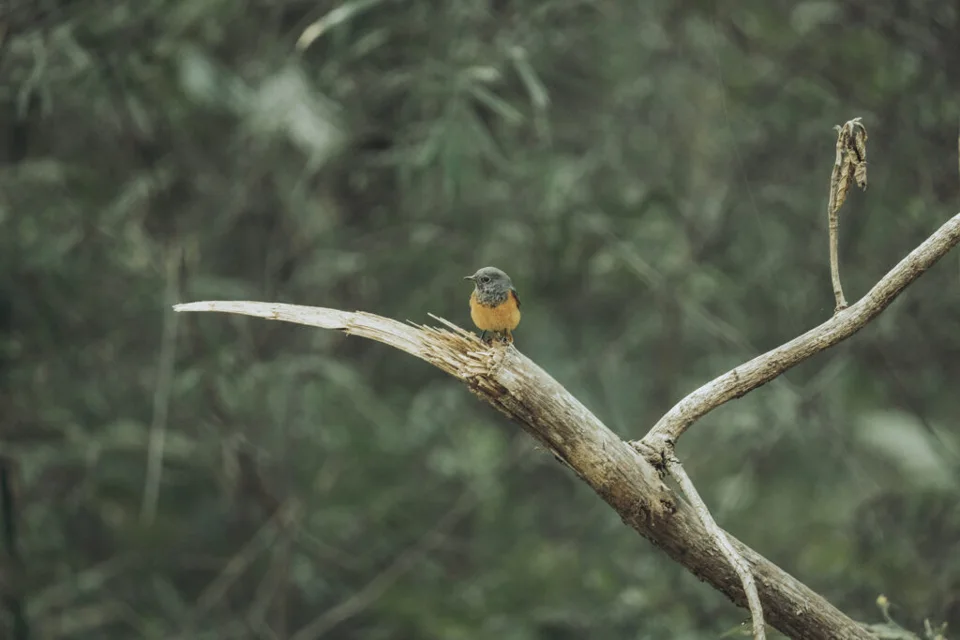
4am start, replacing our scheduled Navegaon Core slot due to an organiser mix-up. That swap cost us the day. We rolled in via Kolara Gate into the buffer zone, where Sharmili and her cubs had a deer kill three days earlier. The carcass was visible at distance. The tiger was not. A male Black Redstart held its perch on the waterhole until the jeep traffic pushed it into the deeper jungle.

Black Redstart being bothered (Phoenicurus ochruros)

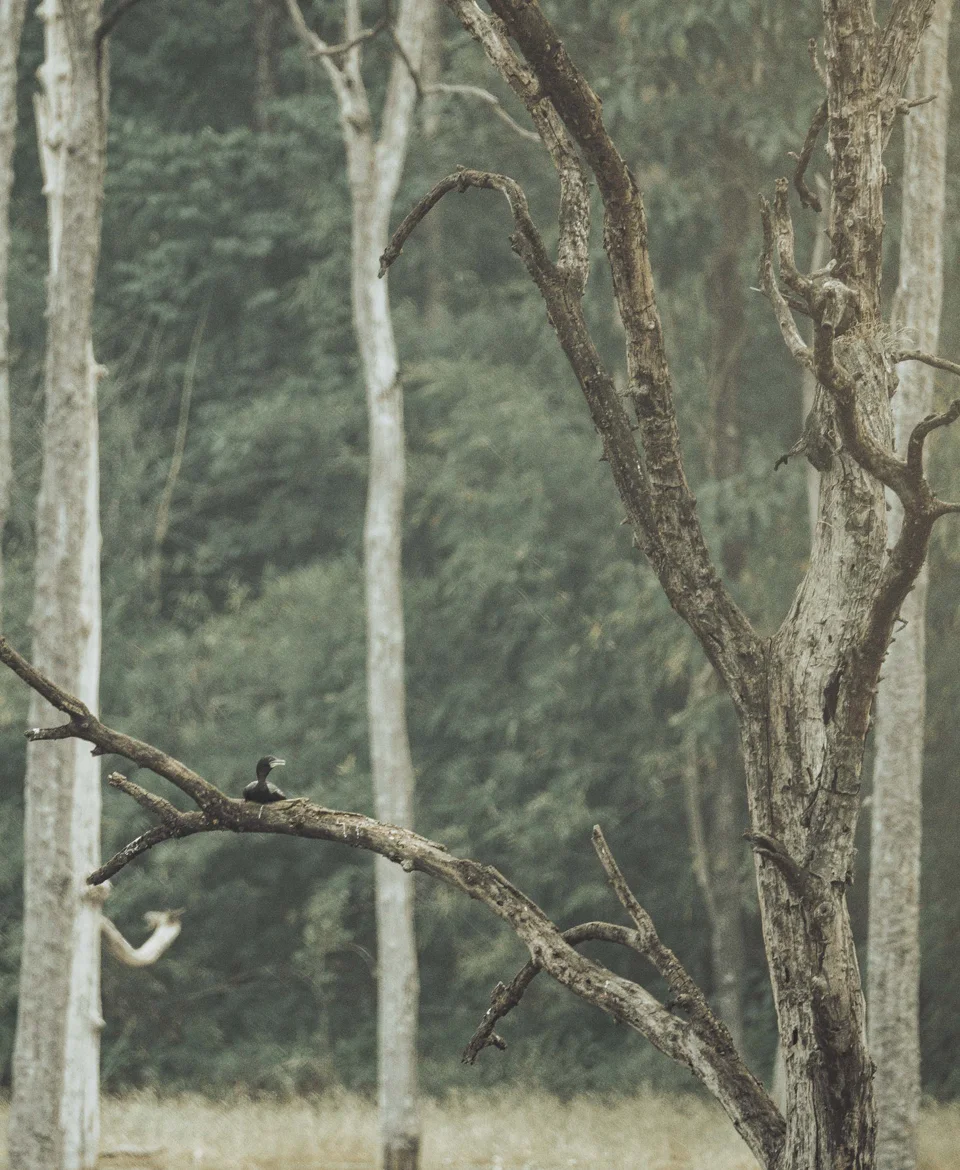
Drove to a second waterhole on the rumour-trail. Fresh pug marks on the bank, no animal. The waterhole was a bird hotspot: a basking cormorant, green bee-eaters, bulbuls.

Nesting Cormorant (Microcarbo niger)

All the jeeps cycled in and out around waterhole no. 2 hoping for a return visit. We retreated post-breakfast at 9am, expecting a blank for everyone.

Wrong call. The teams that went into core spotted T-54 Matkasur, the old male, lying in tall grass. They could not move for 2.5 hours straight — moving on a sleeping tiger is unethical and the rangers enforce it. The sighting held until Matkasur woke up, yawned, and walked away.


View this post on Instagram


A post shared by Devesh Desai (@deveshdesaiphotography)

Safari Three : Sirkada Buffer

Sirkada entrance was more than half an hour drive from the Kolara gate, which made the experience that much extra to deal with. This was followed by an exceptional overdose of bumpy roads, fear of the jeep getting stuck in mud amidst forest. The guide reported that there has been no sighting in Sirkada and Alizanja in over a week. As a result, chances of encounter with leopards and sloth bears were considered higher in this area.

White-breasted waterhen searching for snack (Amaurornis phoenicurus) 

Encountered wild boars and waterhen and a whole lot of body pain. With truck load of disappointment, our car slowly crawled to the exit gate. The guide chose to stop near a massive water body as we waited to see the deer family prancing away.

Spotted Chital Deer family on high alert (Axis axis)

All of a sudden, the deers went on high alert and started generating repeated warning calls. The guides followed the direction they were staring at and predicted that the resident tigress and her cub will sneak out for water. Finally there seemed to be a real chance of catch!

Darkness fell on like a cloak as the calls got louder, everyone had their eyes peeled up front. As other gypsy followed suit, couple of the groups went too enthusiastic and drove too much into the expected path, ignoring our constant signal to go on reverse. However the damage was probably done as the barks came to an abrupt halt, likely the tiger getting spooked and taking a different route as so many humans encroached their path.

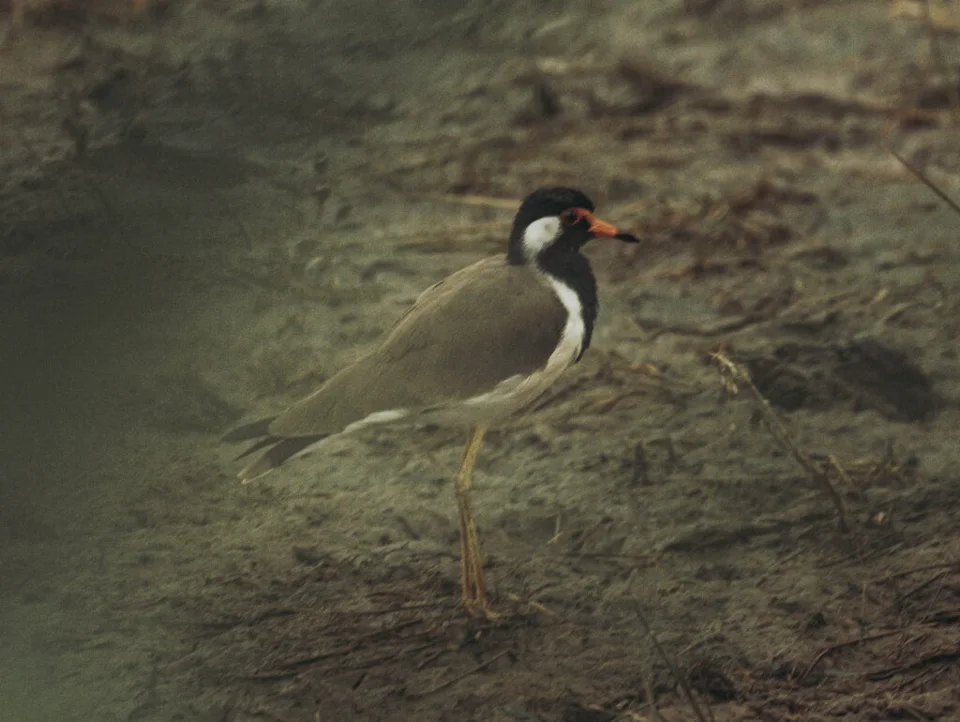
Red-wattled lapwing searching for food (Vanellus indicus)

To add real salt to our wounds, we came back to the news that the Kolara core group had head on encounter with the coveted tigress Maya and her one surviving male cub. It is presumed that the remaining three cubs from last year are dead now, although their body had not been recovered.

Safari Three: Pause

Coverage of this safari is missing from this post. We saw little of note that round. Jumping to the next.

Safari Four: Kolara Core

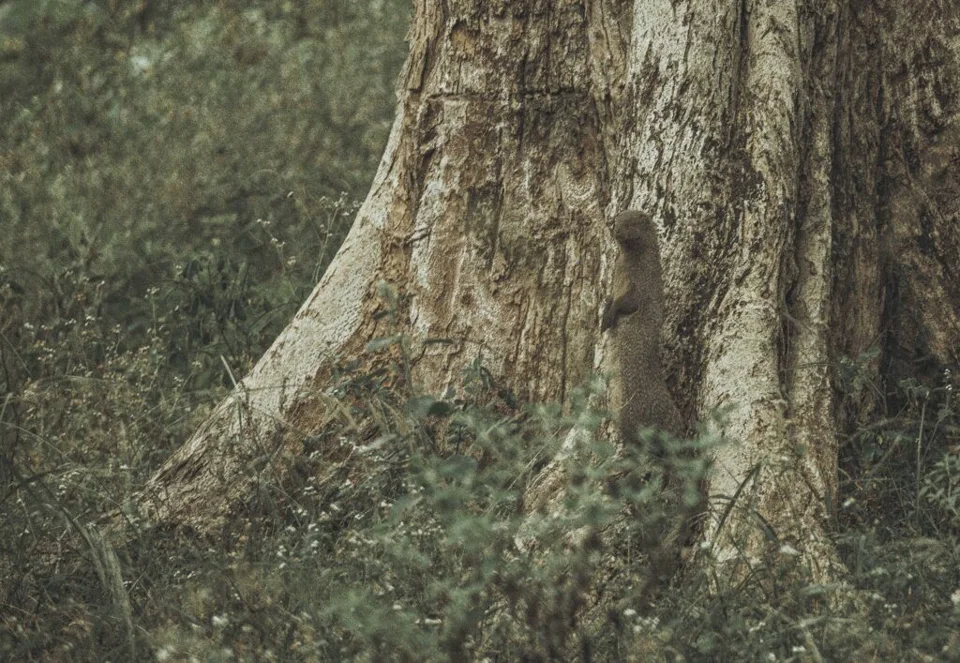
Straight to the spot where Maya had been sighted the previous night. On the way, the deer alarm cued up again, with a mongoose standing in the open this time. Local lore: a mongoose sighting brings luck. The probability that day did, slightly, agree.

White-breasted waterhen searching for snack (Amaurornis phoenicurus) 

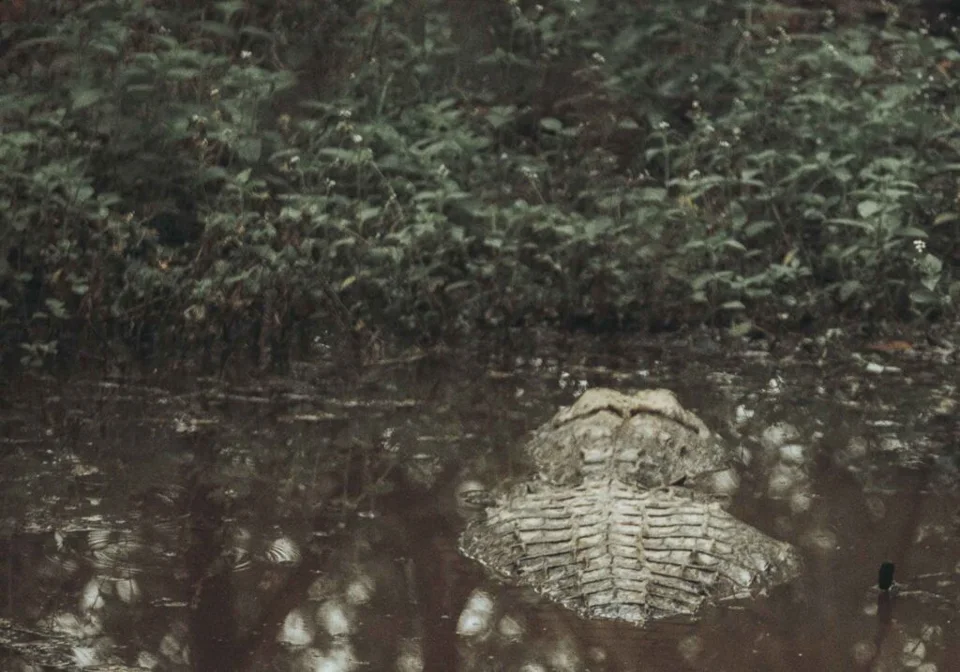
After the deer settled, we kept searching. The Tadoba lake shore has a designated breakfast spot with a working washroom. We worked through the hotel’s packed breakfast there. A crocodile sunbathed in the lake at the dimensional fidelity of a floating log.

Spotted Chital Deer family on high alert (Axis axis)

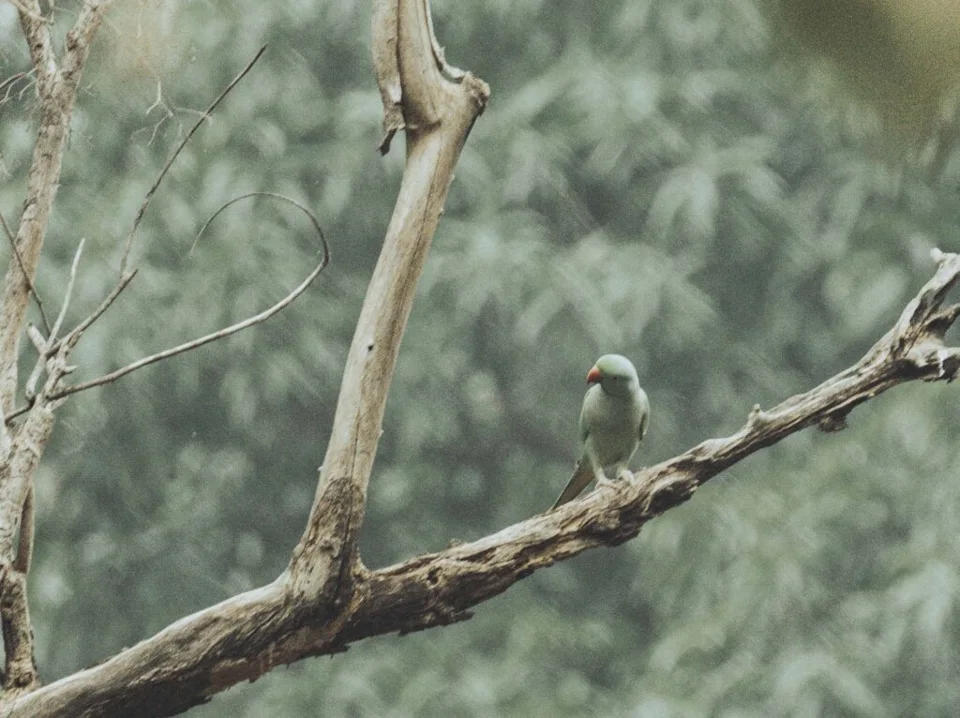
The breakfast point hosted parakeets and golden-headed orioles flying through. Best meal location across the zones.

One vehicle radioed Maya in a paddy field. The convoy regrouped. Multiple gypsies clustered too tight, blocking each other’s lines. Eventually a cub became visible in the distance, swimming. It was clear we were not getting a head-on frame today.

Red-wattled lapwing searching for food (Vanellus indicus)

Safari Five: Kolara Buffer

Switched out of Alizanja for a Kolara buffer roll. Bad guide call cost us the run. Another car in our group held position with Matkasur walking the road behind their jeep — he was looking for a tree to mark territory. Other gypsies got too close. He left the road for cover.

Indian grey mongoose on alert (Urva edwardsii)

Then a Sharmili rumour went up. She was visible behind a small stream with her cubs.

Then it broke. The first car blocking the cleanest view was our own tour organiser’s. Rain rolled in. Twenty gypsies crammed into a 10-foot ditch trying to position. Sharmili read the chaos and walked away. The cubs followed.

Safari Six: Kolara Buffer

Final attempt. Fifteen minutes in, a sloth bear walking circles behind a thicket, anxious about the engine noise. He never came out. Then the headline: Matkasur, in the open. He walked the narrow single-lane track within the forest, with ten-plus jeeps in front of him and behind. We were fourth in the back convoy. Tracked the rear of the tiger for a clean ten minutes.

The vulnerable mugger crocodile (Crocodylus palustris)

Until someone got too close. He turned, urinated to mark territory, and stepped sideways into the jungle. End of the trip.

Hotel and Food

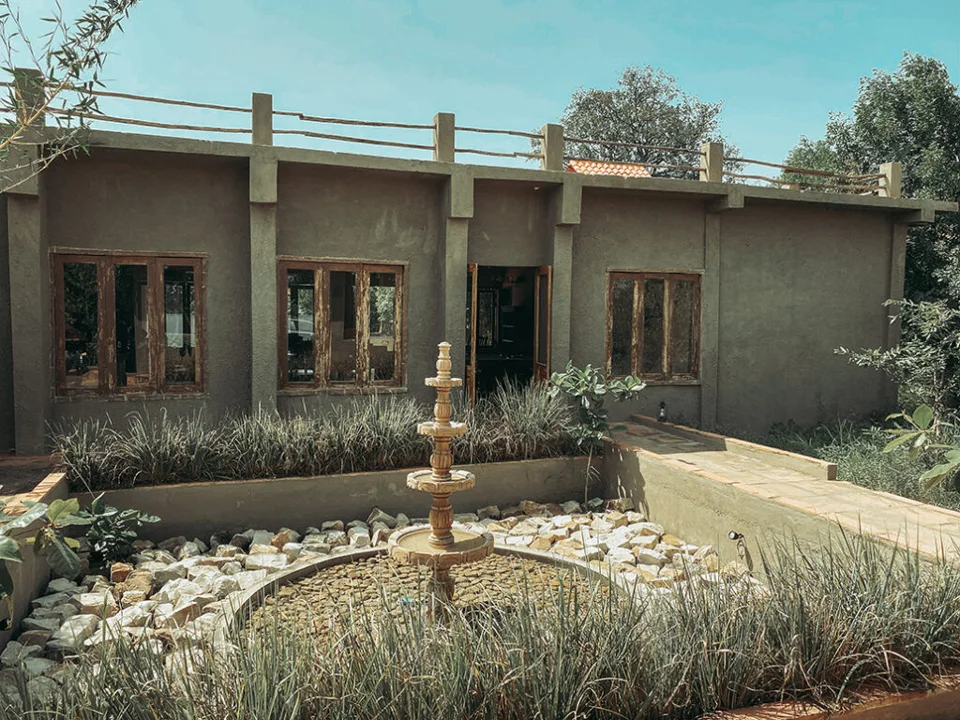
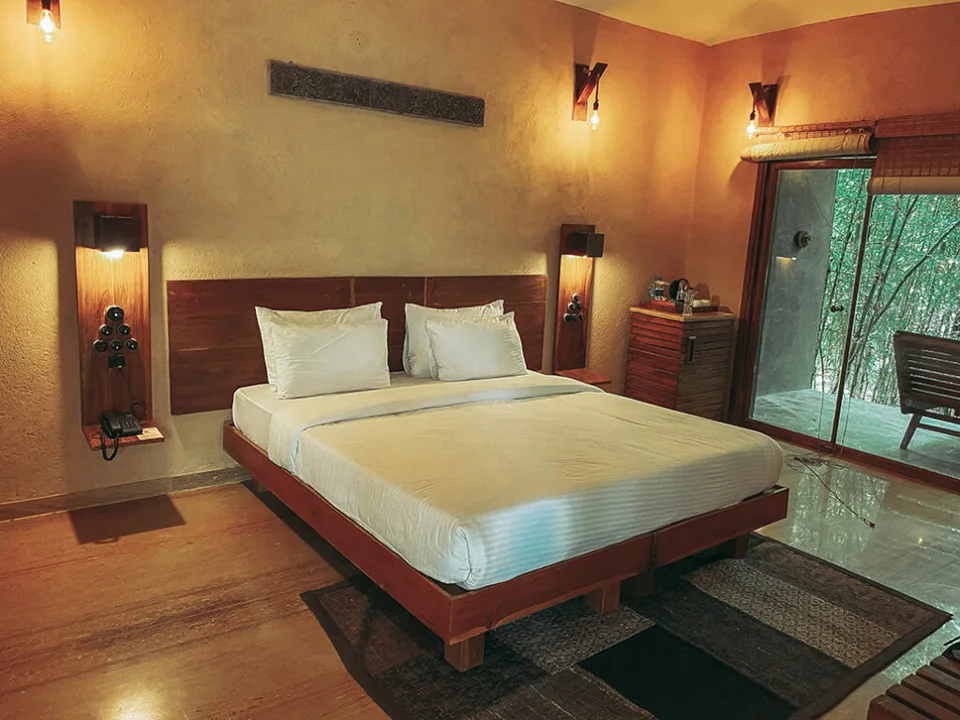
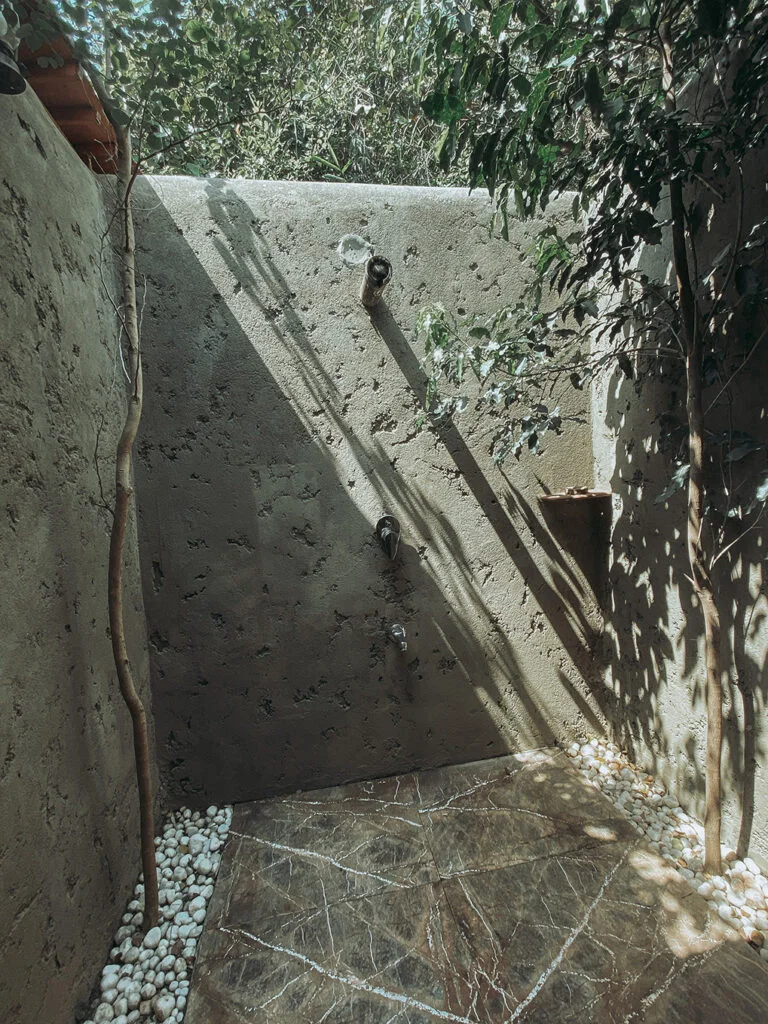
Sylvan Wood: large wooden rooms, deep balconies, both open and closed shower areas, timbered architecture top to bottom.

Parakeet
Maya’s male kin

Slightly unclean swimming pool in the centre. Healthy tree cover around the property. Common room serves as the dining area. No Wi-Fi. Mobile internet is poor.

Black Wood Spider infesting the jungles (Nephila kuhlii)
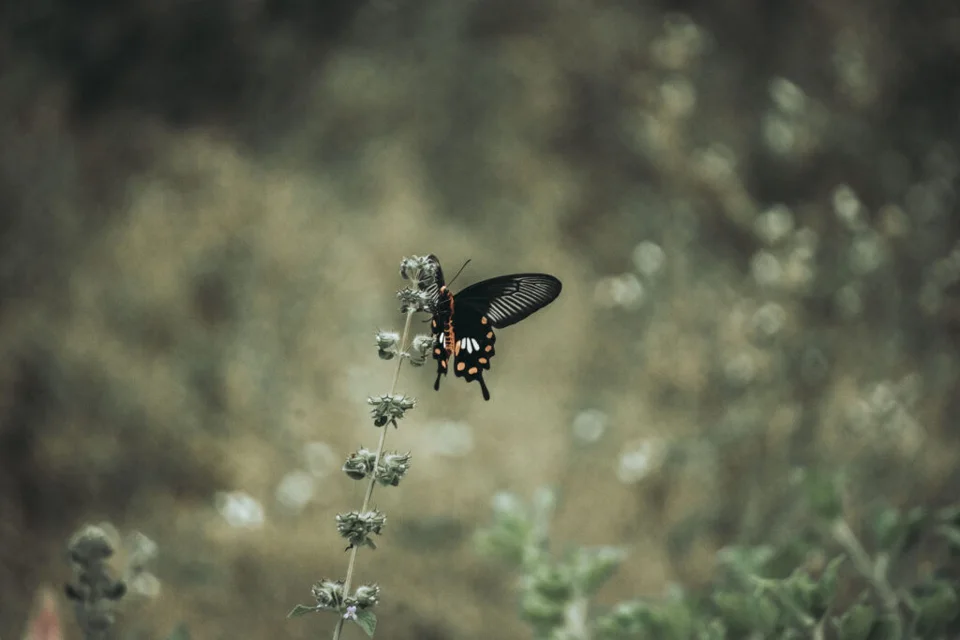
Common Windmill butterflies (Byasa polyeuctes)

Buffet for lunch and dinner, simple. Breakfast is packed for the safari. Hookah (500 INR) and drinks on request. Staff is courteous and fixes things fast. Our organiser ran a Maharashtrian buffet plus a gala dinner that landed several notches above the standard menu.

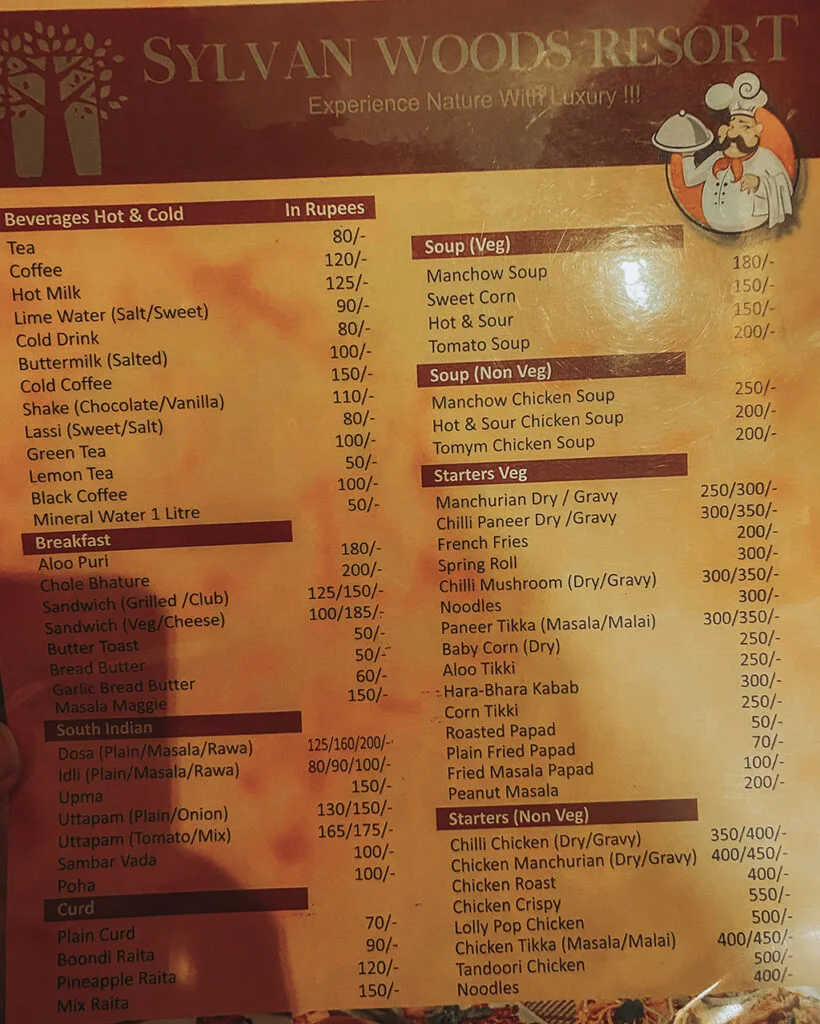
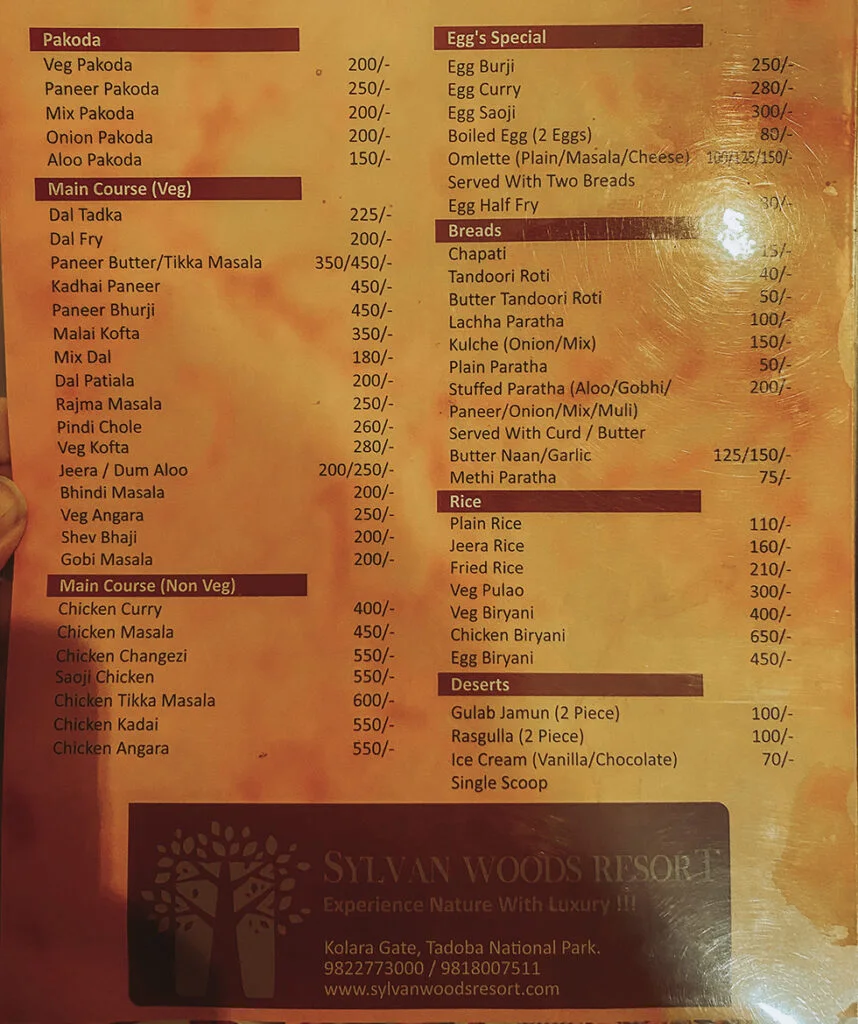
Separate paid food menu in the rooms. Bottled water is chargeable.

Return

Wrap-up at noon with a group photo session. Same Innova, same Mr. Yogesh. Under three hours later I was at Nagpur airport. The lounge is small. Security does not let you into the boarding gate area until 2 hours before your flight.

Met some of the same group at the gates — Maharashtra-bound on the 7:30pm flight, Bangalore-bound on the 8pm. The Karnataka-bound passengers needed a mandatory RT-PCR; the airport clinic ran the test for 850 INR, with results landing around the time their flights touched down.

Field Notes

  • Stay in the jeep. Tigers in Tadoba have killed humans before. No exceptions.
  • Don’t litter, stay quiet, stay ethical. Heavy fines for breaking these.
  • Phone in flight mode for the safari. Some guides will let you keep it out of the box unofficially. Do not bring it out in the open during a sighting.
  • Use a real operator for VIP slots. Self-booking the slots, especially on weekends or holidays, is a separate full-time job.
  • Long lens, padded. The roads are bumpy. A long lens without padding is a destroyed lens. Reaction speed becomes a separate skill on these tracks.
  • Calibrate by season. Summer (April-May) gives you easier sightings on dry waterholes. Winter gives you a green backdrop. Zone, guide, and weather are all individual variables that compound.

One Recommendation

It was my first tiger safari. The thing I would recommend is the experience itself. If you are doing this for the first time, target peak season — April to May — for the highest baseline odds.

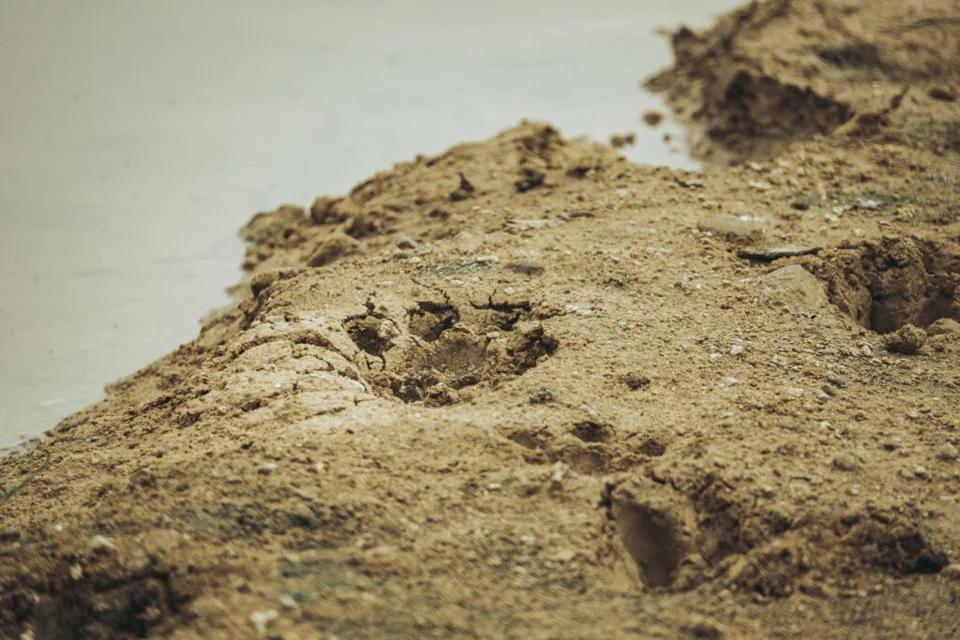
Pugmark of a Big Cat

We will be back.

Sayantan

Dabbling Daman

The Trigger

Post-lockdown, late December. The itch to leave the city was real and the standard hill station list was crowd-saturated. Daman was the offbeat pick — small Portuguese-era enclave, four hours up the coast from Mumbai with a quick swing through Gujarat. 2 hours of planning was all I gave it.

The Plan

  • Loose itinerary built around a few likely spots and rough distances
  • Hotel for 26 December (Saturday) on Booking.com — 2400 INR
  • Cab + driver via Savaari — 6300 INR

Hotel Fiasco

Departed Kanjurmarg 5pm, drove north past Thane toward Vapi. Tolls ~600 INR including the next-day return permit. Driver had a FASTag, so the highway nakas were quick. The final 100 INR was the Daman entry fee, paid upfront.

Two entrances into Daman. We took the smaller one. No permit checkpoint here, which felt wrong; the larger entrance is the proper one if you want a clean record on entry.

Google Maps put Seashore Rooms in the central church complex. We rolled into the precinct at 9pm, no signage, no people, no obvious entrance. A phone call to the hotel produced a curt response: rooms full, you should have called ahead.

Quick Pivot

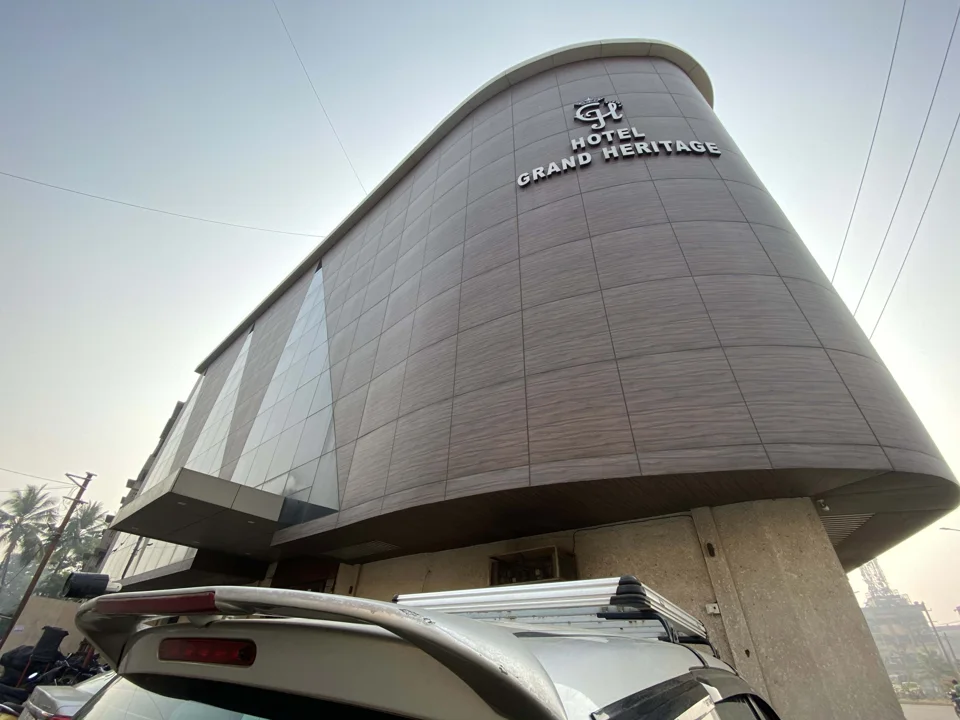
On-the-fly booking: OYO Capital O 76790, Hotel Grand Heritage. 2700 INR for a Deluxe room, no food included.

Room-service food was the surprise. Better than the room rate suggested.

Portuguese Heartland

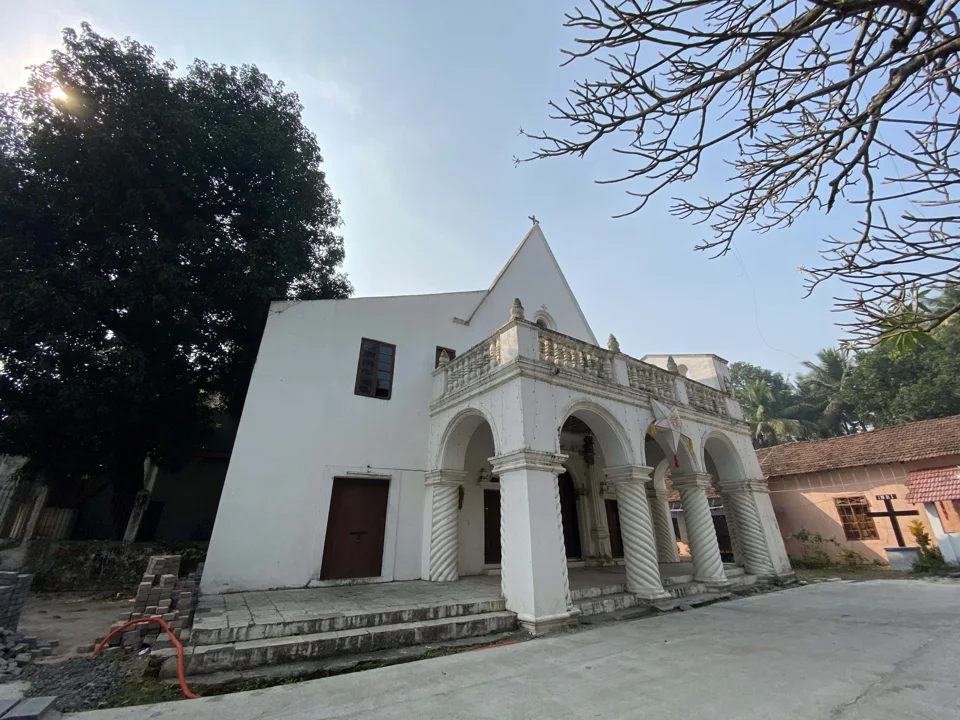
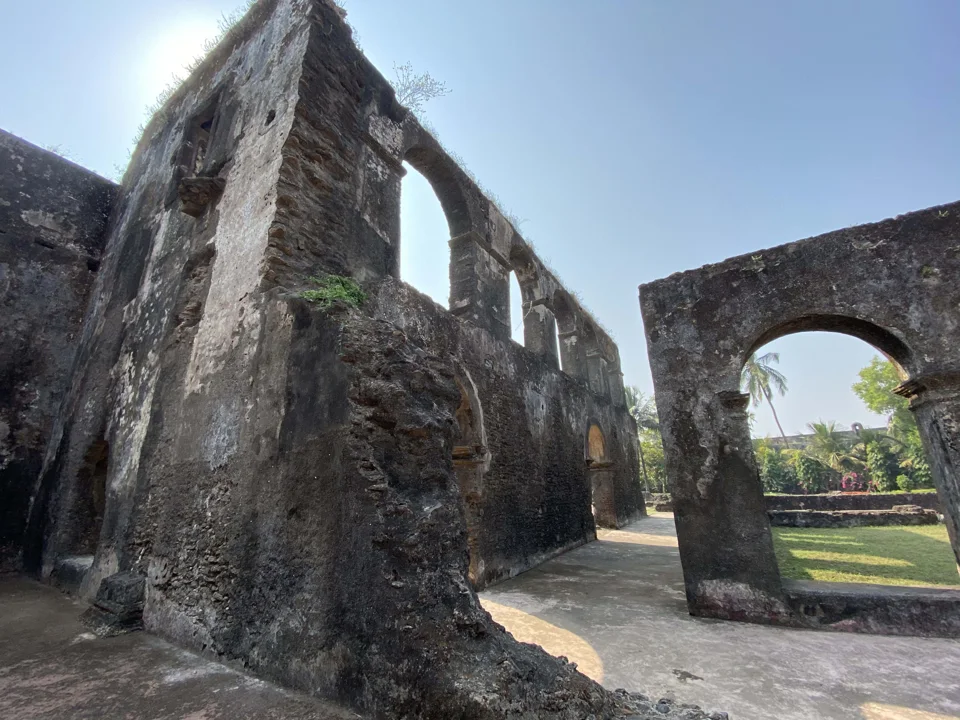
Morning. Back to the church complex we had U-turned out of the night before. Fortification walls run 50 feet up around an inner sanctum holding several churches and a few government buildings. The disappointment is unanimous and clear: most churches stay closed outside of mass hours.

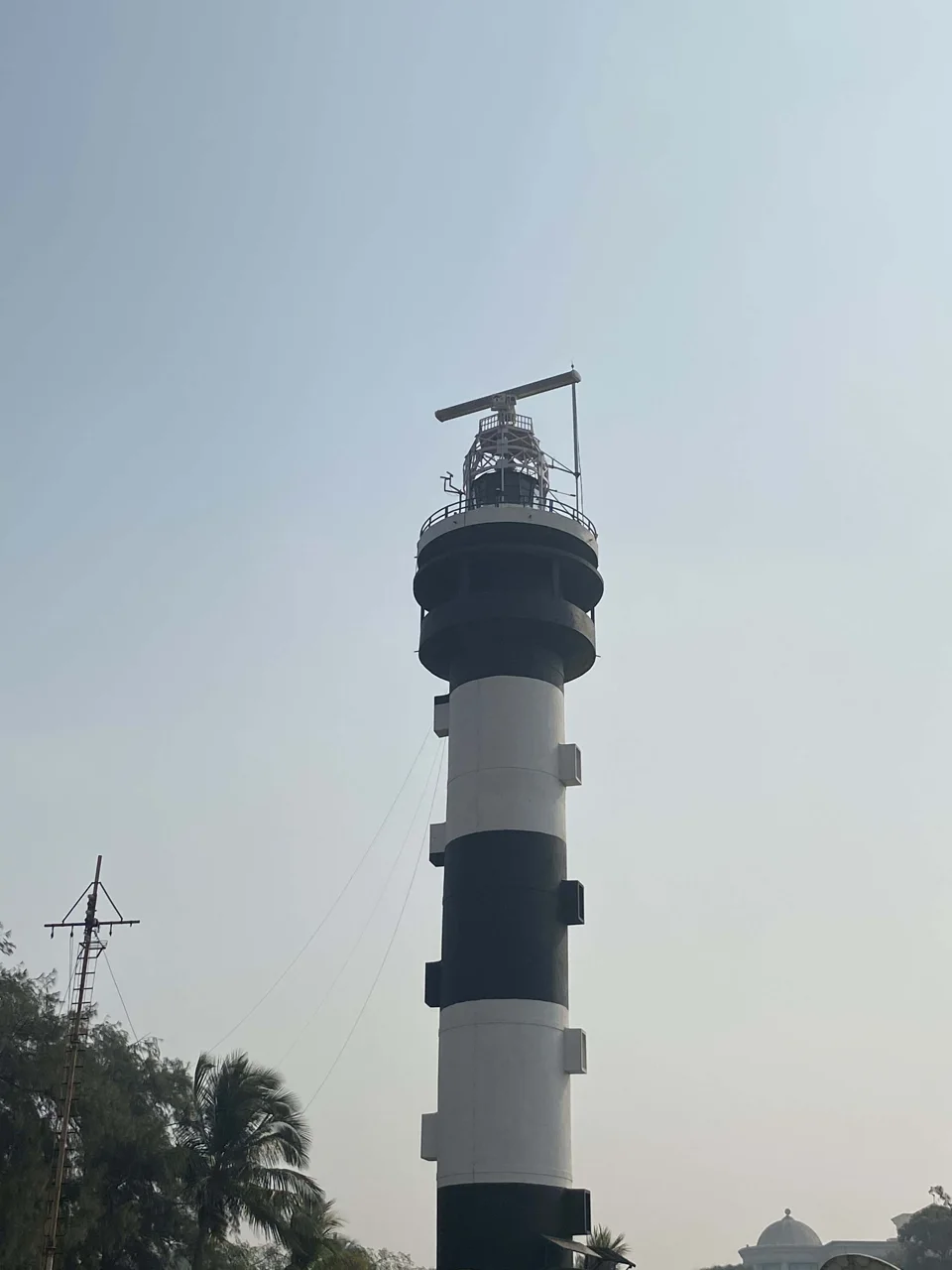
The famous lighthouse was the next stop. Blocked. Until last year you could climb the spiral metal stairway inside and look out over the ocean. Not this year.

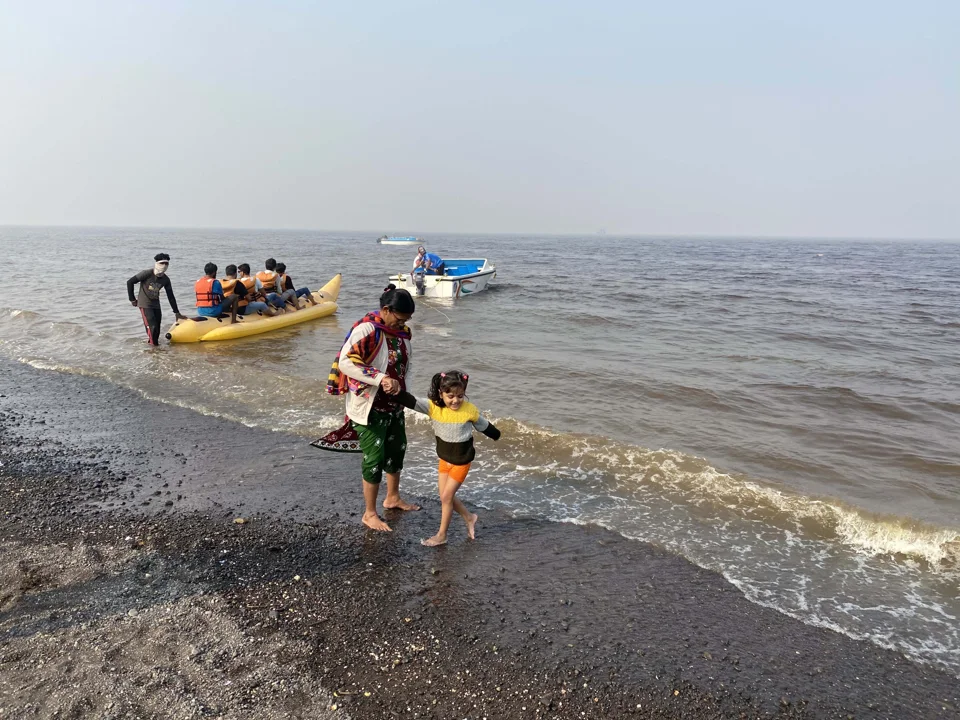
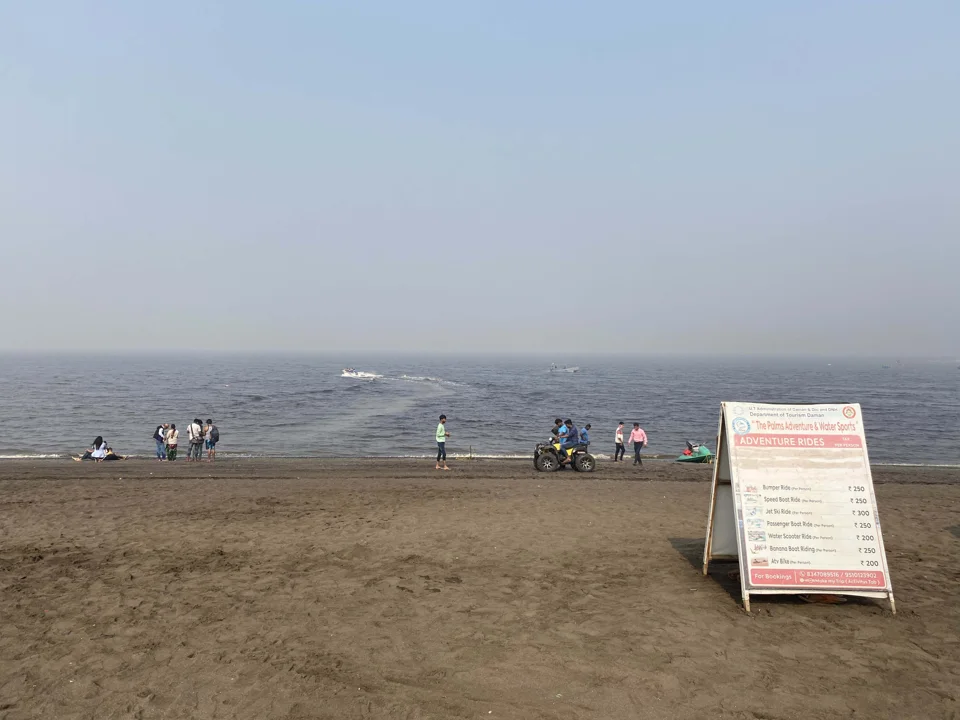
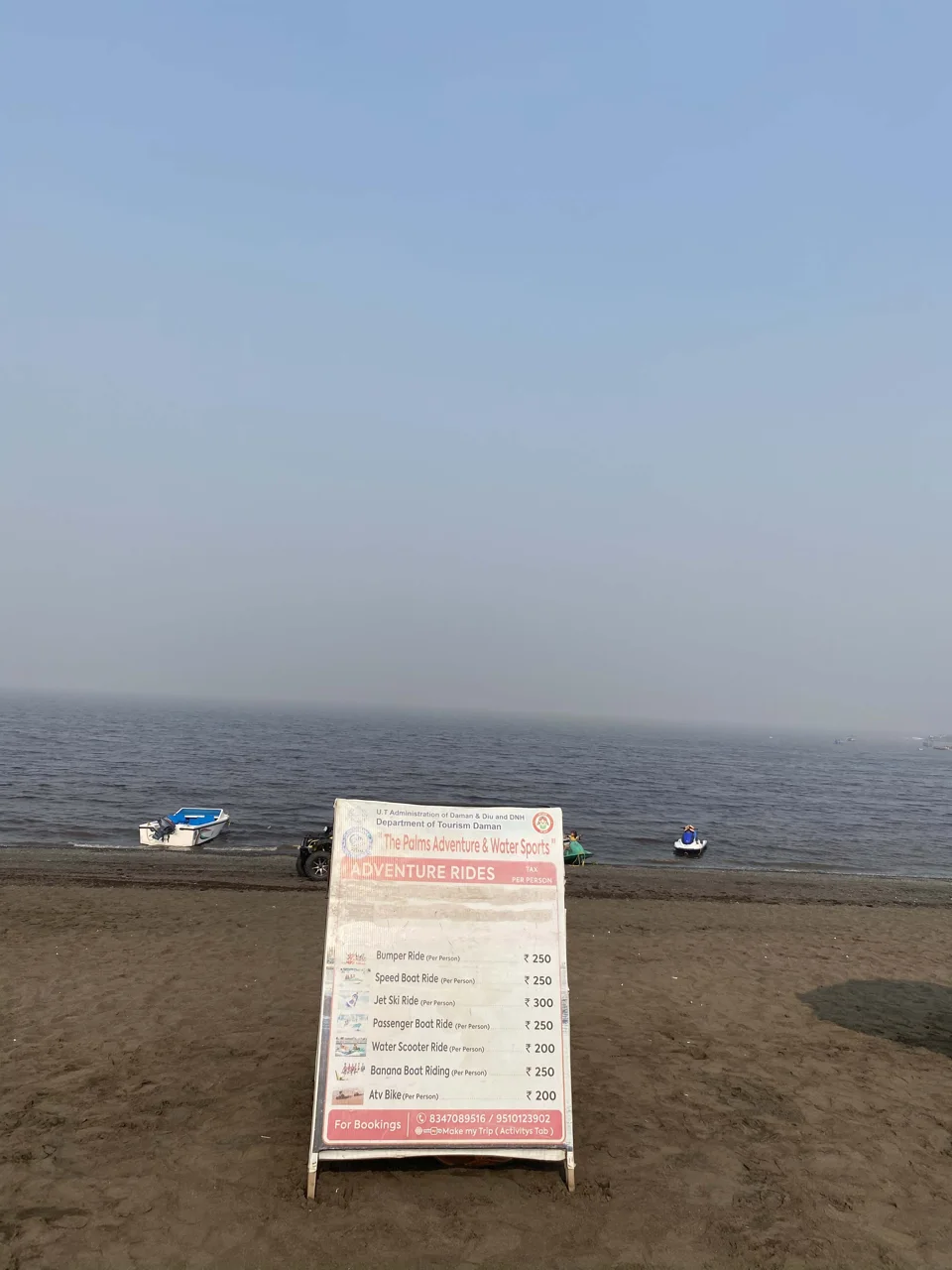
Moti Daman beach sits directly in front of the lighthouse. Brown sand, a few hawkers, basic water rides. Tidiest beach on the strip and the least touristy.

Rate chart for water rides below.

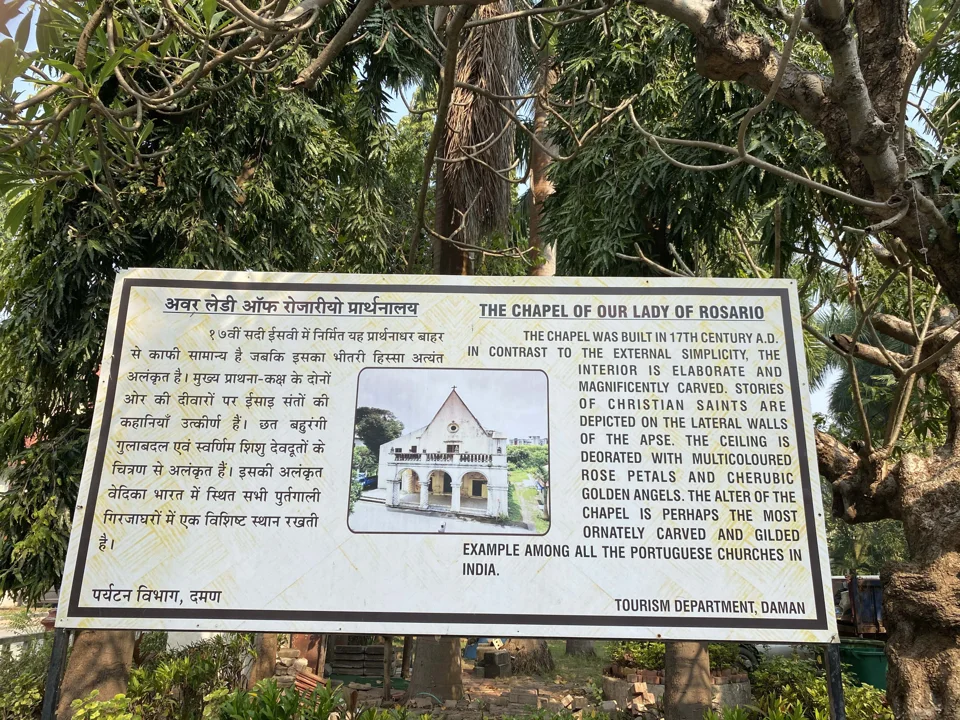
The Chapel of Our Lady of Rosario sits at the boundary of the inner walls. Closed.

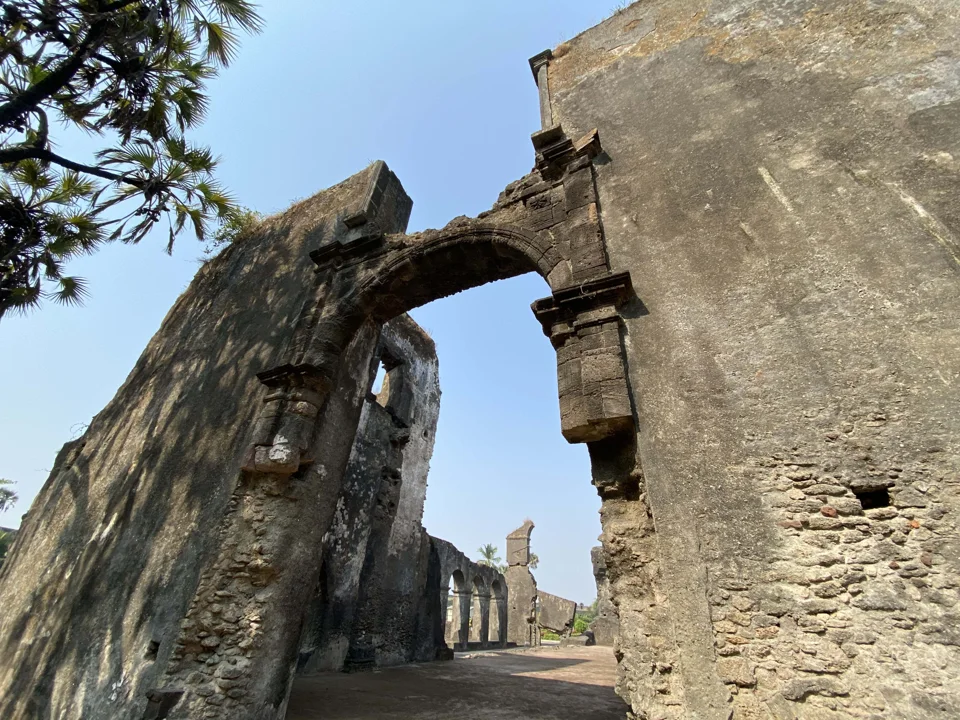
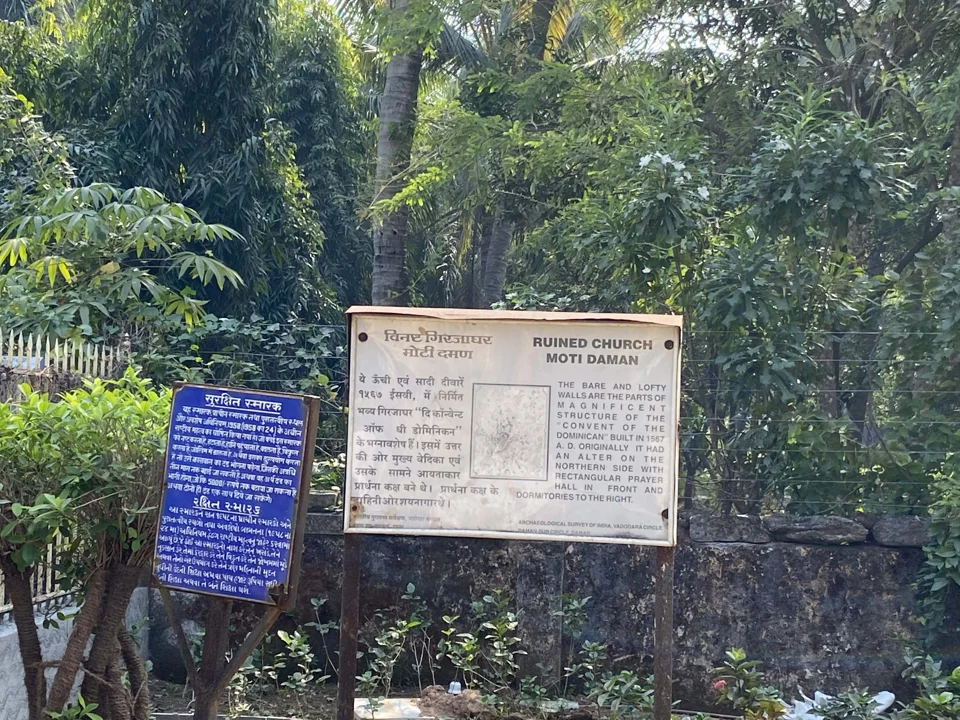
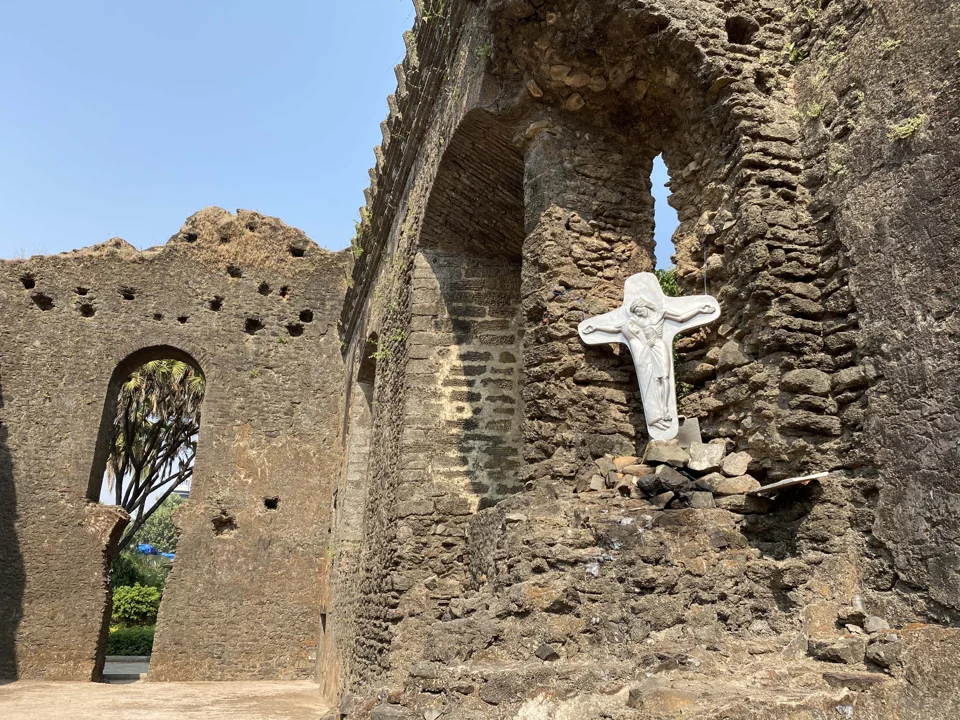
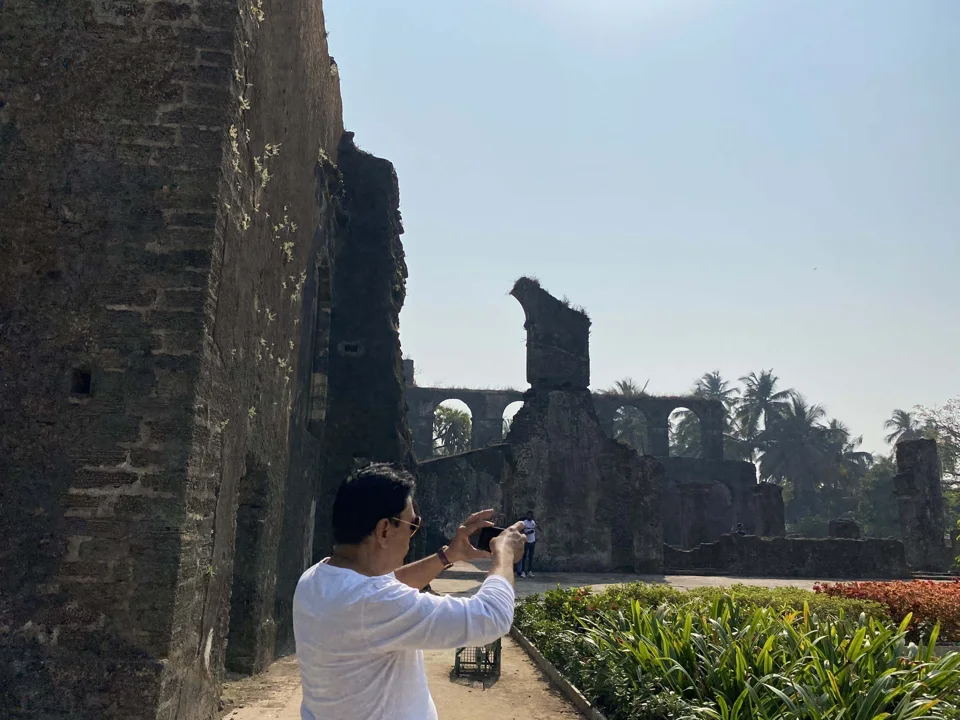
Past Bom Jesus (also closed), opposite the central Administration Secretariat, a left turn took us to a place locally called The Ruined Church.

The garden on the left flank is maintained. There is no idol left inside. A plastic figure of Christ sits in the tattered shell.

Mirasol Lake Garden

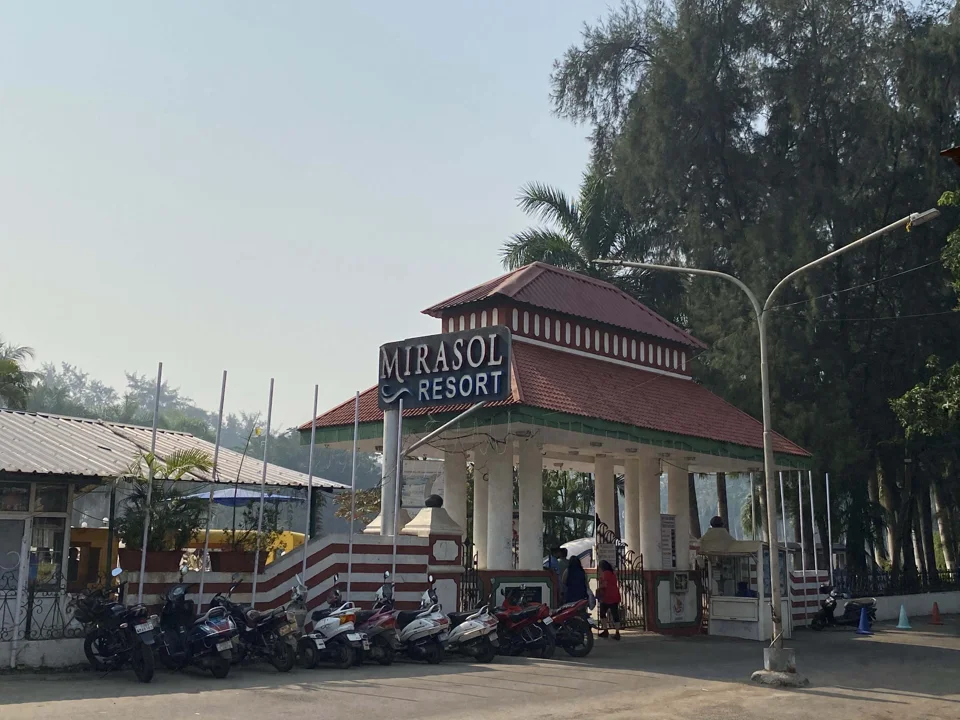
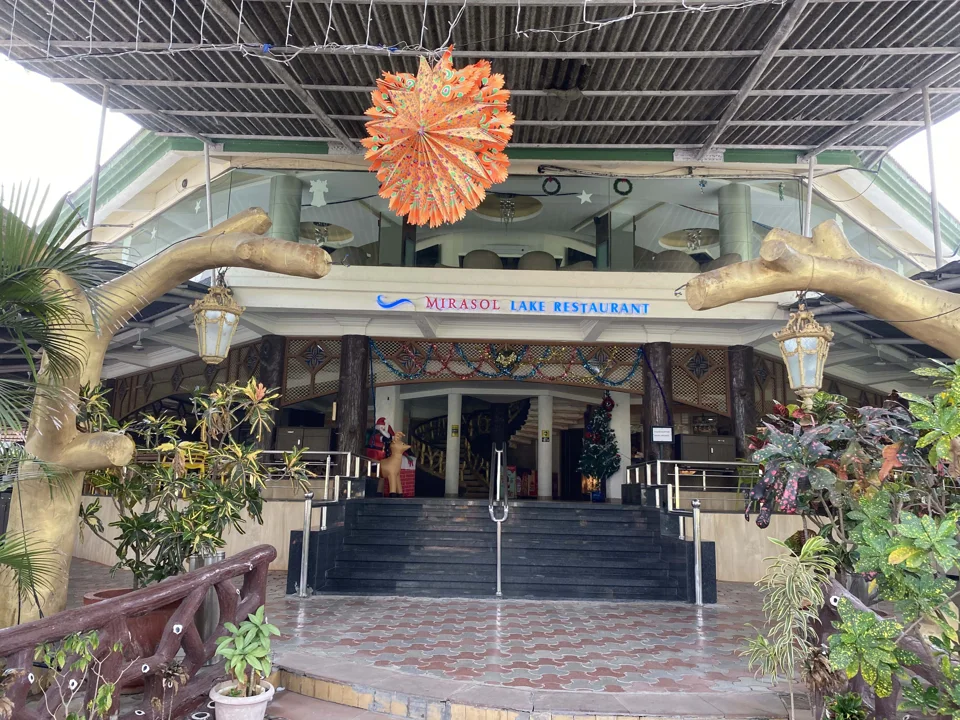
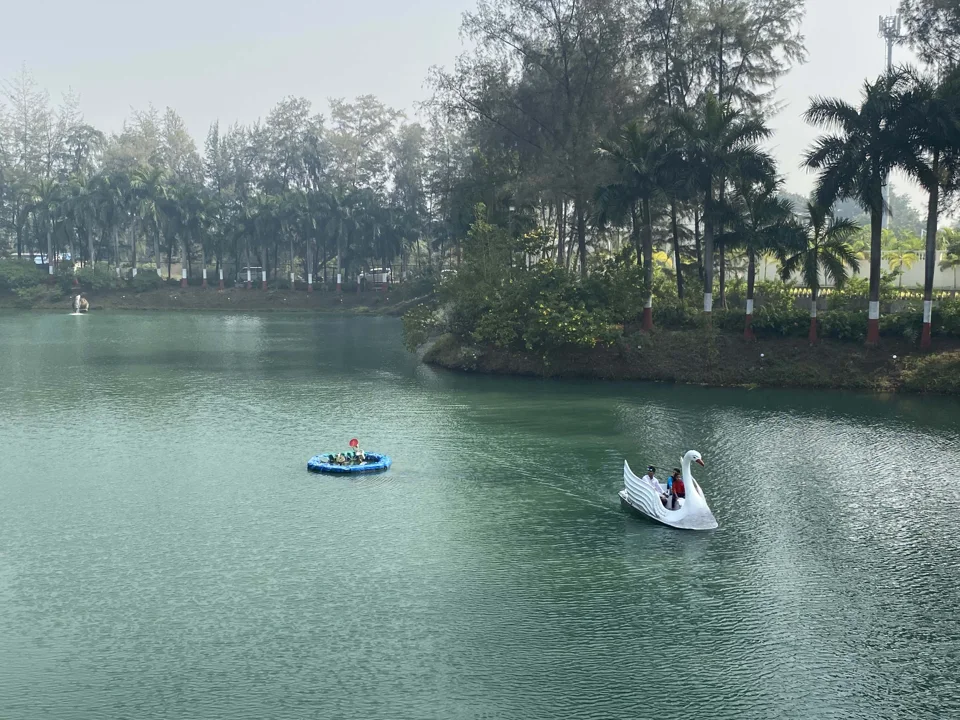
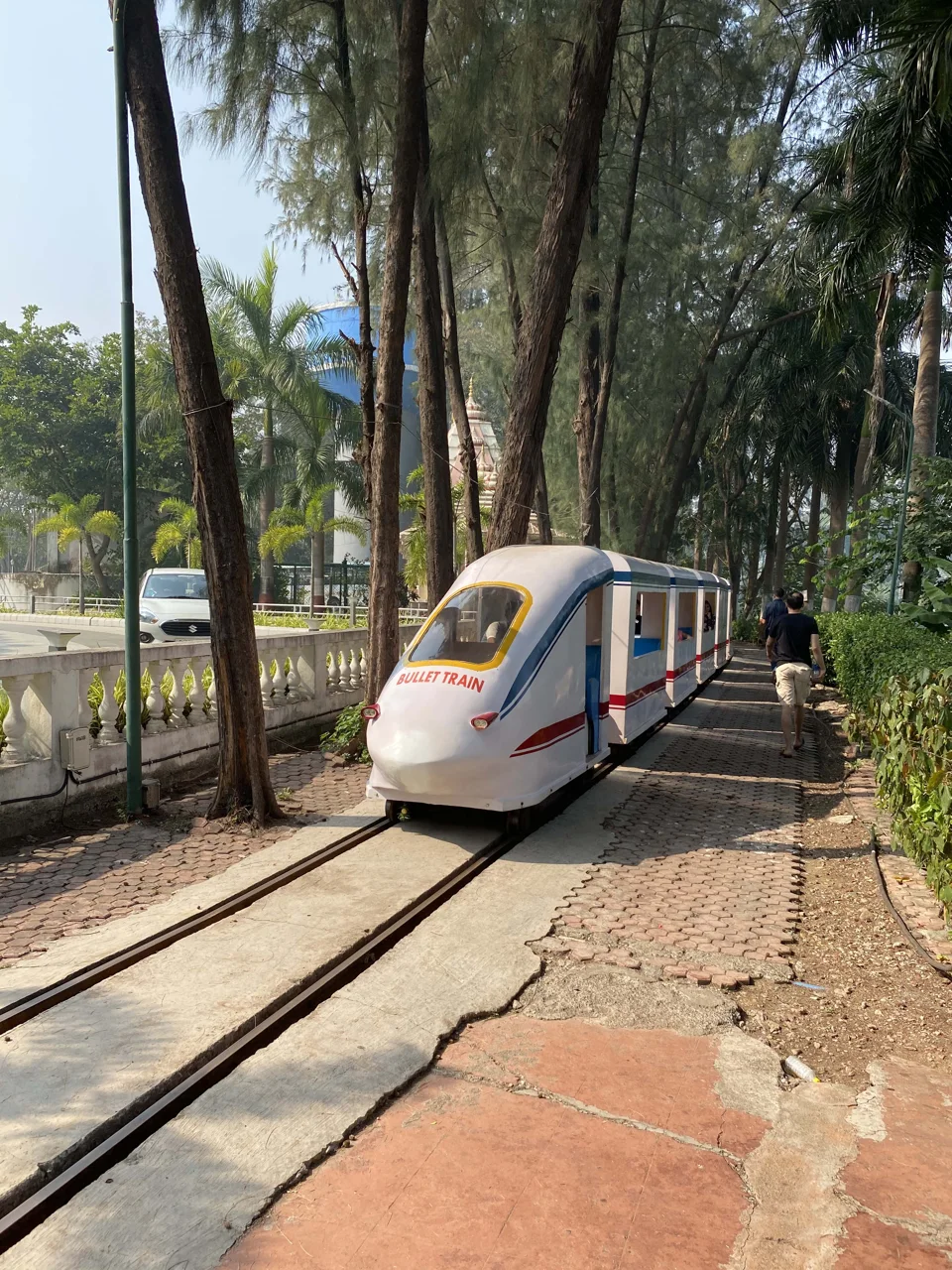
Mirasol is a resort plus an artificial lake plus a garden plus a toy train plus restaurants plus an amusement park. Family unit, kids, paddle-boats. Entry: 5 INR. The hotel itself feels like a high-end residential society with all the standard amenities.

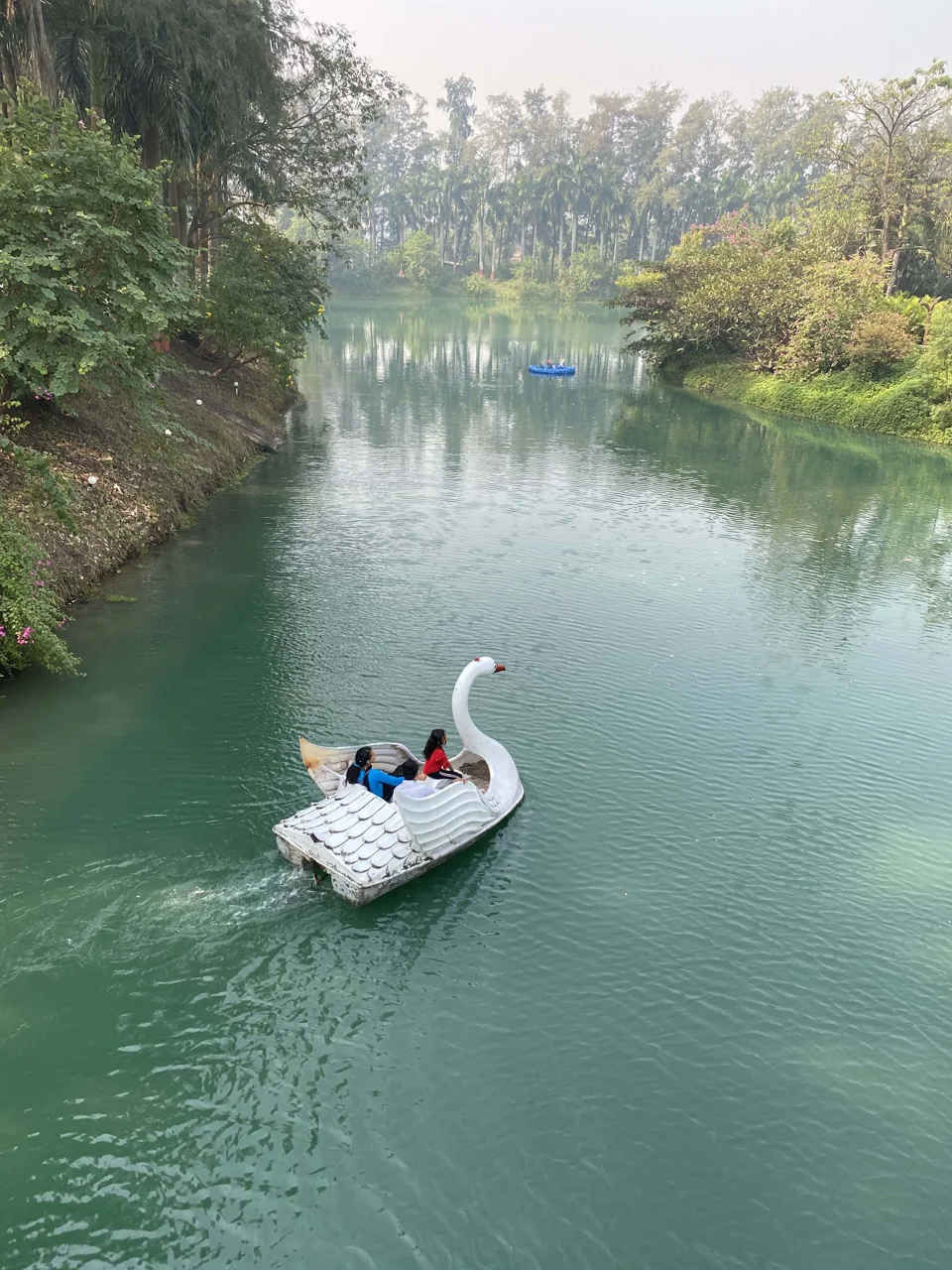
Swans are the visual theme. Boat-rides are swan-shaped. The actual swans on the water seem unbothered.

Across the toy-train track, a three-way intersection holds a small temple, the hotel, and the amusement park.

The water park was closed for lockdown-era renovation.

Food inside Mirasol is priced for trapped customers. We skipped it. Across from the main gate there are dhabas at fair prices.

Nani Daman

Nani Daman sits opposite Moti Daman. The lighthouse on Moti is visible from St. Jerome Fort on Nani.

You can climb to the top of the fort. The view back across the inlet is the whole point.

Inside the fort complex: a school and another closed church.

Nani’s flagship beach, Devka, was under construction. Normally the busy strip of Daman: best hotels, market, food joints.

Construction has effectively cordoned off the beach itself. The only way down to the water is a steep, unmaintained slope.

Final Beach

South to Jampore. Long, clean, popular, and effectively a continuation of Moti Daman beach. Treeline and parking on the inland side; no hotels overlooking the water. Devka, after its renovation, will probably look like this.

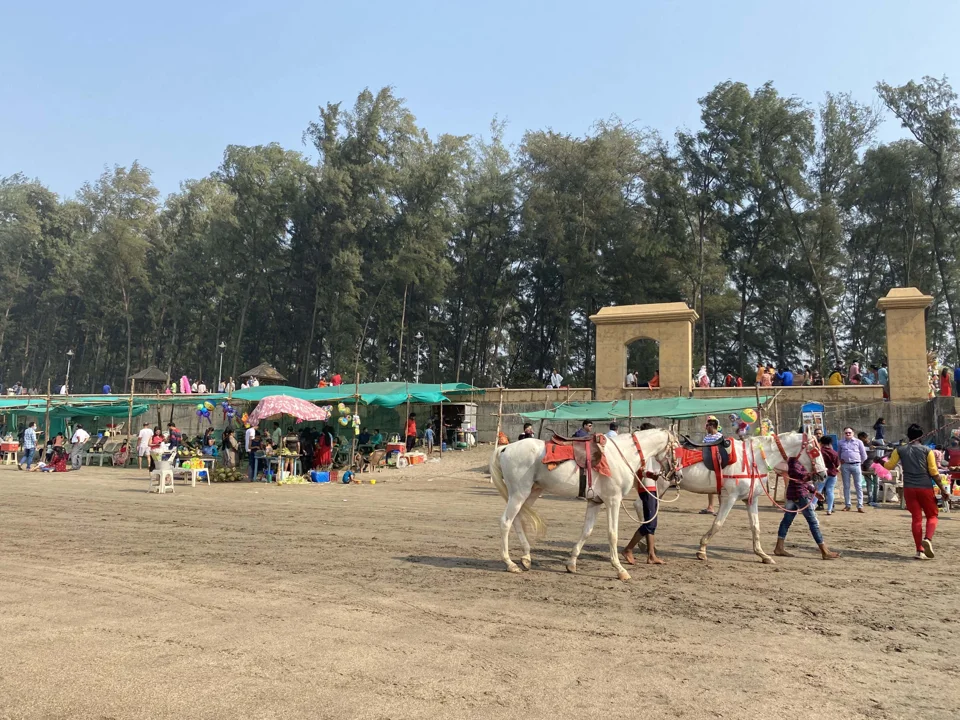
Activity menu cycles every five minutes: horse rides, dirt bikes, beach parasails.

Field Notes

  • Cheap alcohol. Daman is a Union Territory, so liquor pricing is a different planet from Maharashtra or Gujarat.
  • Food and stay. Wide range across price points, mostly clustered in Nani Daman.
  • No public transport. A personal vehicle (or a hired car) is the only practical mode of getting around.
  • Where to stay. Nani Daman has the budget and premium options. Moti Daman has the ocean-view stays better suited to family trips.
  • Alcohol export to Gujarat is illegal. Plainclothes cops watch wine shops with cameras to flag bottles leaving the UT. Carry a permit if you must take alcohol across.

One Recommendation

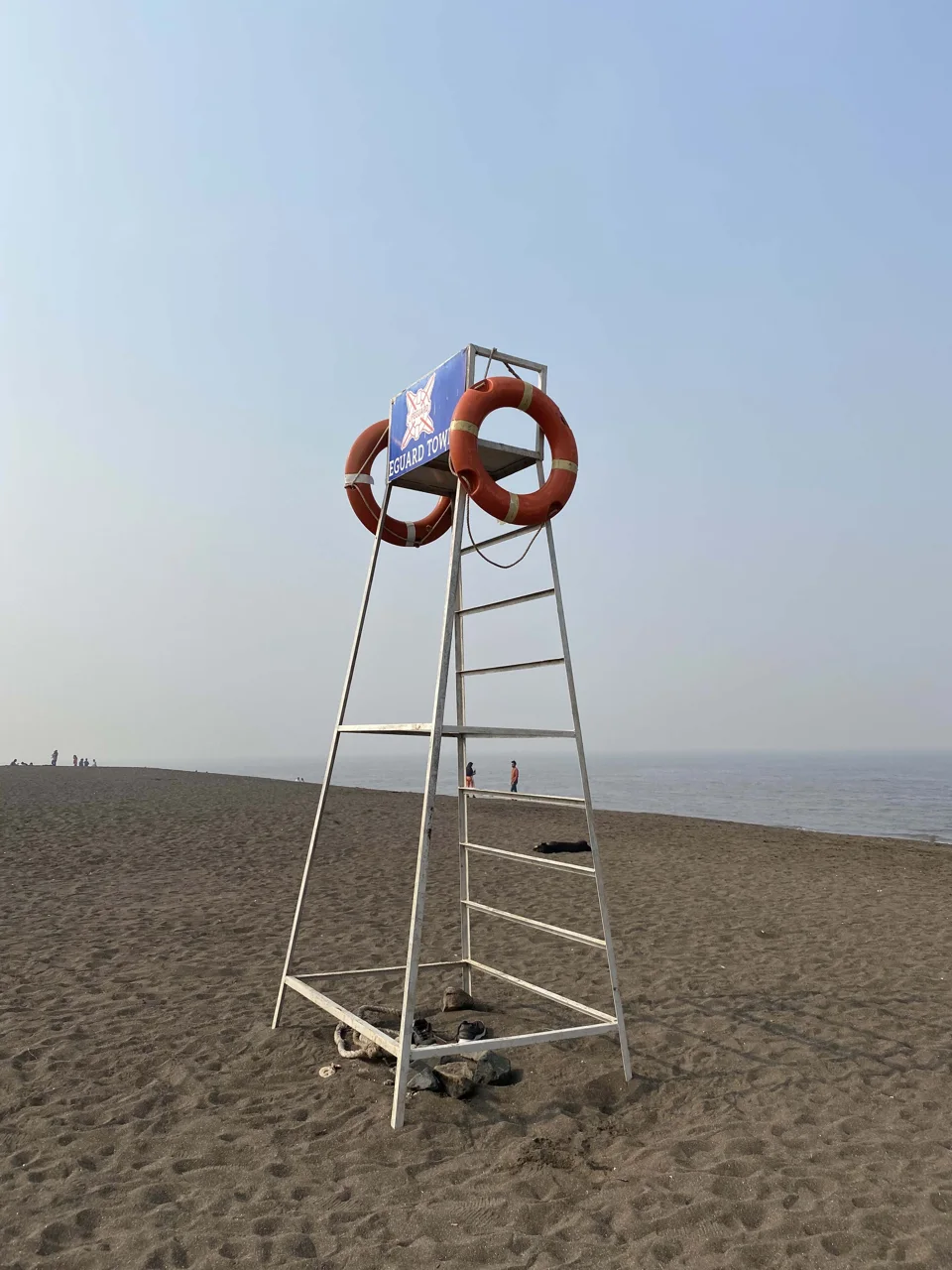
The lighthouse view would have been the headline frame. It was closed, so I have nothing to show for it. Here, instead, is a lifeguard stand on Jampore.

Till the next real trip,
Sayantan

Bolpur Bucks

The Trigger

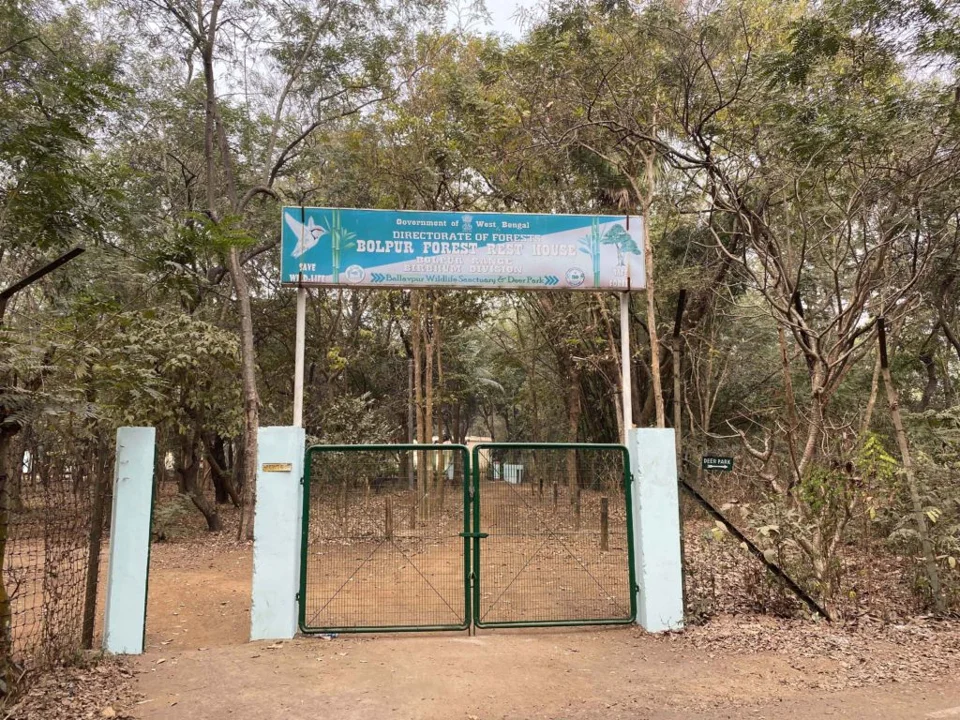
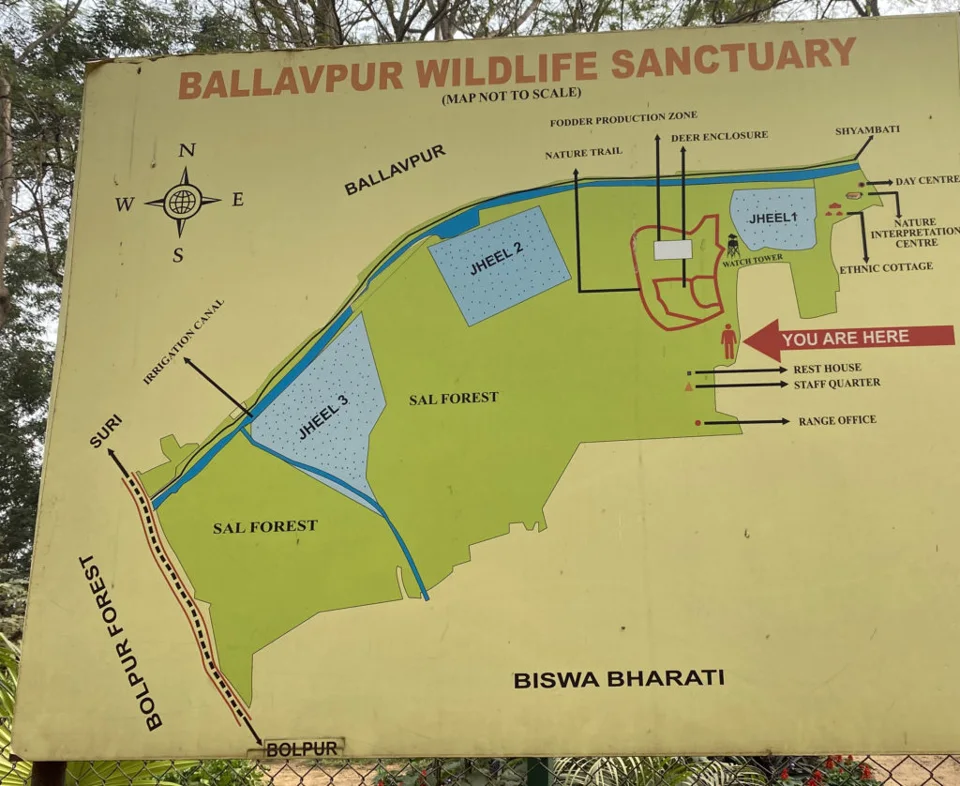
A long, slow weekend in Shantiniketan with too much free time and an underused pair of shoes. Ballavpur Wildlife Sanctuary sits behind the Vishwabharati campus, billed locally as a deer park. 200 hectares on paper. Open parking out front. We went.

The lanes around the entrance carry hand-painted arrows pointing toward Deer Park.

Logistics

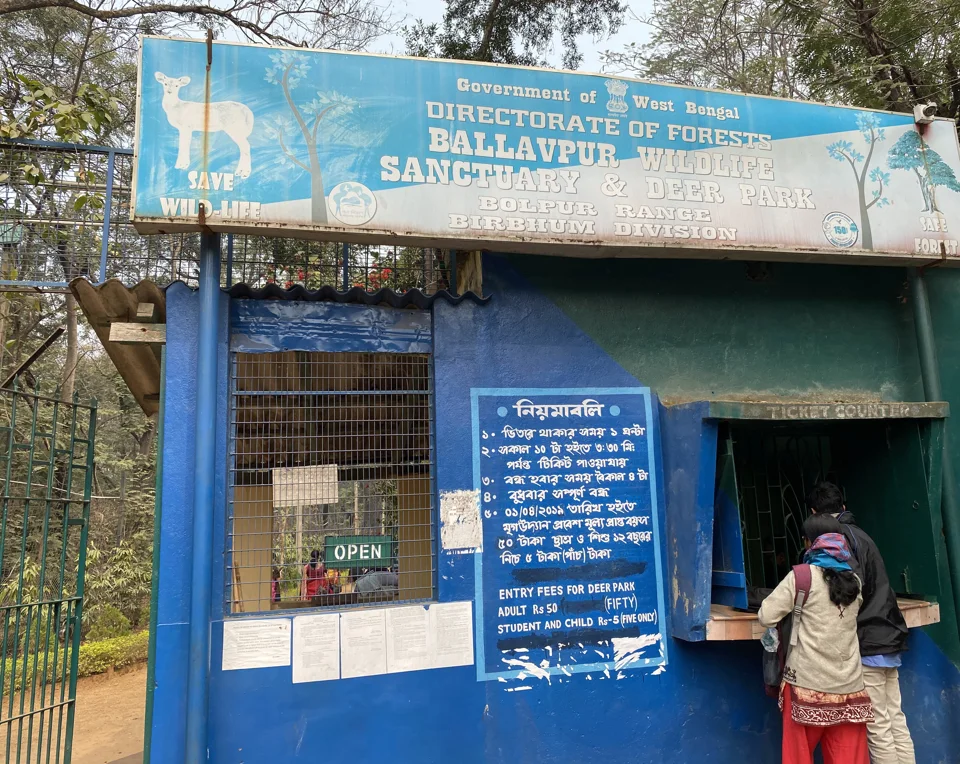
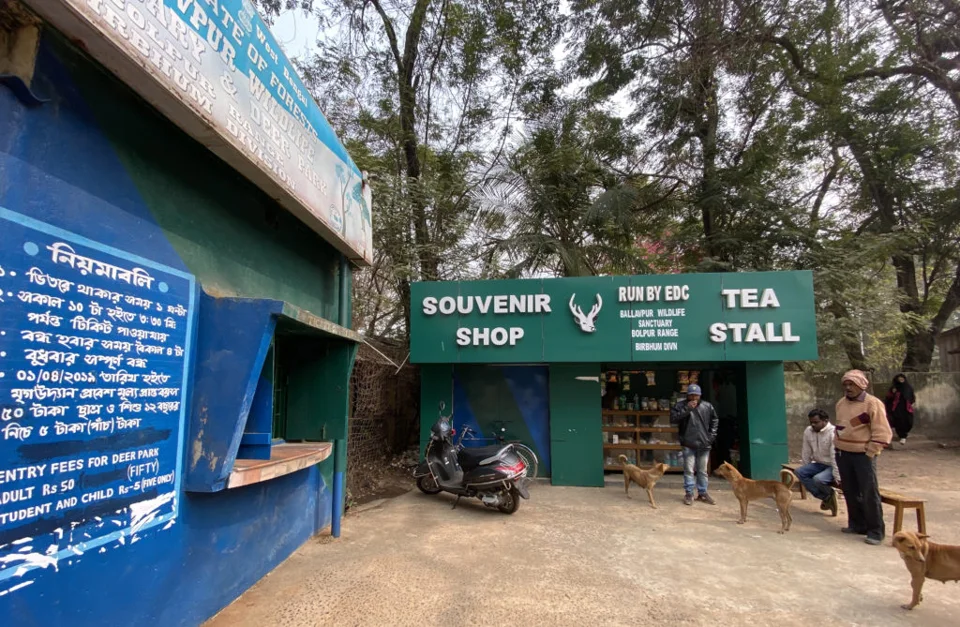
Closed Wednesdays. Open 10am to 4pm the rest of the week. Entry: 50 INR. The ticket window has one counter, one cashier, and one woman doubling as the ticket checker. That is the entire security apparatus.

Calibrate expectations against that booth size.

The Honest Part

Why did I come here? I should not have. As a wildlife visit, this is a clean miss. An average urban lake under heavy human footprint will show you more biodiversity.

The opening signage tells you how big the park is and what you can theoretically see, with no honest line about how little of that is actually accessible.

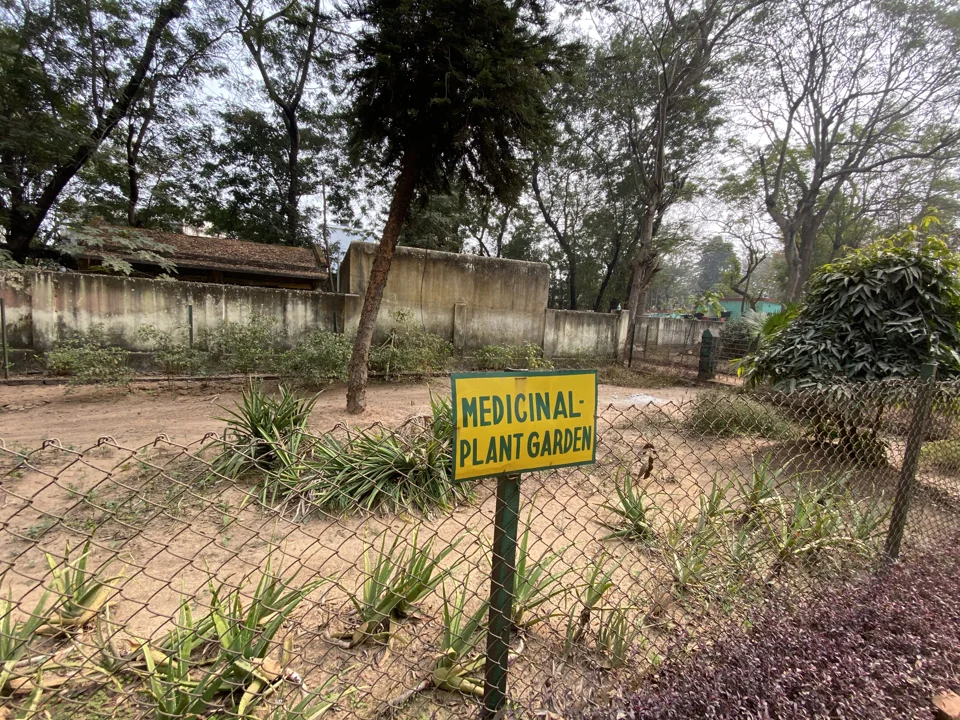
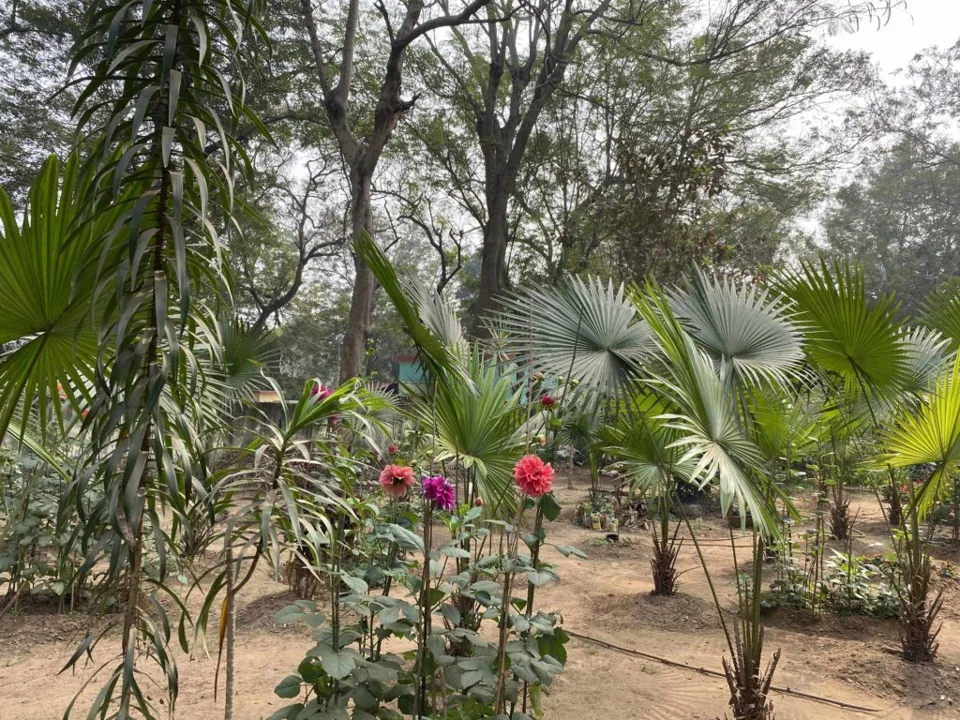
There is a small medicinal-plant garden near the real entrance, tended by two visibly disgruntled employees.

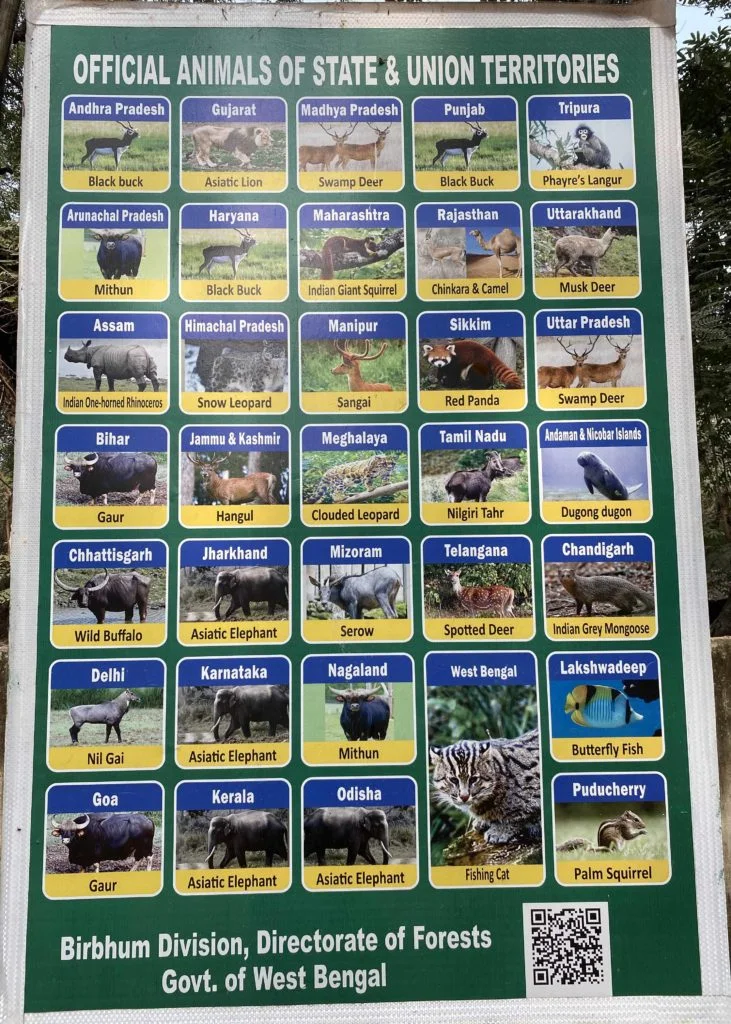
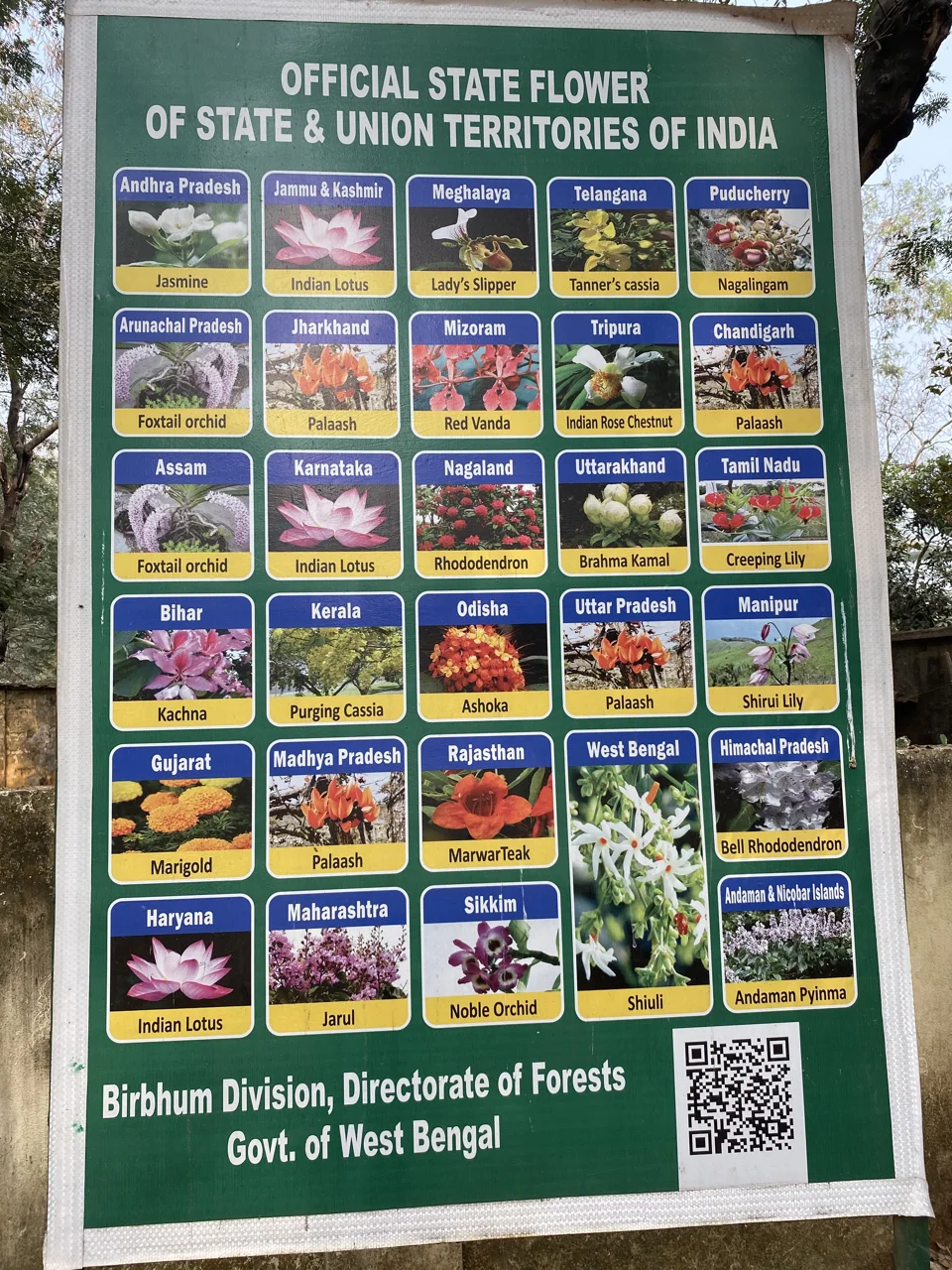
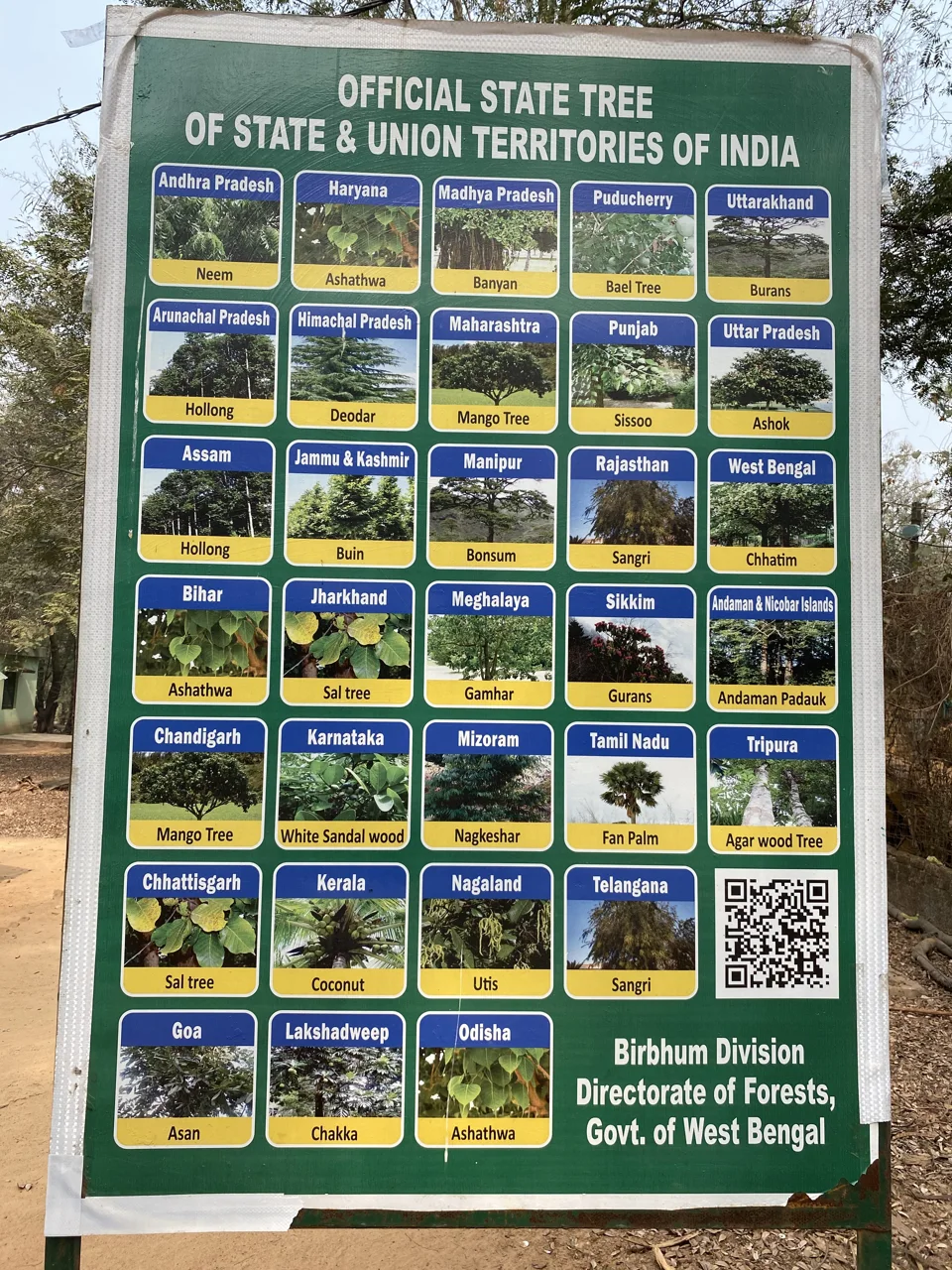
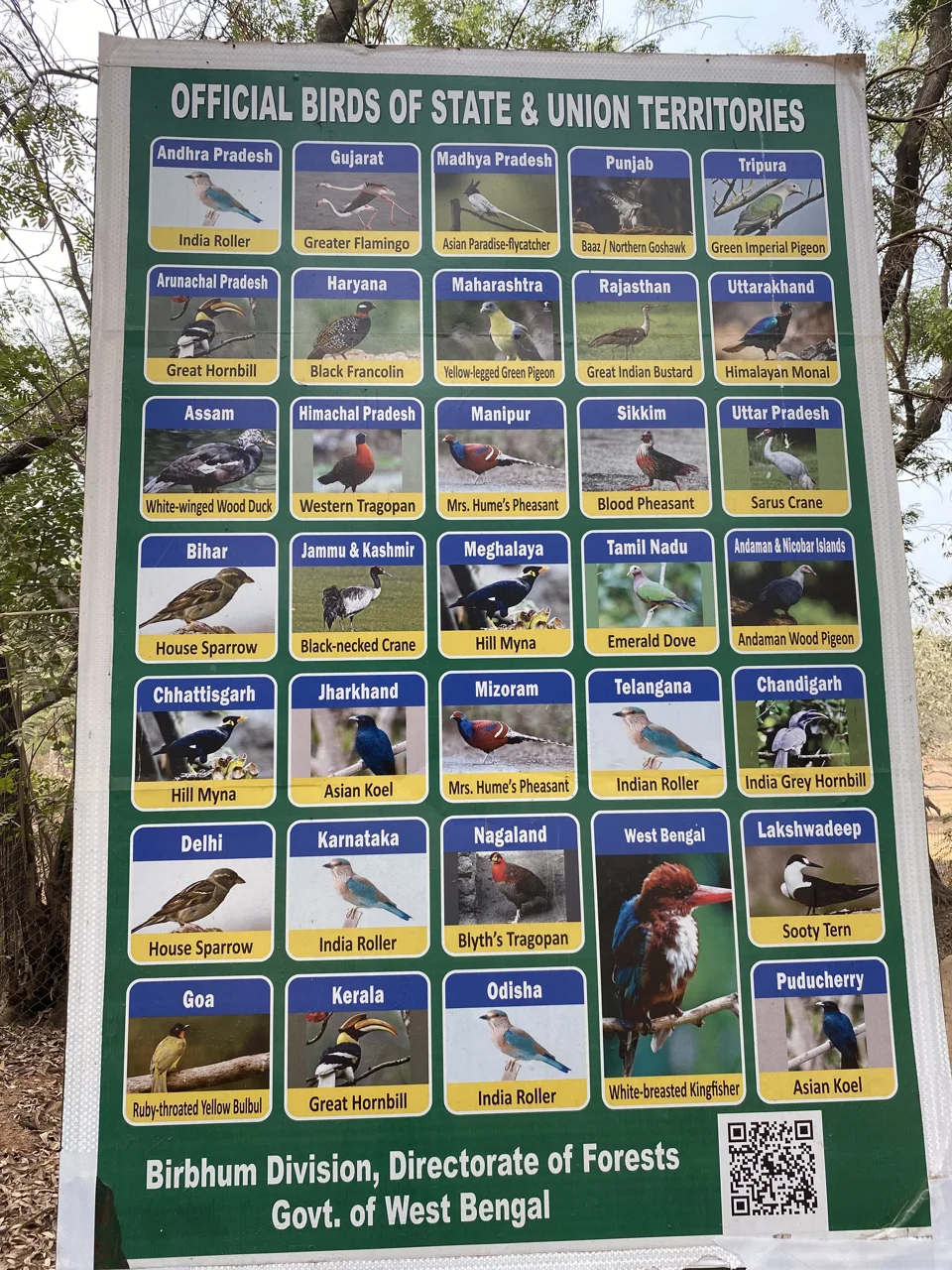
On the wall: four charts of national flora and fauna by region, decent in concept. The QR code links to a Wikipedia list, not a government site. So that.

What You Will Actually See

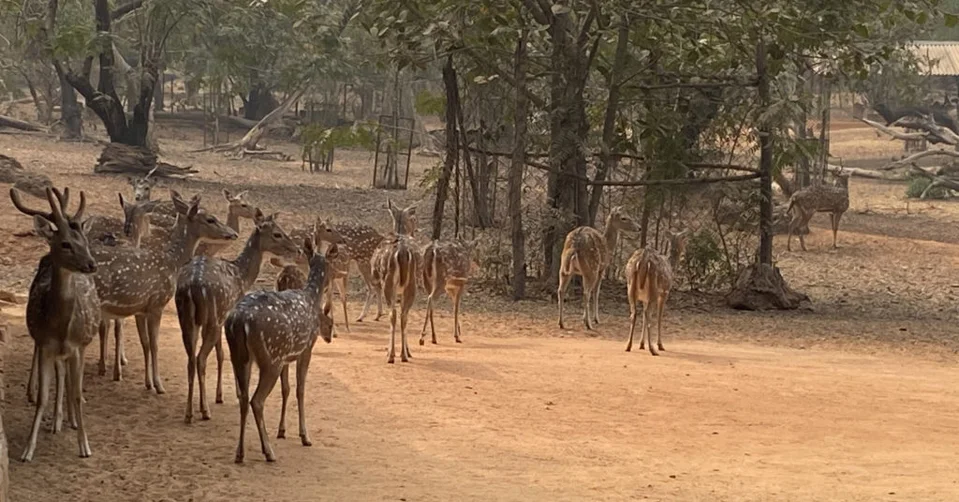
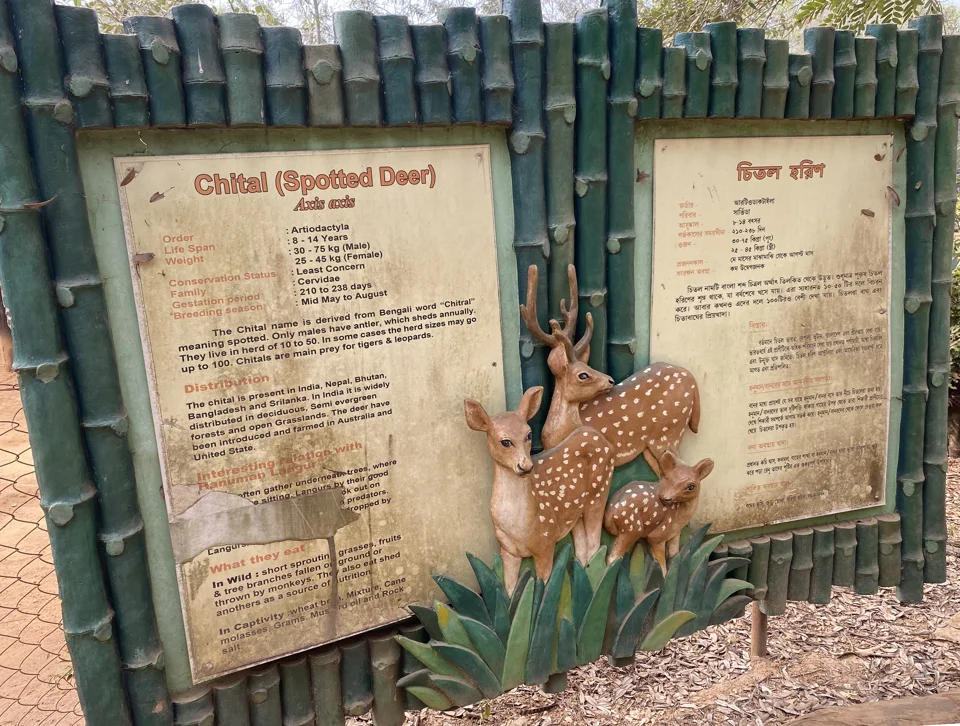
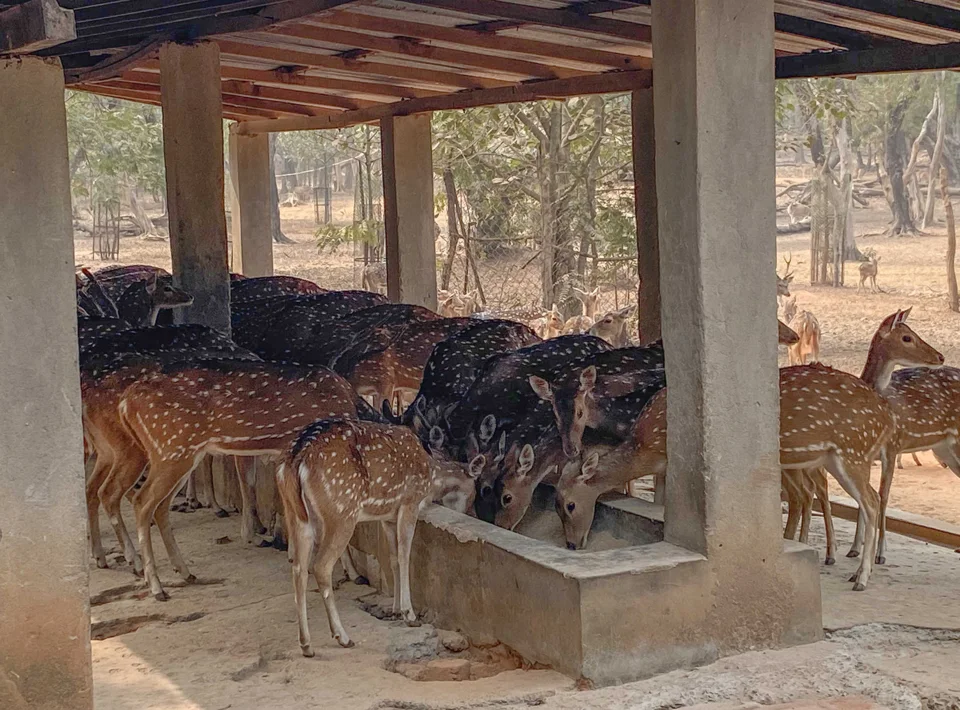
Spotted Deer. IUCN Least Concern. The most readily-available herbivore in this part of India.

They flock around a feeding stable behind a fence, then drift back into the section of the park that is closed off. They give you the over-the-shoulder stare and walk away.

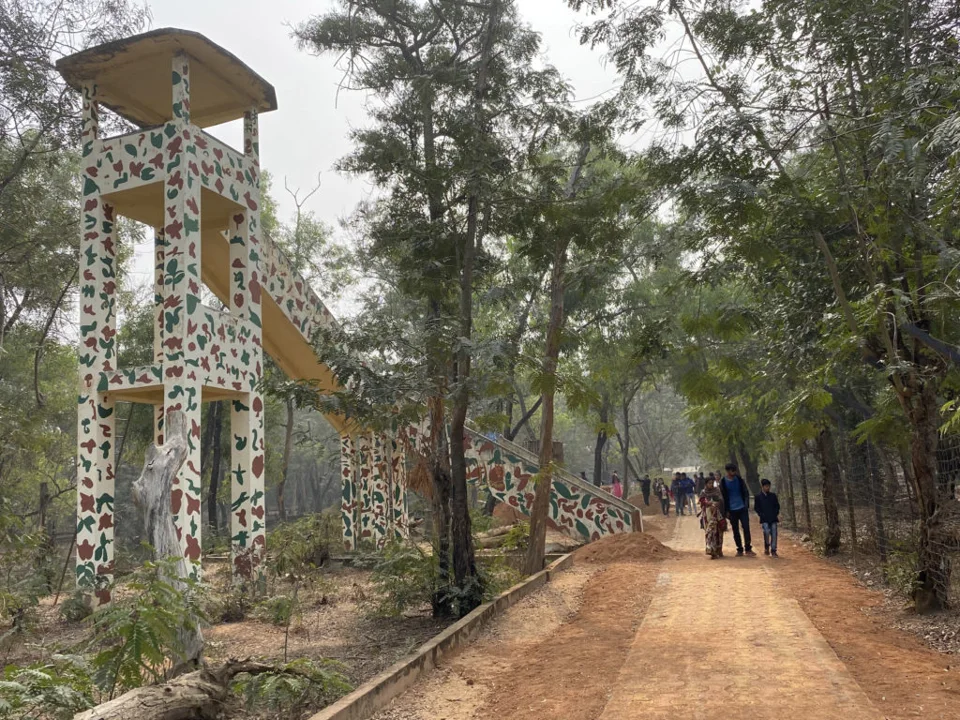
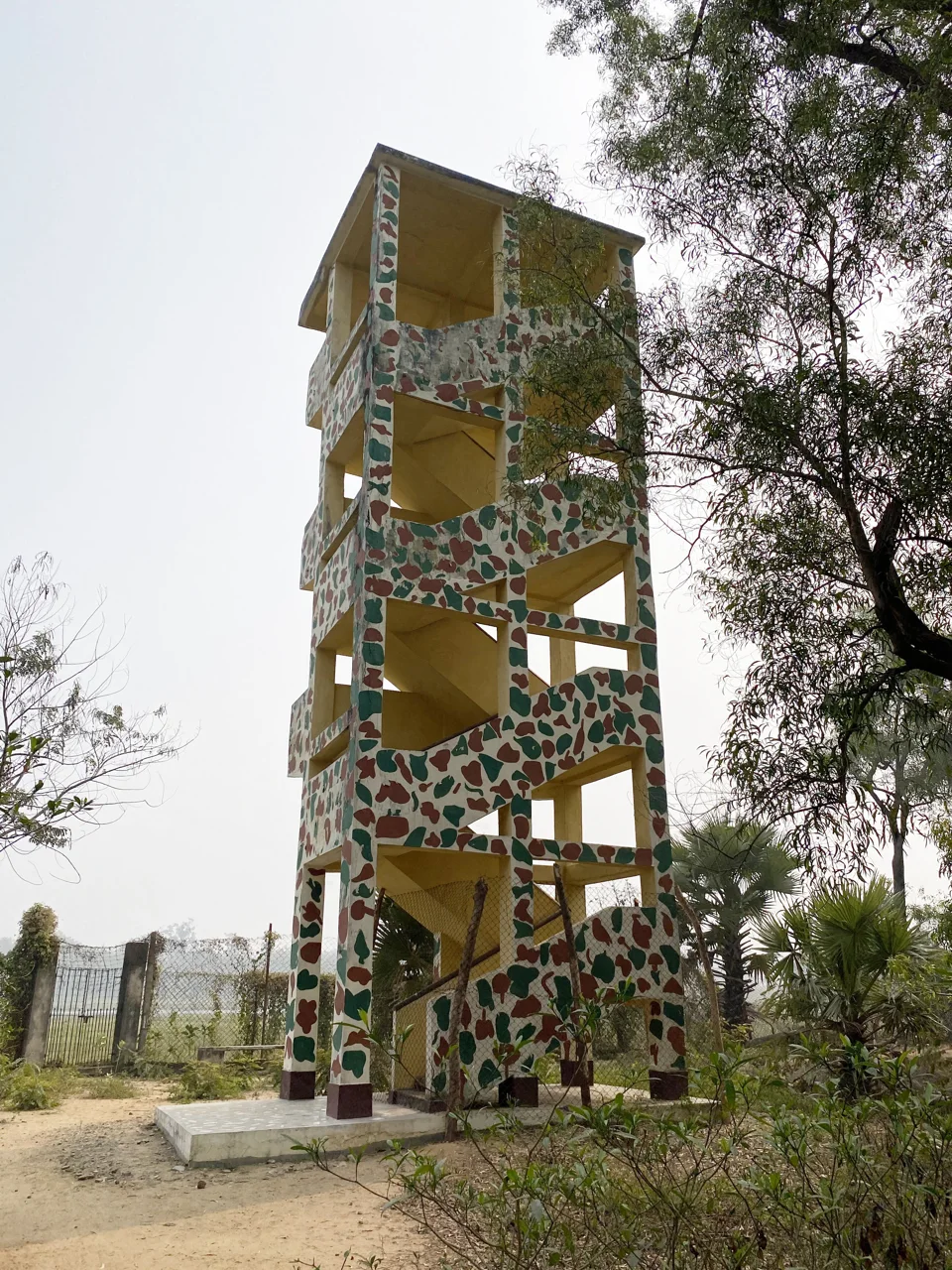
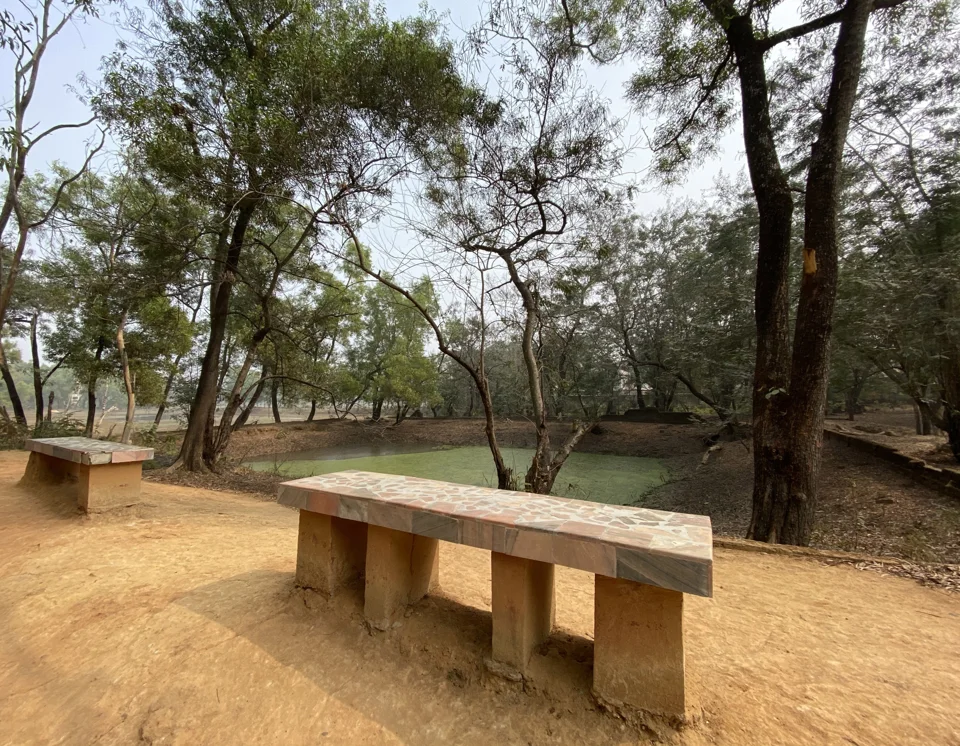
First watchtower up the path. 30 steps. The view at the top is an algae-covered pond and not much else.

North, north-west, south-west: the path closes off. I slipped past the northern barbed-wire to the second watchtower. There is an additional blockage at the base; the structure has visible cracks at the top, which probably explains the closure.

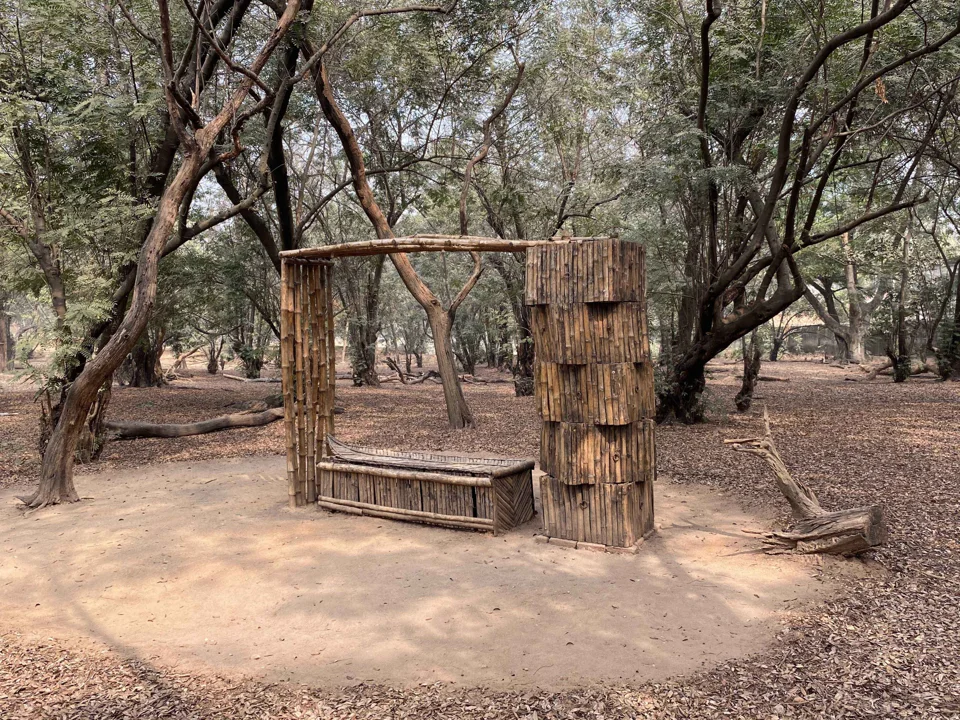
Benches throughout. Mostly empty.

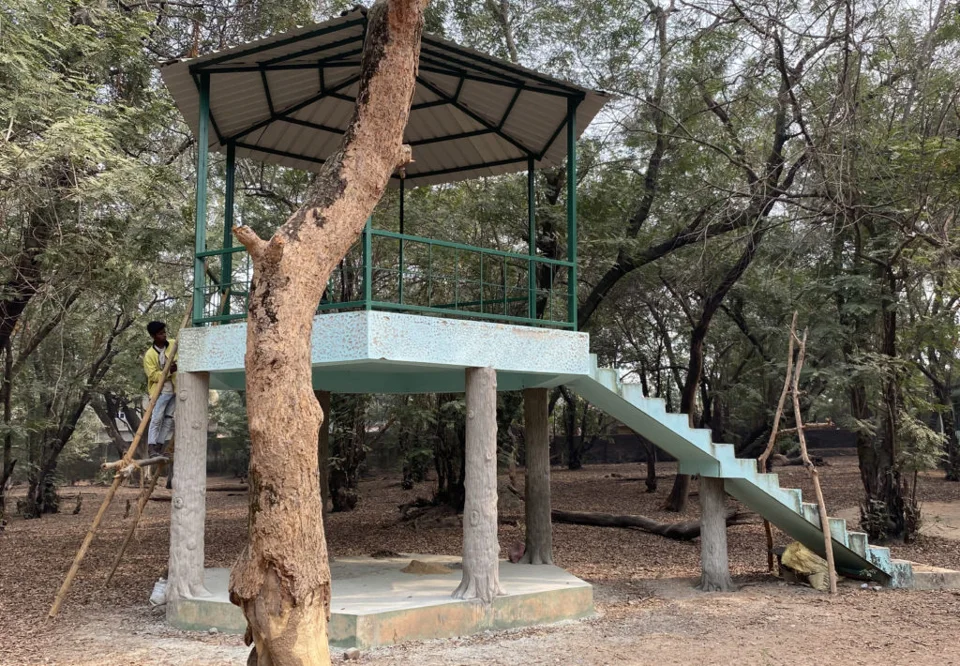
A new watchtower is going up opposite the deer enclosure. Presumably to view the deer from elevation.

Field Notes

  • Distance. Roughly 1 km loop. Exit is the entrance.
  • On site. Souvenir shop beside the entrance (closed both my visits). One food stall next to it serving tea and dry snacks.
  • Use case. Decent for a brisk walk if you are already in Shantiniketan with time to kill.
  • Closed Wednesdays. 10am-4pm. 50 INR entry.

One Recommendation

Skip it. Even if you have a long, empty afternoon and few options nearby, this one will not redeem the time.

Nothing to show,
Sayantan

Adventure Spiti

The Trigger

Spiti had been on the list for years. The first attempt slid; on the previous Himachal trip we had to cut it from the route. The hook this time was photographic — chasing the Milky Way after a year of Instagram stalking the genre.

Here is the carry-over evidence from the earlier failed attempt:

Himalayan highlands are neither easy nor cheap. The trip selects for a tolerance for extreme weather, altitude, road risk, and unpredictability. The last truly meet-strangers-and-travel format I had done was Noida 2010. I had not gone back to that mode in nine years.

The path in this time was Sony India’s Alpha Community programme, August 2019. Heavy discounts on the trip in exchange for using and reviewing Sony gear during it. Mr Dheeraj Paul of Indian Photography Tours led the run. The mentorship and the logistics held up across the worst of the conditions.

Ascent

Mumbai-Chandigarh flight, then a night at OYO 9822 Hotel Seven in Sector 7C, the restaurants and bars zone. First-time visitor here. The cleanliness and emptiness of Chandigarh registered immediately, against the standard Indian-city baseline. Dumpling platter for dinner. Quick run to Elante Mall, since I was already in town.

Next morning, met the rest of the group at Hotel Park Plaza, Zirakpur. Four Innovas in a fleet, aimed at Narkanda — a small town past Shimla, accessed through tight green hills, waterfalls, and the occasional mountain sheep watching from the verge.

Tethys Resort, a wood-and-stone structure that reads like a small castle, was the first stay. Briefing on the road conditions ahead, gear-handling techniques, double-occupancy assignments. I was paired with Chetan, an avid wildlife photographer and another Mumbaikar. Quickly clear we were the youngest in the group.

Indian buffet on the ground floor. Wooden rooms, very comfortable. Cellular signal starts thinning past Tethys. Internet is unreliable from here onward. The afternoon downpour rolled in on schedule.

Nature Strike

Major flooding had broken out in Himachal during our setup. News reached us at Tethys: a significant section of the road ahead was closed; Manali was the worst-hit. Spiti was several days out and the route was conditional. We pushed on toward Kinnaur.

The Kinnaur stretch is one of the riskier road sections in the country. Carriageway carved into granite slabs with active water seepage. Every metre carries the warning that a boulder could give way.

Small pebbles falling are the early signal. Larger boulders follow when the base of a slab erodes. The cars ahead caught a few windscreen dents. We watched a major landslide come down on a peak across the valley.

Sangla Valley camp, set among Deodar forest, is the next stop. Tents that exist for six snowless months a year. Camp set beside the Baspa river. A small flower garden across the path. Real food, mountain quiet, plus the cold.

10pm sharp, my first sighting of the Milky Way as a clear band. The tripod went out fast. Cold stops registering once the alignment falls into place — the galaxy strung up over snow ridges, and the camera doing what it was bought to do.

Indo-China Border

Chitkul village, the last village on the Indo-China line, accessed via a muddy connector road. A common photographer destination. The villagers are visibly tired of being the subject.

Rain intensified, temperature dropped sharply. The villagers — acclimatised in a way you can read off their faces — brought us simple lunch.

Rakcham village on the way back, smaller than Chitkul. The river runs hard upstream of here. Meadows of fafra in alternating purple and green.

Rural Monsoon

Easy drive to Kalpa the next day. Stay: Grand Shambala. Marijuana grows roadside and nobody pretends otherwise. After lunch we drove down to the actual Kalpa village and stayed through to sunset.

First twin-rainbow of my life. The far edge of the village holds a small temple and a school overlooking a steep cliff. The two arcs formed independently on either side of the sky. We had a clear line of sight to both.

Apple farms run the local economy here. We had our first (and only) photo-review session in the room before turning in.

Detours

Early start. Reached Nako village by noon. The lake sits on the lower fringe; the climb down is steep but quick.

Lunch at the Chacha Chachi dhaba in Batal. By here the green is gone. This is the transition point into the Spiti rocky-desert landscape.

A bypass road to Giu got us to the first monastery of the trip. It houses a 500-year-old naturally preserved mummy of a Buddhist lama, sitting upright in a small glass chamber.

The day’s drive ended at Tabo village, Hotel Maitreya Regency. Updates on the flood downstream were not encouraging. Cars at higher altitude were stuck in Kaza. The drivers were genuinely debating whether to push on or turn back. Sanjeev was negotiating live with the car company. Decision: continue. The bet was that the road would clear by the time we descended toward Manali.

Monastery

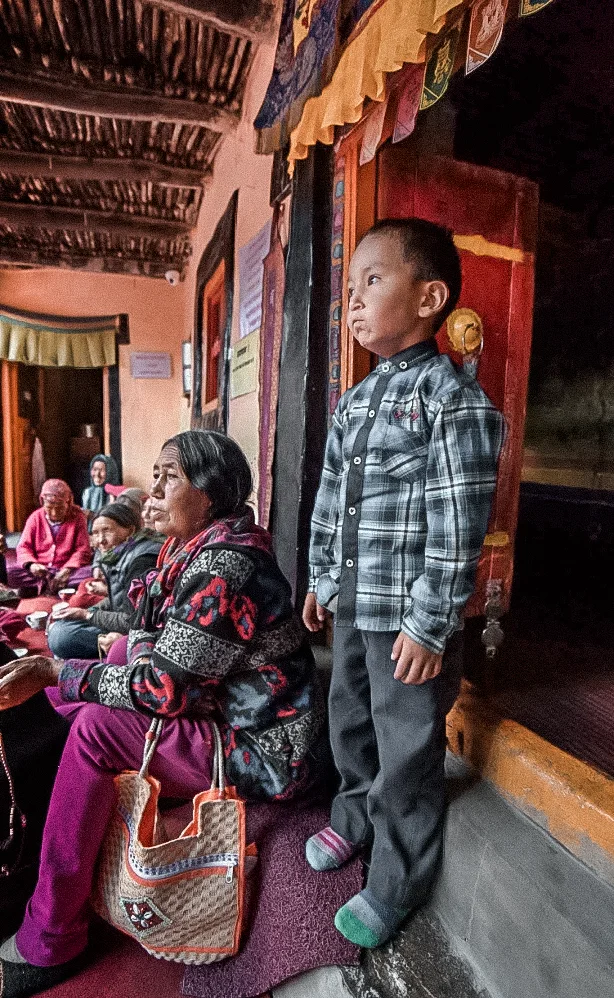
Tabo monastery sits next to the hotel. Photography allowed in the premises but not in the monk quarters. The original rock-temple structure becomes visible toward the back. We left after breakfast for Pin Valley.

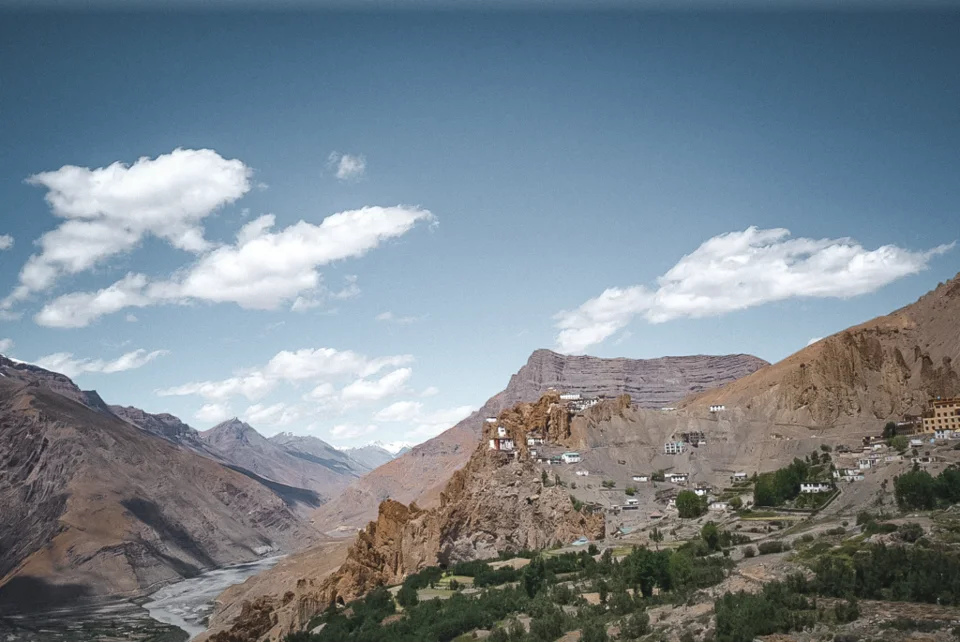
Dhankar is a near-1000-year-old example of Vajrayana Buddhist architecture and one of the 100 most endangered monuments in the world. It sits on a 300-metre rock ledge above the confluence of the Pin and Spiti rivers. The name itself: fort on a cliff.

Inside Dhankar, the monks run a daily kitchen for women and children from the surrounding villages. Tourists climbing to the top contribute a small fee toward maintenance.

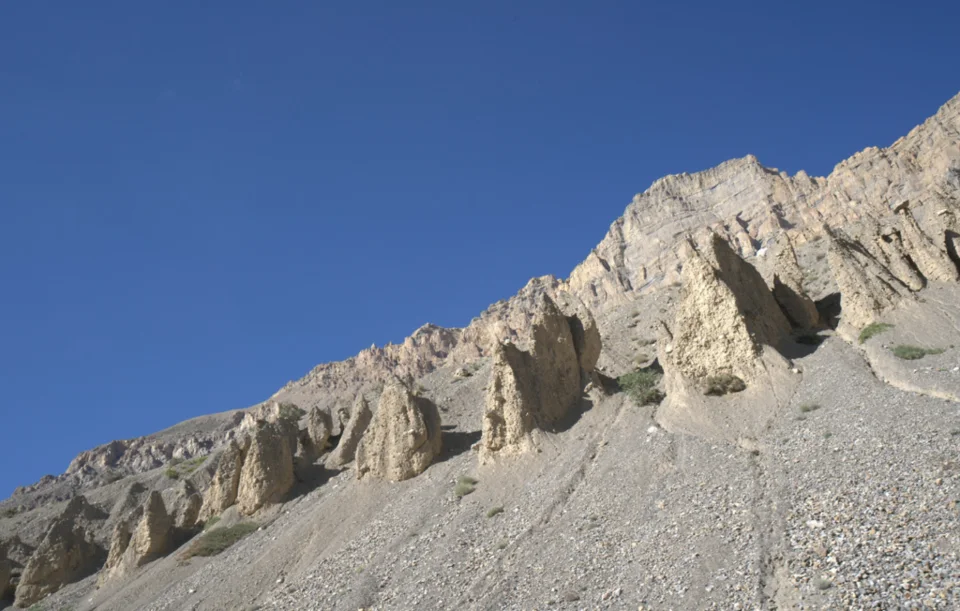
There is a school nearby where children train as monks. The thing that caught my eye on this stop was a different feature entirely: limestone pillars rising out of the eroded landscape, the kind of geological accident you cannot un-see.

We skipped Key monastery for the schedule. Down in the village below you can see Key from a distance. Waiting for sunset gave us the cattle-and-children frame.

Hotel Deyzor at Kaza was the next stay. Kaza is the last major town in Spiti. Deyzor reads as British-cottage with an unusually good restaurant attached and a number of resident dogs. Power cuts are routine in the morning. We learned to heat water during the on-windows because it cools fast back to shivering.

Final Summit

Across the Khibber Chicham bridge to the first village uphill — farmlands at altitude. Past the helipad we found locals cultivating sweet peas.

Hikkim village next, famous for the second-highest post office in the world. The local move is to mail a postcard to yourself; it lands at home weeks after you do.

Quick stop at Komic, which announces itself as the highest homestay in the world via a hand-painted welcome board. We did not stay.

Back on the road, the driver took a detour to a Himalayan ibex herd grazing just off the track. He also flagged the alternative: Spiti in winter is the better trip for wildlife photographers — Red Fox is easy and Snow Leopard is the elusive one to chase.

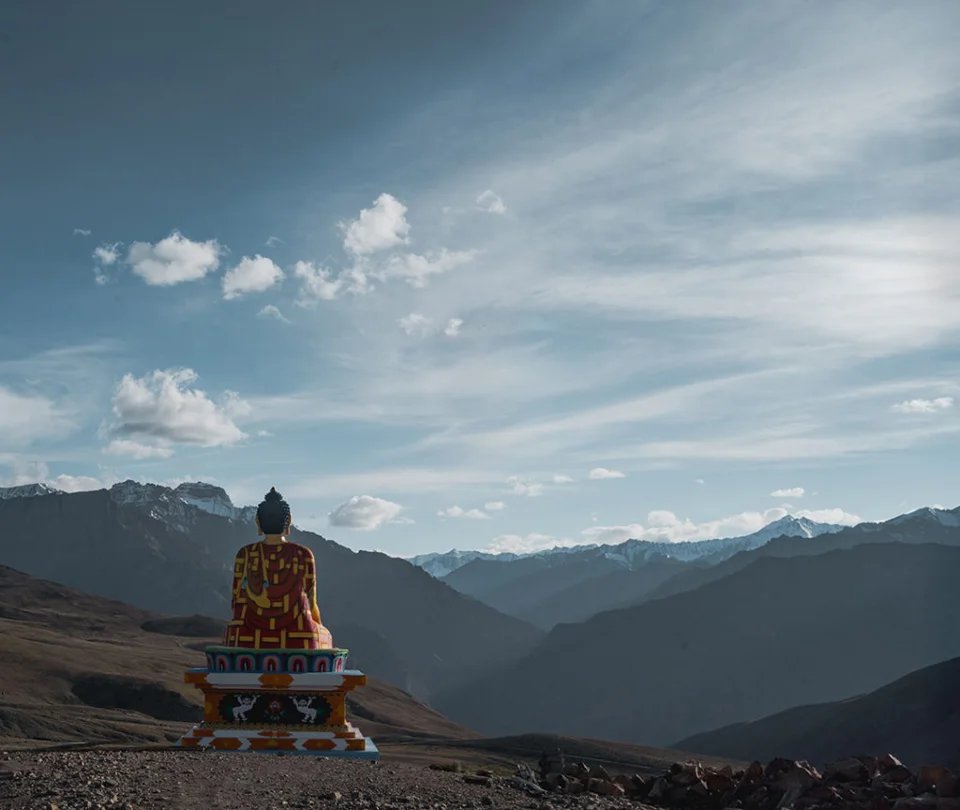
The wild goats sprint uphill at the first sign of pressure. Endpoint: the giant Buddha statue of the Fossil village (Langza), at 14,500 feet. Day done.

Descent

4am start back. Front seat passenger has one job: do not doze off, watch the driver. The trench drops here are unforgiving. Off the road is a free-fall against bare meteoric rock.

Driver mentioned in passing that Akshay Kumar had been at Kaza recently, shooting Kesari (2019), in this exact stretch.

As the landscape went full no-man’s-land, it also went strikingly beautiful. First stop: Kunzum Devi temple, the snowy gateway into Spiti from the Manali side. Fog ahead crushed visibility but I caught a few wild mountain horses at distance.

From Kunzum Pass on, expect a steep spiral descent cut through rock. Two members of the group started vomiting from altitude sickness. We had Diamox in hand, which probably worked as placebo at this point — Diamox is meant to be taken a day before the climb. Stopping was not an option; the daily vehicle quota was capped, and a stop meant losing our window.

Chandratal lake is 15 km off Kunzum Pass. Not in our itinerary. We took the other route out and stopped at the first micro-village for breakfast and a bathroom break. Rare mountain birds flocked the surroundings.

Further on we caught a double rainbow at maybe 30 feet of distance from a mountain foothill. Then Rohtang Pass. The roads turn treacherous here. Eagles and vultures overhead. Nothing in any direction for miles.

Cars break down at Rohtang and stop traffic for hours, sometimes days. We had to get out of our Innova at three separate water-crossings and walk over the literal waterfalls so the tyres could clear without weight on them. Stuck wet rocks under a loaded car is a hard recovery.

Cross Rohtang as early in the day as possible. The previous night’s snow melts on the road and the path gets harder by the hour. We could see glacier debris and the new tunnel under construction that will eventually connect Manali to Spiti the easy way (and bring a different kind of crowd). At the army-presence section we stopped for lunch.

Descended to Manali. Stuck for a few hours behind a punctured truck blocking the line. Past that, lush greenery and pine cones again — Manali evening landing on schedule. Hotel Serenity, well off centre. Exhaustion was real.

Urban Touch

We paid the driver extra to keep going to Delhi. The fear was the post-flood roadblocks the radio kept reporting. Different route. Worked. Tensions stayed high in the car because everyone had a flight or train to catch from Chandigarh; we made it with margin.

Final night in OYO 7372 Platinum Inn, booked from inside the puncture jam. North Chandigarh, run by some opaque young dudes. They had reserved the place for an exam intake and were not really opening for regular guests. Linens unclean, bathroom sub-par. Uber at 4am out for Delhi airport.

Field Notes

  • Enter through Shimla, exit through Manali. Easier on altitude. Diamox a day or two before regardless.
  • Watch the slides. Common between Kinnaur and Kaza. Drive in daylight.
  • Travel safely if old or with kids. Hire a real operator. Safety is the only ranking that matters here.
  • Drivers matter. We had four good ones in the fleet. My driver was Neeraj, +91 98178 00054 / +91 97364 00054. Pro.
  • Pack for sharp temperature drops and surprise rain. Common cold and fever cost you days here.
  • Hiking shoes earn their keep.
  • Build buffer days if you are self-planning. Weather kills itineraries here.
  • TNT blasting for road construction is scheduled on specific days. Check the calendar and timing before you set out.
  • Jio reaches close to Kaza now. Carry Jio plus BSNL. BSNL is non-negotiable.
  • Talk to locals. Easily the most generous, knowledgeable channel for actual on-the-ground guidance.

One Recommendation

Spiti is too dense to recommend a single thing without doing a disservice to the rest. The honest pick: stand at the giant Buddha at Langza for fifteen minutes. It is the panoramic frame of what Spiti is — a civilisation built where the wind and the rock outvote everything else.

Worth the struggle to get there.

No travel since due to Covid.

Sayantan

High on Hampi

The Trigger

December 2019, typed from Bengaluru airport. The decade closes here. It started in this same airport, my first-ever flight, December 2009. The tradition feels worth a closing chapter.

2019 was three trips that diverged from the usual Goa-and-Maharashtra rotation. The thread between them, if you go looking, is the element of Earth. Hampi is the first one.

Where We Went

Hampi. UNESCO World Heritage Site, North Karnataka. The capital of the Vijayanagara empire from the 14th to 16th century. Sacked and ruined in 1565. From Bengaluru it is a 7-hour overnight bus ride. The Earth connection: the entire civilisation was carved out of granite. Buildings, idols, market complexes, all out of the boulders that already lay there.

Where We Stayed

Rocky’s Guest House. Basic rooms, prime location, helpful hosts, a steady stream of foreign tourists. Service and food both above the price point. Available on Booking.com at 3800 INR per night.

Cheaper options exist if you walk in. On-spot rates can drop to 2500 INR. Hippie Island bare-bones huts are 500 INR per night.

Where We Ate

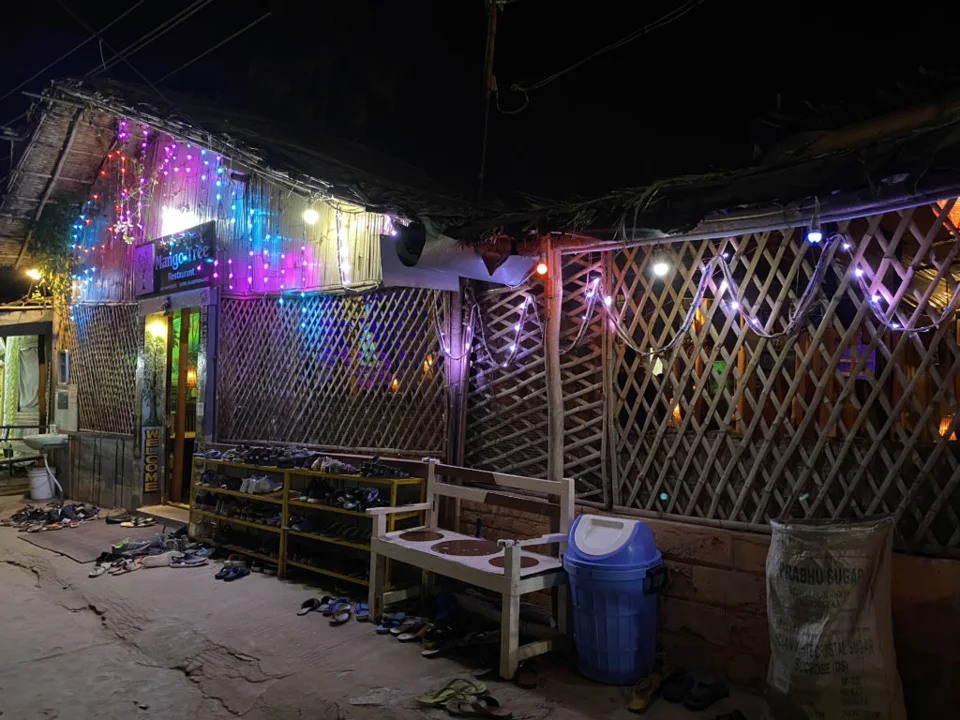
Mango Tree

Large space. Strong vibes. Best location of the four. Food matches the room.

Gopi Guesthouse and Roof

Small rooftop. The location is the headline; the food is workable.

Top Secret

Medium rooftop. Good vibes. Genuinely hidden. Food is up there with Mango Tree.

Laughing Buddha (Hippie Island)

Best place to chill. Temple complex visible across the river, music after dark, more adventurous menu than the temple-side spots.

How We Got Around

Time and budget were both tight. The east and south sides of Hampi we covered on foot. Tiring but doable if you keep moving.

For the Hippie Island side, we hired an auto package: 1200 INR for the full circuit, plus 800 INR for the coracle ride on Sanapur lake.

The auto route loops 20 km to cross from one bank to the other, since the bridge is a long way upstream.

What We Saw

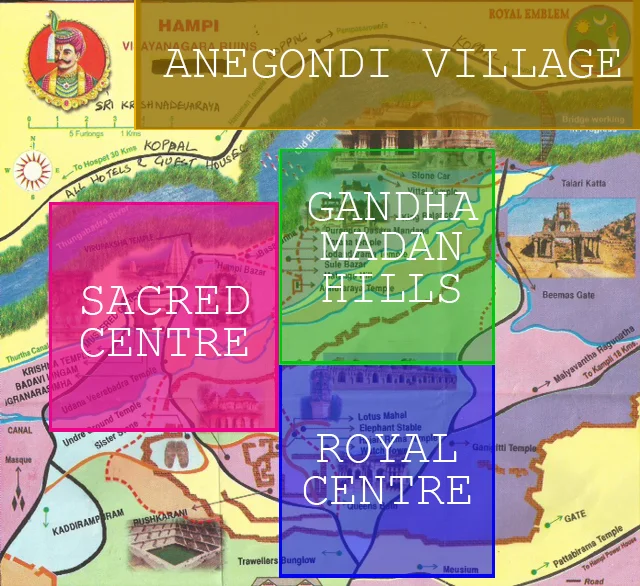
Four facets to this place, broken down by zone.

Hampi reads as a Hindu temple-town for the most part. Around 1600 surviving monuments, most in Dravidian style. A handful of Jain monuments, fewer still that are Muslim.


SACRED CENTRE

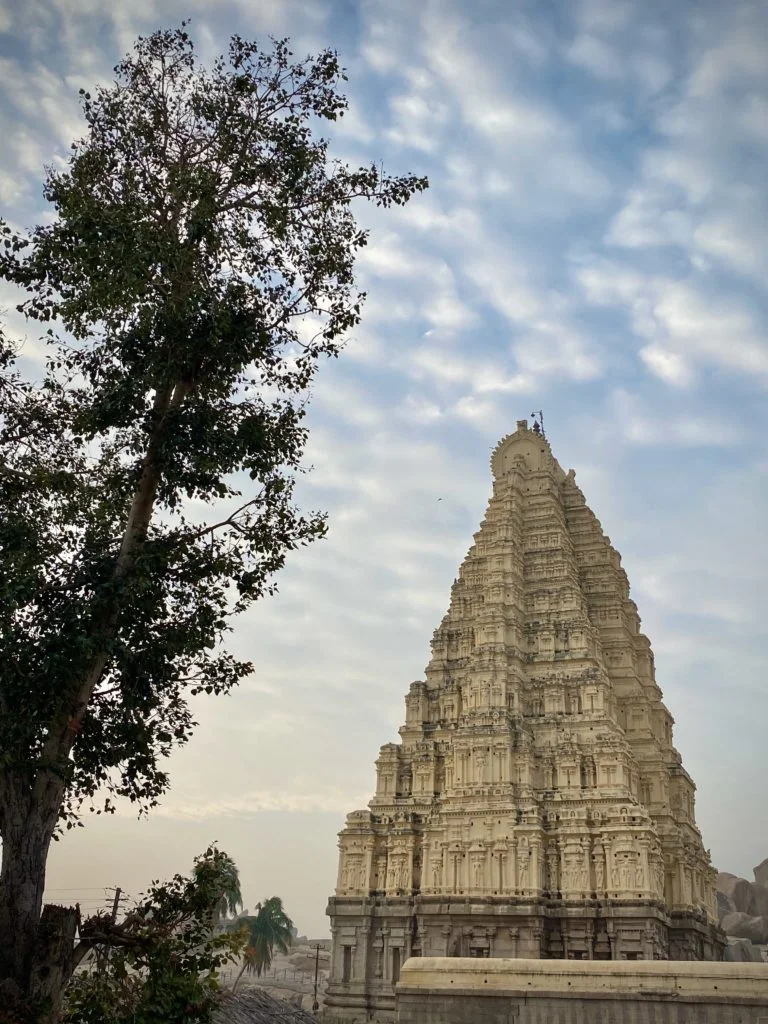
Virupaksha temple

A small Shiva shrine to begin with. Expanded under the late Chalukyas and Hoysalas. The current scale was reached during the Vijayanagara period under Deva Raya II.

The 1565 sack damaged structures across the temple. Virupaksha endured, and remains an active religious site.

Krishnadevaraya was its biggest patron. Lakshmi, the temple elephant, walks this back route every morning to her bath.

Watch this if you can be on site between 7:30 and 8am. The window is short and the scene reliably absurd.

Kadalekalu Ganesha

5 feet of Ganesha, carved from a single boulder. The belly is shaped like a Bengal gram (kadalekalu in Kannada), which is how it gets its name.

Hemakuta monuments

Jain temples dedicated to Shiva. Pyramid roofs.

Krishna Temple and Complex

Built in 1513 by Krishnadevaraya to mark the conquest of Udayagiri (in present-day Odisha).

The central chamber houses an infant Krishna. The complex out front was the main market in the city’s working years.

Narasimha Idol

Built in 1528. The original Lakshmi statue that accompanied Narasimha is gone.

Hampi Bazaar

Virupaksha bazaar ruins run a kilometre in front of the temple.

ROYAL CENTRE

Queen’s palace

Zenana enclosure. 46 by 29 metres. The private compound for royal women. Only the basement survives.

Lotus Mahal

The headline piece of the Royal Centre. Used as a council room for the chief commanders.

Ranga Temple sits to the east of Lotus Mahal. Closed to visitors during our visit due to renovation.

Elephant stable

11 chambers of granite for elephants. Metal hooks for tying are still on the inner walls. Small openings at the rear were the mahouts’ service entries.

Underground Shiva temple

Dedicated to Prasanna Virupaksha. Unearthed in the 1980s. Nobody has a working theory for why it was built underground.

Nobleman’s quarters

Foundation of the residential complex for the aristocracy. Water channels and gold artefacts at this site corroborate the use.

Muhammadan watch tower

Built 1439 by Ahmad Khan, a military officer under Devaraya II. One of the rare Islamic prayer sites at Hampi.

Hazara Rama temple

Devaraya I built this in 1446 in three sections: the open mahamandapa, the middle ardhamandapa, the rear gribhgriha, all enclosed by a 24-foot wall. Dedicated to the ideal governance of Lord Rama.

Goddess Pampa was Shiva’s consort here. The story of her blessing Devaraya I to build the temple is inscribed across the walls. The Ramayana runs across 108 panels and ends in the Lava-Kusha episode.

Queen’s bath

1.8-metre trenches surround the bath. Built by Achyutaraya. Believed to be the centre of court water-sports.

Other things in this zone we ran out of time for. Drop in if you have the day:

  • Tenali Rama Pavilion
  • Archaeological gallery
  • Octagonal bath
  • Bhima’s Gate

Malyavanta Raghunatha Temple

Local legend: Lord Rama, Lakshmana, and the Hanuman army sheltered here through a monsoon before crossing to Lanka.

The climb continues to a Shiva cave temple atop a large boulder. View earns the steps.

GANDHAMADAN HILLS

Vijaya Vittala temple

Built in 1513 by Rani Chinnadevi and Rani Tirumaladevi, both queens of Krishnadevaraya. The Portuguese traveller Domingo Paes wrote of the king himself:

Krishandevaraya is of medium height, and of fair complexion. He has a good figure, though rather fat than thin. On his face he has signs of small-pox. He is most feared and a perfect king. He honors foreigners and receives them kindly, asking about all their affairs, whatever their condition might be. He is a great ruler and a man of much justice, but subject to sudden fits of rages.

https://madrascourier.com/insight/a-portuguese-account-of-krishnadevaraya-his-kingdom/

The Vittala bazaar in front stretches over a kilometre. The traders and merchants of the period worked it daily.

Shree Varaha swami Temple

Varaha, the mythical boar, third incarnation of Vishnu. The walls hold images and bas-reliefs of boars set into the stone.

Sugreeva’s caves are next to the Varaha temple. Village animals graze around them.

Sacred banyan tree

Vat Vriksha. Pilgrims tie charms onto the branches as they pass.

Ranganatha temple

Dedicated to Vishnu.

Closing this section with me jumping the steps of Narasimha temple.


Then the other side of Hampi, north of the Tungabhadra. Greener, less crowded, accessible by a quick coracle ride across the river.

ANEGONDI VILLAGE

Anegundi (or Anegondi), formerly Kishkindha, is older than Hampi. It sits on the northern bank of the Tungabhadra.

Shri Ranganatha Swami temple

Pampa Sarovar

Pampa, an incarnation of Shiva’s consort Parvati, performed Shaivik penance here. That gives the lake its religious weight.

The Bhagavata Purana names five sacred lakes — Mansarovar, Bindu Sarovar, Narayan Sarovar, Pampa Sarovar, and Pushkar Sarovar. This is one of the five.

Sanapur lake

An irrigation reservoir. Coracles for hire. Calm water. The video below is the vibe.

Anjanadri Hill

Birthplace of Hanuman by tradition. Geologically, the plateau is ~3 billion years old, one of the oldest on the planet. We did not climb the 600+ steps to the peak. Counted those calories saved as a separate kind of penance.

Hippie Island

A coracle ride from the temple-side bank gets you here. Goa-style energy. Quiet, slow, the kind of place you stop watching the clock at.

Field Notes

  • Heat is real. We went in December and the sun still landed hard. Calibrate accordingly.
  • Skip monsoon. Tungabhadra rises high enough to damage structures and bridges; access also collapses.
  • Haggle. Tourism is the local economy. Every auto, store, and stay starts at the optimistic price.
  • Time the visit to your interest. If you read history or care about classical Indian art, two days minimum. One day is a sprint that misses the texture.

One Recommendation

Be at the Tungabhadra back channel between 7:30 and 8am for Lakshmi’s bath. The closest you will get to a working temple elephant in India.

Rocking it,
Sayantan
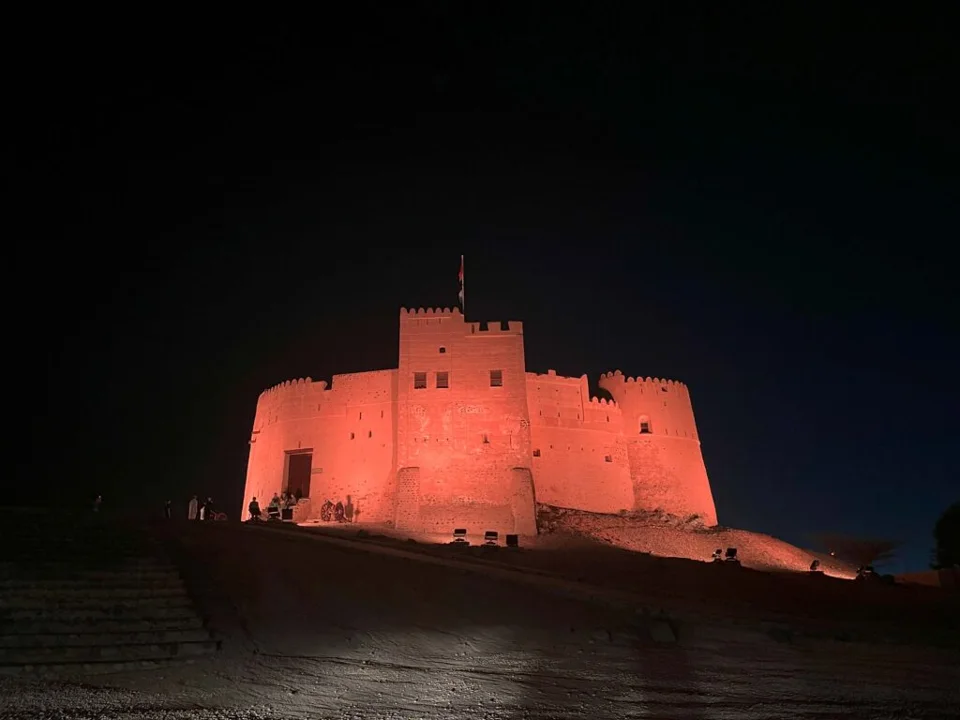
Andaman Anecdote
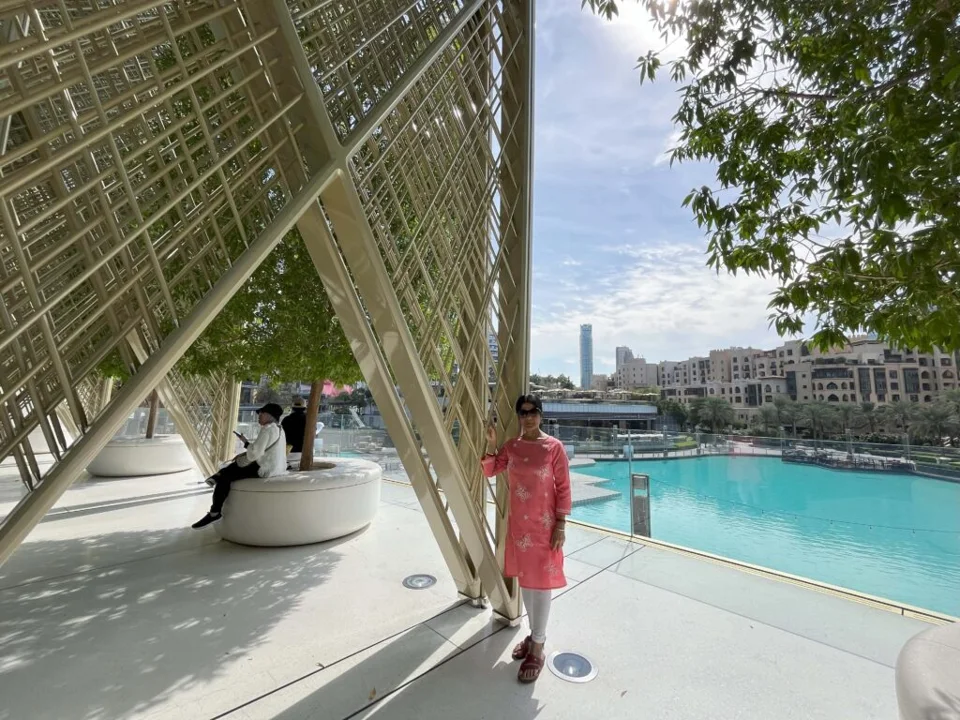
The Trigger

Family trip after a long break, planned end-to-end by me. Stakes higher than usual; nothing was supposed to go sideways. So I did the homework. Note that the rates and experiences below are for November. December prices climb steeply.
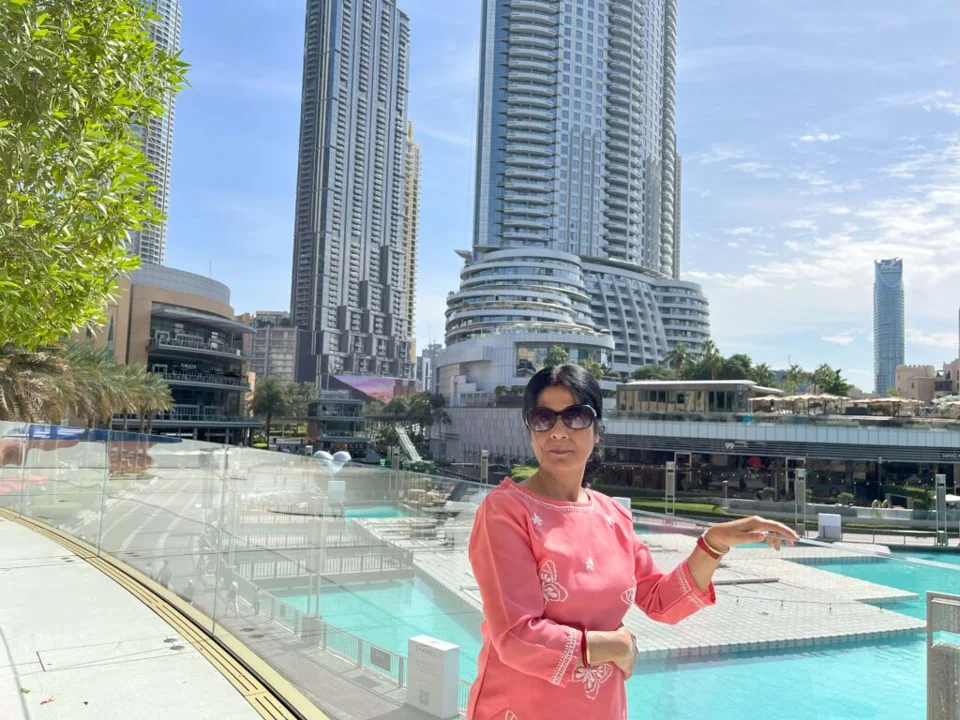
Research lived on blogs and TripAdvisor, with a clear filter: comfort first, no boundary-pushing. The trip ran Sunday to Friday — six days, the longest I had attempted to that point.
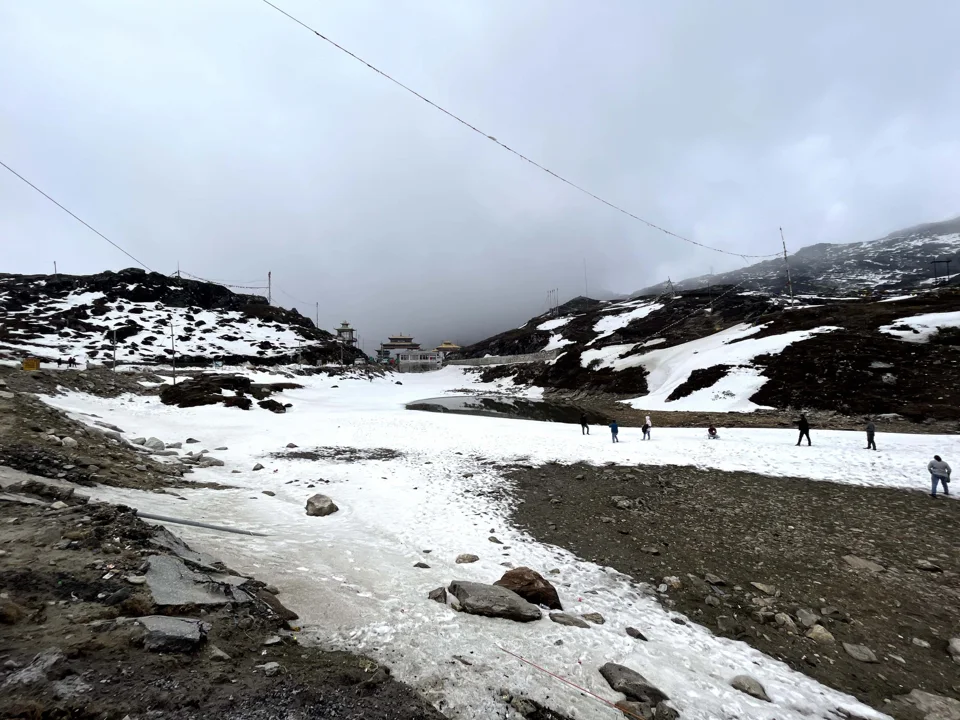
Booking sequence that saved real money:

  • Lock the place list. Filter for senior-citizen friendliness.
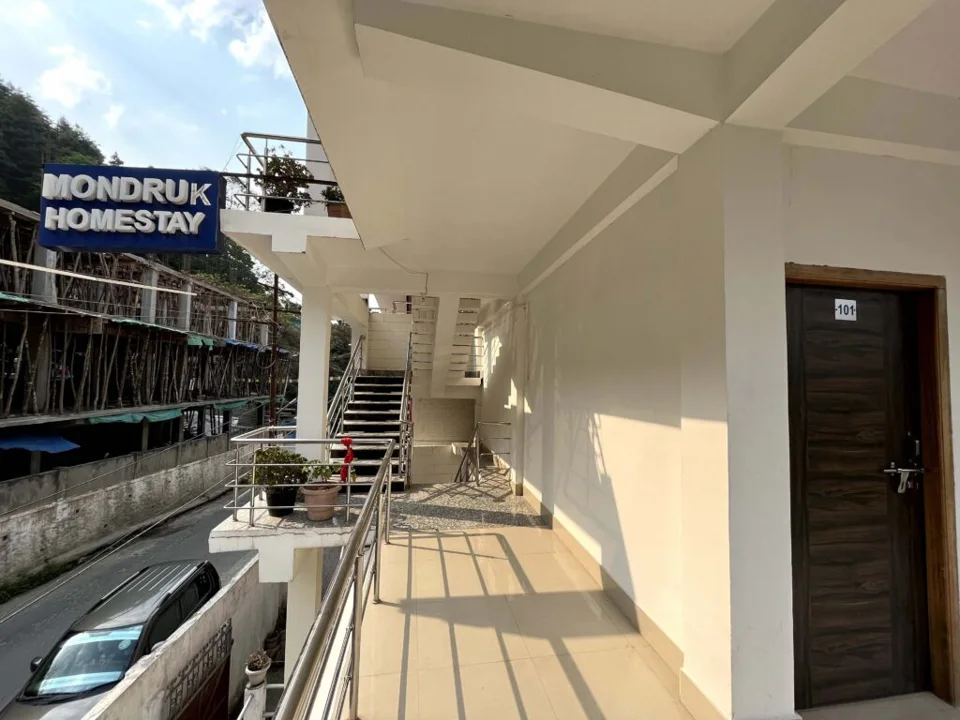
  • Book hotels four months ahead. Tourism partners overcharge for the same rooms. Book online, use coupons. Get this done early; demand spikes fast.
  • Lock flights, ideally within a month of the hotel bookings.
  • In parallel, talk to multiple travel and tour operators. Most ask for an advance. Take the best deal. Keep the water-sports portion open until you are on the ground; it depends on weather and luck.

Sunday

Spicejet, Kolkata to Port Blair, 2:30pm landing. Confirm a window seat at check-in. The view earns it.

Screenshot_1
Flying over Andaman Archipelago

And if you are lucky, you fly through a rainbow.

Screenshot_2
Sailing through a Rainbow

The airport is small. Travel firms are waiting outside with placards. Our operator, Tropical Andaman, had Rohit at the curb. Solo travellers can pick up bikes or autos at the same point. We had AC cars across the trip, run by locals who were also employees of the operator.

IMG_8842.jpg
My Model in J Hotel

We checked in to J Hotel. Inland from the sea, but the rooms are large and the food is the best we ate in the islands. Front desk was unfailingly helpful.

c6a927cd-967e-446c-9b80-87377145dd46
Cellular Jail Complex

That night was just the Cellular Jail light-and-sound show. Smart move to do this before visiting the jail itself; the show frames the rest. Steel folding chairs, long entry queues. The narration covers Andaman history, the torture inside the jail, and its place in the freedom movement. English and Hindi alternate; we caught the Hindi run. Tickets ~100 INR (usually folded into the operator’s bill).

Monday

Ferries leave on time. Plan around the timetable, not the other way around. We took Makruzz (the other strong option is Green Ocean), 8:15am out for Havelock.

Screenshot_1.jpg
Ferry to Havelock

We picked the middle Deluxe class (Premium / Deluxe / Royal). ~1500 INR + tax, paid through the agency. Deluxe gets you a window seat. As with every Andaman hotel: pack a lunch the night before. The 2-hour ride is AC-enclosed with tinted windows. I slept through most of it.

Screenshot_2.jpg
Through tinted glass of Makruzz Ferry

Havelock’s ferry drop is well-organised. Tropical Andaman had another placard waiting. We checked in to Dolphin Resort, a few kilometres from the jetty.

be36c0bd-a04c-480f-9a2a-80aedb9cf7cb.jpg
The Dolphin Resort

Mind-blowing location. Duplex cottages with glass walls. The resort has its own private beach where you can wade out without much swimming and, at high tide, swim across a kilometre. Hermit crabs everywhere on the sand. Clean, quiet.

IMG_8884.jpg
Coconuts on Dolphin Resort Private beach

Post-lunch we left for Asia’s best beach, also known as Radhanagar. Crowded but well-maintained. Crystal-clear water, changing rooms on site.

IMG_8891.jpg
Radhanagar Beach

I have not swum in a friendlier beach. The water reads less salty than usual ocean; I could pull a 360 underwater the way you do in a swimming pool.

IMG_8901.jpg
Crystal waters

Tuesday

We left luggage at Dolphin’s front desk and went to Kaala Pathar beach. Quiet stretch with rocks and twisted trees that everyone uses for portraits. Coconuts at 40 INR each.

vlcsnap-error994.png
Walking towards Kaala Pathar

Then we collected bags and drove to scuba (3500 INR per head). They run a health-and-fitness NOC and have a hard age cap on the older end. Bad luck arrived: someone had spotted a freshwater crocodile in the ocean that morning, and the forest department had suspended scuba and snorkelling across Havelock. Done.

vlcsnap-error458.png
A scuba cylinder

Annoyed and relieved, we let the operator route us to lunch at a place called Something Different. Normally I refuse off-itinerary detours; they tend to be margin extraction. I gave it a pass this time because they were also covering the ride to the ferry, and food across Dolphin and beyond had been mediocre. The road in is muddy and rough.

IMG_1077.JPG
Themed Restaurant called Something Different

Something Different is a top-3 restaurant on Havelock for a reason (data I confirmed once Wi-Fi cooperated). The interior is a deliberate jumble: regular dining, a library, vintage toys, floor seating, denim crockery, every abstract idea bolted on. The food was the best we ate in the entire trip. My Google review.

IMG_1075.JPG
Food tables and Salty Waves

Walk to the back of the restaurant. There is a forested, deserted beach behind it that holds the mangrove energy.

IMG_9422.jpg
Mangroves reclaiming the land

We caught the 5pm return ferry to Port Blair. No security check this direction; counter-side ticket verification and you board. By evening we were checked in at the Megapode Resort, the government property named after the local bird.

IMG_1117.JPG
Panoramic View from Megapode

Wednesday

The other tentpole of this trip was Jolly Buoy. The pun was warranted.

IMG_9435.jpg
Enroute Jolly Buoy

Departure 6:30am for the bumpy drive to Wandoor jetty. Pack breakfast the night before; most hotels will do this if you ask. The site is forest-department controlled. Confirm with your operator that your name is on the day’s list. Aadhaar or passport is mandatory at the ticket counter.

IMG_1114.JPG
Wandoor Jetty

No-plastic zone. Refundable water bottle at the Wandoor counter for 10 INR plus 200 INR refundable security. Entry to Jolly Buoy: 35 INR. The boat ride is another hour, threading through mangroves.

IMG_9794.jpg
Mangrove Reserve

The ferry parks 100 feet off the island so anchors do not damage the coral bed. You transfer to a glass-bottom boat in life vests. Even the brief view through the tinted glass is something else.

IMG_9468.jpg
Coral Bed through Glass bottom

Six coral varieties in this patch with rich biodiversity and active fish. The full glass-boat package is 1000 INR per head. The operator narrates as you go: which fish, what species, what is unusual about each. Thirty minutes of live Discovery.

IMG_9436.jpg
Jolly Buoy Island

The island itself is small. Limited refreshments, makeshift restrooms, deep sand. Swimming is allowed within a marked zone, watched by coast guard. The fish are so unhabituated to people that they nibble your feet without flinching. Boats leave at 2:30pm.

IMG_9778.jpg
Bulbul bird

Thursday

Next morning, the guide handed us access passes (580 INR per person) for Rajiv Gandhi Water Sports Complex. The complex is the hub for information, ferry service, and motorboat rides; the jetty is locally called Aberdeen. The water around it is shallow with fish schools and starfish.

vlcsnap-error174.png
Rajiv Gandhi Sports Water Complex

First stop: Ross Island, entry 30 INR. The British-era capital of Andaman.

vlcsnap-error621.png
Ross Island

The island is layered with colonial ruins, fearless coconut-thieving deer, and male peacocks crossing the paths.

IMG_9833_kyunkichristmaspereindeer.jpg
Oh Deer

Second stop: North Bay, entry 10 INR. Known for food stalls and water sports.

vlcsnap-error174.png
North Bay

North Bay packs the longest activity menu of the trip:

  • Semi-submarine — 1850 INR
  • Scuba diving — 3500 INR
  • Snorkelling — 500 INR (half mask) / 1000 INR (full mask)
  • Glass boat to spot dolphins — 1850 INR
  • Sea walking — 3500 INR
IMG_9861.jpg
Scuba Diving Gear

Conventional wisdom: skip most of these here. Scuba and snorkelling are better at Havelock and Neil. Glass boats are better at Neil and Jolly Buoy. Sea walking and the semi-submarine are exclusive to North Bay. We took the semi-submarine. Disappointing experience plus seasickness.

IMG_9854.jpg
Fishes through Submarine glass panes

The semi-submarine has aircraft-style interiors and safety system. The viewing glass is heavily tinted; an occasional curious orange fish bumps the panel. Coral visibility was poor and the seabed here is in noticeably worse shape than Jolly Buoy.

Friday

Last day. Checked out and went back to the Cellular Jail, this time the daytime visit: monochrome photographs, walking through the cells, the gallows up close, the names of prisoners engraved on the pillars. The Sunday-night context paid off here. The watchtower at the top opens to a panoramic view of the cell wings and surrounding islands.

e1790be3-339c-47c7-b446-b75a3705929a.jpg
The hanging chamber

Quick stop at the Fisheries and Anthropological Museums before the airport — budget an hour minimum. Fisheries holds species in formaldehyde, mummified swordfish and dolphins, higher-level coral types, and aquariums with rare carp and lobsters. The Anthropological Museum covers the indigenous tribes: photographs, cultural distinctions, weapons, hut models, all built from samples collected in the field. The exhibits on tribes still surviving outside modern contact are the part that stays with you.

IMG_8874.jpg

Back to the small airport for the flight to Kolkata. Spicejet again. The runway sits up against the waiting area; the takeoffs are a show on their own.

Field Notes

  • Bake costs into the operator deal upfront. Cruise, permissions, entry fees — get them on the email itself.
  • Pick the month deliberately. November runs cooler than December and significantly cheaper. Mid-November is also when Jolly Buoy opens for its 6-month window.
  • Scuba is conditional. Age limit, fitness clauses, ~36 disqualifiers. Even after passing all of them, a wandering crocodile can shut the day down. Plan for both outcomes.
  • Jolly Buoy beats Red Skin. They alternate every six months for coral recovery. Red Skin is smaller and consistently worse-reviewed. Time the trip for Jolly Buoy.
  • Why I skipped Neil. Neil is similar to Havelock and only earns the visit if you plan to cycle the island or do water sports. Not our setup.
  • Why I skipped mud volcano and limestone caves. The walk and the trek are not senior-citizen friendly. If you do not have that constraint, do them; the scenery shifts.
  • Cellular Jail accepts debit cards only. Specifically debit, not credit. Confirmed at the gate.
  • Skip the base cruise package. The price gap to the upgrade is small and the base experience is not worth it. Avoid the government cruises entirely; they are slow and run-down.
  • Order: light-and-sound first, museum and jail later. The narration gives you the context to actually read the artefacts.
  • Window seat. Afternoon flight. Both directions. Thank me later.
  • Eat at J Hotel. The food is the best part of the property.
  • Dolphin’s food is poor. Stick to veg. Better: Coco Restaurant, ~1.5 km away. Pricier, but it is food.
  • Megapode food is fine. Cafes, restaurant, buffet. Nothing standout, nothing bad.
  • Book hotels six months out. Especially government hotels. They sell out that early.
  • Makruzz / Green Ocean security check is real. Treat it like an airline. Do not pack lighters or anything else you would not put through baggage screening. We lost a lighter.

One Recommendation

Book Dolphin Resort. Eat at Something Different. Spend more nights at Havelock than at Port Blair.

And here, a hermit crab.

IMG_9279.jpg

Who lives in a pineapple under the sea?

Sayantan