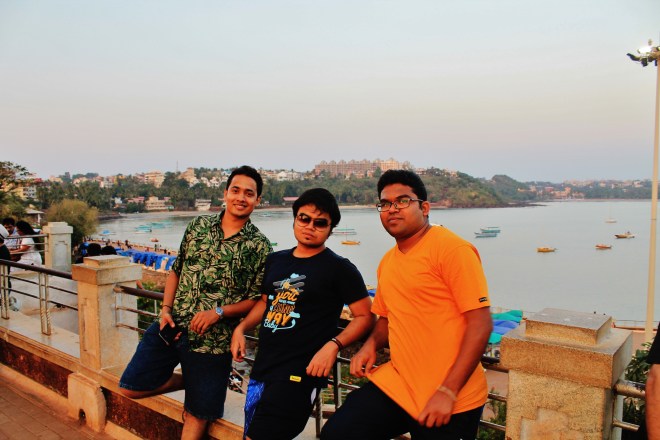
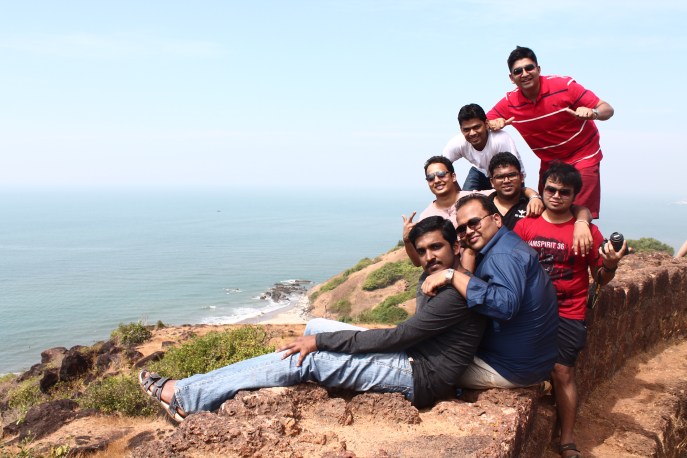
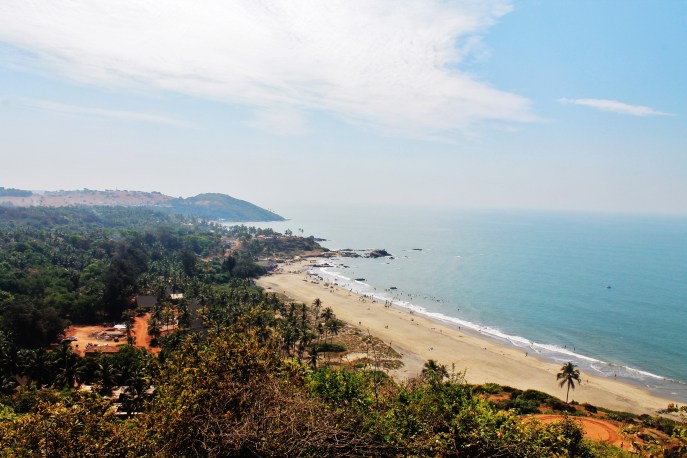
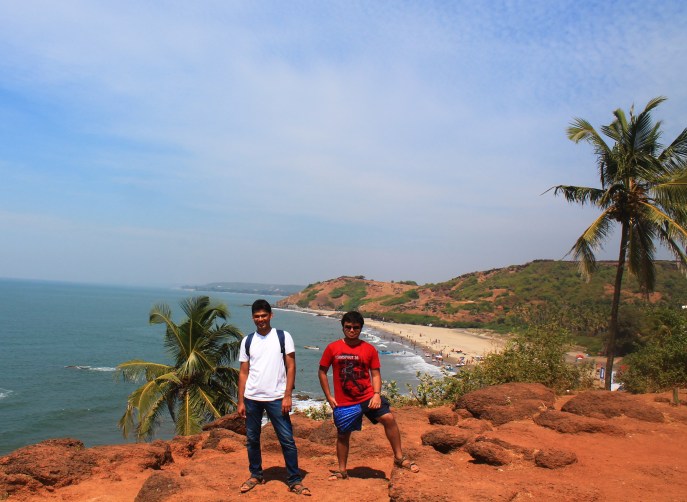
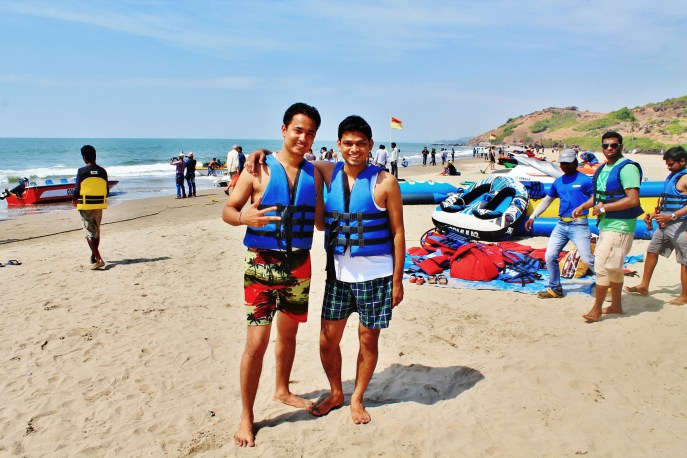
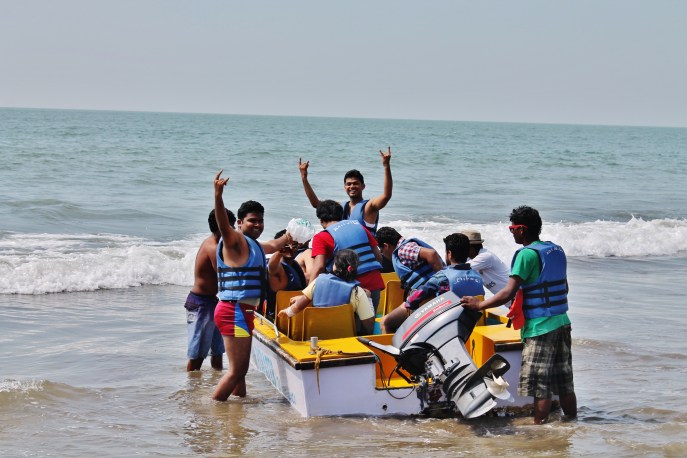
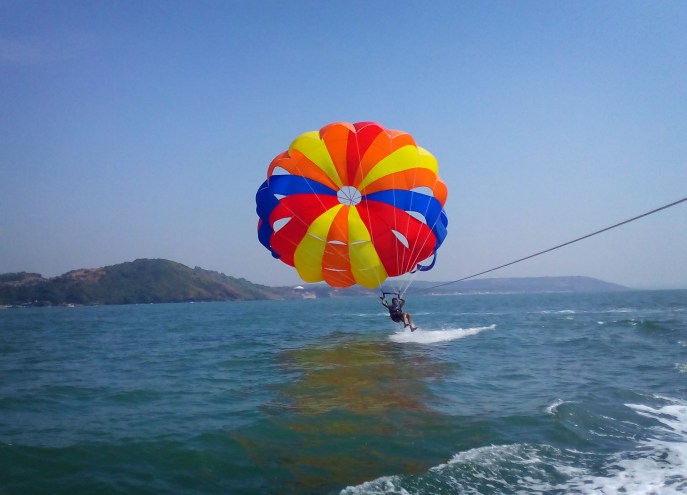
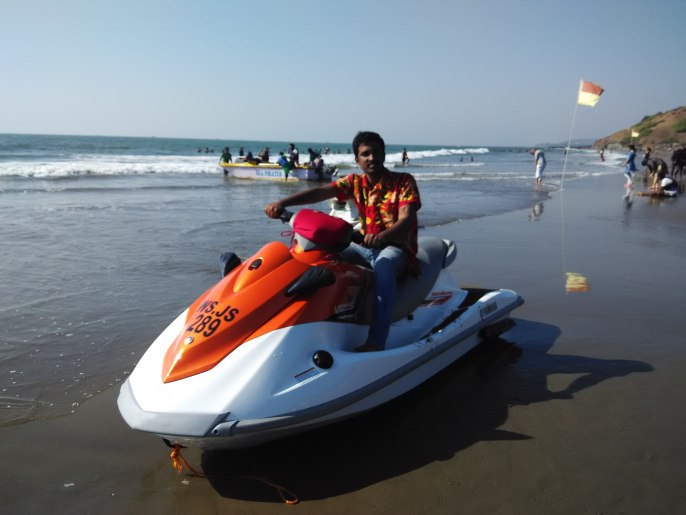
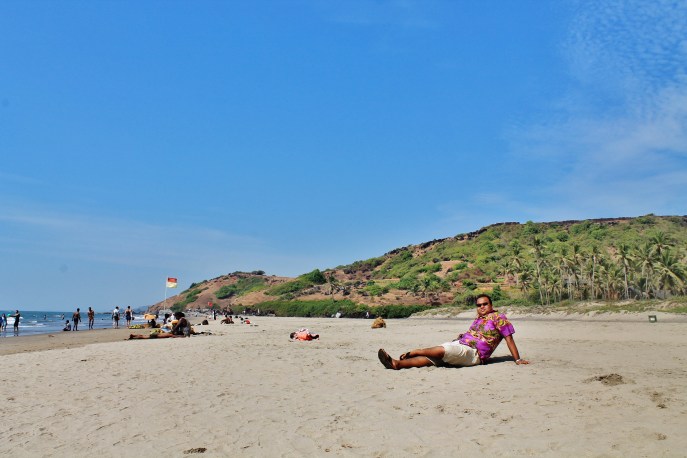
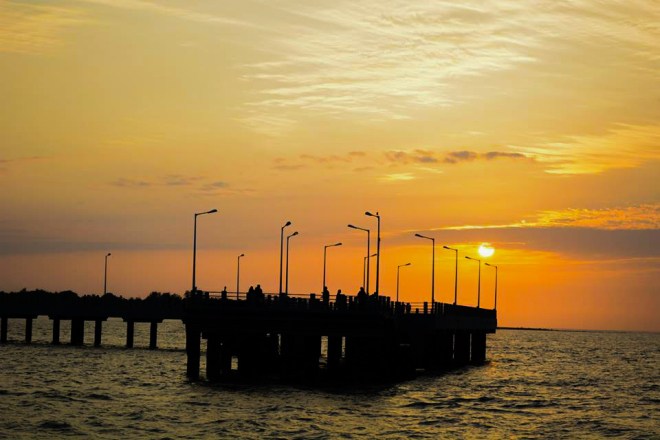
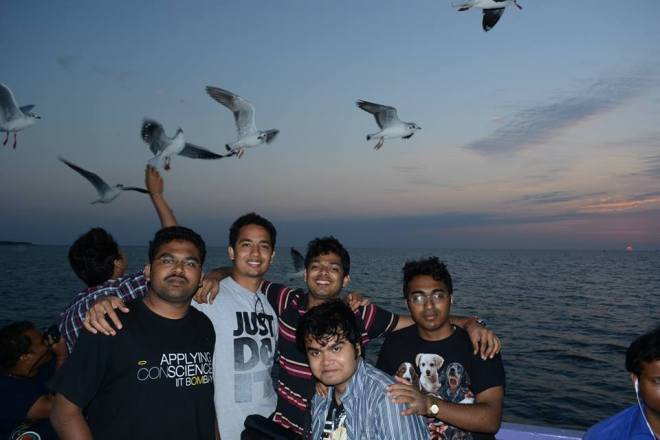
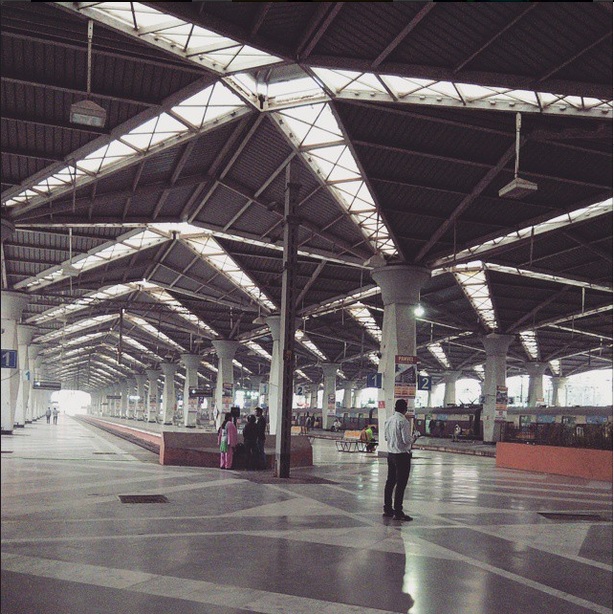
Goa Gospels

The Trigger

Goa, second visit. New tweaks. We took the midnight train out of Mumbai and rolled into Margao close to noon the next day, where the third member of the crew was inbound from Bangalore. Hotel was in North Goa. Buffer transport was a private bus packed past Dadar density, then a government bus to Panjim, then a hunt for a rental car.

North Goa rentals are organised. Panjim rentals are sketchier. The dealer took 3000 INR upfront and a photocopy of the licence. Handed over a 2007 Maruti, manual transmission of an older school. It served the trip.

Night 1

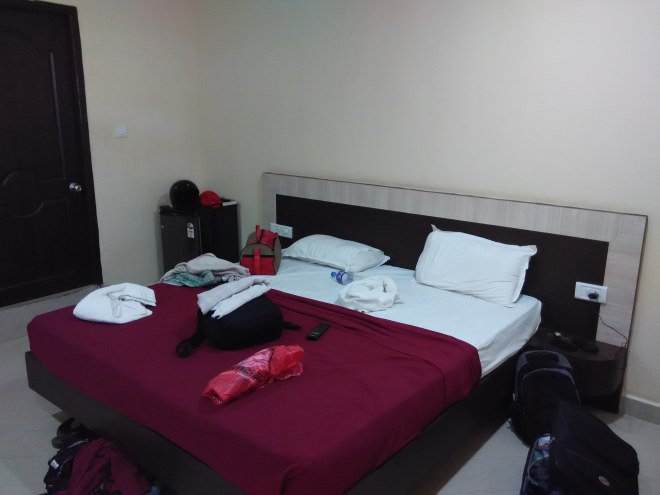
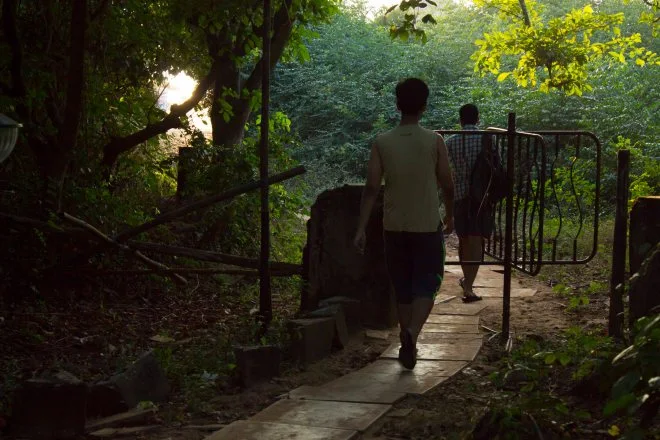
Check-in at Candolim was a spare room inside the home of a cafe owner named Bosco, pre-booked over the phone. 1000 INR per night for three of us. Bob pointed us toward his beach shack, accessed through a garden trail along the back of the luxury hotel out front.
1.jpg
Accessing Candolim beach from Bobs Inn

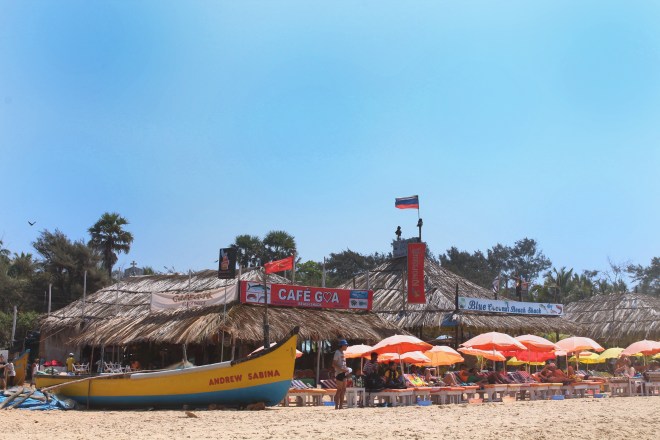
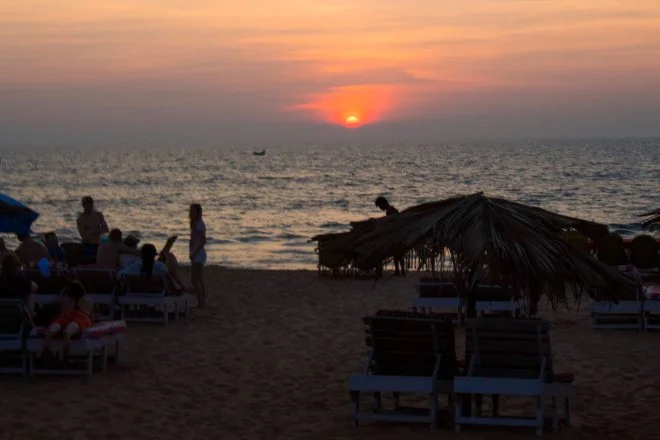
First evening: shack chairs, beers, sunset, conversations long overdue. The shack was new ground for both my friends.
2
Sunset from a shack

Dinner at Bob’s Inn, the sister property near Hyatt. Good food, fair pricing, a deep wine list, mostly older bottles.
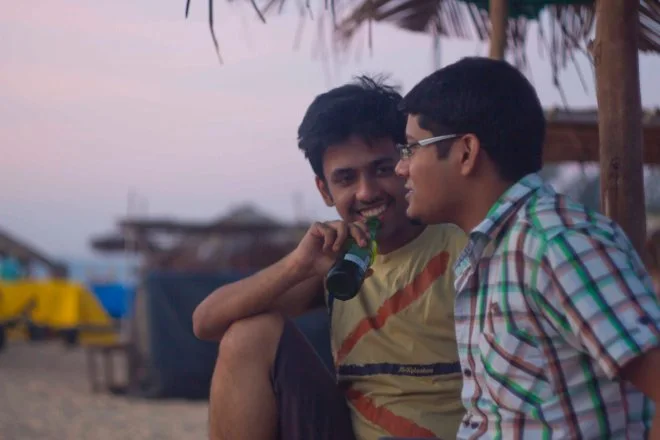
3.jpg
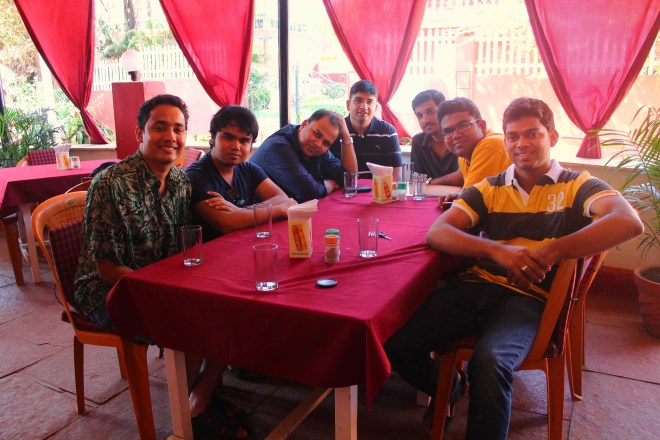
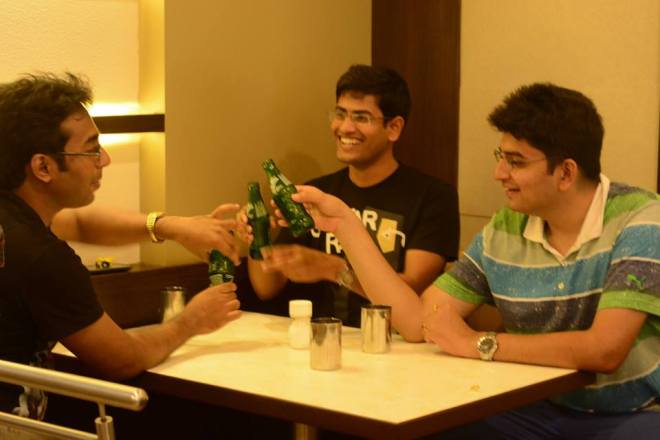
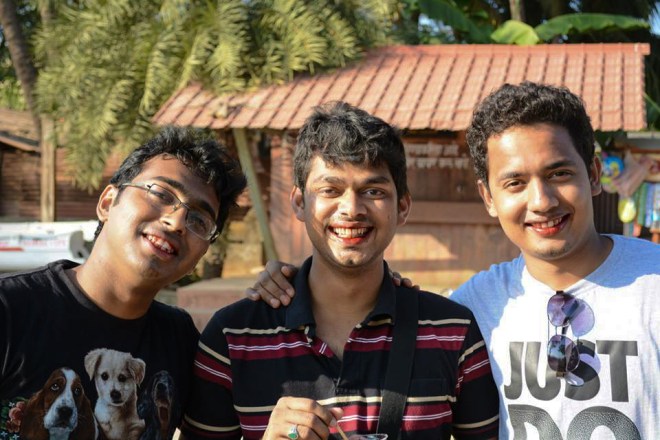
Friendship over beers

Stick to the Chinese side of the menu. Kitchen closes at 11pm. Be inside by 10.

Day 2

Long ride ahead.
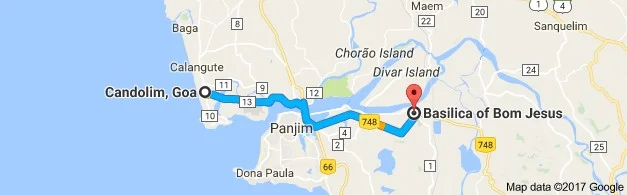
7.jpg

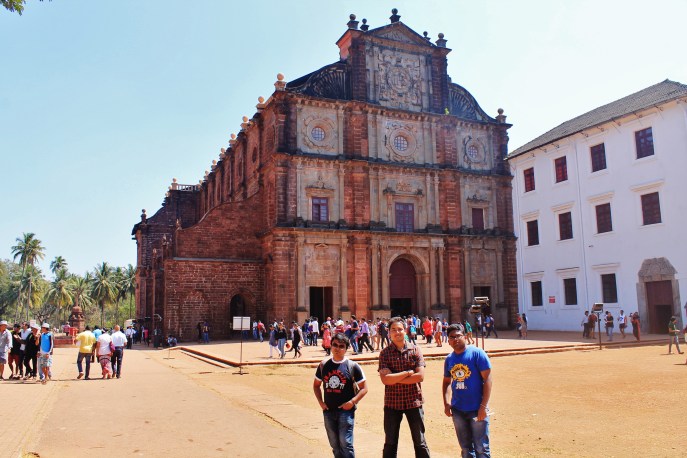
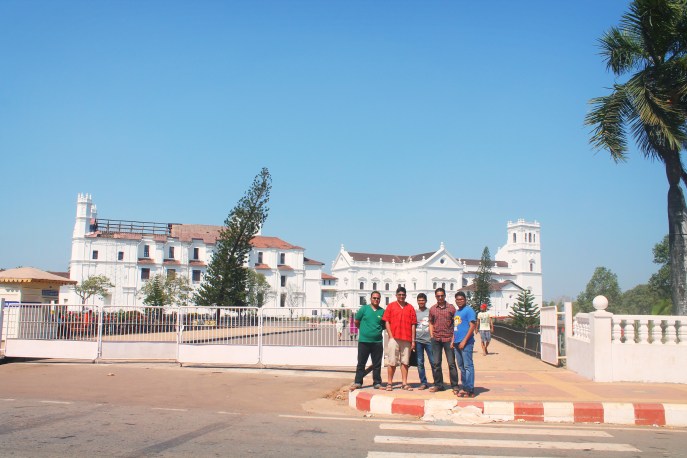
Early start, headed for the two main churches of Old Goa.
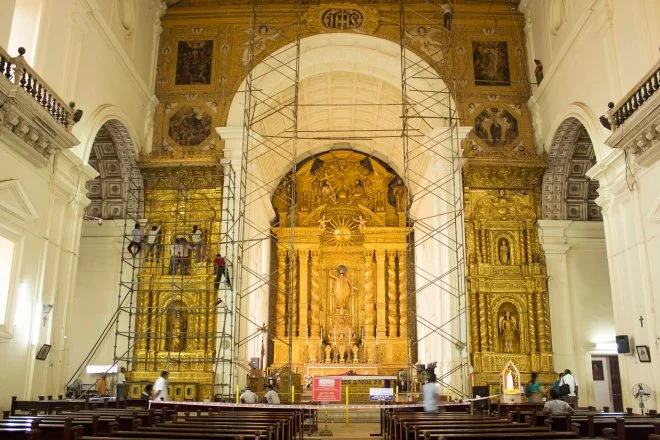
8.jpg
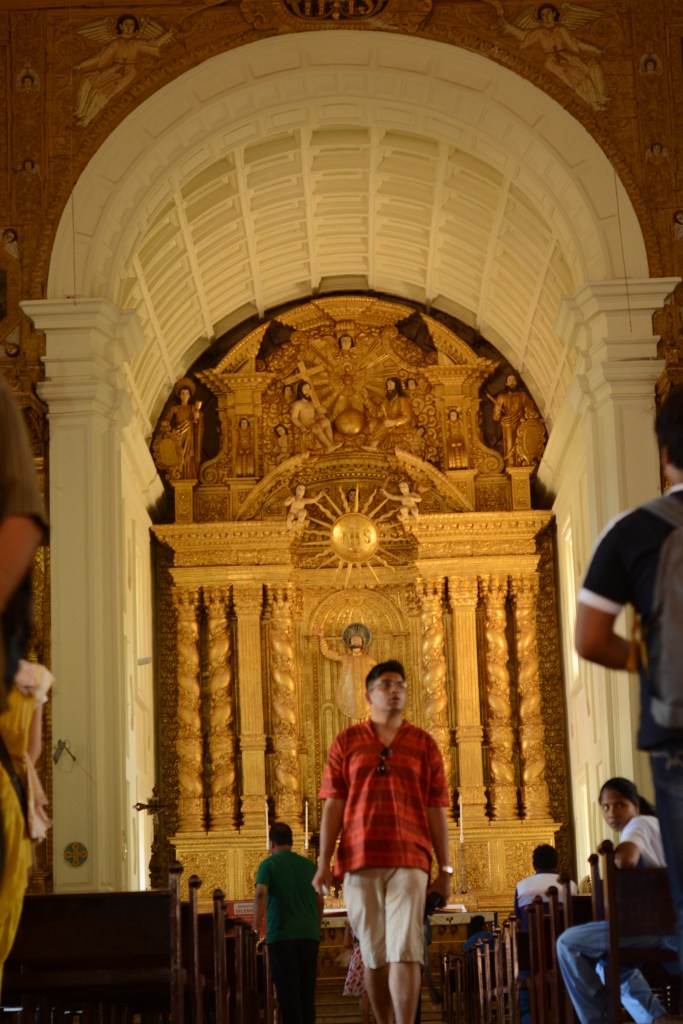
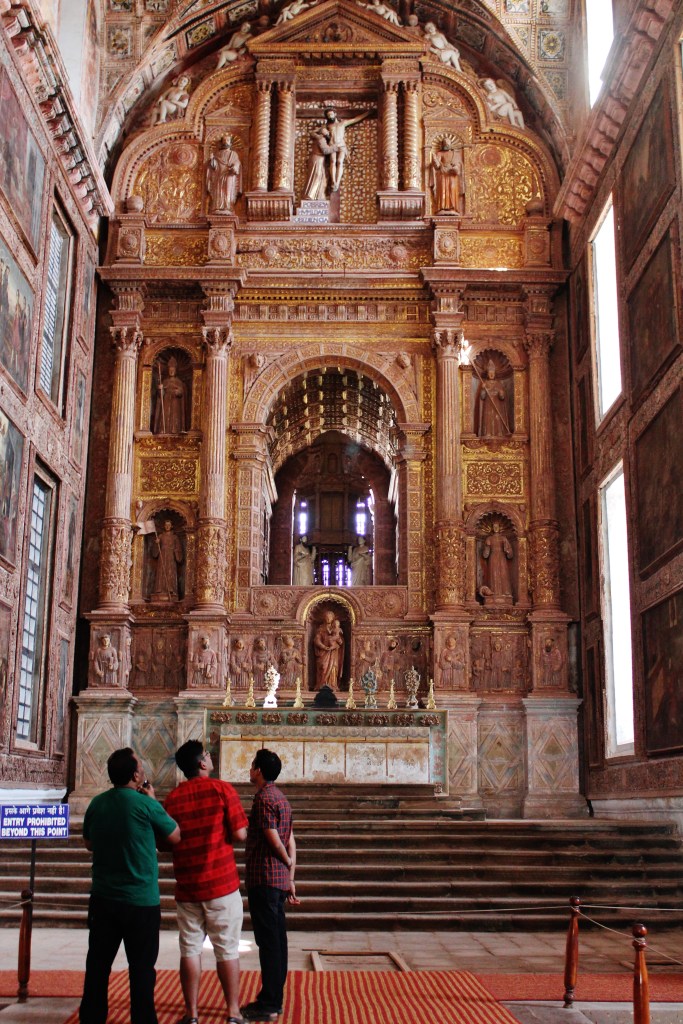
Inside St Basilica of Bom Jesus

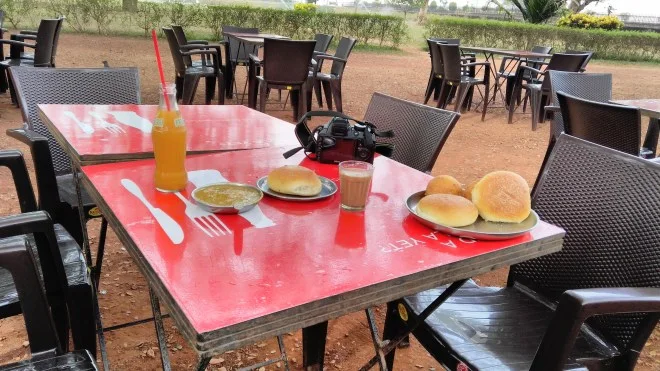
There is a small shop inside the church complex selling breakfast snacks. The exploration arc was the same as in our first visit, so the post moves to the next stop.
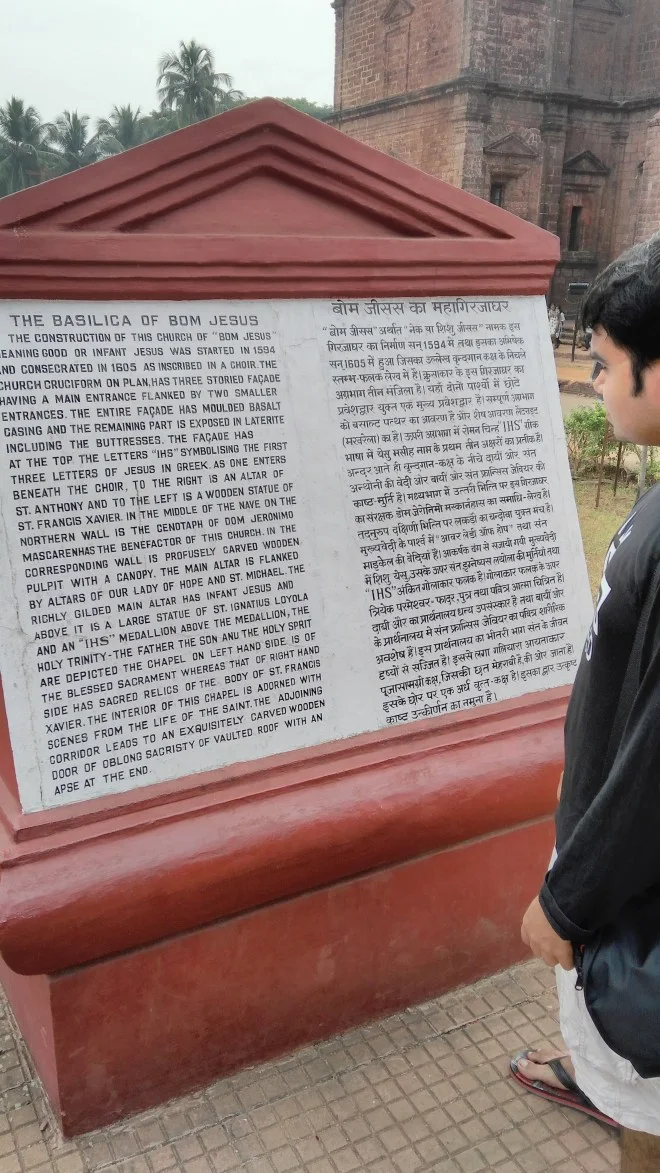
8a.jpg
Reading through history
8b.jpg
Over Paus and Mazaa

Then the part I had not done before. South Goa, beginning with Col9.jpgva, the famously fishing-first beach.
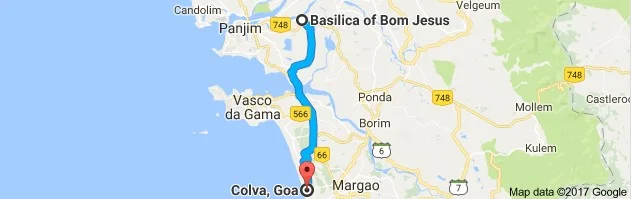
Parallel to Margao, navigable on Google Maps with reasonable accuracy. The vibe is rural and uncommercialised. Colva is the last beach where you will hit any real crowd; the fishermen draw it. Past here the coast empties out and the terrain shifts.
10.jpg
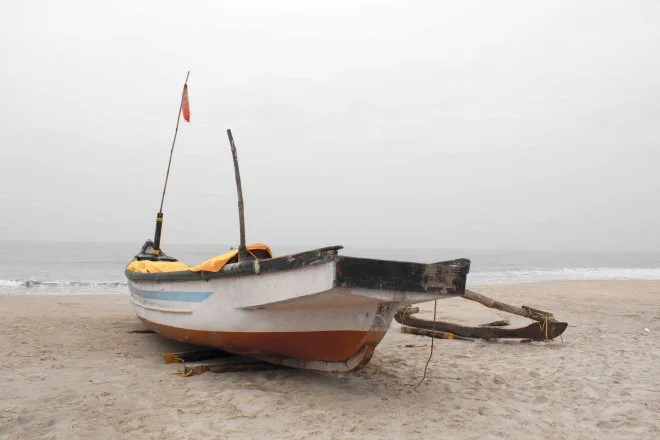
Fisherman’s boat

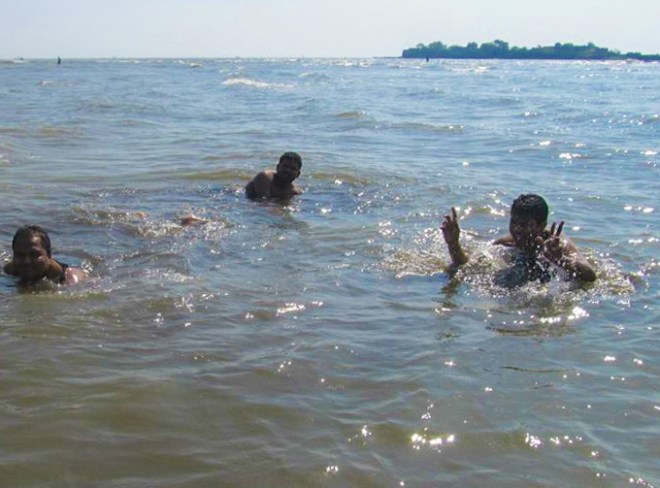
Beautiful, not great for swimming.

11.jpg
YOLO

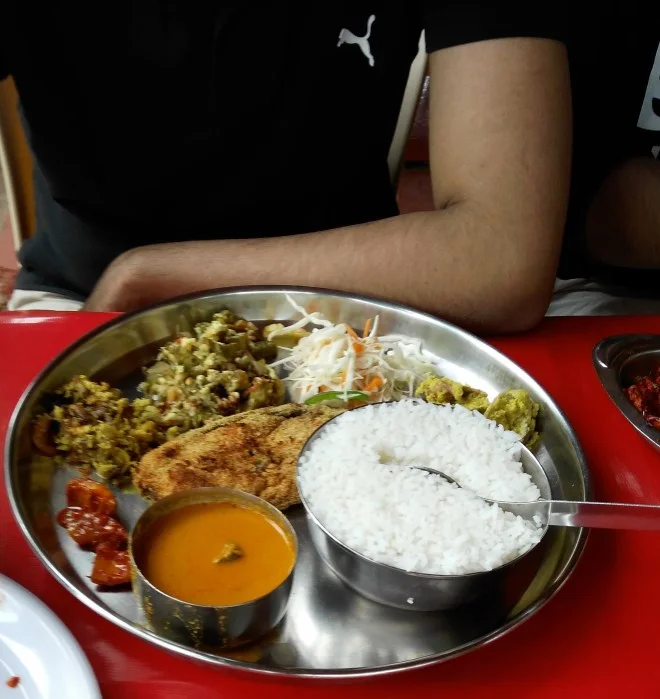
Restaurants at the far end of the beach run a proper Goan curry.
11a.jpg
Authentic Goan delicacy

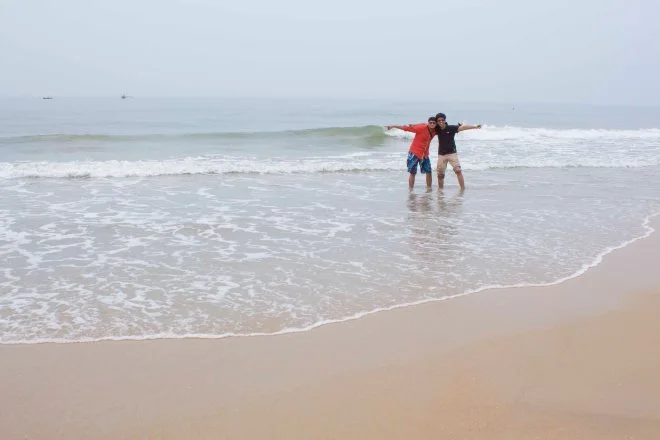
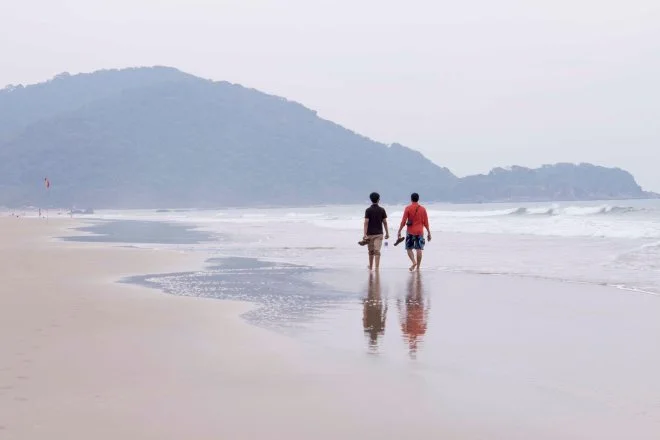
Further down: Palolem. The most beautiful beach in Goa. No competition.

12.jpg

Sunbathers in rows. The road in is highway through low habitation, with elevation that does not behave.
14
My favorite shot of the trip

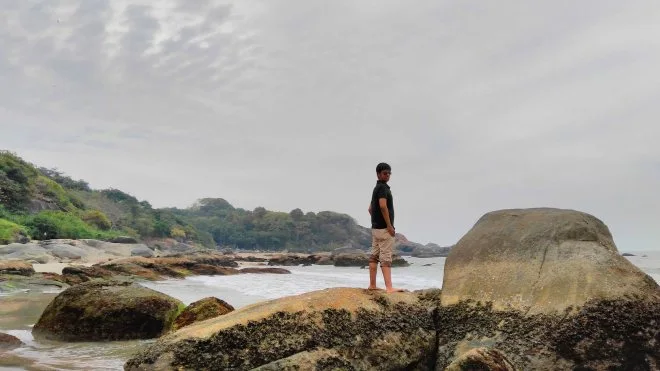
Rock formations are the signature here. They also make the beach genuinely dangerous to swim. The waves arrive with force and the rocks do not forgive.
15.jpg
Rock paper scissor

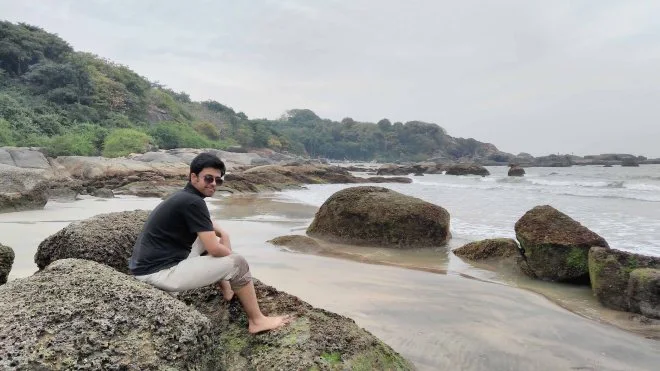
The rocks themselves are slick: algae, seaweed, soft moss. Climbing them is a poor decision.
16.jpg
Seaweed and Algae

Night 2

17

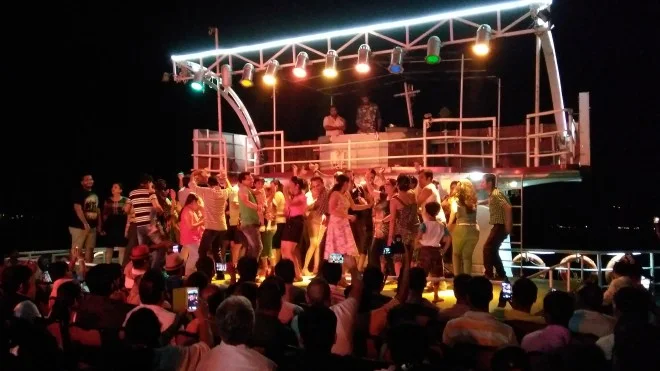
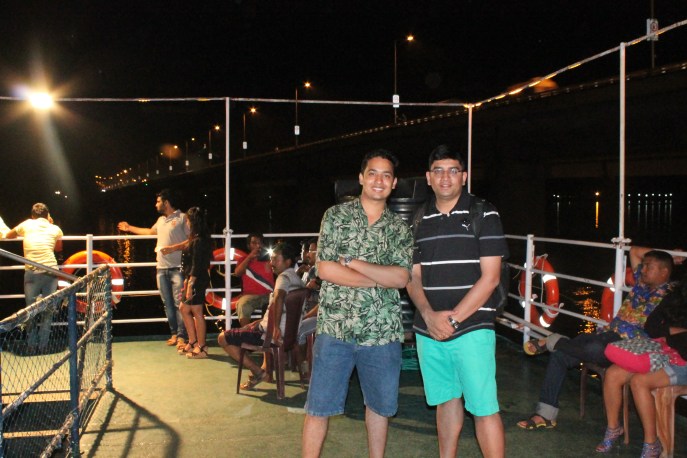
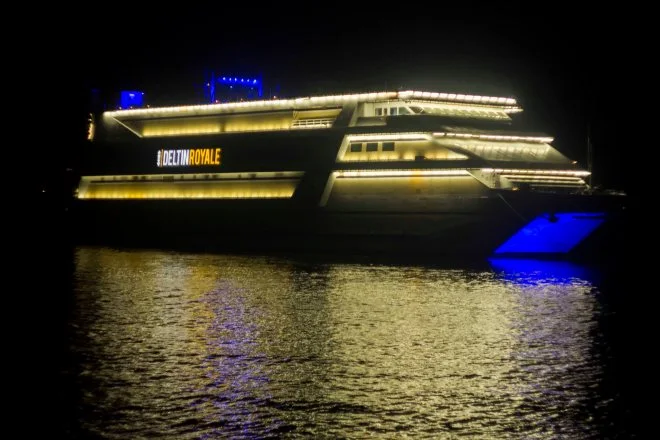
Back to Panjim for the cruise. Same format as the first trip, except this time we worked our way around the Deltin Royale floating casino more thoroughly.
18.jpg
The Casino

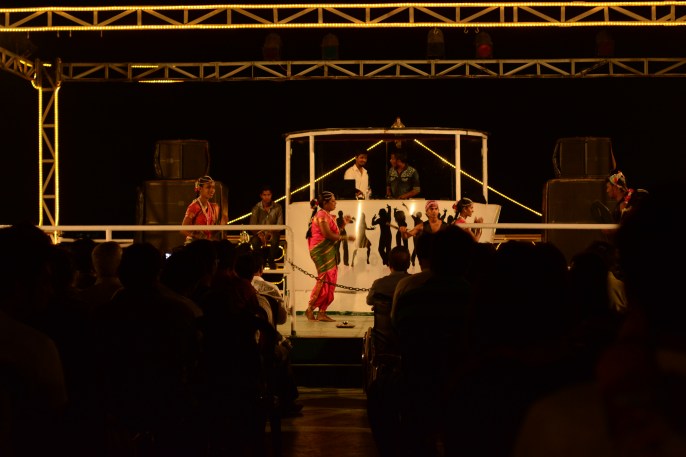
My friends danced. A lot.

19.jpg
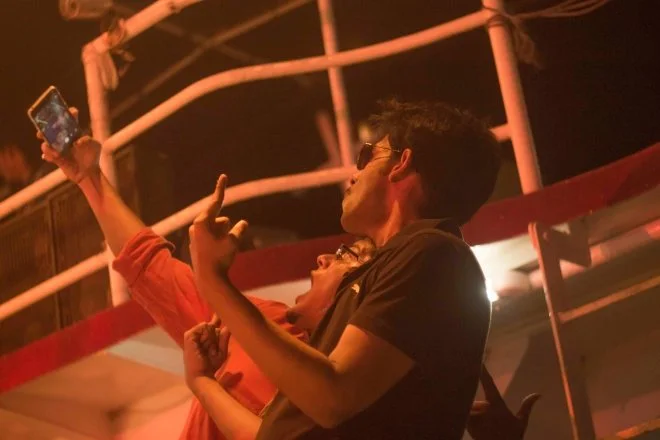
Selfie on a dance

So did the rest of the boat.

20.jpg
Where is the party tonight

Dinner at Fisherman’s Cove. Best restaurant of the trip: live music, open setting, food that earned its price. Crab, lobster, and chicken on the table.

That night we partied properly. Headbanging. Cartwheels. Body waves. Air guitar. Best night out in a long stretch.
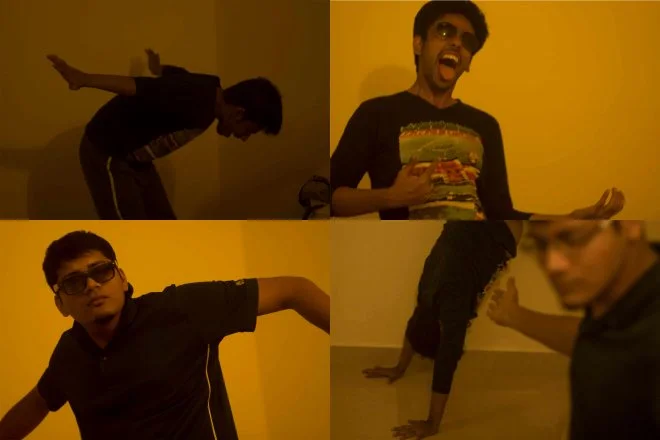
24.jpg
Dancing to Chikni Chameli

Day 3

24a.jpg

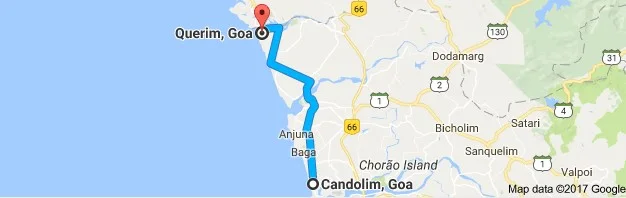
The northern tip of Goa, where Maharashtra is visible across the water. Roads cut through hills to get there. Querim, the first beach inside Goa, is unlike the others.
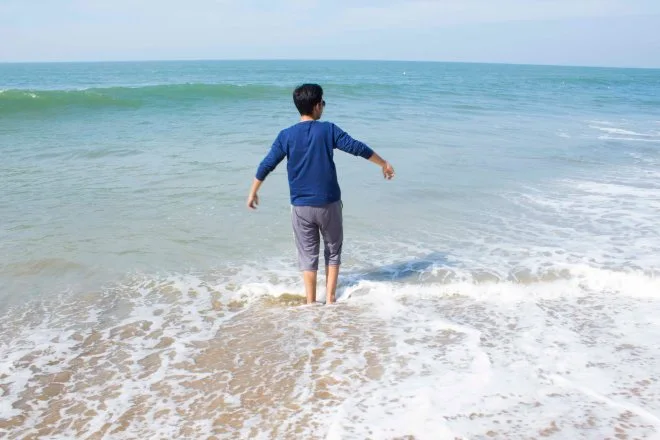
25.jpg
Cause Sea is Life

Sunbathers again, surf-ready. The beach is an estuary, sloping down sharply into water that meets it with force.
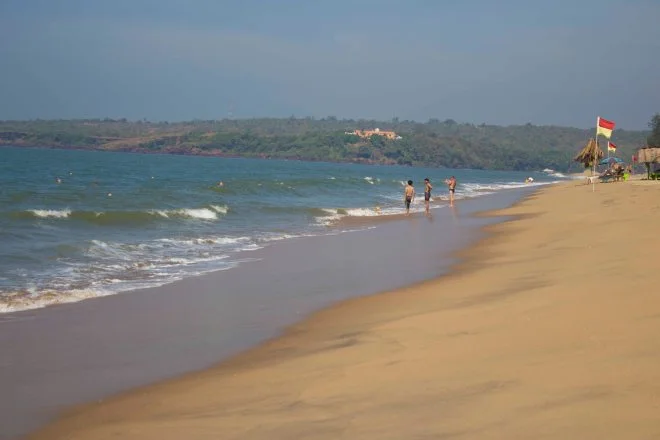
26.jpg
Lifeguard Poles

Ropes run from the beach to fishing poles offshore. If you lose your footing in the water, hold the rope. Not optional.
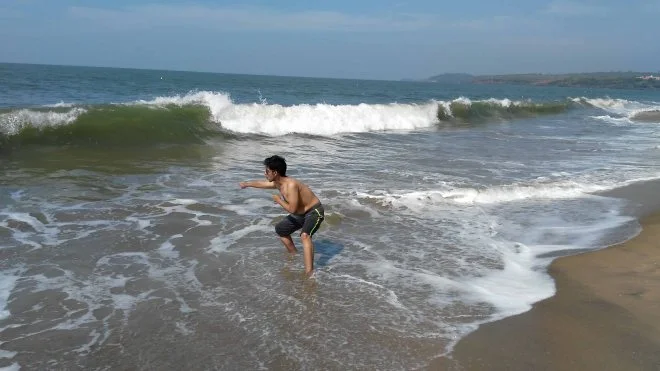
27.jpg
Tag! You are It!

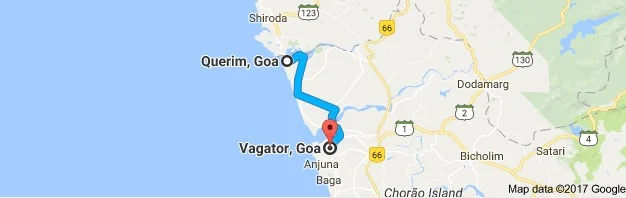
Next: Chapora Fort to Vagator beach. Familiar arc, with a couple of additions.
28.jpg

This time we took the DSLR into parasailing. The lens caught a few mouthfuls of seawater across the frame.
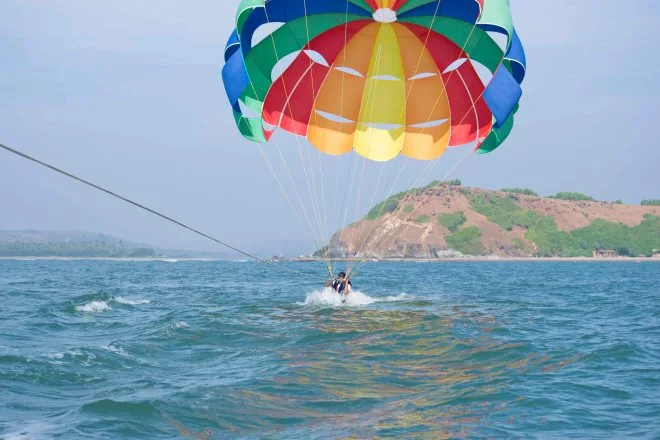
29.jpg
BLURBBB

Night 3

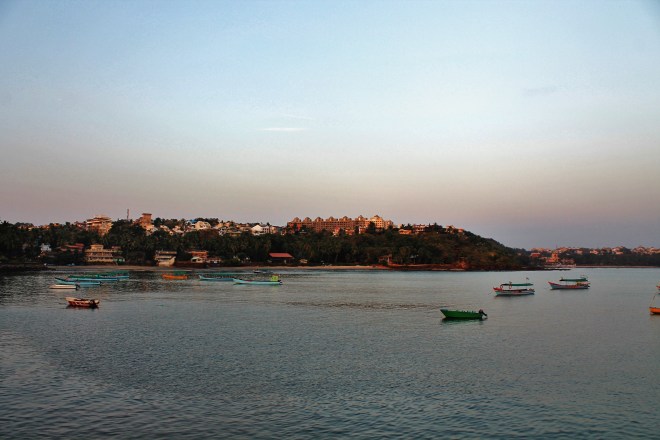
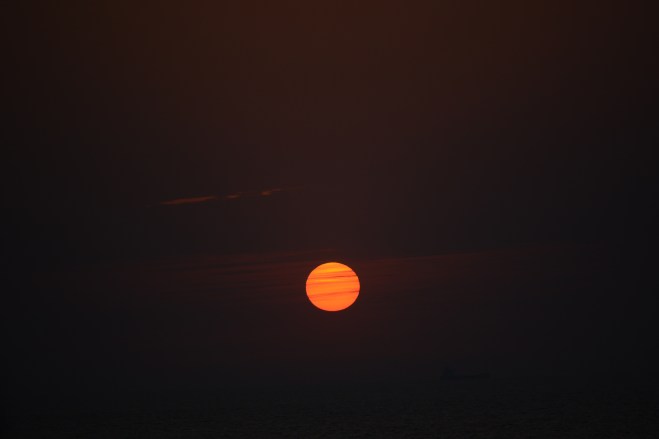
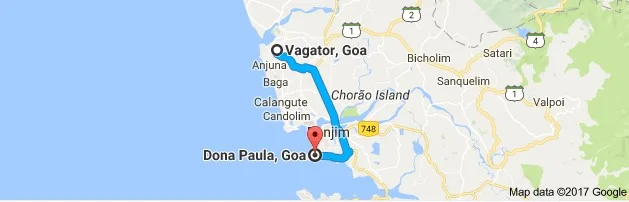
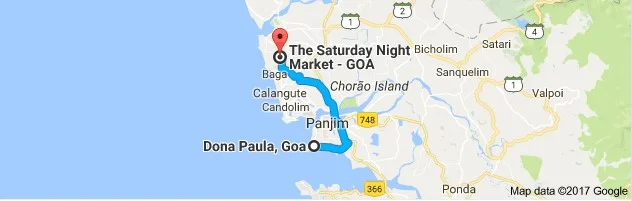
Hard drive to Dona Paula. We arrived a couple of minutes after sunset.
30

The afterglow stayed longer than expected. As we got up to leave, the sky turned over to fireworks.
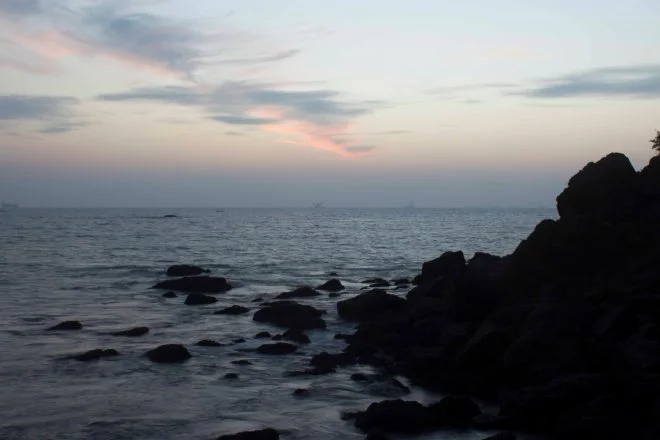
31.jpg
Serene Sunset

Then back to the Saturday Night Market near Baga. This time we worked the place properly, every stall, every corner.
32.jpg

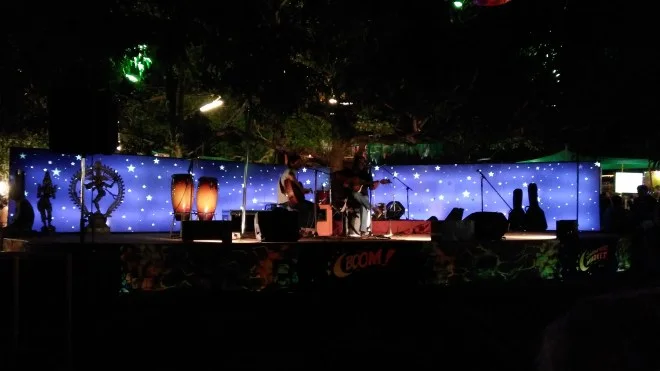
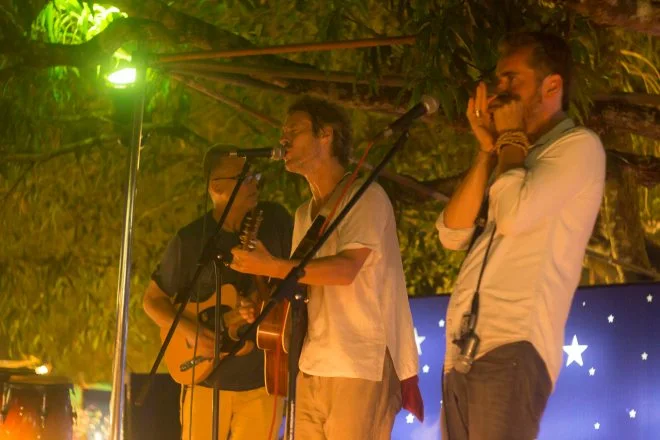
Live music was on. The Saturday Night Market is the part of Goa I keep returning to.
33.jpg
Live Music Performance
34.jpg
The Boom Stage

Day 4

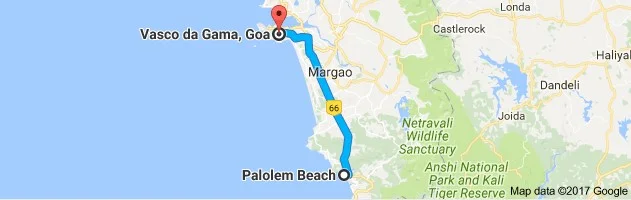
Last loop through Panjim, picked up two floral T-shirts with Goa printed on them. The airport is a long way from the city. The state bus from Panjim to Vasco da Gama airport was supposed to run; it did not that day. The car owner who rented us the Maruti agreed to drop us for 500 INR. Done.

Field Notes

  • Do not skip South Goa. The contrast against the north is what makes the state interesting.
  • Querim is non-optional. A sloping estuary beach with almost no tourists is a rare combination.
  • Eat at Bob’s Inn and Fisherman’s Cove. Worth it if you eat seafood. We did not bother with food on the first trip; this trip the meals were half the experience.
  • Keep GPS on. It works, but acts up at junctions.
  • If you must rent a car, do it in North Goa. Try the Thivim chain. The South Goa rental scene is informal at best. Note: no Uber/Ola in Goa yet. Bike is still the smarter rental.

One Recommendation

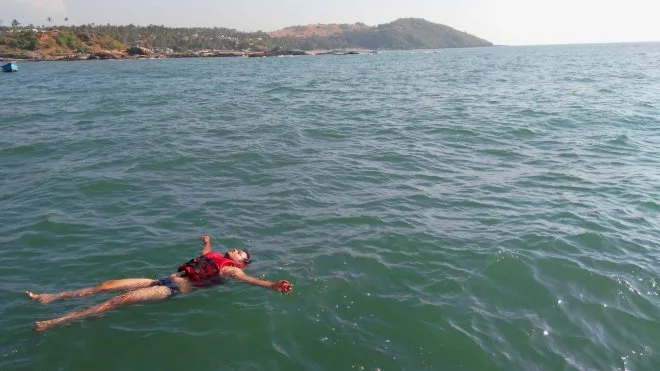
Skip the banana ride if your group is small. Ask the parasailing operator to drop you straight into the ocean for a few hundred rupees. Same fun, less queue.
35.jpg
Miles to float before I sleep

Ciao,
Sayantan
Caving In Elephanta Cavern

The Trigger

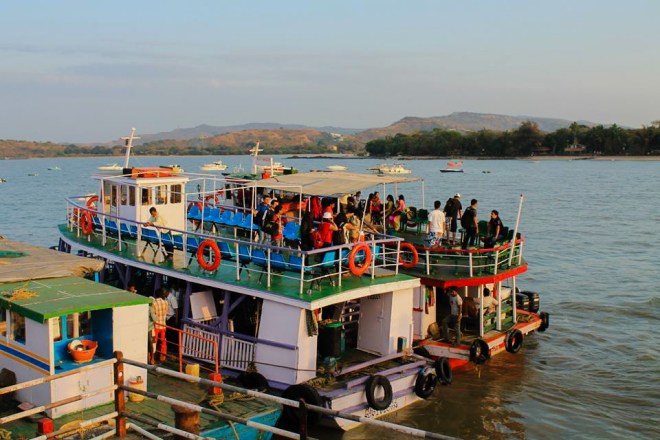
November 26th. A free Saturday in Mumbai, a friend up for the day, and the Gateway of India ferry counter open. Two destinations on offer: Mandwa-Alibaug or Elephanta. We picked the cave island. 190 INR for lower deck, 10 INR more for upper. One hour out, one hour back.

15337403_1631120526905441_1596353163968432106_n
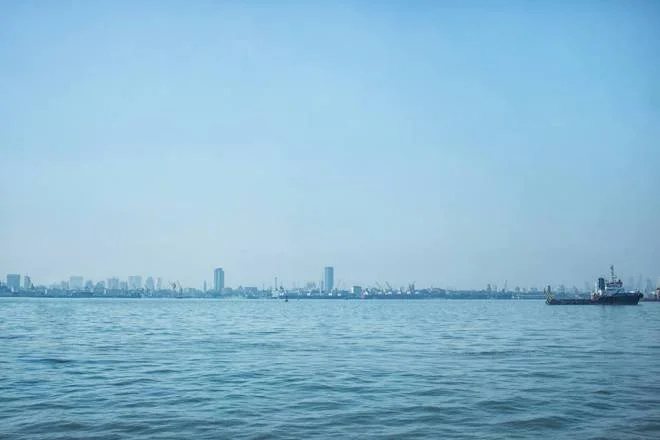
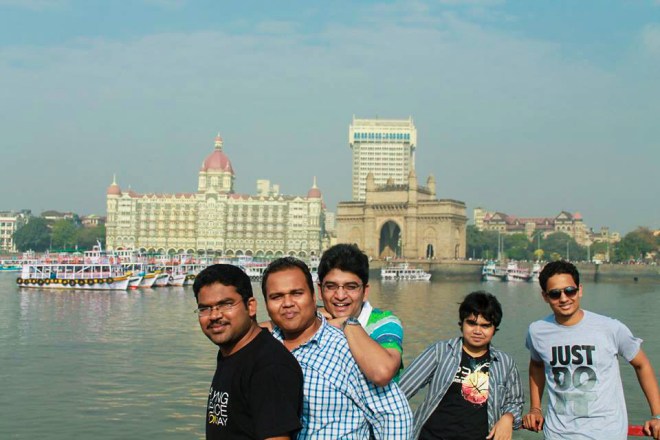
Mumbai Skyline

Pre-noon haze had cleared. The Mumbai skyline was readable from mid-bay, the kind of frame you stop fiddling with the camera for and just shoot.

15337403_1631120526905441_1596353163968432106_o
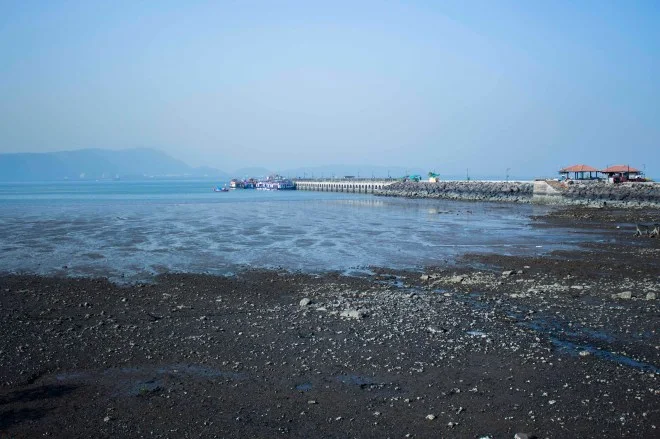
Elephanta Island Jetty

The jetty greets you with two welcoming committees: aggressive cows and a steady supply of dogs. Carrying food is a tax you pay in chase. Skip it. There is plenty up the hill at fair prices. The beach reads more rocky than swimmable.

Above the landing, 100 steps climb between rows of stalls selling almost anything you might want and a few you do not. Eateries thread through the line. At the top: 5 INR for entry to the UNESCO site.

15337403_1631120526905441_1596353163968432106_q
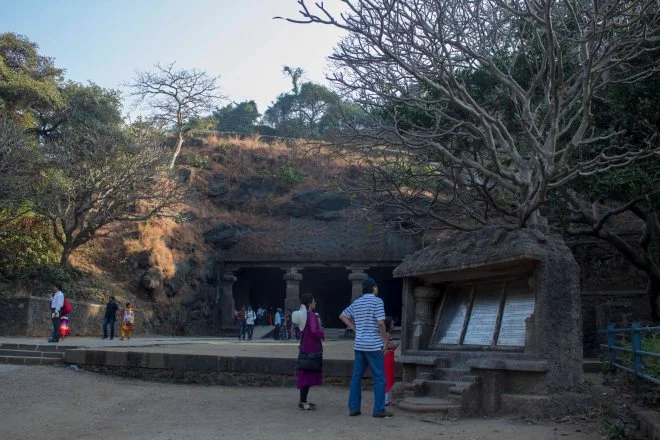
The restored cave at main entrance

Five Hindu caves. Two Buddhist. Origins disputed; nobody agrees on the dating. The Portuguese put 15th-century damage into most of what survives, and restoration has done what it can. The exception is the central icon, which they spared.

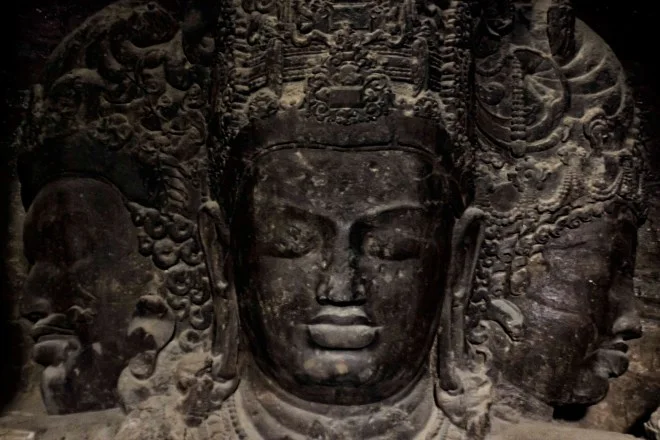
The cave opens. The light shifts. The Trimurti emerges. Twenty feet of stone, three faces, one Shiva. It earns the rest of the visit on its own.

15337403_1631120526905441_1596353163968432106_r
Trimurti sculpture

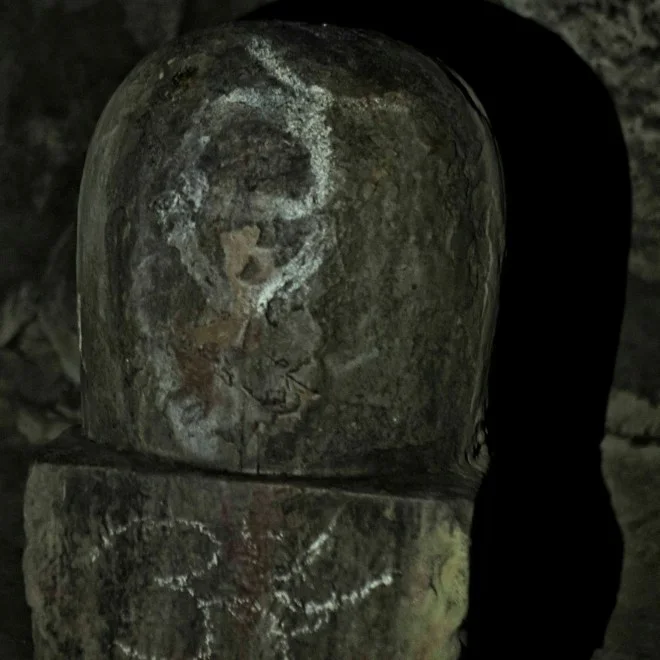
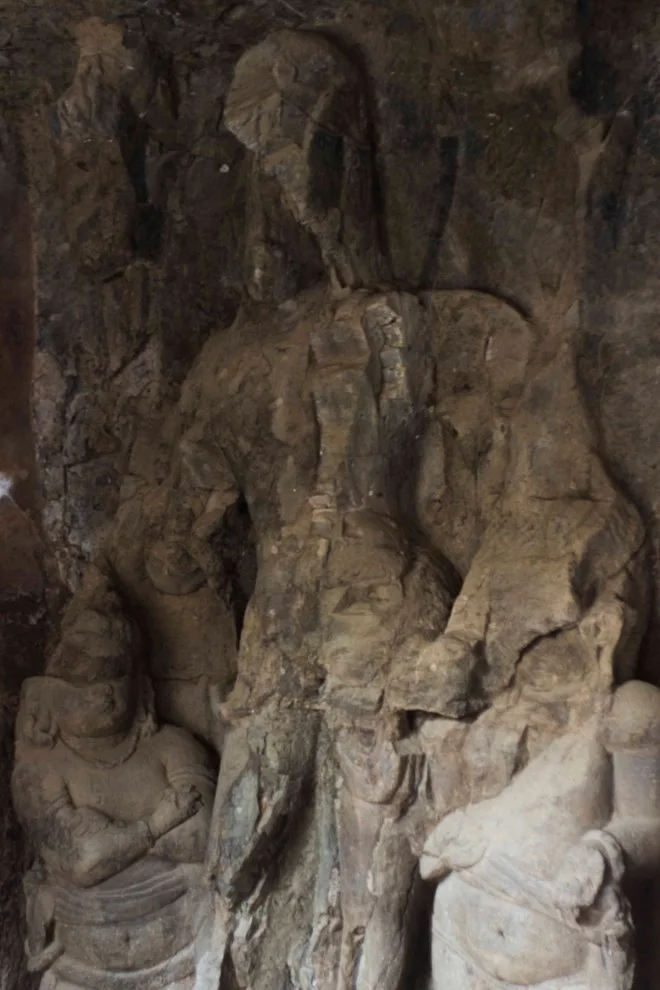
The remaining caves are too broken to fully read, but a couple of fragments hold their shape: a Linga in the half-light, and a piece of art with one face still intact.

15337403_1631120526905441_1596353163968432106_s
Shiva Linga
15337403_1631120526905441_1596353163968432106_t
Broken Art

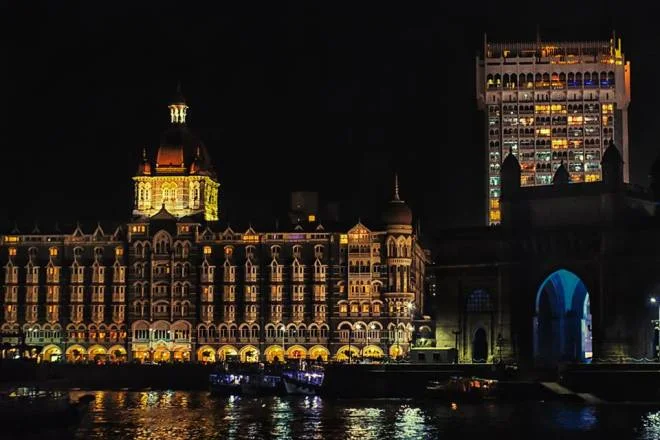
We caught the last ferry back at 7pm. The bay opens up after dusk. November 26th meant the Gateway and the Taj were lit for the martyrs of 2008. The crossing has a different weight on that date.

15241295_1619658581384969_1231490587696414518_n
Taj and Gateway

Field Notes

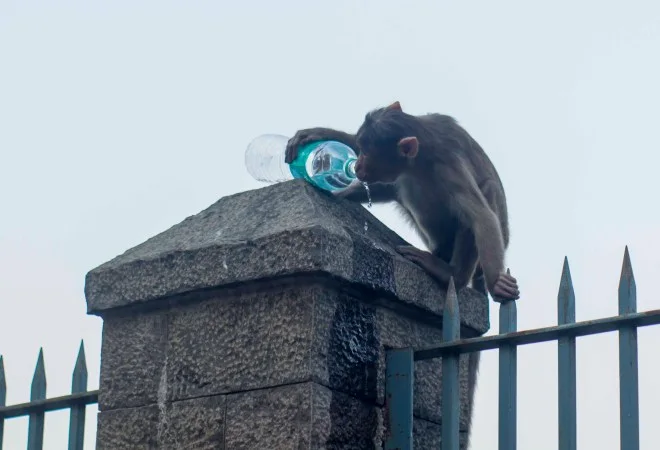
  • Leave the food and water bottles behind. Cows take the snacks. The macaques are smart enough to work the bottles.
  • Hat budget: 100 INR. The stretch is open. If the sun bothers you, buy one at the foot of the steps.
  • Walk fitness: low but non-zero. 100 steps plus a flat exploration. Doable for most, not effortless.
  • Audience. Heritage site, slow pace, history-heavy. Not the trip to bring a noisy group on. Solo, couple, or family with patience.

One Recommendation

Pick up a souvenir on the staircase strip. The variety on those 100 steps beats the official shop. As a parting frame, here is a macaque negotiating with a water bottle.

img_7875
Monkeying Around

Posts have been thin lately. More soon.

Until next time,
Sayantan
Update (2020)

My second visit was about getting four senior citizens up the hill comfortably. Slower pace, fewer stops at the stalls, more time inside the caves I had skipped the first time. Nothing material to add to the field notes.

Cooling Point Coorg

The Trigger

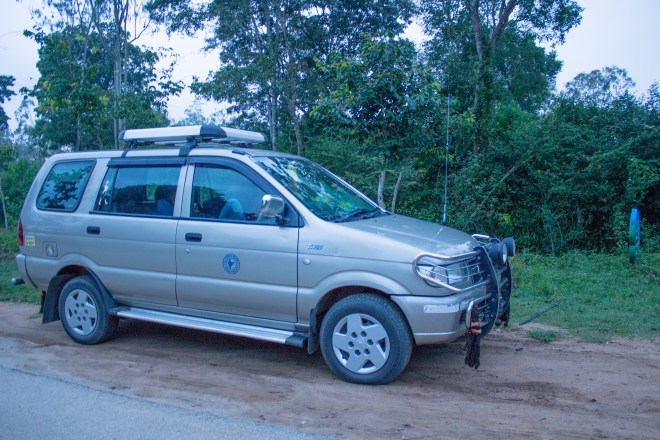
Midnight landing in Bangalore. Two hours in the terminal, a Subway sandwich, and the Travera rolling up at the curb to take us toward Coorg. Three hours of road between us and the Nagarhole gate.

Our Riding Machine
Our wheels on Trip – THE TRAVERA

The Forest

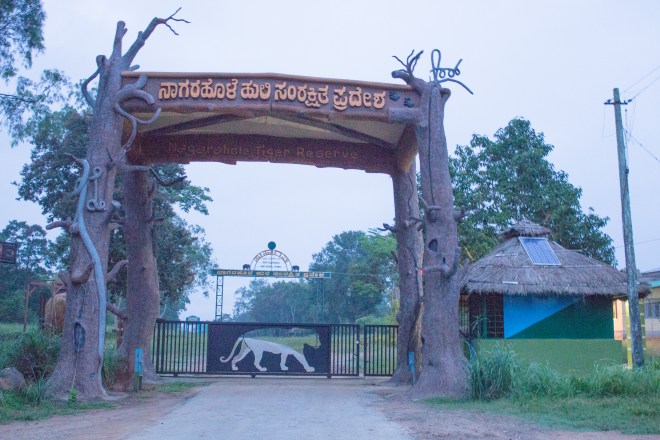
Nagarhole National Forest checkpoint at 5:45am. Engine off, headlights low, waiting for the gate to lift with the sun.

Forest Entry
Enter the Reserve

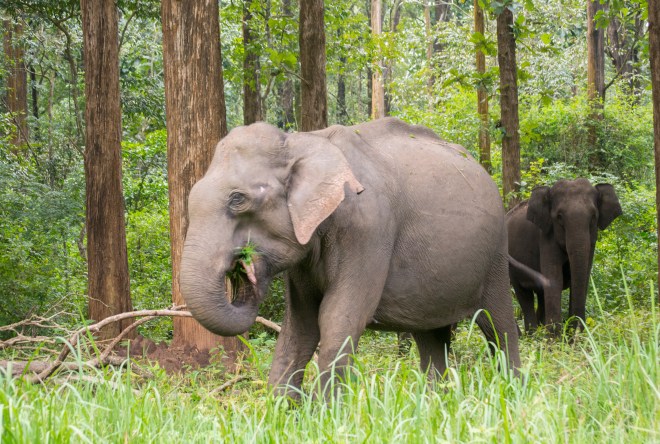
Rule one of the drive-through: do not stop. Bison, boar, elephant, the occasional tiger. Distance is what keeps you safe.

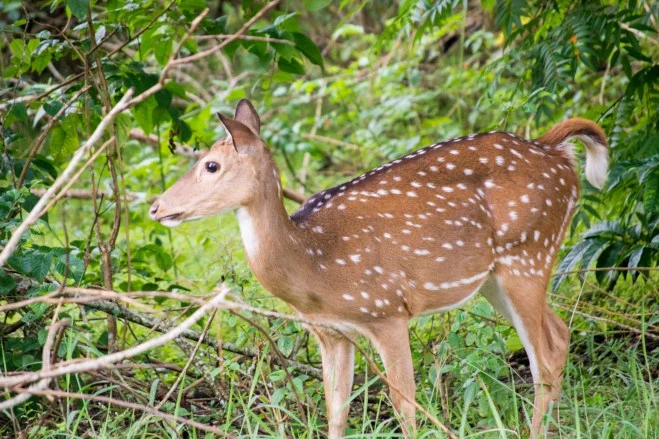
Chinkara
Spotted Deer
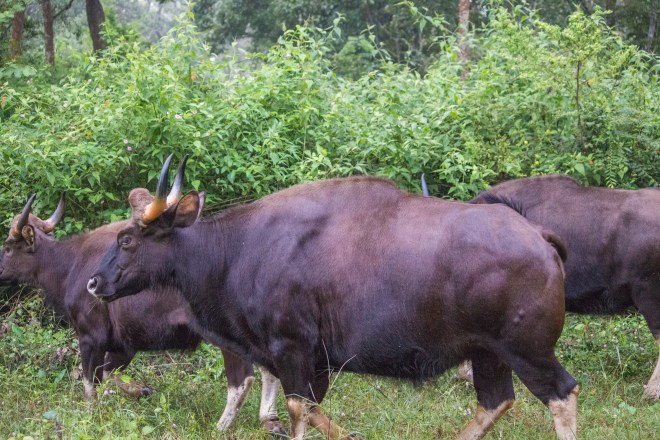
Bison
Indian Bisons
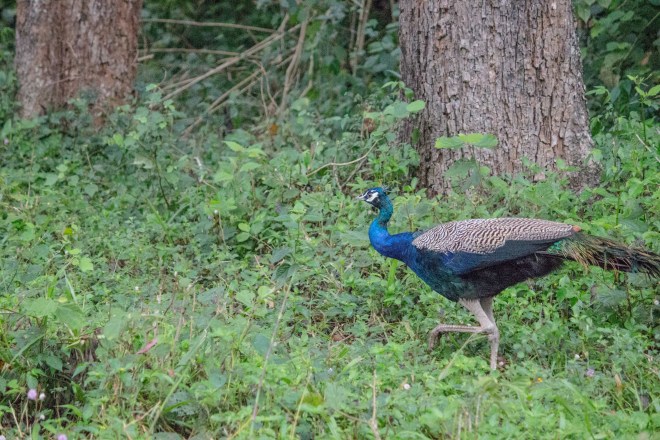
Peacock
Male Peacock
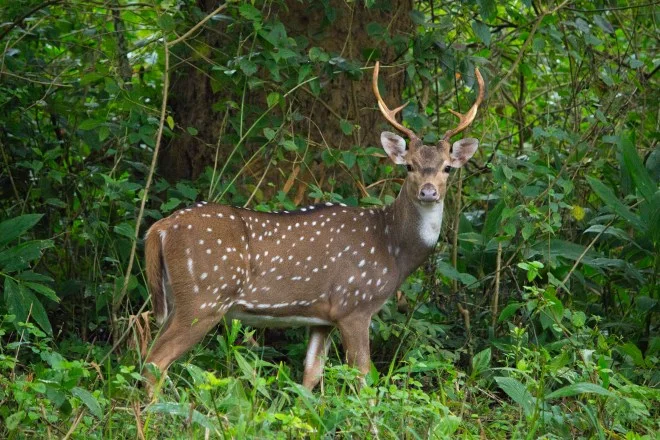
Reindeer (???)
Spotted Deer
Elephant
Dwarf Elephants

Two hours of forest before you hit the safari point. The safari runs twice: 6 to 8 in the morning, 3 to 5 in the evening, both pattern-resistant. Tigers are abundant. Cancellations also abundant.

IMG_9029
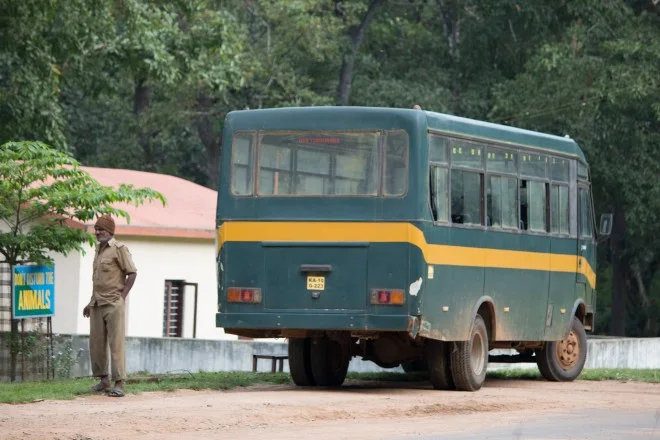
Official Safari Bus

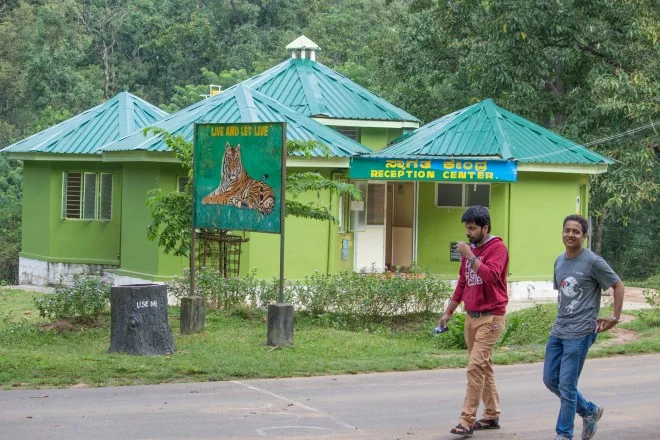
Each jeep takes five at 700 INR per head with a not-quite-promise of a tiger. A bus runs as backup, infrequently. We were too late and word on the trail was that nobody had picked up stripes that morning either. The reception is well kept: clean toilets, decent cottages.

IMG_9025
Safari Reception Center

The Stay

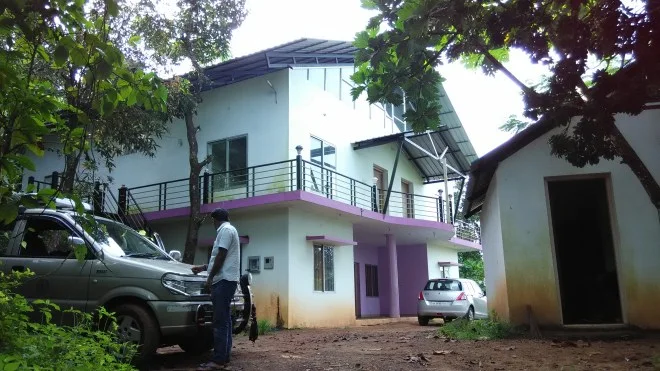
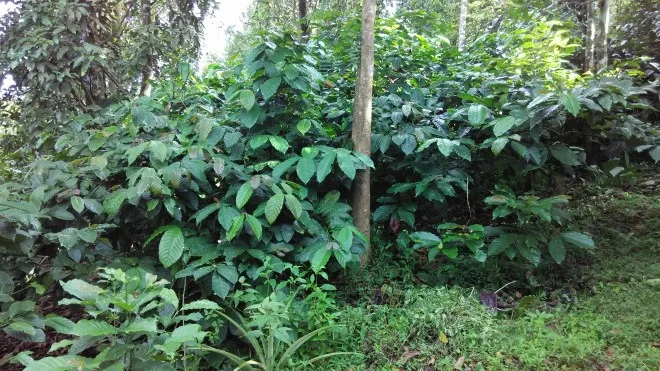
From the missed safari we drove on to the homestay, picking up bottles of homemade wine in three flavours from a roadside vendor. The plantations close in around the road. The homestay sits inside coffee.

IMG_20151003_082518
An outside view of our stay

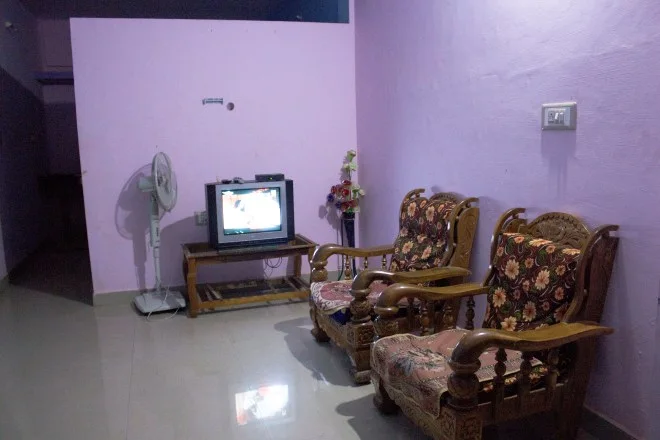
The hosts cooked for us because nobody could move. Old friends, local food, regional wine, and a TV with a stubborn handful of channels. Good night.

IMG_9121
Drawing room

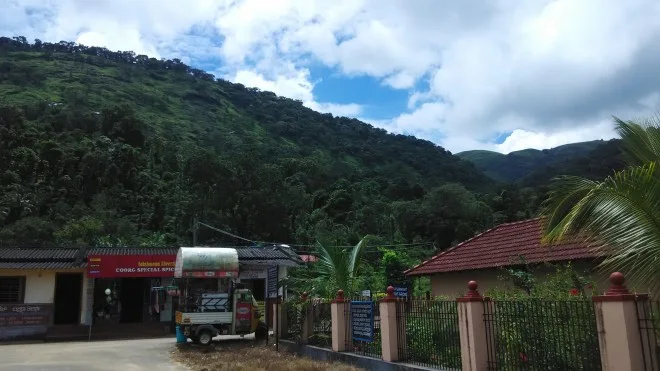
The next morning the route ran out through coffee and cashew on the way to Mandalpatti, the hill section Coorg is best known for.

IMG_20151003_082354
Coffee Garden

The Hills

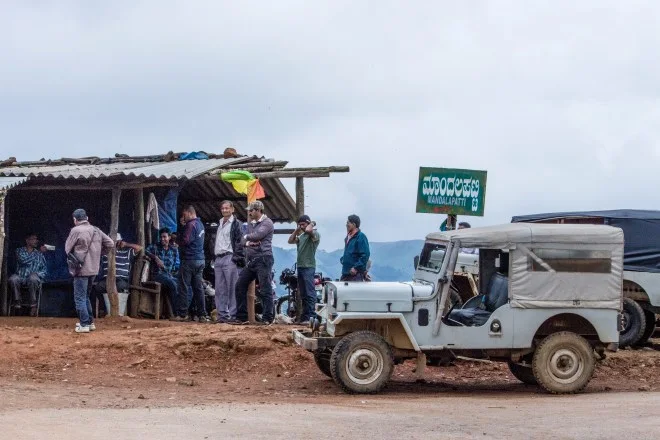
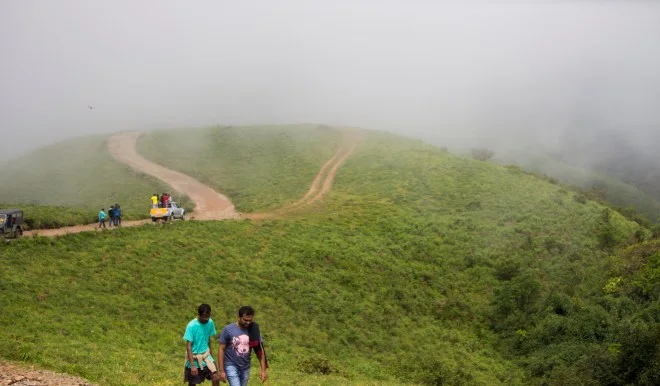
Mandalpatti reads more like the Northeast than South India. Terrain steepens past a point your sedan does not negotiate. From here you switch to a local jeep at around 600 INR.

IMG_9144
Jeep boarding point
IMG_9151
Road to Pushpagiri entrance

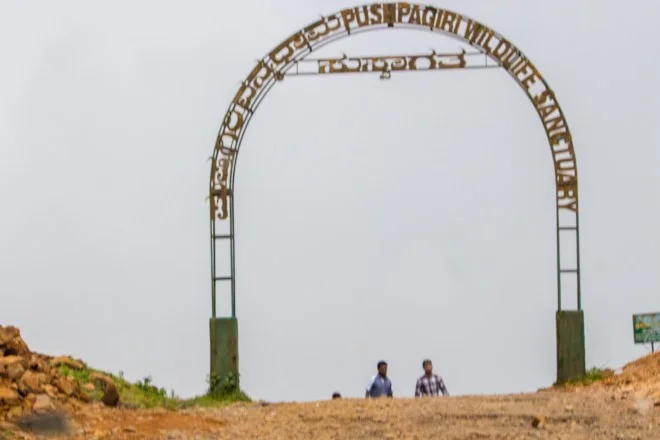
Pushpagiri Wildlife Sanctuary holds the same patch as Mandalpatti. We saw no animals through the fog. The road past the gate gets aggressively rocky.

IMG_9155
Pushpagiri Reserve gateway
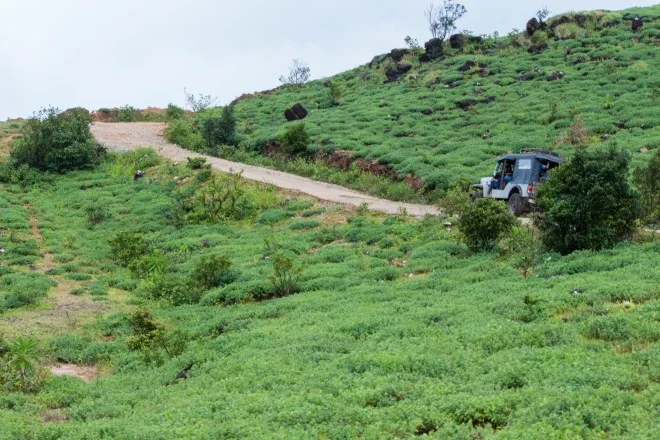
IMG_9156
Jeep track to the peak

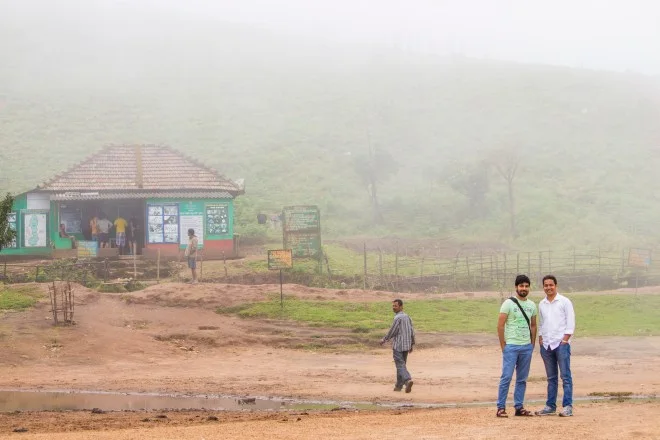
The driver parks at a lone tourism centre and gives you an hour. From there it is a short trek up.

IMG_9158
Jeep parking point
IMG_9160
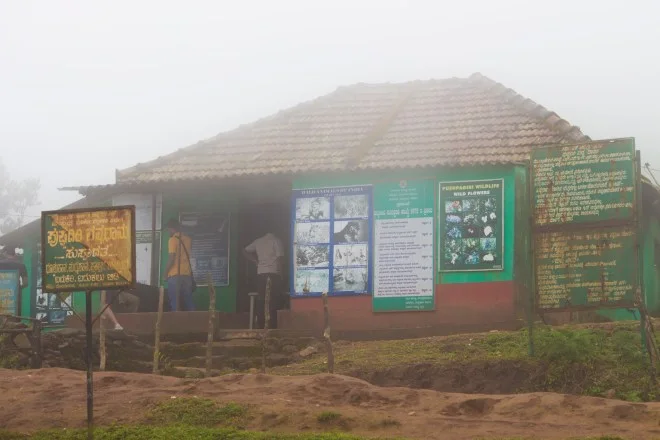
Mandalpatti Reception Center

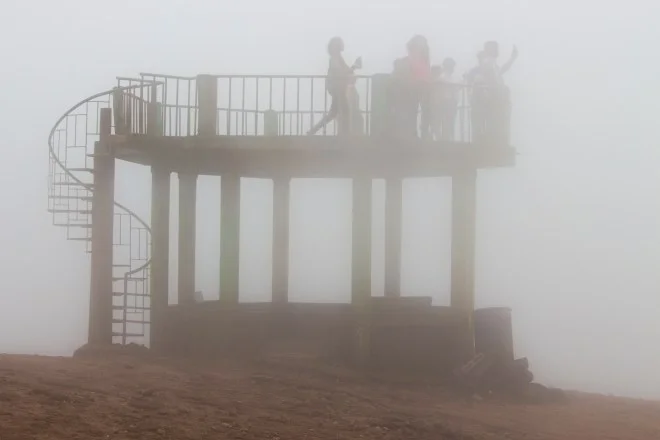
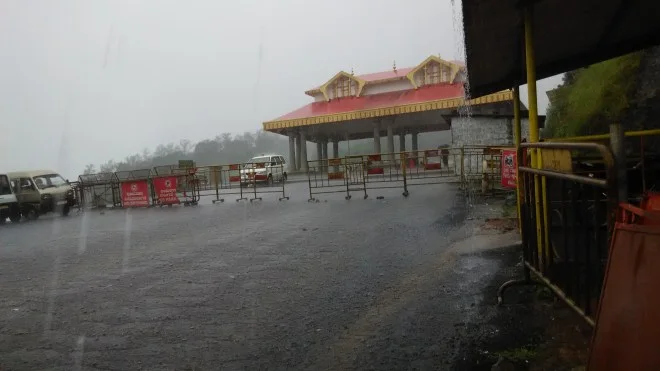
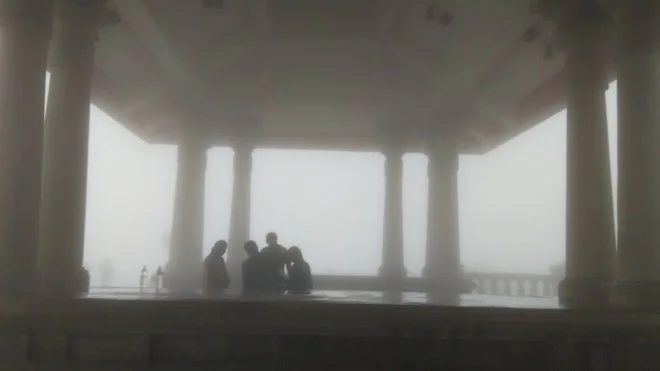
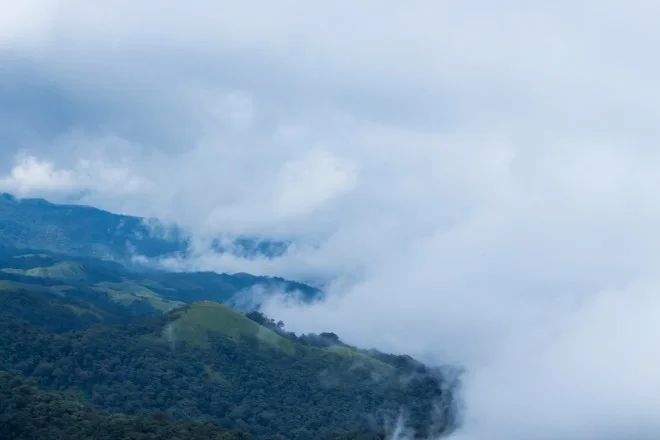
And then you are inside a cloud. Visibility drops to a few feet. If a damp cloud passes through, it rains while you are standing in it. Rain inside weather is a thing you do not forget.

IMG_9163
Viewpoint inside clouds

The Temple

Talacauvery sits higher and gets dressed in the same fog. We arrived as the rain clouds rolled in. The temperature dropped close to freezing.

IMG_20151001_171416_1
Gate leading to Cauvery origins

Marble steps run to the top. We climbed against wind that was not supposed to be there in October. Visibility somewhere between low and zero.

IMG_20151001_165429
Marble structured entrance

The temple itself is a strict no-photography zone. It sits a few metres below the source point of the Cauvery. Below is a Wikipedia frame to give a sense of what you cannot photograph yourself.

Thalakkaveri_Temple,_Karnataka
Wikipedia photo of Talacauvery temple

The Falls

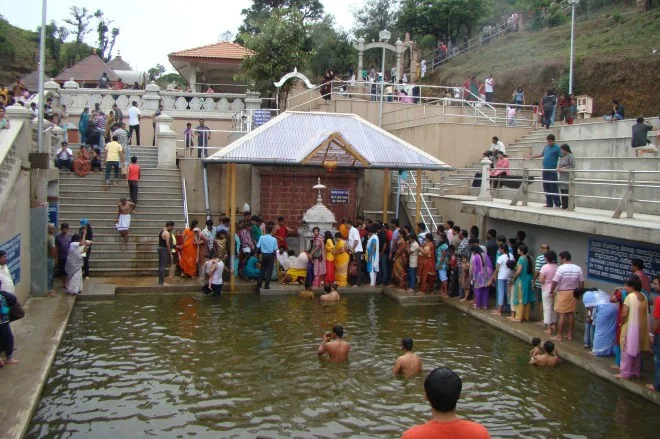
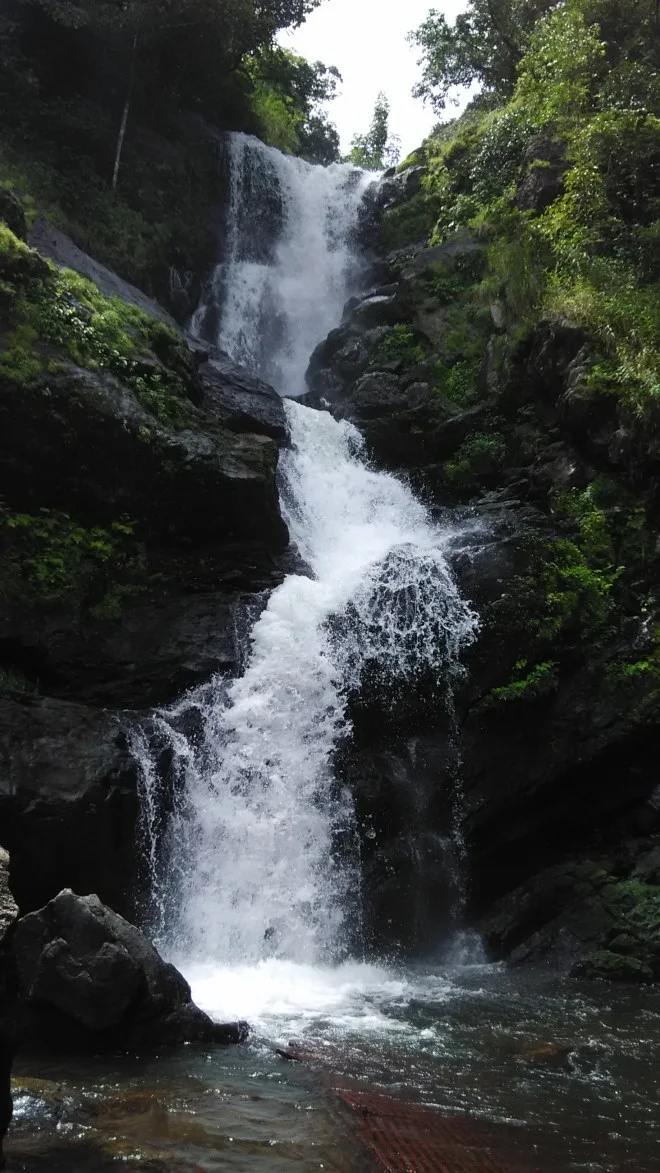
Iruppu Falls, the headline waterfall of Kodagu. A small temple at the entrance, a nominal fee, and a path that walks you up to the base.

IMG_20151001_120709
Temple entrance to Iruppu falls

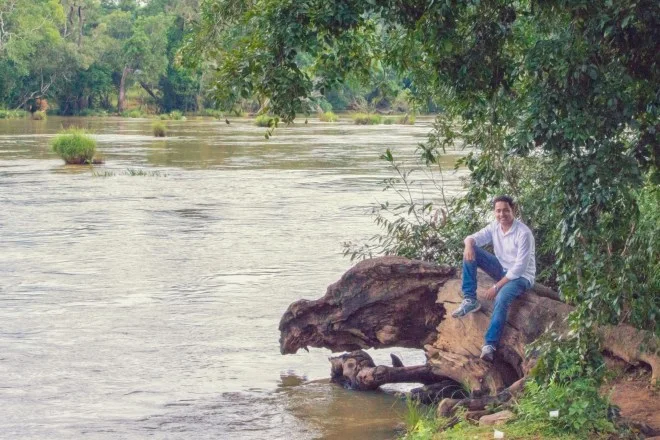
The walk is the show: greenery, the Cauvery upstream, wooden bridges with rope rails, leeches if you are unlucky, butterflies if you are not.

IMG_20151001_112213
Iruppu falls

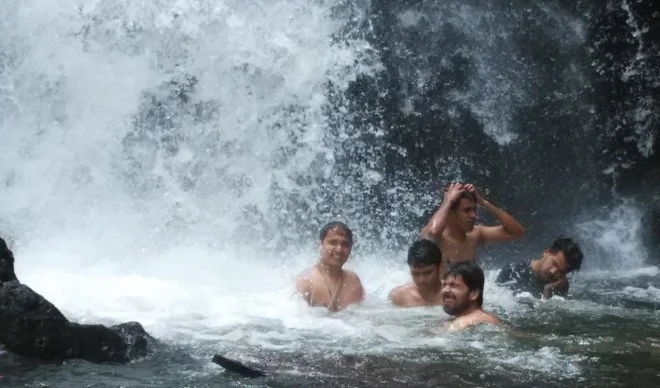
We waded into the basin where the water lands. The two-step formation softens the force enough to bathe under. Slick rocks. We took the bath, then dried off and moved on.

IMG_20151001_111151 - Copy
Beneath the waterfall

The Monastery

Namdroling Monastery in Kushalnagar, better known as the Golden Temple. Large grounds, large crowds, monks happy to be in your selfie.

IMG_9226
Gateway to Monastery

The centrepiece is a trio: Gautama Buddha (Prince Siddhartha) in the middle, Padmasambhava on the left, Amitayus on the right. Standard monastery quiet under the noise of visitors.

IMG_9247
Three pillars of Buddhism

The Camp

Dubare Elephant Camp is a draw for the rides on the far bank of the Cauvery. We hit it on a holiday afternoon and the queue to cross the river never moved. We did not commit. The rowing crowd seemed to be having a better time.

IMG_9277
Rowing on Cauvery

The bank had a lot of swimmers. Local advice: do not go deep. The current here drowns people.

IMG_9281
On banks of Elephant camp

The Throne

Not Game of Thrones. The king who built this picked the spot for the sunset and named it after himself, hence Raja’s Seat. Sunset arrives on schedule and earns the seat.

IMG_9315
Raja’s seat during sunset

Field Notes

  • Drive in. A car (or hired Travera) opens up the loop. Kannada speakers in the group help.
  • It works as a Northeast-emulation. One of the few Southern destinations that scratches the hill-station itch with proper food and stays.
  • Adventure menu is broad. Jungle safari, river rowing, a toy train. Rare combination this far south.
  • Days are short in the hills. Get up early. Get back before sunset.

One Recommendation

Walk into the Mandalpatti cloud. The trek is short, the view is one big cloud, and standing inside weather is the part that stays.

IMG_9154
Mandalpatti as seen from distance

Late post. Got busy with life.

Love,
Sayantan
Kanheri Kickoff

The Trigger

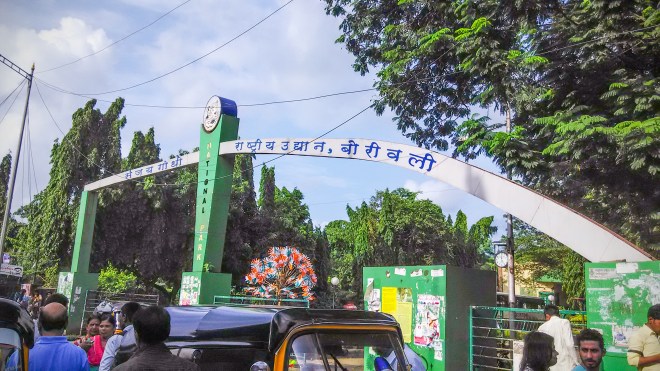
August 2015. Two years on Mumbai soil. The IIT Powai campus where I had been living sits at one edge of Sanjay Gandhi National Park; Borivali Station and the park’s main arch sit at the other. I had been living inside the park for two years and had not actually walked into it. A free Sunday and a friend with the same lapse. Time to fix it.

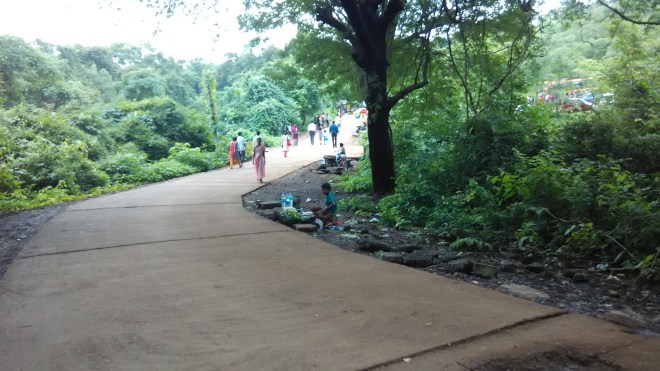
Main Entrance on City Main Road

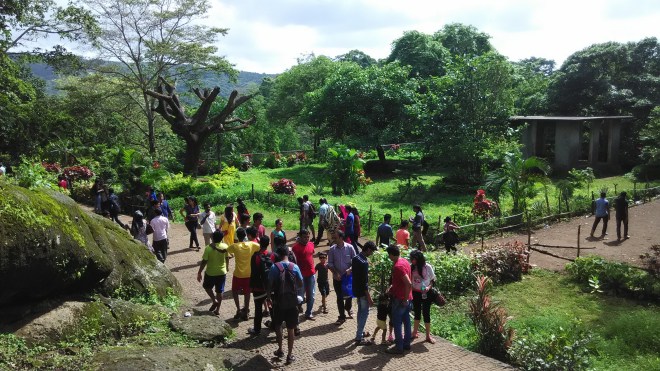
The park is rawer than the campus version of forest I was used to. We did not get close to a real exploration; for this trip we stuck to one element, the Kanheri caves.

Fifteen Minute walk from Bus stop to Caves

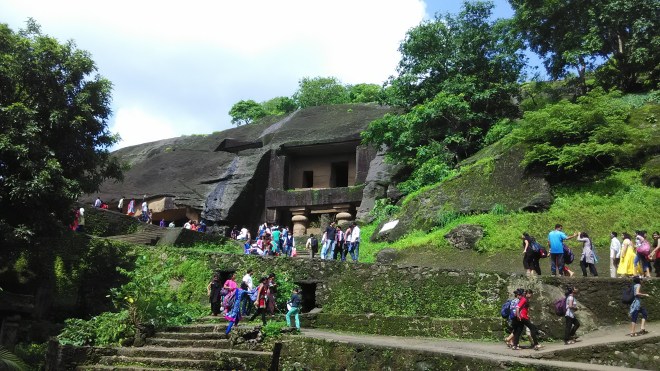
History notes, via Wikipedia: 109 caves, carved out of basalt, dating from the 1st century BCE to the 10th century CE. Most served as Buddhist viharas, used for living, studying, and meditation.

Enter the Caves
Enter the Caves

Park entry can be paid online or at the gate. From there, government buses run on a schedule to the foot of the caves; the bus charges separately. Caves themselves carry a nominal entry fee on top.

Granite your way up
Granite your way up

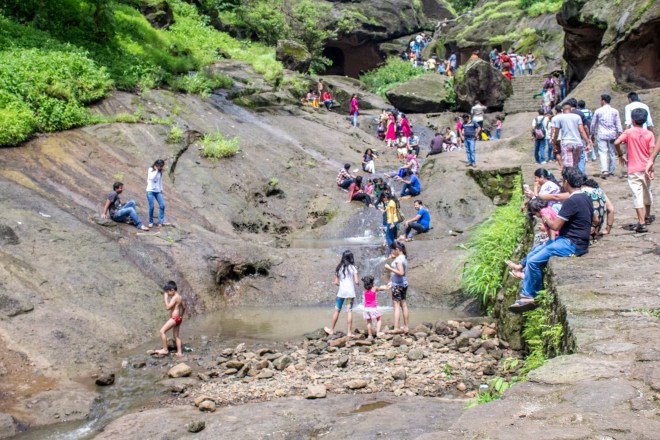
Inside, it is essentially a chain of caves with Buddha engravings and towering statues. The central vihara, the prayer hall, is the one part that holds the visitor’s attention. Architecturally, not much else has survived intact. Up the winding staircase, water seeps from above and pools across the rock; the steps go slick fast.

Kids playing around falls

The top opens to a meadow. Trails lead from there into forest that climbs further. Wildflowers along the path. View earns the climb.

Trekking up to highest point

A shop near the entrance sells water and cold drinks. Roadside food shows up at intervals. The bus back to the gate runs about 20 minutes.

Field Notes

  • Avoid public holidays. We did not. Lesson logged.
  • Picnic crowd, not heritage crowd. Families with food spreads. The mood is wrong if you came for the caves.
  • Drive in if you can. The bus loop limits how much of the park you can cover. A car opens up everything beyond the caves.
  • Plastic bottles are confiscated at the gate. Then sold inside. Carry a refillable.
  • Watch the water edges. Snakes work the wet rocks. Step deliberately.
  • Inside city limits. No travel logistics. That is the only easy thing about this trip.

One Recommendation

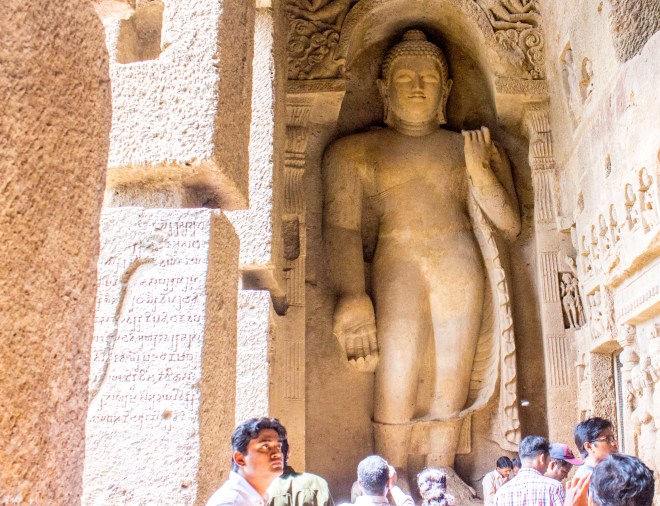
Touch the rock. Most of what you walk past has been holding its shape for 2000 years. The doorway Buddha is the most legible piece on the route.

Engraved Buddha
Engraved Buddha

This one was a thin post. Better one coming.

Promise.
Sayantan
Godspeed Goa

The Trigger

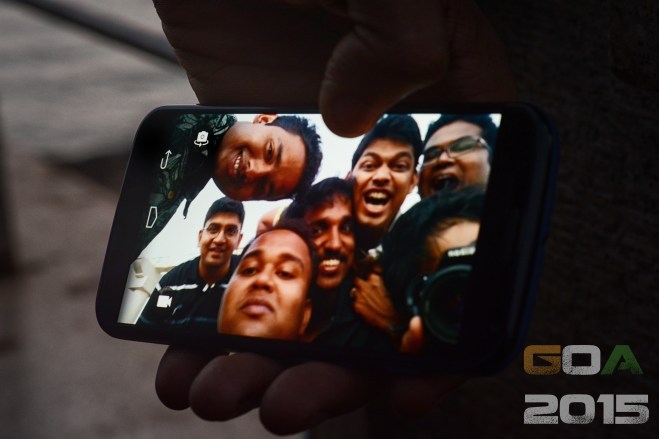
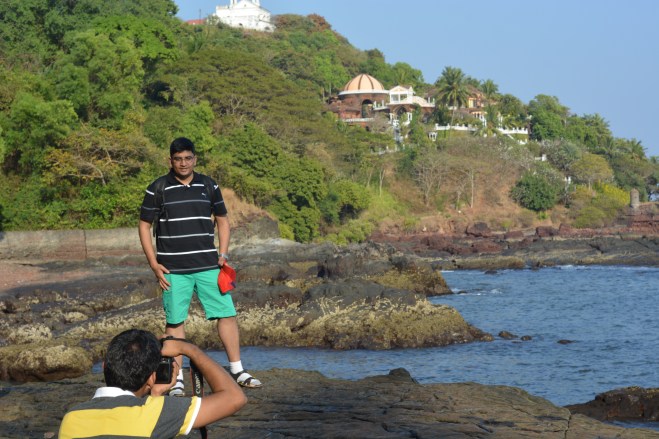
My father had been telling me about Goa since the Bollywood era. The personal checklist of obvious-things-to-do from Mumbai had it pencilled in for years. February 2015. A long weekend, a group of seven, and finally enough alignment to book it. The trip below is the strenuous one. Also the satisfying one. The frame at the edge of Panaji is the one we picked to remember it by.

Selfie of a Selfie

The Departure

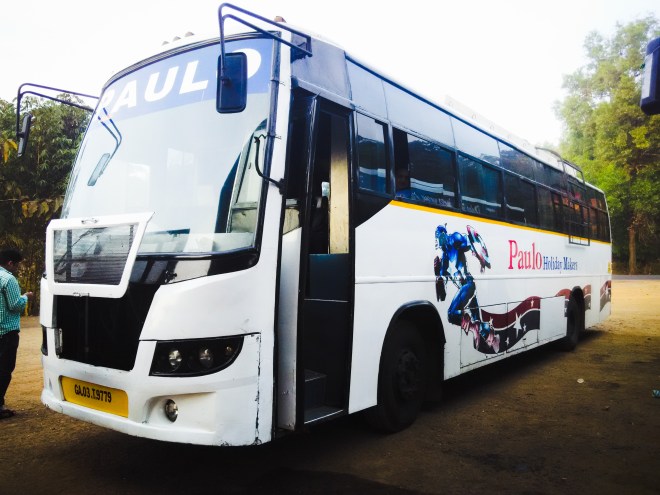
IRCTC was full. We pivoted to Paulo Travels via Redbus. Non-AC seater, comfortable enough. Departed Sion at 6pm Thursday. 15 hours of road ahead.

Paulo Travels Bus sporting Captain America for reasons unknown

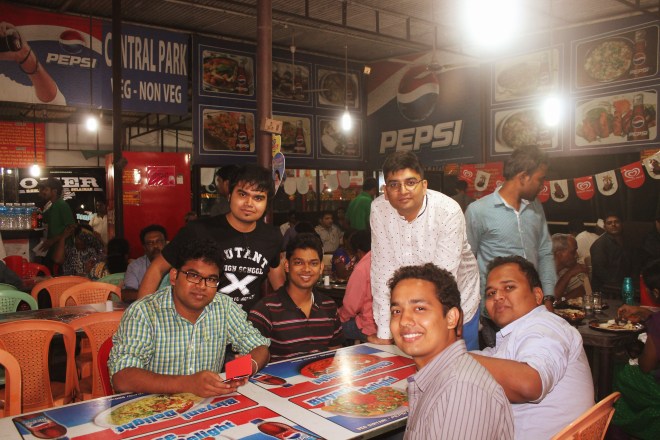
First halt: Central Park dhaba on the Mumbai-Pune highway. Food is priced higher than the quality earns. Eat lightly. The hours ahead do not appreciate a heavy meal.

Eating out in a Dhaba

The bus stopped at dawn after a stretch of road that rearranged everyone in their seat. You can brush and have breakfast here. I skipped, so cannot rate the food.

Entering Goa in morning

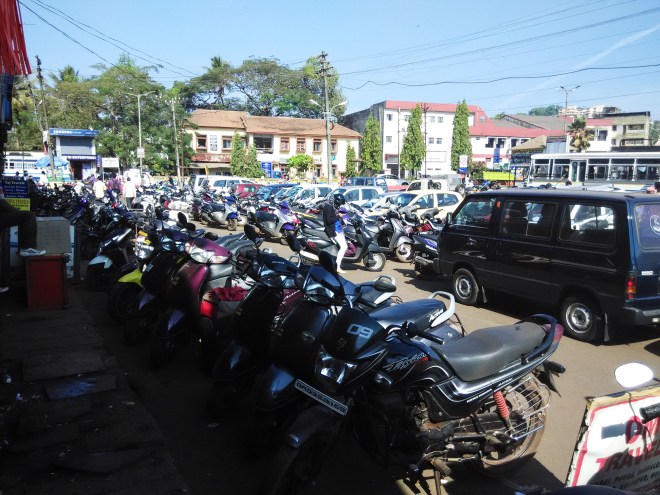
We got off at Mapusa because our stay was closer to the north. Convenient: travel agencies and bike-rental stalls cluster at the same intersection. We picked a Scooty (250 INR/day) and a Pulsar (350 INR/day). Driver’s licence as deposit. Always take the receipt and a helmet, in case of an inspection. Petrol on us. Cars, jeeps, and Harleys are available if you ask the right shop.

4
Bike stand at Mapusa

The Stay

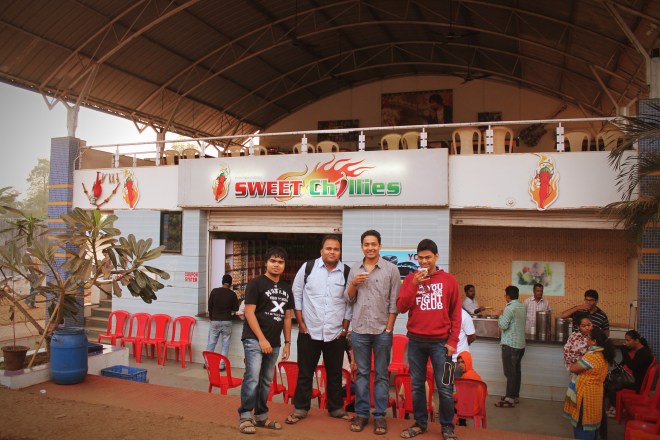
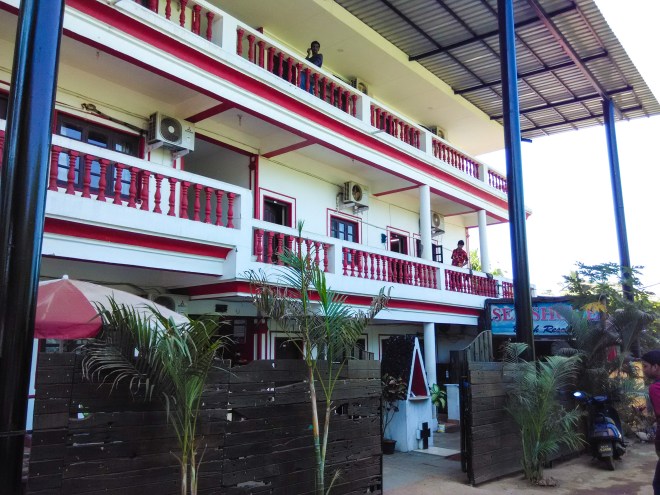
Student budget. Online research pointed at Sea Shore Beach Resort. Strong TripAdvisor rating, mostly because of location: 30 seconds from Calangute beach, easy on the wallet. The “resort” word is generous; calibrate accordingly. Site: seashorebeachresort.com. Mr. Devanand and Mr. Arshad run a tight, friendly operation.

Hotel Seashore resort

The lane is easy to overshoot. Land on Calangute, look for Mocha, take the turn there. Ask for second-floor rooms; they were recently refurbished and have the better views. Amenities: AC, TV, geyser, extra bed, and food service from the ground-floor eatery until 10:30pm. Four bachelors fit comfortably.

Double Bedroom on Sea facing top floor

Calangute Beach

Steps from the resort. Shacks and sunbathers along the strip.

Canoes and Shacks of Calangute

Blue sky, clear water, white sand. Walking on it is its own thing.

Treading on Seashore

We took the wider route into the water. Calangute is shallow for a long stretch out from shore. You can wade in further than instinct suggests.

Swimming through the waves

Lunch shifted to the open-air shack Spice Wok. Afternoon sun, decent food.

Spiced up at Spice Wok

We had to ride later, so mocktails not cocktails. Cranberry was the pick of the lot.

Cranberry Carnival
Cranberry Carnival

Aguada Fortress

Bikes up the hill.

Riding on Bikes
Riding on Bikes

Aguada Fort. Portuguese for “water place.” Built 1612.

Entrance to Aguada Fort

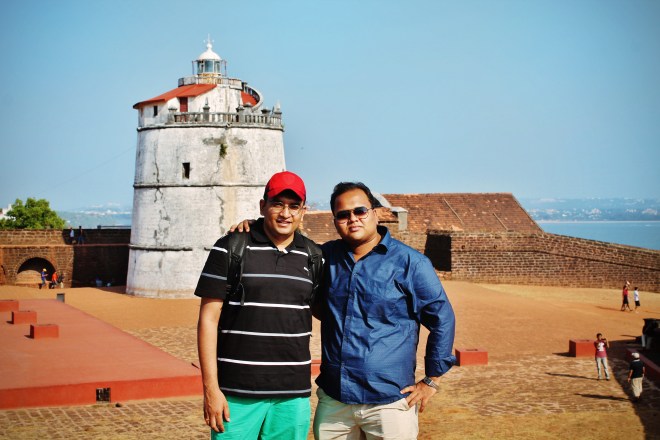
Most of the structure has held up under heavy footfall. The white lighthouse on the property ran until 1976. The interior is closed to visitors.

14
Lighthouse of the Fortress

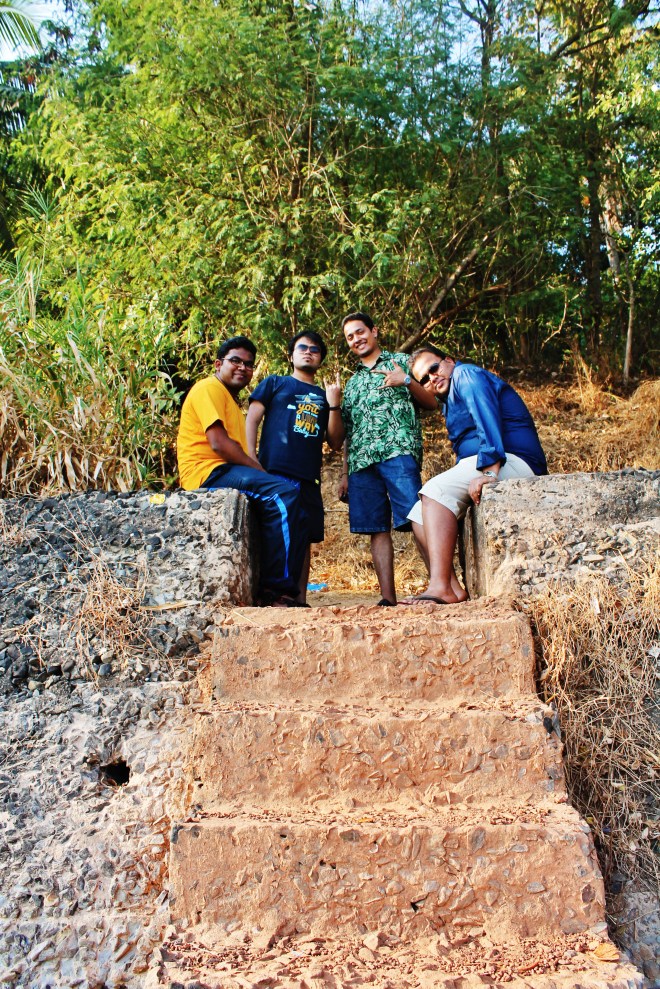
On the way down we spotted a turn for Aguada Jail. It is a working jail; further entry not allowed. There is a path on its right flank that drops down a flight of stairs.

Stairs near Central Jail

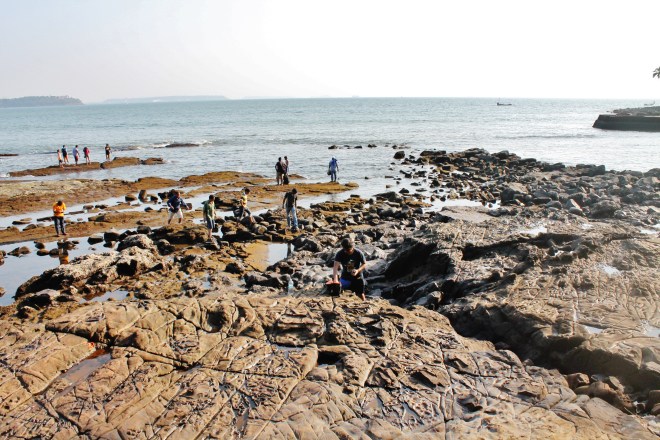
From the lower stones, the sea is much closer than it was on the bastion.

Rock Bottom
Rock Bottom

Top of the fort and the rocks at sea level read as two different places.

The Fort and The Sea

Dona Paula

Through Panaji to the Dona Paula viewpoint, just in time for the sunset window. Elevated, crowded, lined with stalls selling hats, sunglasses, and Goa-print clothing.

Chilling atop Dona Paula

Bated breath as the sun dropped to meet the sea.

Hues of Sunset
Hues of Sunset

And then it was gone. The blue went to a flat dark.

Moments before light vanishes

The Cruise

A wine shopkeeper sold us cruise tickets at a discount. Middle and upper deck are open to everyone for free. The lower deck is a floating disco — free for women, 50 INR for men.

Decking the Decks

We stayed on the upper deck. Cultural performance covers Goan tradition first. Then the live DJ takes over and the deck becomes a dance floor.

Culture Aboard
Culture Aboard

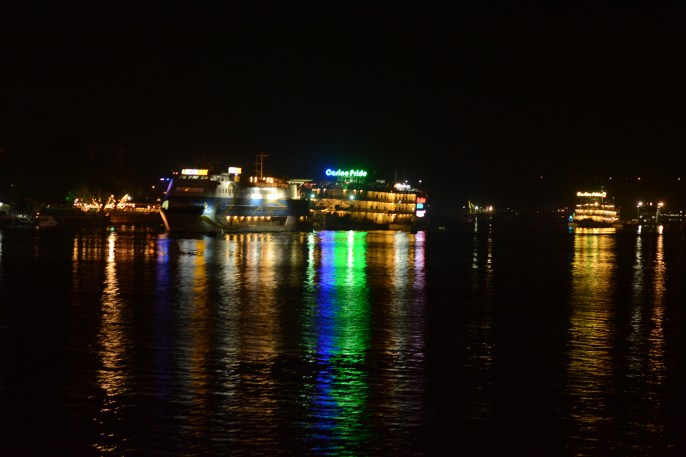
The Mandovi at night does the rest of the work. Lights along both banks, water carrying the reflection.

Lights Aligned
Lights Aligned

The Buildings

On the second day, the houses kept catching the eye through the visor.

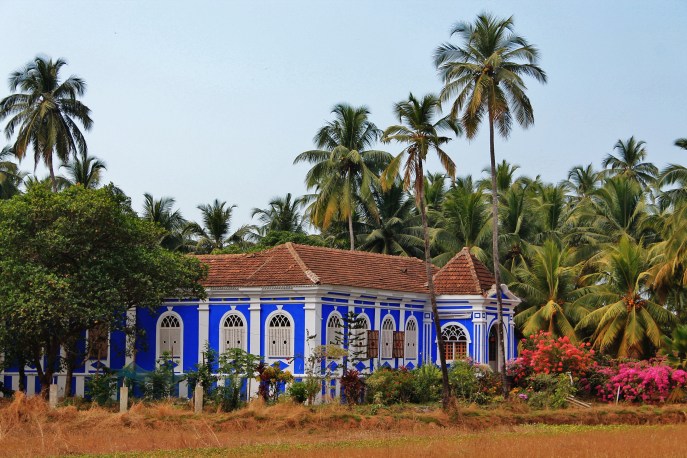
A typical Goan House

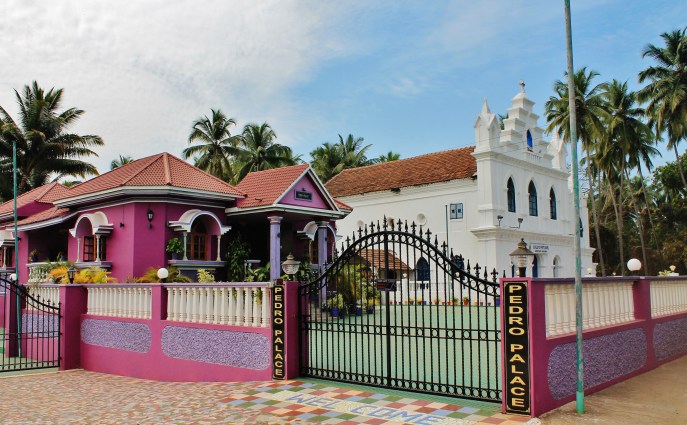
Most churches stick to white. The houses around them carry the colour. The contrast holds the postcard look together.

A typical Goan Church

Chapora Fort

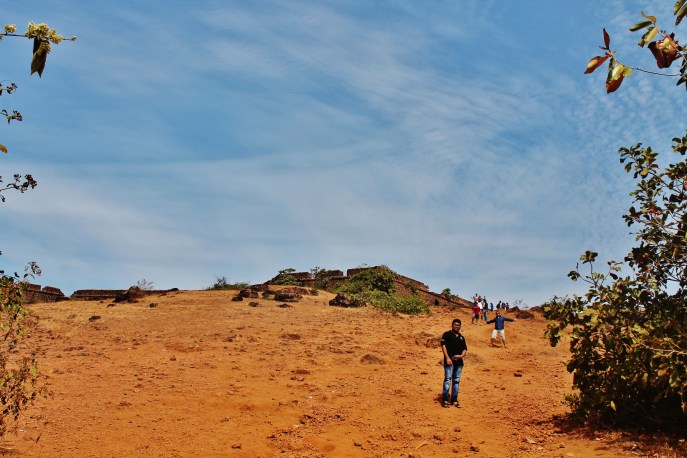
Through narrow lanes to a barren shoulder of land where Chapora sits.

Walking Up
Walking Up

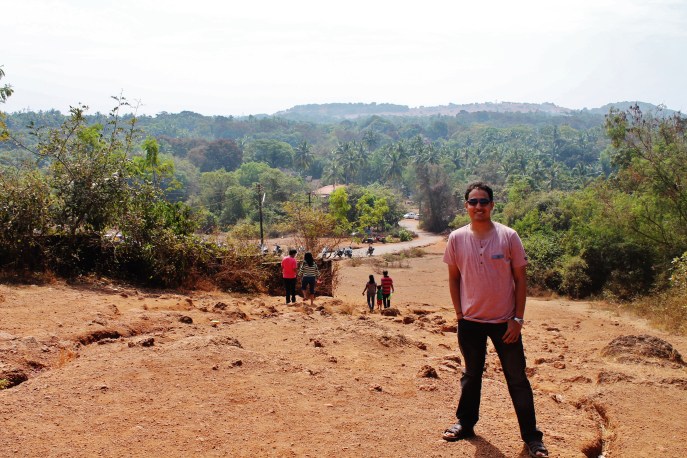
You park the bikes at the base. The walk up is non-trivial.

Leaving the Bikes behind

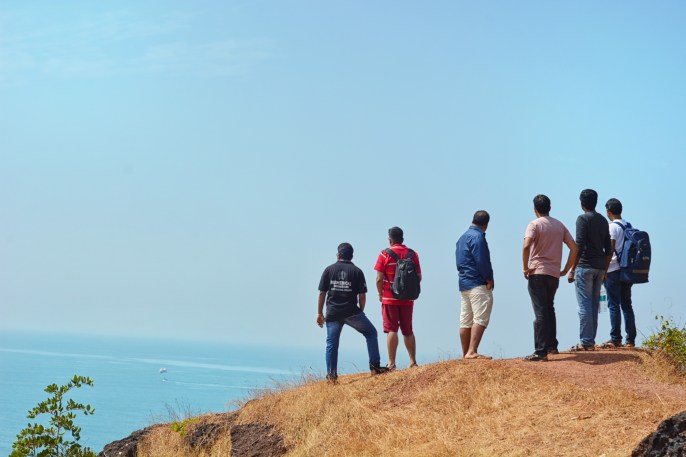
Earned at the top.

Viewpoint
Viewpoint

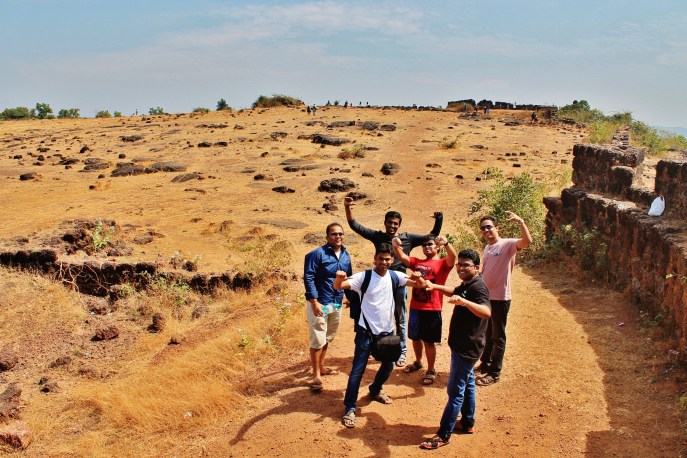
The walk in midday sun gets you a tan. The view earns the sweat.

YOLO moment
YOLO moment

And then the corner. The Dil Chahta Hai spot. The title-track frame, specifically.

The Sacred Spot
The Sacred Spot

From here you can already see the curve of the next stop.

Vagator Beach
Vagator Meets the Horizon

Vagator Beach

Two parking spots. Top is paid and gives you the elevated landscape; bottom is free, next to a shack. Vagator is one of the cheapest beaches for water sports.

Upper Vagator
Dudes of Upper Vagator

Park at the bottom unless you specifically want the upper view.

Dressed up for Darr ke Age ka Jeet

The water-sports package: 1600 INR. They take you out by boat to a deep-water platform for banana ride, water bikes, bump rides. Parasailing is a separate add-on; carry an extra 200 INR if you want the sea-dip during the ride.

Ready for Parasailing

Wrap your camera or phone in plastic before you board. The salt comes for it.

A salty Dip of Parasailing

Ranking: Banana Ride first. They drop you mid-ocean without warning. Bump Ride is the simplest fun, like a Mumbai water park. Water bikes, they will let you steer if you can ride the land version. Be careful with the throttle.

Water Biker
Water Biker

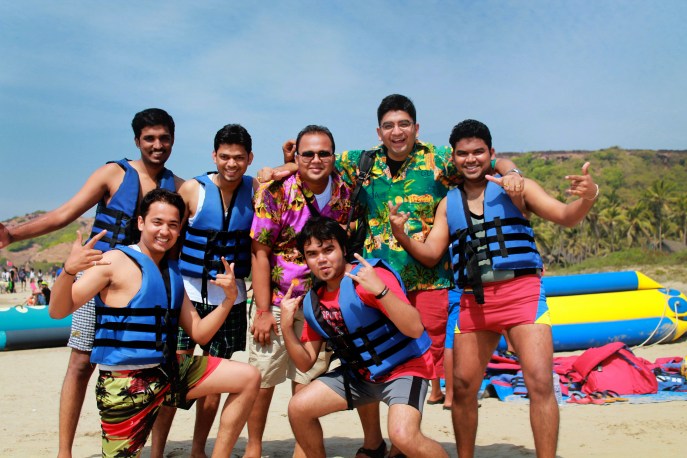
Some preferred to stay on the sand, in floral T-shirts that are exclusively a Goa thing.

Chilling in Pink
Chilling in Pink

End of session, end of arguments about who is doing what.

Mandatory Group Photo

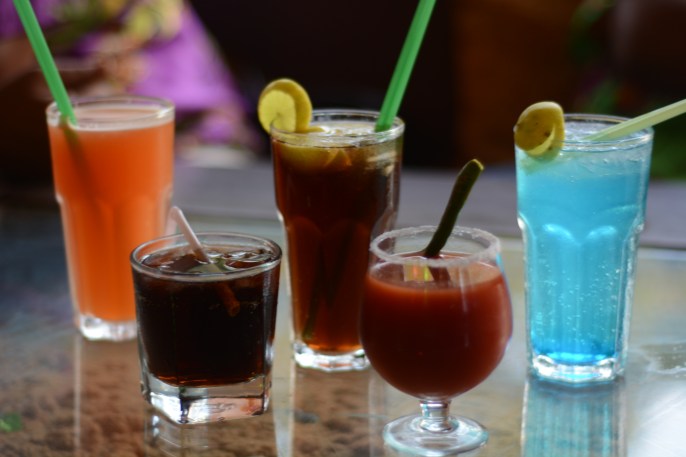
The ride back was cocktail-shaped. Coffee, bloody, lagoon.

Cocktail Colours
Cocktail Colours

One member of the group had to fly back early for work. From here we were six.

Saturday Night Market

Official Logo of SNM

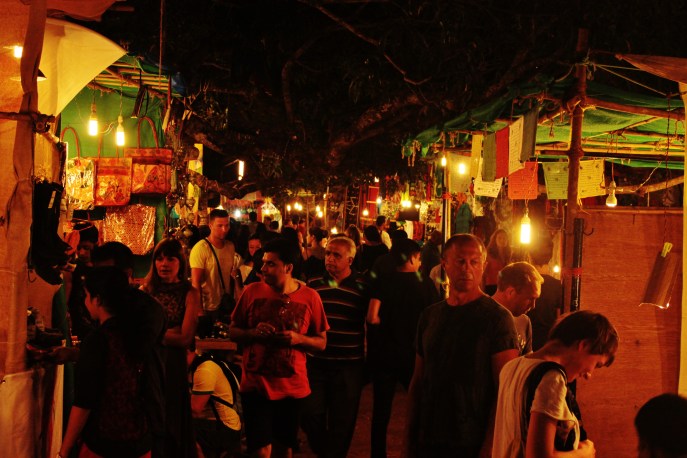
Asking what makes Goa Goa? This market. North Goa, Saturday only. Locals and tourists pack it. Built around Goan food, music, and the sheer volume of stuff for sale.

Crowd of Market
Crowd of Market

Pure energy.

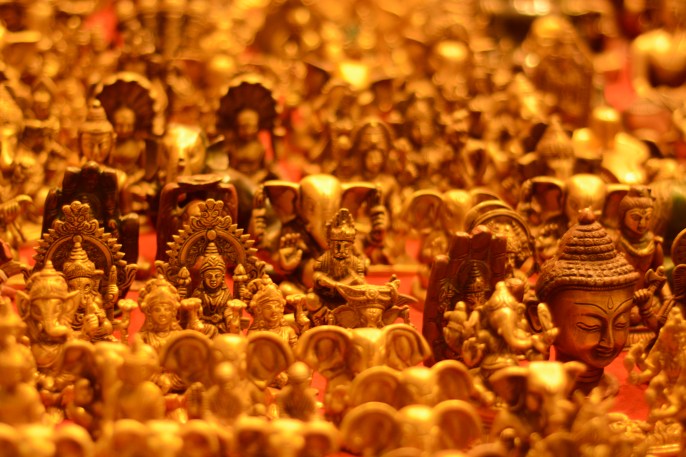
Idols on Sale
Idols on Sale

The path winds upward through stalls.

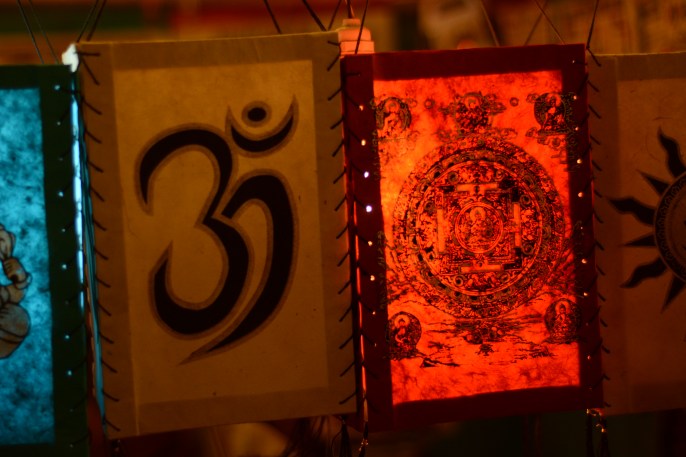
Lanterns of Paper
Lanterns of Paper

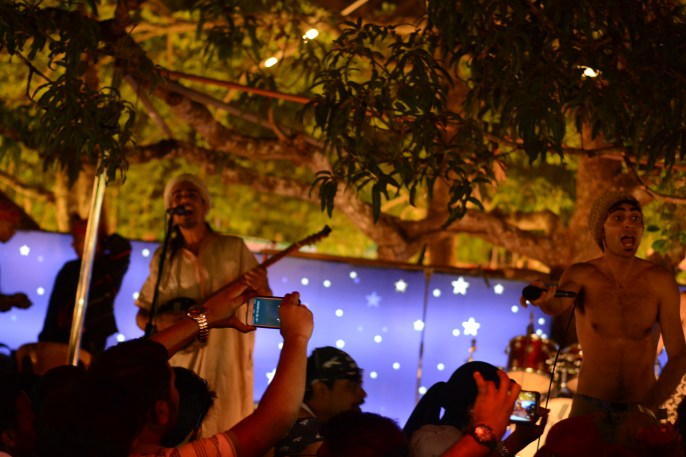
Arabian band Anna RF was on the live stage at the centre. Their channel. Their Rikshawalla track is the gateway. Jump is the one that closes you out.

Live Performance gig

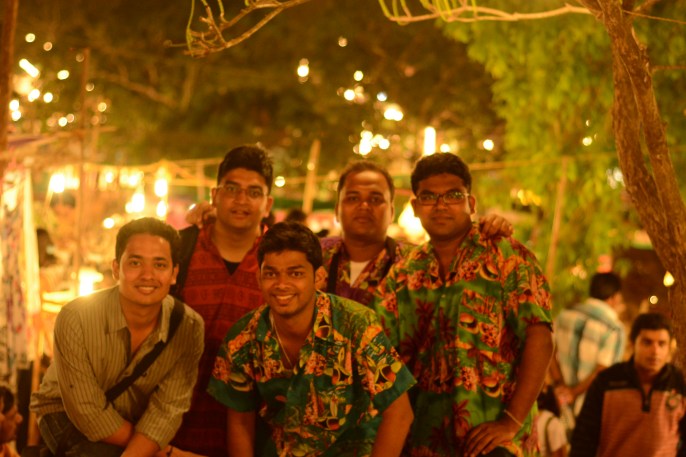
The night was nowhere near over.

Gang in Market Lights
Market Lights

Old Goa

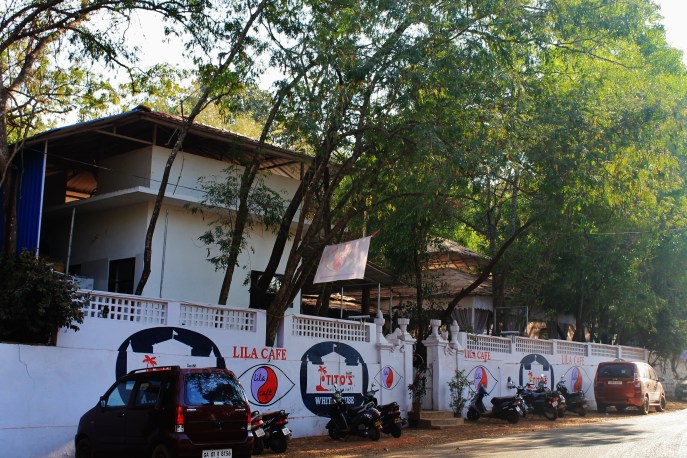
Lila Cafe and Tito’s are the two clubs that get most of the press. We were short on time and had to skip them this round.

Tito's Bar
Tito’s Bar

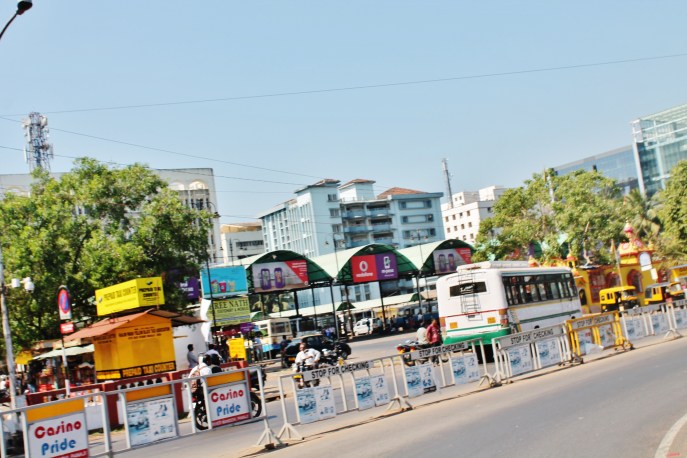
The last morning was Old Goa. We crossed Panjim on the way.

Panjim Bus Stop
Panjim Bus Stop

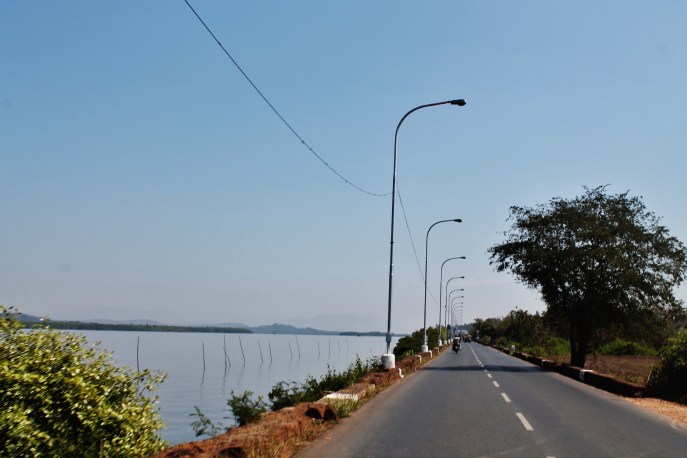
The route runs along the Mandovi again. Wind in the visor.

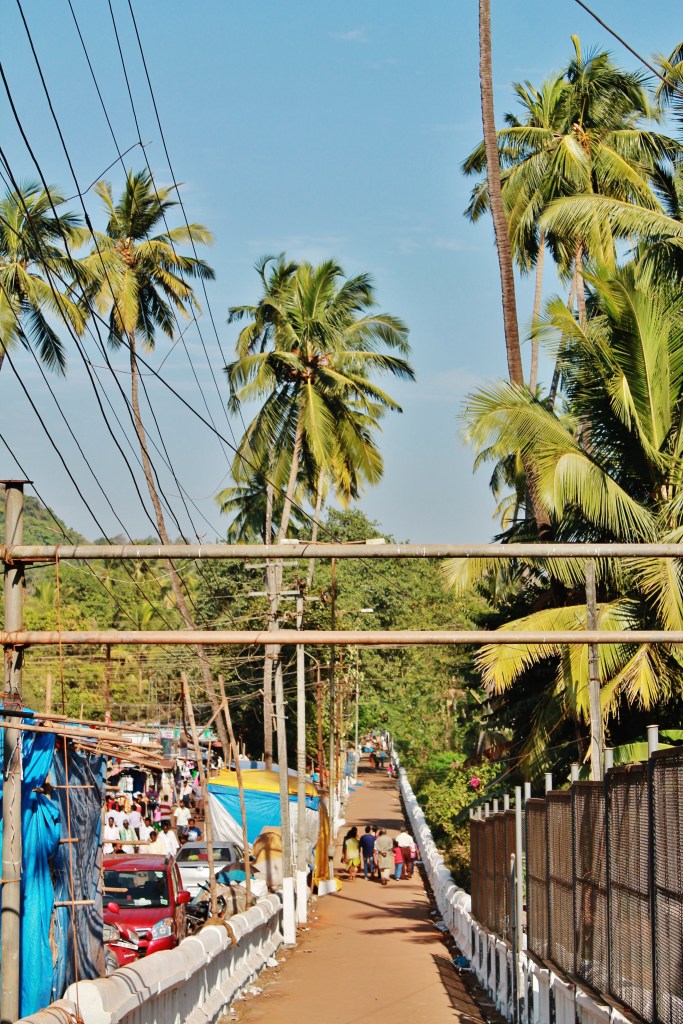
Stretch connecting Panjim to Old Goa

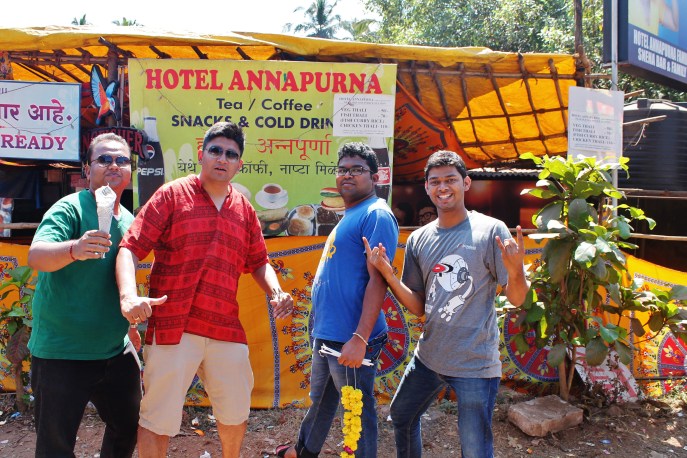
Lunch at Hotel Annapurna near the Basilica. Plain dhaba, easy on the budget. Thalis at 100 INR.

Food Time
Food Time

The Churches

The Basilica of Bom Jesus is the headline. Red brick, large, well-photographed for a reason.

Red Tints of Bom Jesus

The interior is what carries the visit.

Walking through the Cathedral

Walk up to the no-photography zone where history runs as a series of paintings. The cathedral houses relics from churches around the world that arrived through Goa’s stretch of foreign invasion. The Church of St. Francis of Assisi opposite has the museum that explains it.

Church of St Francis

Pale exterior, full interior.

Inside Art
Inside Art

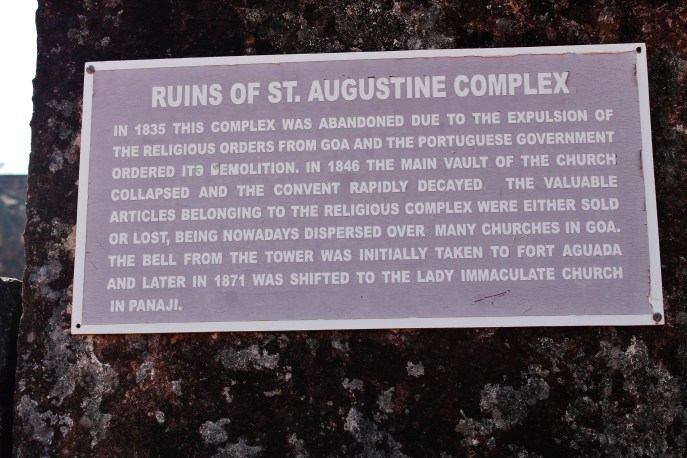
Further on, the ruins of St. Augustine. The story is on the welcome signboard.

Ruins and Placard
Ruins and Placard

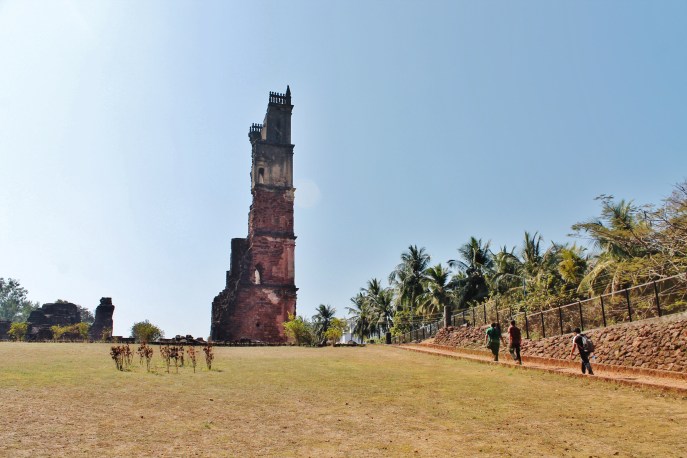
Pulled back, this is the scale of the destruction.

The Ruins from a Distance

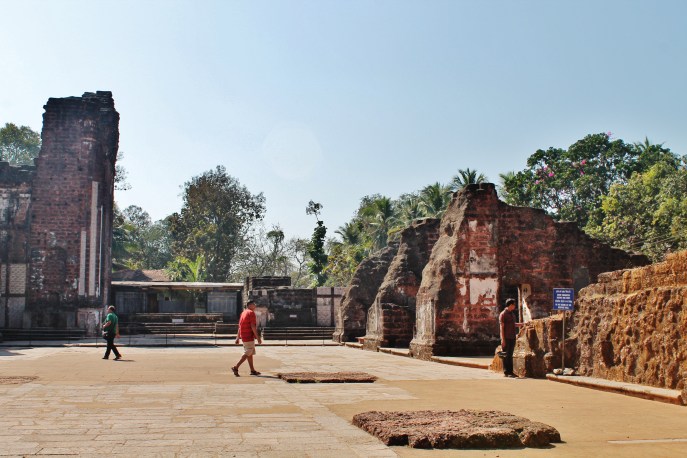
And here is the inside.

Inside the Belly of the Ruins

The Temple

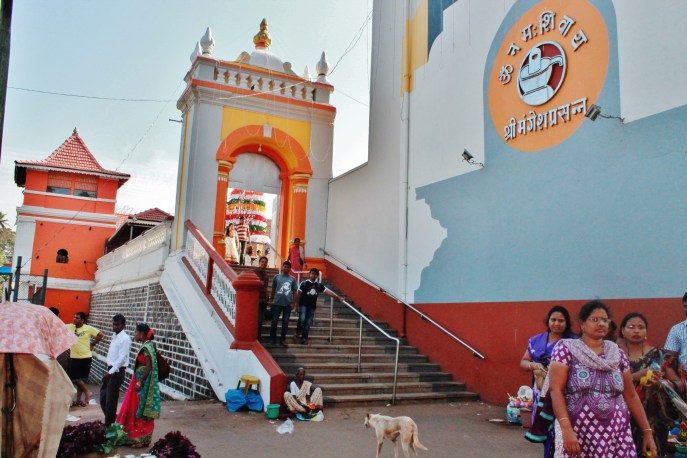
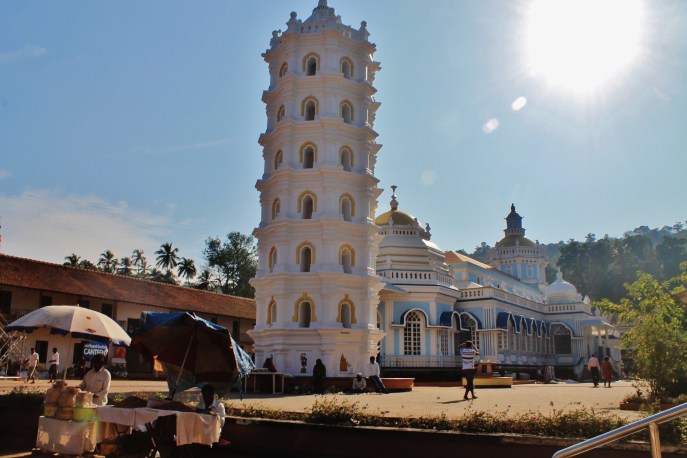
Shanta Durga is at the foot of Kavalem village.

Path to Temple
Path to Temple

A row of shops between parking and the temple steps.

Staircase up to the main Entrance

Indo-Portuguese architecture. There is an unused water tank at the back. Inside is another no-photography zone. The local belief: the deity grants what you ask.

Pillars of Shanta Durga Temple

Then we rushed back to the hotel, checked out, and caught Atmaram Travels from Mapusa at 6:30pm. Booking via Ibibo. The return ride was long and sleepy. Off the bus near Sion at 10am.

Field Notes

  • Two-wheelers over cars. Skip the traffic, double the spots you cover, half the rental cost.
  • Use the road signs, then ask locals. Everybody here knows everywhere. Trust them over Maps when both disagree.
  • Sunscreen. Use it. Otherwise your skin will peel for a week, like mine.
  • Helmets if you ride. Cops will fine you. Take the helmet from the rental shop.
  • UV shades, not street shades. Coloured plastic from the roadside is useless under this sun.
  • Ignore offers from strangers. On beaches at night and on the road during the day. Hotel agents and shopkeepers are the trustworthy info channels.
  • Do not litter. The water is clean. Popular beaches are not, mostly because of beer cans.
  • Drink, do not get drunk. Past a point you stop being fun for everyone around you.

One Recommendation

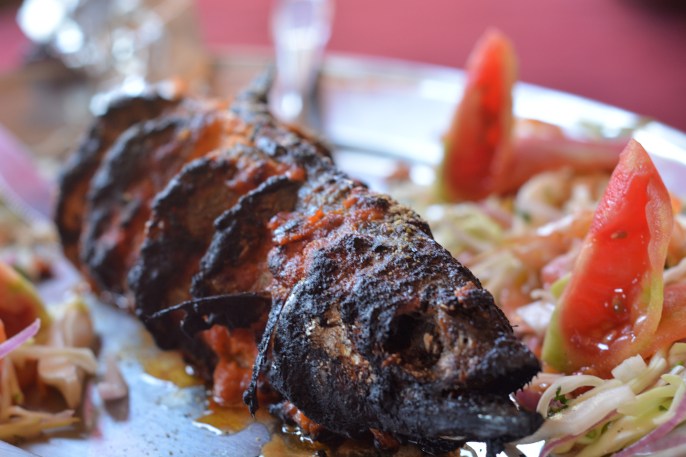
Order the King Fish. It is large, mild, and culturally indigenous to the Goan plate. Baked is the format we tried. The teeth told us the hunters here are also the hunted. There are richer recommendations available, but King Fish is the one that earns the section.

Something Smells Fishy

Until next time,
Aloha,
Sayantan
All Hail Alibaug

The Trigger

A free Saturday in February. The plan: ferry to Alibaug, lunch on the coast, climb the sea-fort, ferry back before sunset. Easiest start point is Churchgate or CST, then a cab to the Gateway of India.

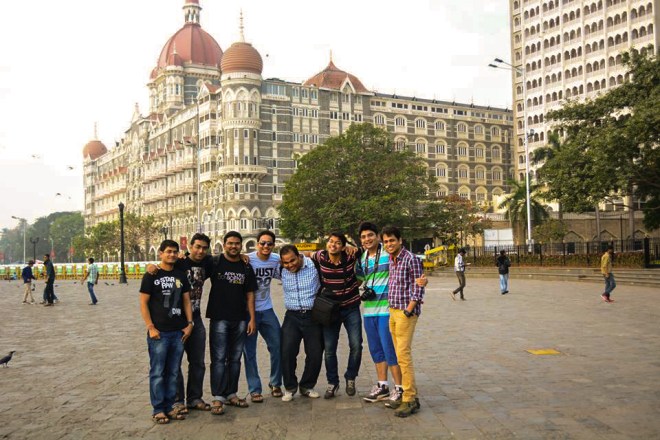
The Gang in front of The Taj

We boarded the same ferry counter that runs to Elephanta. Schedule and rate chart here. Our pick: Maldar Ferry, non-AC, top deck, wind in face.

Gateway of Mumbai on the Horizon

90 minutes across the bay. The Bombay dockyard parade unfolds on the way: cargo, naval, ferries of every girth, with seagulls picking off whatever the wakes turn up. Agneepath fans, yes, this is that Mandwa. The jetty is clean and well-kept, a surprise after Mumbai’s standard.

Mandwa Jetty
Mandwa Jetty

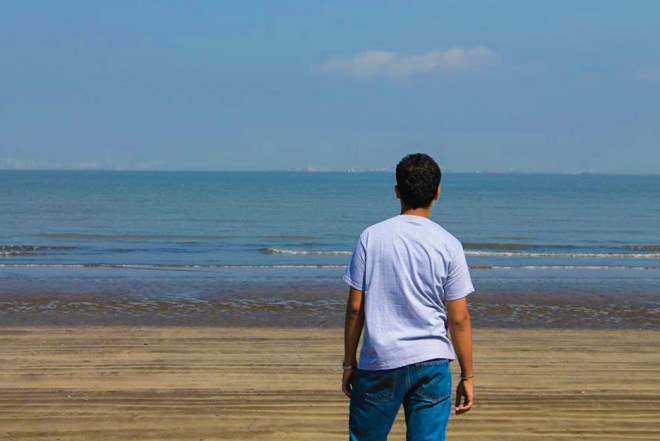
From the jetty steps, the Arabian Sea reads calmer, bluer, less encroached than any Mumbai beach. Crabs scuttle around your feet. Banana rides operate further down. The garbage line that follows every popular Bombay beach is missing here.

On looking into the Ocean

The complimentary bus into Alibaug town runs every 30 minutes. We were impatient and hungry. We took an auto for 450 INR over rough road. Worse roads exist. The ride was fine.

The Road to Alibaug
The Road to Alibaug

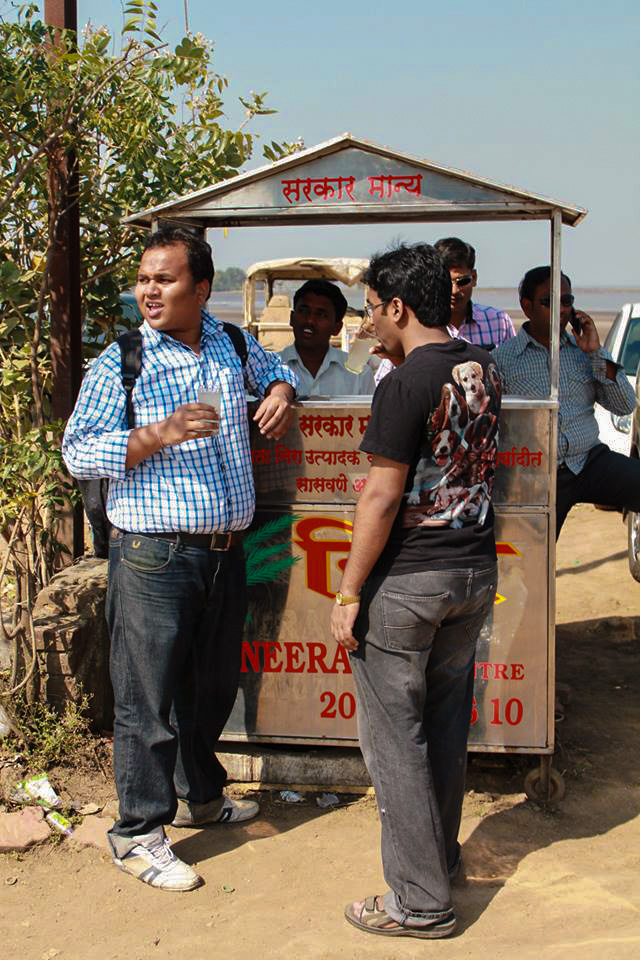
Try Neera on the way. It is fresh palm-tree sap, cold, and only available in the morning. After noon, it ferments past the point you want to drink it.

Cooling off with Neera

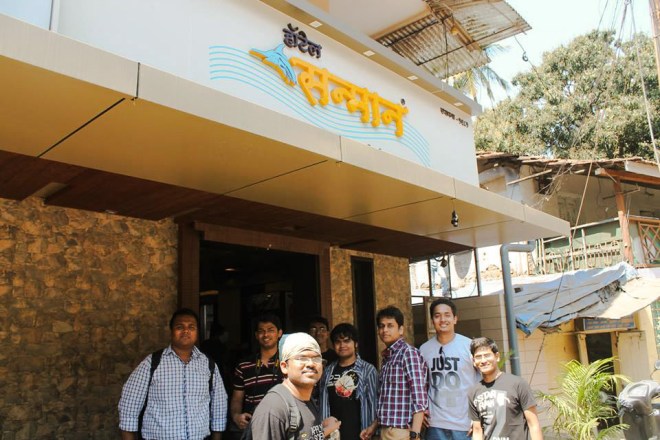
On reaching Alibaug beach, the lunch hunt began. Restaurants line the road, but every paanwala unanimously pointed to Hotel Samman. About 20 minutes on foot from the beach, in a sun that did not help. We walked it anyway, through the coastal lanes.

Hotel Samman
The Hotel that everyone Respects

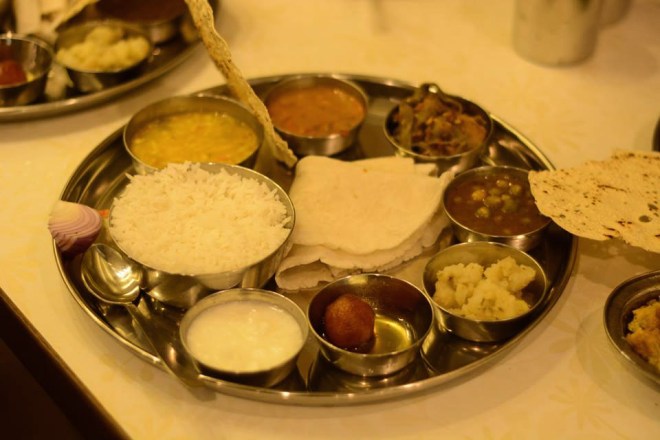
Veg thalis are reasonably priced and the room is better kept than the menu suggests.

Assorted Thali for The Vegeterians

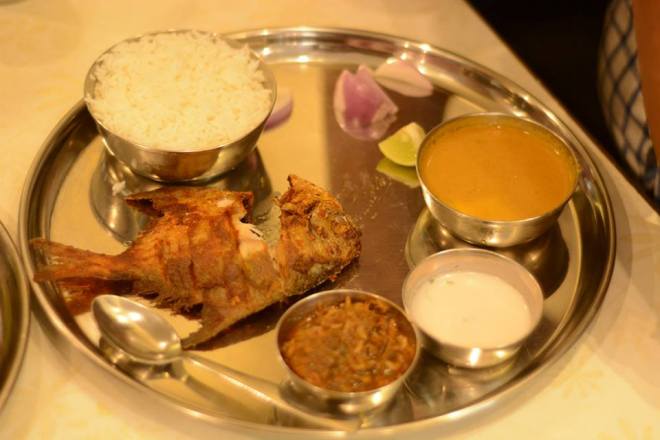
If you eat fish, the Konkani thali is the order. The flavour is regional and uncompromised.

Konkani Dish with marine Fish

Order the oyster masala on the side. It does not come with the thali. I never got a photo because all my attention went into the oysters. We closed lunch with cold drinks.

Cheers to Friendship and a good meal

Walking back, we hit the beach entrance again. Resorts line the strip on either side.

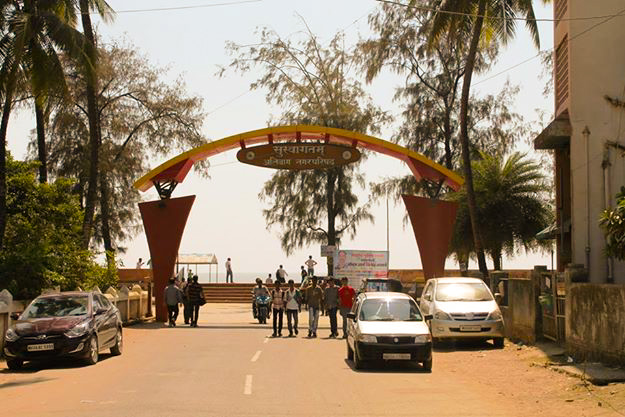
Entrance to the Anlibaug beach

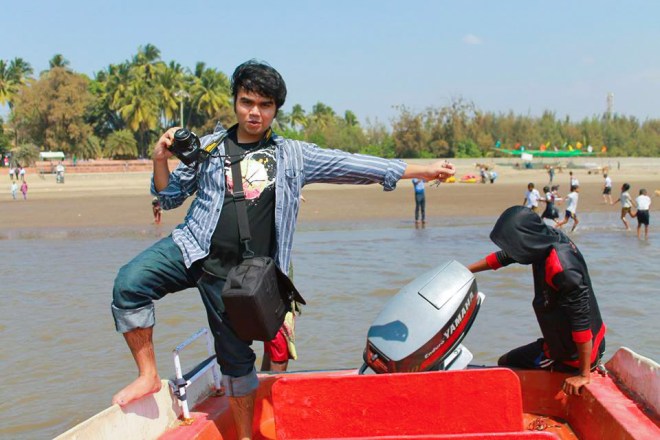
Here is the calculation. Kolaba Fort sits in the sea, walkable on foot at low tide. We were at high tide. No spare clothes. Group split in half: one team committed to swimming over with what they had on, the other took a 100 INR speedboat that crosses in five minutes. I had the camera. I took the boat.

Speedboating with Nikon DSLR

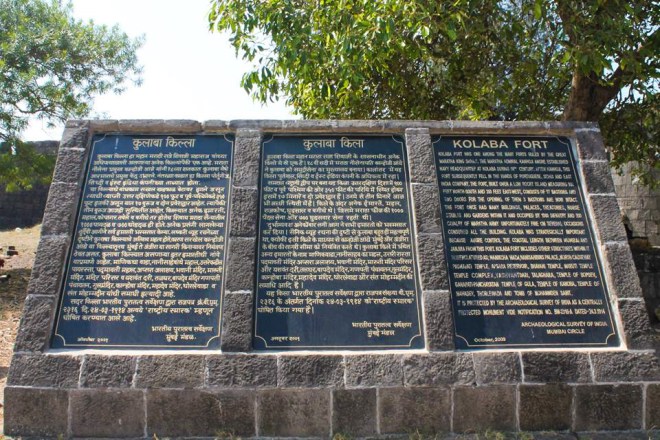
The fort holds up better than its hill counterparts. Walls broken in places but the structure still reads. Footprint is large. The information tablet at the entrance lays out the basics.

The Information Tablet

Then a moment to sit. The rocks at the corner of Kolaba run as long as you want them to. Dil Chahta Hai framing in the head, eyes scanning back across the water for the swim team to confirm they were still alive.

Dil Chaahta Hain Reprised

They were not visible from the fort. We moved on to the inner caverns and observation slits. Several of the ports clearly served as lookouts for incoming threats from the water.

Exploring the remnants of Kolaba Fort

A small white temple stands in the center. The far end of the fort is in worse shape than the entrance.

Birds eye view of Fort Edge

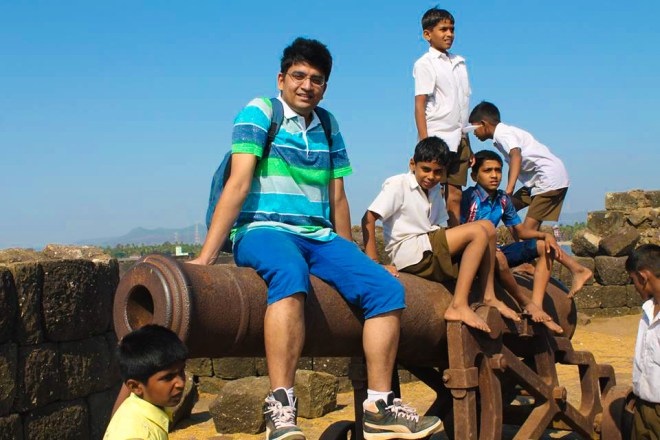
Mandatory cannon. Children doing what children do with a cannon, photographed from a Canon.

The Canonical Case
The Canonical Case

Update on the swim team: they did not make a quarter of the distance. They had pivoted to throwing wet sand at each other instead. Both gangs got the trip they wanted.

Frolicking amidst Water

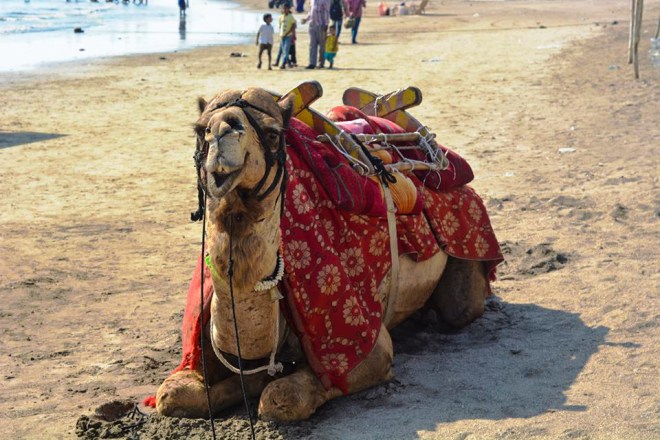
Back on the beach, water sports operators were drying their gear and themselves. If you want a camel ride or a banana boat, this is the strip.

Carefree Camel not caring at all

End of the beach: changing rooms, separate by gender, properly maintained. In front: a row of street stalls running golas, corn on the cob, and assorted snacks.

Dracula Stage thanks to Kala Khatta

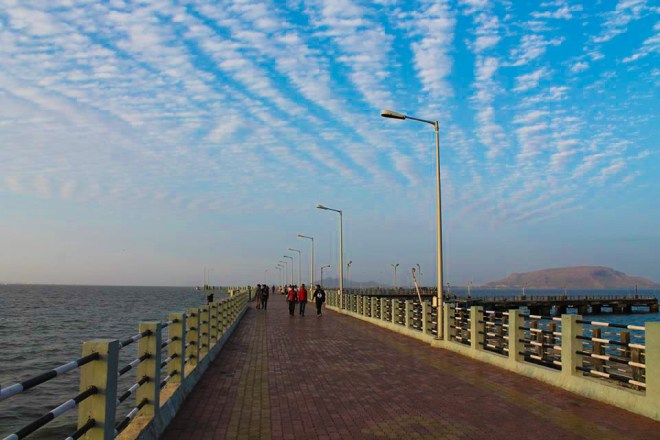
The thing to track is the last ferry. Miss it and the bus back to Bombay takes 3.5 hours. Mandwa Jetty at sunset earns the wait.

Cloud lining over Mandwa Jetty

Amazing is undersold.

Sunset on the Jetty
Sunkissed Horizon at Mandwa

On the return crossing, the seagulls do their thing. They will take chips out of your hand. Cameras started failing as the light dropped.

Seagulls soaring towards food

Field Notes

  • Get there early. Nagaon beach reportedly beats Alibaug for swimming. We never made it. Late and lazy.
  • Ferry, not bus. Bus is 3.5 hours and a sentence. Ferry is the trip.
  • Spare clothes if you swim. Otherwise carry an extra 100 INR for the speedboat.
  • Try Konkani food. Marine fish, prepared local. Neera before noon; after that it has turned.
  • Keep GPS on. Useful for restaurants, bus stops, and the way back to the jetty.

One Recommendation

Feed the seagulls on the return ferry. Chips work. Biscuits get ignored. Both are sold at the jetty. The other thing worth holding the camera up for: Mumbai’s lights from the middle of the bay at night.

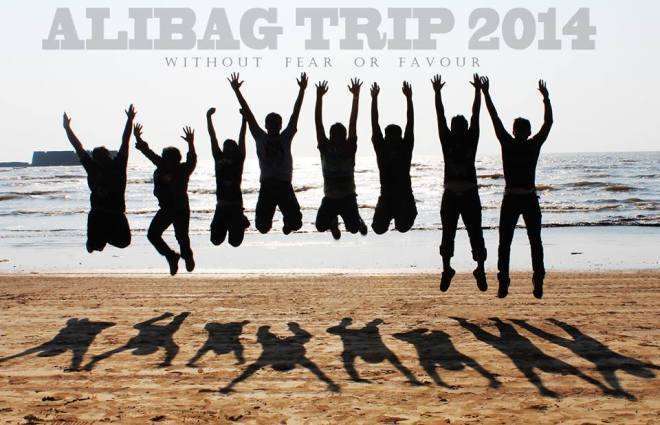
Without Fear or Favour
Framing the Silhouettes

That frame took more attempts than I want to admit. Worth it.

Until next time,
Sayantan
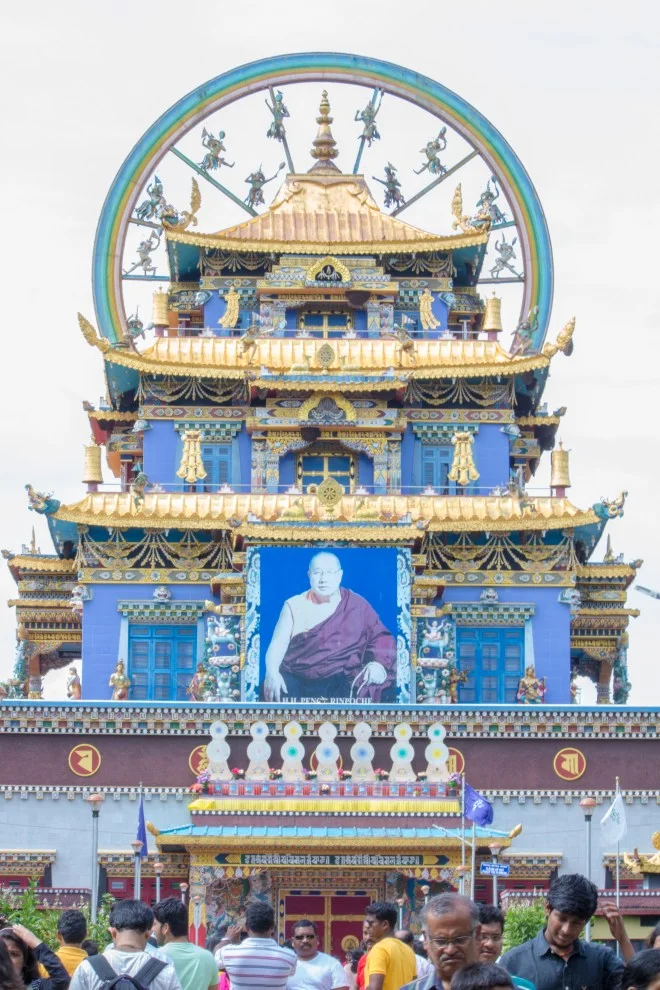
Update (2020)

I went back to Alibaug for company offsites. The format was a bus ride to a farmhouse, well clear of the touristy beaches. The first one was fun. I was the camera guy and the experience was new. The second visit, same farmhouse, same plan, was a flat repeat.

I tried to skip the third and was talked into it. A colleague and I made an excuse and left early. The way out was a 9-seater shared auto with the local villagers heading to the ferry point. That hour was honestly more fun than the offsite that produced it.

Marching Through Manikgad

The Trigger

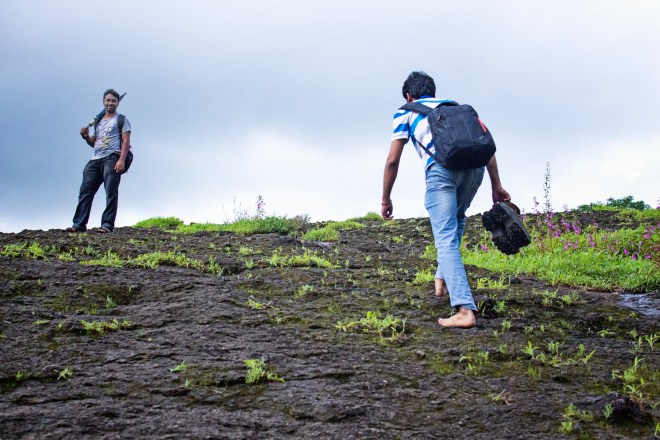
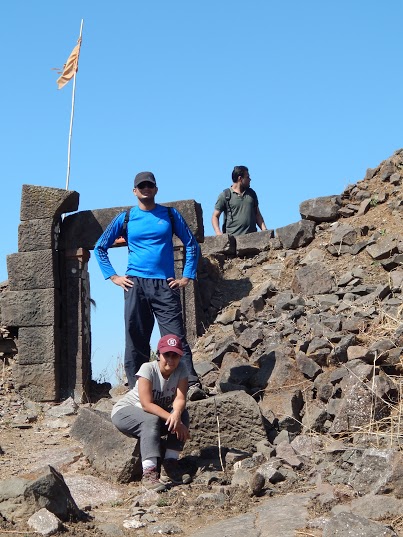
First Saturday of January 2015. A senior at the institute was already in Mumbai Explorers, a meetup.com trekking group, and the new-year hike to Manikgad Fort had open seats. Twenty trekkers signed up, half of them from my department. New year hike turned into a class outing.

Panvel Railway station at Mumbai's end
Panvel Railway station at Mumbai’s end

Wherever you are in Mumbai, the route is the same: get to the central line, board a train to Panvel, target a 7:30am arrival at the latest. Anything later and you risk descending in the dark. From Panvel, you need a vehicle to the village at the foot of the climb.

We crammed into two Tata Sumos. A bus is cheaper if your group can wait for one. A local guide on the climb itself: 500 INR. Worth every rupee. Trekkers get lost on this trail. Stock food and water in the village before you start. Glucose, basic first aid, grip-tested shoes.

A part of the Gang when everybody was so full of energy
A piece of the energised gang

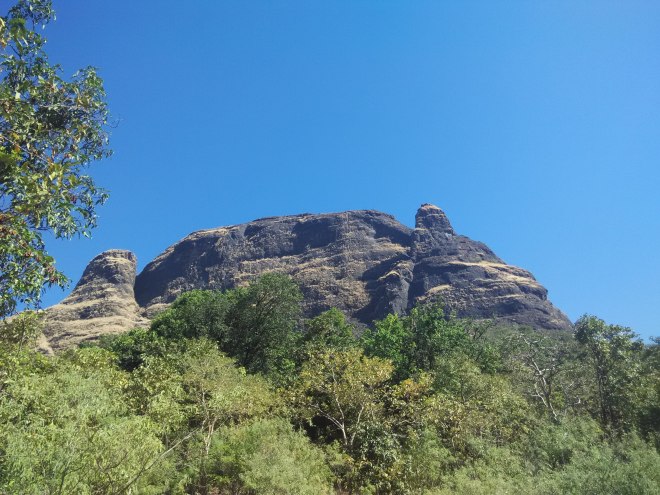
Numbers to absorb before the boots hit dirt. 13 km up. 13 km back. Summit at 1800 feet. No clean trail. Monsoon brings rain, fog, slick rock. January brings sun that does not quit and dries everything around you to kindling.

Walking through dried grassy terrain
Walking through Dried Grassy Terrain

From the village, the route opens onto black granite, then green patches of low forest, then dried hay that turns lush in monsoon. The first target is not the summit; it is the top of an intermediate plateau. We cut through hay to get there.

Smiles as we reached near the Plateau

Past the plateau came a long meadow with the sun doing the work the climb usually does. Then grassy terrain with thin streams. The guide finally pointed at the real summit. From the plateau we could see the peak. We had to do it again, twice over.

A peek into the Peak from the Plateau Top
A peek into the Peak from the Plateau surface

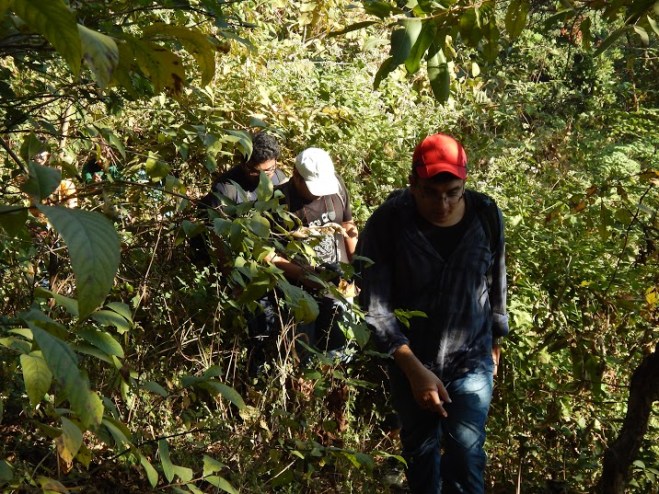
The next section is dense forest with random boulders for grip. Paths fork without warning into dead ends. Group speeds diverged. We got lost once. I caught a tree branch with my forehead.

Two members of the group hit limits. A middle-aged trekker came close to turning back. A girl cycled through panic and tears. The pace cracked. People fell behind.

Pushing through Greenery

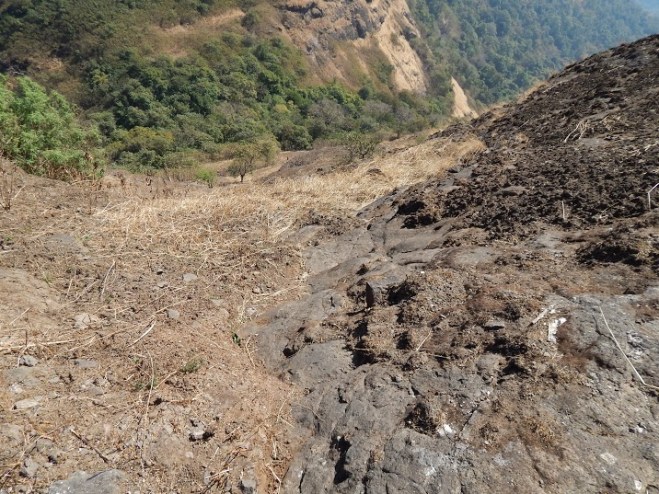
The rescue cost us 30 minutes. Past that we passed a wrecked Hanuman shrine with a Shiva linga, then a barren ridge of loose rock where every step had to be deliberate. Photography paused. Center of gravity took priority.

Barren land and Rocky roads

Then the fort. The first thing you cheer for is the water pond inside the broken castle.

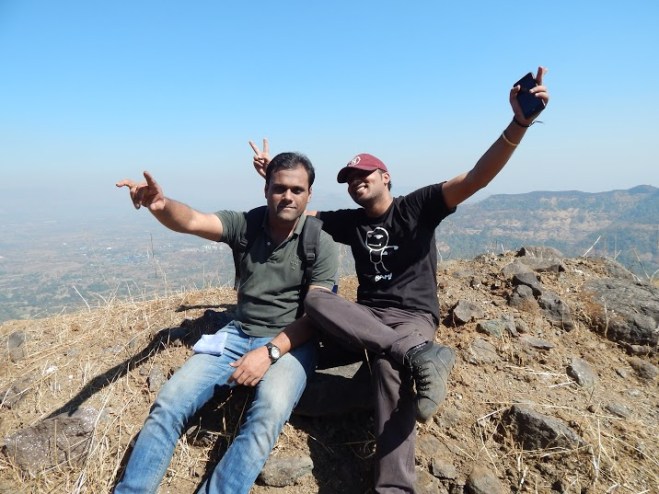
Happy to be First
Happy to be First

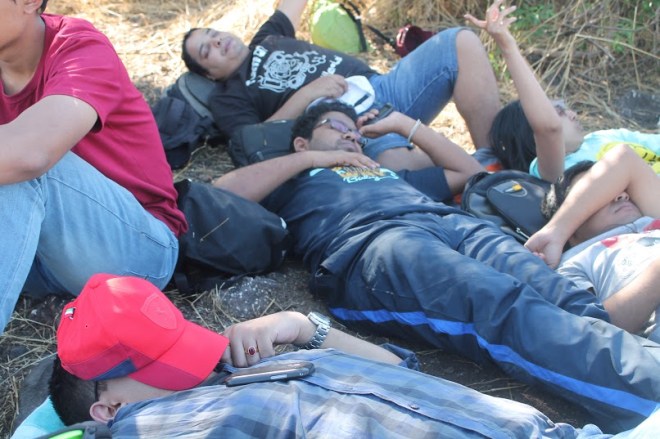
Most of the group collapsed flat on the ground for a quick nap.

Weary and Dozed off
Weary and Dozed off

Bottles were dry. The cisterns we found held water that was unusable. The pond a few steps below, fed by rainwater, became the only option. We drank from it.

Fun with Flags
Fun with Flags

If you came up expecting fortifications, calibrate down. The fort is mostly broken bricks now, with a scatter of coloured flags strung on top. Manikgad rewards the climb itself, not the destination.

The tiny fort on descent

Descent at 3pm. Winter days are long enough that this works. We took close to three hours down. The descent is harder than the climb if your shoes start slipping; walk straight, hold center of gravity, use a stick.

Look back at what was left behind
Panoramic Look back at what was left behind

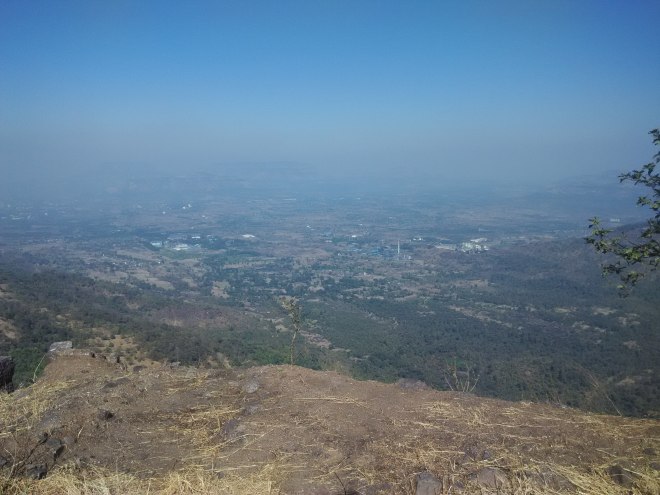
Scrolling these photos later, I kept thinking about the Maratha builders who hauled material this far up. The view from the top answers the question. The fort was a watch post. From here you see threats coming long before they arrive. The fog problem is the part I still cannot solve.

Landscape view from the Fort

Field Notes

  • Water and dry food are non-negotiable. You do not survive this without them.
  • Grip beats brand. Especially in monsoon. Test your shoes before you leave.
  • Carry a torch. Wikipedia lists panthers in the area. Locals say none remain. Plan for the older claim.
  • Budget. A lean run goes for ~150 INR. Ours was 400 INR all-in (food, guide, Sumo).
  • Not for the weak-hearted. Said with feeling.
  • Camera choice. A point-and-shoot or light DSLR earns its keep on this trail. We carried a P&S, a Canon 1200D, and a Nikon 5300D. Most of our shots were on the Nikon, whose memory card was lost in an auto on the way back. Backup. Always.

One Recommendation

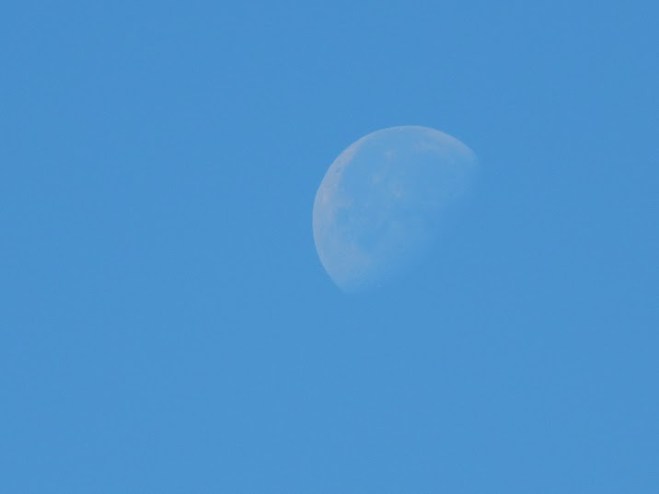
Look up at 10am. We caught the sun and the gibbous moon at the same time, courtesy the altitude. Easy frame, hard to forget.

Gibbous Moon at 10 AM as seen through Compact Camera

Different terrain in the next post.

Until next time,
Sayantan
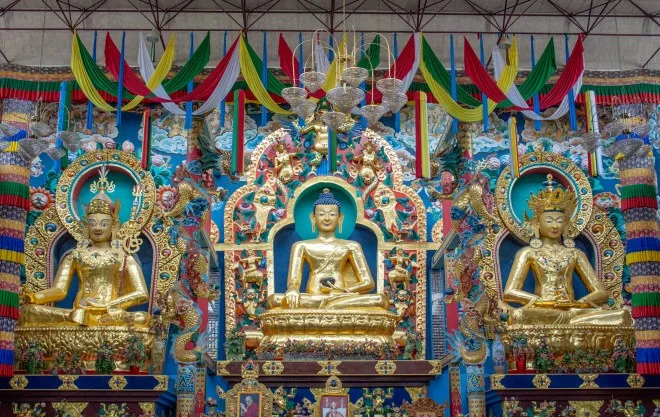
Love From Lavasa

The Trigger

December 2014. Abhishek calls from Powai: he’s heading to Lavasa with his family for a day trip and there’s a seat in the cab. Friends had been writing the place off for years. Underdeveloped. Half-finished. A political mess. I went in deliberately blind. No Google. No expectations. Best decision of the trip.

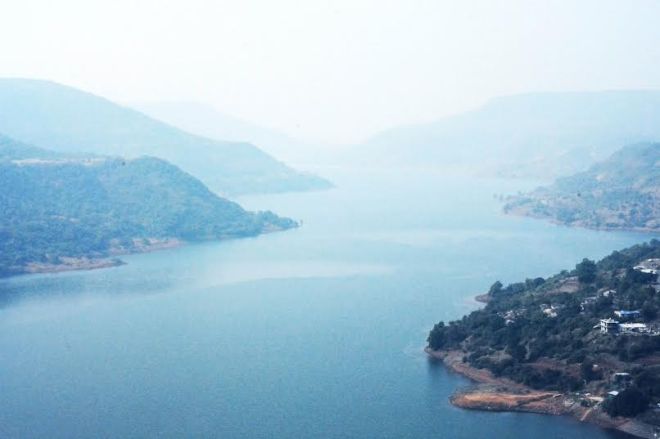
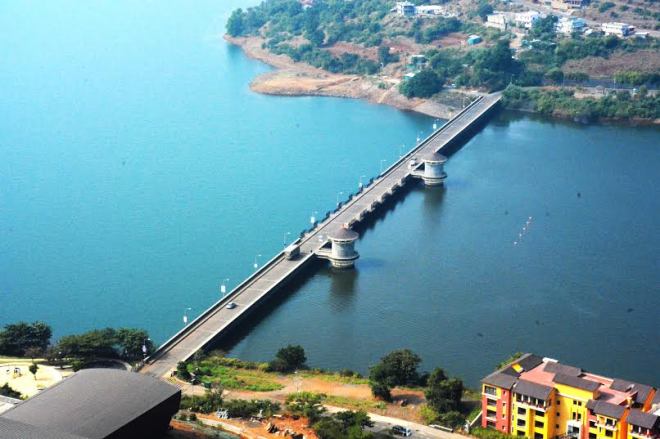
The breathtaking lake that makes Lavasa the beautiful place it is

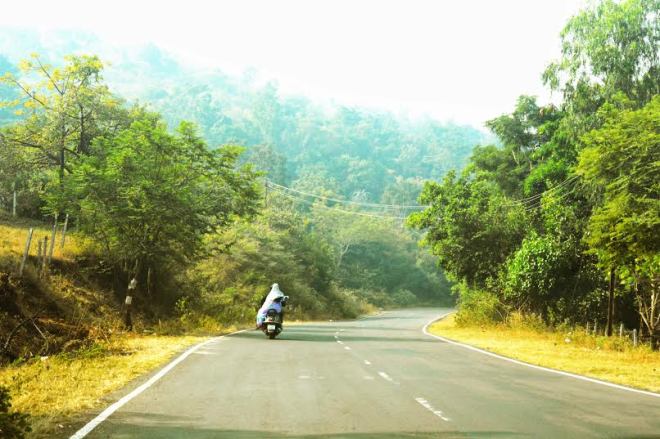
We left Powai at 7am in a TaxiForSure cab. Three of us, 186 km of expressway between Mumbai and the Sahyadris. Pre-sunrise traffic out of Mumbai is not a fight you pick. You endure it.

The Expressway which connects Mumbai and Pune, serving a well built path to majority of Maharashtra tourist places

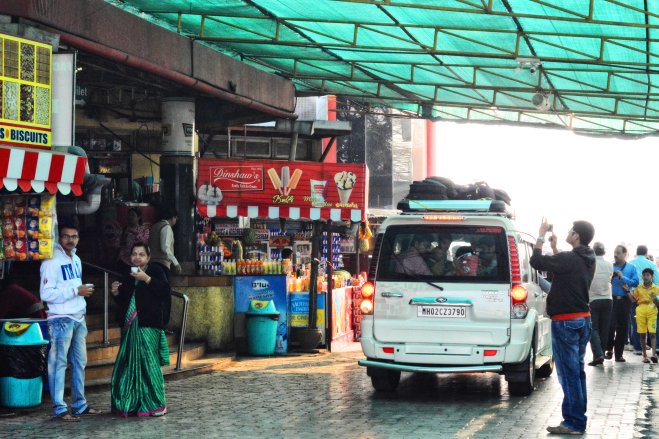
The Mumbai-Pune Expressway carries the easiest stretch of the run: six lanes, well-built, the kind of road you forget you are on. We pulled over for breakfast at the standard halt, a strip of canteens lining the parking lot where every Mumbai-Pune driver eventually stops.

A chain of eatery cum parking lot to fill your tummies prior to breakfast

Three hours in, the highway peels off and the road starts climbing. The spiral begins. Inclines steepen. Corners tighten. Then the bridge appears. That is the city.

Behold the bridge of Lavasa gluing the town together

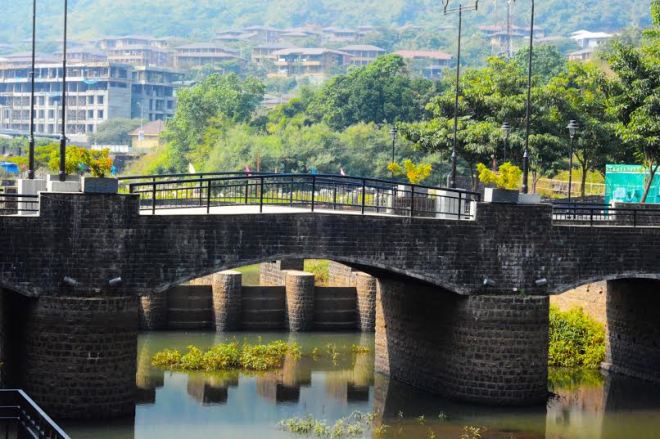
Lavasa is built on borrowed grammar: Copenhagen waterfront, Venetian footbridges, painted facades stacked along an artificial lake. The planning is so deliberate it almost feels staged. Paved walks. Arched bridges. A complete absence of the roadside chaos every Indian eye is calibrated for.

Arch shaped brick bridges modeled in European style
Arch shaped brick bridges in European style

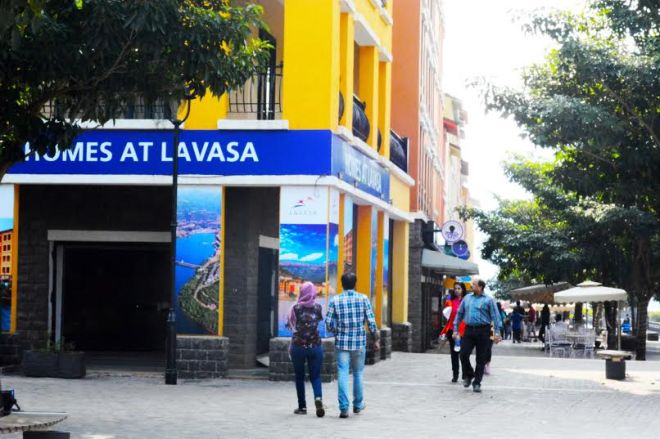
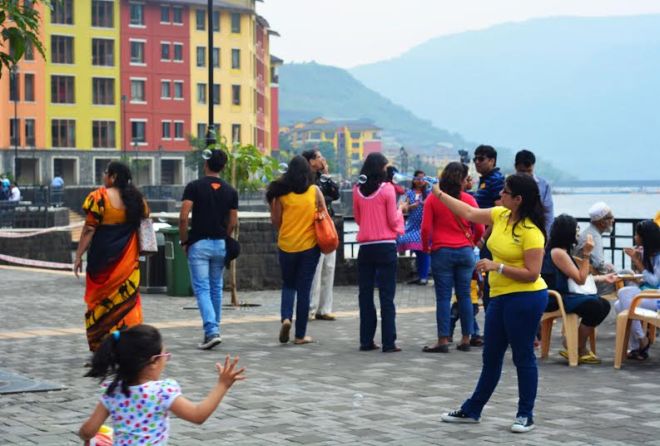
The promenade carries Cafe Coffee Day, Baskin Robbins, a mini theatre, and a string of restaurants. Children play on the sidewalks. Sidewalks that are actually swept.

Chain of Restaurants along Lavasa Footpath

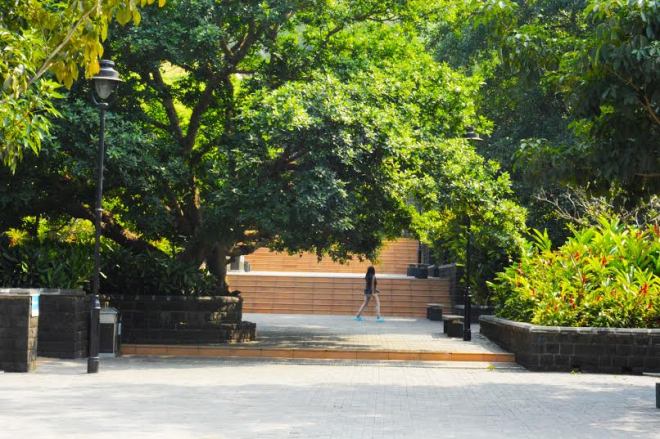
The environmental case against Lavasa is real and well-documented; political battles have stalled the project for years. From the ground, though, it is hard to see brutality in this much greenery. Tree cover threads through brick and stone. A clearing here, a stairwell there.

A flight of stairs guarded by Green doorway

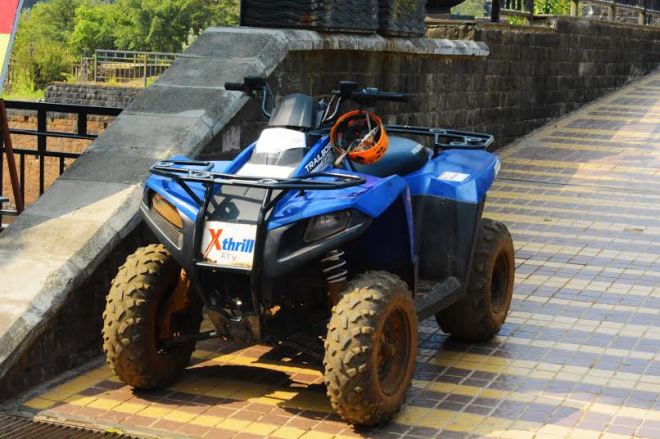
If you have brought kids, the toy budget burns fast. Tandem bicycles. Mini four-wheelers from XThrill. Segway-style personal transporters. Each ride: around 500 INR.

Compact Four Wheeler transporter

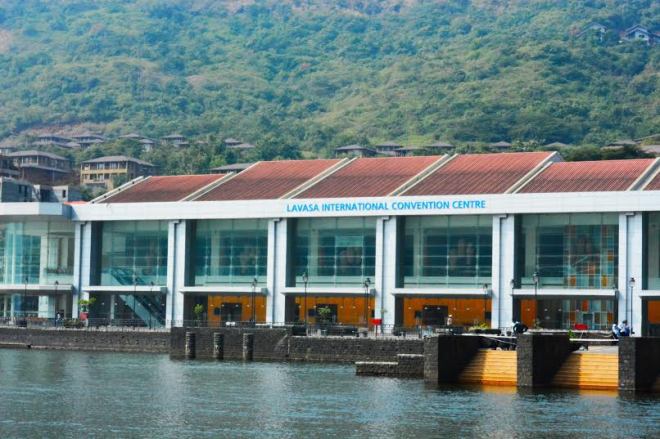
The Lavasa International Centre is the orientation point: stay options, sports bookings, and the case for owning a home in the gap between Mumbai’s hustle and Pune’s keyboards.

The All In One Lavasa International Centre for tourists

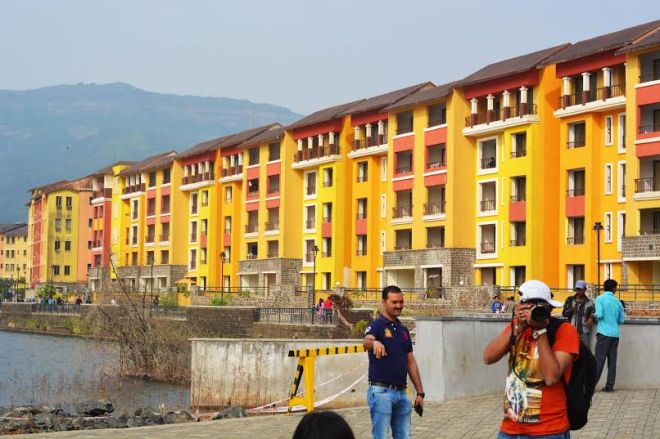
We did not stay overnight. We should have. The lakefront apartments on the prime stretch are the kind of view you book for a quiet weekend, not a day visit.

Flats for tourists planning overnight stay

Water rides open in the afternoon at the far end of the lake. Rowing and motorboating run around 1000 INR. After dusk, the promenade lights up and the whole place shifts register.

The lakeside streets that glows in the dark

One thing: bring a real camera. Mine was a Nikon D5200 paired with a 50mm prime, and that lens did 90% of the work in this post. Abhishek shot a Nikon D3100 with a 55-200mm. Both handled the light. Lake reflections and bridge geometry deserve more than a phone.

Photographer preparing his next shot

Field Notes

  • Day trip vs overnight. Day trips are cheap. Overnights are not. Pricing climbs hard once you book a room, so plan for the latter if you are committing.
  • Eat at Oriental Octopus. Their seven-course Chinese set is 400 INR and the best value on the strip. Indian, Lebanese, Mughlai, Italian, and American options are also available.
  • Audience matters. Lavasa is engineered for relaxation, not nightlife. If you are 20-something rolling in with friends, you will be bored by 6pm. Bring family.
  • Drive with GPS on. Even local drivers get confused near the final ascent. Ours did. Google Maps fixed it.
  • Detailed info: www.lavasa.com or the International Centre on the ground.

One Recommendation

Kiwi juice at Oriental Octopus. Cold, sharp, slightly tart. Order it twice.

Kiwi Juice can be the ultimate refreshment

Next post: a trek.

Until then,
Sayantan
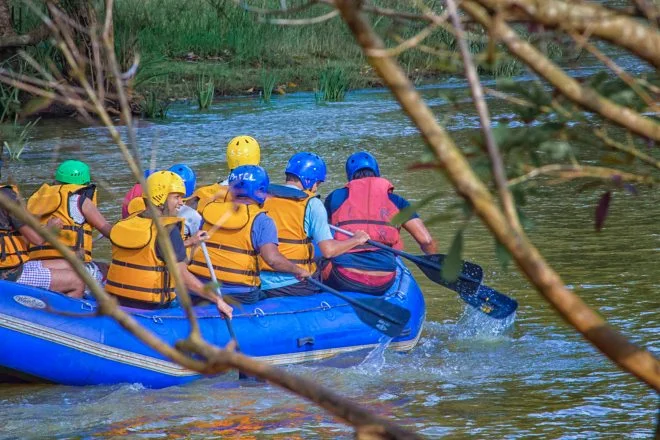
Revisited (2020)

I went back twice after this trip. Both times worse. Chains had shuttered, maintenance had slipped, and the entry fee stayed steep. The crowds had thinned to nothing. Lavasa looks closer to a ghost town now than to the city in these photos, and the politics never resolved.
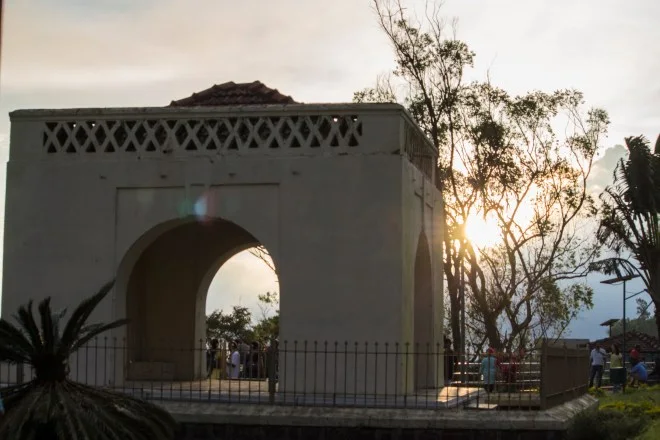
If Maharashtra is on your list and this is your first visit, there are better places to spend a weekend. Lavasa is a story now, more than a destination.