The Trigger
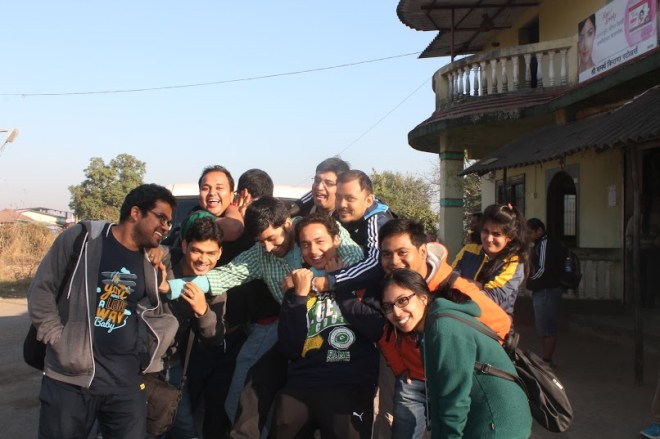
First Saturday of January 2015. A senior at the institute was already in Mumbai Explorers, a meetup.com trekking group, and the new-year hike to Manikgad Fort had open seats. Twenty trekkers signed up, half of them from my department. New year hike turned into a class outing.
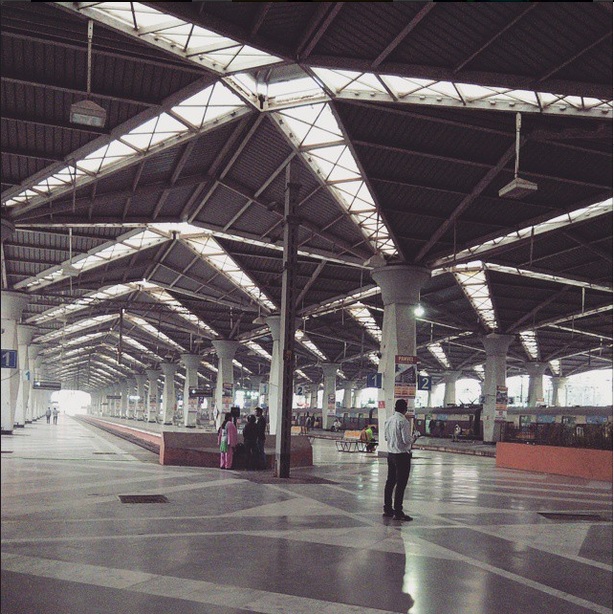
Wherever you are in Mumbai, the route is the same: get to the central line, board a train to Panvel, target a 7:30am arrival at the latest. Anything later and you risk descending in the dark. From Panvel, you need a vehicle to the village at the foot of the climb.
We crammed into two Tata Sumos. A bus is cheaper if your group can wait for one. A local guide on the climb itself: 500 INR. Worth every rupee. Trekkers get lost on this trail. Stock food and water in the village before you start. Glucose, basic first aid, grip-tested shoes.
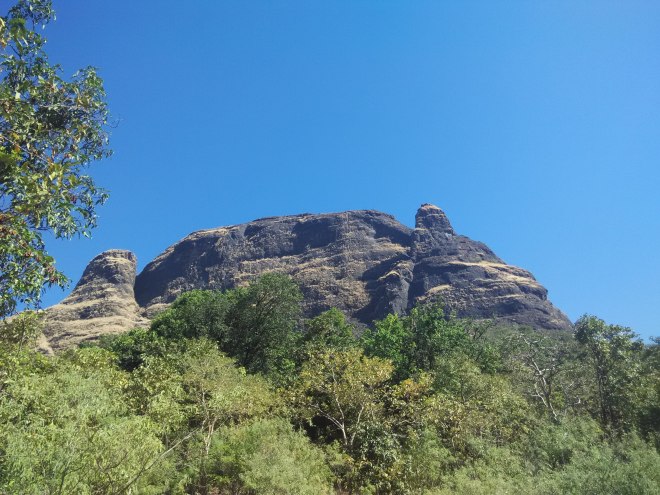
Numbers to absorb before the boots hit dirt. 13 km up. 13 km back. Summit at 1800 feet. No clean trail. Monsoon brings rain, fog, slick rock. January brings sun that does not quit and dries everything around you to kindling.
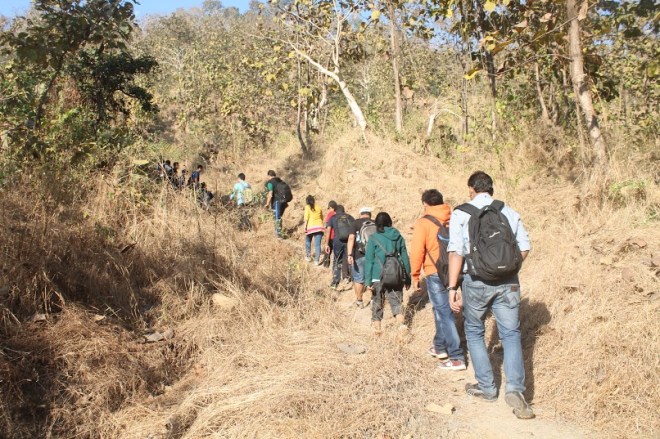
From the village, the route opens onto black granite, then green patches of low forest, then dried hay that turns lush in monsoon. The first target is not the summit; it is the top of an intermediate plateau. We cut through hay to get there.
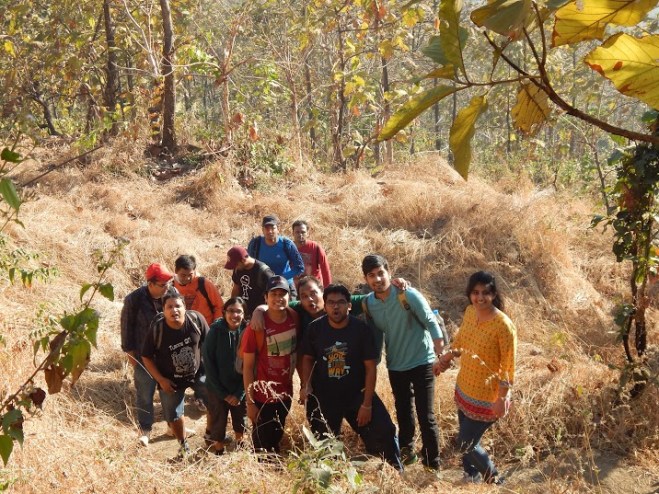
Past the plateau came a long meadow with the sun doing the work the climb usually does. Then grassy terrain with thin streams. The guide finally pointed at the real summit. From the plateau we could see the peak. We had to do it again, twice over.
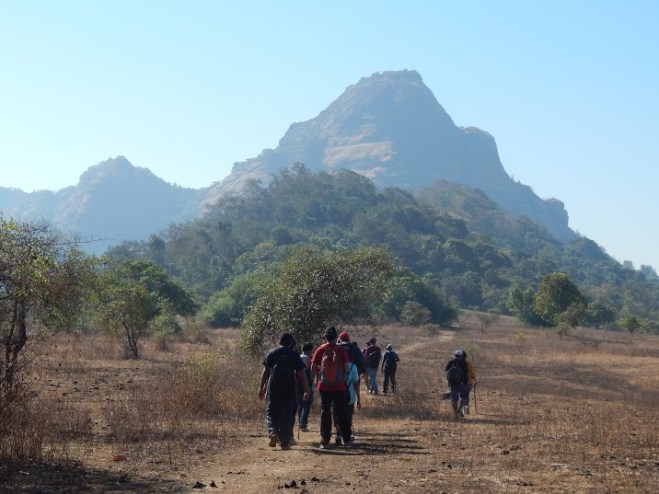
The next section is dense forest with random boulders for grip. Paths fork without warning into dead ends. Group speeds diverged. We got lost once. I caught a tree branch with my forehead.
Two members of the group hit limits. A middle-aged trekker came close to turning back. A girl cycled through panic and tears. The pace cracked. People fell behind.
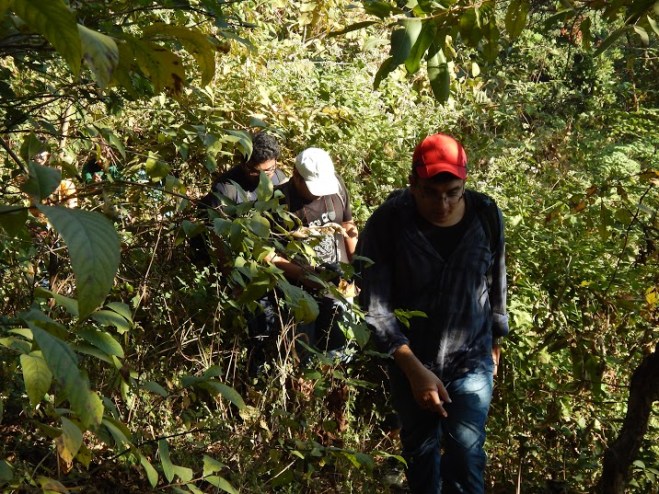
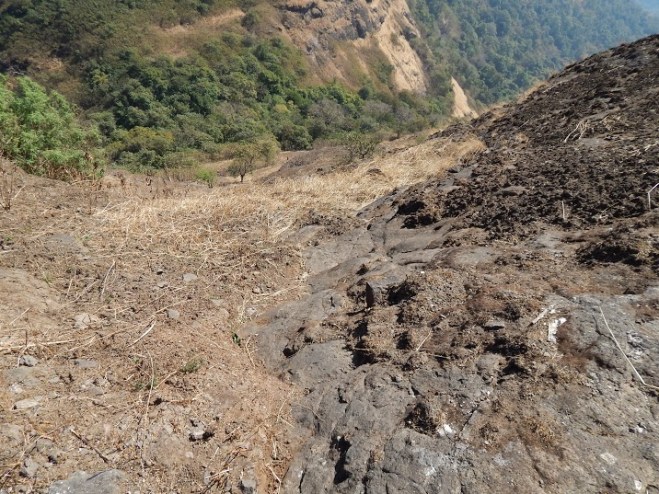
The rescue cost us 30 minutes. Past that we passed a wrecked Hanuman shrine with a Shiva linga, then a barren ridge of loose rock where every step had to be deliberate. Photography paused. Center of gravity took priority.
Then the fort. The first thing you cheer for is the water pond inside the broken castle.
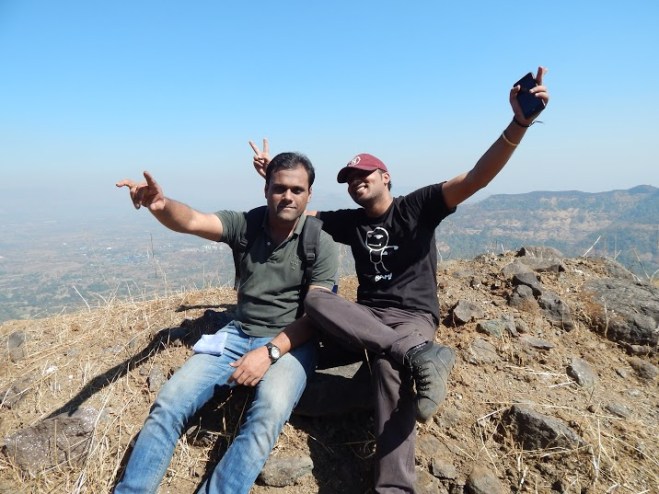
Most of the group collapsed flat on the ground for a quick nap.
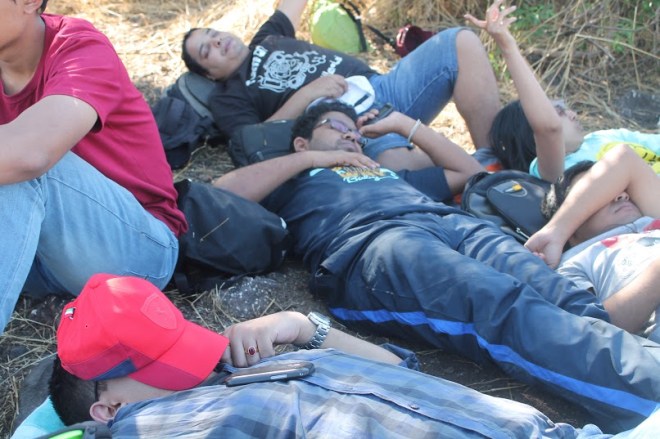
Bottles were dry. The cisterns we found held water that was unusable. The pond a few steps below, fed by rainwater, became the only option. We drank from it.
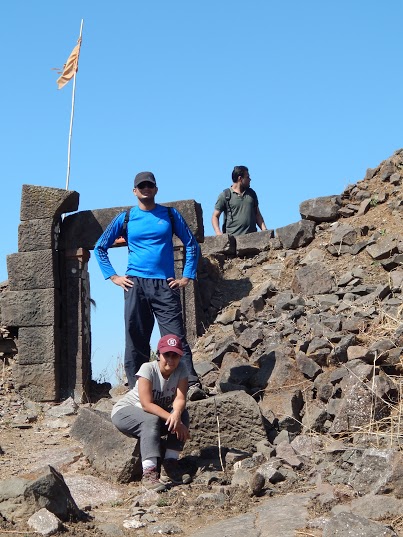
If you came up expecting fortifications, calibrate down. The fort is mostly broken bricks now, with a scatter of coloured flags strung on top. Manikgad rewards the climb itself, not the destination.
Descent at 3pm. Winter days are long enough that this works. We took close to three hours down. The descent is harder than the climb if your shoes start slipping; walk straight, hold center of gravity, use a stick.
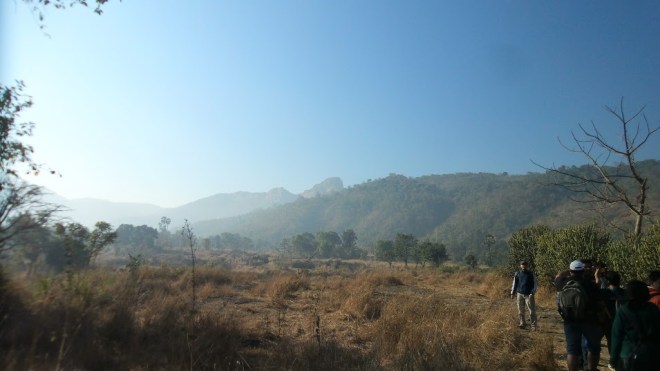
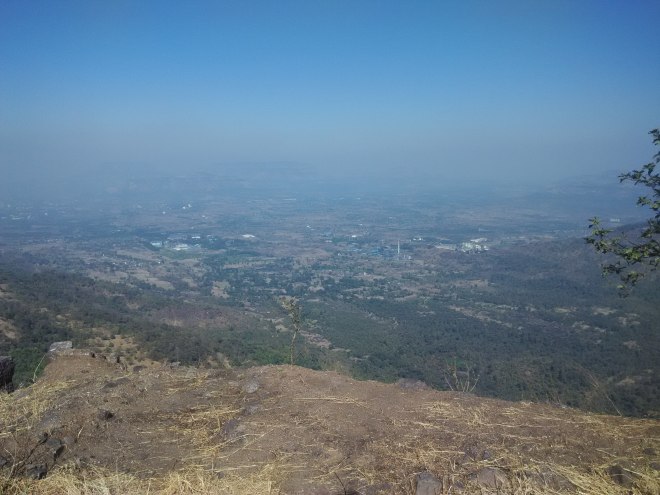
Scrolling these photos later, I kept thinking about the Maratha builders who hauled material this far up. The view from the top answers the question. The fort was a watch post. From here you see threats coming long before they arrive. The fog problem is the part I still cannot solve.
Field Notes
- Water and dry food are non-negotiable. You do not survive this without them.
- Grip beats brand. Especially in monsoon. Test your shoes before you leave.
- Carry a torch. Wikipedia lists panthers in the area. Locals say none remain. Plan for the older claim.
- Budget. A lean run goes for ~150 INR. Ours was 400 INR all-in (food, guide, Sumo).
- Not for the weak-hearted. Said with feeling.
- Camera choice. A point-and-shoot or light DSLR earns its keep on this trail. We carried a P&S, a Canon 1200D, and a Nikon 5300D. Most of our shots were on the Nikon, whose memory card was lost in an auto on the way back. Backup. Always.
One Recommendation
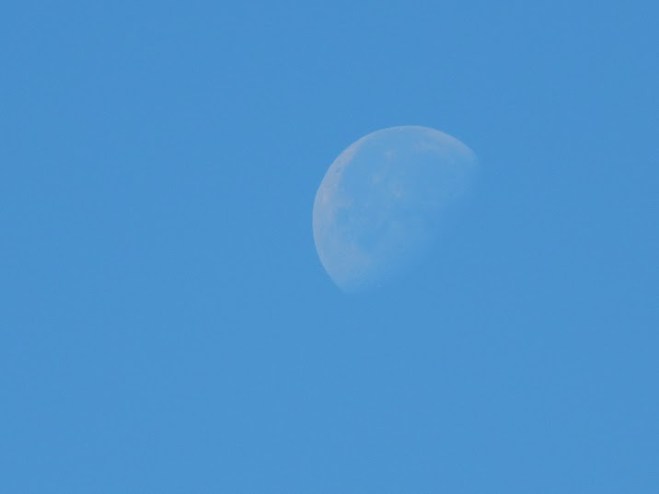
Look up at 10am. We caught the sun and the gibbous moon at the same time, courtesy the altitude. Easy frame, hard to forget.
Different terrain in the next post.
Until next time,
Sayantan