The Trigger
Spiti had been on the list for years. The first attempt slid; on the previous Himachal trip we had to cut it from the route. The hook this time was photographic — chasing the Milky Way after a year of Instagram stalking the genre.
Here is the carry-over evidence from the earlier failed attempt:
Himalayan highlands are neither easy nor cheap. The trip selects for a tolerance for extreme weather, altitude, road risk, and unpredictability. The last truly meet-strangers-and-travel format I had done was Noida 2010. I had not gone back to that mode in nine years.
The path in this time was Sony India’s Alpha Community programme, August 2019. Heavy discounts on the trip in exchange for using and reviewing Sony gear during it. Mr Dheeraj Paul of Indian Photography Tours led the run. The mentorship and the logistics held up across the worst of the conditions.
Ascent
Mumbai-Chandigarh flight, then a night at OYO 9822 Hotel Seven in Sector 7C, the restaurants and bars zone. First-time visitor here. The cleanliness and emptiness of Chandigarh registered immediately, against the standard Indian-city baseline. Dumpling platter for dinner. Quick run to Elante Mall, since I was already in town.
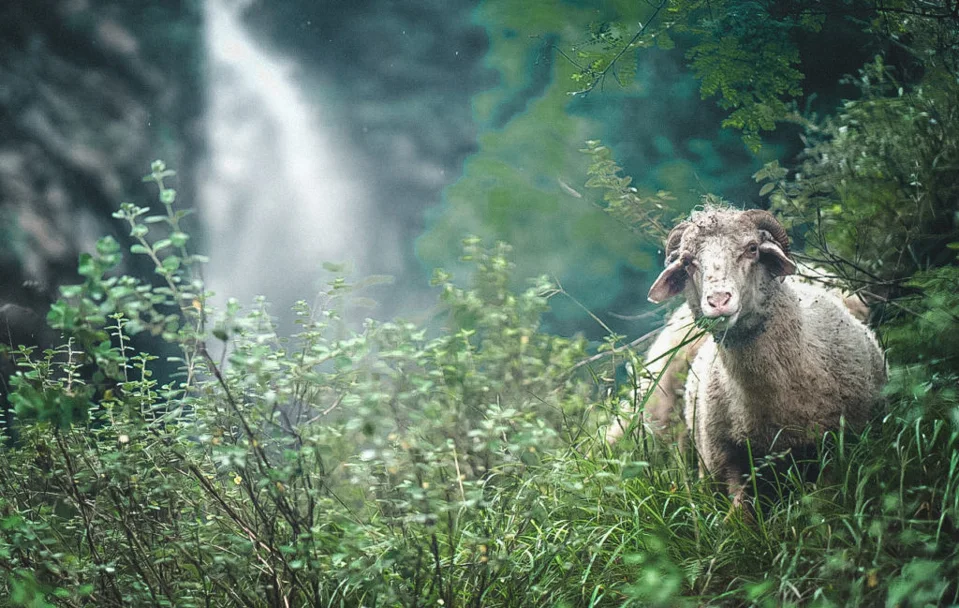
Next morning, met the rest of the group at Hotel Park Plaza, Zirakpur. Four Innovas in a fleet, aimed at Narkanda — a small town past Shimla, accessed through tight green hills, waterfalls, and the occasional mountain sheep watching from the verge.
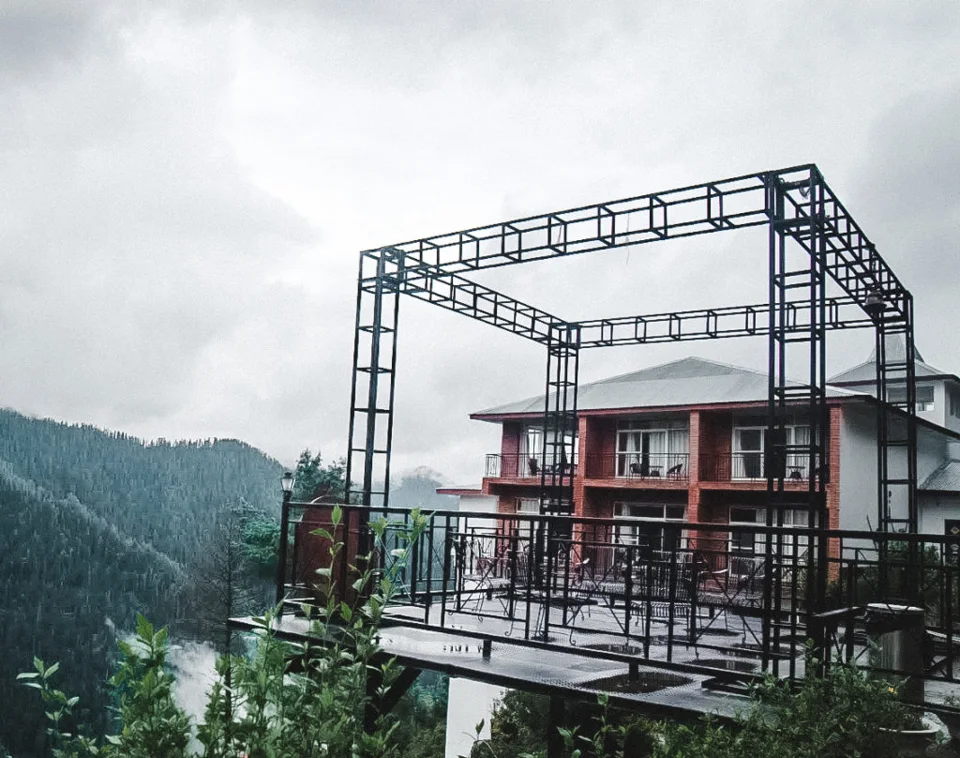
Tethys Resort, a wood-and-stone structure that reads like a small castle, was the first stay. Briefing on the road conditions ahead, gear-handling techniques, double-occupancy assignments. I was paired with Chetan, an avid wildlife photographer and another Mumbaikar. Quickly clear we were the youngest in the group.
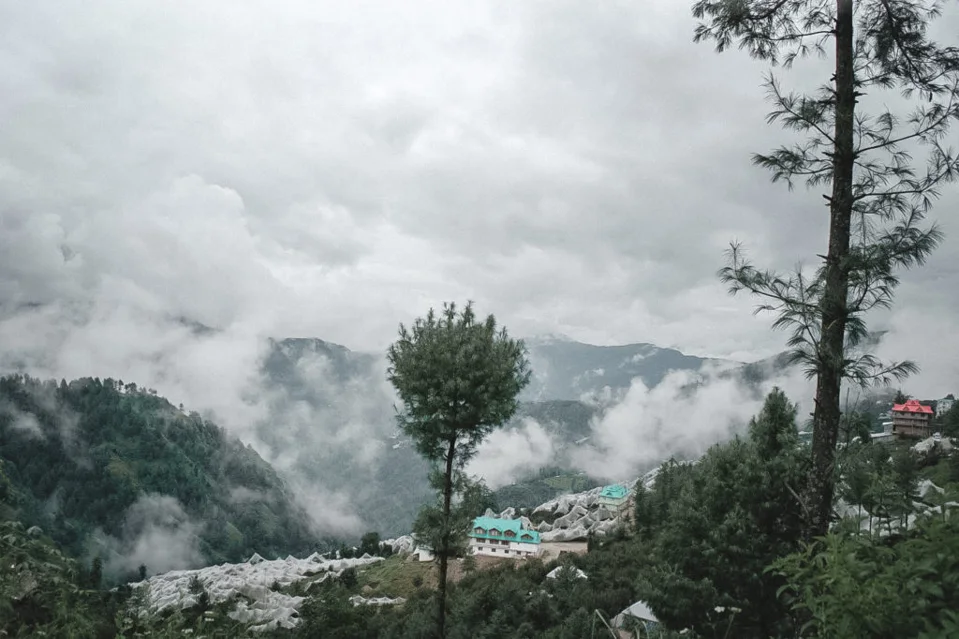
Indian buffet on the ground floor. Wooden rooms, very comfortable. Cellular signal starts thinning past Tethys. Internet is unreliable from here onward. The afternoon downpour rolled in on schedule.
Nature Strike
Major flooding had broken out in Himachal during our setup. News reached us at Tethys: a significant section of the road ahead was closed; Manali was the worst-hit. Spiti was several days out and the route was conditional. We pushed on toward Kinnaur.
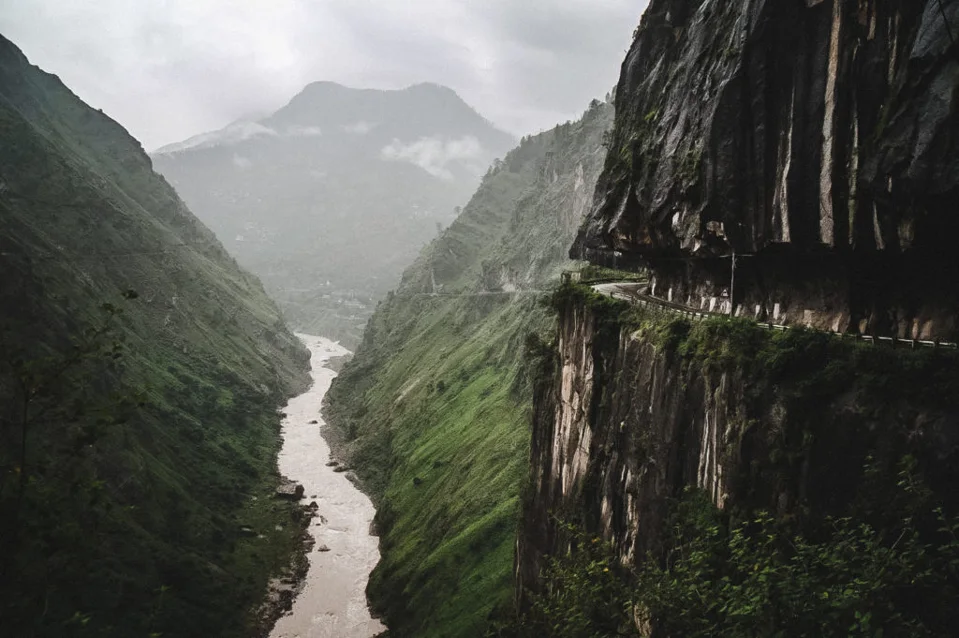
The Kinnaur stretch is one of the riskier road sections in the country. Carriageway carved into granite slabs with active water seepage. Every metre carries the warning that a boulder could give way.
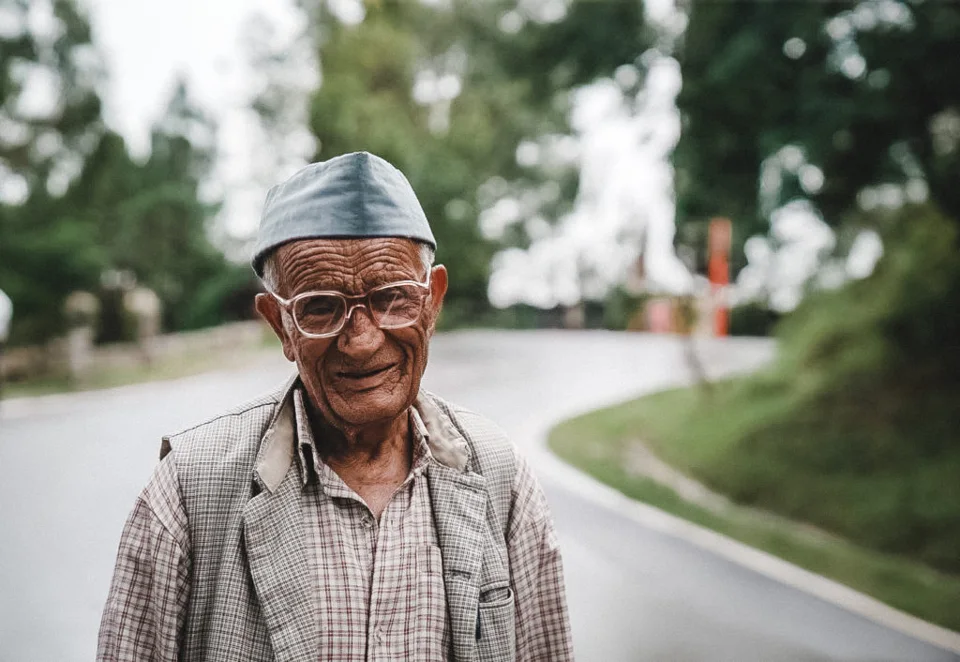
Small pebbles falling are the early signal. Larger boulders follow when the base of a slab erodes. The cars ahead caught a few windscreen dents. We watched a major landslide come down on a peak across the valley.
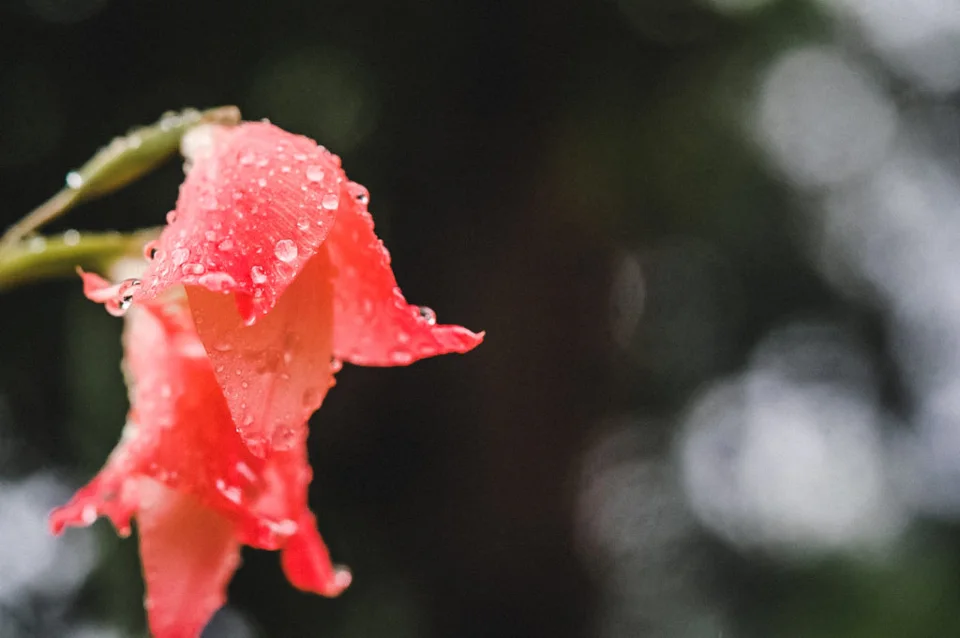
Sangla Valley camp, set among Deodar forest, is the next stop. Tents that exist for six snowless months a year. Camp set beside the Baspa river. A small flower garden across the path. Real food, mountain quiet, plus the cold.
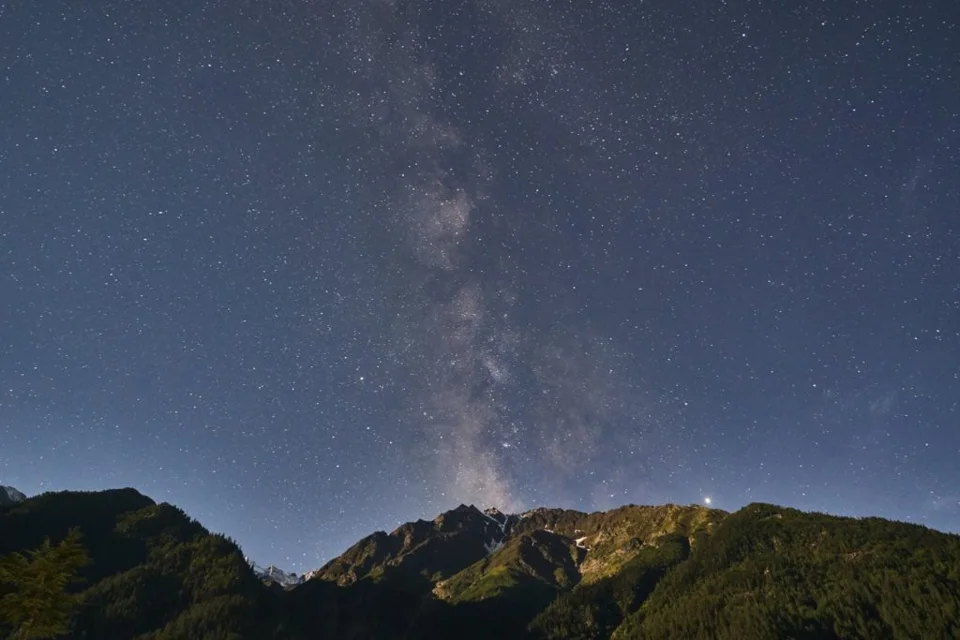
10pm sharp, my first sighting of the Milky Way as a clear band. The tripod went out fast. Cold stops registering once the alignment falls into place — the galaxy strung up over snow ridges, and the camera doing what it was bought to do.
Indo-China Border
Chitkul village, the last village on the Indo-China line, accessed via a muddy connector road. A common photographer destination. The villagers are visibly tired of being the subject.
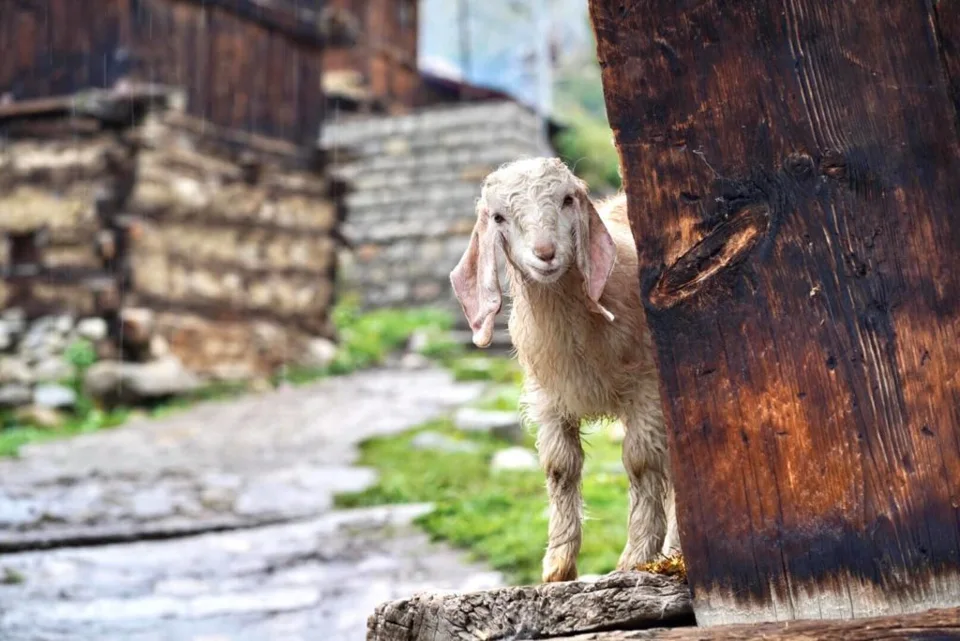
Rain intensified, temperature dropped sharply. The villagers — acclimatised in a way you can read off their faces — brought us simple lunch.
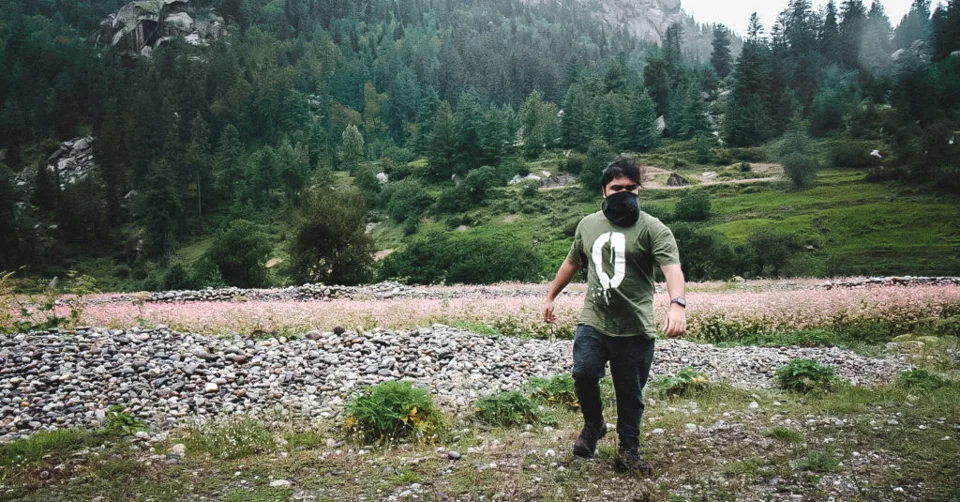
Rakcham village on the way back, smaller than Chitkul. The river runs hard upstream of here. Meadows of fafra in alternating purple and green.
Rural Monsoon
Easy drive to Kalpa the next day. Stay: Grand Shambala. Marijuana grows roadside and nobody pretends otherwise. After lunch we drove down to the actual Kalpa village and stayed through to sunset.
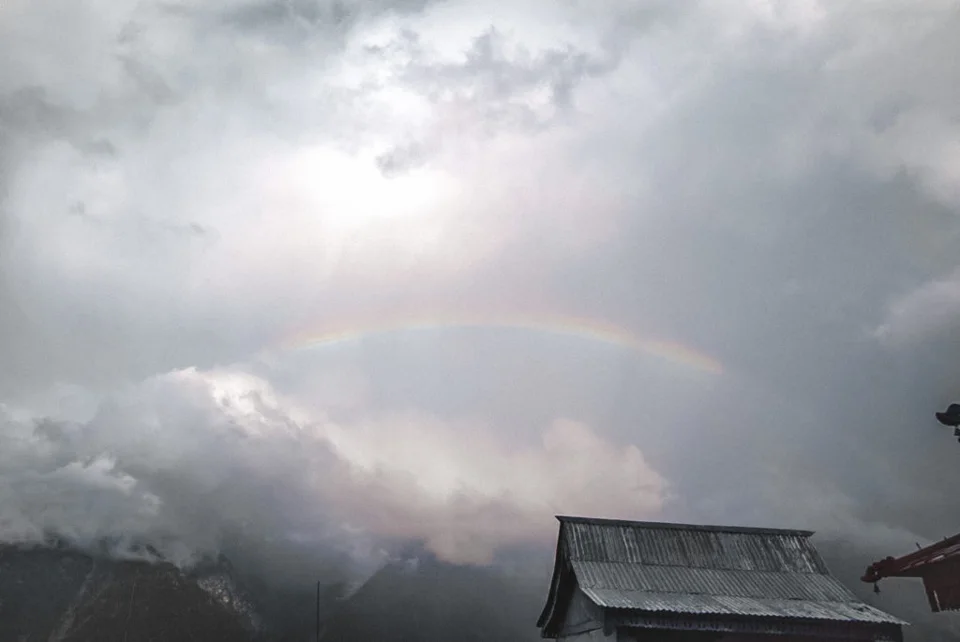
First twin-rainbow of my life. The far edge of the village holds a small temple and a school overlooking a steep cliff. The two arcs formed independently on either side of the sky. We had a clear line of sight to both.
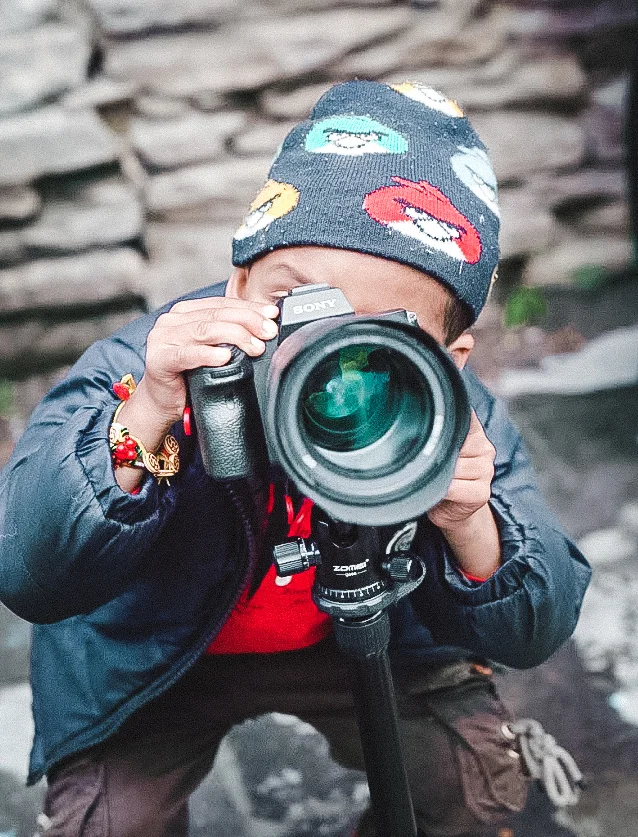
Apple farms run the local economy here. We had our first (and only) photo-review session in the room before turning in.
Detours
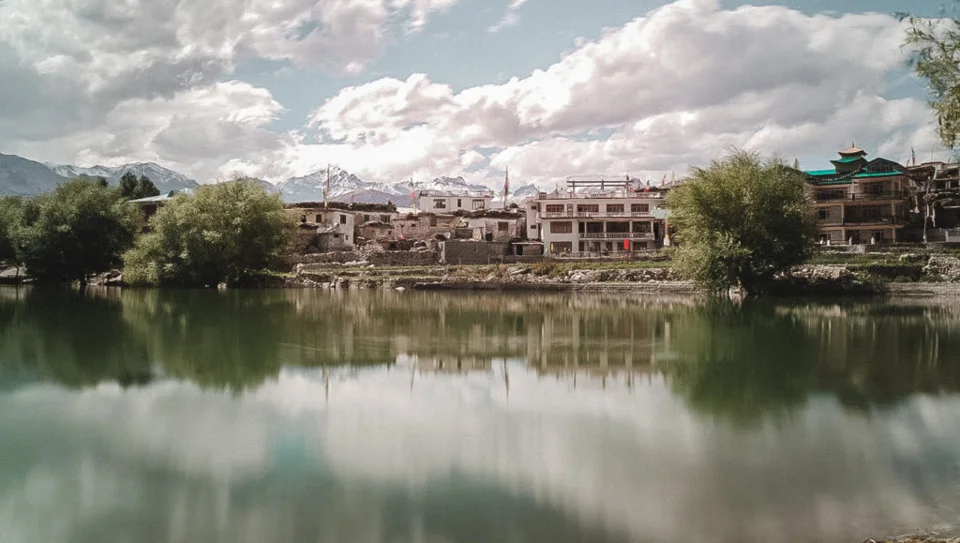
Early start. Reached Nako village by noon. The lake sits on the lower fringe; the climb down is steep but quick.
Lunch at the Chacha Chachi dhaba in Batal. By here the green is gone. This is the transition point into the Spiti rocky-desert landscape.
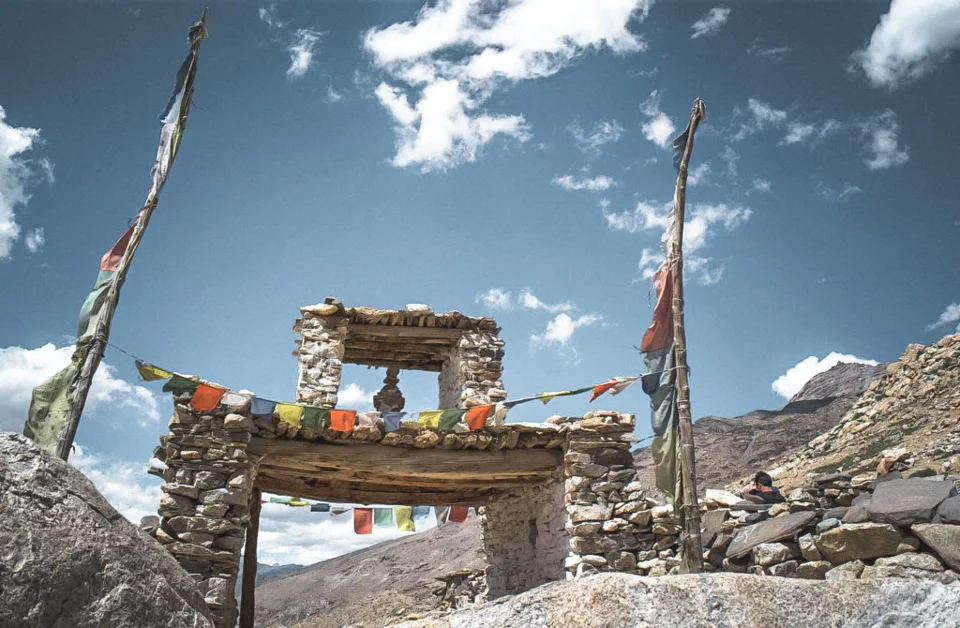
A bypass road to Giu got us to the first monastery of the trip. It houses a 500-year-old naturally preserved mummy of a Buddhist lama, sitting upright in a small glass chamber.
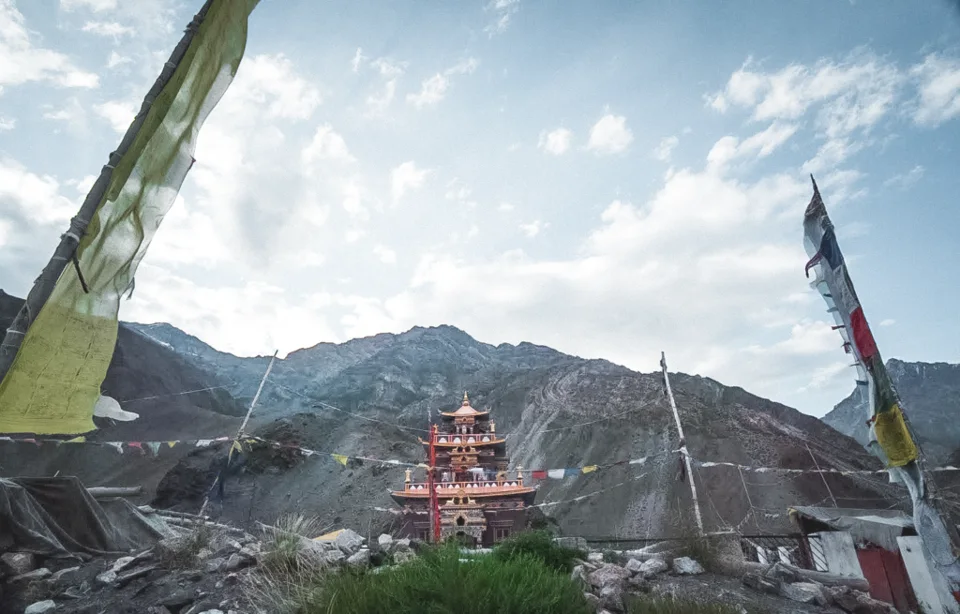
The day’s drive ended at Tabo village, Hotel Maitreya Regency. Updates on the flood downstream were not encouraging. Cars at higher altitude were stuck in Kaza. The drivers were genuinely debating whether to push on or turn back. Sanjeev was negotiating live with the car company. Decision: continue. The bet was that the road would clear by the time we descended toward Manali.
Monastery
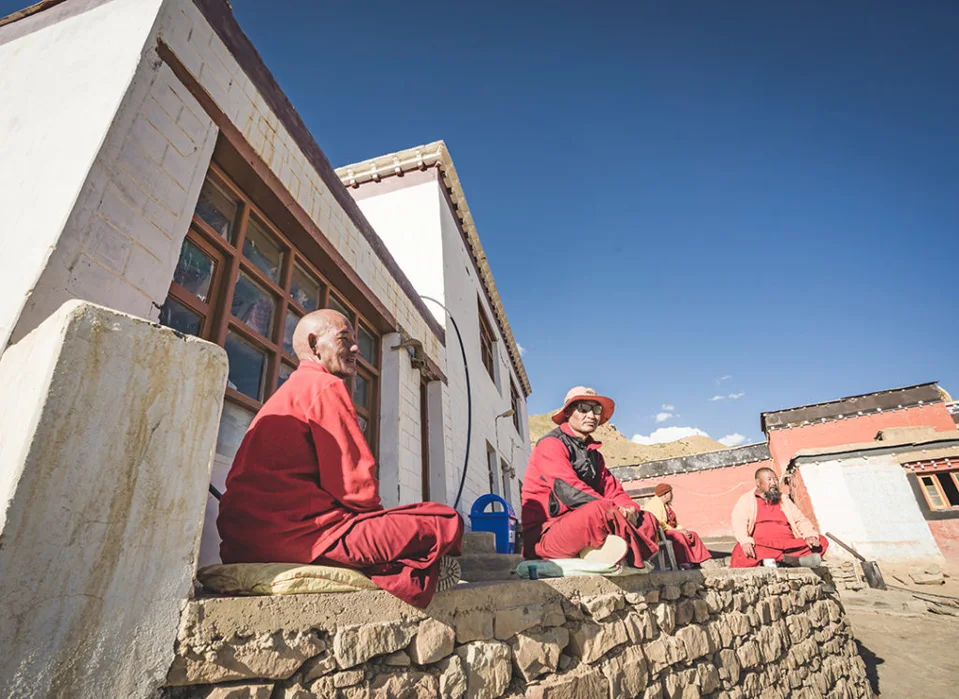
Tabo monastery sits next to the hotel. Photography allowed in the premises but not in the monk quarters. The original rock-temple structure becomes visible toward the back. We left after breakfast for Pin Valley.
Dhankar is a near-1000-year-old example of Vajrayana Buddhist architecture and one of the 100 most endangered monuments in the world. It sits on a 300-metre rock ledge above the confluence of the Pin and Spiti rivers. The name itself: fort on a cliff.
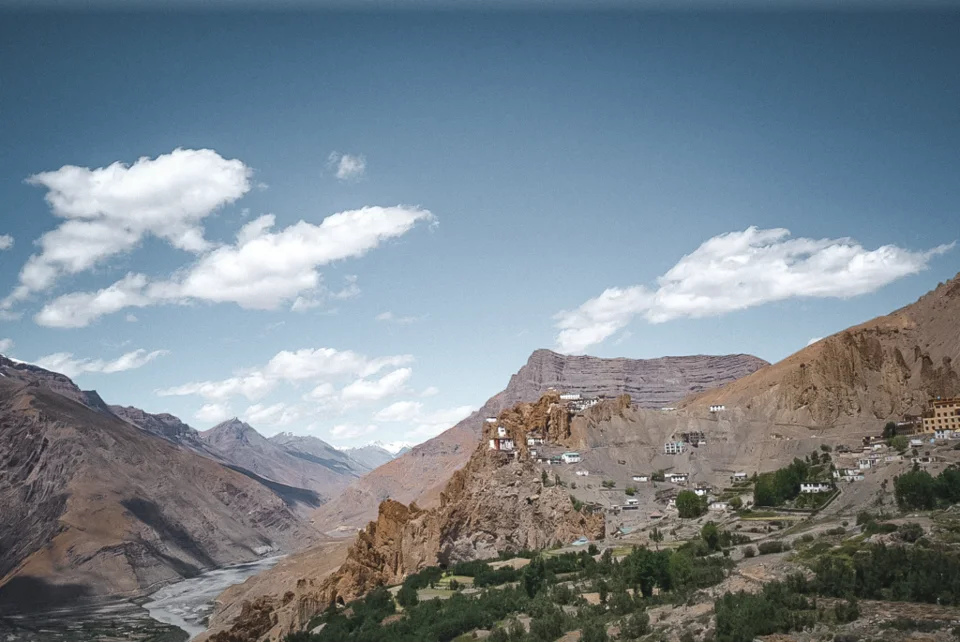
Inside Dhankar, the monks run a daily kitchen for women and children from the surrounding villages. Tourists climbing to the top contribute a small fee toward maintenance.
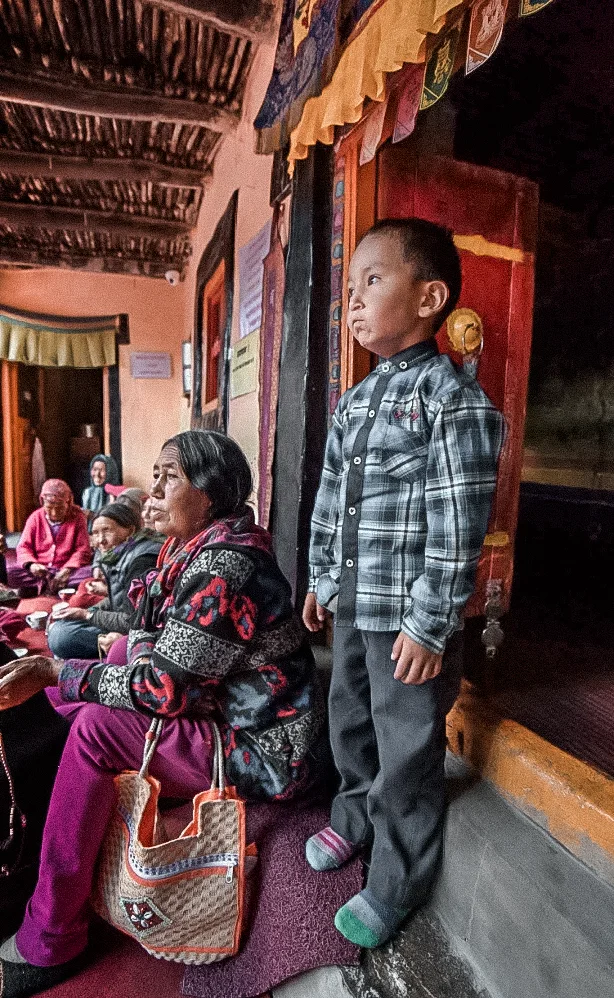
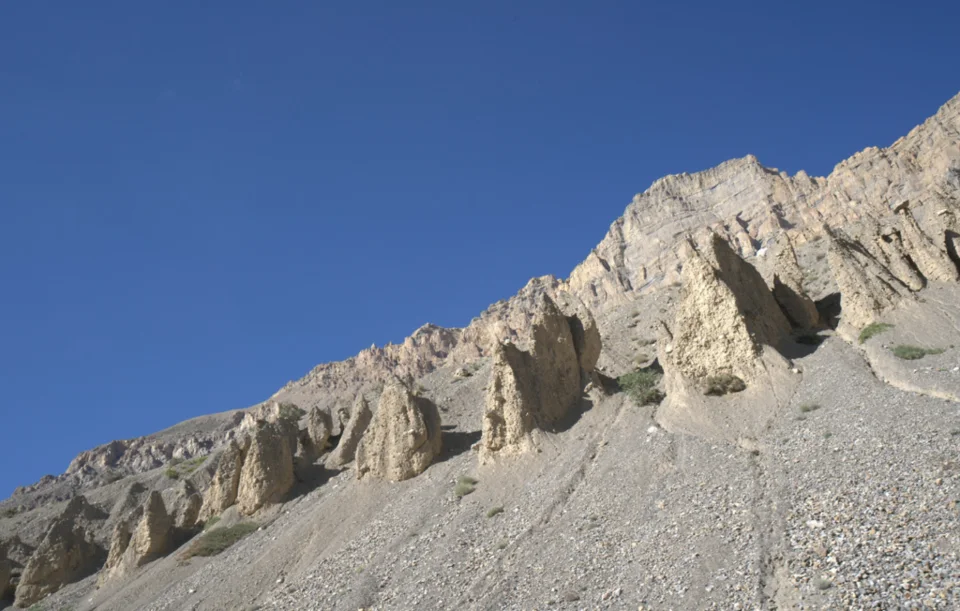
There is a school nearby where children train as monks. The thing that caught my eye on this stop was a different feature entirely: limestone pillars rising out of the eroded landscape, the kind of geological accident you cannot un-see.
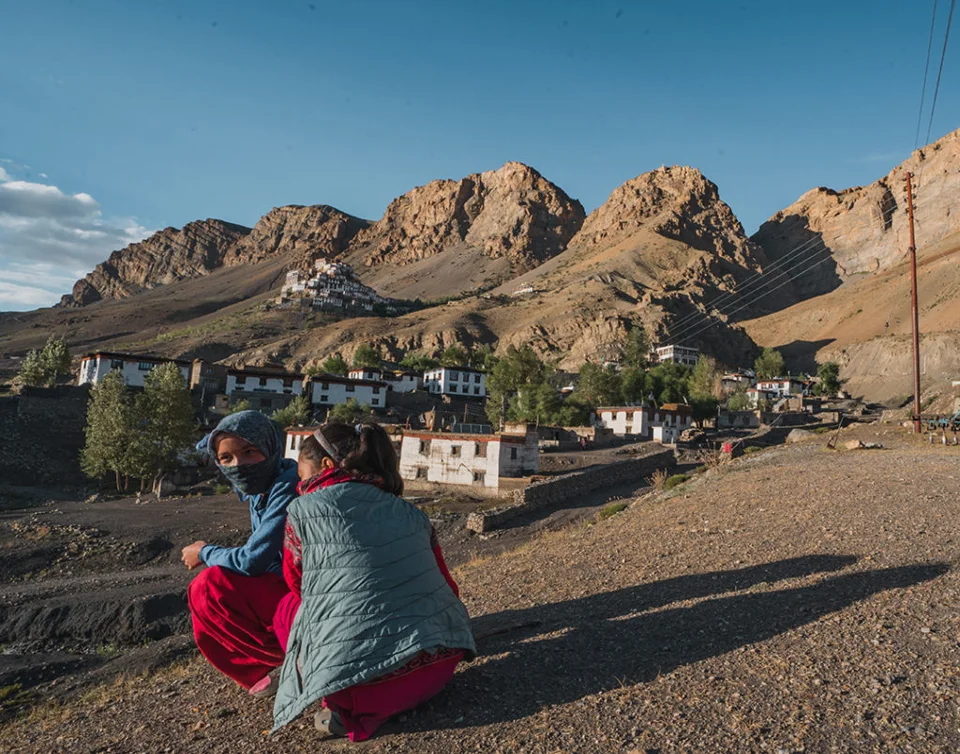
We skipped Key monastery for the schedule. Down in the village below you can see Key from a distance. Waiting for sunset gave us the cattle-and-children frame.
Hotel Deyzor at Kaza was the next stay. Kaza is the last major town in Spiti. Deyzor reads as British-cottage with an unusually good restaurant attached and a number of resident dogs. Power cuts are routine in the morning. We learned to heat water during the on-windows because it cools fast back to shivering.
Final Summit
Across the Khibber Chicham bridge to the first village uphill — farmlands at altitude. Past the helipad we found locals cultivating sweet peas.
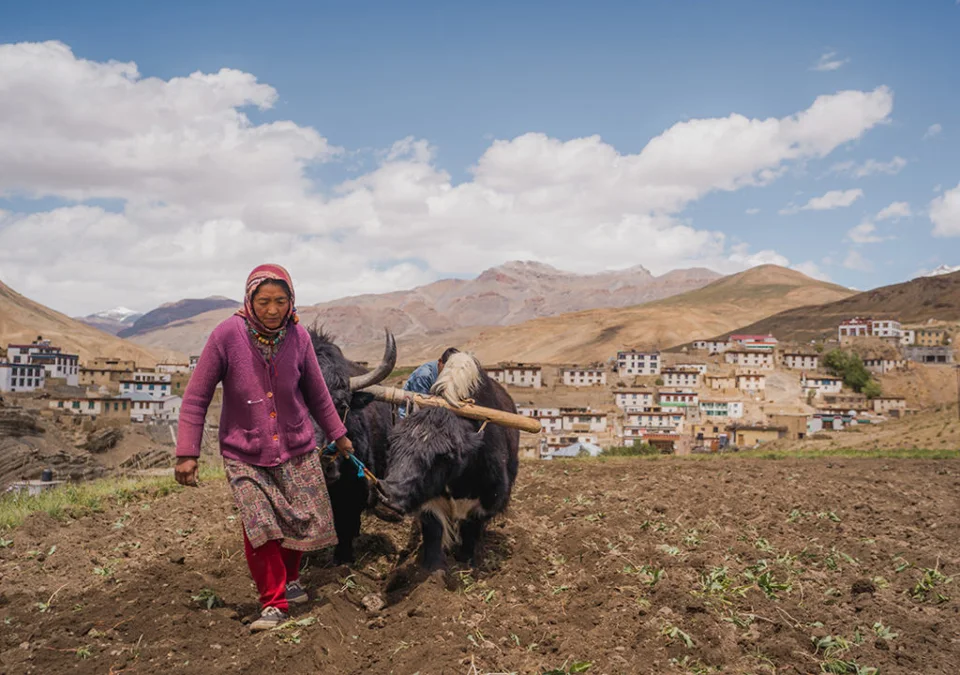
Hikkim village next, famous for the second-highest post office in the world. The local move is to mail a postcard to yourself; it lands at home weeks after you do.
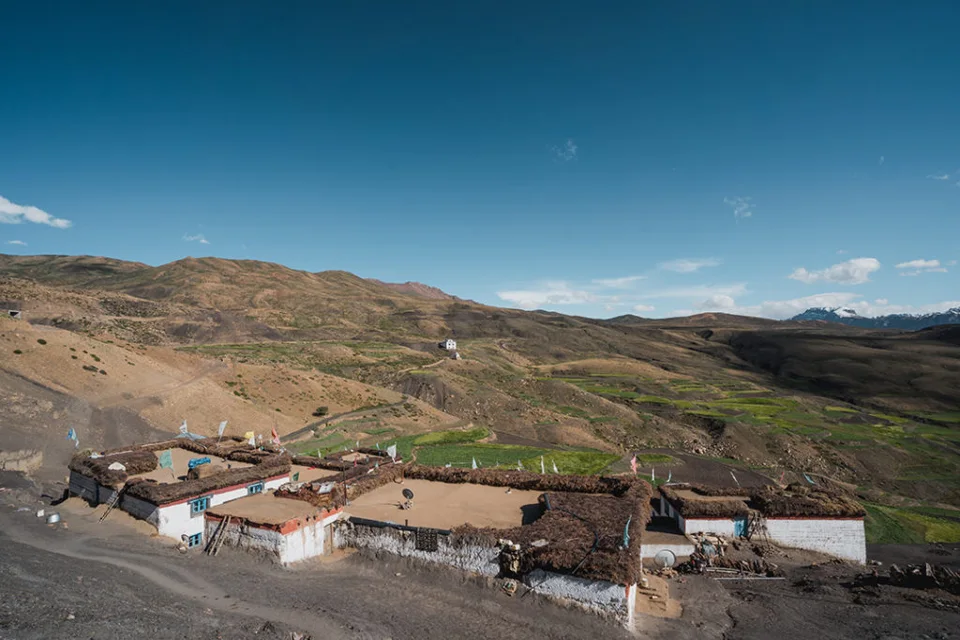
Quick stop at Komic, which announces itself as the highest homestay in the world via a hand-painted welcome board. We did not stay.
Back on the road, the driver took a detour to a Himalayan ibex herd grazing just off the track. He also flagged the alternative: Spiti in winter is the better trip for wildlife photographers — Red Fox is easy and Snow Leopard is the elusive one to chase.
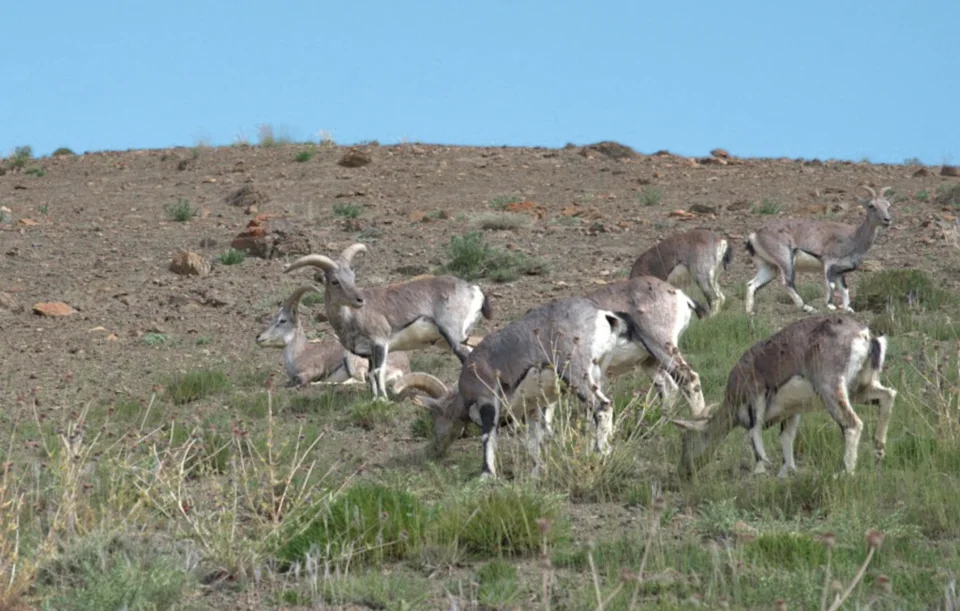
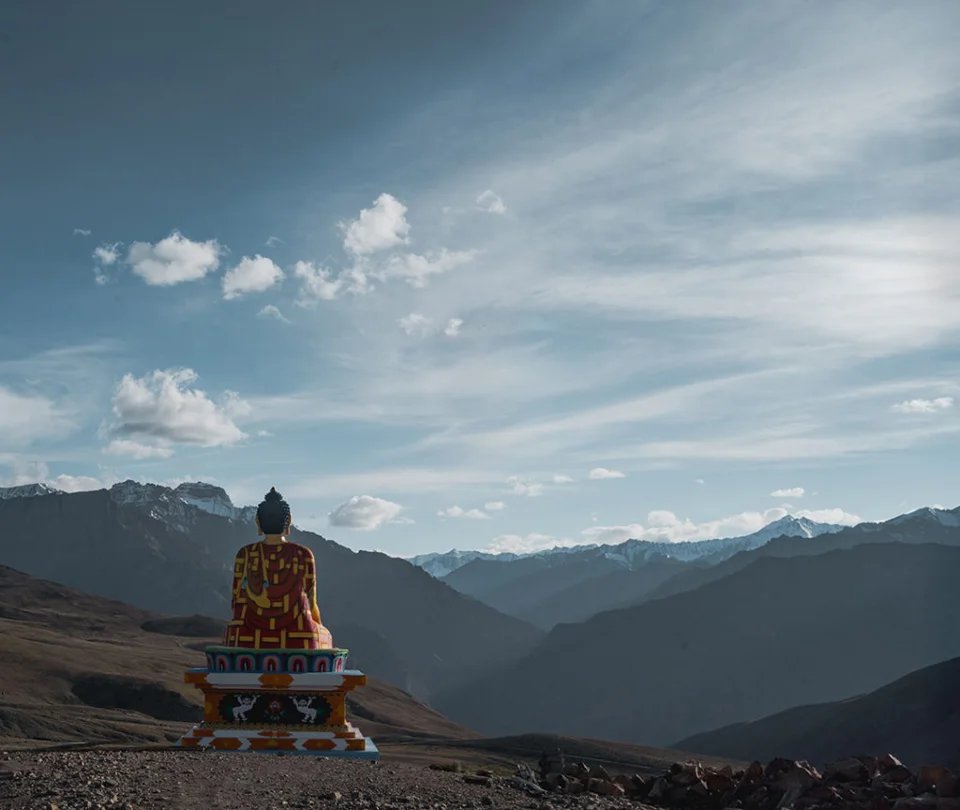
The wild goats sprint uphill at the first sign of pressure. Endpoint: the giant Buddha statue of the Fossil village (Langza), at 14,500 feet. Day done.
Descent
4am start back. Front seat passenger has one job: do not doze off, watch the driver. The trench drops here are unforgiving. Off the road is a free-fall against bare meteoric rock.
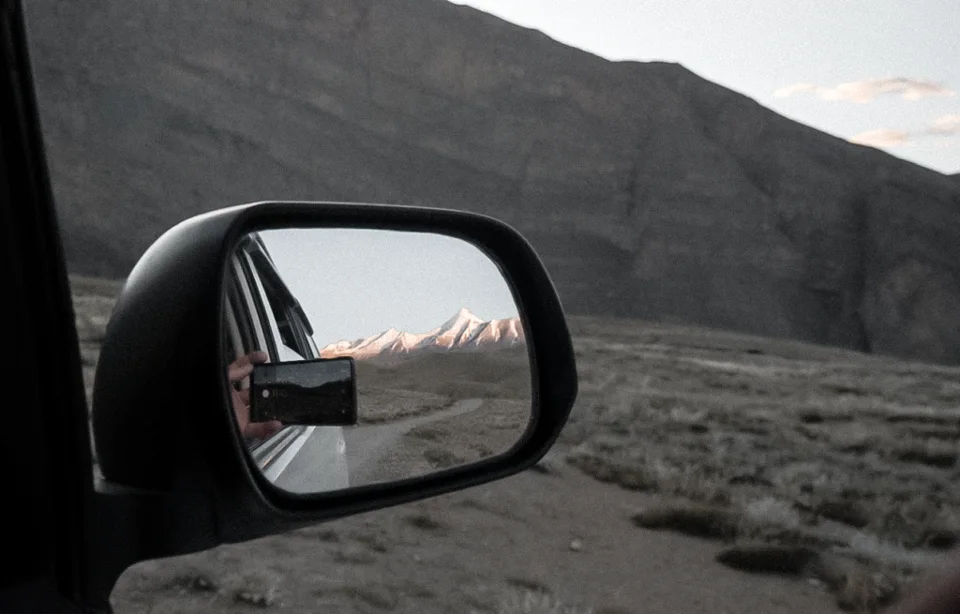
Driver mentioned in passing that Akshay Kumar had been at Kaza recently, shooting Kesari (2019), in this exact stretch.
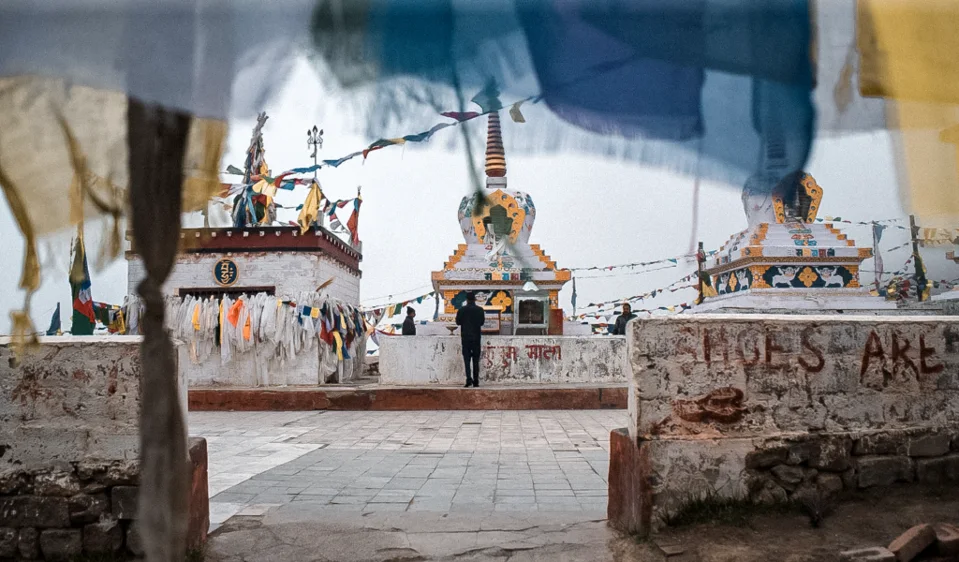
As the landscape went full no-man’s-land, it also went strikingly beautiful. First stop: Kunzum Devi temple, the snowy gateway into Spiti from the Manali side. Fog ahead crushed visibility but I caught a few wild mountain horses at distance.
From Kunzum Pass on, expect a steep spiral descent cut through rock. Two members of the group started vomiting from altitude sickness. We had Diamox in hand, which probably worked as placebo at this point — Diamox is meant to be taken a day before the climb. Stopping was not an option; the daily vehicle quota was capped, and a stop meant losing our window.
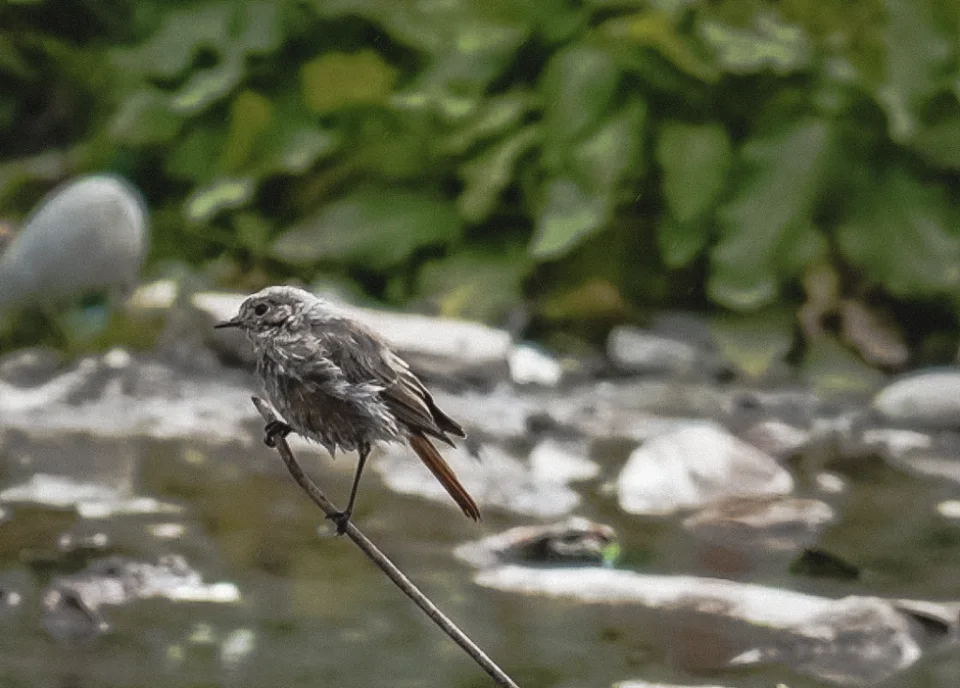
Chandratal lake is 15 km off Kunzum Pass. Not in our itinerary. We took the other route out and stopped at the first micro-village for breakfast and a bathroom break. Rare mountain birds flocked the surroundings.
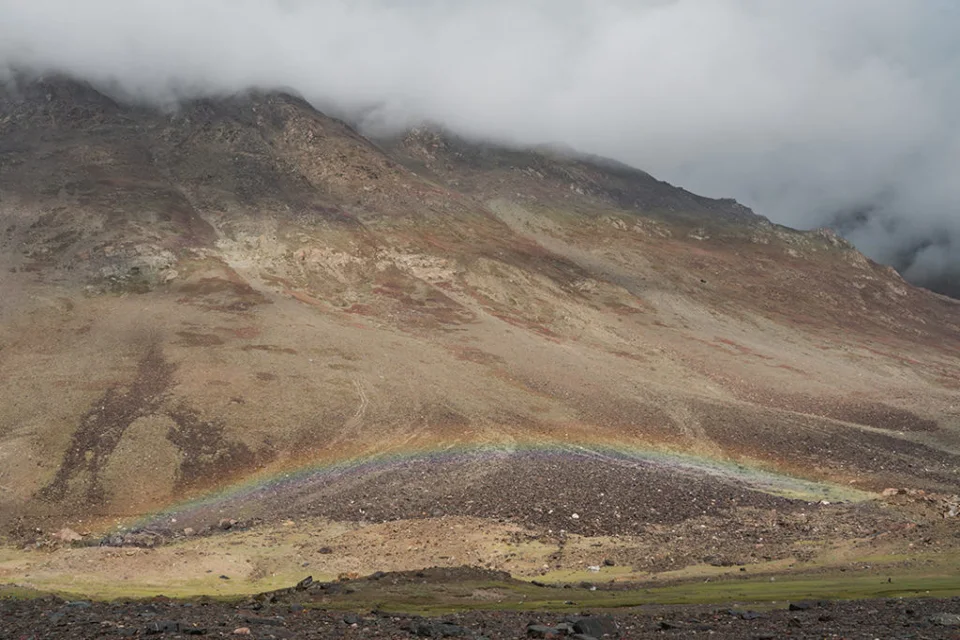
Further on we caught a double rainbow at maybe 30 feet of distance from a mountain foothill. Then Rohtang Pass. The roads turn treacherous here. Eagles and vultures overhead. Nothing in any direction for miles.
Cars break down at Rohtang and stop traffic for hours, sometimes days. We had to get out of our Innova at three separate water-crossings and walk over the literal waterfalls so the tyres could clear without weight on them. Stuck wet rocks under a loaded car is a hard recovery.
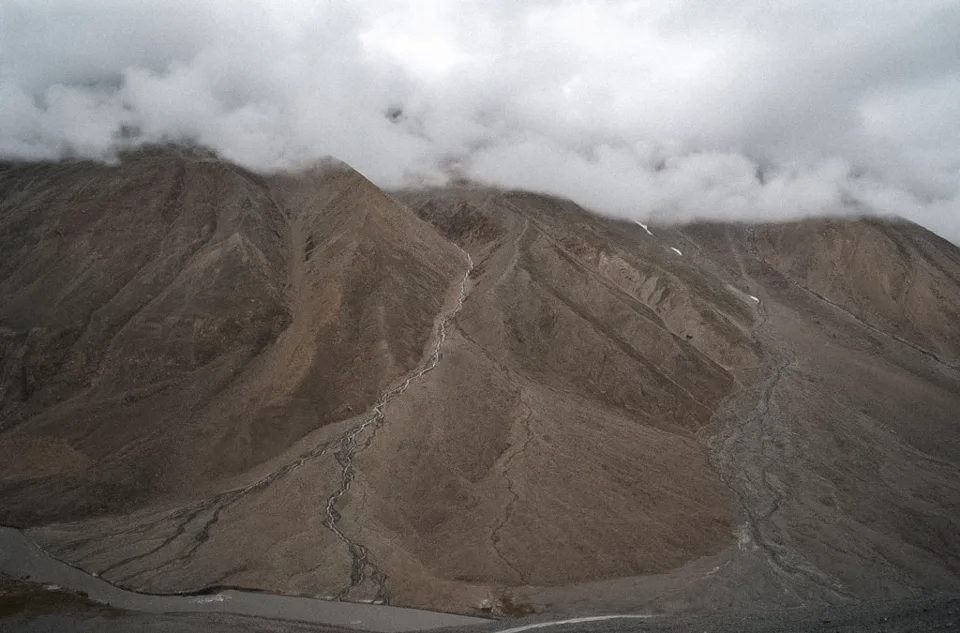
Cross Rohtang as early in the day as possible. The previous night’s snow melts on the road and the path gets harder by the hour. We could see glacier debris and the new tunnel under construction that will eventually connect Manali to Spiti the easy way (and bring a different kind of crowd). At the army-presence section we stopped for lunch.
Descended to Manali. Stuck for a few hours behind a punctured truck blocking the line. Past that, lush greenery and pine cones again — Manali evening landing on schedule. Hotel Serenity, well off centre. Exhaustion was real.
Urban Touch
We paid the driver extra to keep going to Delhi. The fear was the post-flood roadblocks the radio kept reporting. Different route. Worked. Tensions stayed high in the car because everyone had a flight or train to catch from Chandigarh; we made it with margin.
Final night in OYO 7372 Platinum Inn, booked from inside the puncture jam. North Chandigarh, run by some opaque young dudes. They had reserved the place for an exam intake and were not really opening for regular guests. Linens unclean, bathroom sub-par. Uber at 4am out for Delhi airport.
Field Notes
- Enter through Shimla, exit through Manali. Easier on altitude. Diamox a day or two before regardless.
- Watch the slides. Common between Kinnaur and Kaza. Drive in daylight.
- Travel safely if old or with kids. Hire a real operator. Safety is the only ranking that matters here.
- Drivers matter. We had four good ones in the fleet. My driver was Neeraj, +91 98178 00054 / +91 97364 00054. Pro.
- Pack for sharp temperature drops and surprise rain. Common cold and fever cost you days here.
- Hiking shoes earn their keep.
- Build buffer days if you are self-planning. Weather kills itineraries here.
- TNT blasting for road construction is scheduled on specific days. Check the calendar and timing before you set out.
- Jio reaches close to Kaza now. Carry Jio plus BSNL. BSNL is non-negotiable.
- Talk to locals. Easily the most generous, knowledgeable channel for actual on-the-ground guidance.
One Recommendation
Spiti is too dense to recommend a single thing without doing a disservice to the rest. The honest pick: stand at the giant Buddha at Langza for fifteen minutes. It is the panoramic frame of what Spiti is — a civilisation built where the wind and the rock outvote everything else.
Worth the struggle to get there.
No travel since due to Covid.
Sayantan