Author: admin

Kolkata Fashion
Amrita
Meryl

Milon
Andaman Anecdote
The Trigger
Family trip after a long break, planned end-to-end by me. Stakes higher than usual; nothing was supposed to go sideways. So I did the homework. Note that the rates and experiences below are for November. December prices climb steeply.
Research lived on blogs and TripAdvisor, with a clear filter: comfort first, no boundary-pushing. The trip ran Sunday to Friday — six days, the longest I had attempted to that point.
Booking sequence that saved real money:
- Lock the place list. Filter for senior-citizen friendliness.
- Book hotels four months ahead. Tourism partners overcharge for the same rooms. Book online, use coupons. Get this done early; demand spikes fast.
- Lock flights, ideally within a month of the hotel bookings.
- In parallel, talk to multiple travel and tour operators. Most ask for an advance. Take the best deal. Keep the water-sports portion open until you are on the ground; it depends on weather and luck.
Sunday
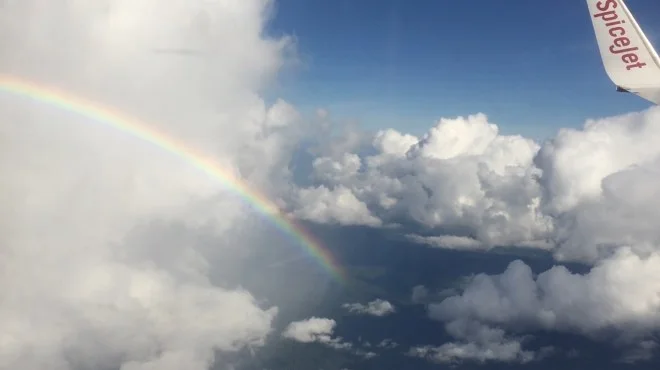
Spicejet, Kolkata to Port Blair, 2:30pm landing. Confirm a window seat at check-in. The view earns it.
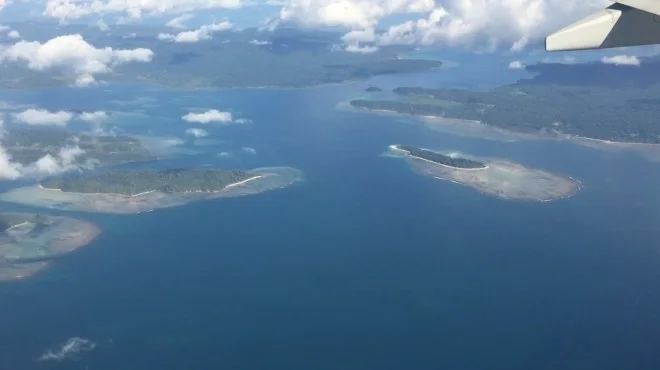
And if you are lucky, you fly through a rainbow.
The airport is small. Travel firms are waiting outside with placards. Our operator, Tropical Andaman, had Rohit at the curb. Solo travellers can pick up bikes or autos at the same point. We had AC cars across the trip, run by locals who were also employees of the operator.
We checked in to J Hotel. Inland from the sea, but the rooms are large and the food is the best we ate in the islands. Front desk was unfailingly helpful.
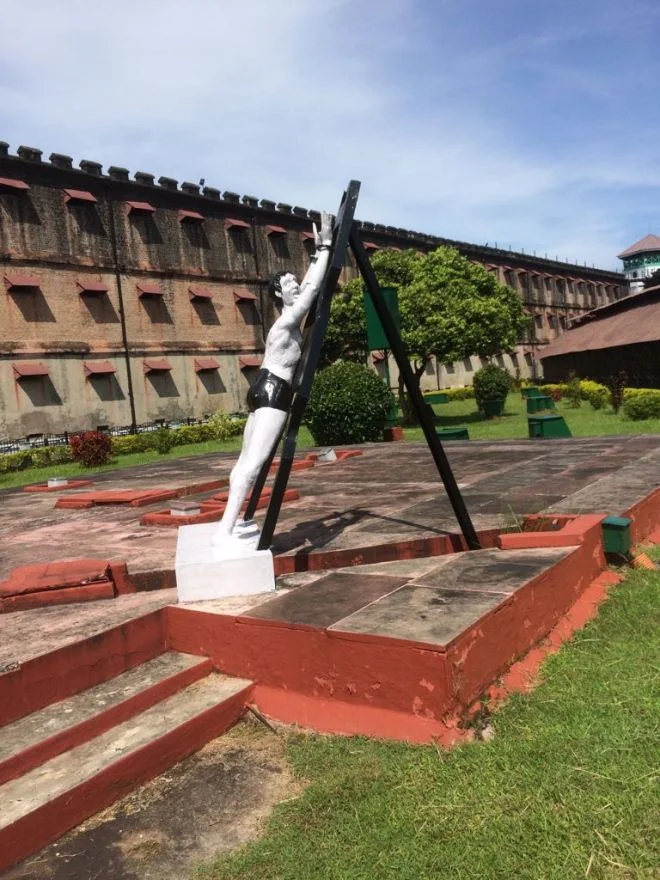
That night was just the Cellular Jail light-and-sound show. Smart move to do this before visiting the jail itself; the show frames the rest. Steel folding chairs, long entry queues. The narration covers Andaman history, the torture inside the jail, and its place in the freedom movement. English and Hindi alternate; we caught the Hindi run. Tickets ~100 INR (usually folded into the operator’s bill).
Monday
Ferries leave on time. Plan around the timetable, not the other way around. We took Makruzz (the other strong option is Green Ocean), 8:15am out for Havelock.
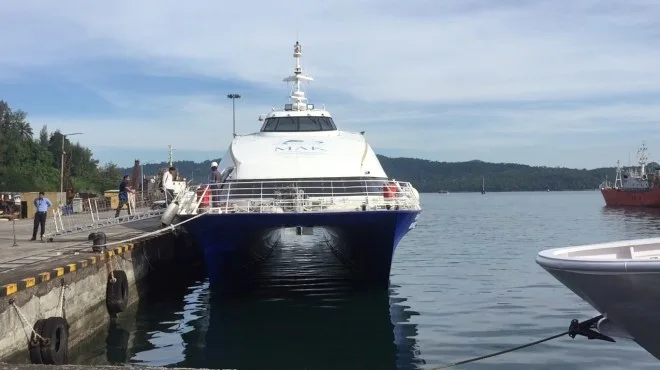
We picked the middle Deluxe class (Premium / Deluxe / Royal). ~1500 INR + tax, paid through the agency. Deluxe gets you a window seat. As with every Andaman hotel: pack a lunch the night before. The 2-hour ride is AC-enclosed with tinted windows. I slept through most of it.
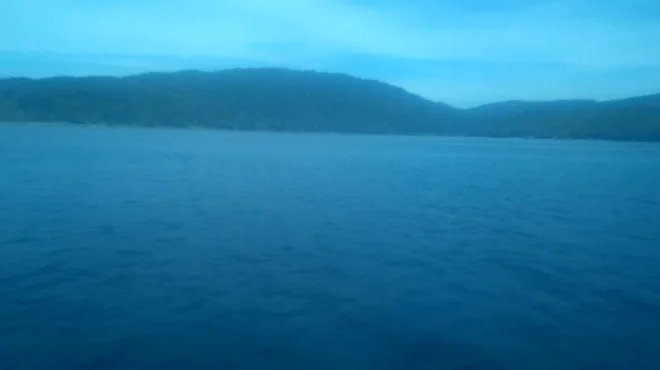
Havelock’s ferry drop is well-organised. Tropical Andaman had another placard waiting. We checked in to Dolphin Resort, a few kilometres from the jetty.
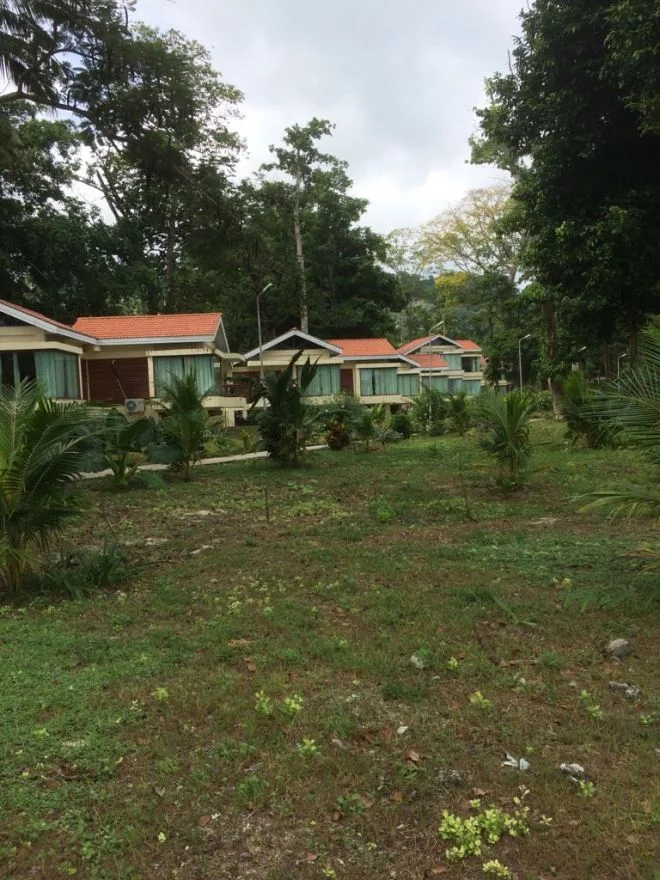
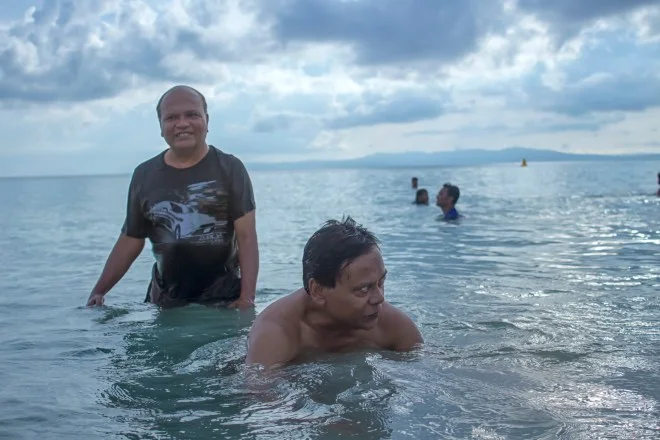
Mind-blowing location. Duplex cottages with glass walls. The resort has its own private beach where you can wade out without much swimming and, at high tide, swim across a kilometre. Hermit crabs everywhere on the sand. Clean, quiet.
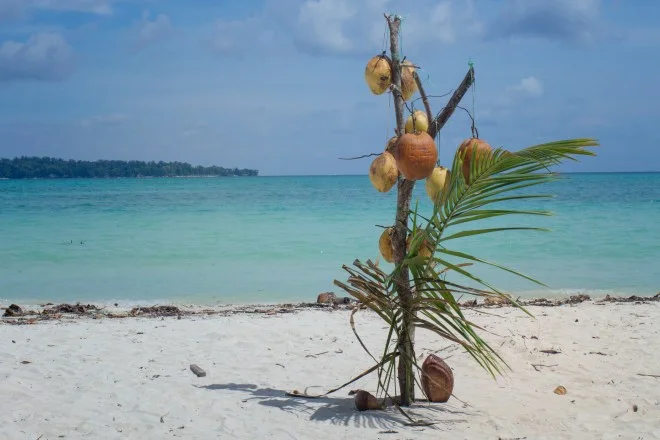
Post-lunch we left for Asia’s best beach, also known as Radhanagar. Crowded but well-maintained. Crystal-clear water, changing rooms on site.
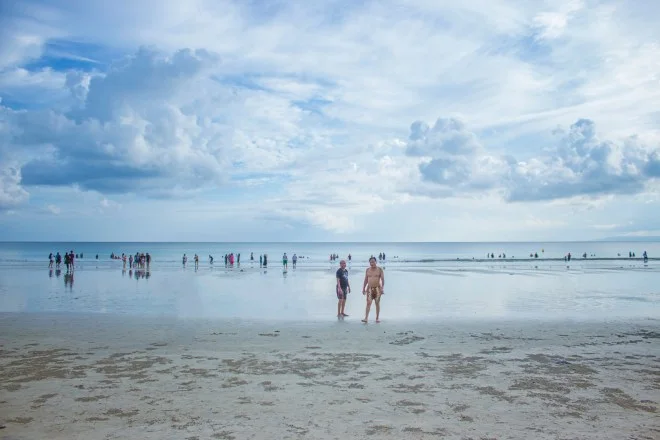
I have not swum in a friendlier beach. The water reads less salty than usual ocean; I could pull a 360 underwater the way you do in a swimming pool.
Tuesday
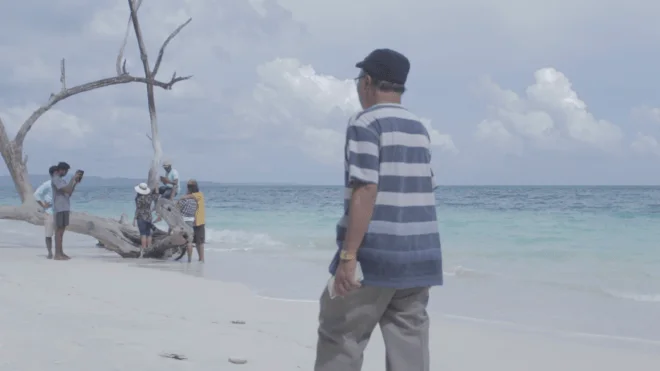
We left luggage at Dolphin’s front desk and went to Kaala Pathar beach. Quiet stretch with rocks and twisted trees that everyone uses for portraits. Coconuts at 40 INR each.
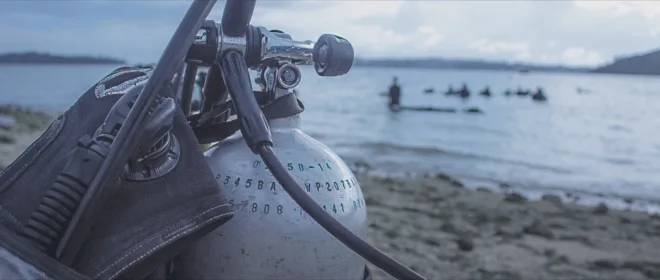
Then we collected bags and drove to scuba (3500 INR per head). They run a health-and-fitness NOC and have a hard age cap on the older end. Bad luck arrived: someone had spotted a freshwater crocodile in the ocean that morning, and the forest department had suspended scuba and snorkelling across Havelock. Done.
Annoyed and relieved, we let the operator route us to lunch at a place called Something Different. Normally I refuse off-itinerary detours; they tend to be margin extraction. I gave it a pass this time because they were also covering the ride to the ferry, and food across Dolphin and beyond had been mediocre. The road in is muddy and rough.
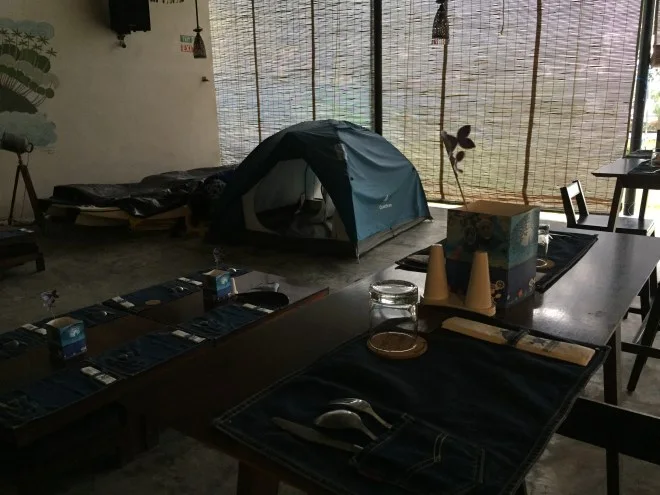
Something Different is a top-3 restaurant on Havelock for a reason (data I confirmed once Wi-Fi cooperated). The interior is a deliberate jumble: regular dining, a library, vintage toys, floor seating, denim crockery, every abstract idea bolted on. The food was the best we ate in the entire trip. My Google review.
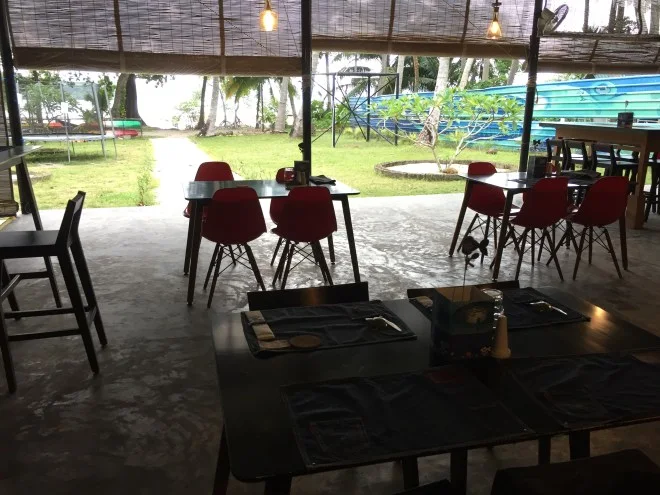
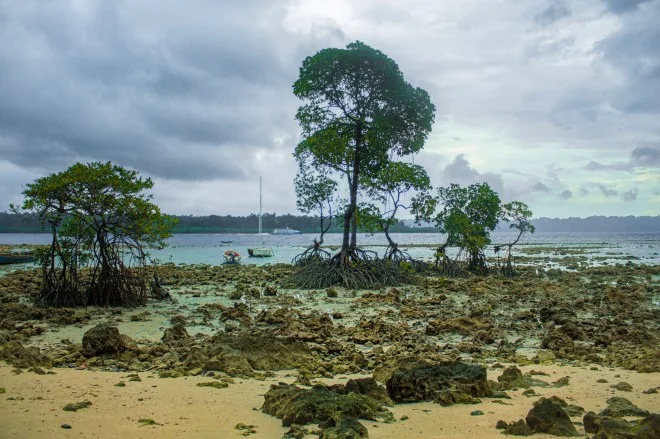
Walk to the back of the restaurant. There is a forested, deserted beach behind it that holds the mangrove energy.
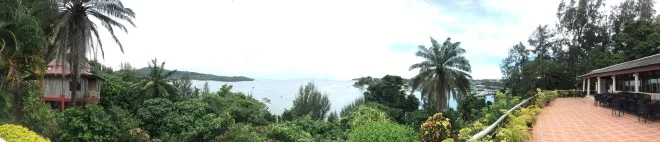
We caught the 5pm return ferry to Port Blair. No security check this direction; counter-side ticket verification and you board. By evening we were checked in at the Megapode Resort, the government property named after the local bird.
Wednesday
The other tentpole of this trip was Jolly Buoy. The pun was warranted.
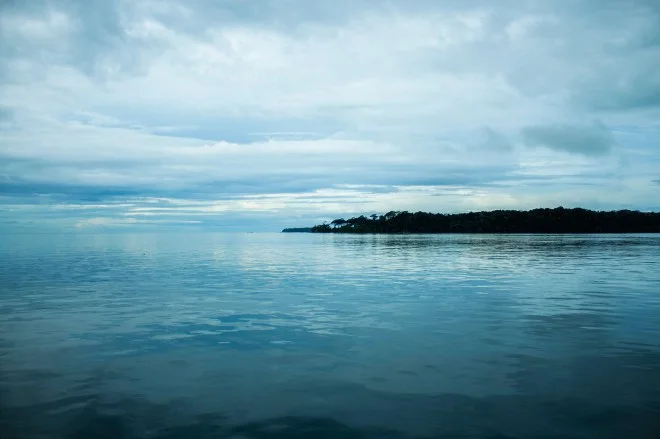
Departure 6:30am for the bumpy drive to Wandoor jetty. Pack breakfast the night before; most hotels will do this if you ask. The site is forest-department controlled. Confirm with your operator that your name is on the day’s list. Aadhaar or passport is mandatory at the ticket counter.
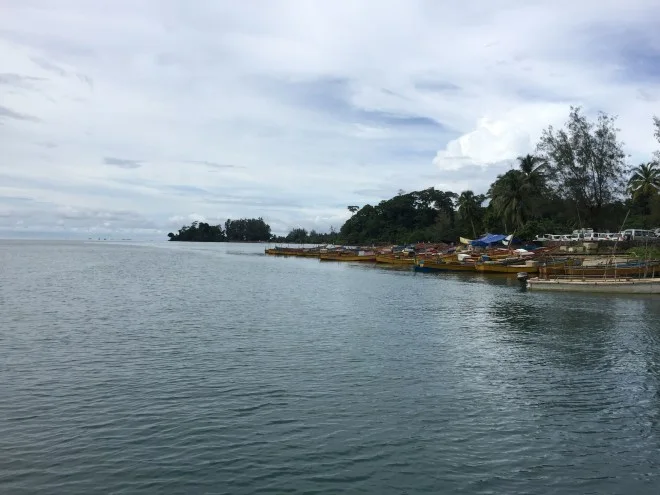
No-plastic zone. Refundable water bottle at the Wandoor counter for 10 INR plus 200 INR refundable security. Entry to Jolly Buoy: 35 INR. The boat ride is another hour, threading through mangroves.
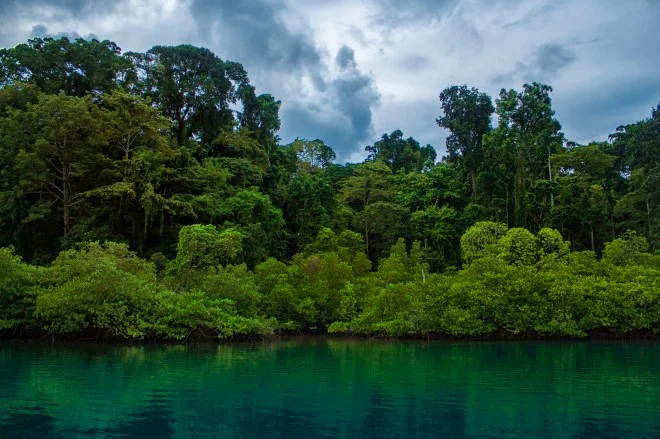
The ferry parks 100 feet off the island so anchors do not damage the coral bed. You transfer to a glass-bottom boat in life vests. Even the brief view through the tinted glass is something else.
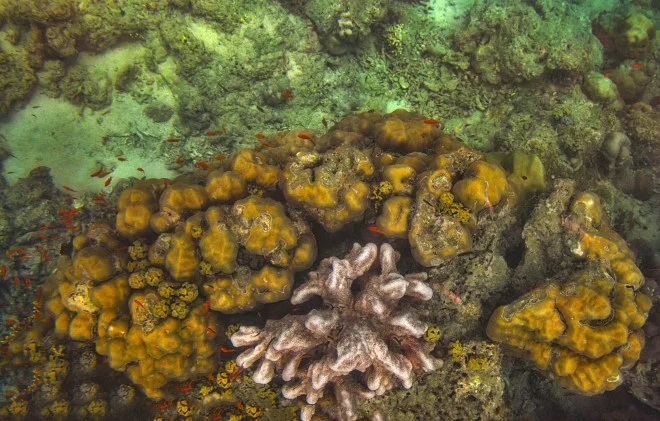
Six coral varieties in this patch with rich biodiversity and active fish. The full glass-boat package is 1000 INR per head. The operator narrates as you go: which fish, what species, what is unusual about each. Thirty minutes of live Discovery.
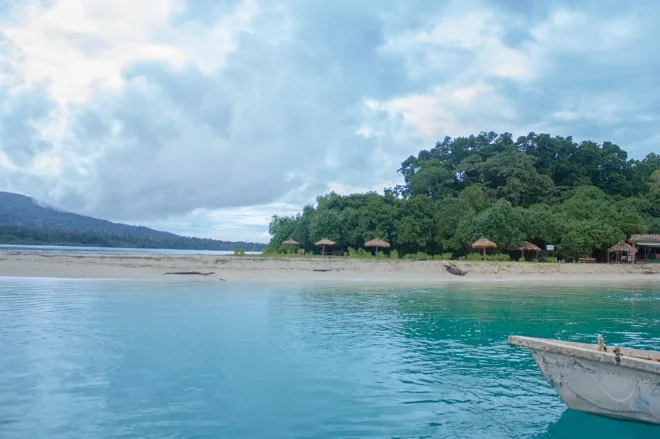
The island itself is small. Limited refreshments, makeshift restrooms, deep sand. Swimming is allowed within a marked zone, watched by coast guard. The fish are so unhabituated to people that they nibble your feet without flinching. Boats leave at 2:30pm.
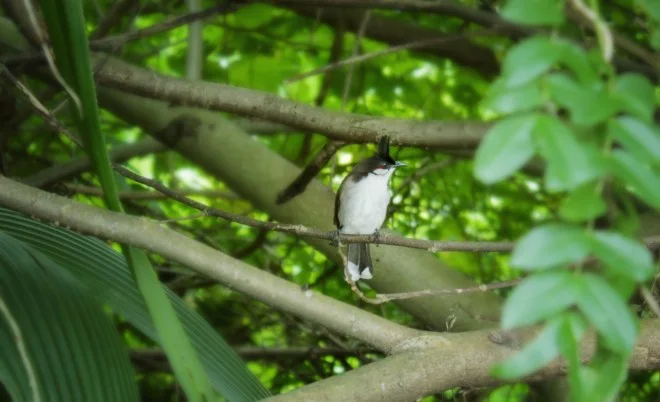
Thursday
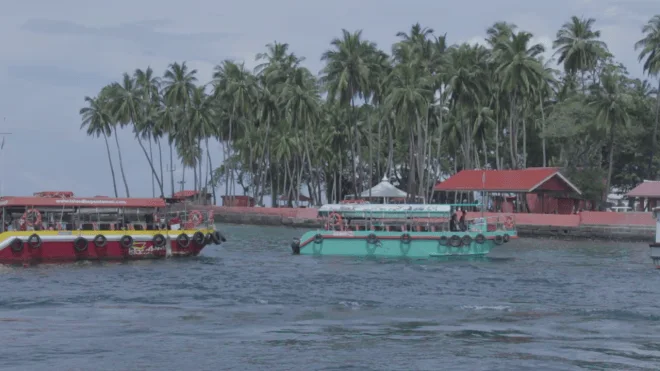
Next morning, the guide handed us access passes (580 INR per person) for Rajiv Gandhi Water Sports Complex. The complex is the hub for information, ferry service, and motorboat rides; the jetty is locally called Aberdeen. The water around it is shallow with fish schools and starfish.
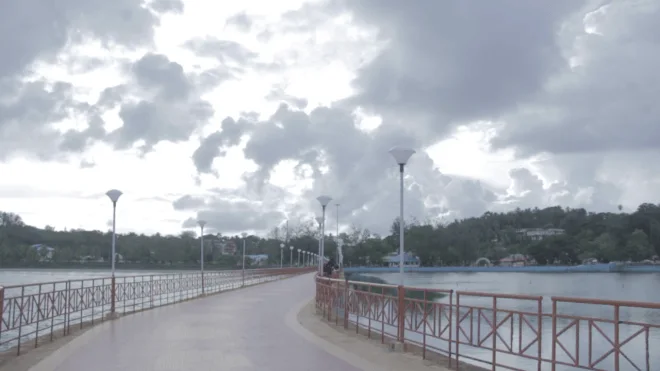
First stop: Ross Island, entry 30 INR. The British-era capital of Andaman.
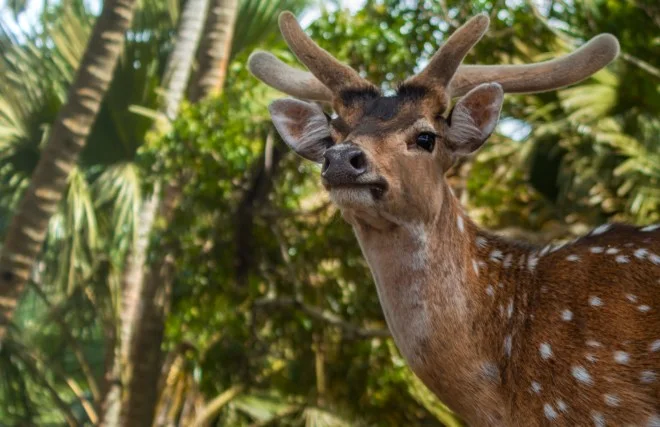
The island is layered with colonial ruins, fearless coconut-thieving deer, and male peacocks crossing the paths.
Second stop: North Bay, entry 10 INR. Known for food stalls and water sports.
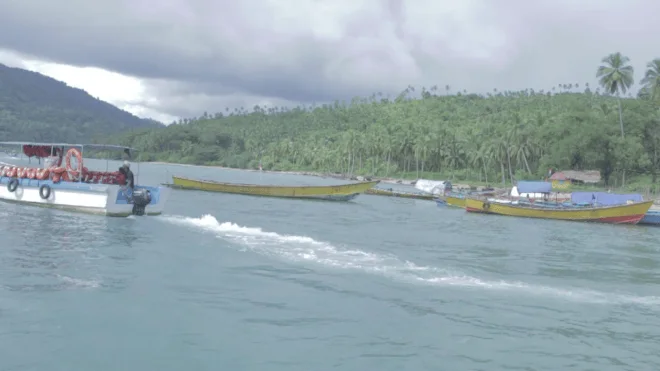
North Bay packs the longest activity menu of the trip:
- Semi-submarine — 1850 INR
- Scuba diving — 3500 INR
- Snorkelling — 500 INR (half mask) / 1000 INR (full mask)
- Glass boat to spot dolphins — 1850 INR
- Sea walking — 3500 INR
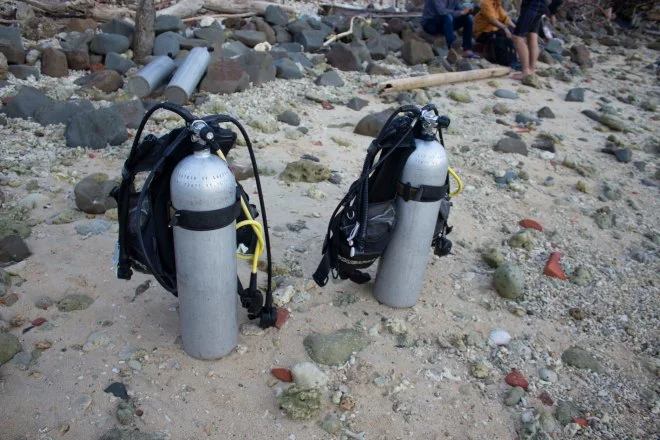
Conventional wisdom: skip most of these here. Scuba and snorkelling are better at Havelock and Neil. Glass boats are better at Neil and Jolly Buoy. Sea walking and the semi-submarine are exclusive to North Bay. We took the semi-submarine. Disappointing experience plus seasickness.
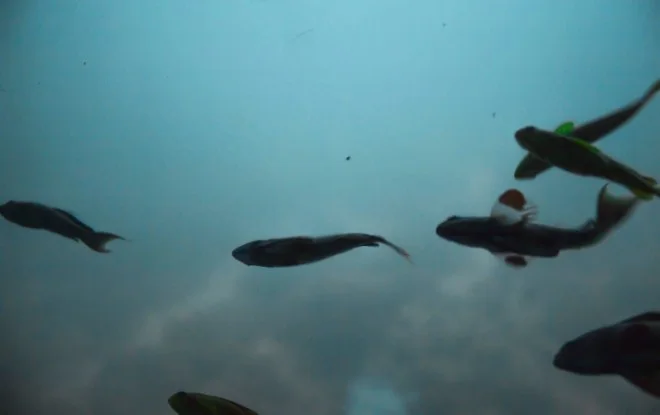
The semi-submarine has aircraft-style interiors and safety system. The viewing glass is heavily tinted; an occasional curious orange fish bumps the panel. Coral visibility was poor and the seabed here is in noticeably worse shape than Jolly Buoy.
Friday
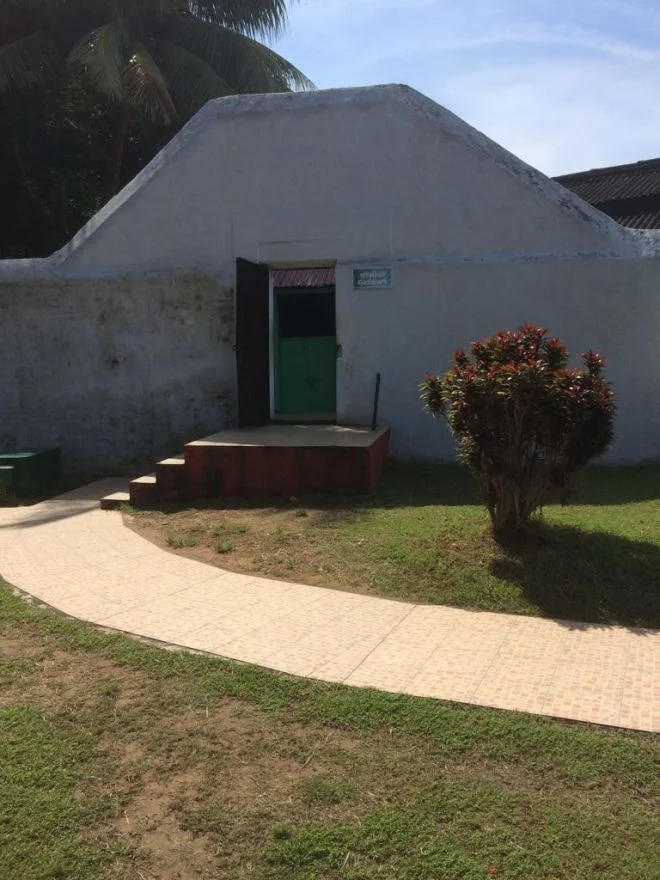
Last day. Checked out and went back to the Cellular Jail, this time the daytime visit: monochrome photographs, walking through the cells, the gallows up close, the names of prisoners engraved on the pillars. The Sunday-night context paid off here. The watchtower at the top opens to a panoramic view of the cell wings and surrounding islands.
Quick stop at the Fisheries and Anthropological Museums before the airport — budget an hour minimum. Fisheries holds species in formaldehyde, mummified swordfish and dolphins, higher-level coral types, and aquariums with rare carp and lobsters. The Anthropological Museum covers the indigenous tribes: photographs, cultural distinctions, weapons, hut models, all built from samples collected in the field. The exhibits on tribes still surviving outside modern contact are the part that stays with you.
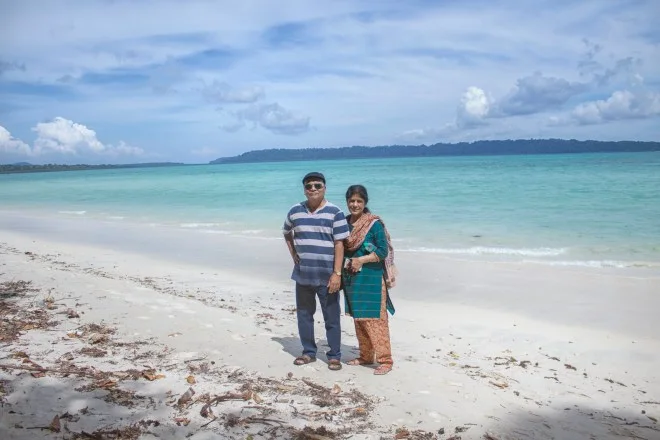
Back to the small airport for the flight to Kolkata. Spicejet again. The runway sits up against the waiting area; the takeoffs are a show on their own.
Field Notes
- Bake costs into the operator deal upfront. Cruise, permissions, entry fees — get them on the email itself.
- Pick the month deliberately. November runs cooler than December and significantly cheaper. Mid-November is also when Jolly Buoy opens for its 6-month window.
- Scuba is conditional. Age limit, fitness clauses, ~36 disqualifiers. Even after passing all of them, a wandering crocodile can shut the day down. Plan for both outcomes.
- Jolly Buoy beats Red Skin. They alternate every six months for coral recovery. Red Skin is smaller and consistently worse-reviewed. Time the trip for Jolly Buoy.
- Why I skipped Neil. Neil is similar to Havelock and only earns the visit if you plan to cycle the island or do water sports. Not our setup.
- Why I skipped mud volcano and limestone caves. The walk and the trek are not senior-citizen friendly. If you do not have that constraint, do them; the scenery shifts.
- Cellular Jail accepts debit cards only. Specifically debit, not credit. Confirmed at the gate.
- Skip the base cruise package. The price gap to the upgrade is small and the base experience is not worth it. Avoid the government cruises entirely; they are slow and run-down.
- Order: light-and-sound first, museum and jail later. The narration gives you the context to actually read the artefacts.
- Window seat. Afternoon flight. Both directions. Thank me later.
- Eat at J Hotel. The food is the best part of the property.
- Dolphin’s food is poor. Stick to veg. Better: Coco Restaurant, ~1.5 km away. Pricier, but it is food.
- Megapode food is fine. Cafes, restaurant, buffet. Nothing standout, nothing bad.
- Book hotels six months out. Especially government hotels. They sell out that early.
- Makruzz / Green Ocean security check is real. Treat it like an airline. Do not pack lighters or anything else you would not put through baggage screening. We lost a lighter.
One Recommendation
Book Dolphin Resort. Eat at Something Different. Spend more nights at Havelock than at Port Blair.
And here, a hermit crab.
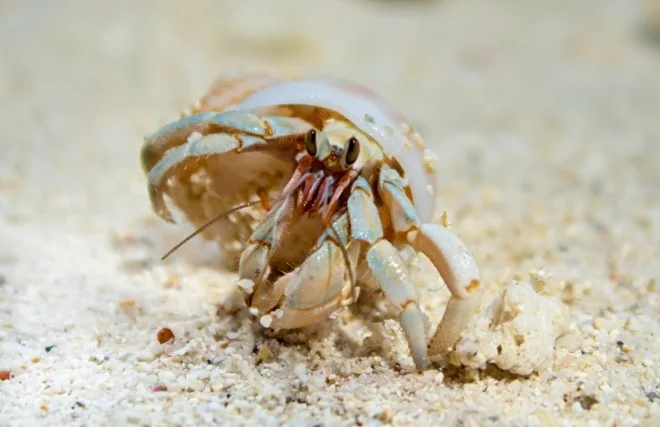
Who lives in a pineapple under the sea?
Sayantan
Goa Gospels
The Trigger
Goa, second visit. New tweaks. We took the midnight train out of Mumbai and rolled into Margao close to noon the next day, where the third member of the crew was inbound from Bangalore. Hotel was in North Goa. Buffer transport was a private bus packed past Dadar density, then a government bus to Panjim, then a hunt for a rental car.
North Goa rentals are organised. Panjim rentals are sketchier. The dealer took 3000 INR upfront and a photocopy of the licence. Handed over a 2007 Maruti, manual transmission of an older school. It served the trip.
Night 1
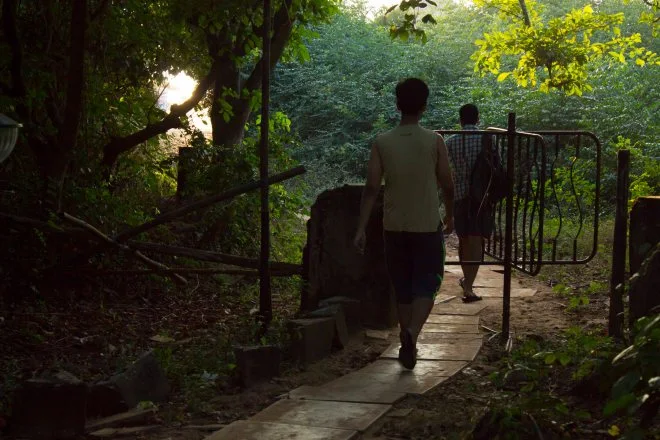
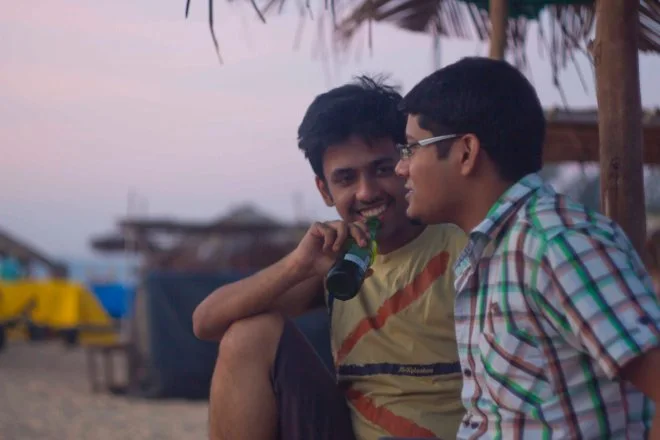
Check-in at Candolim was a spare room inside the home of a cafe owner named Bosco, pre-booked over the phone. 1000 INR per night for three of us. Bob pointed us toward his beach shack, accessed through a garden trail along the back of the luxury hotel out front.
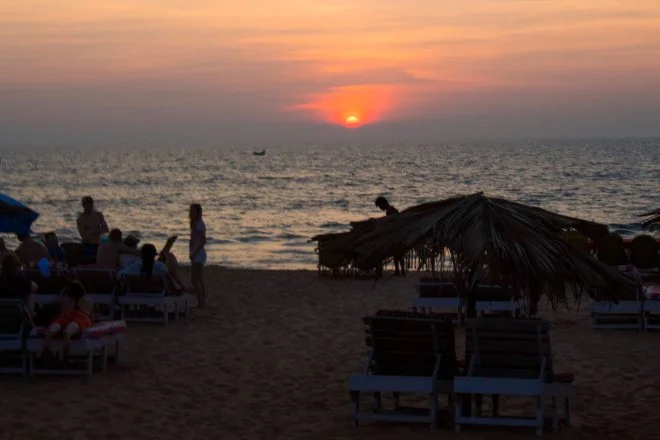
First evening: shack chairs, beers, sunset, conversations long overdue. The shack was new ground for both my friends.
Dinner at Bob’s Inn, the sister property near Hyatt. Good food, fair pricing, a deep wine list, mostly older bottles.
Stick to the Chinese side of the menu. Kitchen closes at 11pm. Be inside by 10.
Day 2
Long ride ahead.
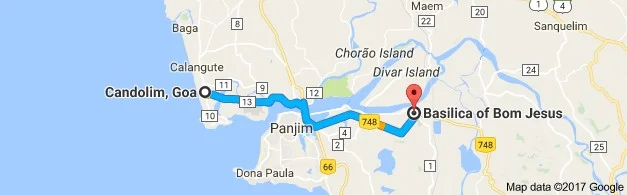
Early start, headed for the two main churches of Old Goa.
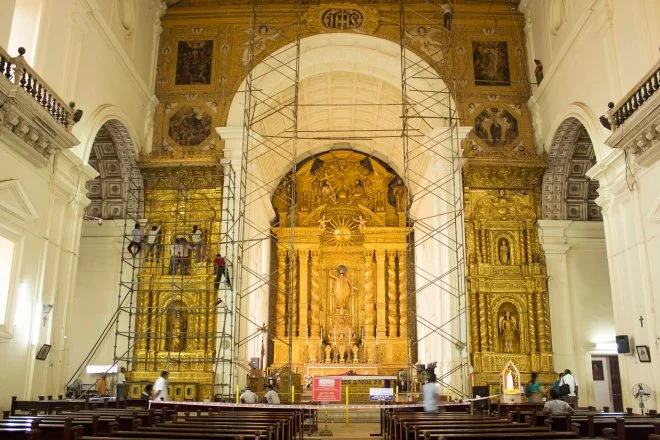
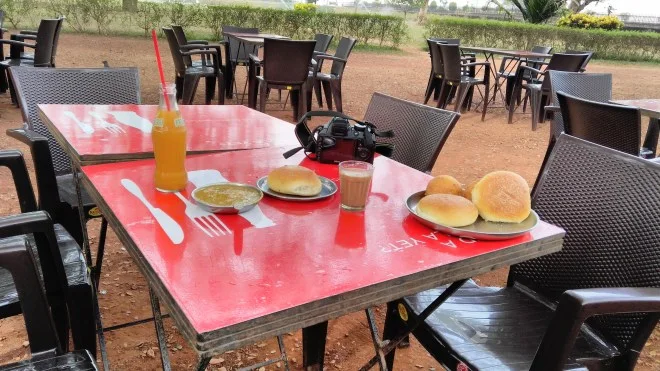
There is a small shop inside the church complex selling breakfast snacks. The exploration arc was the same as in our first visit, so the post moves to the next stop.
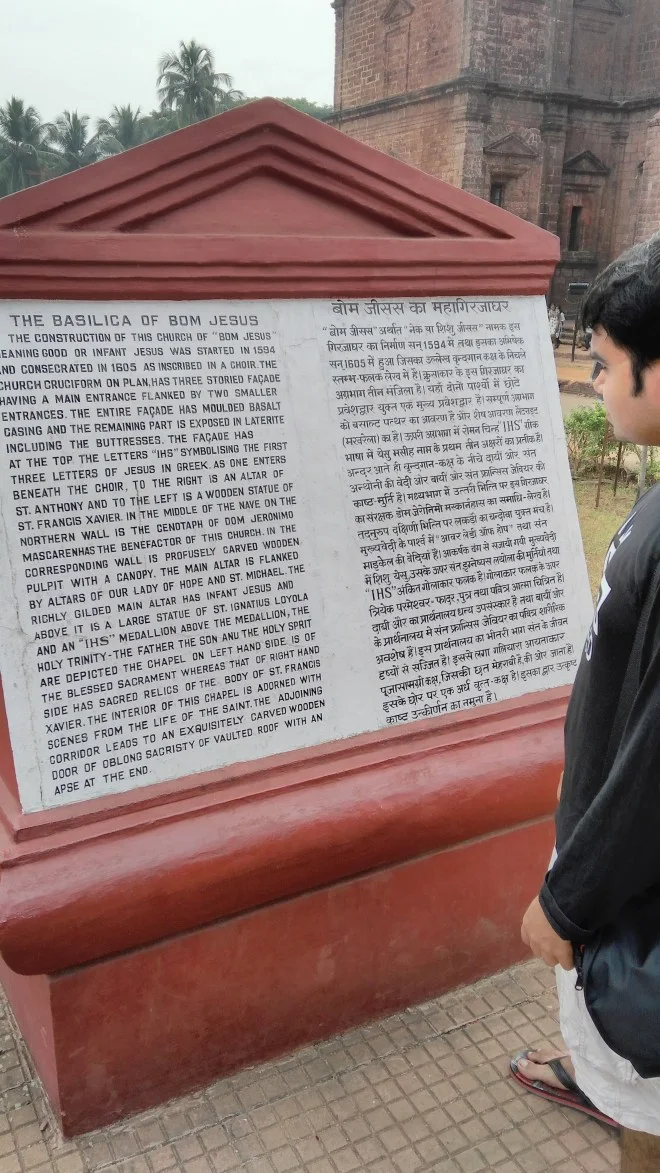
Then the part I had not done before. South Goa, beginning with Col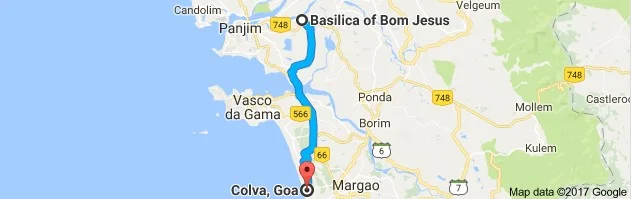 va, the famously fishing-first beach.
Parallel to Margao, navigable on Google Maps with reasonable accuracy. The vibe is rural and uncommercialised. Colva is the last beach where you will hit any real crowd; the fishermen draw it. Past here the coast empties out and the terrain shifts.
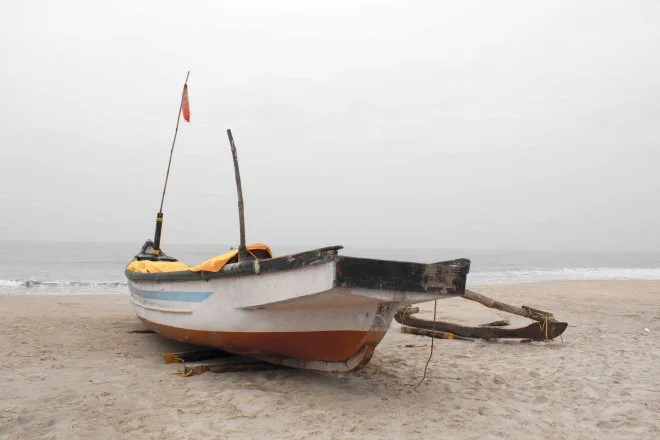
Beautiful, not great for swimming.
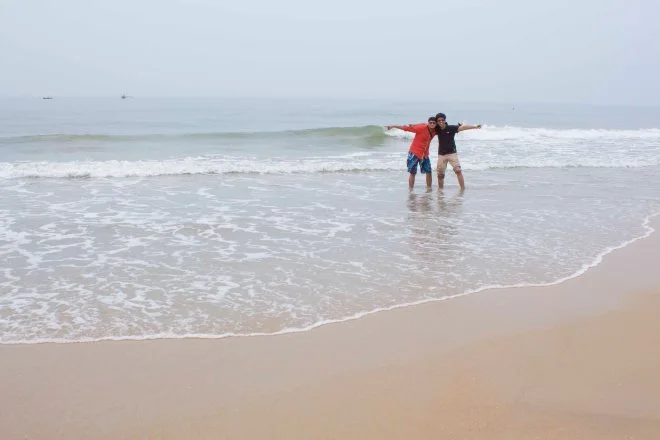
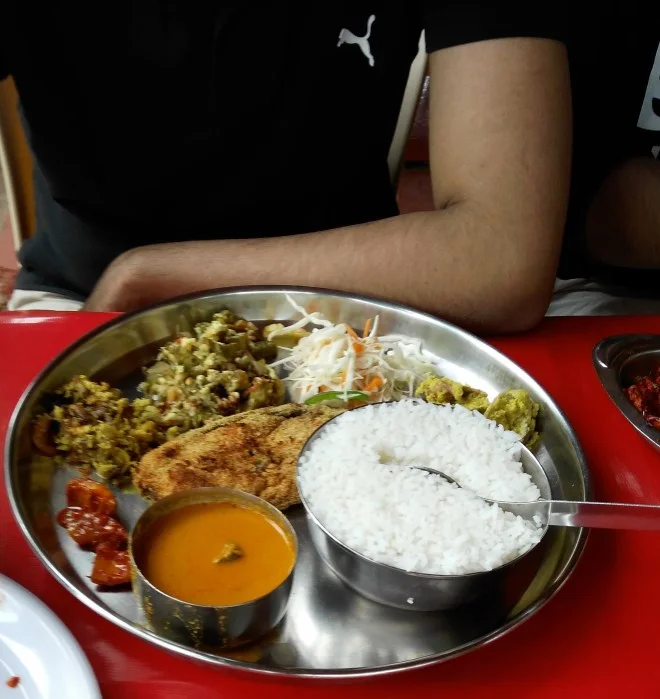
Restaurants at the far end of the beach run a proper Goan curry.
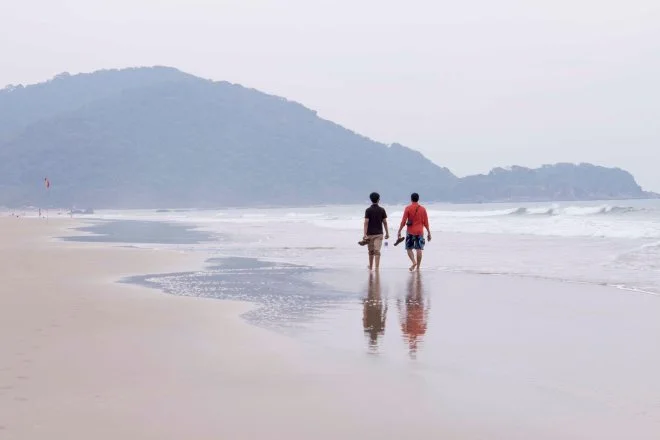
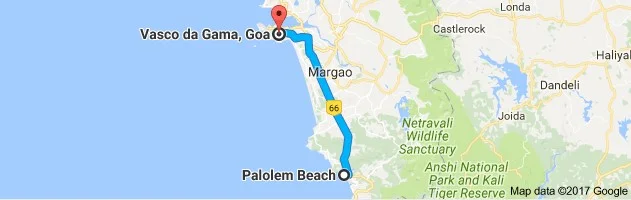
Further down: Palolem. The most beautiful beach in Goa. No competition.

Sunbathers in rows. The road in is highway through low habitation, with elevation that does not behave.
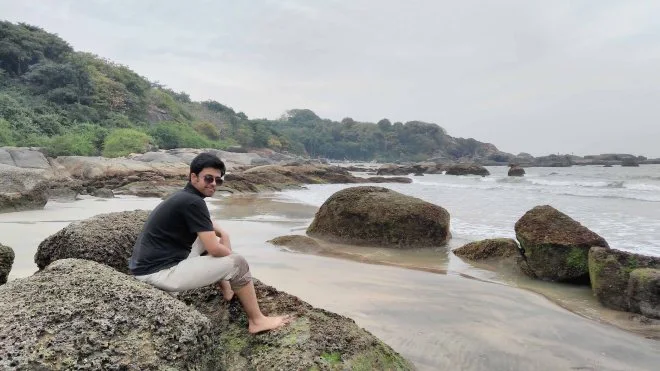
Rock formations are the signature here. They also make the beach genuinely dangerous to swim. The waves arrive with force and the rocks do not forgive.
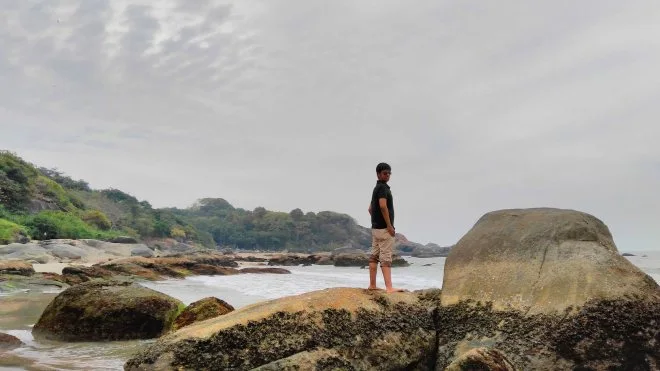
The rocks themselves are slick: algae, seaweed, soft moss. Climbing them is a poor decision.
Night 2
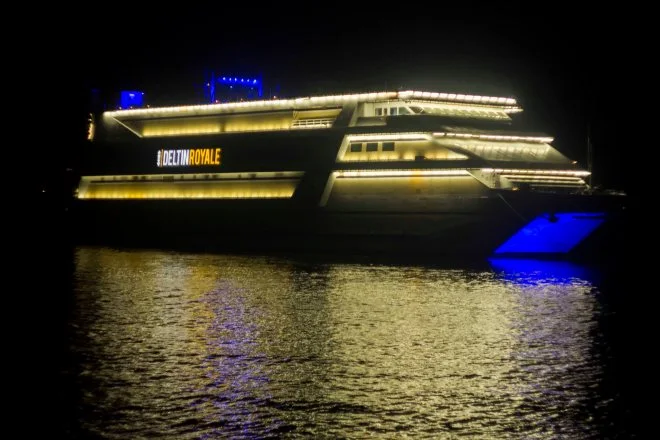
Back to Panjim for the cruise. Same format as the first trip, except this time we worked our way around the Deltin Royale floating casino more thoroughly.
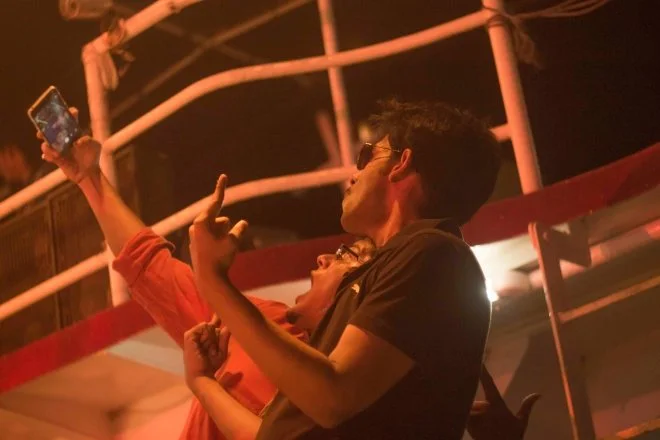
My friends danced. A lot.
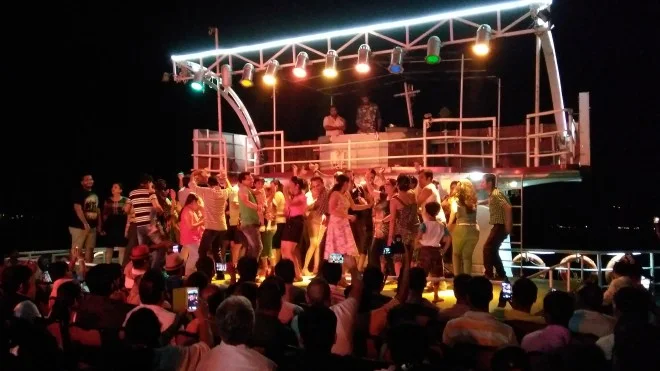
So did the rest of the boat.
Dinner at Fisherman’s Cove. Best restaurant of the trip: live music, open setting, food that earned its price. Crab, lobster, and chicken on the table.
That night we partied properly. Headbanging. Cartwheels. Body waves. Air guitar. Best night out in a long stretch.
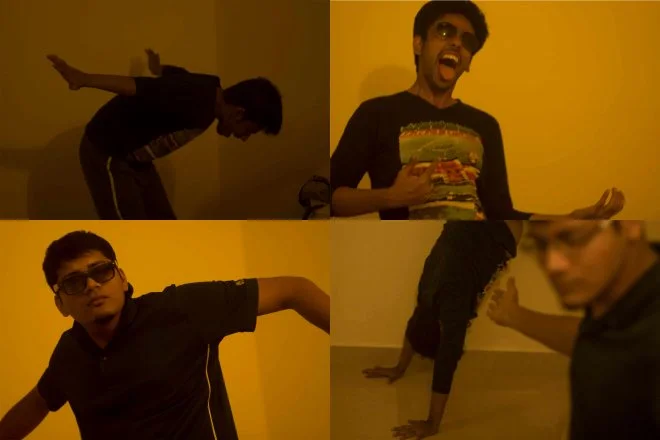
Day 3
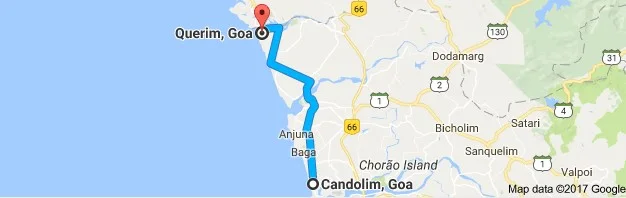
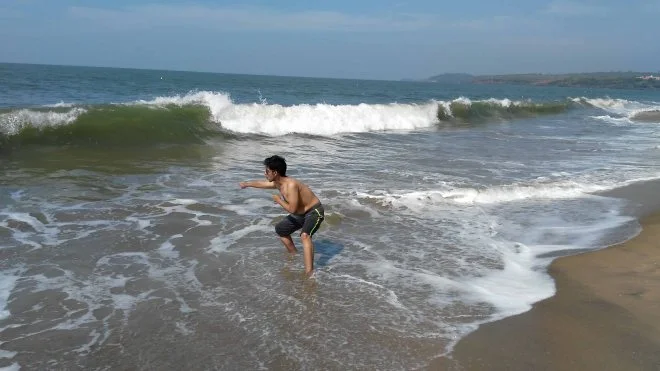
The northern tip of Goa, where Maharashtra is visible across the water. Roads cut through hills to get there. Querim, the first beach inside Goa, is unlike the others.
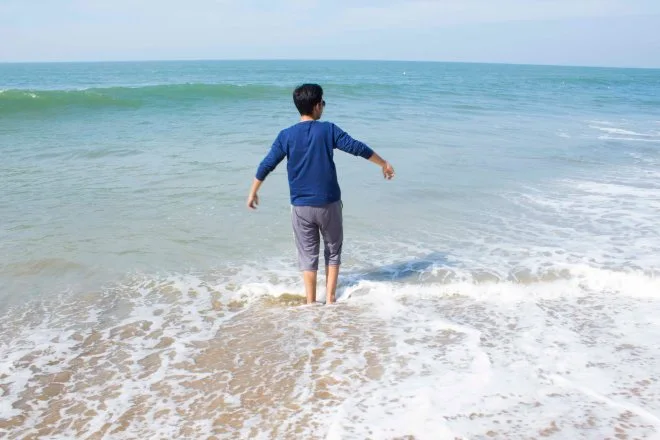
Sunbathers again, surf-ready. The beach is an estuary, sloping down sharply into water that meets it with force.
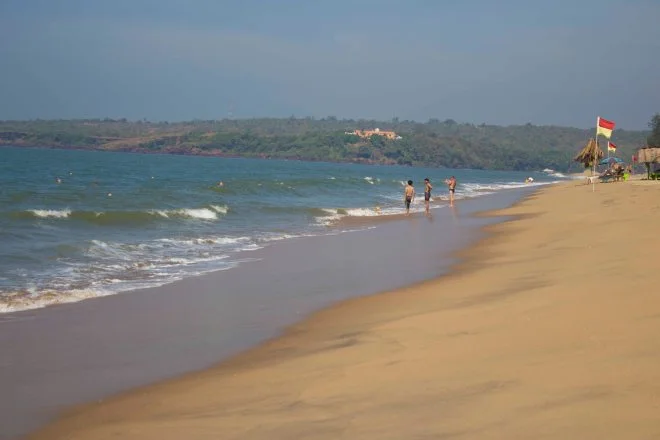
Ropes run from the beach to fishing poles offshore. If you lose your footing in the water, hold the rope. Not optional.
Next: Chapora Fort to Vagator beach. Familiar arc, with a couple of additions.

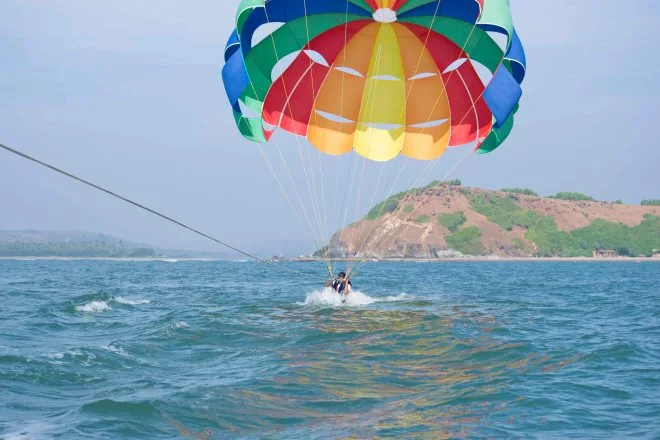
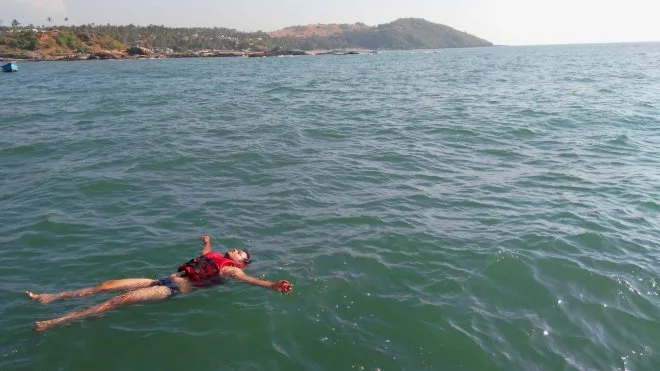
This time we took the DSLR into parasailing. The lens caught a few mouthfuls of seawater across the frame.
Night 3
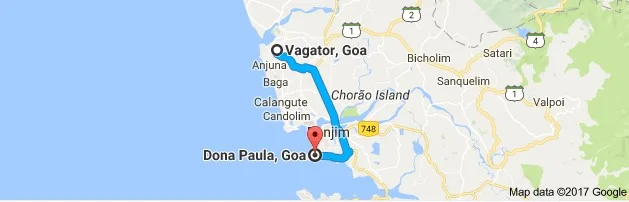
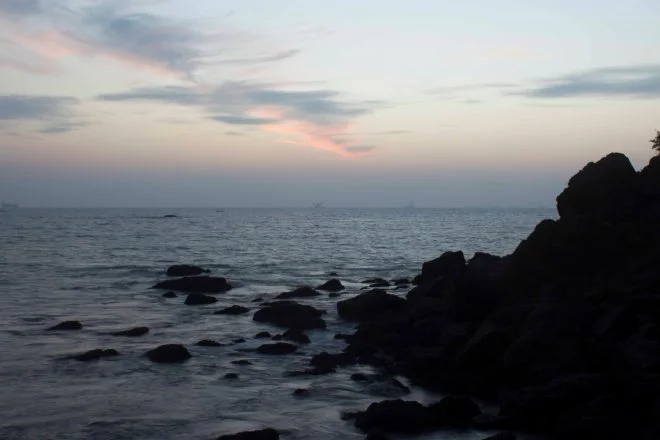
Hard drive to Dona Paula. We arrived a couple of minutes after sunset.
The afterglow stayed longer than expected. As we got up to leave, the sky turned over to fireworks.
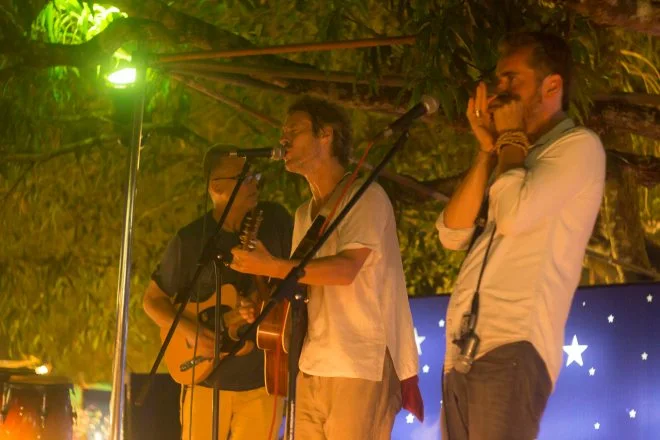
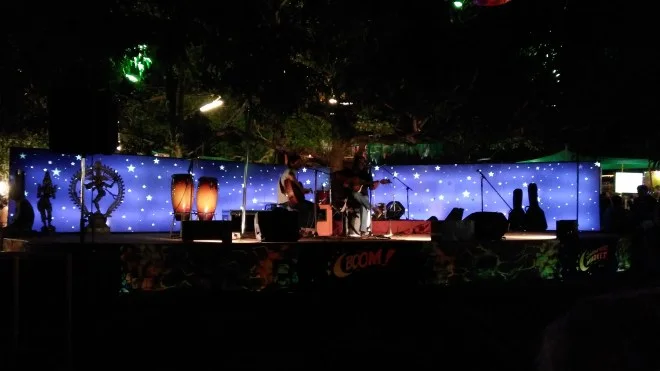
Then back to the Saturday Night Market near Baga. This time we worked the place properly, every stall, every corner.

Live music was on. The Saturday Night Market is the part of Goa I keep returning to.
Day 4
Last loop through Panjim, picked up two floral T-shirts with Goa printed on them. The airport is a long way from the city. The state bus from Panjim to Vasco da Gama airport was supposed to run; it did not that day. The car owner who rented us the Maruti agreed to drop us for 500 INR. Done.
Field Notes
- Do not skip South Goa. The contrast against the north is what makes the state interesting.
- Querim is non-optional. A sloping estuary beach with almost no tourists is a rare combination.
- Eat at Bob’s Inn and Fisherman’s Cove. Worth it if you eat seafood. We did not bother with food on the first trip; this trip the meals were half the experience.
- Keep GPS on. It works, but acts up at junctions.
- If you must rent a car, do it in North Goa. Try the Thivim chain. The South Goa rental scene is informal at best. Note: no Uber/Ola in Goa yet. Bike is still the smarter rental.
One Recommendation
Skip the banana ride if your group is small. Ask the parasailing operator to drop you straight into the ocean for a few hundred rupees. Same fun, less queue.
Ciao,
Sayantan
Caving In Elephanta Cavern
The Trigger
November 26th. A free Saturday in Mumbai, a friend up for the day, and the Gateway of India ferry counter open. Two destinations on offer: Mandwa-Alibaug or Elephanta. We picked the cave island. 190 INR for lower deck, 10 INR more for upper. One hour out, one hour back.
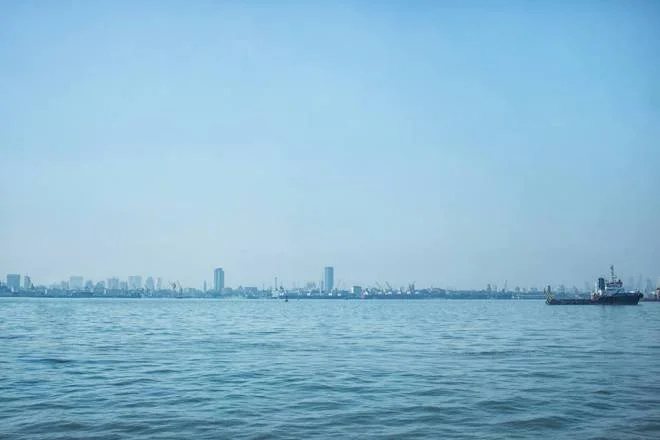
Pre-noon haze had cleared. The Mumbai skyline was readable from mid-bay, the kind of frame you stop fiddling with the camera for and just shoot.
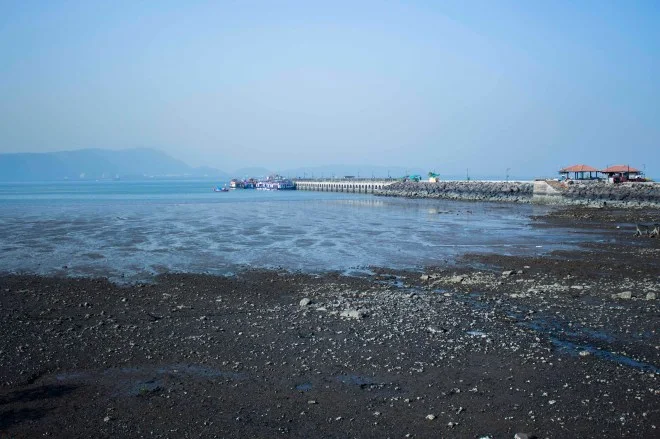
The jetty greets you with two welcoming committees: aggressive cows and a steady supply of dogs. Carrying food is a tax you pay in chase. Skip it. There is plenty up the hill at fair prices. The beach reads more rocky than swimmable.
Above the landing, 100 steps climb between rows of stalls selling almost anything you might want and a few you do not. Eateries thread through the line. At the top: 5 INR for entry to the UNESCO site.
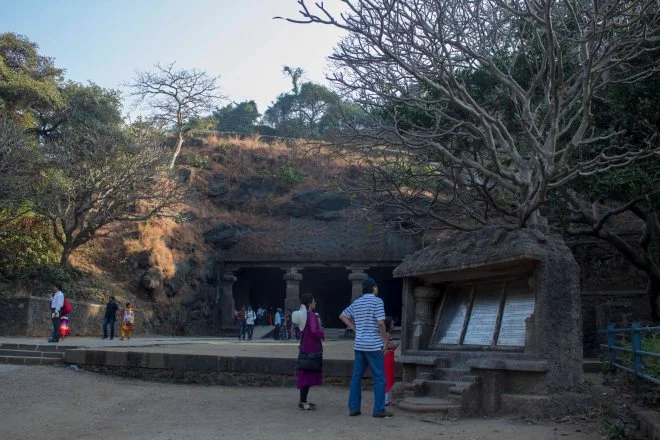
Five Hindu caves. Two Buddhist. Origins disputed; nobody agrees on the dating. The Portuguese put 15th-century damage into most of what survives, and restoration has done what it can. The exception is the central icon, which they spared.
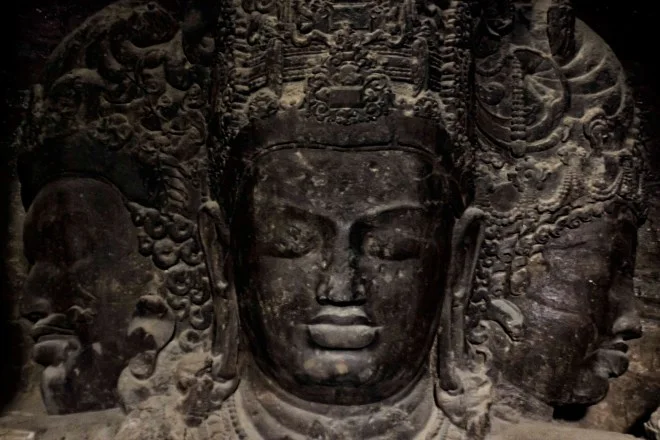
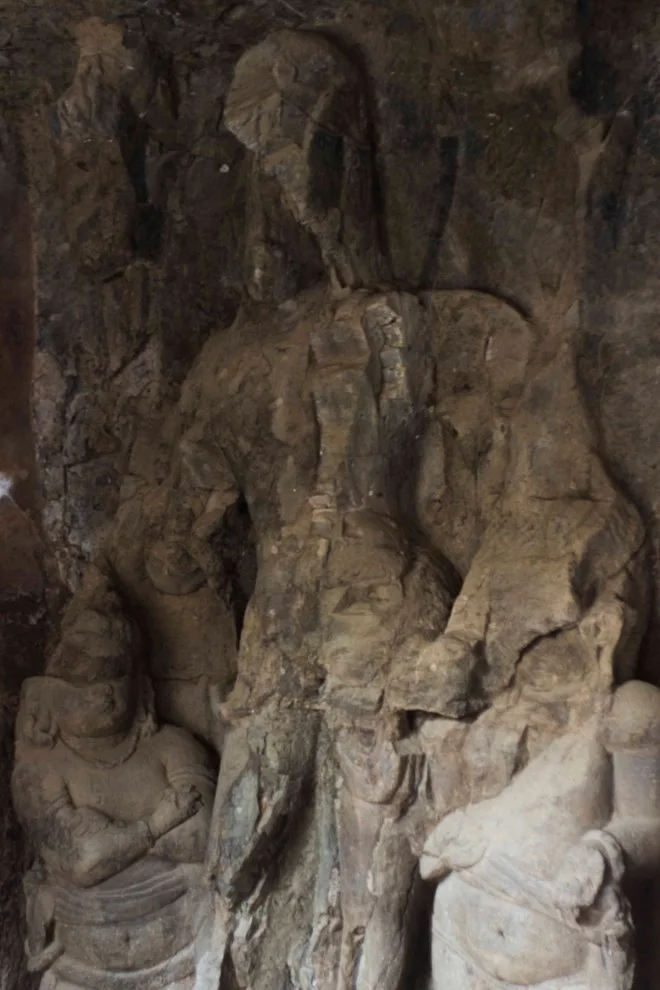
The cave opens. The light shifts. The Trimurti emerges. Twenty feet of stone, three faces, one Shiva. It earns the rest of the visit on its own.
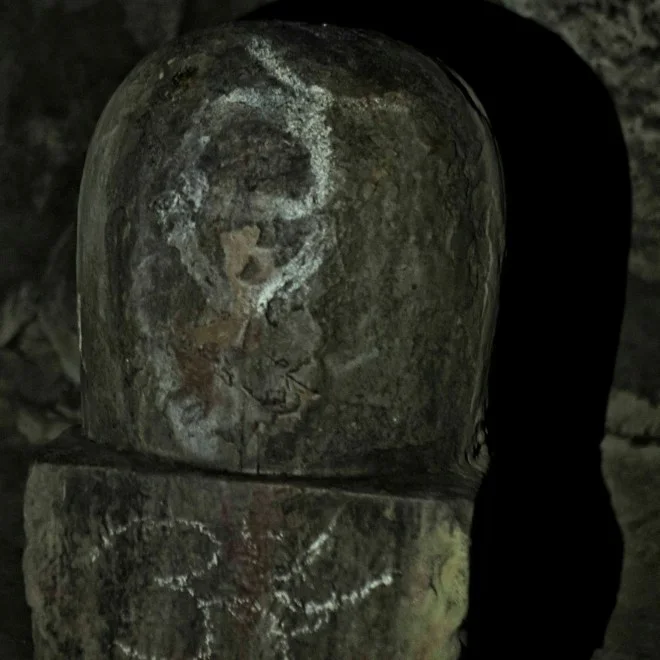
The remaining caves are too broken to fully read, but a couple of fragments hold their shape: a Linga in the half-light, and a piece of art with one face still intact.
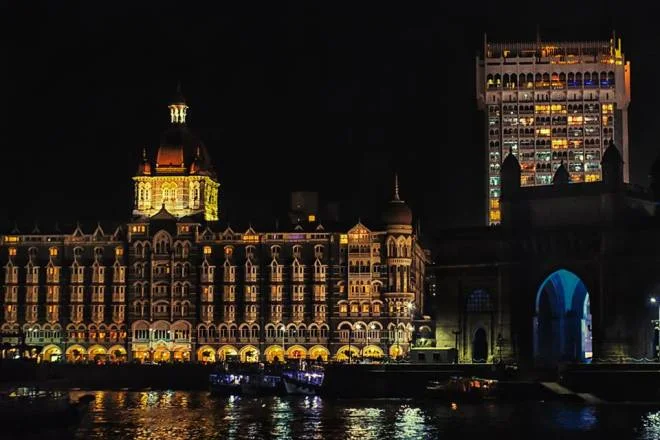
We caught the last ferry back at 7pm. The bay opens up after dusk. November 26th meant the Gateway and the Taj were lit for the martyrs of 2008. The crossing has a different weight on that date.
Field Notes
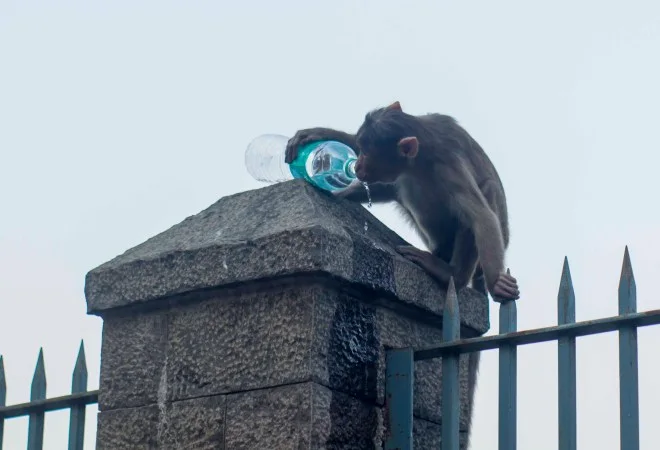
- Leave the food and water bottles behind. Cows take the snacks. The macaques are smart enough to work the bottles.
- Hat budget: 100 INR. The stretch is open. If the sun bothers you, buy one at the foot of the steps.
- Walk fitness: low but non-zero. 100 steps plus a flat exploration. Doable for most, not effortless.
- Audience. Heritage site, slow pace, history-heavy. Not the trip to bring a noisy group on. Solo, couple, or family with patience.
One Recommendation
Pick up a souvenir on the staircase strip. The variety on those 100 steps beats the official shop. As a parting frame, here is a macaque negotiating with a water bottle.
Posts have been thin lately. More soon.
Until next time,
Sayantan
Update (2020)
My second visit was about getting four senior citizens up the hill comfortably. Slower pace, fewer stops at the stalls, more time inside the caves I had skipped the first time. Nothing material to add to the field notes.
Cooling Point Coorg
The Trigger
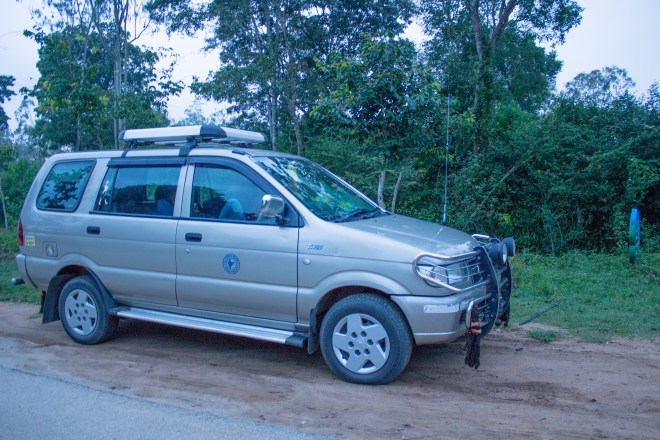
Midnight landing in Bangalore. Two hours in the terminal, a Subway sandwich, and the Travera rolling up at the curb to take us toward Coorg. Three hours of road between us and the Nagarhole gate.
The Forest
Nagarhole National Forest checkpoint at 5:45am. Engine off, headlights low, waiting for the gate to lift with the sun.
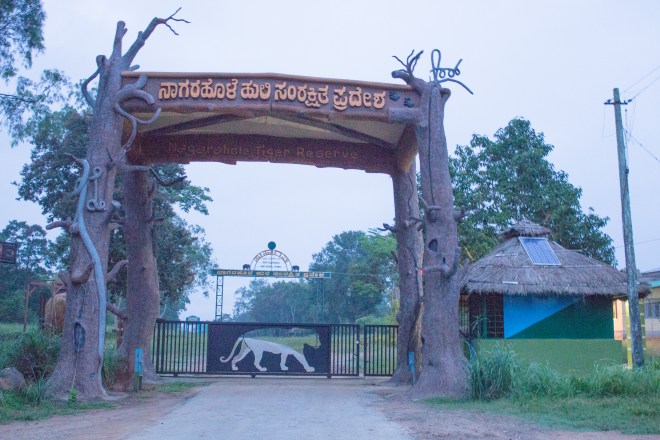
Rule one of the drive-through: do not stop. Bison, boar, elephant, the occasional tiger. Distance is what keeps you safe.
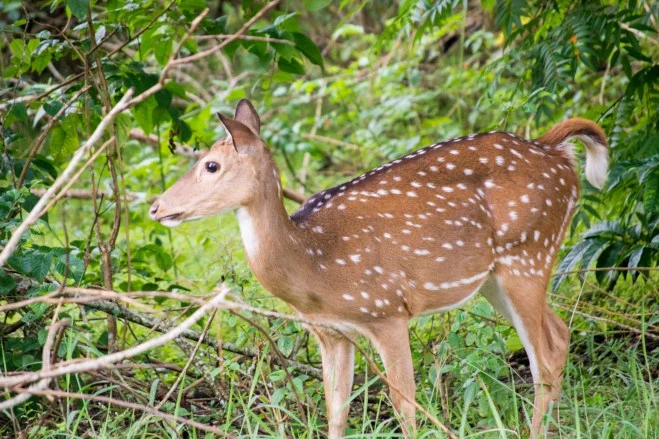
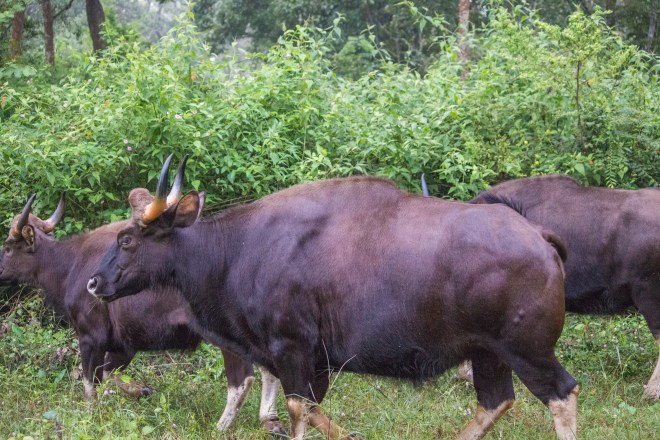
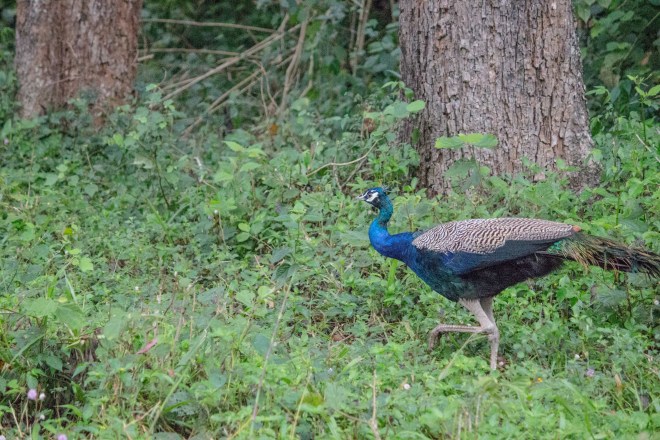
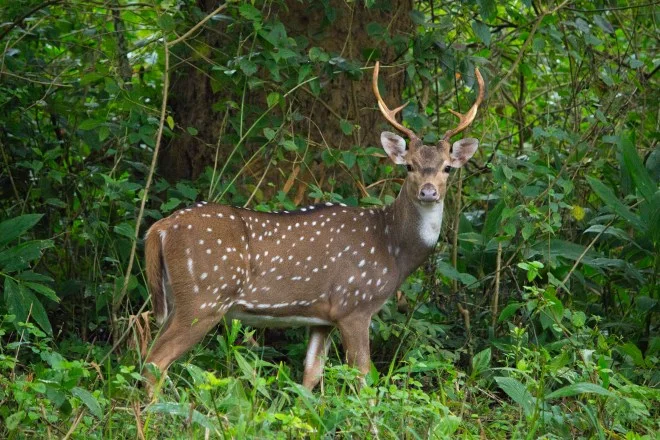
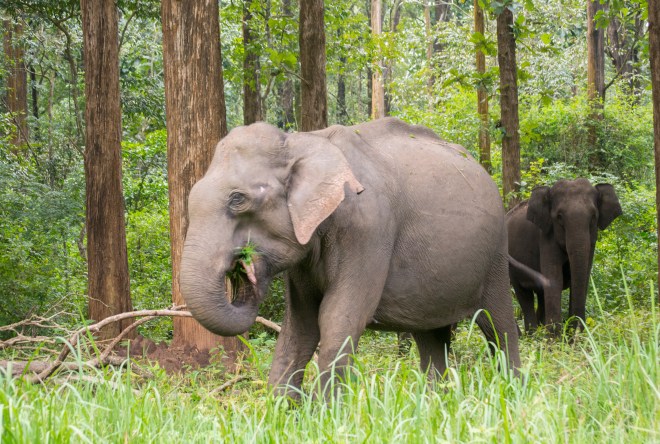
Two hours of forest before you hit the safari point. The safari runs twice: 6 to 8 in the morning, 3 to 5 in the evening, both pattern-resistant. Tigers are abundant. Cancellations also abundant.
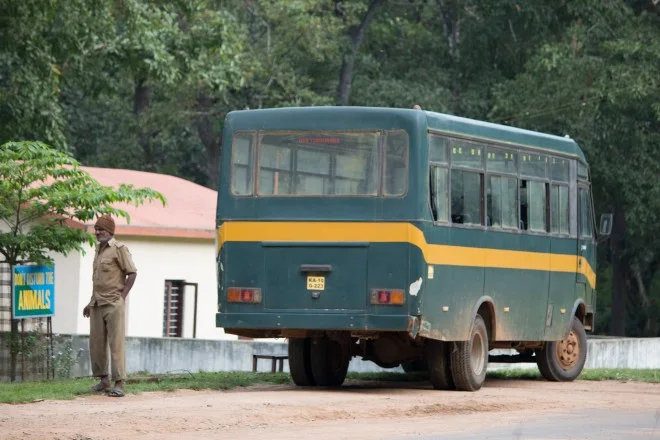
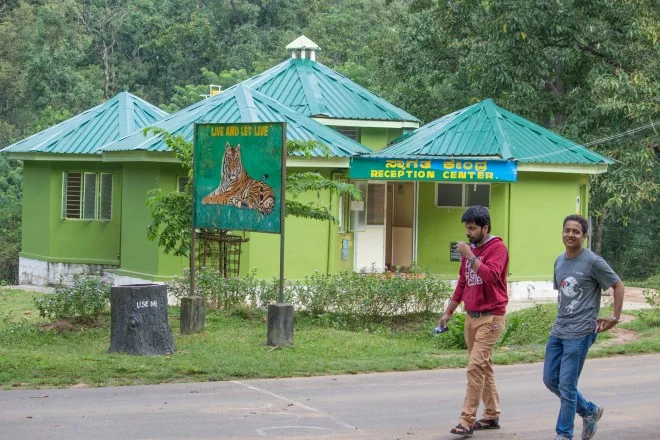
Each jeep takes five at 700 INR per head with a not-quite-promise of a tiger. A bus runs as backup, infrequently. We were too late and word on the trail was that nobody had picked up stripes that morning either. The reception is well kept: clean toilets, decent cottages.
The Stay
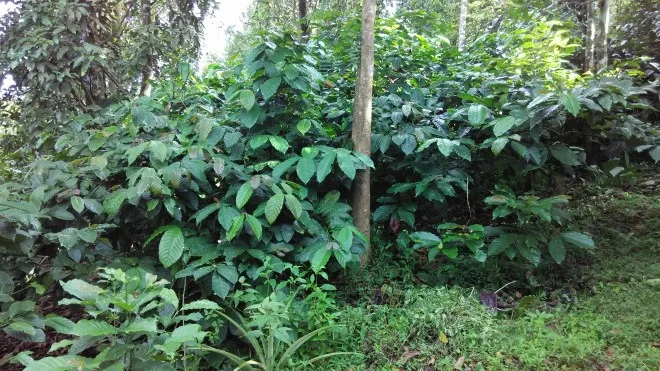
From the missed safari we drove on to the homestay, picking up bottles of homemade wine in three flavours from a roadside vendor. The plantations close in around the road. The homestay sits inside coffee.
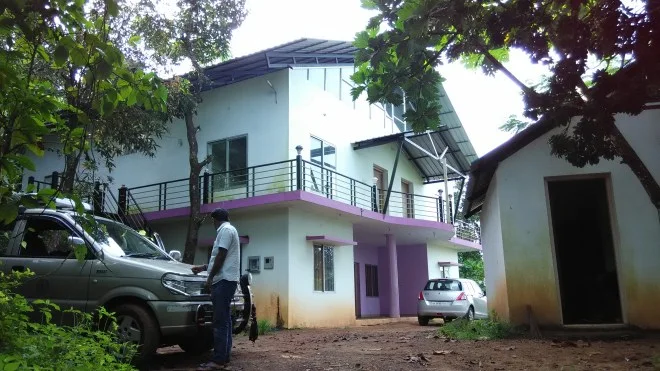
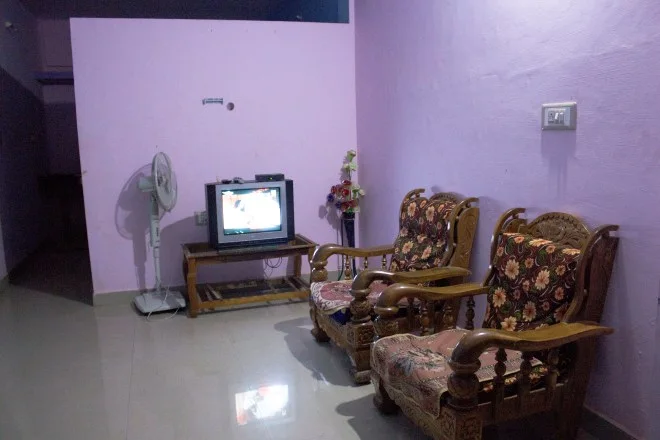
The hosts cooked for us because nobody could move. Old friends, local food, regional wine, and a TV with a stubborn handful of channels. Good night.
The next morning the route ran out through coffee and cashew on the way to Mandalpatti, the hill section Coorg is best known for.
The Hills
Mandalpatti reads more like the Northeast than South India. Terrain steepens past a point your sedan does not negotiate. From here you switch to a local jeep at around 600 INR.
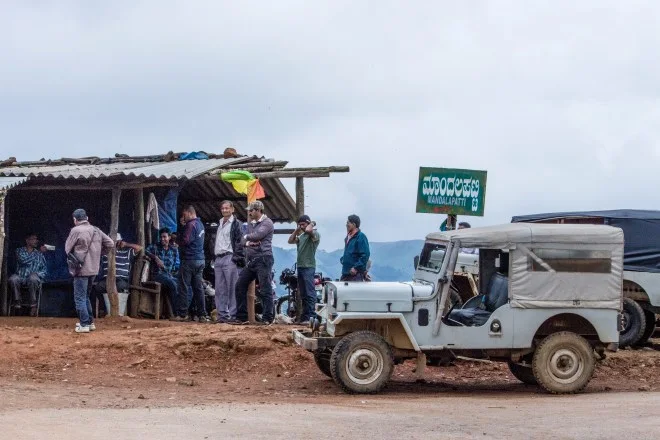
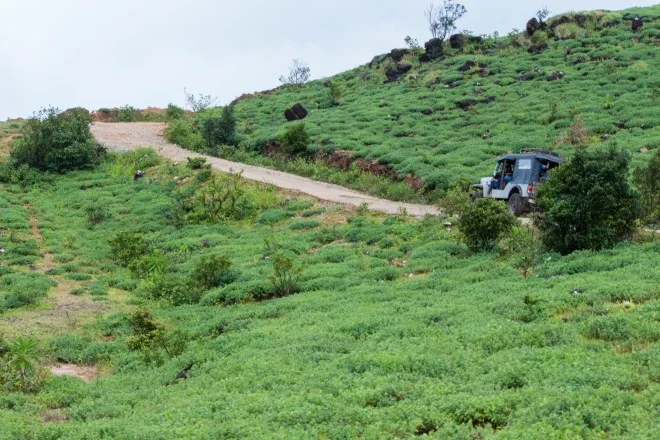
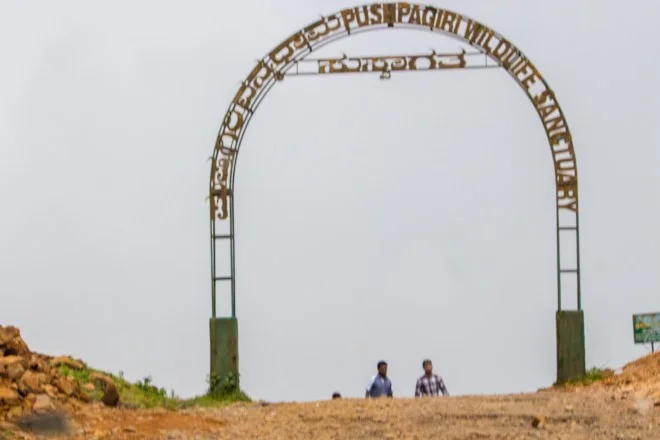
Pushpagiri Wildlife Sanctuary holds the same patch as Mandalpatti. We saw no animals through the fog. The road past the gate gets aggressively rocky.
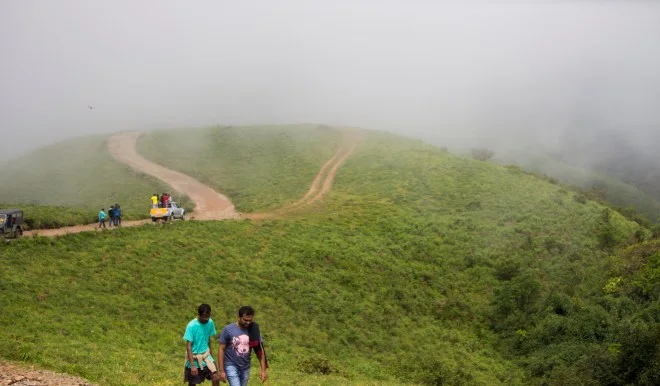
The driver parks at a lone tourism centre and gives you an hour. From there it is a short trek up.
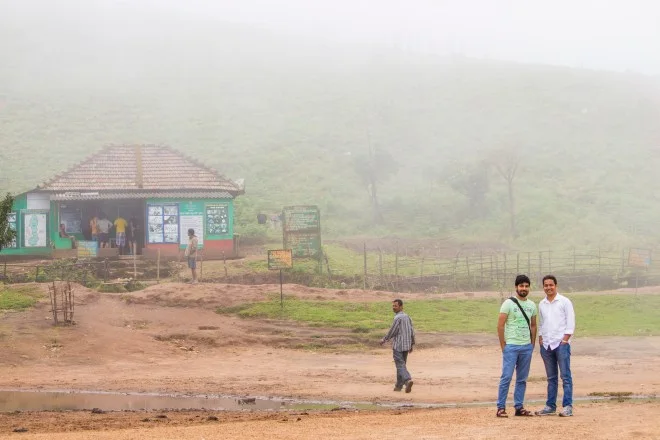
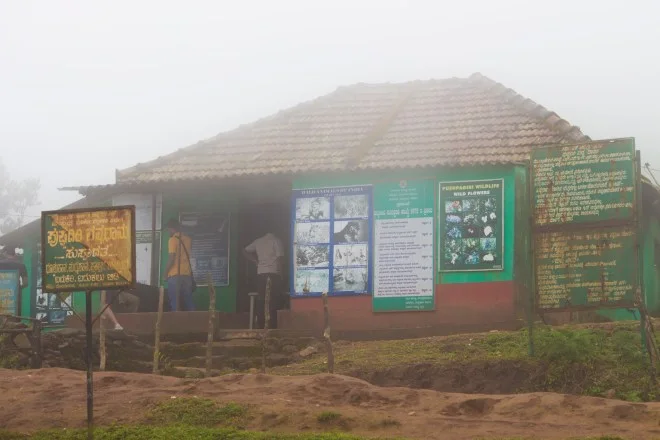
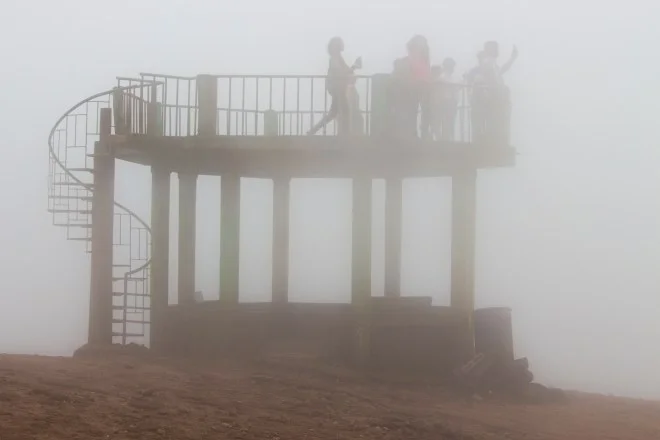
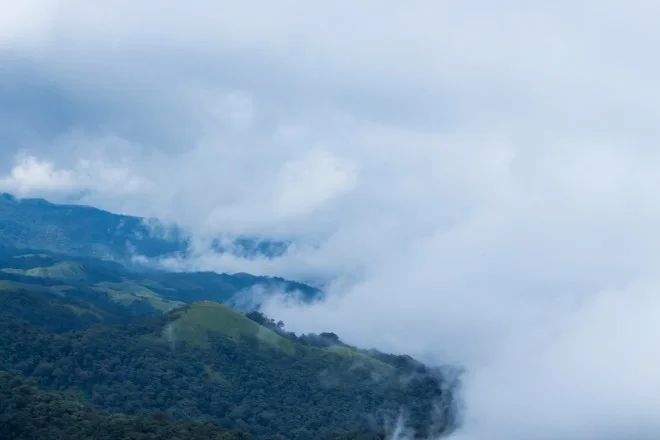
And then you are inside a cloud. Visibility drops to a few feet. If a damp cloud passes through, it rains while you are standing in it. Rain inside weather is a thing you do not forget.
The Temple
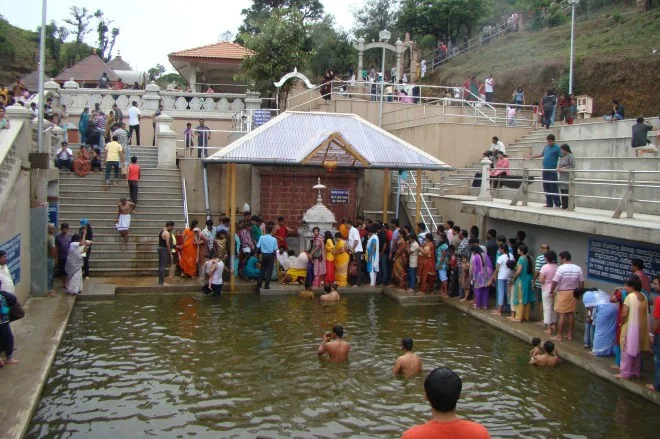
Talacauvery sits higher and gets dressed in the same fog. We arrived as the rain clouds rolled in. The temperature dropped close to freezing.
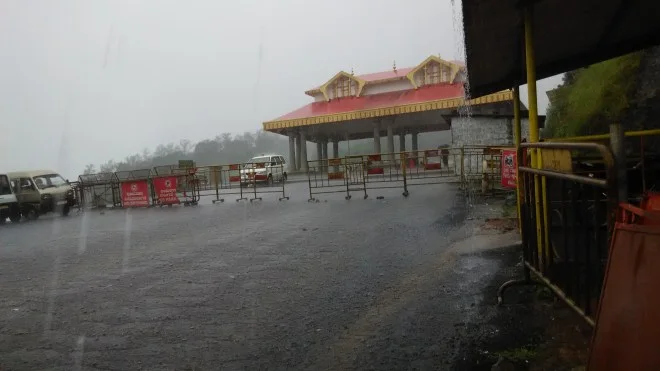
Marble steps run to the top. We climbed against wind that was not supposed to be there in October. Visibility somewhere between low and zero.
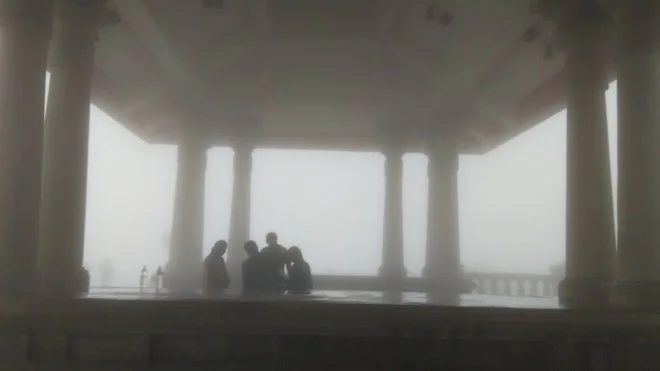
The temple itself is a strict no-photography zone. It sits a few metres below the source point of the Cauvery. Below is a Wikipedia frame to give a sense of what you cannot photograph yourself.
The Falls
Iruppu Falls, the headline waterfall of Kodagu. A small temple at the entrance, a nominal fee, and a path that walks you up to the base.
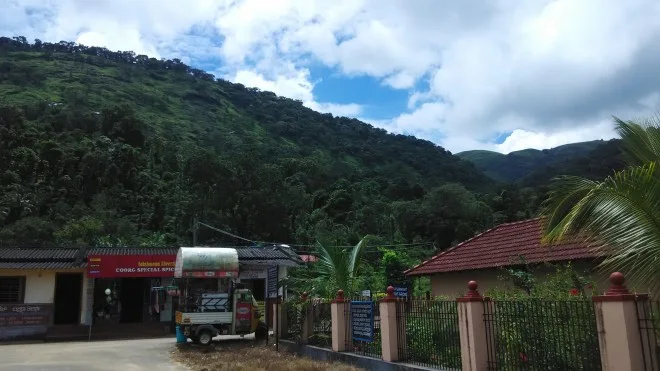
The walk is the show: greenery, the Cauvery upstream, wooden bridges with rope rails, leeches if you are unlucky, butterflies if you are not.
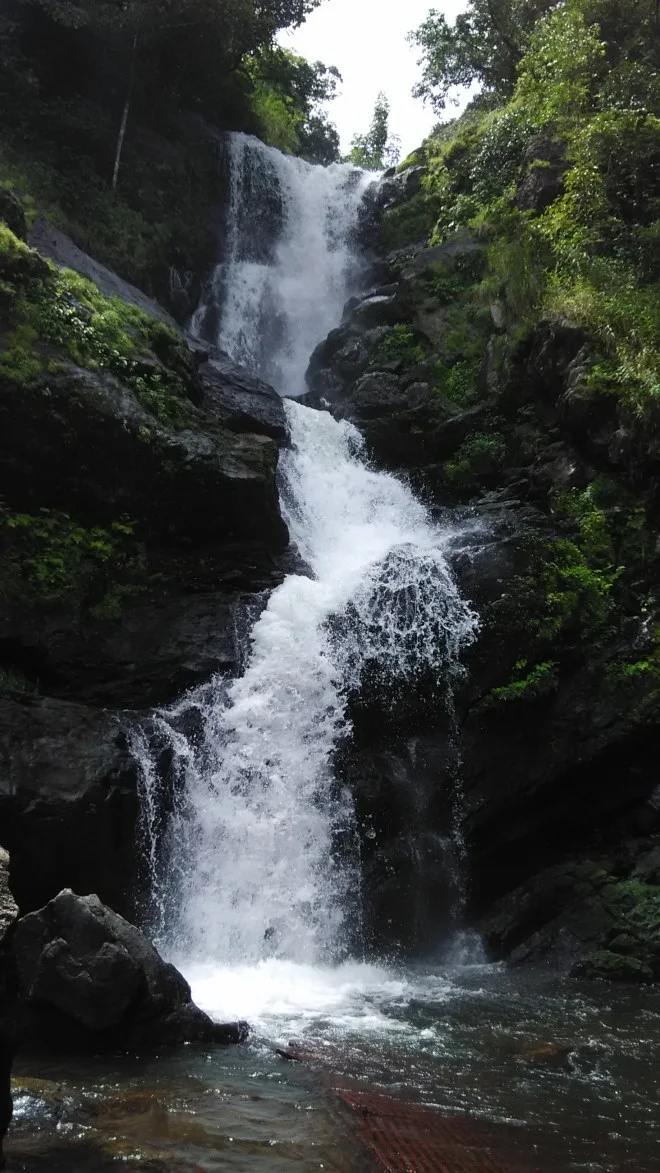
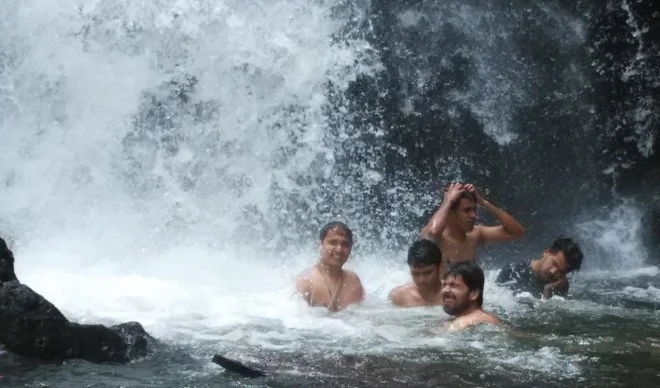
We waded into the basin where the water lands. The two-step formation softens the force enough to bathe under. Slick rocks. We took the bath, then dried off and moved on.
The Monastery
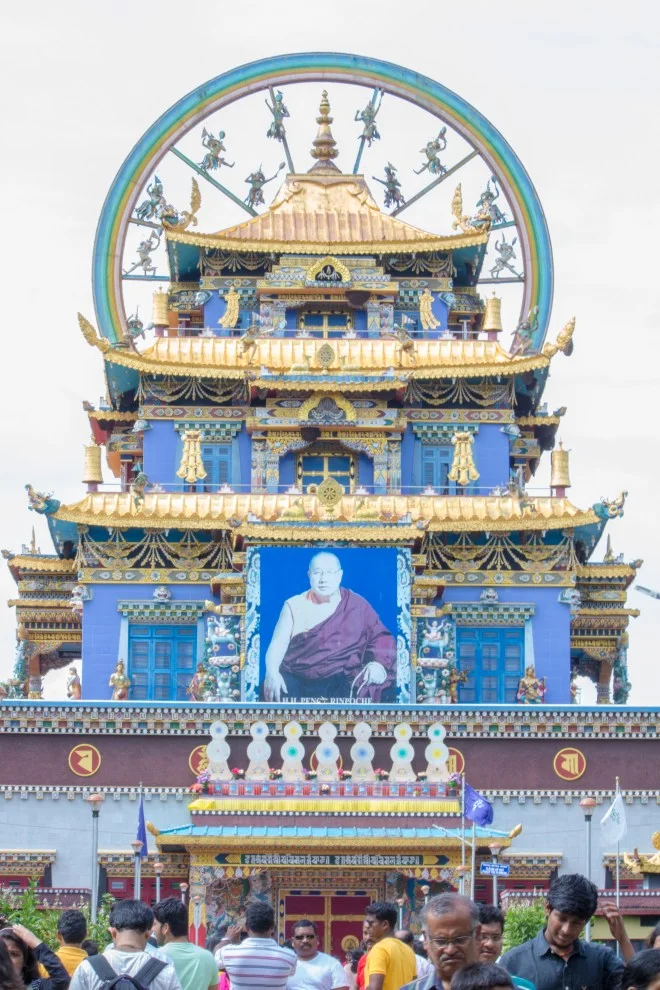
Namdroling Monastery in Kushalnagar, better known as the Golden Temple. Large grounds, large crowds, monks happy to be in your selfie.
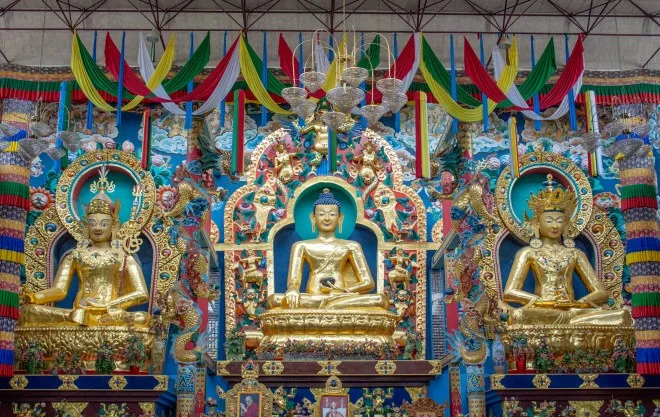
The centrepiece is a trio: Gautama Buddha (Prince Siddhartha) in the middle, Padmasambhava on the left, Amitayus on the right. Standard monastery quiet under the noise of visitors.
The Camp
Dubare Elephant Camp is a draw for the rides on the far bank of the Cauvery. We hit it on a holiday afternoon and the queue to cross the river never moved. We did not commit. The rowing crowd seemed to be having a better time.
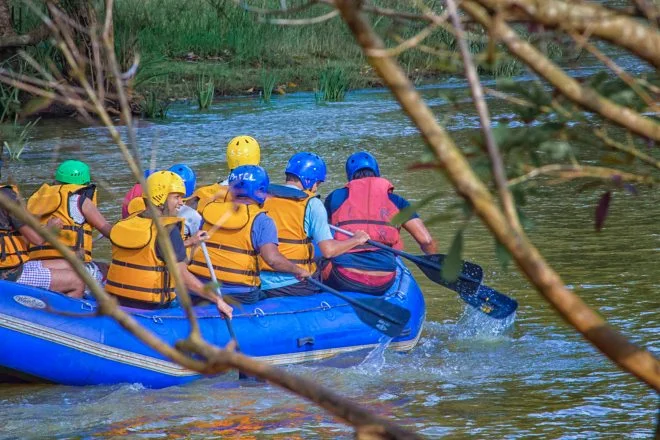
The bank had a lot of swimmers. Local advice: do not go deep. The current here drowns people.
The Throne
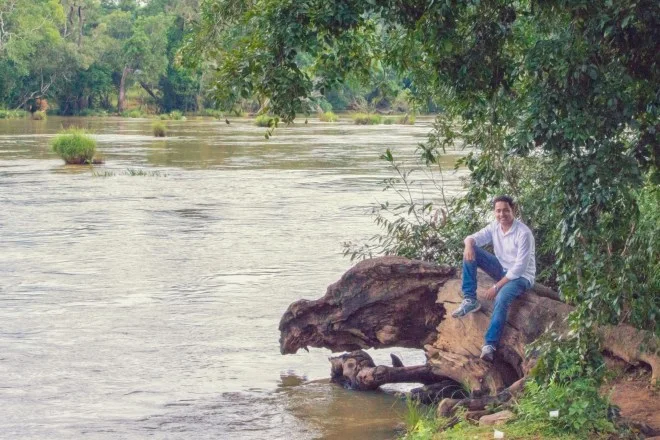
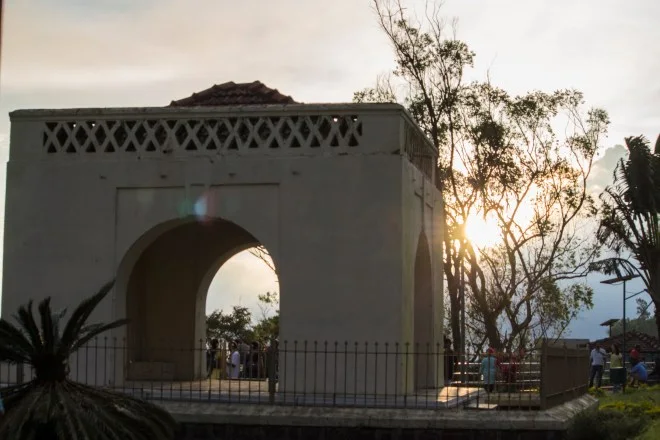
Not Game of Thrones. The king who built this picked the spot for the sunset and named it after himself, hence Raja’s Seat. Sunset arrives on schedule and earns the seat.
Field Notes
- Drive in. A car (or hired Travera) opens up the loop. Kannada speakers in the group help.
- It works as a Northeast-emulation. One of the few Southern destinations that scratches the hill-station itch with proper food and stays.
- Adventure menu is broad. Jungle safari, river rowing, a toy train. Rare combination this far south.
- Days are short in the hills. Get up early. Get back before sunset.
One Recommendation
Walk into the Mandalpatti cloud. The trek is short, the view is one big cloud, and standing inside weather is the part that stays.
Late post. Got busy with life.
Love,
Sayantan
Kanheri Kickoff
The Trigger
August 2015. Two years on Mumbai soil. The IIT Powai campus where I had been living sits at one edge of Sanjay Gandhi National Park; Borivali Station and the park’s main arch sit at the other. I had been living inside the park for two years and had not actually walked into it. A free Sunday and a friend with the same lapse. Time to fix it.
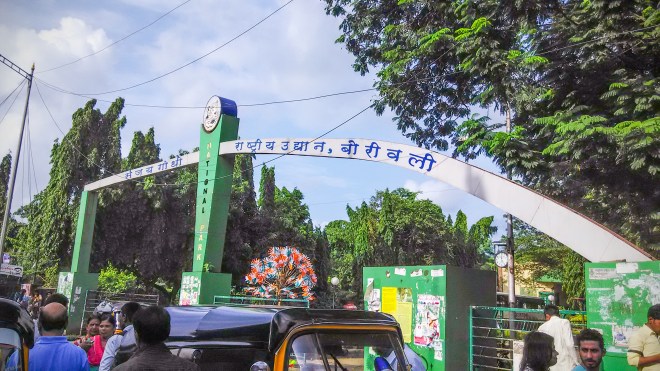
The park is rawer than the campus version of forest I was used to. We did not get close to a real exploration; for this trip we stuck to one element, the Kanheri caves.
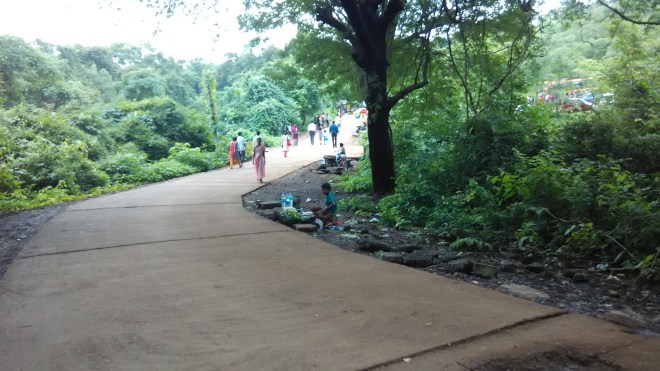
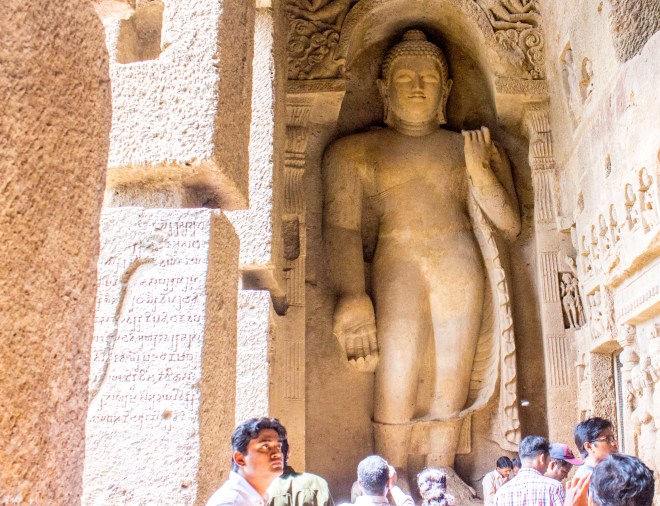
History notes, via Wikipedia: 109 caves, carved out of basalt, dating from the 1st century BCE to the 10th century CE. Most served as Buddhist viharas, used for living, studying, and meditation.
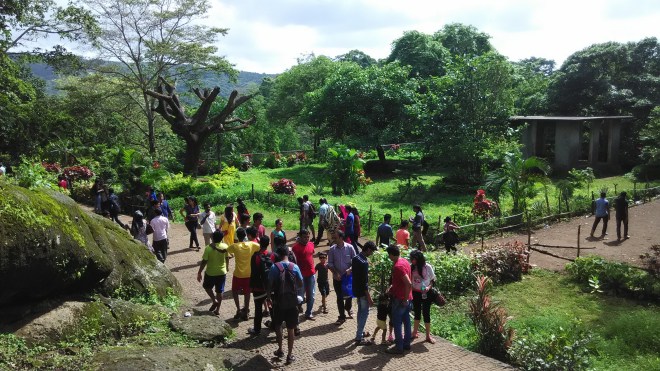
Park entry can be paid online or at the gate. From there, government buses run on a schedule to the foot of the caves; the bus charges separately. Caves themselves carry a nominal entry fee on top.
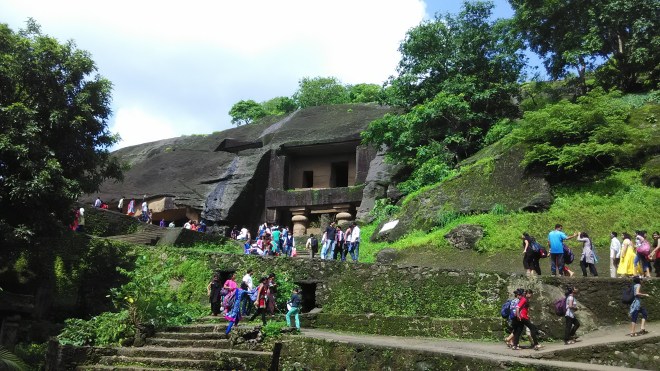
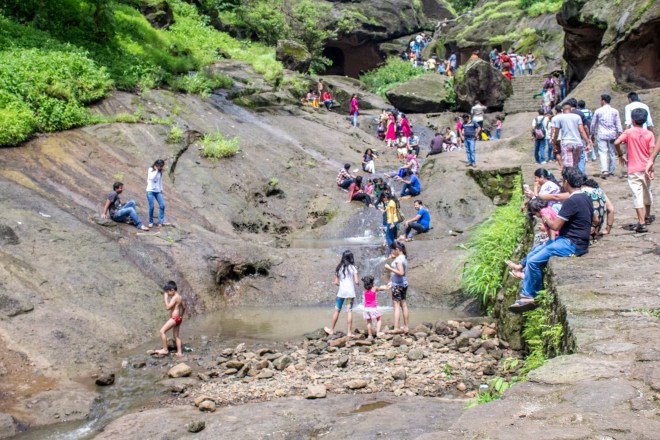
Inside, it is essentially a chain of caves with Buddha engravings and towering statues. The central vihara, the prayer hall, is the one part that holds the visitor’s attention. Architecturally, not much else has survived intact. Up the winding staircase, water seeps from above and pools across the rock; the steps go slick fast.
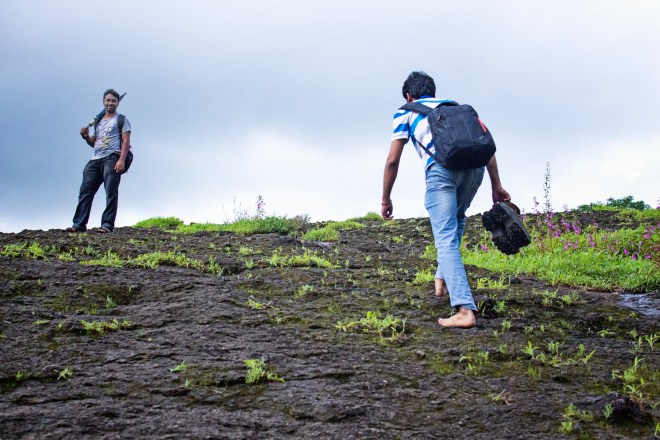
The top opens to a meadow. Trails lead from there into forest that climbs further. Wildflowers along the path. View earns the climb.
A shop near the entrance sells water and cold drinks. Roadside food shows up at intervals. The bus back to the gate runs about 20 minutes.
Field Notes
- Avoid public holidays. We did not. Lesson logged.
- Picnic crowd, not heritage crowd. Families with food spreads. The mood is wrong if you came for the caves.
- Drive in if you can. The bus loop limits how much of the park you can cover. A car opens up everything beyond the caves.
- Plastic bottles are confiscated at the gate. Then sold inside. Carry a refillable.
- Watch the water edges. Snakes work the wet rocks. Step deliberately.
- Inside city limits. No travel logistics. That is the only easy thing about this trip.
One Recommendation
Touch the rock. Most of what you walk past has been holding its shape for 2000 years. The doorway Buddha is the most legible piece on the route.
This one was a thin post. Better one coming.
Promise.
Sayantan