The Trigger
My first dedicated avian-focused write-up. These trips are typically not solo-able and need real guidance, so I had not bothered to document them before. Arunachal forced the issue. The terrain is hard, the destination is unfamiliar to most readers, and the bird at the centre of the trip — the Bugun Liocichla — is the first new bird species described from independent India.
Operator: Avian Trips Group, who I have been travelling with since the pandemic. Tour leader Dilip; bird guide Micah; two Mahindra Xylos with their drivers. Group size: four.
Day 0
Checked in a day early on 6 April (Thursday). Day job is remote, all I need is laptop and internet. Air India out of Kolkata, Guwahati landing at 7am. The taxi rate at the terminal door is 100 INR. Cross the airport’s outer gate first and the same ride drops to 30 INR. Guwahati is the primary checkpoint for the seven sister states (Dibrugarh in upper Assam being the other).
600m on foot from the gate to my stay, Hotel Mirana. I had paid up to 2500 INR (from the standard 1800) over the phone for an early check-in window.
Second-floor room, spacious, well-kept. Food menu was on the higher side; room service ran until 10:30pm. Surprisingly tasty across a generous spread of options. The single hard miss was the Wi-Fi: speeds unusable, connection dropping every few minutes.
Day 1
7:30am, off to the great municipal landfill of Guwahati to look for the endangered Greater Adjutant. The landfill is processed by industrial composters, which has neutralised the smell across an enormous area.
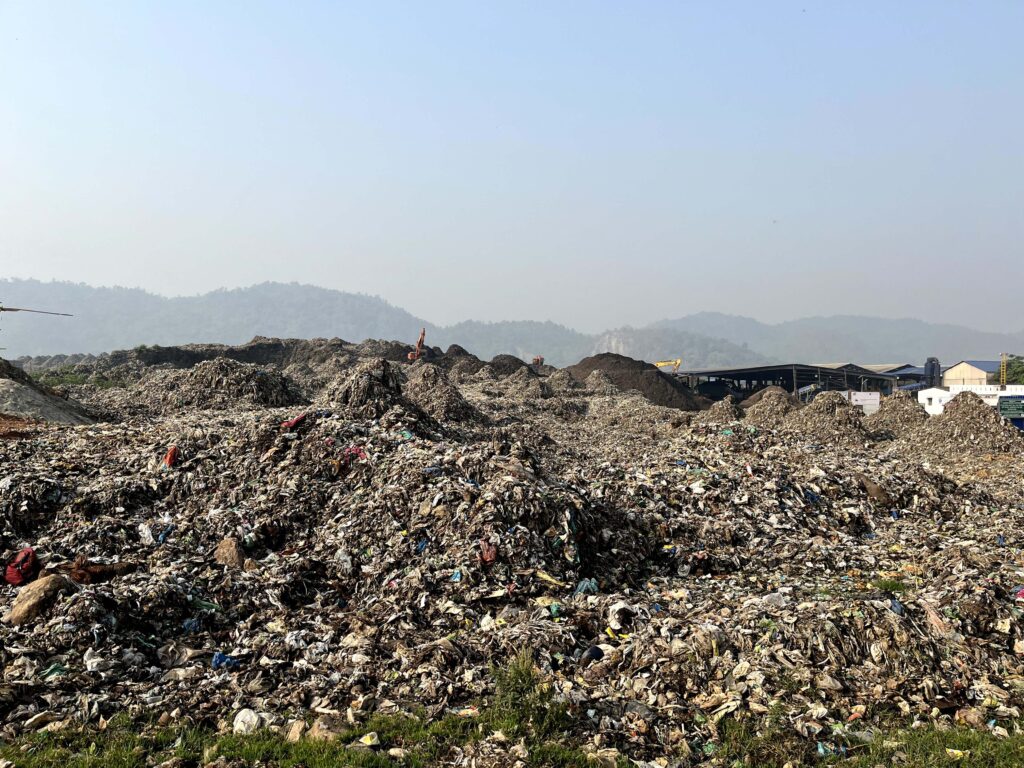
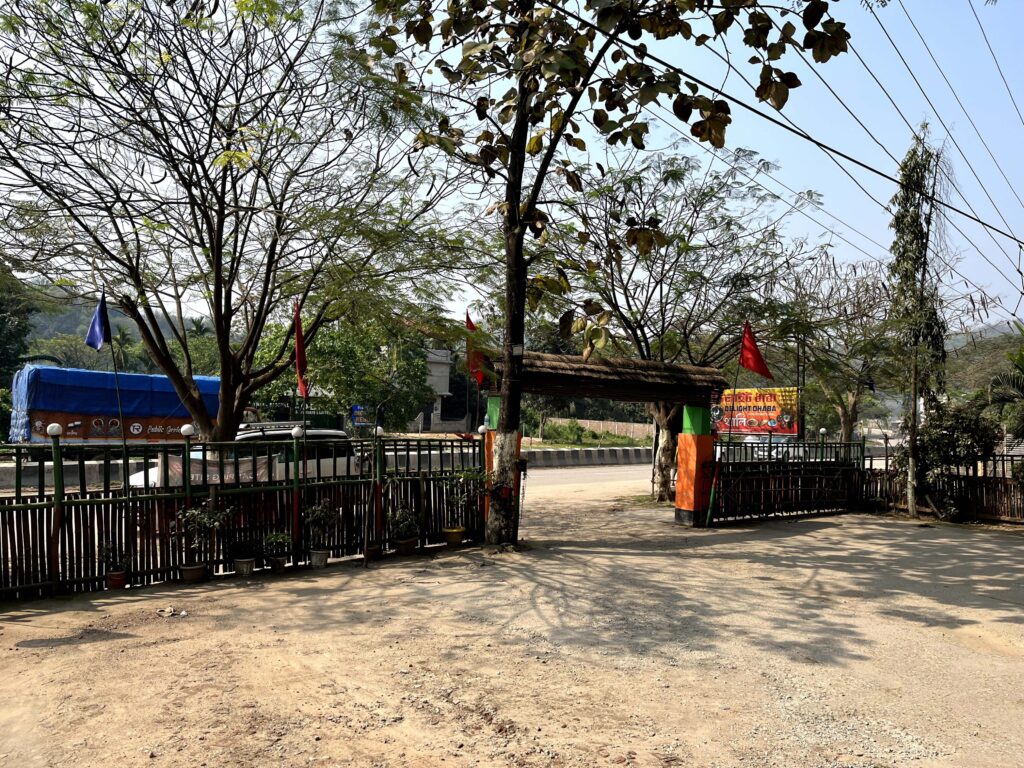
Two hours at the dump. Then north toward Arunachal. Breakfast at a roadside dhaba called Delight, which was less delightful than its name. Tea, roti, and sabzi was the limit of the menu. We continued into the 7-hour drive.
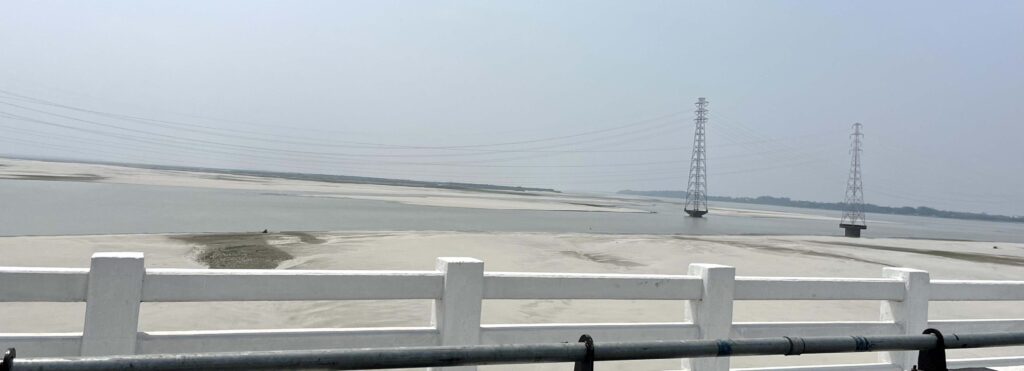
National Highway through the centre of Assam, all the way to Kaziranga National Park. Sharp left after that to bridge the Brahmaputra, which had run unusually low for the season.
Exited Assam at Tezpur. The Arunachal entry needs a pre-approved permit. The check-post is heavily manned by the Indian Armed Forces.
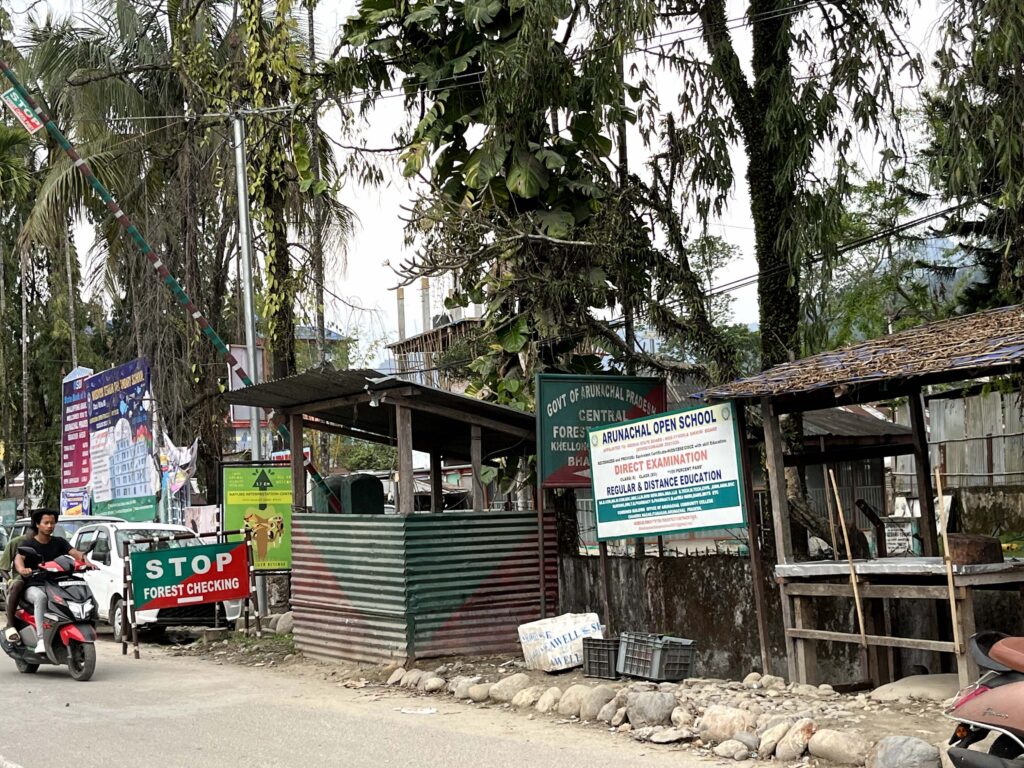
Lunch at another dhaba on the Arunachal side. Then a long uninterrupted drive to Lama Camp, where we slept.
Day 2
Lama at night is brutal. The cold gets through the quilts. Tap water reads like molten ice; hands go numb. The cold is the system’s way of telling you the next morning will deserve attention.
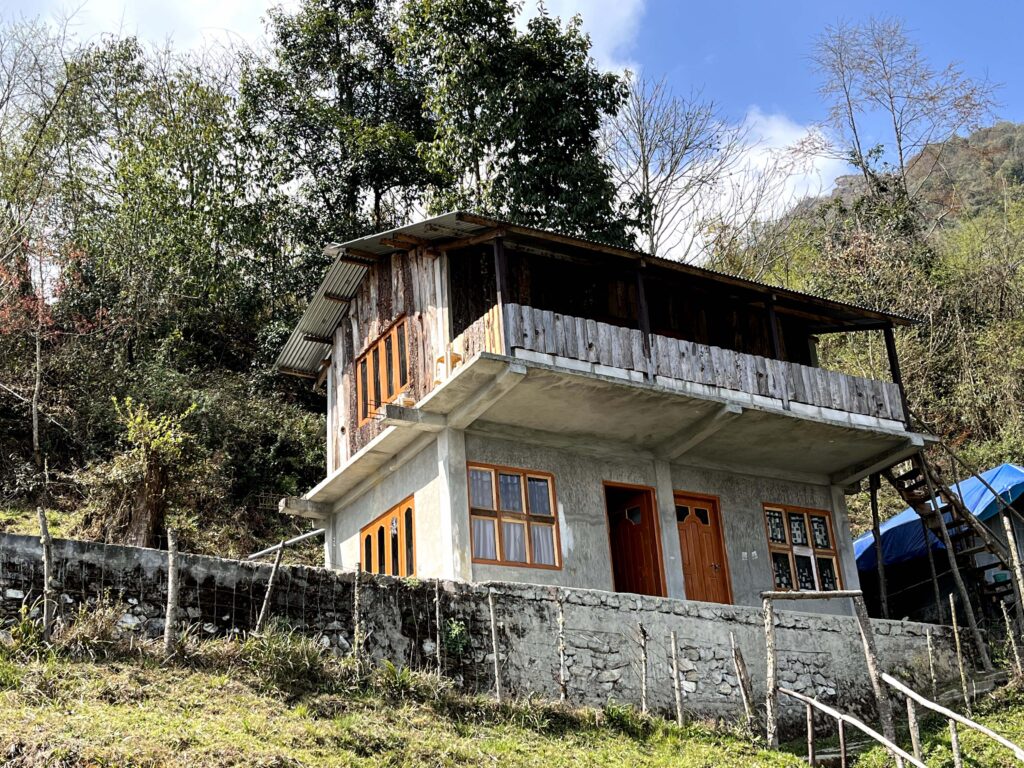
Up by 5am for the first session. Sun starts the warming clock; the temperature catches up to liveable as soon as the light is fully in.
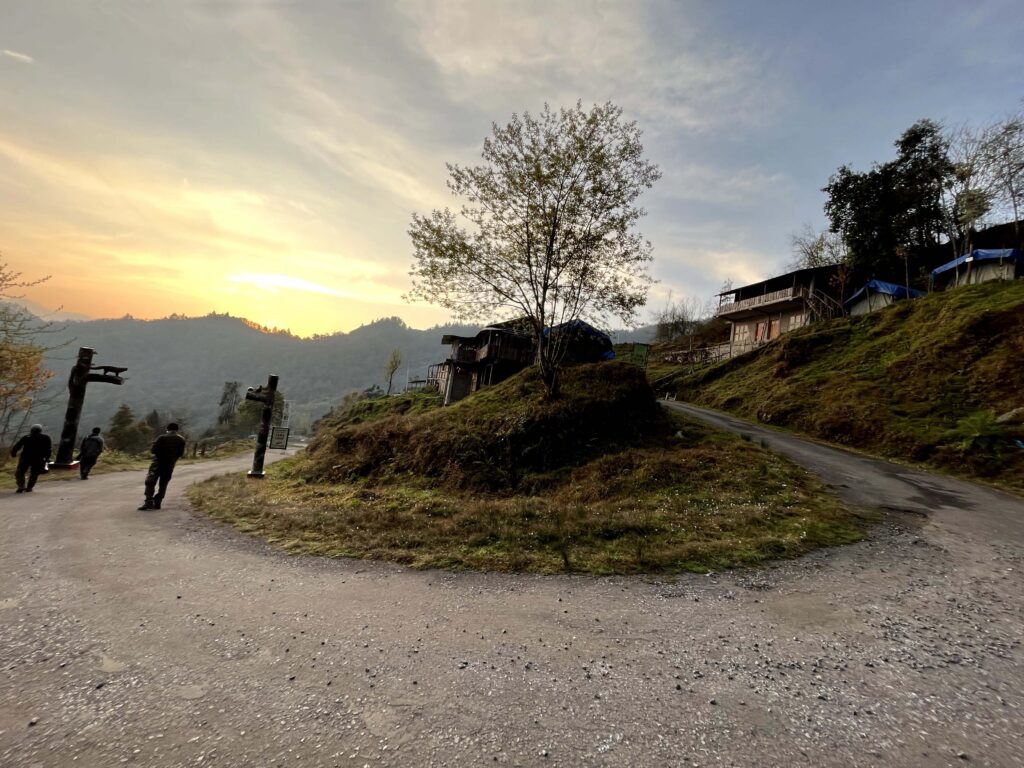
The Lama setup will not feel familiar to plains-dwellers. Stairs to the tents are wobbly. Rooms are wood-walled with tin roofs to handle the rain, with the occasional spider or moth coming through the gaps.
One solar LED per cabin. All phone and camera charging is in the common dining area. Three meals a day, all of them noticeably good.
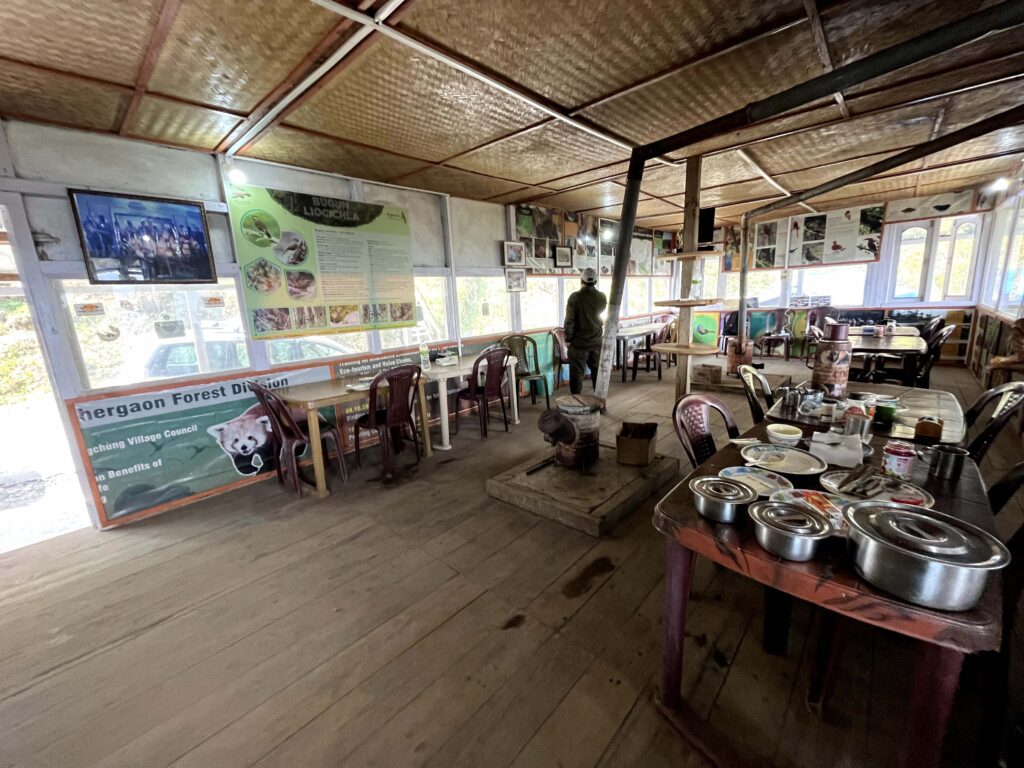
Birding here means driving to a coordinate the guide has confirmed, then walking rocky trails through dense forest. The biodiversity is among the highest in the country. Spotting in canopy and undergrowth is the part nobody can shortcut.

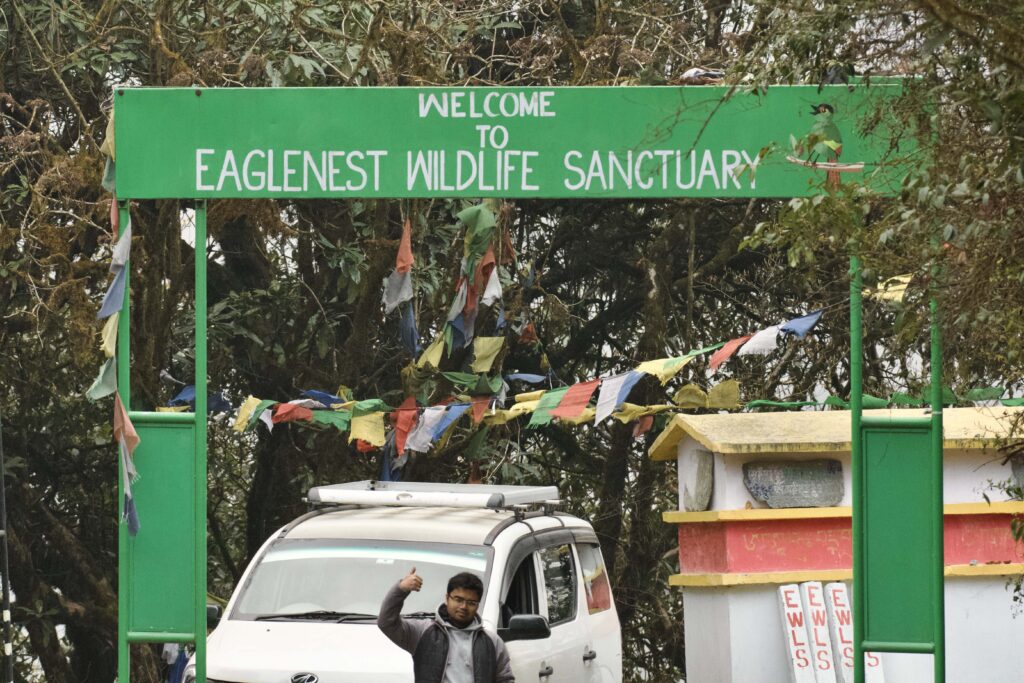
The headline bird at Eaglenest is the Bugun Liocichla. Conservative estimates put fewer than 250 mature individuals in the wild; the highest single-day confirmed count is 14.
On the trail we crossed paths with Ramana Athreya, the eminent birder and astronomer who first described the species in 2006 — the first new bird species described from independent India. The Bugun tribe protects the sanctuary; the species was named after them, and the relationship between the tribe and the bird’s protection is part of why it still exists.
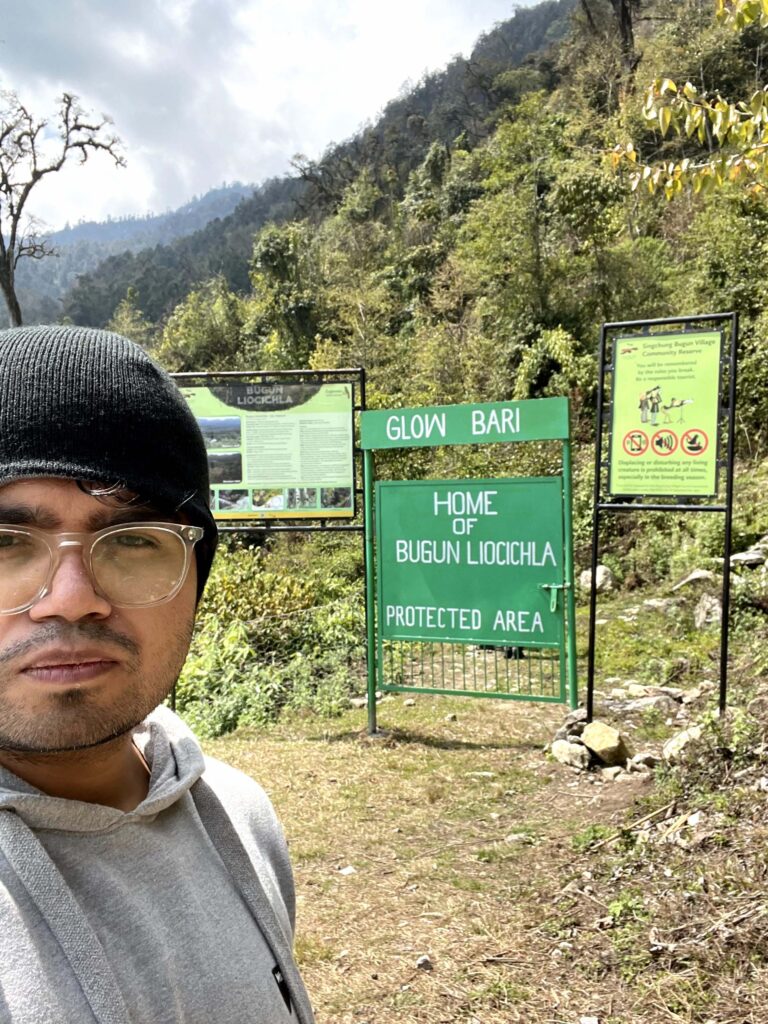
Bugun Liocichla travels in mixed flocks. The standard tracking method is to find the other species in the flock and infer the Bugun is among them. Our guide picked up the call from a mixed flock several hundred metres ahead. The rest of us did not.
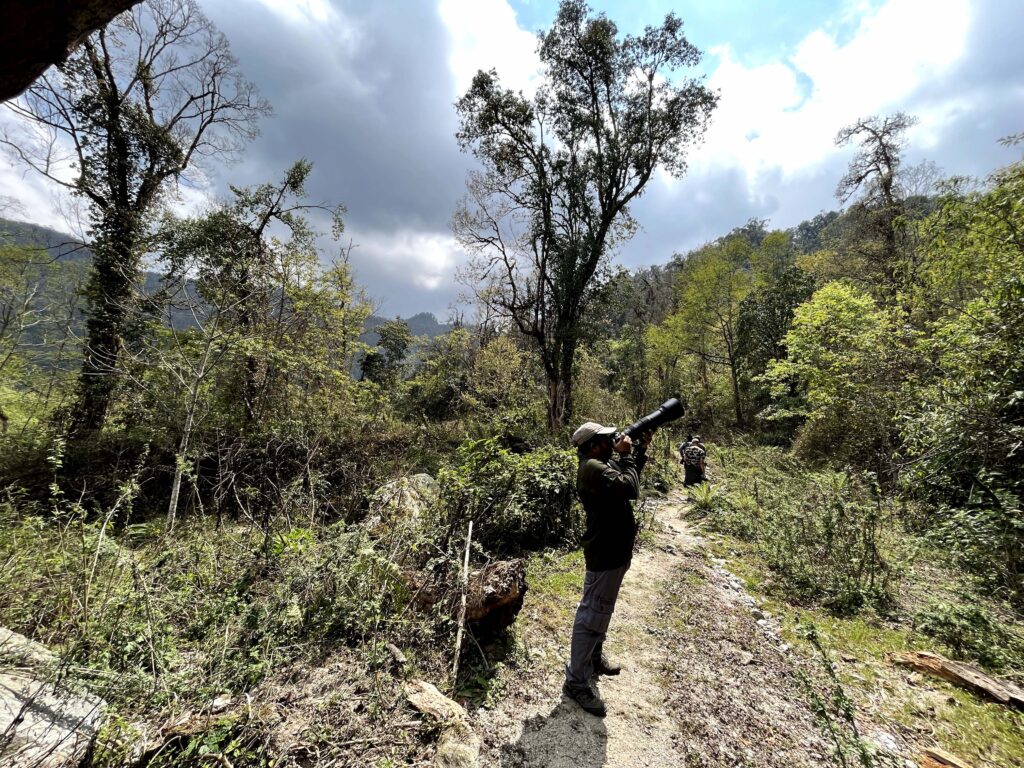
He took us uphill into the dense forest after the call. The route involved poking branches, tight manoeuvring, and an unpleasant amount of contact with Indian stinging nettle.
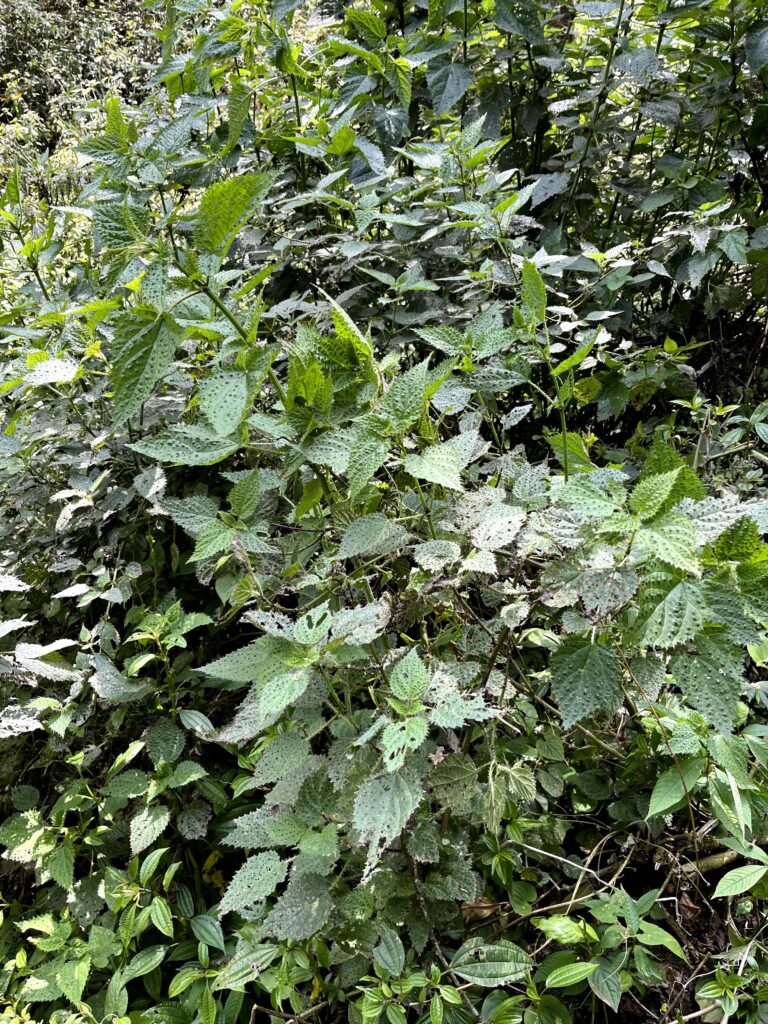
Most of the group got stung at some point. Spared from leeches only because the previous days had been dry.
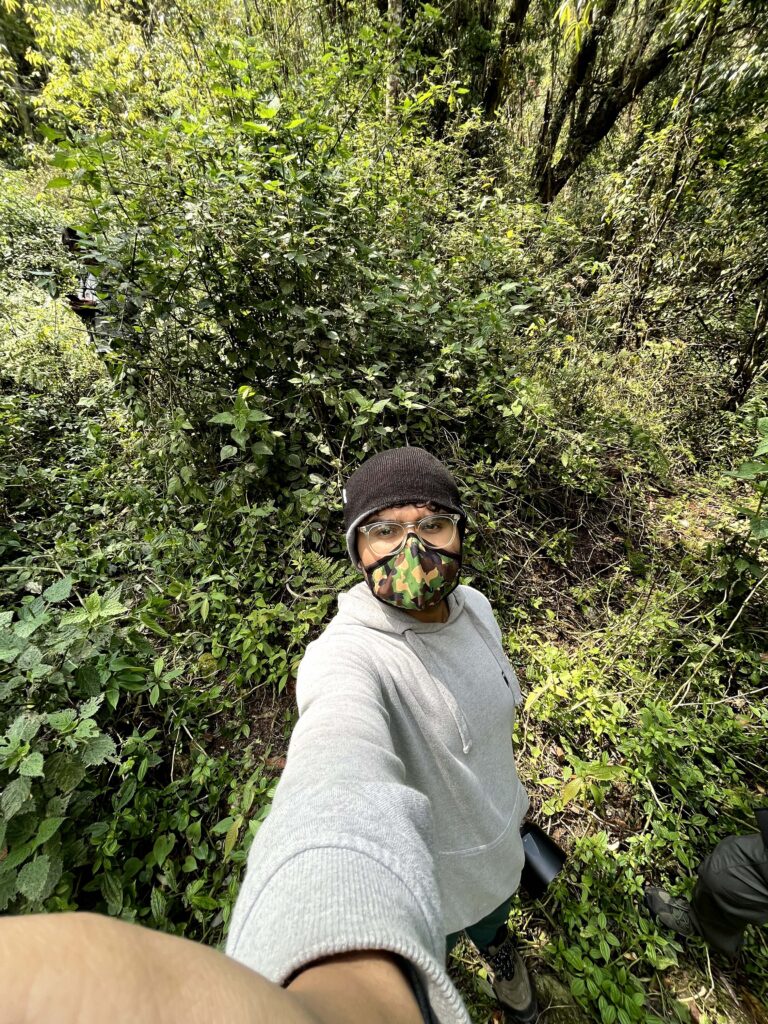
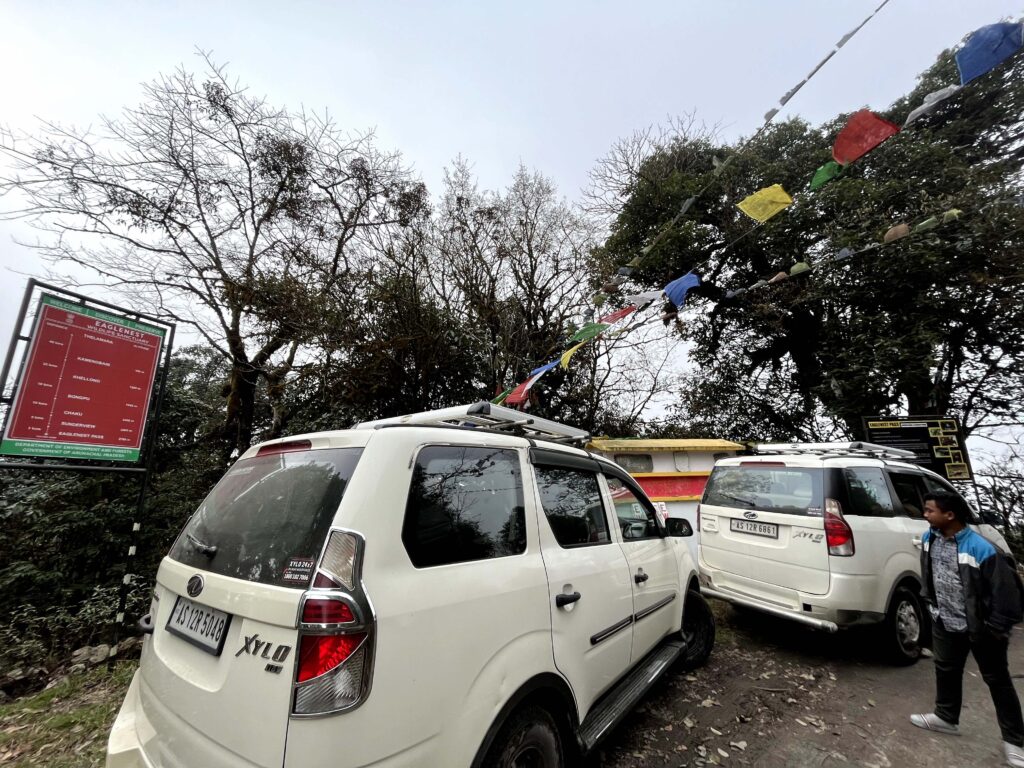
Session ended without the bird. We drove up to Eaglenest Pass, a patch of forest wrapped in cloud at 9000+ feet. From there we descended a slope to look for Temminck’s Tragopan.
An hour of position-holding and the light started going. We called the day and dropped to the next camp through bumpy roads.
Day 3
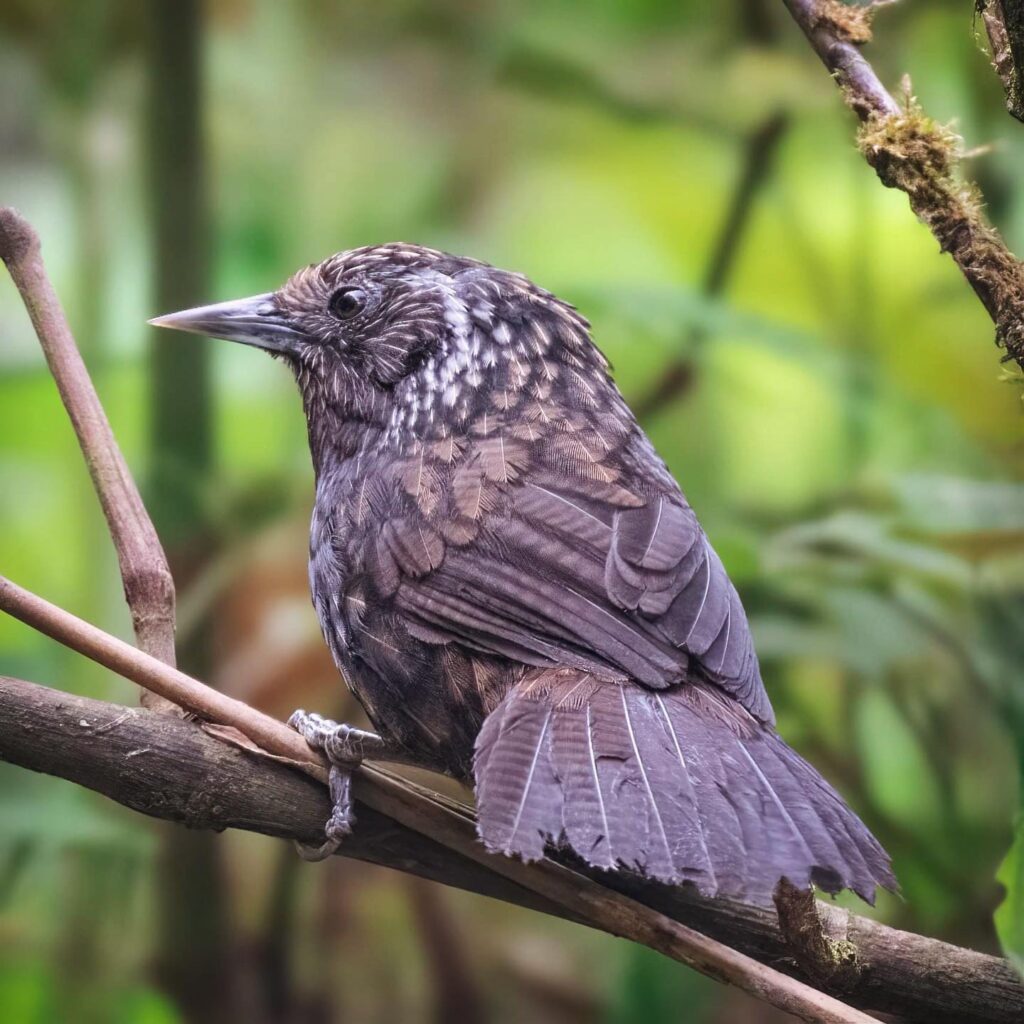
Bompu Camp is at lower elevation than Lama. Same facilities, much more bearable cold. Just outside the camp trail we found the Sikkim Wedge-billed Babbler, a recently rediscovered species that was thought to be extinct.
Drove on to Khellong at lower elevation still. The valleys here are flat and the temperature climbs through the morning.
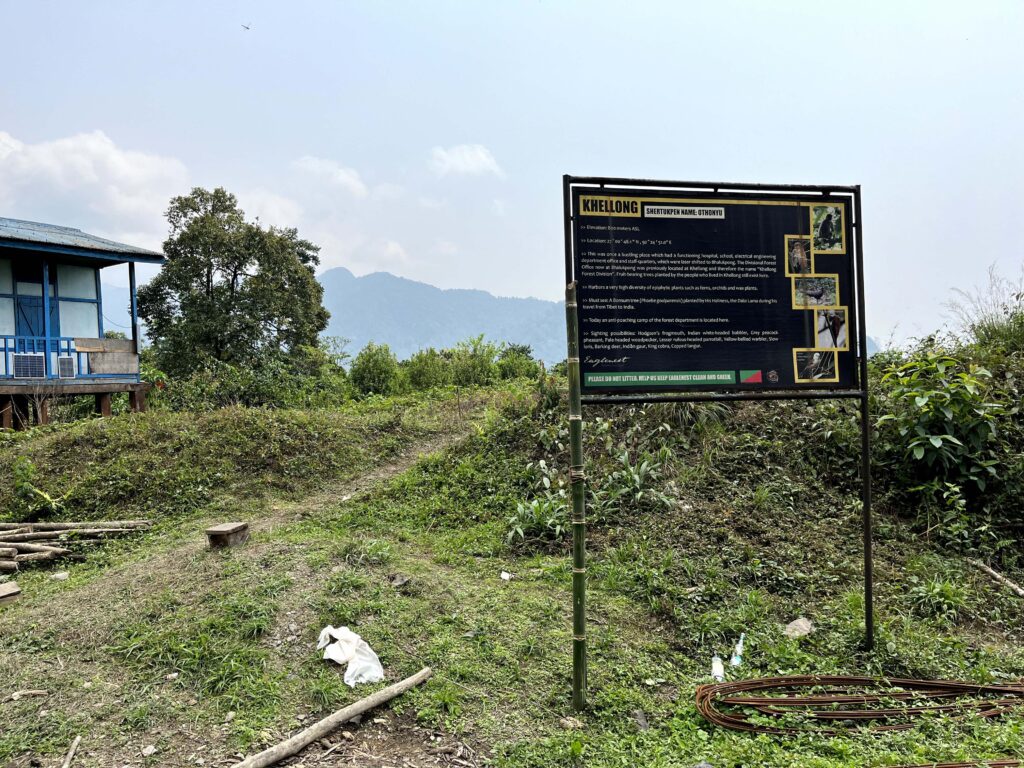
End of Khellong is marked by a prominent army checkpost with broken beds and empty rooms — somewhere travellers can rest and use basic facilities.
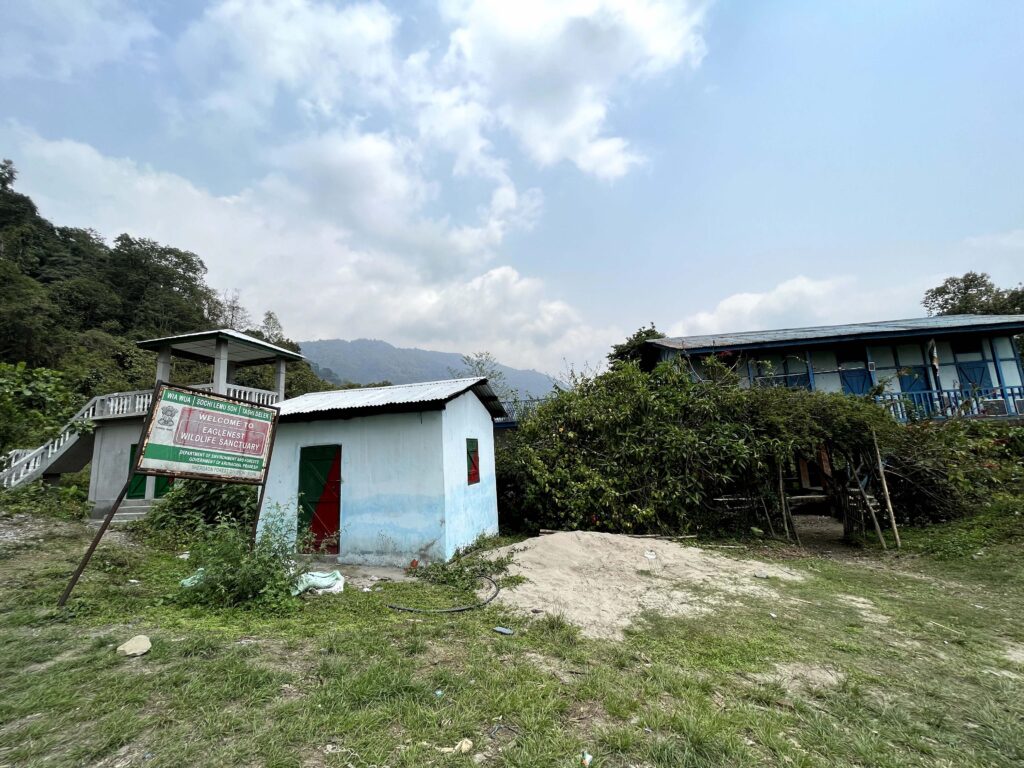
The trail beyond goes to a small Buddhist shrine in the middle of the jungle.
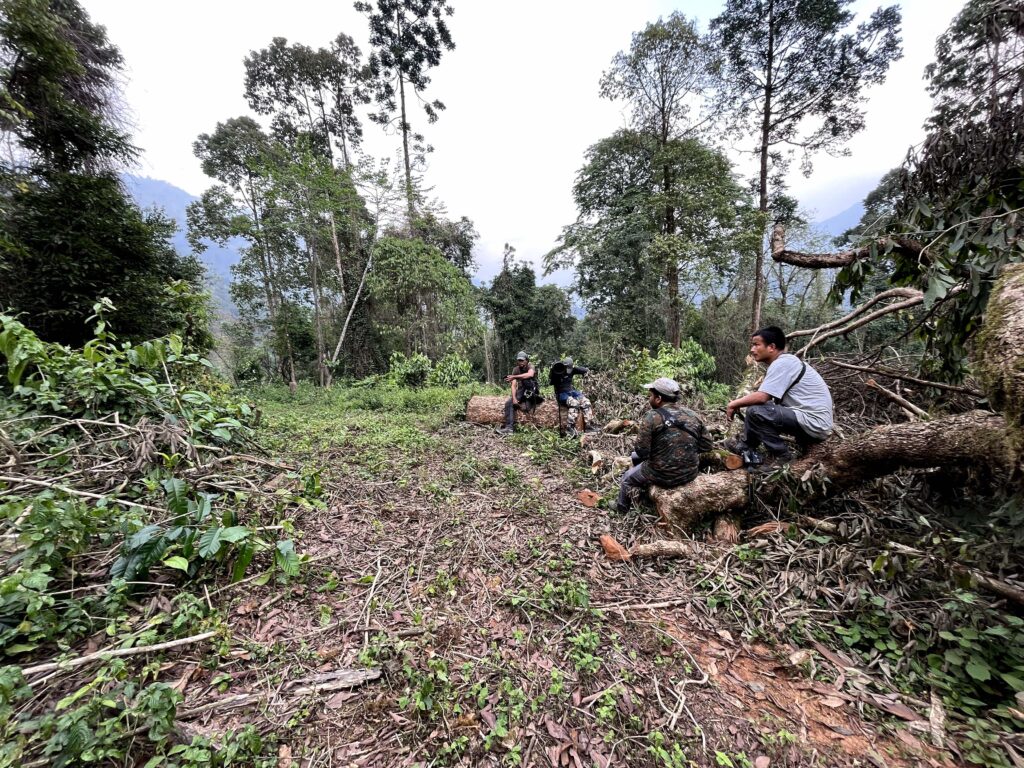
Around the shrine we saw active habitat destruction: trees being uprooted and milled into planks, almost certainly illegally. The headline sighting on this trail was a Red-headed Trogon.
Day 4
The next night was at Bompu, which spreads across a larger expanse than Lama. Trail of canvas tents and shared bathrooms, eco-built with deliberately minimal habitat impact.
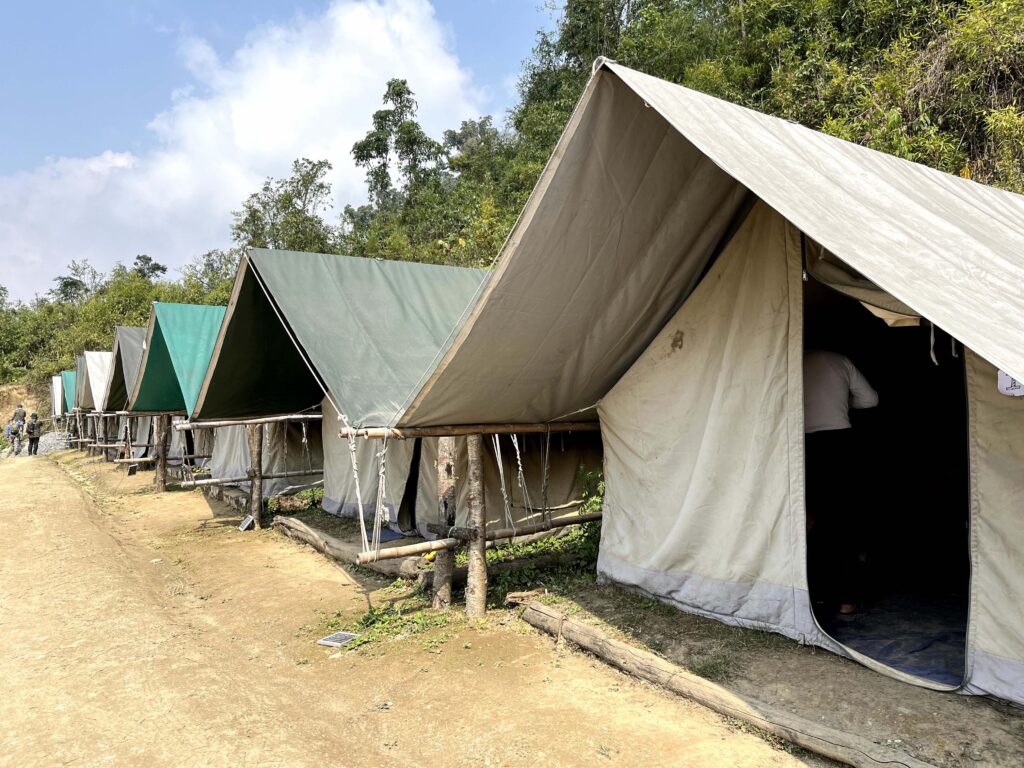
Almost no internet at Bompu. Cellular network is spotty. There is a central patch for fireplace and trekker picnics.
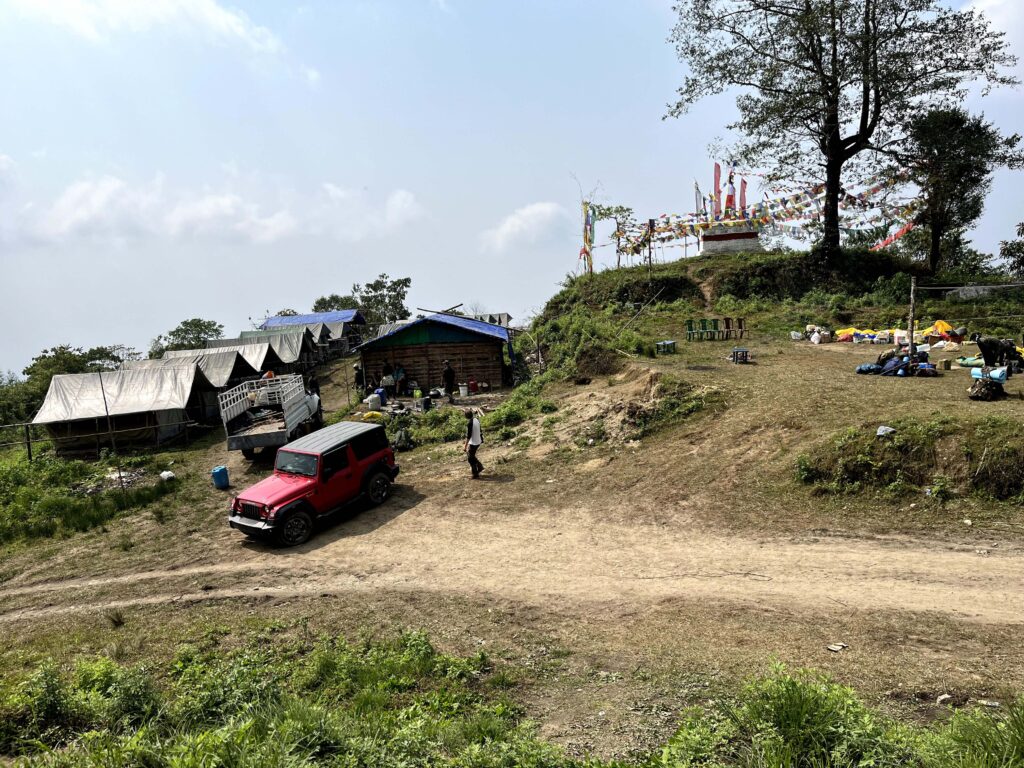
Solar LED in each tent, charging in the common wooden house. Charging window: 7pm to 10pm only.
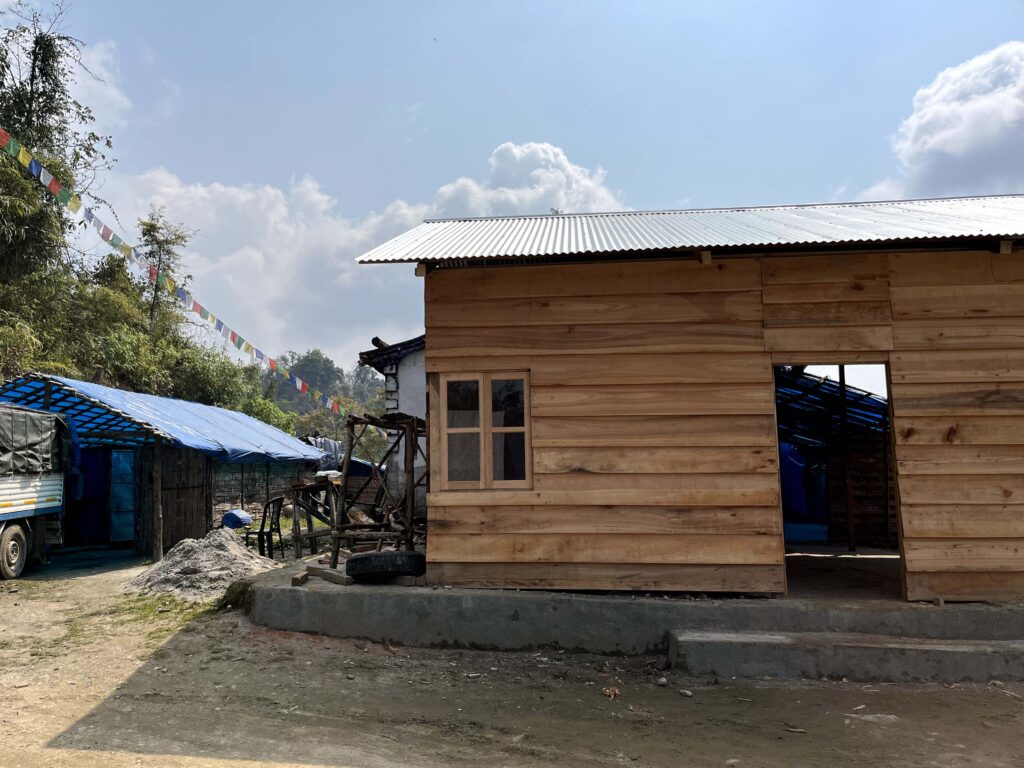
Food matches Lama’s quality. Same packed-breakfast-and-lunch model for early-departure birders. The standard rotation: fried rice, omelette, puri-bhaji, paneer, several green-vegetable spreads.
Day 5
The wrap-day on this leg. We went back via the same trail to Lama for another shot at the Eaglenest Pass tragopan.
First, the Ward’s Trogon family. The guide took us into a canopy-thick valley where we got two males and a female of this vulnerable species in a single window.
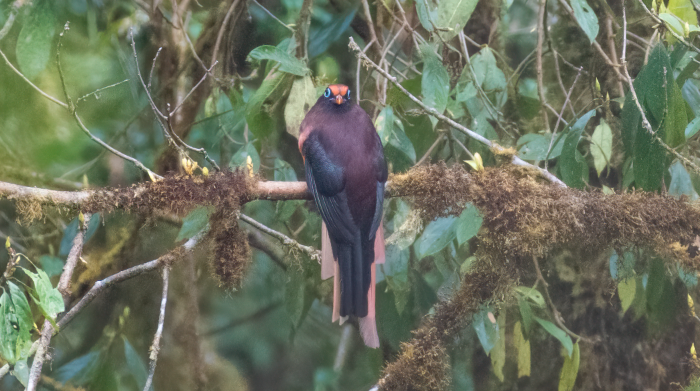
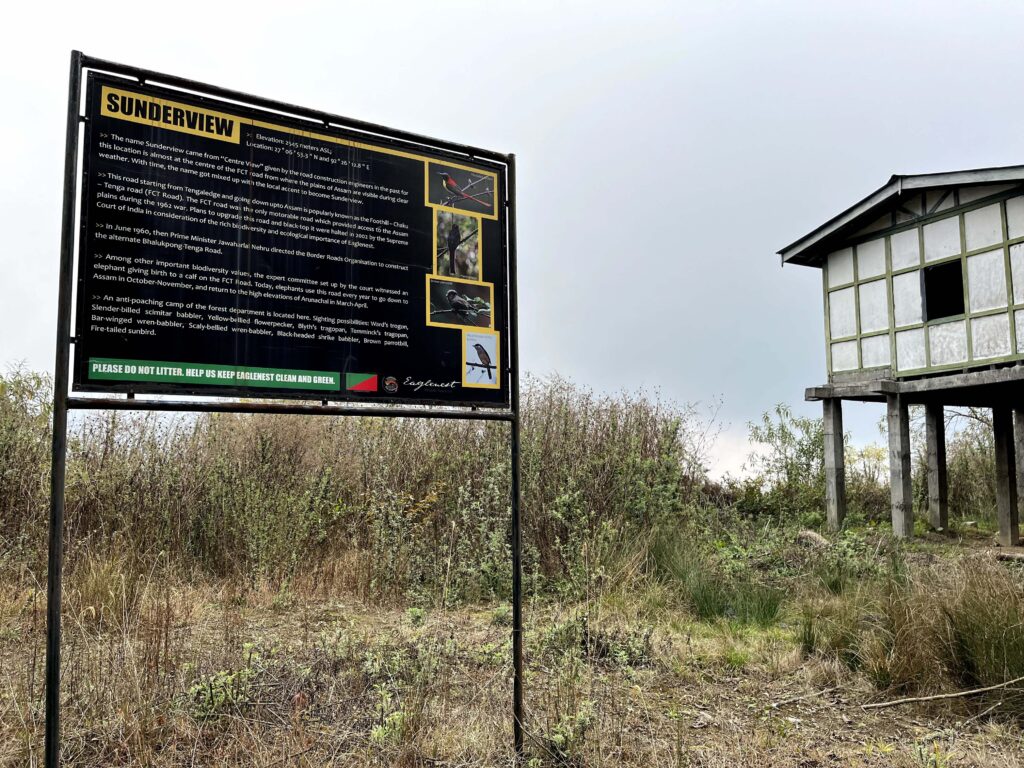
Second tragopan attempt at Sunderview also blanked (Blyth’s runs at lower altitudes). Back at Lama by 7pm. The cold was easier this time — either psychological adjustment or lighter wind, hard to call.
Night session for Hodgson’s Frogmouth. Heard the call repeatedly. Bird never came into the open. The compensation prize was a sky completely free of light pollution and cloud cover. The kind of dark that is rare to come across.
Day 6
Morning attempt for Bugun Liocichla in the core sanctuary. Greeted instead by a herd of Mithun, the state animal of Arunachal, a bovine. Local note: not reared for milk. Reared for meat — gifted from groom’s side at tribal weddings.
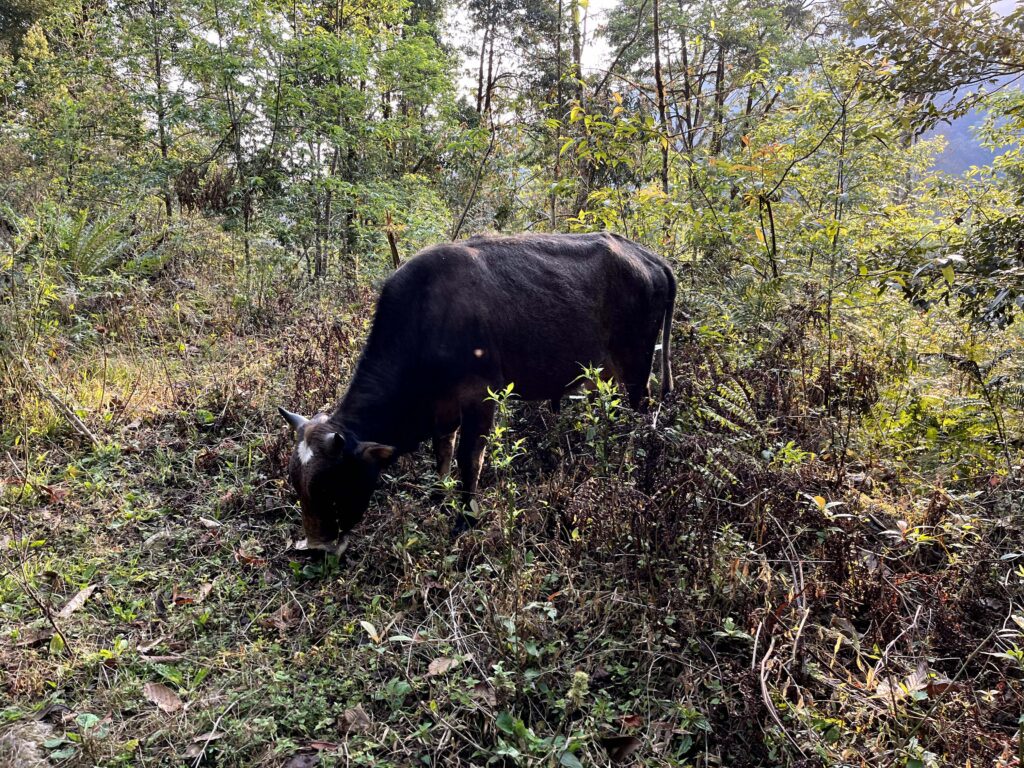
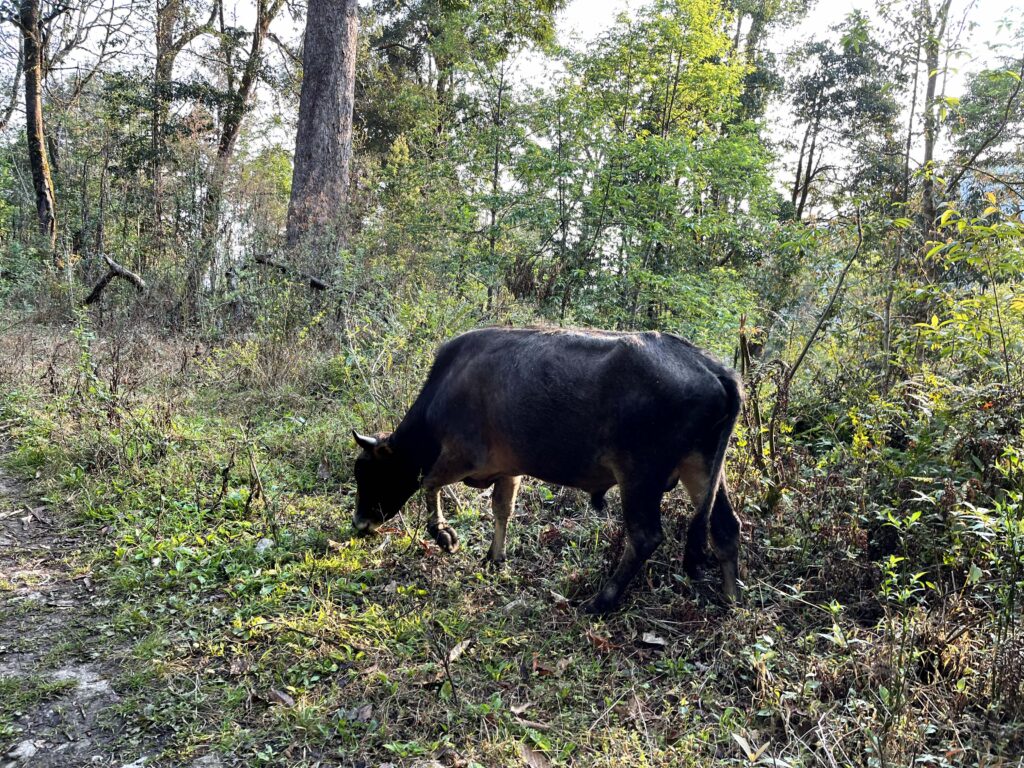
No Bugun. We dropped to the lowest elevation of the trip, Dirang Valley. Evenings in Dirang, hemmed in by mountain lines on every side, are the kind of frame the camera resents being put away for.
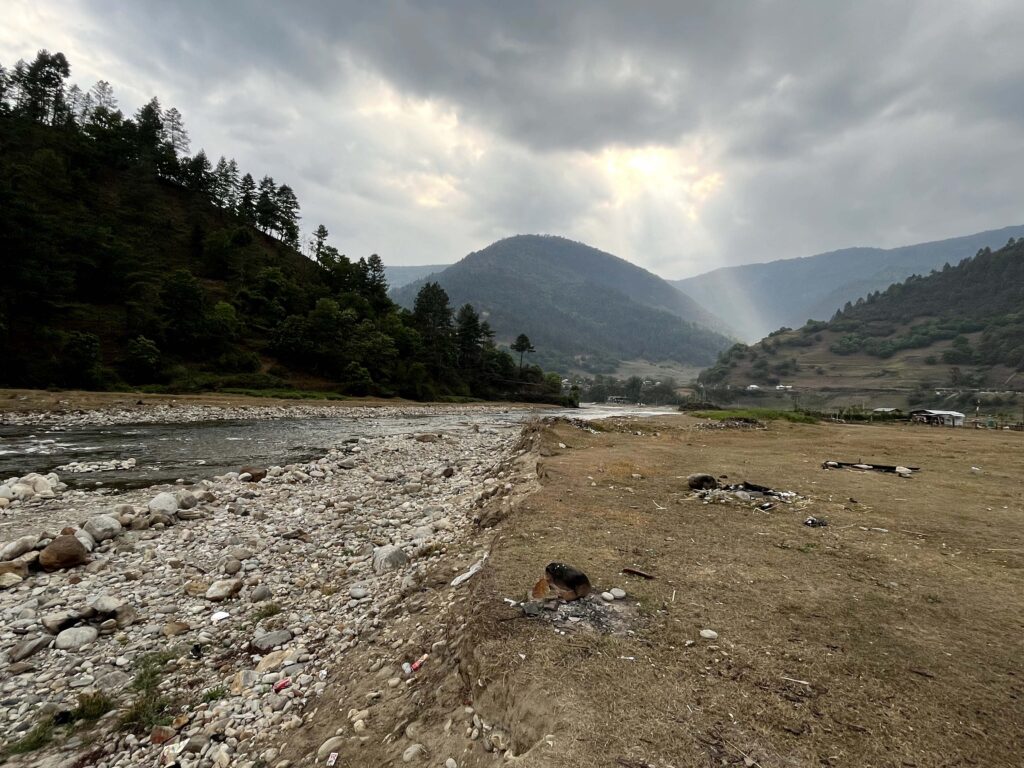
Unlike the camps, Dirang feels like a real town. Smooth roads, regular homestays, hotels, local market, food shops. Coming up as a popular tourist destination of Arunachal for that reason.
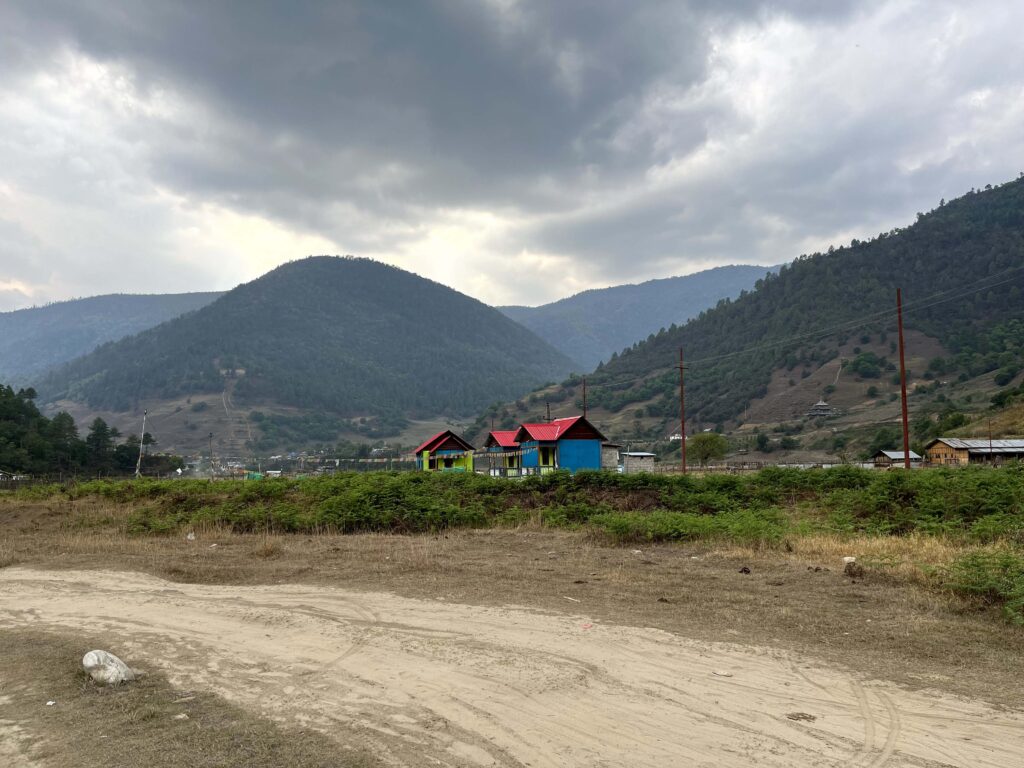
The Kameng river runs wide through the heart of the valley, white water and full force.
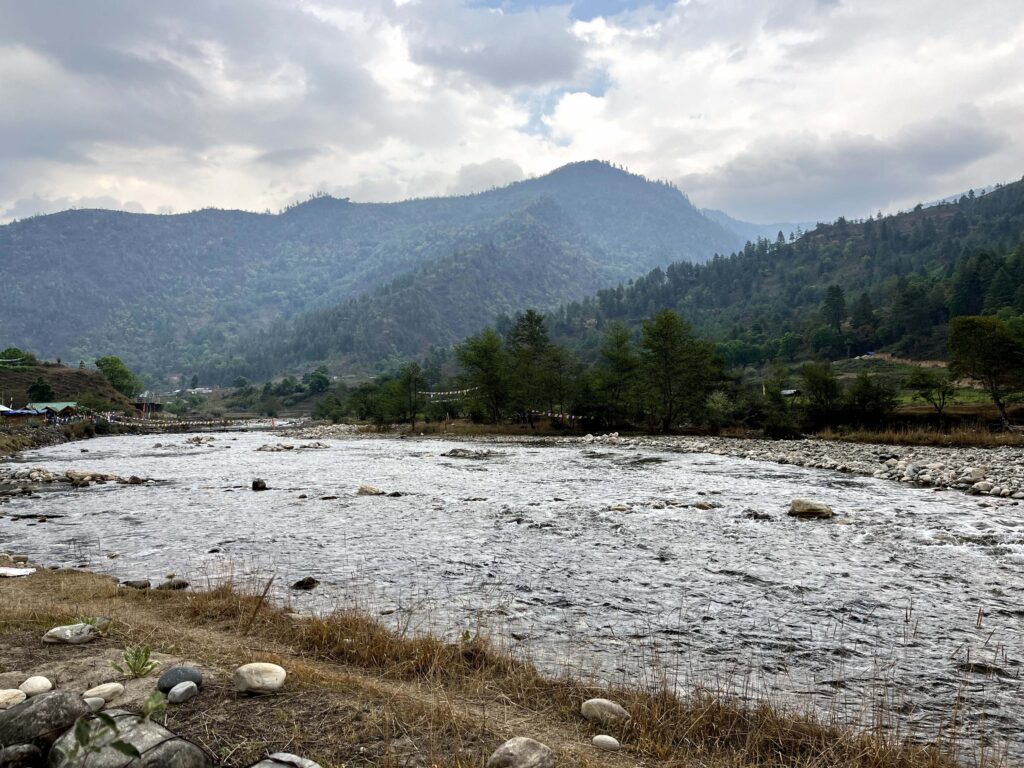
A regular tourist gets the option of a stay on the riverbed, which is a real draw.
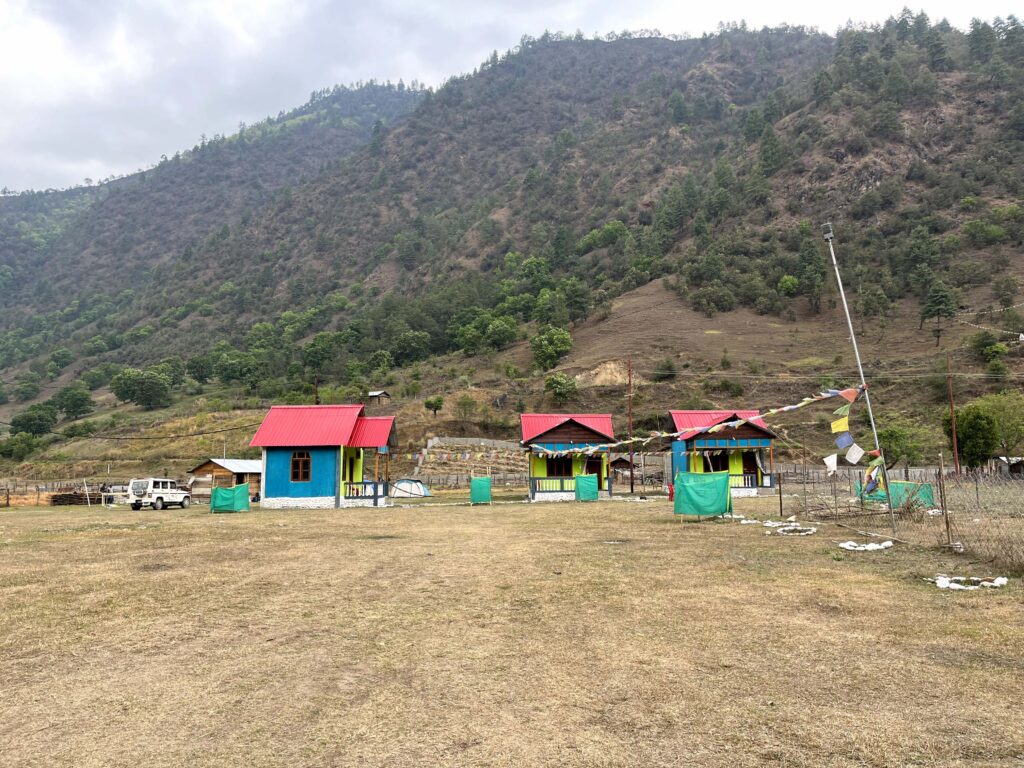
We had a more strategic call to make. We chose Mondruk Homestay, up near the Dirang market.
Day 7
This is the post-interval high point of the trip. 2am wake-up. We were aiming for Sela Pass at 14,000 feet.
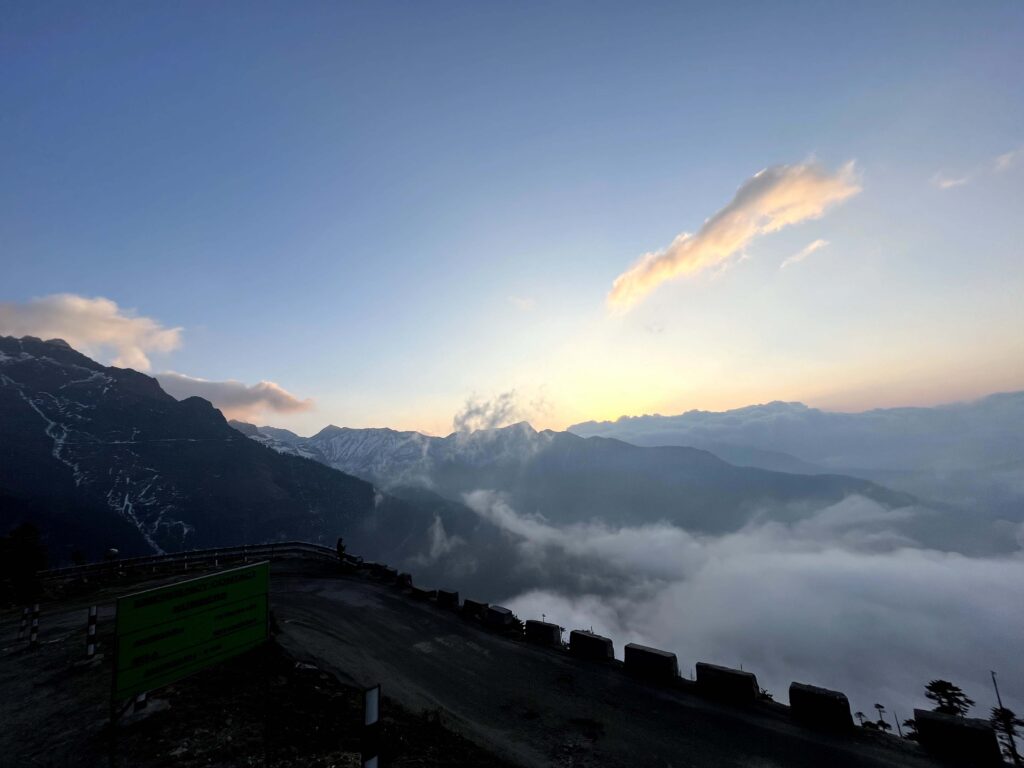
Sela has a massive entrance gateway. The pass is simultaneously an army base, a small village, and a tourist spot.
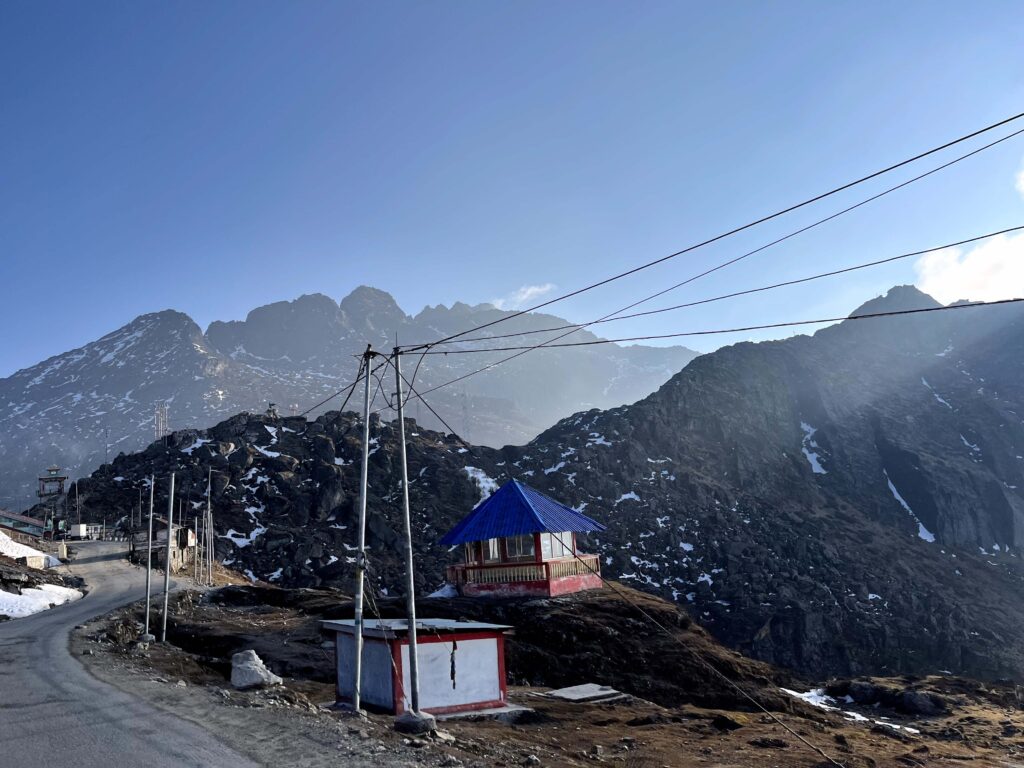
Luck arrived: there had been fresh overnight snowfall. The visuals improved by a factor and the snowy birds were more inclined to come close to human settlement.
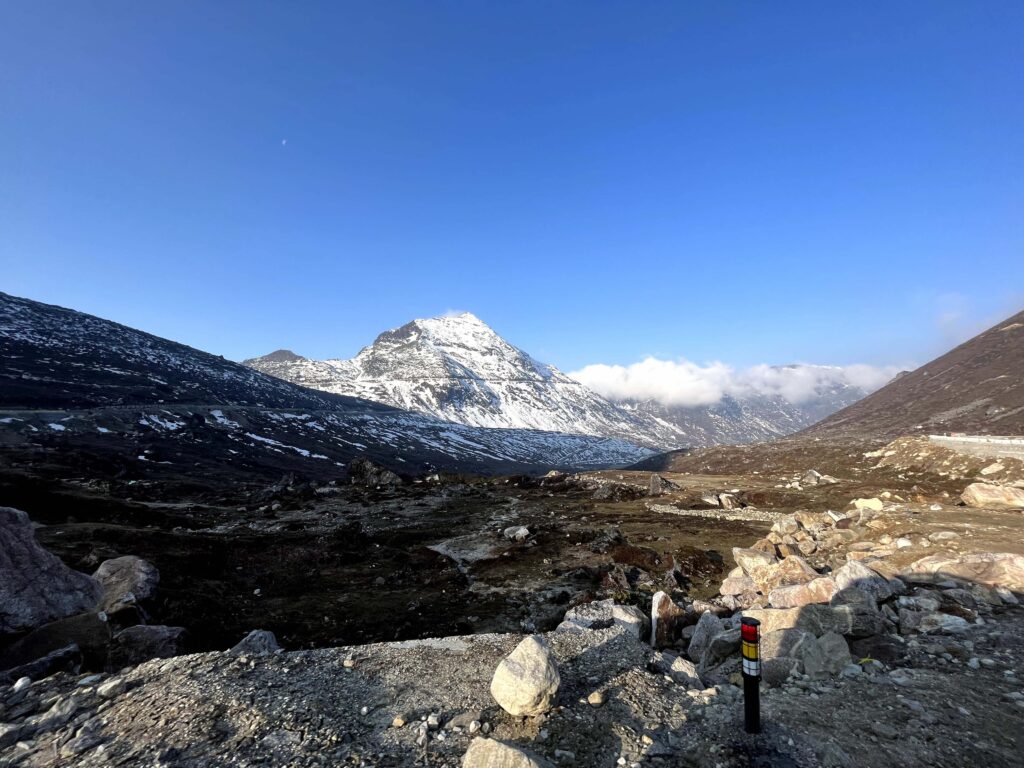
Snow-capped panoramas in every direction with frozen lakes between. Tibetan Buddhism counts 101 sacred lakes in and around the pass. The site has religious weight on top of strategic.
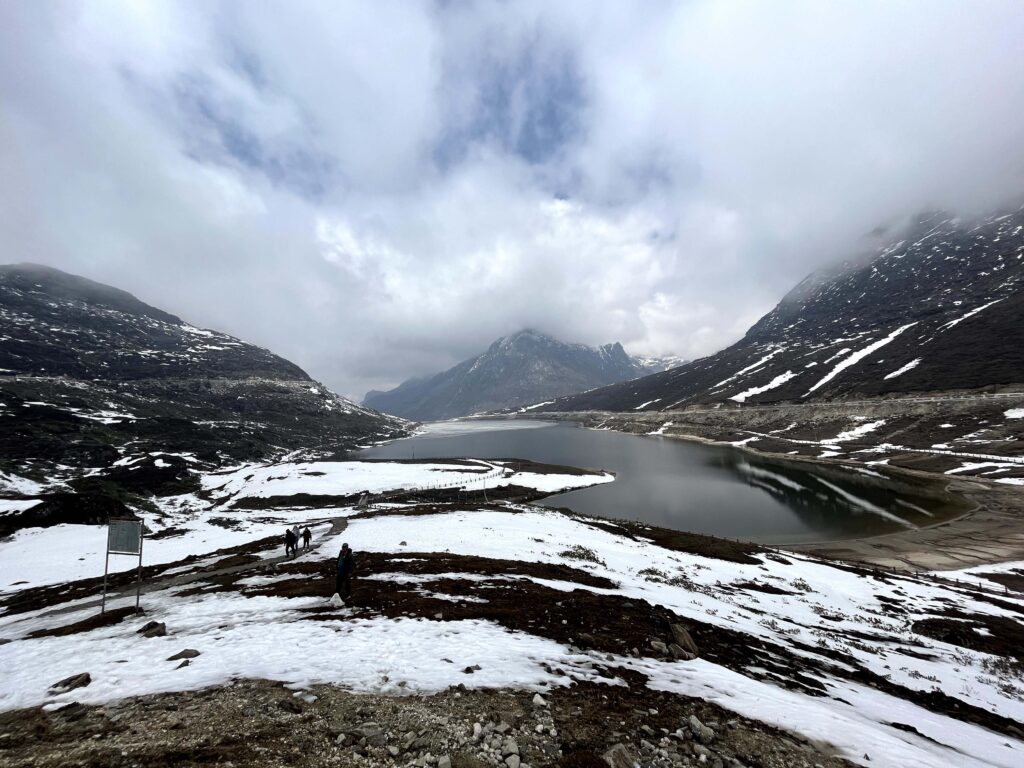
The pass road is smooth and wide thanks to the army. The road played a pivotal role during the Sino-Indian war.
The lake was almost completely covered by a thin sheet of ice. On the few sections where the ice had melted, common shelducks rested — the same species I had previously seen in the arid terrain of Kutch.
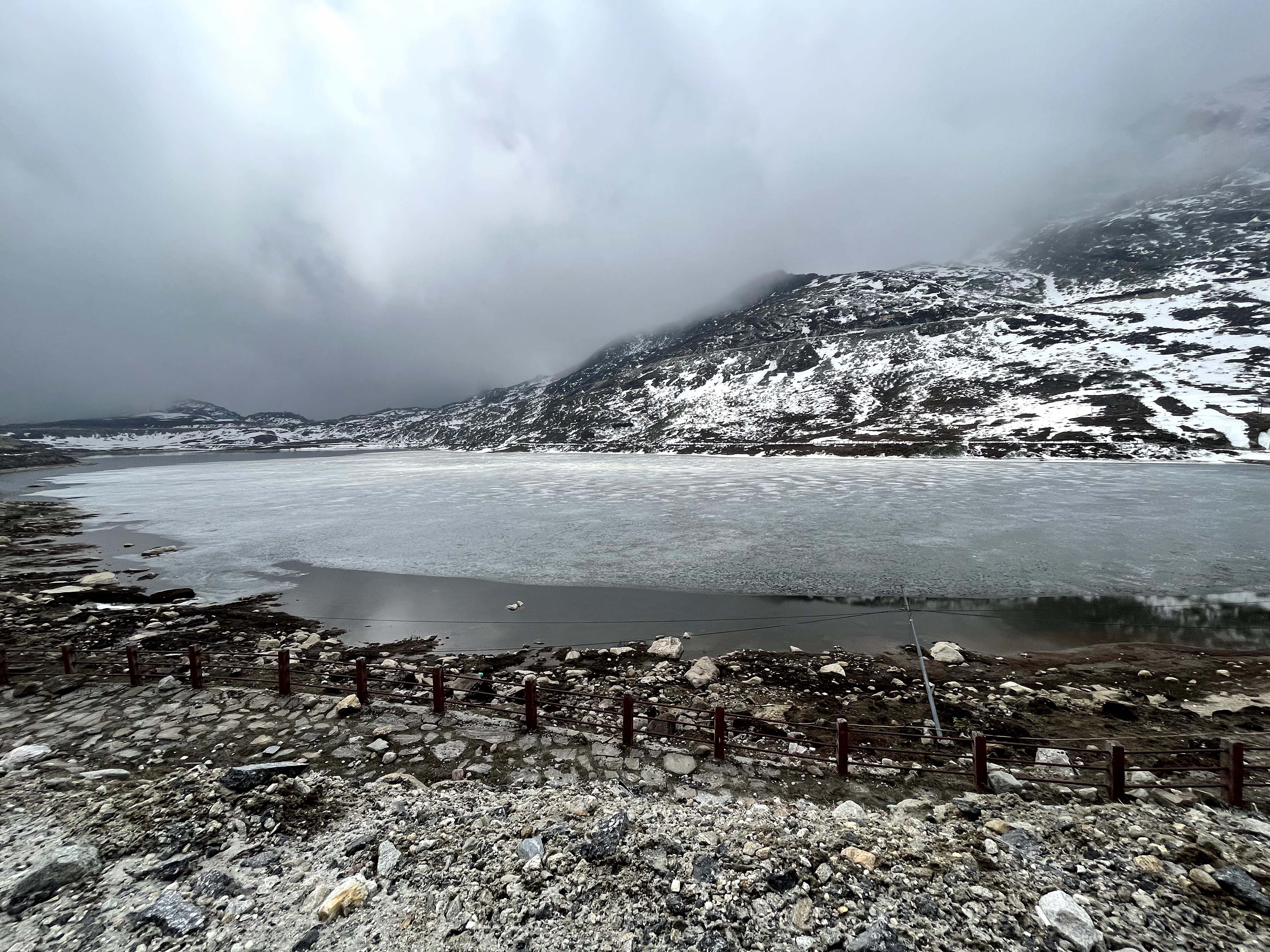
Trekking the slopes, our feet sank deep into the snow. Standard scene at Sela; tourists were starting impromptu snowball fights around us.
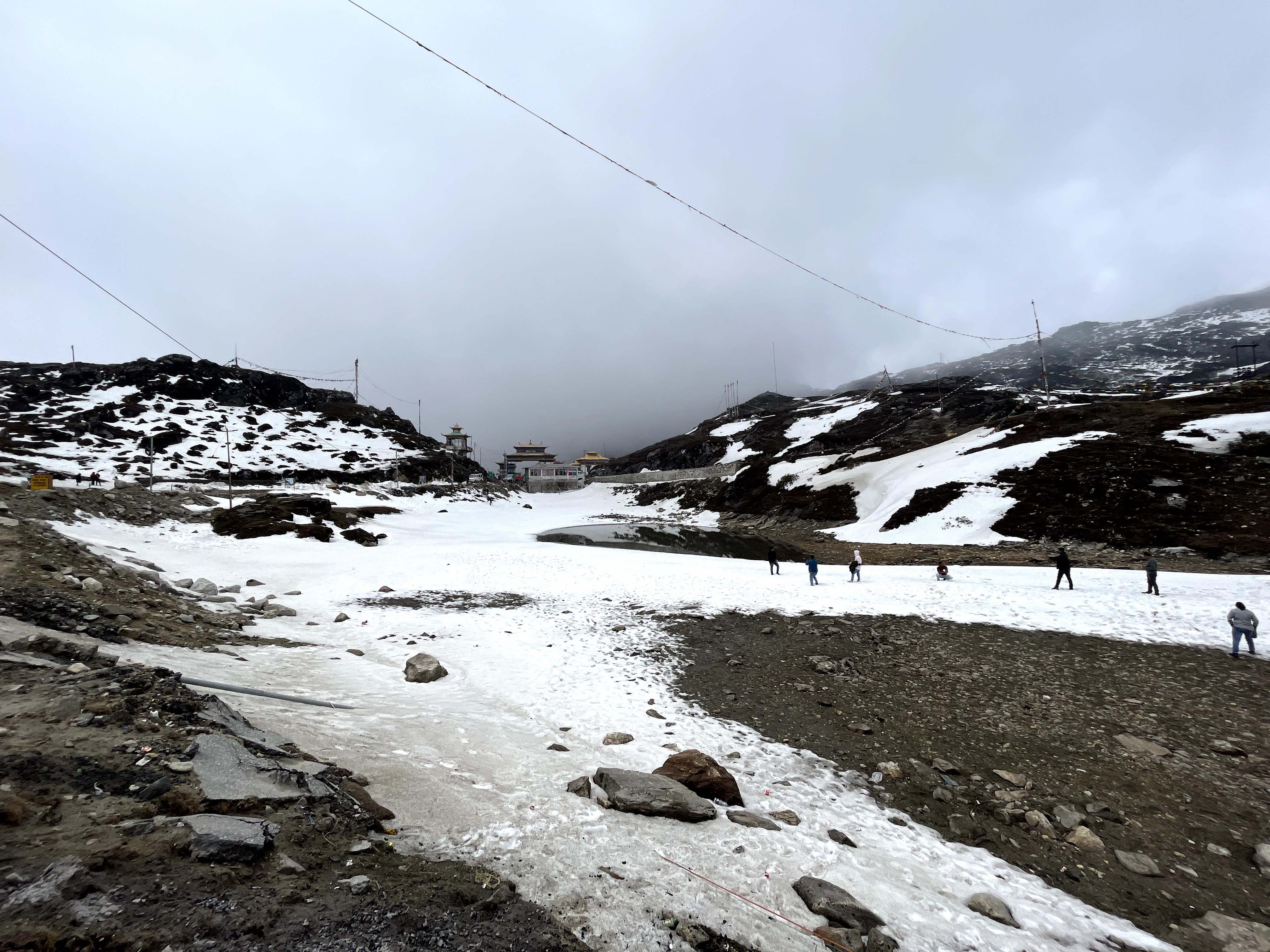
Hot Maggi at the nearby shop, then a final luck-roll along the army camp slopes — Snow Partridges in a flock and Himalayan Monals on the wing. Back to the hotel at Dirang by 3pm. Exhausted, full of frames.
Day 8
Mondruk Homestay was a step up from the previous camp stays — a solid three-storey apartment-style building with spacious rooms. The owners cook home-style meals on the top floor on request.
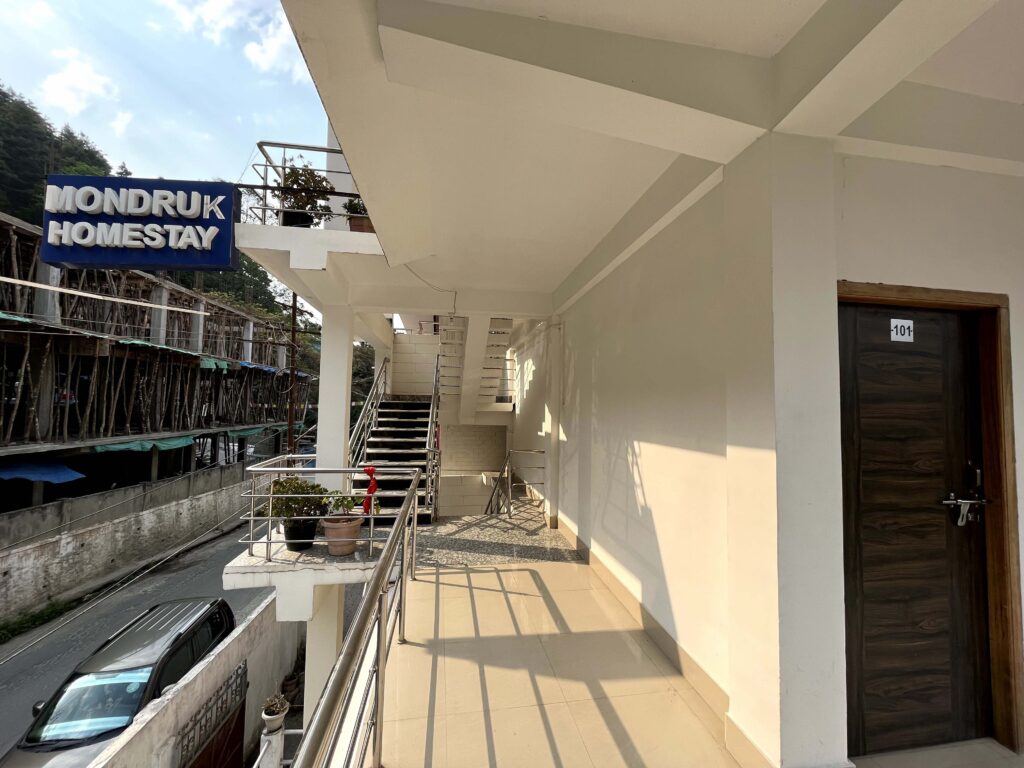
The bathroom had everything you need with on-demand geyser hot water.
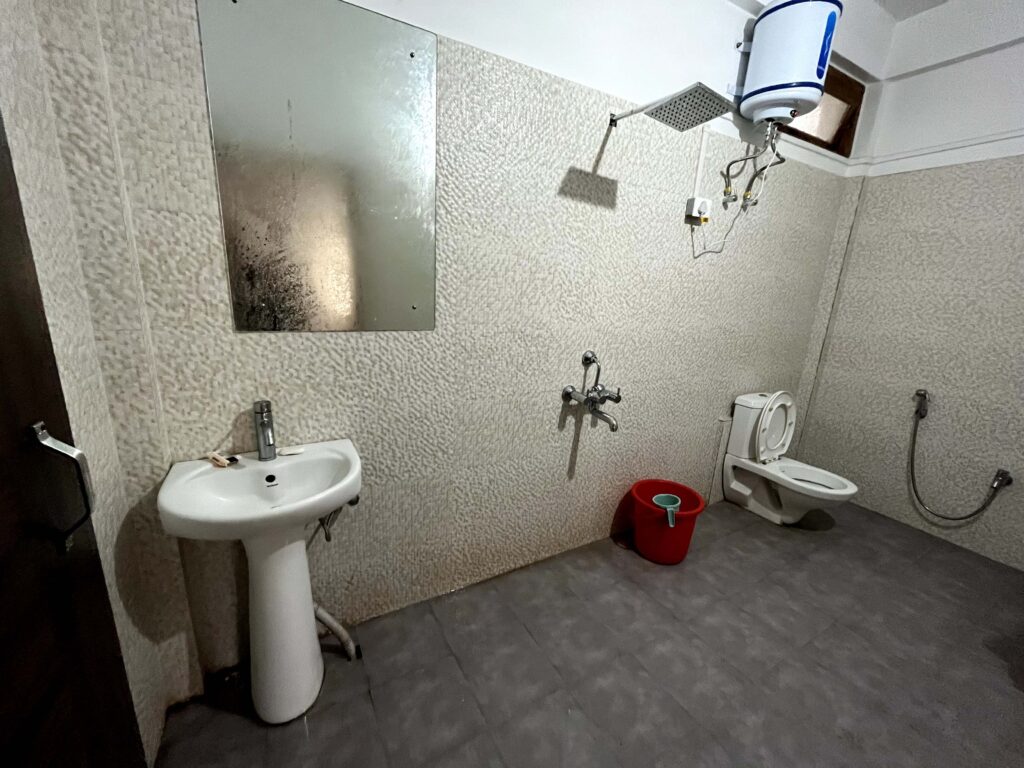
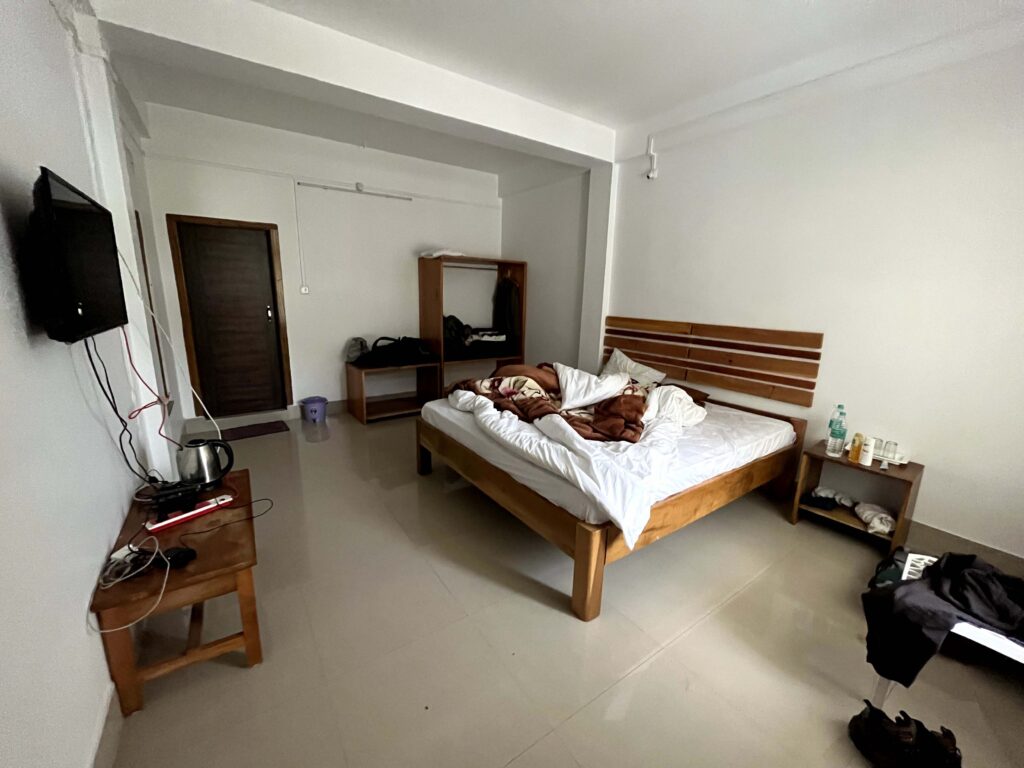
Comfortable 15°C inside Dirang, so the occasional power cuts were not a problem. We left at 5am for Mandala. The centrepiece is 108 stupas, each one carved with Sanskrit incantations.
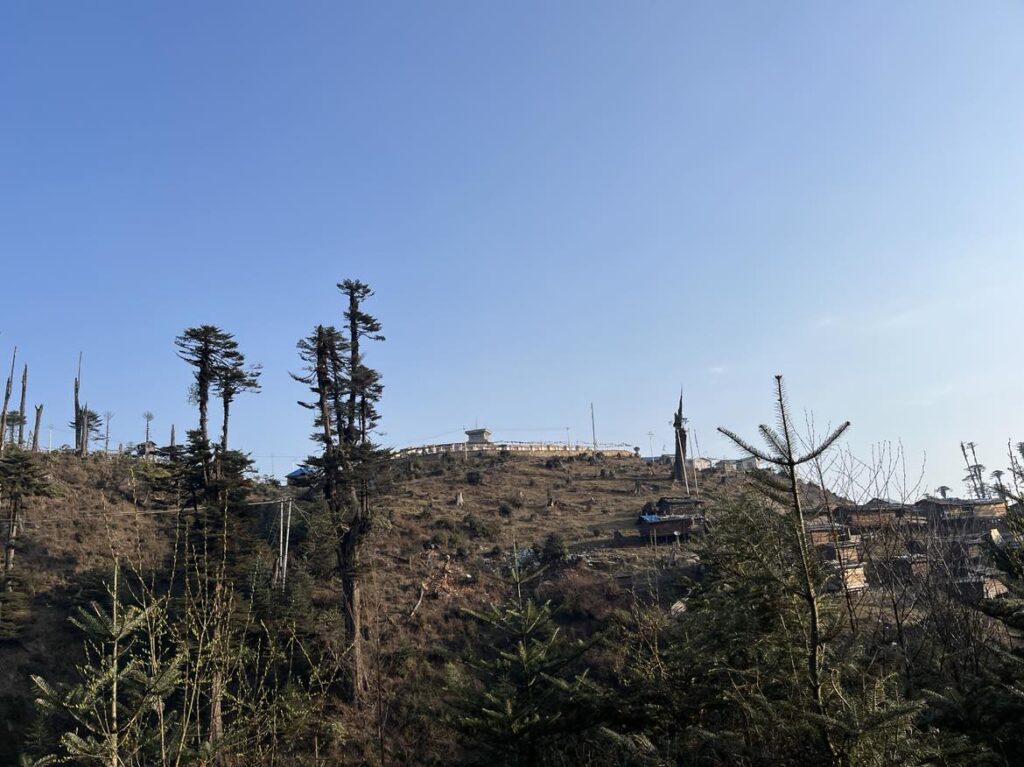
Past Phudung the route forks; the prominent path goes to Mandala at 11,000 feet.
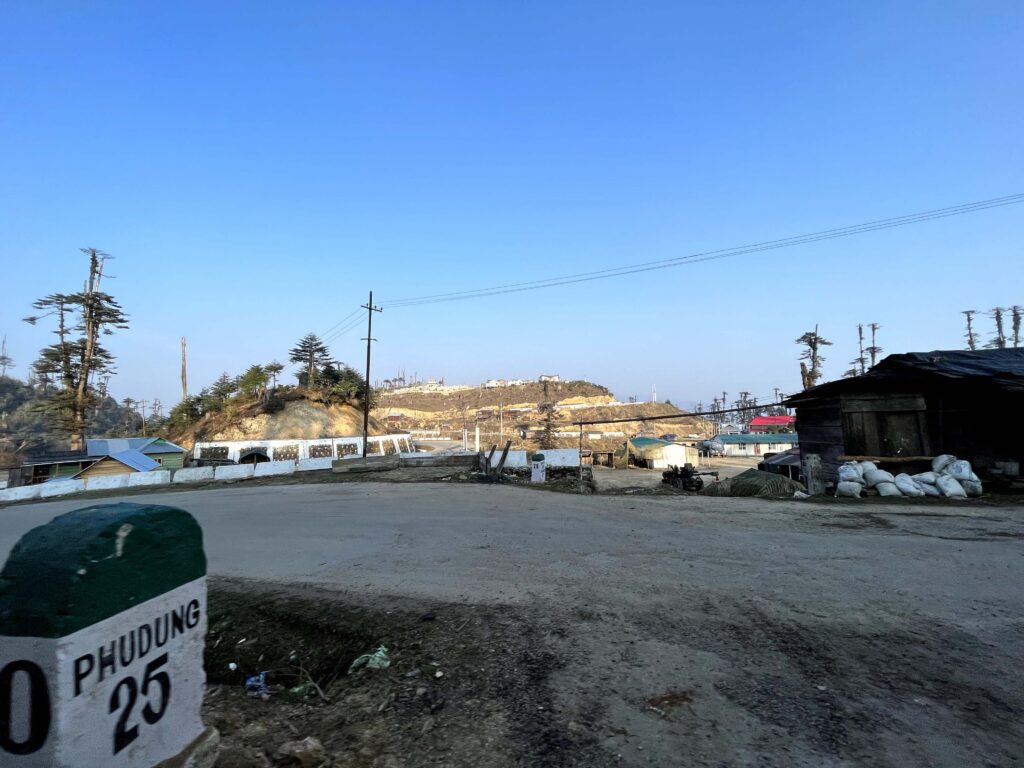
Mandala is known for a famous birding lodge overlooking the gorge ahead. Lately, army training has expanded around it and the noise has gone up materially. Village settlements are spread across the slopes.
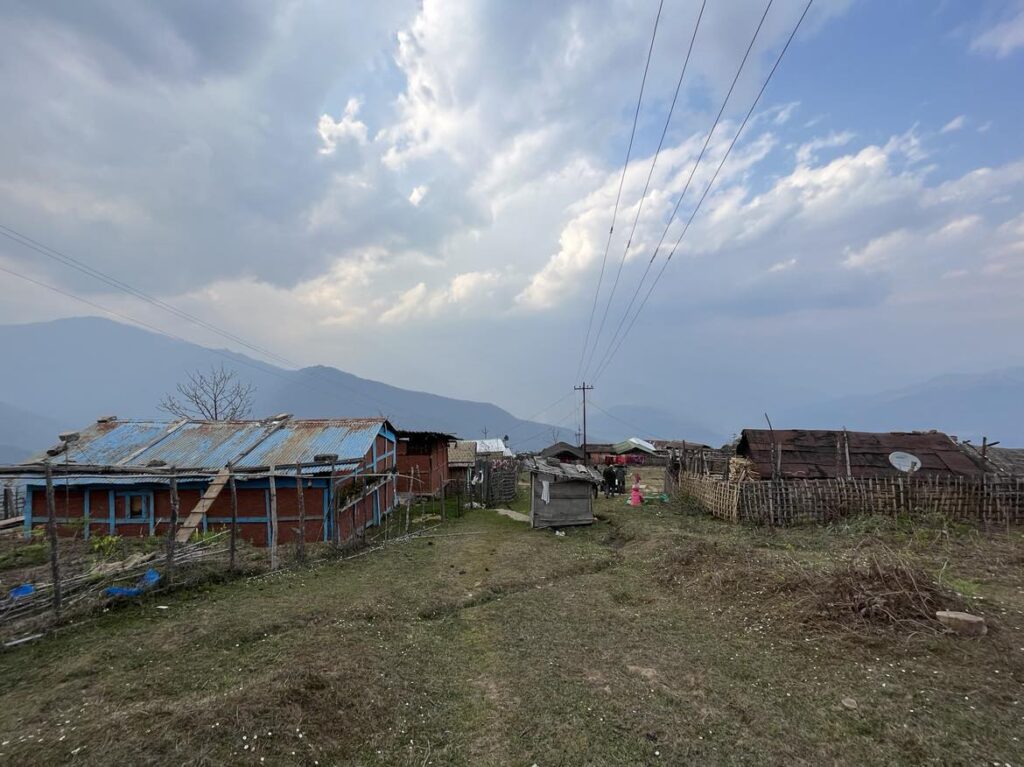
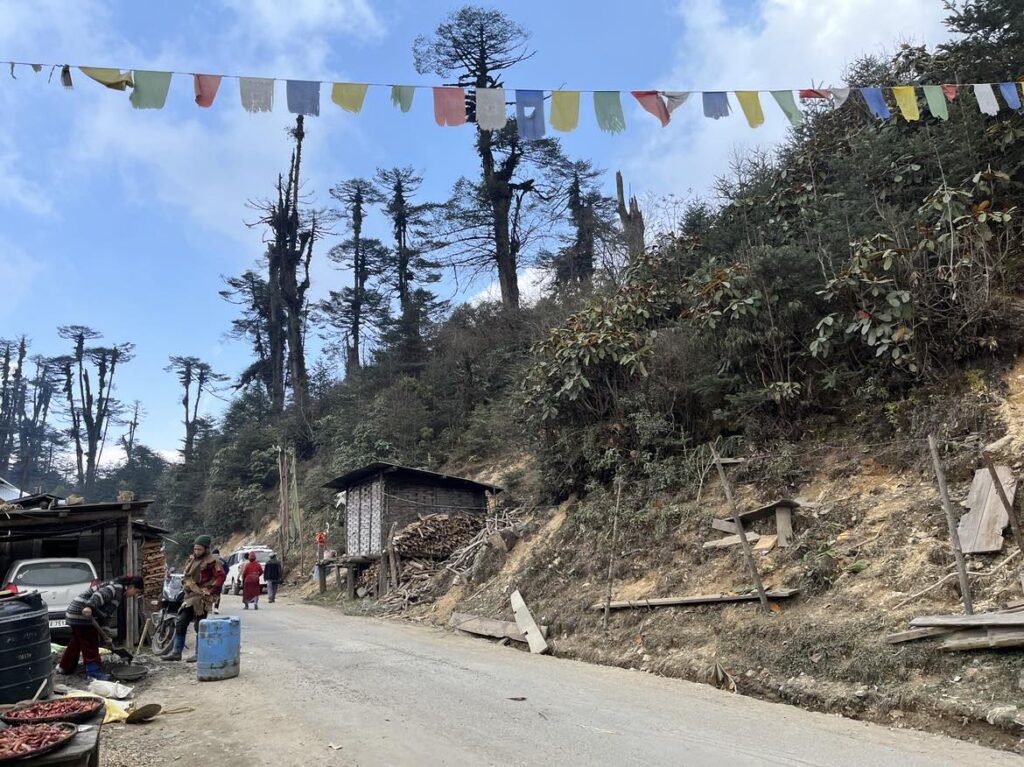
Typical Mandala scene: woodcutters in traditional dress, or locals running the small hotels that serve the army and the occasional tourists.
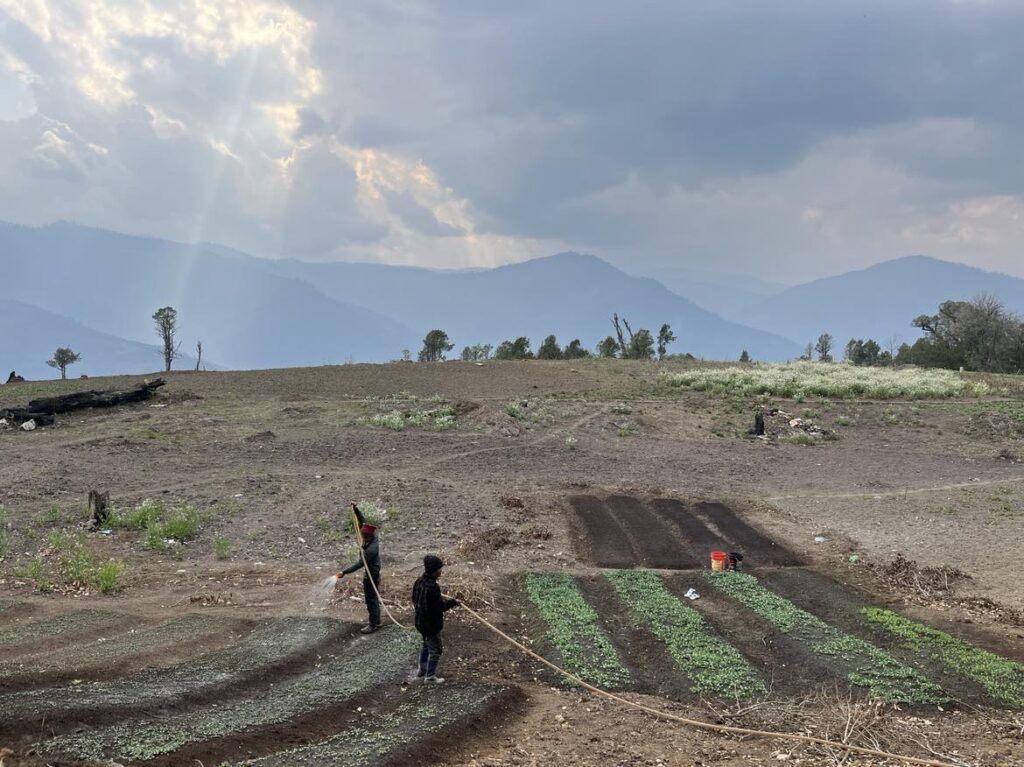
Walking down from Mandala top, we passed villages and watched cabbage farming on large patches.
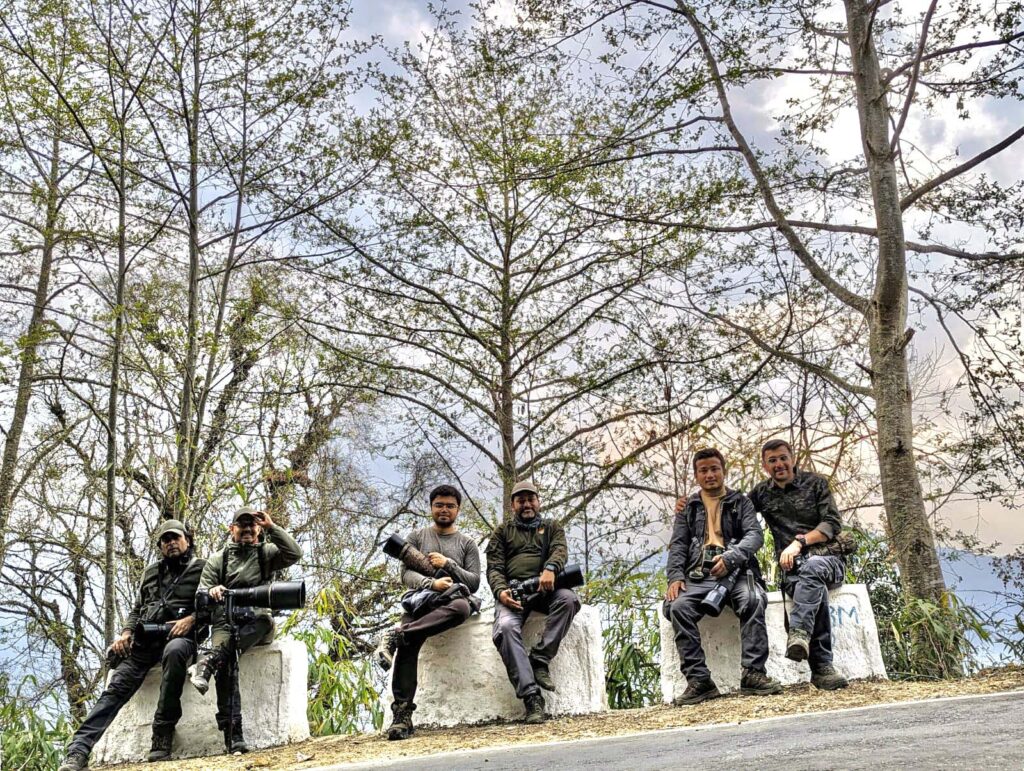
Wrap call at 4pm. Final group photos. Trip officially closing.
Day 9
One final lap on Eaglenest for the Bugun Liocichla, with a hard 9am cut-off because some of the group had flights out of Guwahati. At 9:05am, after misidentifying Red-faced Liocichlas as the target species, we were walking back toward the car. Disappointed, promising ourselves another trip.
Then another guide and his foreign client at the entrance signalled silence. He had it in a bush nearby.
Split second later, there it was. On a branch. Sitting like a typical laughingthrush in foliage and shadow.
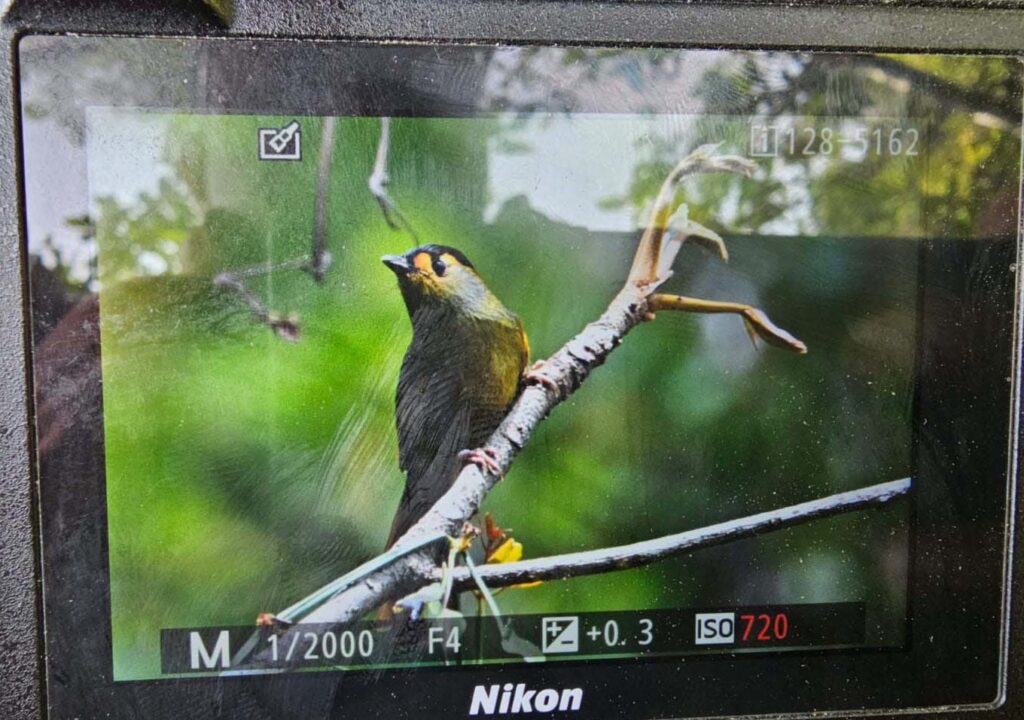
My hands locked. Could not believe it was finally in front of me. Couple of seconds later it dropped back into the bush. Then the second realisation: there were two adults hopping around in there. My shot is unusable but the better-prepared photographers in the group got the frame that confirms it. 180+ species on the final list. A large chunk of the personal lifer count came out of this single trip.
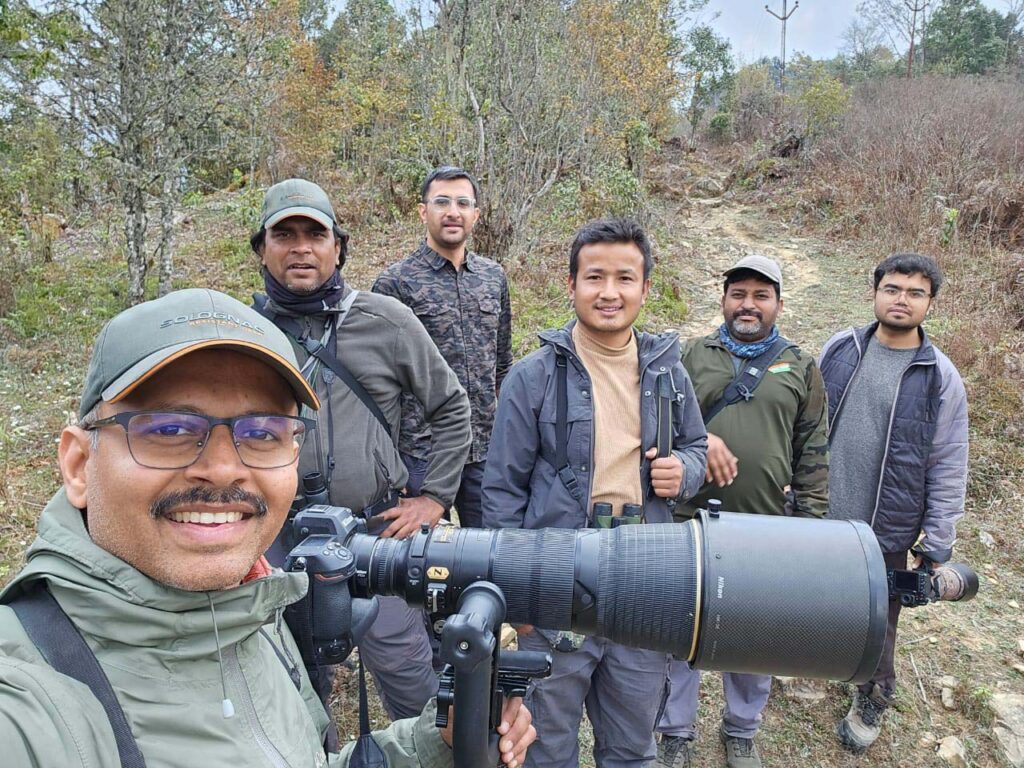
We drove to Tenga, where one of the team was continuing to Tawang to meet his family. Quick breakfast, then the long drive back to Guwahati for the rest of us.
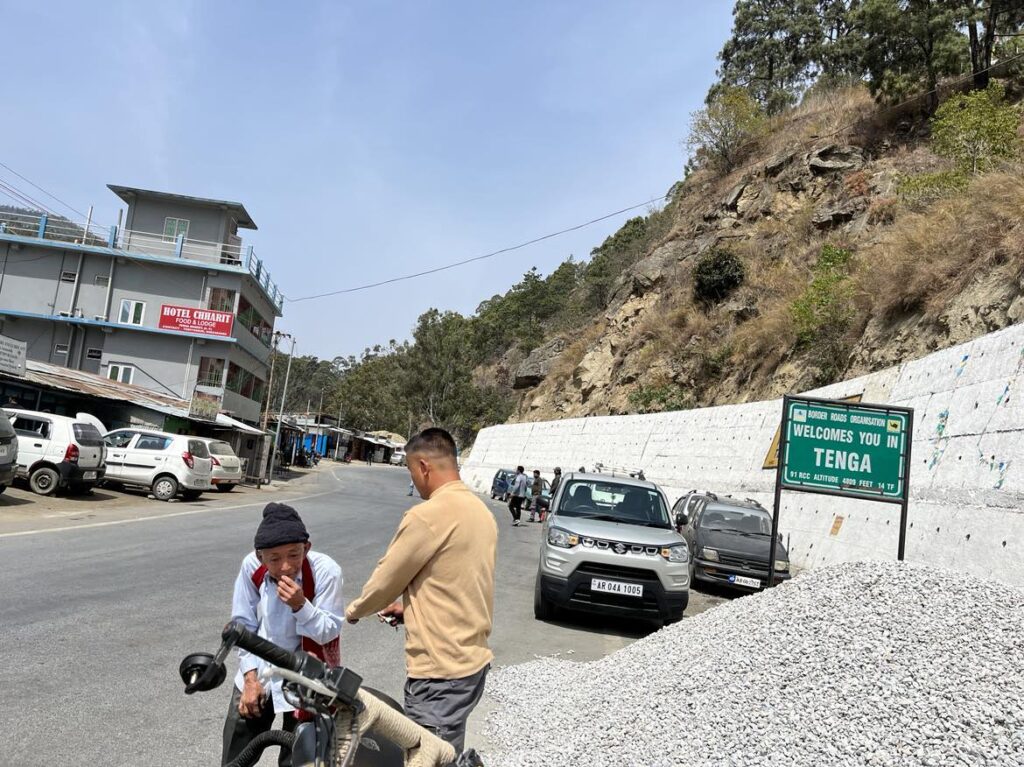
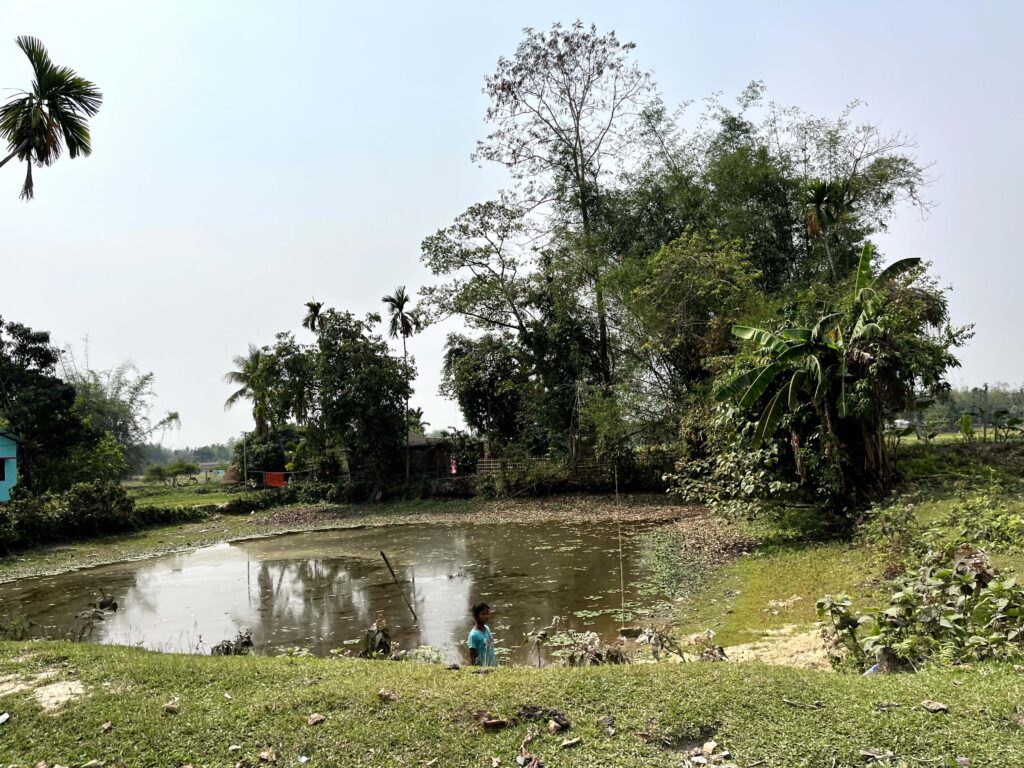
This time we skipped the Kaziranga route and took a parallel state highway through the Assam villages. It was Bihu — first-harvest celebration — and we passed countless local festivities on the way.
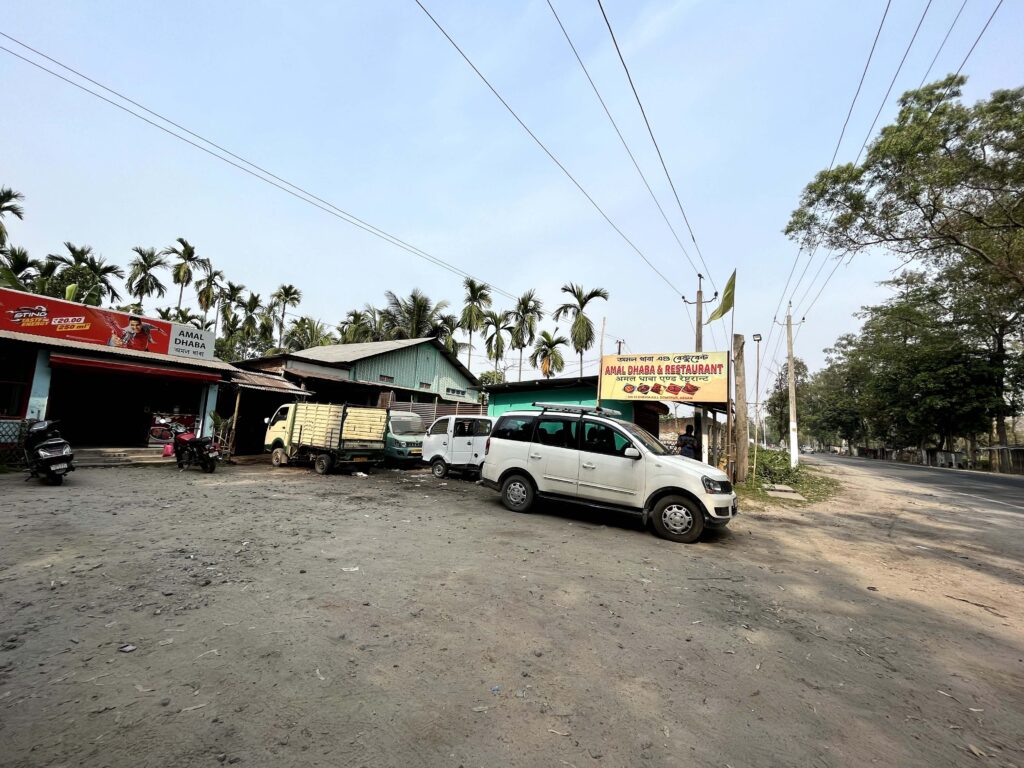
Lunch at Amal Dhaba, the worst meal of the trip. The next town was a long way ahead, so we made do.
Guwahati airport at 6pm. Most of the group went straight to the gates. I went back to Hotel Mirana for the night since my flight was the next evening.
Day 10
After clean sleep, dinner, and breakfast, I walked the 870m back to the airport gate (the receptionist quoted that figure precisely) in 38°C noon heat. Guwahati airport is small but modern. Bihu celebrations were rolling through the premises.
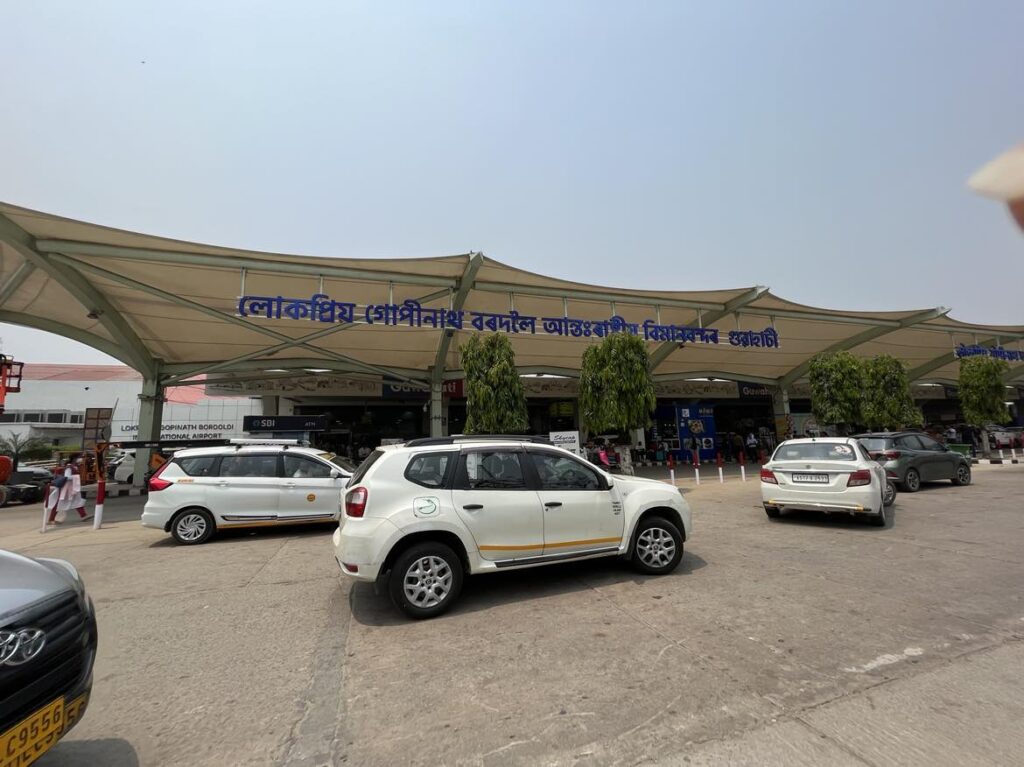
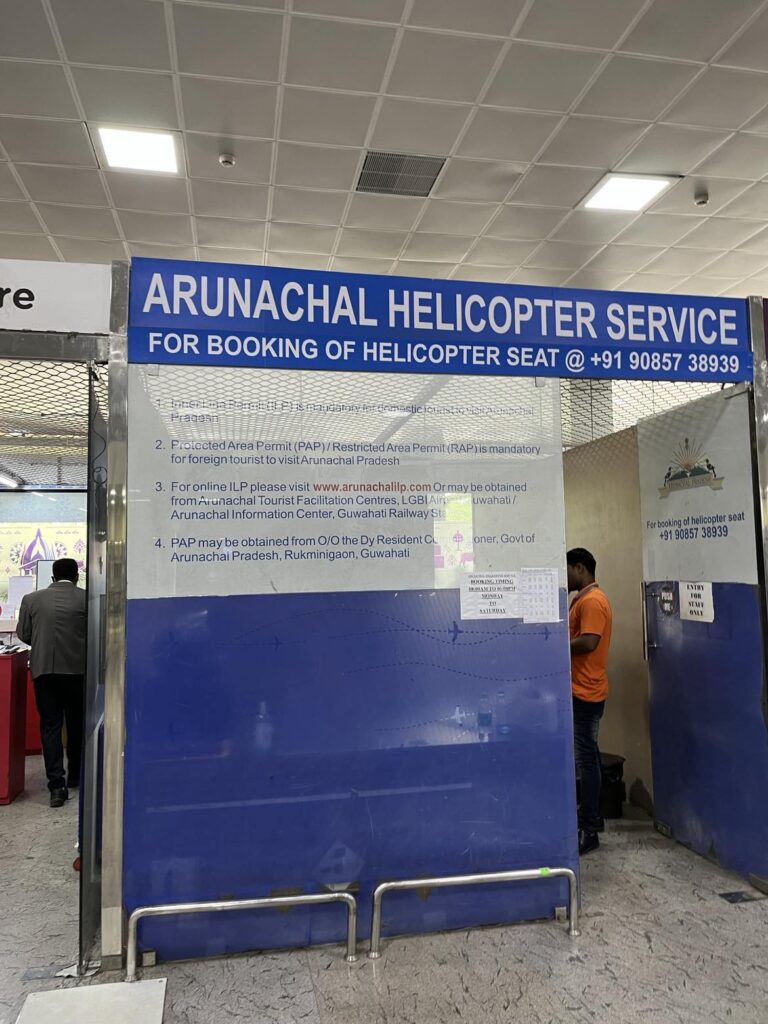
New thing learned: the Guwahati airport offers helicopter services into Arunachal.
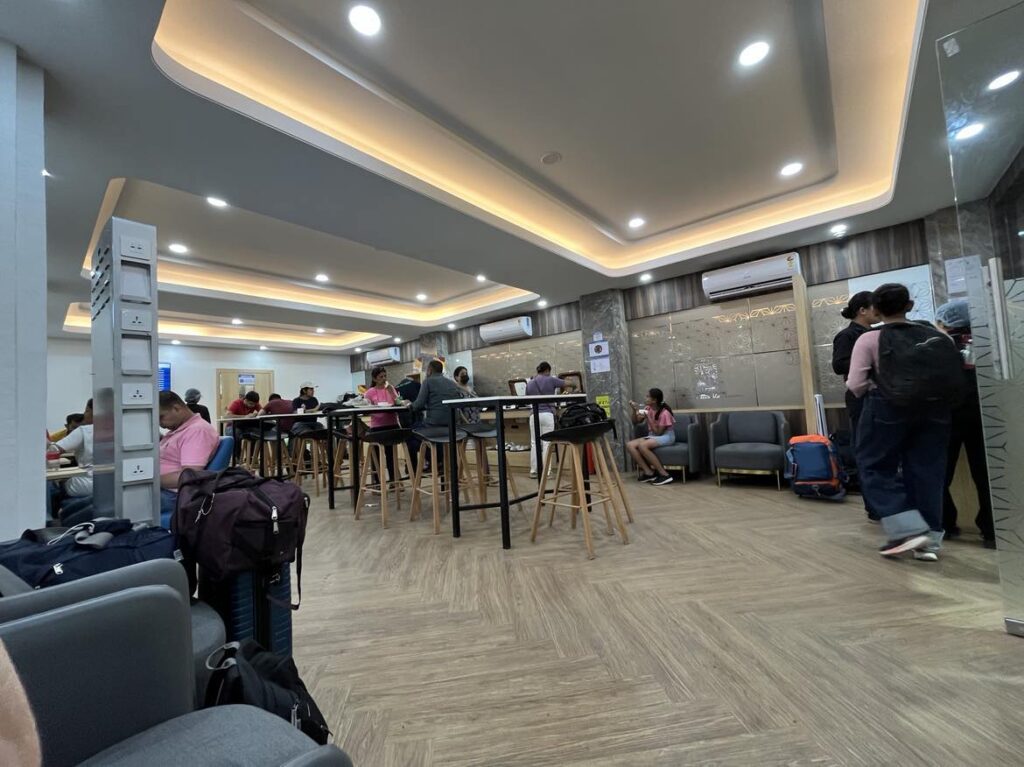
The lounge is small but had a Bihu special menu. Items were close to a typical Bengali fish-chicken-paneer thali, with similar flavour profiles.
Air India back to Kolkata, on time, 4:30pm landing. The 42°C Kolkata heat was the closing hit of the week.
Field Notes
- Pack layers across temperatures and terrain. Light fleece, heavy jacket for sub-zero, rain shell, thermals, gloves, hiking shoes, multiple socks, ear and head protection, nose protection. Some mornings you walk in a t-shirt; some nights you layer everything you own.
- Anti-leech socks are essential when it rains. Carry first-line medicine — we had to drink boiled rainwater on at least one occasion when bottled water ran out, and the bug bites are real.
- Get the Arunachal permit in place before you fly. Aadhaar must travel with you everywhere.
- Hindi works. Most locals are fluent. People are helpful and friendly.
- For camp stays: torch always. Tap water can be cold enough to numb your hands. Solar light only. Common-area charging works for 3-4 hours a night. Ask the staff to heat water in a bucket if there is no on-demand supply.
- Astro is rewarding here. Arunachal night skies are among the cleanest in India for stargazing.
- Basic fitness is required. A lot of walking and uphill hiking. Mental preparation matters as much as physical.
One Recommendation
The Bugun Liocichla is the headline because of its history, biology, and conservation status. The bigger recommendation is to stay at one of the camps rather than a hotel — the wilderness is what you came for. Bompu over Lama if the cold is your main concern. The video below is Bompu in walk-through form.
Freezing out,
Sayantan